



BRM/BRG1 ATP Inhibitor-1
Based on 42 publication(s) in Google Scholar
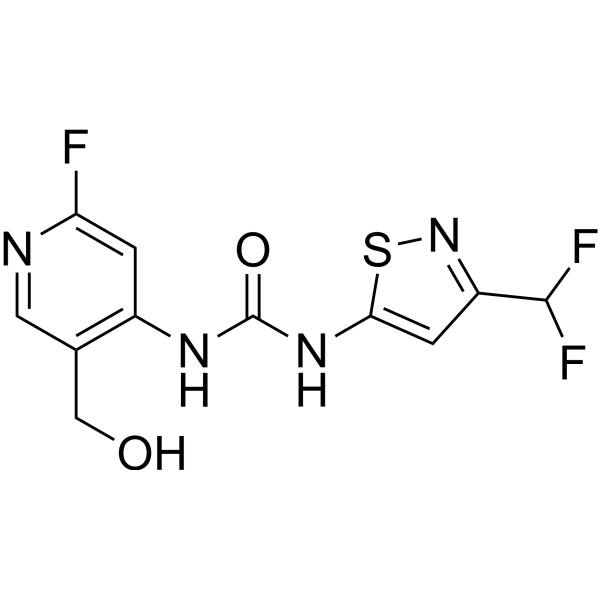
BRM/BRG1 ATP Inhibitor-1 (compound 14) is an orally active allosteric dual brahma homolog (BRM)/SWI/SNF related matrix associated actin dependent regulator of chromatin subfamily A member 2 (SMARCA2) and brahma related gene 1 (BRG1)/SMARCA4 ATPase activity inhibitor, both IC50s are below 0.005 µM. BRM/BRG1 ATP Inhibitor-1 has anticancer activity.
For research use only. We do not sell to patients.
- Purity : 99.72%
- CAS No.: 2270879-17-7
- Formula: C11H9F3N4O2S
- Molecular Weight:318.27
-
Storage:Powder -20°C, 3 years , 4°C, 2 years ; In solvent -80°C, 2 years , -20°C, 1 year

To place orders, for customer services and technical support, please contact: MedChemExpress USA
Tel: 609-228-6898 E-mail: [email protected] [email protected]


-
 Biological Activity
-
Chemical Information
-
Solvent & Solubility
- Purity & Documentation
- References
-
 Help & FAQs


Publications Citing Use of MedChemExpress (MCE) BRM/BRG1 ATP Inhibitor-1
More- Nature. 2024 Dec;636(8043):745-754. [Abstract]
- Nature. 2024 Apr;628(8007):442-449. [Abstract]
- Nature. 2023 Jun;618(7963):180-187. [Abstract]
- Cell. 2025 Aug 7;188(16):4424-4440.e17. [Abstract]
- Cell. 2024 Jun 20;187(13):3390-3408.e19. [Abstract]
- Immunity. 2023 Jun 13;56(6):1303-1319.e5. [Abstract]
- Nat Genet. 2021 Mar;53(3):269-278. [Abstract]
- Cancer Res. 2025 Sep 10. [Abstract]
- Protein Cell. 2025 Aug 4:pwaf071. [Abstract]
- Nat Commun. 2025 May 31;16(1):5079. [Abstract]
- Nat Commun. 2024 Mar 7;15(1):2067. [Abstract]
- Nat Commun. 2022 May 31;13(1):3016. [Abstract]
- Nucleic Acids Res. 2025 Jun 6;53(11):gkaf473. [Abstract]
- Nucleic Acids Res. 2025 Apr 10;53(7):gkaf273. [Abstract]
- Nucleic Acids Res. 2024 Jan 25;52(2):625-642. [Abstract]
- Adv Sci (Weinh). 2025 Oct 24:e13981. [Abstract]
- Adv Sci (Weinh). 2025 Jul 16:e15585. [Abstract]
- J Allergy Clin Immunol. 2025 Sep 17:S0091-6749(25)00948-0. [Abstract]
- Proc Natl Acad Sci U S A. 2024 Jan 30;121(5):e2313656121. [Abstract]
- Genome Res. 2023 Mar;33(3):332-345. [Abstract]
- Mol Cancer Res. 2025 May 2;23(5):416-425. [Abstract]
- PLoS Pathog. 2025 Apr 21;21(4):e1013009. [Abstract]
- Epigenetics Chromatin. 2025 Jun 2;18(1):31. [Abstract]
- Cardiovasc Toxicol. 2026 Jul 23;26(8):83.
- Mol Cell Biol. 2025;45(4):169-184. [Abstract]
- bioRxiv. 2026 Jul 6.
- bioRxiv. 2026 Mar 18.
- bioRxiv. 2026 Mar 13.
- bioRxiv. 2026 Mar 21:2026.03.19.712964. [Abstract]
- bioRxiv. 2026 Jan 29:2026.01.29.702555. [Abstract]
- bioRxiv. 2025 Sep 3:2024.03.24.586276. [Abstract]
- McGill University. 2025.
- bioRxiv. 2025 April 10.
- bioRxiv. 2025 March 03.
- bioRxiv. 2024 Aug 23:2024.08.23.609212. [Abstract]
- bioRxiv. 2024 Jun 13:2024.06.13.598853. [Abstract]
- bioRxiv. 2024 Feb 4:2024.02.02.578660. [Abstract]
- bioRxiv. 2023: 2023.12 [Abstract]
- bioRxiv. 2023 Aug 11:2023.08.08.552544. [Abstract]
- bioRxiv. 2023 May 14.
- bioRxiv. 2023 Mar 3.
- Research Square Preprint. 2022 Jul.
 Customer Validation & Images

-
Bio/Physico-chemical Assay
-
Bio/Physico-chemical Assay
-
Bio/Physico-chemical Assay
-
WB
-
Bio/Physico-chemical Assay
All SWI/SNF Complex Isoforms
More

Biological Activity
Description
IC50 & Target
IC50: ﹤0.005 µM (BRM, BRG1)[1]
Cellular Effect
|
Cell Line

|
Type | Value | Description | References |
|---|---|---|---|---|
| SBC-5 | EC50 |
>10 μM
Compound: 14
|
Antiproliferative activity against human SBC5 cells assessed as cell growth inhibition after 6 days by celltiter-glo luminescent cell viability assay
Antiproliferative activity against human SBC5 cells assessed as cell growth inhibition after 6 days by celltiter-glo luminescent cell viability assay
|
[PMID: 30339381] |
In Vitro
BRM/BRG1 ATP Inhibitor-1 (compound 14) (0-10 μM, 5 days) can inhibit the proliferation of cancer cells[1].
BRM/BRG1 ATP Inhibitor-1 inhibits KRT80 gene expression in H1299 cells with the AAC50 (absolute AC50) value of 0.01 μM and in RERF-LC-AI cells with an AAC50 value of 0.01 μM[1].
MedChemExpress (MCE) has not independently confirmed the accuracy of these methods. They are for reference only.
-
Cell Line:SKMEL5 melanoma cells and SBC-5 small cell carcinoma
-
Concentration:0-10 μM
-
Incubation Time:5 days
-
Result:Inhibited the proliferation of SKMEL5 cells with an AAC50 (absolute AC50) value of 0.004 μM and of SBC-5 cells with the AAC50more than 10 μM.
In Vivo
MedChemExpress (MCE) has not independently confirmed the accuracy of these methods. They are for reference only.
-
Animal Model:Female athymic nude mice with RERF-LC-AI tumor xenografts[1]
-
Dosage:7.5 mg/kg, 20 mg/kg
-
Administration:Oral administration; everyday; 3 weeks
-
Result:Inhibited tumor growth by 21% and 55% at doses of 7.5 mg/kg and 20 mg/kg, respectively.
Inhibited KRT80 expression by up to 90% at 20 mg/kg for 7 hours after administration.


Chemical Information
-
CAS No. 2270879-17-7
-
Appearance Solid
-
Molecular Weight 318.27
-
Formula C11H9F3N4O2S
-
Color White to off-white
-
SMILES
FC1=CC(NC(NC2=CC(C(F)F)=NS2)=O)=C(CO)C=N1
-
Shipping
Room temperature in continental US; may vary elsewhere.
-
Storage
Powder -20°C 3 years 4°C 2 years In solvent -80°C 2 years -20°C 1 year


Publications (42)
-
Journal Impact Factor
-
Most Recent
-
Nature
2024 Dec;636(8043):745-754. PMID: 39567683
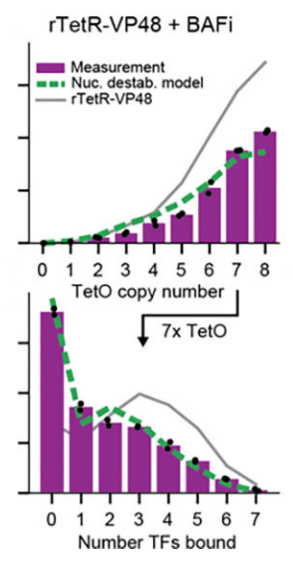
BRM/BRG1 ATP Inhibitor-1 purchased from MedChemExpress. Usage Cited in: Nature. 2024 Dec;636(8043):745-754. [Abstract]
The BAF inhibitor BRM/BRG1 ATP Inhibitor-1 (BRM014) (10 μM; 30 min) reduced the average TF occupancy per enhancer and the TF binding distribution per molecule.
-
Nature
2024 Apr;628(8007):442-449. PMID: 38538798
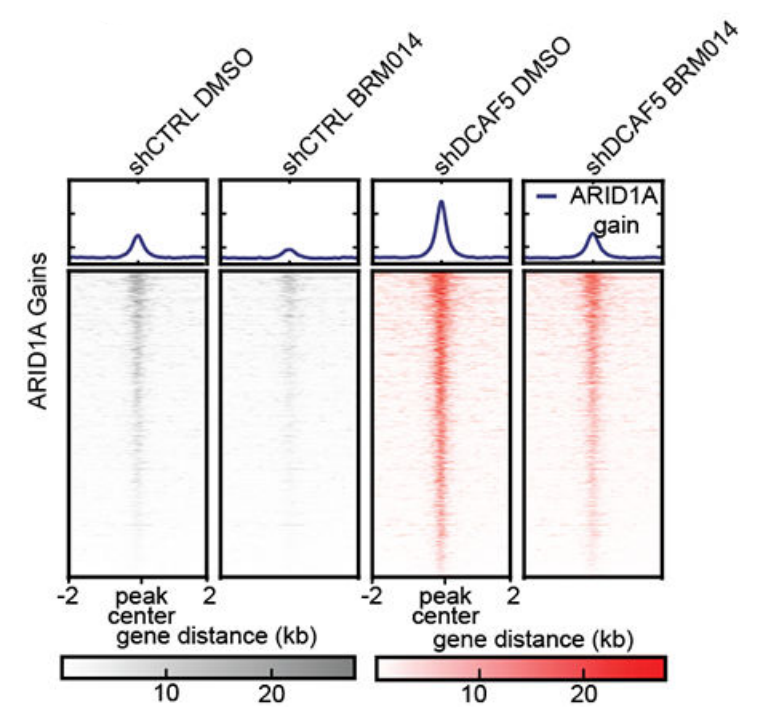
BRM/BRG1 ATP Inhibitor-1 purchased from MedChemExpress. Usage Cited in: Nature. 2024 Apr;628(8007):442-449. [Abstract]
BRM/BRG1 ATP Inhibitor-1 (BRM014) (1 μM; 2 h), a small molecule inhibitor that is specific for the SWI/SNF ATPases SMARCA4 and SMARCA234, largely rescued the effect of DCAF5 knockdown.
-
Nature
2023 Jun;618(7963):180-187. PMID: 37225980
BRM/BRG1 ATP Inhibitor-1 purchased from MedChemExpress. Usage Cited in: Nature. 2023 Jun;618(7963):180-187. [Abstract]
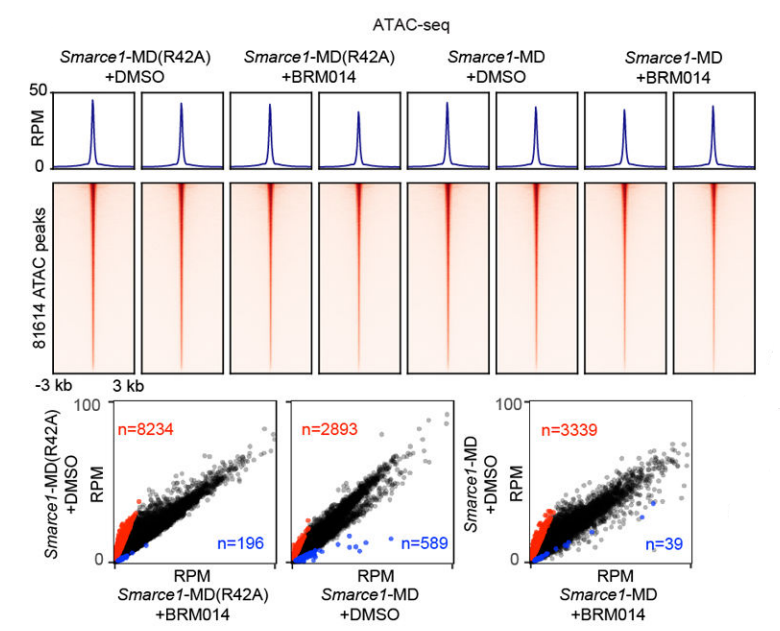
BRM/BRG1 ATP Inhibitor-1 (BRM014) (1 μM; 90 min), a SMARCA4 ATPase inhibitor, significantly reduced the accessible regions in control Smarce1-MD(R42A) cells.
-
Cell
2025 Aug 7;188(16):4424-4440.e17. PMID: 40409270
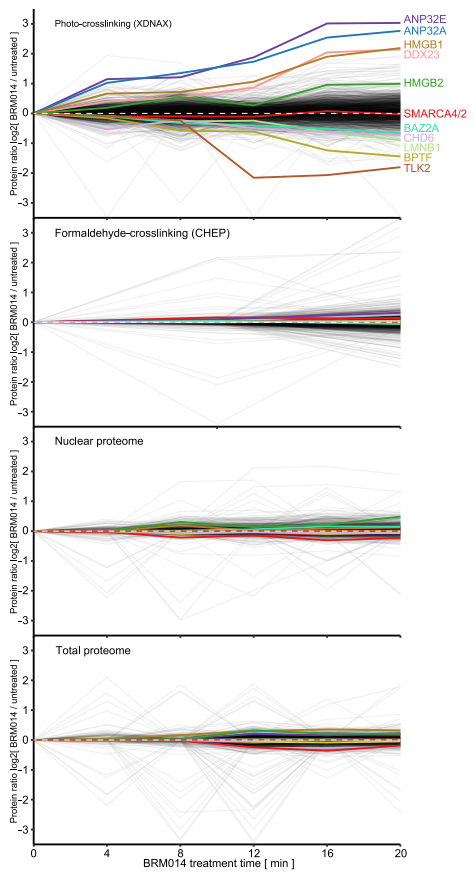
BRM/BRG1 ATP Inhibitor-1 purchased from MedChemExpress. Usage Cited in: Cell. 2025 Aug 7;188(16):4424-4440.e17. [Abstract]
Line plots compared four proteomic analyses on MCF7 cells treated with the BAF inhibitor BRM/BRG1 ATP Inhibitor-1 (BRM014) (1 μM; 20 min). The drug target SMARCA4/2 (BRG1/BRM) and selected chromatin organizers were highlighted, with particularly significant changes in the photo-crosslinked DNA interactome.
-
Cell
ARID1A suppresses R-loop-mediated STING-type I interferon pathway activation of anti-tumor immunity. [Abstract]2024 Jun 20;187(13):3390-3408.e19. PMID: 38754421
BRM/BRG1 ATP Inhibitor-1 purchased from MedChemExpress. Usage Cited in: Cell. 2024 Jun 20;187(13):3390-3408.e19. [Abstract]
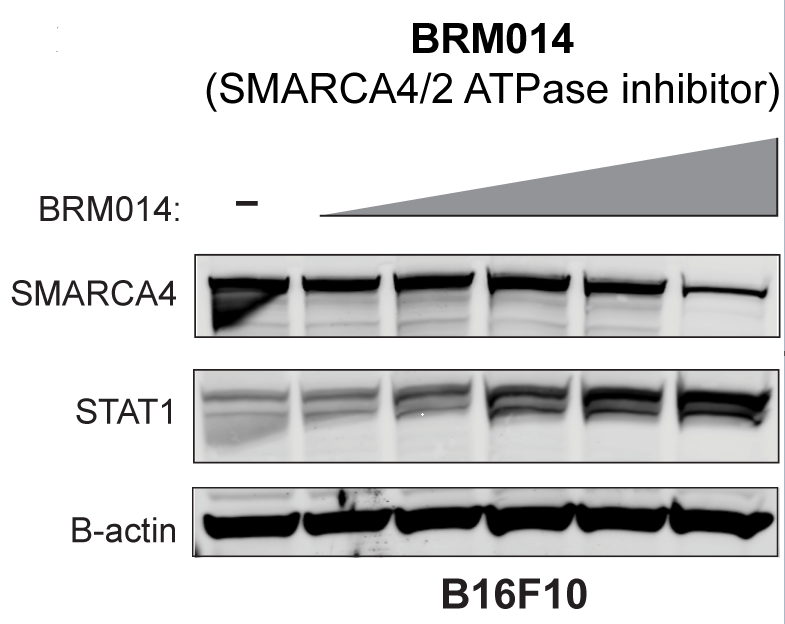
Western blot of SMARCA4 and STAT1 in B16F10 cells treated with vehicle or BRM/BRG1 ATP Inhibitor-1 (BRM014) (30 nM–3 μM; 72 h).
-
Immunity
Canonical BAF complex activity shapes the enhancer landscape that licenses CD8+ T cell effector and memory fates. [Abstract]2023 Jun 13;56(6):1303-1319.e5. PMID: 37315534 -
Nat Genet
2021 Mar;53(3):269-278. PMID: 33558760 -
Cancer Res
SWI/SNF Functions as a Gatekeeper of Enhancer Chromatin Access to Control Progression of Mesenchymal Triple-Negative Breast Cancer. [Abstract]2025 Sep 10. PMID: 40928937 -
Protein Cell
Genome-wide investigation of transcription factor occupancy and dynamics using cFOOT-seq. [Abstract]2025 Aug 4:pwaf071. PMID: 40795153 -
Nat Commun
Eomesodermin in conjunction with the BAF complex promotes expansion and invasion of the trophectoderm lineage. [Abstract]2025 May 31;16(1):5079. PMID: 40450029 -
Nat Commun
2024 Mar 7;15(1):2067. PMID: 38453939 -
Nat Commun
2022 May 31;13(1):3016. PMID: 35641523 -
Nucleic Acids Res
Pioneering new enhancers by GATA3: role of facilitating transcription factors and chromatin remodeling. [Abstract]2025 Jun 6;53(11):gkaf473. PMID: 40479714 -
Nucleic Acids Res
2025 Apr 10;53(7):gkaf273. PMID: 40207634 -
Nucleic Acids Res
Chromatin accessibility and pioneer factor FOXA1 restrict glucocorticoid receptor action in prostate cancer. [Abstract]2024 Jan 25;52(2):625-642. PMID: 38015476 -
Adv Sci (Weinh)
Arid1a Deficiency Drives Aristolochic Acid-Induced Liver Tumorigenesis through Ctnnb1 Mutation and Defective Nucleotide Excision Repair. [Abstract]2025 Oct 24:e13981. PMID: 41133886 -
Adv Sci (Weinh)
Disruption of ARID1B Recruitment to the Nuclear Pore Complex as a New Anticancer Therapeutic Strategy. [Abstract]2025 Jul 16:e15585. PMID: 40671262 -
J Allergy Clin Immunol
Brg1-imprinted chromatin status controls effector and memory group 2 innate lymphoid cell metabolism to exacerbate allergic lung inflammation. [Abstract]2025 Sep 17:S0091-6749(25)00948-0. PMID: 40972980 -
Proc Natl Acad Sci U S A
Dancr-BRG1 regulates Nfatc1 transcription and Pgc1β-dependent metabolic shifts in osteoclastogenesis. [Abstract]2024 Jan 30;121(5):e2313656121. PMID: 38252822 -
Genome Res
The impact of SWI/SNF and NuRD inactivation on gene expression is tightly coupled with levels of RNA polymerase II occupancy at promoters. [Abstract]2023 Mar;33(3):332-345. PMID: 36927987 -
Mol Cancer Res
PAX8 interacts with the SWI/SNF complex at enhancers to drive proliferation in ovarian cancer. [Abstract]2025 May 2;23(5):416-425. PMID: 39918415 -
PLoS Pathog
2025 Apr 21;21(4):e1013009. PMID: 40257982 -
Epigenetics Chromatin
Unraveling the cohesin-chromatin interface: identifying protein interactions that modulate chromosome structure and function. [Abstract]2025 Jun 2;18(1):31. PMID: 40452075 -
-
Mol Cell Biol
Noncoding RNA, ncRNA-a3, Epigenetically Regulates TAL1 Transcriptional Program During Erythropoiesis. [Abstract]2025;45(4):169-184. PMID: 40211453 -
-
-
-
bioRxiv
BAF complexes maintain accessibility at stimulus-responsive chromatin and are required for transcriptional stimulus responses. [Abstract]2026 Mar 21:2026.03.19.712964. PMID: 41890073 -
bioRxiv
Chromatin modifiers KMT2D, BAF, and p300 are required for de novo binding of transcription factors on enhancers. [Abstract]2026 Jan 29:2026.01.29.702555. PMID: 41659470 -
bioRxiv
A double-negative prostate cancer subtype is vulnerable to SWI/SNF-targeting degrader molecules. [Abstract]2025 Sep 3:2024.03.24.586276. PMID: 40949972 -
-
-
-
bioRxiv
2024 Aug 23:2024.08.23.609212. PMID: 39229151 -
bioRxiv
Notch induces transcription by stimulating release of paused RNA Pol II without increasing chromatin accessibility. [Abstract]2024 Jun 13:2024.06.13.598853. PMID: 38915655 -
bioRxiv
Single-molecule chromatin configurations link transcription factor binding to expression in human cells. [Abstract]2024 Feb 4:2024.02.02.578660. PMID: 38352517 -
bioRxiv
Activity-assembled nBAF complex mediates rapid immediate early gene transcription by regulating RNA Polymerase II productive elongation. [Abstract]2023: 2023.12 PMID: 38234780 -
bioRxiv
Interferon response and epigenetic modulation by SMARCA4 mutations drive ovarian tumor immunogenicity. [Abstract]2023 Aug 11:2023.08.08.552544. PMID: 37609261 -
-
-


Solvent & Solubility
In Vitro:
DMSO : 200 mg/mL (628.40 mM; ultrasonic and warming and heat to 60°C; Hygroscopic DMSO has a significant impact on the solubility of product, please use newly opened DMSO)
Please refer to the solubility information to select the appropriate solvent. Once prepared, please aliquot and store the solution to prevent product inactivation from repeated freeze-thaw cycles.
Storage method and period of stock solution: -80°C, 2 years; -20°C, 1 year. When stored at -80°C, please use it within 2 years. When stored at -20°C, please use it within 1 year.
Please refer to the solubility information to select the appropriate solvent. Once prepared, please aliquot and store the solution to prevent product inactivation from repeated freeze-thaw cycles.
Storage method and period of stock solution: -80°C, 2 years; -20°C, 1 year. When stored at -80°C, please use it within 2 years. When stored at -20°C, please use it within 1 year.
Concentration (start) × Volume (start) = Concentration (final) × Volume (final)
In Vivo:
Select the appropriate dissolution method based on your experimental animal and administration route.
- For the following dissolution methods, please ensure to first prepare a clear stock solution using an In Vitro approach and then sequentially add co-solvents:
- To ensure reliable experimental results, the clarified stock solution can be appropriately stored based on storage conditions. As for the working solution for In Vivo experiments, it is recommended to prepare freshly and use it on the same day.
- The percentages shown for the solvents indicate their volumetric ratio in the final prepared solution. If precipitation or phase separation occurs during preparation, heat and/or sonication can be used to aid dissolution.
Add each solvent one by one: 10% DMSO 40% PEG300 5% Tween-80 45% Saline
Solubility: ≥ 2.08 mg/mL (6.54 mM); Clear solution
This protocol yields a clear solution of ≥ 2.08 mg/mL (saturation unknown).
Taking 1 mL working solution as an example, add 100 μL DMSO stock solution (20.8 mg/mL) to 400 μL PEG300, and mix evenly; then add 50 μL Tween-80 and mix evenly; then add 450 μL Saline to adjust the volume to 1 mL.
Preparation of Saline: Dissolve 0.9 g sodium chloride in ddH₂O and dilute to 100 mL to obtain a clear Saline solution.
Add each solvent one by one: 10% DMSO 90% (20% SBE-β-CD in Saline)
Solubility: ≥ 2.08 mg/mL (6.54 mM); Clear solution
This protocol yields a clear solution of ≥ 2.08 mg/mL (saturation unknown).
Taking 1 mL working solution as an example, add 100 μL DMSO stock solution (20.8 mg/mL) to 900 μL 20% SBE-β-CD in Saline, and mix evenly.
Preparation of 20% SBE-β-CD in Saline (4°C, storage for one week): 2 g SBE-β-CD powder is dissolved in 10 mL Saline, completely dissolve until clear.
In Vivo Dissolution Calculator
Please enter the basic information of animal experiments:
-
-
-
-
Recommended: Prepare an additional quantity of animals to account for potential losses during experiments.
Please enter your animal formula composition:
-
%DMSO +
Recommended: Keep the proportion of DMSO in working solution below 2% if your animal is weak.
-
%+
-
+%Tween-80 + +
-
%Saline +
The co-solvents required include: DMSO, . All of co-solvents are available by MedChemExpress (MCE). , Tween 80. All of co-solvents are available by MedChemExpress (MCE).
Working solution concentration: 0.22 mg/mL
Method for preparing stock solution: mg drug dissolved in μL DMSO. Stock solution concentration: mg/mL.
1. Take μL DMSO stock solution;
2. Add μL .
μL , mix evenly;
3. Then add μL Tween 80, mix evenly;
4. Then add μL
Please ensure that the stock solution in the first step is dissolved to a clear state, and add co-solvents in sequence. You can use ultrasonic heating (ultrasonic cleaner, recommended frequency 20-40 kHz), vortexing, etc. to assist dissolution.


Purity & Documentation
-
Data Sheet (276 KB)
-
SDS (254 KB)
- English - EN (254 KB)
- Français - FR (254 KB)
- Deutsch - DE (254 KB)
- Norwegian - NO (254 KB)
- Español - ES (254 KB)
- Swedish - SV (254 KB)
- Italian - IT (254 KB)
- Korean - KR (254 KB)
- Portuguese - PT (254 KB)
-
Handling Instructions (2659 KB)
References


Complete Stock Solution Preparation Table
Please refer to the solubility information to select the appropriate solvent. Once prepared, please aliquot and store the solution to prevent product inactivation from repeated freeze-thaw cycles.
Storage method and period of stock solution: -80°C, 2 years; -20°C, 1 year. When stored at -80°C, please use it within 2 years. When stored at -20°C, please use it within 1 year.
| Optional Solvent | Concentration Solvent Mass | 1 mg | 5 mg | 10 mg | 25 mg |
|---|---|---|---|---|---|
| DMSO | 1 mM | 3.1420 mL | 15.7099 mL | 31.4199 mL | 78.5497 mL |
| 5 mM | 0.6284 mL | 3.1420 mL | 6.2840 mL | 15.7099 mL | |
| 10 mM | 0.3142 mL | 1.5710 mL | 3.1420 mL | 7.8550 mL | |
| 15 mM | 0.2095 mL | 1.0473 mL | 2.0947 mL | 5.2366 mL | |
| 20 mM | 0.1571 mL | 0.7855 mL | 1.5710 mL | 3.9275 mL | |
| 25 mM | 0.1257 mL | 0.6284 mL | 1.2568 mL | 3.1420 mL | |
| 30 mM | 0.1047 mL | 0.5237 mL | 1.0473 mL | 2.6183 mL | |
| 40 mM | 0.0785 mL | 0.3927 mL | 0.7855 mL | 1.9637 mL | |
| 50 mM | 0.0628 mL | 0.3142 mL | 0.6284 mL | 1.5710 mL | |
| 60 mM | 0.0524 mL | 0.2618 mL | 0.5237 mL | 1.3092 mL | |
| 80 mM | 0.0393 mL | 0.1964 mL | 0.3927 mL | 0.9819 mL | |
| 100 mM | 0.0314 mL | 0.1571 mL | 0.3142 mL | 0.7855 mL |


BRM/BRG1 ATP Inhibitor-1 Related Classifications
HY-119374 Related Classifications
 Powered by Bioz