



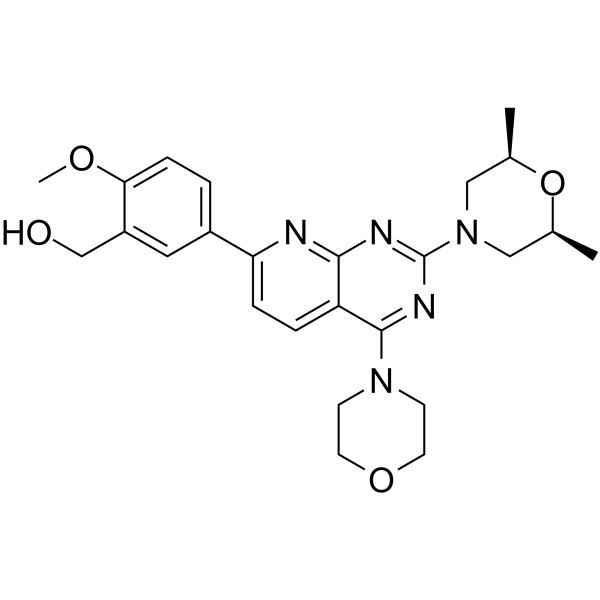
KU-0063794
Based on 15 publication(s) in Google Scholar
KU-0063794 is a potent and specific mTOR inhibitor, inhibiting both the mTORC1 and mTORC2 complexes with IC50s of 10 nM.
For research use only. We do not sell to patients.
- Purity : 99.67%
- CAS No.: 938440-64-3
- Formula: C25H31N5O4
- Molecular Weight:465.54
-
Storage:Powder -20°C, 3 years , 4°C, 2 years ; In solvent -80°C, 2 years , -20°C, 1 year

To place orders, for customer services and technical support, please contact: MedChemExpress USA
Tel: 609-228-6898 E-mail: [email protected] [email protected]


-
 Biological Activity
-
Chemical Information
-
Solvent & Solubility
- Purity & Documentation
- References
-
 Help & FAQs


-
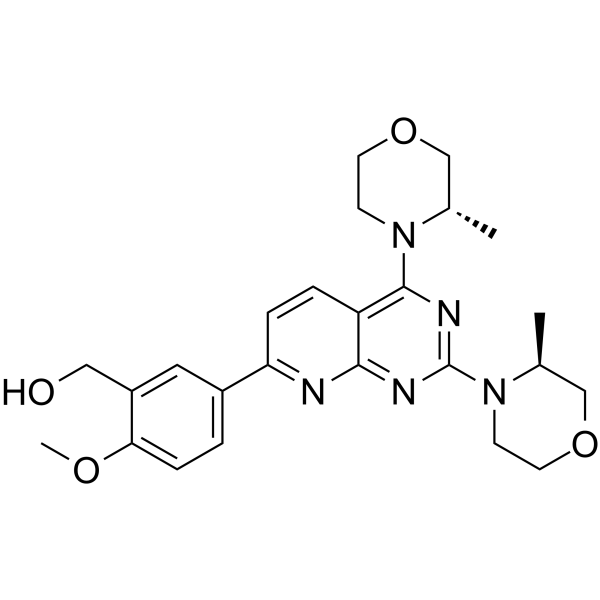
HY-10422
AZD-8055mTOR Inhibitor -
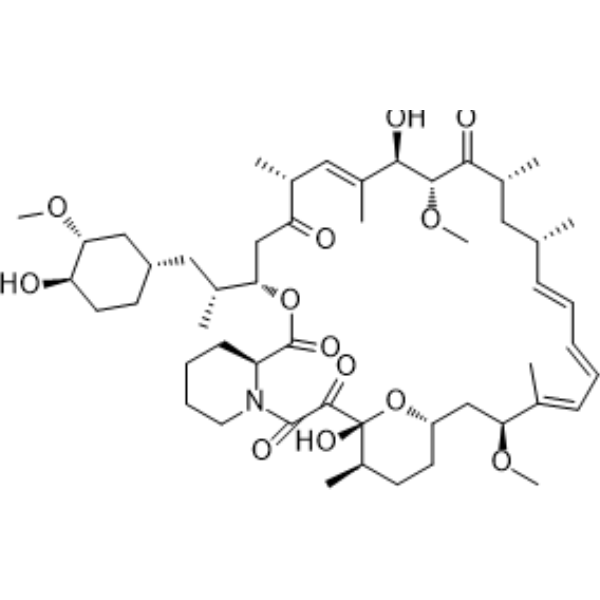
HY-10219
RapamycinmTOR Inhibitor -
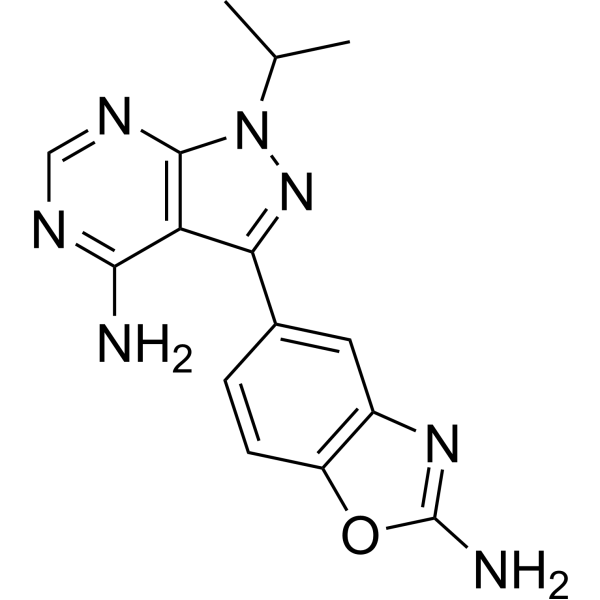
HY-13328
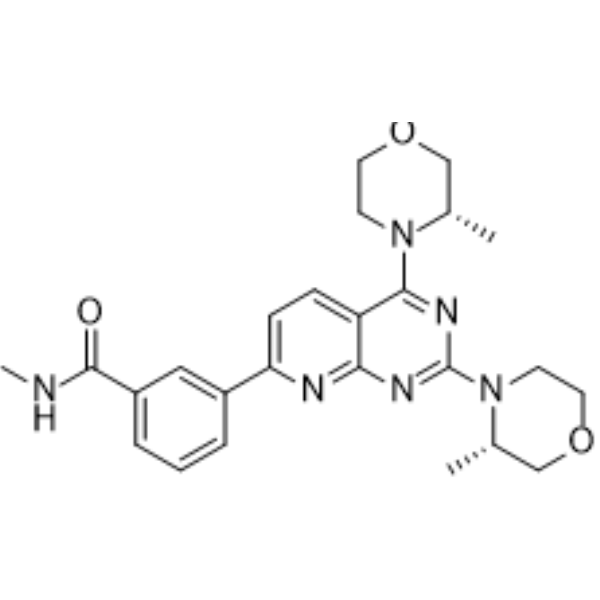
SapanisertibmTORC1/mTORC2 Inhibitor -
HY-15247
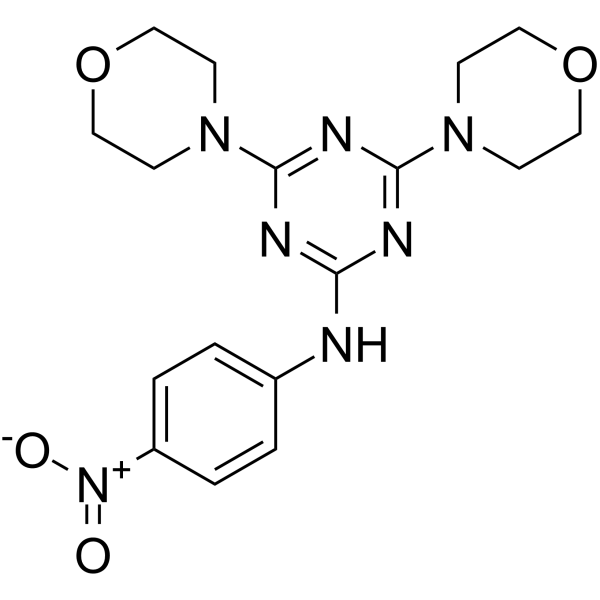
VistusertibmTORC Inhibitor -
HY-B0795
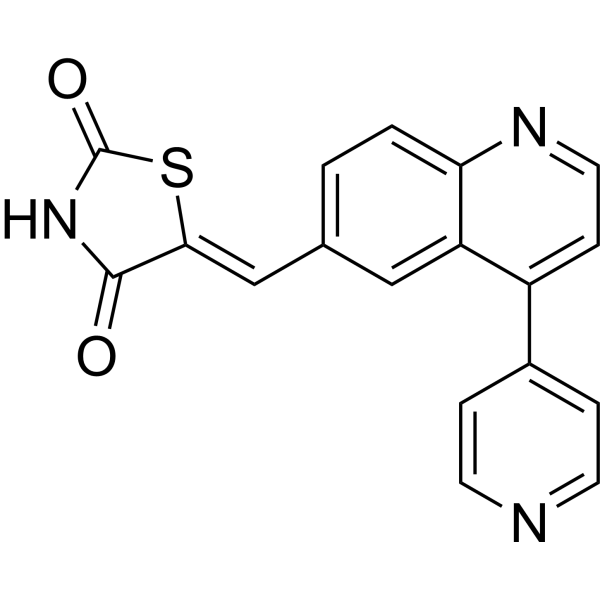
MHY1485mTOR Activator -
HY-12036
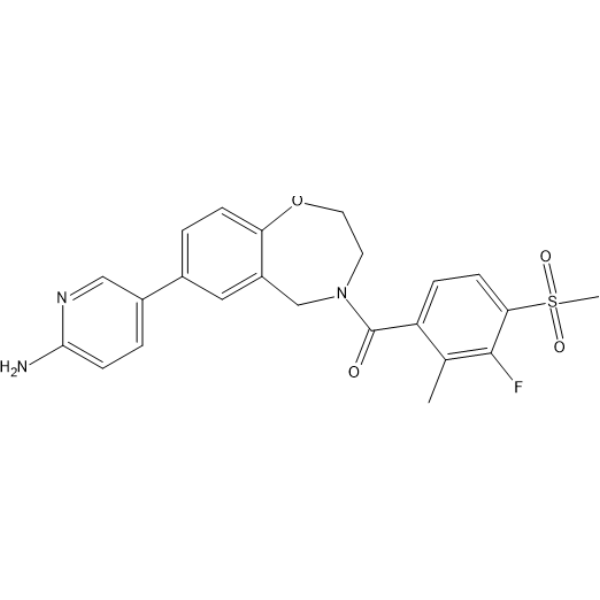
GSK1059615Apoptosis Inducer -
HY-13806
XL388mTOR Inhibitor -
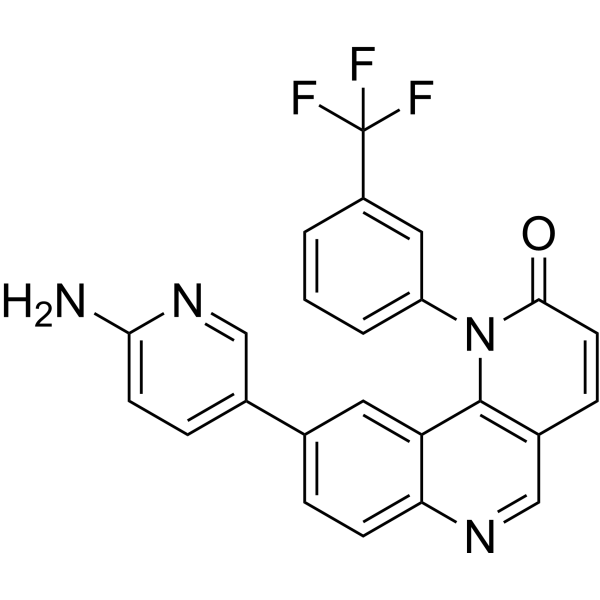
HY-13002
Torin 2mTOR Inhibitor -
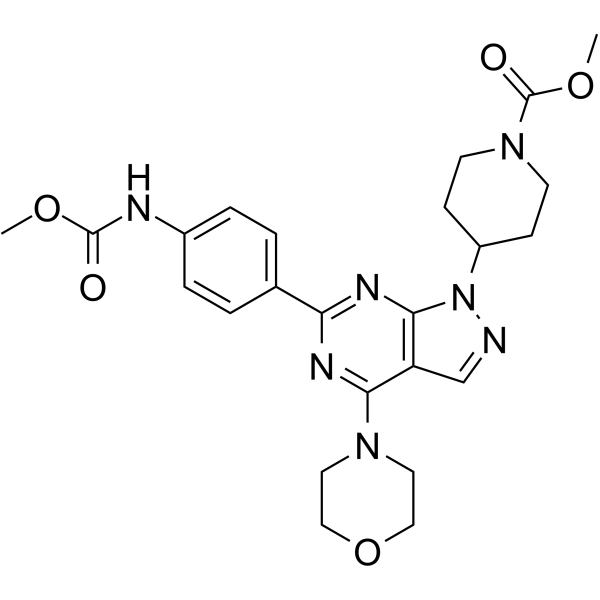
HY-12034
WYE-354mTOR inhibitor -
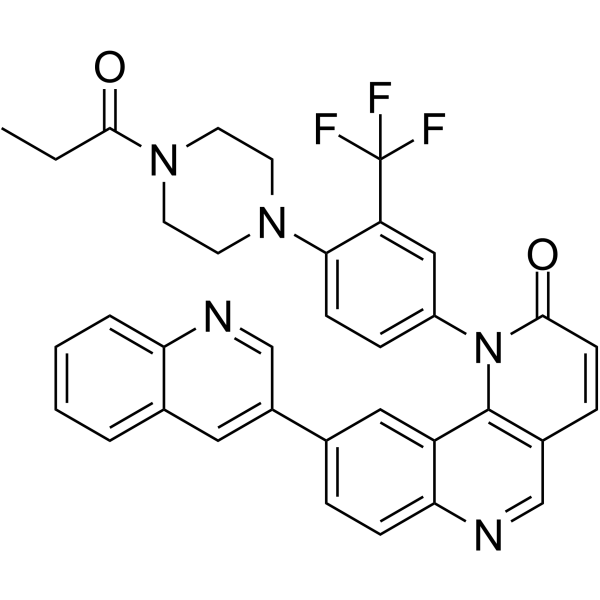
HY-13003
Torin 1mTOR Inhibitor -
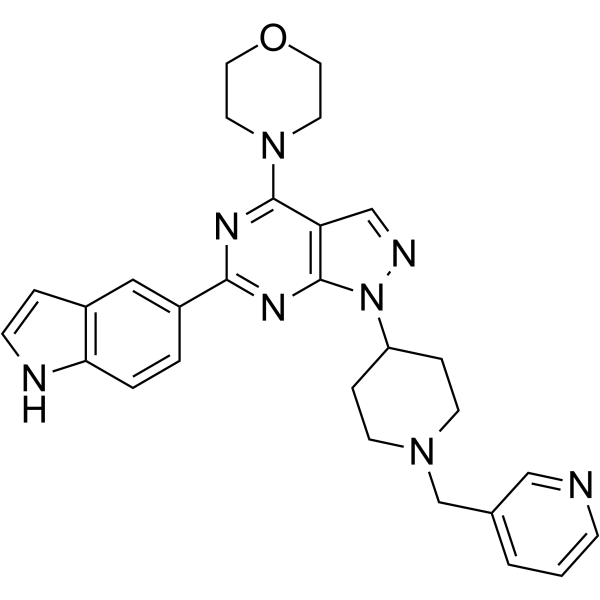
HY-15272
WAY-600mTOR inhibitor -
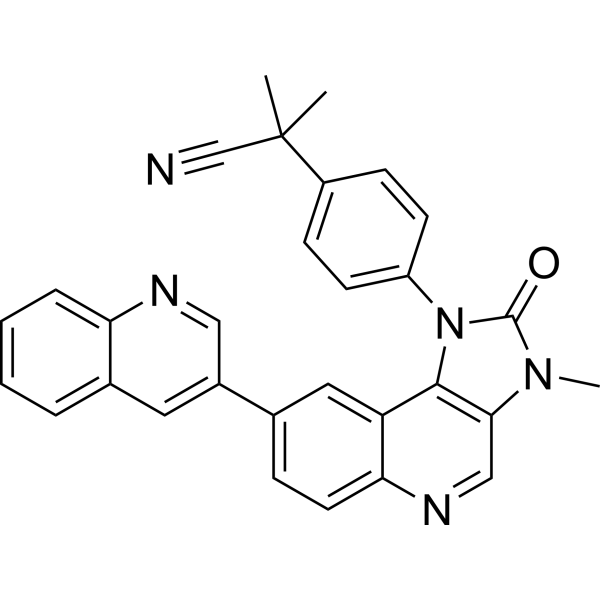
HY-50673
DactolisibPI3K/mTOR Inhibitor
Publications Citing Use of MedChemExpress (MCE) KU-0063794
More- Cell. 2023 Jun 22;186(13):2929-2949.e20. [Abstract]
- Cell Metab. 2019 Sep 3;30(3):573-593.e8. [Abstract]
- Gut. 2024 Jun 4:gutjnl-2023-331854. [Abstract]
- Neuron. 2026 May 11:S0896-6273(26)00315-6. [Abstract]
- Cancer Lett. 2022 Oct 1:545:215826. [Abstract]
- Cell Rep. 2021 Jun 22;35(12):109277. [Abstract]
- Front Pharmacol. 2020 Nov 11:11:580407. [Abstract]
- Molecules. 2020 Apr 23;25(8):1980. [Abstract]
- Mol Pain. 2025 Jan-Dec:21:17448069251376198. [Abstract]
- ACS Chem Biol. 2012 Jun 15;7(6):982-7. [Abstract]
- Hum Mol Genet. 2022 Aug 17;31(15):2508-2520. [Abstract]
- Vet Microbiol. 2026 May:316:110992. [Abstract]
- Exp Ther Med. 2019 Apr;17(4):2495-2502. [Abstract]
- Biomed Pharmacother. 2023 Nov:167:115447. [Abstract]
- Patent. US20180263995A1.


Biological Activity
Description
IC50 & Target
[1]|
mTORC1 10 nM (IC50) |
mTORC2 10 nM (IC50) |
Cellular Effect
|
Cell Line

|
Type | Value | Description | References |
|---|---|---|---|---|
| HEK293 | IC50 |
0.0025 μM
Compound: Ku-0063794
|
Inhibition of recombinant FLAG-tagged mTOR (1362 to 2549) (unknown origin) expressed in HEK293 cells
Inhibition of recombinant FLAG-tagged mTOR (1362 to 2549) (unknown origin) expressed in HEK293 cells
|
[PMID: 23375793] |
| HEK293 | IC50 |
0.003 μM
Compound: 31
|
Inhibition of recombinant FLAG-tagged mTOR expressed in HEK293 cells using biotinylated p70S6K substrate after 2 hrs by alphascreen competition assay
Inhibition of recombinant FLAG-tagged mTOR expressed in HEK293 cells using biotinylated p70S6K substrate after 2 hrs by alphascreen competition assay
|
[PMID: 19762236] |
| HEK293 | IC50 |
10 nM
Compound: 16; Ku-0063794
|
Inhibition of mTORC1 in HEK293 cells using GST-tagged S6K1 or Akt1 as substrate after 30 mins by immunoblotting assay
Inhibition of mTORC1 in HEK293 cells using GST-tagged S6K1 or Akt1 as substrate after 30 mins by immunoblotting assay
|
[PMID: 29211480] |
| HEK293 | IC50 |
10 nM
Compound: 16; Ku-0063794
|
Inhibition of mTORC2 in HEK293 cells using GST-tagged S6K1 or Akt1 as substrate after 30 mins by immunoblotting assay
Inhibition of mTORC2 in HEK293 cells using GST-tagged S6K1 or Akt1 as substrate after 30 mins by immunoblotting assay
|
[PMID: 29211480] |
| HeLa | IC50 |
0.016 μM
Compound: 31
|
Inhibition of mTOR in human HeLa cells using 4E-BP1 substrate by ELISA
Inhibition of mTOR in human HeLa cells using 4E-BP1 substrate by ELISA
|
[PMID: 19762236] |
| MDA-MB-468 | IC50 |
0.24 μM
Compound: Ku-0063794
|
Inhibition of mTORC2 in human MDA-MB-468 cells assessed as reduction of AKT phosphorylation at Ser473 after 2 hrs
Inhibition of mTORC2 in human MDA-MB-468 cells assessed as reduction of AKT phosphorylation at Ser473 after 2 hrs
|
[PMID: 23375793] |
| MDA-MB-468 | IC50 |
0.66 μM
Compound: Ku-0063794
|
Inhibition of mTORC1 in human MDA-MB-468 cells assessed as reduction of pS6 phosphorylation at Ser235/236 after 2 hrs
Inhibition of mTORC1 in human MDA-MB-468 cells assessed as reduction of pS6 phosphorylation at Ser235/236 after 2 hrs
|
[PMID: 23375793] |
| T47D | GI50 |
0.35 μM
Compound: 31
|
Antiproliferative activity against human T47D cells after 120 hrs by SRB assay
Antiproliferative activity against human T47D cells after 120 hrs by SRB assay
|
[PMID: 19762236] |
| U-87MG ATCC | IC50 |
0.1 μM
Compound: 31
|
Inhibition of mTORC1 in human U87MG cells assessed as phosphorylated S6 ribosomal protein (Ser235/236) level after 2 hrs by Western blotting
Inhibition of mTORC1 in human U87MG cells assessed as phosphorylated S6 ribosomal protein (Ser235/236) level after 2 hrs by Western blotting
|
[PMID: 19762236] |
| U-87MG ATCC | IC50 |
0.15 μM
Compound: 31
|
Inhibition of mTORC2 in human U87MG cells assessed as phosphorylated AKT (Ser473) level after 2 hrs by Western blotting
Inhibition of mTORC2 in human U87MG cells assessed as phosphorylated AKT (Ser473) level after 2 hrs by Western blotting
|
[PMID: 19762236] |
In Vitro
Ku-0063794 is cell permeant, suppresses activation and hydrophobic motif phosphorylation of Akt, S6K and SGK, but not RSK (ribosomal S6 kinase), an AGC kinase not regulated by mTOR. Ku-0063794 also inhibits phosphorylation of the T-loop Thr308 residue of Akt phosphorylated by PDK1 (3-phosphoinositide-dependent protein kinase-1). Ku-0063794 induces a much greater dephosphorylation of the mTORC1 substrate 4E-BP1 (eukaryotic initiation factor 4E-binding protein 1) than rapamycin, even in mTORC2-deficient cells, suggesting a form of mTOR distinct from mTORC1, or mTORC2 phosphorylates 4E-BP1. Ku-0063794 also suppresses cell growth and induced a G1-cell-cycle arrest[1]. Ku0063794 does not alter nuclear phospho-Mst1-Thr-120 levels in LNCaP cell nuclei, whereas Ku0063794 or CCI-779 increases phospho-Mst1-Thr-120 levels in C4-2 cell nuclei[2]. The combination of GDC-0941 and KU0063794 inhibits the phosphorylation of 4EBP1 and S6 to a similar extent to that caused by single agent NVP-BEZ235 in HCT116, DLD1 and HT29 cell lines[3].
MedChemExpress (MCE) has not independently confirmed the accuracy of these methods. They are for reference only.


Chemical Information
-
CAS No. 938440-64-3
-
Appearance Solid
-
Molecular Weight 465.54
-
Formula C25H31N5O4
-
Color Light yellow to yellow
-
SMILES
OCC1=CC(C2=CC=C3C(N=C(N=C3N4CCOCC4)N5C[C@@H](O[C@@H](C5)C)C)=N2)=CC=C1OC
-
Shipping
Room temperature in continental US; may vary elsewhere.
-
Storage
Powder -20°C 3 years 4°C 2 years In solvent -80°C 2 years -20°C 1 year


Publications (15)
-
Journal Impact Factor
-
Most Recent
-
Cell
Distinct longevity mechanisms across and within species and their association with aging. [Abstract]2023 Jun 22;186(13):2929-2949.e20. PMID: 37269831 -
Cell Metab
Identification and Application of Gene Expression Signatures Associated with Lifespan Extension. [Abstract]2019 Sep 3;30(3):573-593.e8. PMID: 31353263 -
Gut
2024 Jun 4:gutjnl-2023-331854. PMID: 38834297 -
Neuron
2026 May 11:S0896-6273(26)00315-6. PMID: 42119560 -
Cancer Lett
Vimentin binds to a novel tumor suppressor protein, GSPT1-238aa, encoded by circGSPT1 with a selective encoding priority to halt autophagy in gastric carcinoma. [Abstract]2022 Oct 1:545:215826. PMID: 35839920 -
Cell Rep
TOR signaling regulates liquid phase separation of the SMN complex governing snRNP biogenesis. [Abstract]2021 Jun 22;35(12):109277. PMID: 34161763 -
Front Pharmacol
CC-223, NSC781406, and BGT226 Exerts a Cytotoxic Effect Against Pancreatic Cancer Cells via mTOR Signaling. [Abstract]2020 Nov 11:11:580407. PMID: 33343350 -
Molecules
In Vitro and in Vivo Activity of mTOR Kinase and PI3K Inhibitors Against Leishmania donovani and Trypanosoma brucei. [Abstract]2020 Apr 23;25(8):1980. PMID: 32340370 -
Mol Pain
Inhibition of mTOR/S6K1/Gli1 signaling alleviates morphine-induced thermal hyperalgesia and tolerance. [Abstract]2025 Jan-Dec:21:17448069251376198. PMID: 40968661 -
ACS Chem Biol
Selective ATP-competitive inhibitors of TOR suppress rapamycin-insensitive function of TORC2 in Saccharomyces cerevisiae. [Abstract]2012 Jun 15;7(6):982-7. PMID: 22496512 -
Hum Mol Genet
mTOR pathway repressing expression of FoxO3 is a potential mechanism involved in neonatal white matter dysplasia. [Abstract]2022 Aug 17;31(15):2508-2520. PMID: 35220433 -
Vet Microbiol
The Chinese medicine monomer Schisandrin C inhibits PRRSV infection by regulating the OGT-PI3K/AKT/mTOR signaling pathway. [Abstract]2026 May:316:110992. PMID: 41865607 -
Exp Ther Med
2019 Apr;17(4):2495-2502. PMID: 30906437 -
Biomed Pharmacother
Pharmacological effects of mTORC1/C2 inhibitor in a preclinical model of NASH progression. [Abstract]2023 Nov:167:115447. PMID: 37683589 -


Solvent & Solubility
In Vitro:
DMSO : 16.67 mg/mL (35.81 mM; Need ultrasonic; Hygroscopic DMSO has a significant impact on the solubility of product, please use newly opened DMSO)
Please refer to the solubility information to select the appropriate solvent. Once prepared, please aliquot and store the solution to prevent product inactivation from repeated freeze-thaw cycles.
Storage method and period of stock solution: -80°C, 2 years; -20°C, 1 year. When stored at -80°C, please use it within 2 years. When stored at -20°C, please use it within 1 year.
Please refer to the solubility information to select the appropriate solvent. Once prepared, please aliquot and store the solution to prevent product inactivation from repeated freeze-thaw cycles.
Storage method and period of stock solution: -80°C, 2 years; -20°C, 1 year. When stored at -80°C, please use it within 2 years. When stored at -20°C, please use it within 1 year.
Concentration (start) × Volume (start) = Concentration (final) × Volume (final)
In Vivo:
Select the appropriate dissolution method based on your experimental animal and administration route.
- For the following dissolution methods, please ensure to first prepare a clear stock solution using an In Vitro approach and then sequentially add co-solvents:
- To ensure reliable experimental results, the clarified stock solution can be appropriately stored based on storage conditions. As for the working solution for In Vivo experiments, it is recommended to prepare freshly and use it on the same day.
- The percentages shown for the solvents indicate their volumetric ratio in the final prepared solution. If precipitation or phase separation occurs during preparation, heat and/or sonication can be used to aid dissolution.
Add each solvent one by one: 10% DMSO 40% PEG300 5% Tween-80 45% Saline
Solubility: ≥ 1.67 mg/mL (3.59 mM); Clear solution
This protocol yields a clear solution of ≥ 1.67 mg/mL (saturation unknown).
Taking 1 mL working solution as an example, add 100 μL DMSO stock solution (16.7 mg/mL) to 400 μL PEG300, and mix evenly; then add 50 μL Tween-80 and mix evenly; then add 450 μL Saline to adjust the volume to 1 mL.
Preparation of Saline: Dissolve 0.9 g sodium chloride in ddH₂O and dilute to 100 mL to obtain a clear Saline solution.
Add each solvent one by one: 10% DMSO 90% (20% SBE-β-CD in Saline)
Solubility: ≥ 1.67 mg/mL (3.59 mM); Clear solution
This protocol yields a clear solution of ≥ 1.67 mg/mL (saturation unknown).
Taking 1 mL working solution as an example, add 100 μL DMSO stock solution (16.7 mg/mL) to 900 μL 20% SBE-β-CD in Saline, and mix evenly.
Preparation of 20% SBE-β-CD in Saline (4°C, storage for one week): 2 g SBE-β-CD powder is dissolved in 10 mL Saline, completely dissolve until clear.
In Vivo Dissolution Calculator
Please enter the basic information of animal experiments:
-
-
-
-
Recommended: Prepare an additional quantity of animals to account for potential losses during experiments.
Please enter your animal formula composition:
-
%DMSO +
Recommended: Keep the proportion of DMSO in working solution below 2% if your animal is weak.
-
%+
-
+%Tween-80 + +
-
%Saline +
The co-solvents required include: DMSO, . All of co-solvents are available by MedChemExpress (MCE). , Tween 80. All of co-solvents are available by MedChemExpress (MCE).
Working solution concentration: 0.22 mg/mL
Method for preparing stock solution: mg drug dissolved in μL DMSO. Stock solution concentration: mg/mL.
1. Take μL DMSO stock solution;
2. Add μL .
μL , mix evenly;
3. Then add μL Tween 80, mix evenly;
4. Then add μL
Please ensure that the stock solution in the first step is dissolved to a clear state, and add co-solvents in sequence. You can use ultrasonic heating (ultrasonic cleaner, recommended frequency 20-40 kHz), vortexing, etc. to assist dissolution.


Purity & Documentation
-
Data Sheet (280 KB)
-
SDS (419 KB)
- English - EN (419 KB)
- Français - FR (419 KB)
- Deutsch - DE (419 KB)
- Norwegian - NO (419 KB)
- Español - ES (419 KB)
- Swedish - SV (419 KB)
- Italian - IT (419 KB)
- Korean - KR (419 KB)
- Portuguese - PT (419 KB)
-
Handling Instructions (2659 KB)
References
[1]. Garcia-Martinez et al. Ku-0063794 is a specific inhibitor of the mammalian target of rapamycin (mTOR). Biochem.J. (2009)421 29. [Content Brief]
[2]. Collak FK, et al. Threonine-120 phosphorylation regulated by phosphoinositide-3-kinase/Akt and mammalian target of rapamycin pathway signaling limits the antitumor activity of mammalian sterile 20-like kinase 1.J Biol Chem. 2012 Jul 6;287(28):23698-709. E [Content Brief]
[3]. Haagensen EJ, et al. The synergistic interaction of MEK and PI3K inhibitors is modulated by mTOR inhibition. Br J Cancer. 2012 Apr 10;106(8):1386-94. [Content Brief]


Complete Stock Solution Preparation Table
Please refer to the solubility information to select the appropriate solvent. Once prepared, please aliquot and store the solution to prevent product inactivation from repeated freeze-thaw cycles.
Storage method and period of stock solution: -80°C, 2 years; -20°C, 1 year. When stored at -80°C, please use it within 2 years. When stored at -20°C, please use it within 1 year.
| Optional Solvent | Concentration Solvent Mass | 1 mg | 5 mg | 10 mg | 25 mg |
|---|---|---|---|---|---|
| DMSO | 1 mM | 2.1480 mL | 10.7402 mL | 21.4804 mL | 53.7011 mL |
| 5 mM | 0.4296 mL | 2.1480 mL | 4.2961 mL | 10.7402 mL | |
| 10 mM | 0.2148 mL | 1.0740 mL | 2.1480 mL | 5.3701 mL | |
| 15 mM | 0.1432 mL | 0.7160 mL | 1.4320 mL | 3.5801 mL | |
| 20 mM | 0.1074 mL | 0.5370 mL | 1.0740 mL | 2.6851 mL | |
| 25 mM | 0.0859 mL | 0.4296 mL | 0.8592 mL | 2.1480 mL | |
| 30 mM | 0.0716 mL | 0.3580 mL | 0.7160 mL | 1.7900 mL |


KU-0063794 Related Classifications
HY-50710 Related Classifications
 Powered by Bioz