Search Result
Results for "
p-nitrophenyl-
" in MedChemExpress (MCE) Product Catalog:
26
Biochemical Assay Reagents
| Cat. No. |
Product Name |
Target |
Research Areas |
Chemical Structure |
-
- HY-20336
-
|
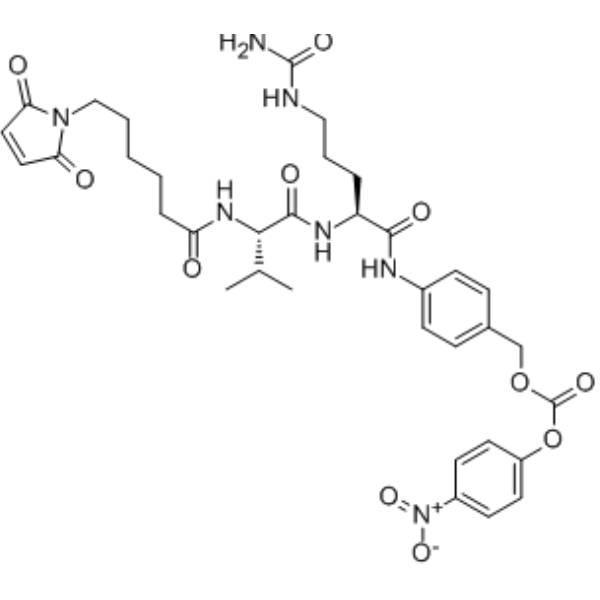
Maleimidocaproyl-L-valine-L-citrulline-p-aminobenzyl alcohol p-nitrophenyl carbonate
|
ADC Linker
|
Others
Inflammation/Immunology
Cancer
|
|
Mc-Val-Cit-PABC-PNP is a cathepsin cleavable linker for antibody-drug conjugates (ADCs) which couples the antibody element to the effecting compound. Mc-Val-Cit-PABC-PNP can be used in the synthesis of ADCs .
|
-
-
- HY-15928
-
|
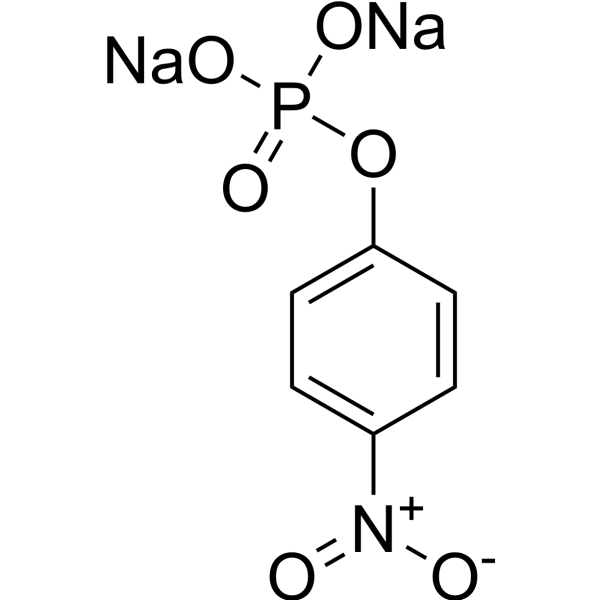
p-nitrophenyl phosphate disodium
|
Fluorescent Dye
|
Others
|
|
4-Nitrophenyl phosphate (p-Nitrophenyl phosphate) disodium is a non-proteinaceous chromogenic substrate for alkaline and acid phosphatases used in ELISA and conventional spectrophotometric assays.
|
-
-
- HY-116022A
-
|
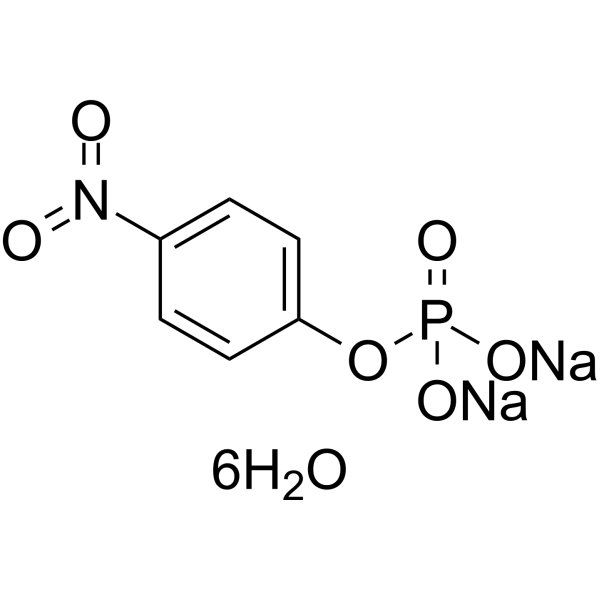
p-nitrophenyl phosphate disodium hexahydrate
|
Biochemical Assay Reagents
|
Others
|
|
4-Nitrophenyl phosphate (p-nitrophenyl phosphate) disodium hexahydrate is widely used as a small molecule phosphotyrosine-like substrate in activity assays for protein tyrosine phosphatases. 4-Nitrophenyl phosphate disodium hexahydrate is a colorless substrate that upon hydrolysis is converted to a yellow 4-nitrophenolate ion that can be monitored by absorbance at 405 nm .
|
-
-
- HY-116022
-
|
p-nitrophenyl phosphate
|
Biochemical Assay Reagents
|
Others
|
|
4-Nitrophenyl phosphate (p-Nitrophenyl phosphate) is widely used as a small molecule phosphotyrosine-like substrate in activity assays for protein tyrosine phosphatases.4-Nitrophenyl phosphate is a colorless substrate that upon hydrolysis is converted to a yellow 4-nitrophenolate ion that can be monitored by absorbance at 405 nm .
|
-

-
- HY-137822
-
|
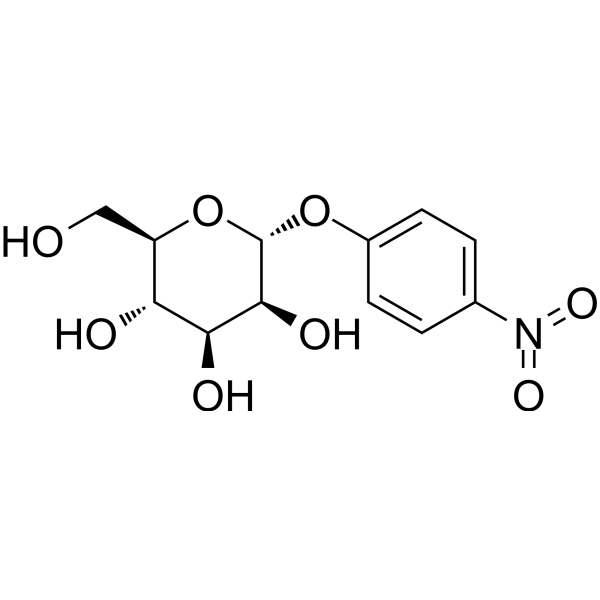
4-nitrophenyl a-D-mannopyranoside
|
Glycosidase
|
Others
|
|
p-Nitrophenyl α-D-mannopyranoside (4-Nitrophenyl α-D-mannopyranoside) is a chromogenic glycosidic ligand. p-Nitrophenyl α-D-mannopyranoside features a sugar moiety (α-D-mannopyranose) with the mannose-characteristic axial hydroxyl group at the C2 position and a ligand portion (p-nitrophenol) that provides ultraviolet-visible light absorption properties. p-Nitrophenyl α-D-mannopyranoside can be used to determine glycosidase activity and characterize the sugar recognition properties of lectins (such as Concanavalin A (HY-P2149)) .
|
-
-
- HY-W013168
-
|
4-nitrophenyl hexadecanoate; p-nitrophenyl Palmitate; pNpp
|
Lipase
|
Others
|
|
4-Nitrophenyl palmitate (4-Nitrophenyl hexadecanoate) is a chromogenic substrate for lipases and esterases. Upon enzymatic hydrolysis, 4-Nitrophenyl palmitate releases p-nitrophenol, which can be quantified by colorimetric detection at 410 nm as a measure of enzymatic activity. 4-Nitrophenyl palmitate is used to characterize the activity of various bacterial and mammalian enzymes, including those from Burkholderia and porcine pancreatic lipase .
|
-

-
- HY-137807
-
|
|
Endogenous Metabolite
|
Cancer
|
|
Thymidine 5′-monophosphate p-nitrophenyl ester sodium (Compound 2a) is the derivative of thymidine 5'-phosphate (TMP). Thymidine 5′-monophosphate p-nitrophenyl ester sodium is potential as an antitumor prodrug .
|
-

-
- HY-137827
-
|
p-nitrophenyl β-D-Cellobioside
|
Glycosidase
|
Others
|
|
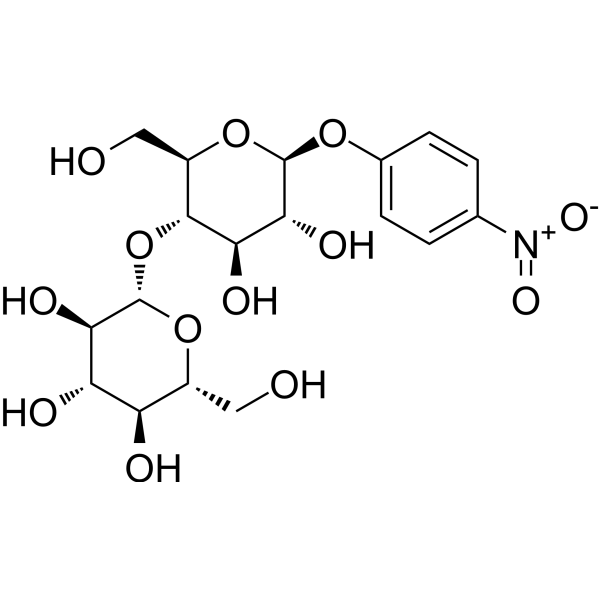
4-Nitrophenyl β-D-Cellobioside (p-Nitrophenyl β-D-cellobioside) is a cellotriose analog. 4-Nitrophenyl β-D-Cellobioside is hydrolyzed by β-glucosidases such as TxGH116 and ThCel7B. 4-Nitrophenyl β-D-Cellobioside can also be hydrolyzed by exoglucanases and endoglucanases to produce p-nitrophenol (PNP). 4-Nitrophenyl β-D-Cellobioside can be used to detect cellulase activity .
|
-
-
- HY-W009454
-
|
4-Nitopheyl Sulfate potassium
|
Fluorescent Dye
|
Others
|
|
Potassium p-nitrophenyl sulfate (4-Nitophenyl Sulfate potassium) serves as a chromogenic substrate for arylsulfatases. Potassium p-nitrophenyl sulfate releases nitrophenol under the cleavage action of arylsulfatases, and the activity of arylsulfatases can be quantitatively determined via colorimetric detection at 400 nm. Potassium p-nitrophenyl sulfate is commonly used in enzyme inhibition assays and metabolite analog-related studies .
|
-

-
- HY-134420
-
|
PNP α-L-Fuc
|
Glycosidase
|
Others
|
|
p-Nitrophenyl α-L-fucoside (PNP α-L-Fuc) is a specific substrate of Pecten maximus α-L-fucosidase, with a Km value of 650 µM. p-Nitrophenyl α-L-fucoside serves as a substrate for ClAgl29A and ClAgl29B. Enzymatic hydrolysis of p-Nitrophenyl α-L-fucoside releases p-nitrophenol and α-L-fucose, where the latter undergoes mutarotation over time to form β-L-fucose. p-Nitrophenyl α-L-fucoside is not the preferred substrate for ClAgl29A and ClAgl29B .
|
-

-
- HY-137878
-
|
PNP-α-NeuNAc
|
Biochemical Assay Reagents
|
Others
|
|
2-O-(p-Nitrophenyl)-α-D-N-acetylneuraminic acid (PNP-α-NeuNAc) is a classic chromogenic substrate for neuraminidase. 2-O-(p-Nitrophenyl)-α-D-N-acetylneuraminic acid releases p-nitrophenol upon enzymatic hydrolysis, allowing quantification of enzyme activity and inhibitory effects via spectrophotometry. 2-O-(p-Nitrophenyl)-α-D-N-acetylneuraminic acid (PNP-α-NeuNAc) acts as a sialyl donor in the process of enzyme-catalyzed trans-sialylation .
|
-

-
- HY-100045
-
|
4-nitrophenylphosphorylcholine; 4-nitrophenylphosphorylcholine; O-(4-nitrophenylphosphoryl)choline
|
Endogenous Metabolite
|
Metabolic Disease
|
|
p-Nitrophenyl phosphorylcholine (4-Nitrophenylphosphorylcholine) is a chromogenic substrate that is used to measure phospholipase C (PLC) activity. Hydrolysis of p-nitrophenylphosphorylcholine by PLC results in the liberation of p-nitrophenol, which can be measured at 405 nm at pH 7.2-7.5.
|
-

-
- HY-P4545
-
|
|
Angiotensin Receptor
|
Others
|
|
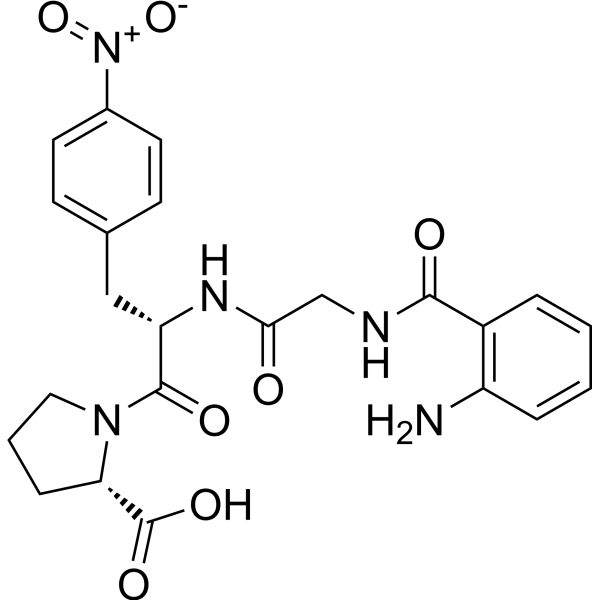
Abz-Gly-p-nitro-Phe-Pro-OH is the fluorescent substrate angiotensin I converting enzyme (ACE-I) with 355 nm excitation and 405 nm emission wavelengths .
|
-
-
- HY-137812
-
|
|
Biochemical Assay Reagents
Glycosidase
|
Others
|
|
p-Nitrophenyl β-D-lactoside is a substrate of β-lactosidase and can be used to determine β-lactosinase activity. p-Nitrophenyl β-D-lactoside is a substrate of cellobiohydrolase. p-Nitrophenyl β-D-lactoside is a class of biochemical reagents used in glycobiology research .
|
-

-
- HY-W011410
-
|
p-nitrophenyl β-D-Mannopyranoside
|
Glycosidase
|
Others
|
|
4-Nitrophenyl β-D-mannopyranoside is a useful substrate for β-D-mannopyranosidase. 4-Nitrophenyl β-D-mannopyranoside is also a substrate for GH1-glucosidase (EaBgl1A) and α-L-rhamnosidase .
|
-

-
- HY-P4561
-
|
|
Cathepsin
|
Others
|
|
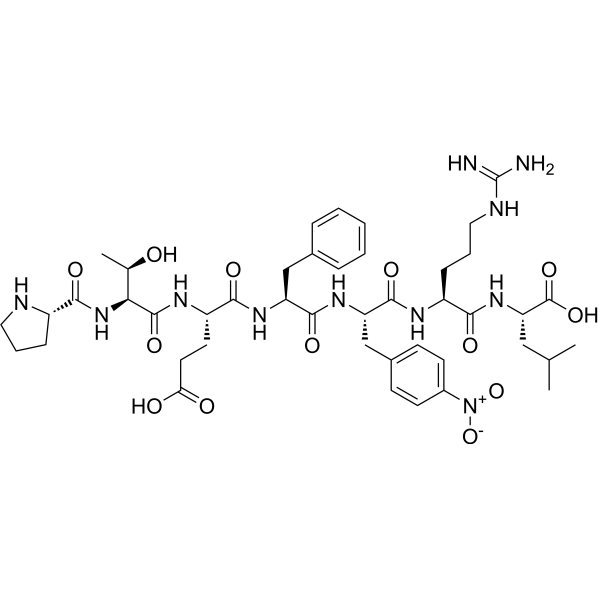
H-Pro-Thr-Glu-Phe-p-nitro-Phe-Arg-Leu-OH is a water-soluble polypeptide that can serve as a substrate for cathepsin D, pepsin and pepsinogen. H-Pro-Thr-Glu-Phe-p-nitro-Phe-Arg-Leu-OH has potential applications in biochemical analysis .
|
-
-
- HY-P4725
-
|
|
Fluorescent Dye
|
Others
|
|
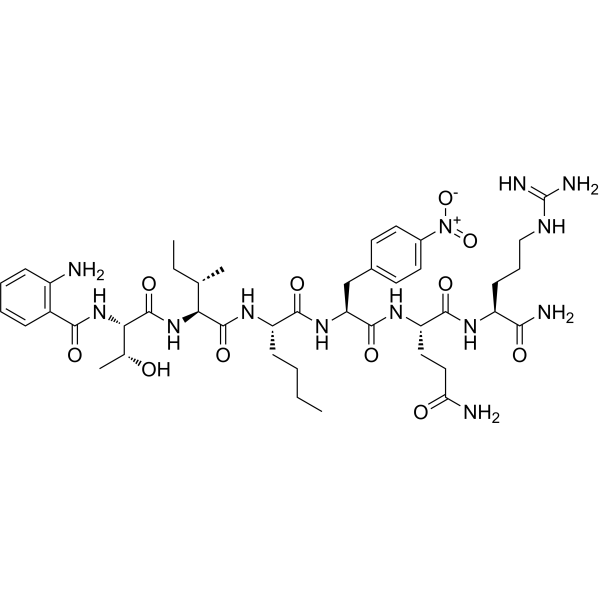
Abz-Thr-Ile-Nle-p-nitro-Phe-Gln-Arg-NH2 is a fluorogenic substrate, that can be used for the fluorescence screening assay .
|
-
-
- HY-P10563
-
|
BHV-1100
|
CD38
|
Cancer
|
|
Noraramtide (BHV-1100) is an antibody recruitment molecule. Noraramtide can specifically bind to CD38 molecules to recruit natural killer (NK) cells. Noraramtide enhances the ability of NK cells to kill tumor cells through antibody-dependent cellular cytotoxicity (ADCC). This mechanism allows NK cells to more effectively recognize and eliminate tumor cells while avoiding mutual killing between NK cells. Noraramtide can be used for the study of autologous cancer immunity .
|
-

-
- HY-138959
-
|
p-nitrophenyl caprylate
|
Lipase
|
Others
|
|
4-Nitrophenyl octanoate (p-Nitrophenyl caprylate) is an aromatic ester compound which can be used as a substrate for pancreatic lipase.
4-Nitrophenyl octanoate contains an ester bond that can be hydrolyzed under the action of lipase, releasing p-nitrophenol as a yellow product.
4-Nitrophenyl octanoate can be used to assay the activities of lipases and esterases .
|
-

-
- HY-W011655
-
|
p-nitrophenyl alpha-D-xylopyranoside
|
Biochemical Assay Reagents
|
Others
|
|
p-Nitrophenyl α-D-xylopyranoside (p-Nitrophenyl alpha-D-xylopyranoside) is a chromogenic substrate for α-xylosidase .
|
-

-
- HY-158199
-
|
|
ADC Linker
|
Cancer
|
|
BCN-HS-PEG2-bis(PNP) (Compound 62) is a p-nitrophenyl-containing ADC linker that can be used to further couple ADC cytotoxins with peptide linkers. BCN-HS-PEG2-bis(PNP) can conjugate with vc-PABC-MMAE (HY-15162) to form Drug-Linker Conjugates for ADC .
|
-

-
- HY-P3350
-
|
|
Bacterial
|
Infection
|
|
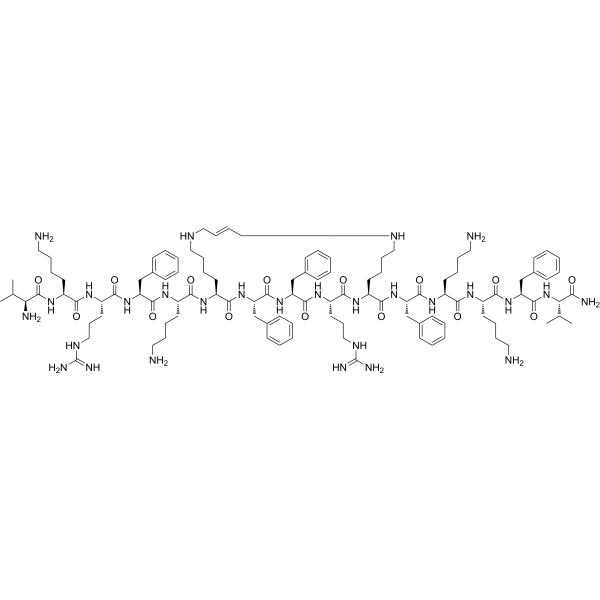
LS-BF1 is a stable and low toxic cationic antimicrobial peptide. LS-BF1 displays broad spectrum of antibacterial activity, including the challenging ESKAPE pathogens, by cell membrane disruptive mechanism. LS-BF1 shows good in vivo efficacy for elimination of bacteria in a mouse infection model[1].
|
-
-
- HY-134429
-
|
|
Biochemical Assay Reagents
|
Others
|
|
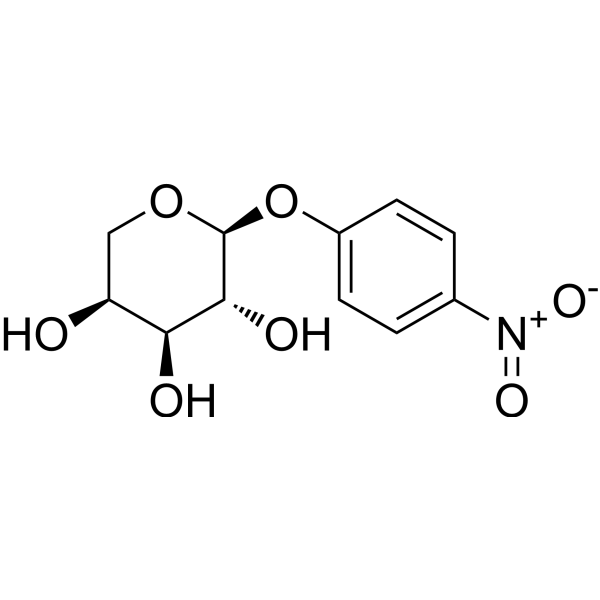
p-Nitrophenyl α-L-arabinopyranoside is a biochemical reagent. p-Nitrophenyl α-L-arabinopyranoside can be hydrolyzed by recombinant BgaA (rBgaA, isolated from E. coli BL21 (DE3) strain harboring pEBGA29). p-Nitrophenyl α-L-arabinopyranoside has potential application in enzyme activity detection .
|
-
-
- HY-139069
-
-

-
- HY-134430
-
|
Tetradecanoic acid, 4-nitrophenyl ester
|
Biochemical Assay Reagents
|
Others
|
|
p-Nitrophenyl myristate (Tetradecanoic acid, 4-nitrophenyl ester) is a biochemical assay reagent.
|
-

-
- HY-139143
-
|
|
FAAH
|
Others
|
|
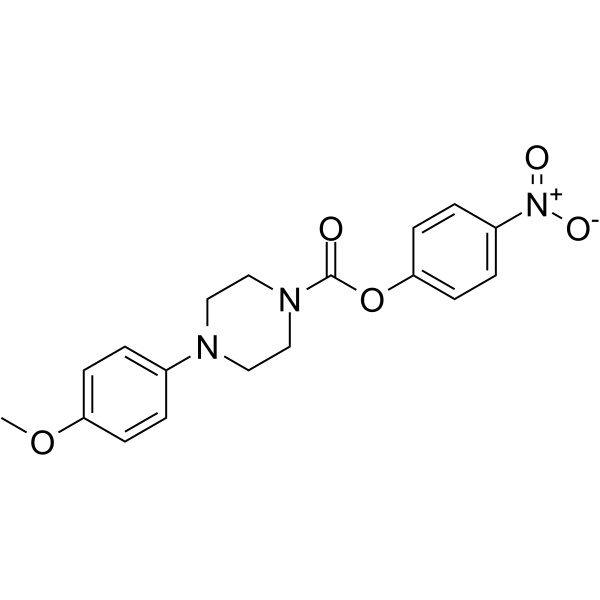
WWL154, an analog of JZL184 that maintains the SH-reactive p-nitrophenyl carbamate group, is a FAAH-4 inhibitor .
|
-
-
- HY-W776875
-
-

-
- HY-167253
-
|
|
Biochemical Assay Reagents
|
Others
|
|
p-Nitrophenyl 4,6-benzylidene-β-D-glucopyranoside is a class of biochemical reagents used in glycobiology research. Glycobiology studies the structure, synthesis, biology, and evolution of sugars. It involves carbohydrate chemistry, enzymology of glycan formation and degradation, protein-glycan recognition, and the role of glycans in biological systems. This field is closely related to basic research, biomedicine, and biotechnology .
|
-

-
- HY-W396250
-
|
|
Biochemical Assay Reagents
|
Others
|
|
p-Nitrophenyl 2,3,4,6-tetra-O-acetyl-α-D-mannopyranoside is a class of biochemical reagents used in glycobiology research. Glycobiology studies the structure, synthesis, biology, and evolution of sugars. It involves carbohydrate chemistry, enzymology of glycan formation and degradation, protein-glycan recognition, and the role of glycans in biological systems. This field is closely related to basic research, biomedicine, and biotechnology .
|
-

-
- HY-W698765
-
|
|
Biochemical Assay Reagents
|
Others
|
|
Methyl p-nitrophenyl 2,3,4-tri-O-acetyl-β-D-glucouronate is a class of biochemical reagents used in glycobiology research. Glycobiology studies the structure, synthesis, biology, and evolution of sugars. It involves carbohydrate chemistry, enzymology of glycan formation and degradation, protein-glycan recognition, and the role of glycans in biological systems. This field is closely related to basic research, biomedicine, and biotechnology .
|
-

-
- HY-105168
-
|
|
Endothelin Receptor
|
Cardiovascular Disease
|
|
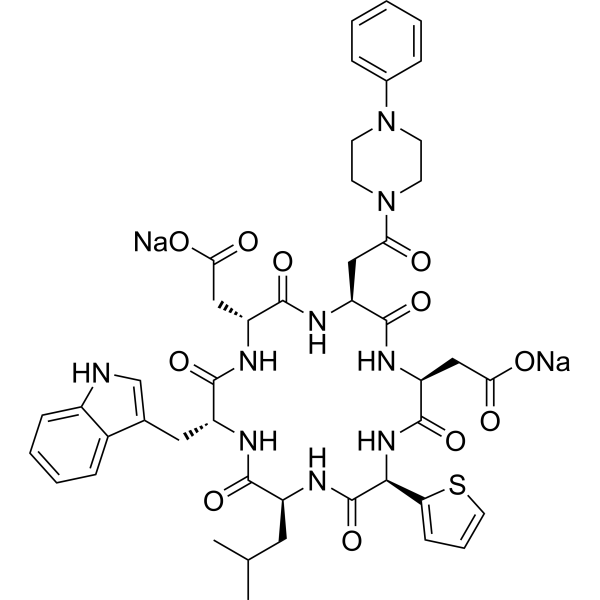
TAK 044 is an antagonist of Endothelin Receptor. TAK 044 strongly inhibits ET-induced deterioration in various animal models. TAK 044 can be used in study ET-related diseases such as acute myocardial infarction,acute renal failure, acute hepatic malfunction, and subarachnoid hemorrhage .
|
-
-
- HY-N14194
-
|
|
Lipase
|
Others
|
|
Esterastin is a lipase inhibitor with an IC50 value of 2 ng/mL when p-nitrophenyl acetate is used as a substrate .
|
-

-
- HY-W776848
-
-

-
- HY-116022B
-
|
p-nitrophenyl phosphate ditromethamine
|
Biochemical Assay Reagents
|
Others
|
|
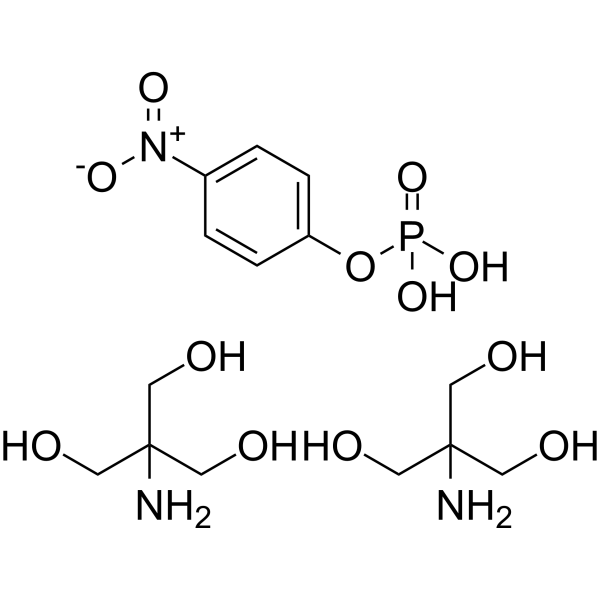
4-Nitrophenyl phosphate ditromethamine is an enzyme substrate commonly used in biochemical assays to measure the activity of various phosphatases, including alkaline phosphatase. 4-Nitrophenylphosphate has unique chemical properties that allow it to be hydrolyzed by phosphatases, releasing a yellow product that can be detected spectrophotometrically.
|
-
-
- HY-116022C
-
-

-
- HY-W416325
-
-

-
- HY-W302789
-
-

-
- HY-W416326
-
-

-
- HY-W739832
-
|
|
Biochemical Assay Reagents
|
Others
|
|
p-Nitrophenyl β-D-cellobioside heptacetate is a class of biochemical reagents used in glycobiology research. Glycobiology studies the structure, synthesis, biology, and evolution of sugars. It involves carbohydrate chemistry, enzymology of glycan formation and degradation, protein-glycan recognition, and the role of glycans in biological systems. This field is closely related to basic research, biomedicine, and biotechnology .
|
-

-
- HY-W416323
-
-

-
- HY-P4556
-
|
|
Biochemical Assay Reagents
|
Others
|
|
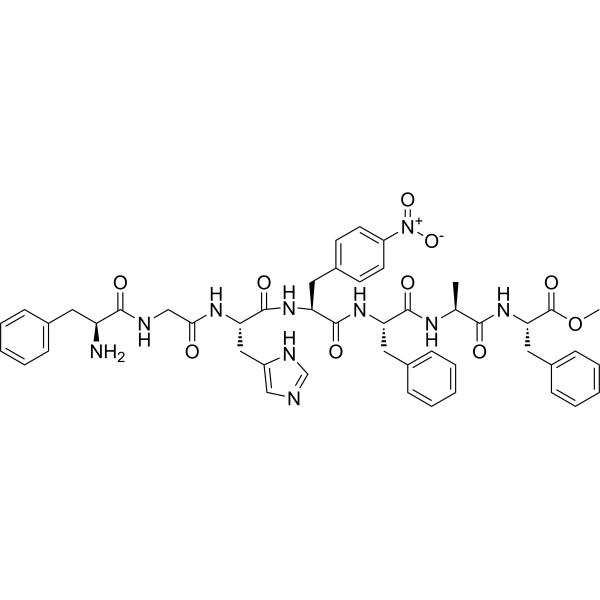
H-Phe-Gly-His-p-nitro-Phe-Phe-Ala-Phe-OMe is a polypeptide that can be hydrolyzed by Rennin (HY-P2810). H-Phe-Gly-His-p-nitro-Phe-Phe-Ala-Phe-OMe is commonly used as a biochemical reaction reagent .
|
-
-
- HY-W699023
-
|
|
Biochemical Assay Reagents
|
Others
|
|
p-Nitrophenyl 2-acetamido-2-deoxy-3-O-(2,3,4,6-tetra-O-acetyl-β-D-galactopyranosyl)-α-D-galactopyranoside is a class of biochemical reagents used in glycobiology research. Glycobiology studies the structure, synthesis, biology, and evolution of sugars. It involves carbohydrate chemistry, enzymology of glycan formation and degradation, protein-glycan recognition, and the role of glycans in biological systems. This field is closely related to basic research, biomedicine, and biotechnology .
|
-

-
- HY-W739389
-
-

-
- HY-W357155
-
|
Galactosyl-N-acetylglucosaminyl-β-p-nitrophenyl
|
Biochemical Assay Reagents
|
Others
|
|
Gal1-β-3GlcNAc-β-PNP (Galactosyl-N-acetylglucosaminyl-β-p-nitrophenyl) is a class of biochemical reagents used in glycobiology research. Glycobiology studies the structure, synthesis, biology, and evolution of sugars. It involves carbohydrate chemistry, enzymology of glycan formation and degradation, protein-glycan recognition, and the role of glycans in biological systems. This field is closely related to basic research, biomedicine, and biotechnology .
|
-

-
- HY-W699276
-
-

-
- HY-P2863A
-
|
|
Endogenous Metabolite
|
Metabolic Disease
|
|
Deoxyribonuclease II, Bovine (EC 3.1.22.1) hydrolyzes deoxyribonucleotide linkages in native and denatured DNA yielding products with 3'-phosphates. In vitro, its optimum pH range is 4.5-5.0. Deoxyribonuclease II, Bovine (EC 3.1.22.1) also acts upon p-nitrophenyl-phosphodiesters at pH 5.6-5.9.
|
-

-
- HY-E71168
-
|
|
Biochemical Assay Reagents
|
Others
|
|
1,6-α-D-Mannosidase (EC 3.2.1.163) is specific for (1→6)-linked mannobiose and has no activity towards any other linkages, or towards p-nitrophenyl-α-D-mannopyranoside or baker's yeast mannan. It is strongly inhibited by Mn2+ but does not require Ca2+ or any other metal cofactor for activity.
|
-

-
- HY-P2999B
-
|
|
Endogenous Metabolite
|
Metabolic Disease
|
|
β-N-Acetylglucosaminidase, Canavalia ensiformis (EC 3.2.1.52), can release terminally β-linked N-acetylglucosamine and N-acetylgalactosamine from a variety of substrates. The activity of β-N-Acetylglucosaminidase can be determined using the chromogenic substrate p-nitrophenyl-N-acetyl-β-D-glucosinolate. β-N-Acetylglucosaminidase degrades the terminal non-reducing N-acetyl-D-aminohexose residue.
|
-

-
- HY-P2999C
-
|
|
Endogenous Metabolite
|
Metabolic Disease
|
|
β-N-Acetylglucosaminidase, Human (EC 3.2.1.52), can release terminally β-linked N-acetylglucosamine and N-acetylgalactosamine from a variety of substrates. The activity of β-N-Acetylglucosaminidase can be determined using the chromogenic substrate p-nitrophenyl-N-acetyl-β-D-glucosinolate. β-N-Acetylglucosaminidase degrades the terminal non-reducing N-acetyl-D-aminohexose residue.
|
-

-
- HY-P2999A
-
|
|
Endogenous Metabolite
|
Metabolic Disease
|
|
β-N-Acetylglucosaminidase, Bovine (EC 3.2.1.52), can release terminally β-linked N-acetylglucosamine and N-acetylgalactosamine from a variety of substrates. The activity of β-N-Acetylglucosaminidase can be determined using the chromogenic substrate p-nitrophenyl-N-acetyl-β-D-glucosinolate. β-N-Acetylglucosaminidase degrades the terminal non-reducing N-acetyl-D-aminohexose residue.
|
-

- HY-P4948
-
|
|
Biochemical Assay Reagents
|
Others
|
|
Coumarin-phalloidin is a kind of phalloidin labeled with Coumarin (HY-N0709). Coumarin-phalloidin is a new type of actin probe that can be used for triple immunofluorescence microscopic observation of the cell skeleton .
|
-

| Cat. No. |
Product Name |
Type |
-
- HY-15928
-
|
p-nitrophenyl phosphate disodium
|
Fluorescent Dyes
|
|
4-Nitrophenyl phosphate (p-Nitrophenyl phosphate) disodium is a non-proteinaceous chromogenic substrate for alkaline and acid phosphatases used in ELISA and conventional spectrophotometric assays.
|
-
- HY-W013168
-
|
4-nitrophenyl hexadecanoate; p-nitrophenyl Palmitate; pNpp
|
Fluorescent Dyes
|
|
4-Nitrophenyl palmitate (4-Nitrophenyl hexadecanoate) is a chromogenic substrate for lipases and esterases. Upon enzymatic hydrolysis, 4-Nitrophenyl palmitate releases p-nitrophenol, which can be quantified by colorimetric detection at 410 nm as a measure of enzymatic activity. 4-Nitrophenyl palmitate is used to characterize the activity of various bacterial and mammalian enzymes, including those from Burkholderia and porcine pancreatic lipase .
|
-
- HY-100045
-
|
4-nitrophenylphosphorylcholine; 4-nitrophenylphosphorylcholine; O-(4-nitrophenylphosphoryl)choline
|
Fluorescent Dyes
|
|
p-Nitrophenyl phosphorylcholine (4-Nitrophenylphosphorylcholine) is a chromogenic substrate that is used to measure phospholipase C (PLC) activity. Hydrolysis of p-nitrophenylphosphorylcholine by PLC results in the liberation of p-nitrophenol, which can be measured at 405 nm at pH 7.2-7.5.
|
| Cat. No. |
Product Name |
Type |
-
- HY-116022A
-
|
p-nitrophenyl phosphate disodium hexahydrate
|
Biochemical Assay Reagents
|
|
4-Nitrophenyl phosphate (p-nitrophenyl phosphate) disodium hexahydrate is widely used as a small molecule phosphotyrosine-like substrate in activity assays for protein tyrosine phosphatases. 4-Nitrophenyl phosphate disodium hexahydrate is a colorless substrate that upon hydrolysis is converted to a yellow 4-nitrophenolate ion that can be monitored by absorbance at 405 nm .
|
-
- HY-137822
-
|
4-nitrophenyl a-D-mannopyranoside
|
Biochemical Assay Reagents
|
|
p-Nitrophenyl α-D-mannopyranoside (4-Nitrophenyl α-D-mannopyranoside) is a chromogenic glycosidic ligand. p-Nitrophenyl α-D-mannopyranoside features a sugar moiety (α-D-mannopyranose) with the mannose-characteristic axial hydroxyl group at the C2 position and a ligand portion (p-nitrophenol) that provides ultraviolet-visible light absorption properties. p-Nitrophenyl α-D-mannopyranoside can be used to determine glycosidase activity and characterize the sugar recognition properties of lectins (such as Concanavalin A (HY-P2149)) .
|
-
- HY-134420
-
|
PNP α-L-Fuc
|
Biochemical Assay Reagents
|
|
p-Nitrophenyl α-L-fucoside (PNP α-L-Fuc) is a specific substrate of Pecten maximus α-L-fucosidase, with a Km value of 650 µM. p-Nitrophenyl α-L-fucoside serves as a substrate for ClAgl29A and ClAgl29B. Enzymatic hydrolysis of p-Nitrophenyl α-L-fucoside releases p-nitrophenol and α-L-fucose, where the latter undergoes mutarotation over time to form β-L-fucose. p-Nitrophenyl α-L-fucoside is not the preferred substrate for ClAgl29A and ClAgl29B .
|
-
- HY-137878
-
|
PNP-α-NeuNAc
|
Biochemical Assay Reagents
|
|
2-O-(p-Nitrophenyl)-α-D-N-acetylneuraminic acid (PNP-α-NeuNAc) is a classic chromogenic substrate for neuraminidase. 2-O-(p-Nitrophenyl)-α-D-N-acetylneuraminic acid releases p-nitrophenol upon enzymatic hydrolysis, allowing quantification of enzyme activity and inhibitory effects via spectrophotometry. 2-O-(p-Nitrophenyl)-α-D-N-acetylneuraminic acid (PNP-α-NeuNAc) acts as a sialyl donor in the process of enzyme-catalyzed trans-sialylation .
|
-
- HY-137812
-
|
|
Biochemical Assay Reagents
|
|
p-Nitrophenyl β-D-lactoside is a substrate of β-lactosidase and can be used to determine β-lactosinase activity. p-Nitrophenyl β-D-lactoside is a substrate of cellobiohydrolase. p-Nitrophenyl β-D-lactoside is a class of biochemical reagents used in glycobiology research .
|
-
- HY-W011410
-
|
p-nitrophenyl β-D-Mannopyranoside
|
Biochemical Assay Reagents
|
|
4-Nitrophenyl β-D-mannopyranoside is a useful substrate for β-D-mannopyranosidase. 4-Nitrophenyl β-D-mannopyranoside is also a substrate for GH1-glucosidase (EaBgl1A) and α-L-rhamnosidase .
|
-
- HY-W011655
-
|
p-nitrophenyl alpha-D-xylopyranoside
|
Biochemical Assay Reagents
|
|
p-Nitrophenyl α-D-xylopyranoside (p-Nitrophenyl alpha-D-xylopyranoside) is a chromogenic substrate for α-xylosidase .
|
-
- HY-134429
-
|
|
Biochemical Assay Reagents
|
|
p-Nitrophenyl α-L-arabinopyranoside is a biochemical reagent. p-Nitrophenyl α-L-arabinopyranoside can be hydrolyzed by recombinant BgaA (rBgaA, isolated from E. coli BL21 (DE3) strain harboring pEBGA29). p-Nitrophenyl α-L-arabinopyranoside has potential application in enzyme activity detection .
|
-
- HY-139069
-
-
- HY-134430
-
|
Tetradecanoic acid, 4-nitrophenyl ester
|
Biochemical Assay Reagents
|
|
p-Nitrophenyl myristate (Tetradecanoic acid, 4-nitrophenyl ester) is a biochemical assay reagent.
|
-
- HY-W776875
-
-
- HY-167253
-
|
|
Biochemical Assay Reagents
|
|
p-Nitrophenyl 4,6-benzylidene-β-D-glucopyranoside is a class of biochemical reagents used in glycobiology research. Glycobiology studies the structure, synthesis, biology, and evolution of sugars. It involves carbohydrate chemistry, enzymology of glycan formation and degradation, protein-glycan recognition, and the role of glycans in biological systems. This field is closely related to basic research, biomedicine, and biotechnology .
|
-
- HY-W396250
-
|
|
Biochemical Assay Reagents
|
|
p-Nitrophenyl 2,3,4,6-tetra-O-acetyl-α-D-mannopyranoside is a class of biochemical reagents used in glycobiology research. Glycobiology studies the structure, synthesis, biology, and evolution of sugars. It involves carbohydrate chemistry, enzymology of glycan formation and degradation, protein-glycan recognition, and the role of glycans in biological systems. This field is closely related to basic research, biomedicine, and biotechnology .
|
-
- HY-W698765
-
|
|
Biochemical Assay Reagents
|
|
Methyl p-nitrophenyl 2,3,4-tri-O-acetyl-β-D-glucouronate is a class of biochemical reagents used in glycobiology research. Glycobiology studies the structure, synthesis, biology, and evolution of sugars. It involves carbohydrate chemistry, enzymology of glycan formation and degradation, protein-glycan recognition, and the role of glycans in biological systems. This field is closely related to basic research, biomedicine, and biotechnology .
|
-
- HY-W776848
-
-
- HY-116022B
-
|
p-nitrophenyl phosphate ditromethamine
|
Biochemical Assay Reagents
|
|
4-Nitrophenyl phosphate ditromethamine is an enzyme substrate commonly used in biochemical assays to measure the activity of various phosphatases, including alkaline phosphatase. 4-Nitrophenylphosphate has unique chemical properties that allow it to be hydrolyzed by phosphatases, releasing a yellow product that can be detected spectrophotometrically.
|
-
- HY-116022C
-
|
p-nitrophenyl phosphate cyclohexylammonium
|
Biochemical Assay Reagents
|
|
4-Nitrophenyl phosphate (cyclohexylammonium) is a biochemical assay reagent.
|
-
- HY-W416325
-
-
- HY-W302789
-
-
- HY-W416326
-
-
- HY-W739832
-
|
|
Biochemical Assay Reagents
|
|
p-Nitrophenyl β-D-cellobioside heptacetate is a class of biochemical reagents used in glycobiology research. Glycobiology studies the structure, synthesis, biology, and evolution of sugars. It involves carbohydrate chemistry, enzymology of glycan formation and degradation, protein-glycan recognition, and the role of glycans in biological systems. This field is closely related to basic research, biomedicine, and biotechnology .
|
-
- HY-W416323
-
-
- HY-W699023
-
|
|
Biochemical Assay Reagents
|
|
p-Nitrophenyl 2-acetamido-2-deoxy-3-O-(2,3,4,6-tetra-O-acetyl-β-D-galactopyranosyl)-α-D-galactopyranoside is a class of biochemical reagents used in glycobiology research. Glycobiology studies the structure, synthesis, biology, and evolution of sugars. It involves carbohydrate chemistry, enzymology of glycan formation and degradation, protein-glycan recognition, and the role of glycans in biological systems. This field is closely related to basic research, biomedicine, and biotechnology .
|
-
- HY-W739389
-
-
- HY-W357155
-
|
Galactosyl-N-acetylglucosaminyl-β-p-nitrophenyl
|
Biochemical Assay Reagents
|
|
Gal1-β-3GlcNAc-β-PNP (Galactosyl-N-acetylglucosaminyl-β-p-nitrophenyl) is a class of biochemical reagents used in glycobiology research. Glycobiology studies the structure, synthesis, biology, and evolution of sugars. It involves carbohydrate chemistry, enzymology of glycan formation and degradation, protein-glycan recognition, and the role of glycans in biological systems. This field is closely related to basic research, biomedicine, and biotechnology .
|
-
- HY-W699276
-
| Cat. No. |
Product Name |
Target |
Research Area |
-
- HY-P4545
-
|
|
Angiotensin Receptor
|
Others
|
|
Abz-Gly-p-nitro-Phe-Pro-OH is the fluorescent substrate angiotensin I converting enzyme (ACE-I) with 355 nm excitation and 405 nm emission wavelengths .
|
-
- HY-P4561
-
|
|
Cathepsin
|
Others
|
|
H-Pro-Thr-Glu-Phe-p-nitro-Phe-Arg-Leu-OH is a water-soluble polypeptide that can serve as a substrate for cathepsin D, pepsin and pepsinogen. H-Pro-Thr-Glu-Phe-p-nitro-Phe-Arg-Leu-OH has potential applications in biochemical analysis .
|
-
- HY-P4725
-
|
|
Fluorescent Dye
|
Others
|
|
Abz-Thr-Ile-Nle-p-nitro-Phe-Gln-Arg-NH2 is a fluorogenic substrate, that can be used for the fluorescence screening assay .
|
-
- HY-P10563
-
|
BHV-1100
|
CD38
|
Cancer
|
|
Noraramtide (BHV-1100) is an antibody recruitment molecule. Noraramtide can specifically bind to CD38 molecules to recruit natural killer (NK) cells. Noraramtide enhances the ability of NK cells to kill tumor cells through antibody-dependent cellular cytotoxicity (ADCC). This mechanism allows NK cells to more effectively recognize and eliminate tumor cells while avoiding mutual killing between NK cells. Noraramtide can be used for the study of autologous cancer immunity .
|
-
- HY-P3350
-
|
|
Bacterial
|
Infection
|
|
LS-BF1 is a stable and low toxic cationic antimicrobial peptide. LS-BF1 displays broad spectrum of antibacterial activity, including the challenging ESKAPE pathogens, by cell membrane disruptive mechanism. LS-BF1 shows good in vivo efficacy for elimination of bacteria in a mouse infection model[1].
|
-
- HY-105168
-
|
|
Endothelin Receptor
|
Cardiovascular Disease
|
|
TAK 044 is an antagonist of Endothelin Receptor. TAK 044 strongly inhibits ET-induced deterioration in various animal models. TAK 044 can be used in study ET-related diseases such as acute myocardial infarction,acute renal failure, acute hepatic malfunction, and subarachnoid hemorrhage .
|
-
- HY-P4147
-
|
|
Peptides
|
Others
|
|
Ac-IHIHIQI-NH2 is a fibril-forming heptapeptide with high catalytic activity to laccase mimics. Ac-IHIHIQI-NH2 exhibits selectivity for hydrophobic p-nitrophenyl (ONp) ester substrates in the process of self-assembly .
|
-
- HY-P4556
-
|
|
Biochemical Assay Reagents
|
Others
|
|
H-Phe-Gly-His-p-nitro-Phe-Phe-Ala-Phe-OMe is a polypeptide that can be hydrolyzed by Rennin (HY-P2810). H-Phe-Gly-His-p-nitro-Phe-Phe-Ala-Phe-OMe is commonly used as a biochemical reaction reagent .
|
-
- HY-P4948
-
|
|
Biochemical Assay Reagents
|
Others
|
|
Coumarin-phalloidin is a kind of phalloidin labeled with Coumarin (HY-N0709). Coumarin-phalloidin is a new type of actin probe that can be used for triple immunofluorescence microscopic observation of the cell skeleton .
|
| Cat. No. |
Product Name |
Category |
Target |
Chemical Structure |
| Cat. No. |
Product Name |
|
Classification |
-
- HY-158199
-
|
|
|
BCN
|
|
BCN-HS-PEG2-bis(PNP) (Compound 62) is a p-nitrophenyl-containing ADC linker that can be used to further couple ADC cytotoxins with peptide linkers. BCN-HS-PEG2-bis(PNP) can conjugate with vc-PABC-MMAE (HY-15162) to form Drug-Linker Conjugates for ADC .
|
-
- HY-W739389
-
|
|
|
Azide
|
|
Azocarmine G (Acid Red 101; Rosinduline) is a biochemical assay reagent.
|
Your information is safe with us. * Required Fields.
Inquiry Information
- Product Name:
- Cat. No.:
- Quantity:
- MCE Japan Authorized Agent:








