1. Search Result
Search Result
Results for "

β1 PKC

" in MedChemExpress (MCE) Product Catalog:

12

Inhibitors & Agonists

1

Peptides

4

Natural
Products

1

Recombinant Proteins

1

Antibodies

Targets Recommended:
Cat. No. Product Name Target Research Areas Chemical Structure
  • HY-18719
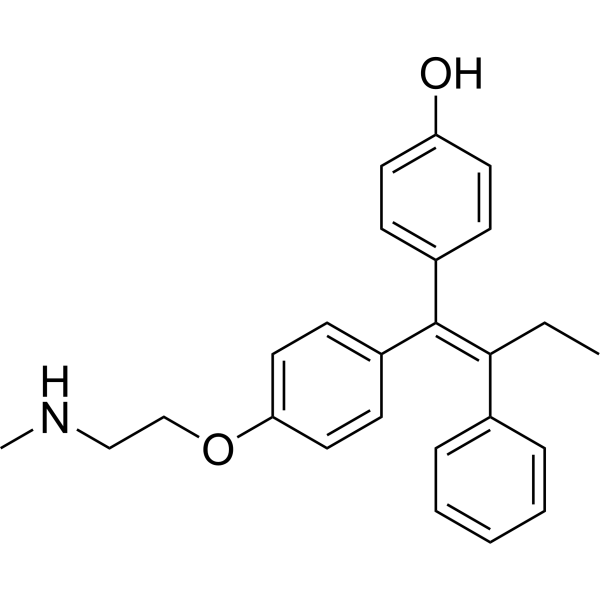
    Endoxifen (Z-isomer)
    3 Publications Verification

    Estrogen Receptor/ERR Drug Metabolite PKC Akt Apoptosis Neurological Disease Cancer
    Endoxifen Z-isomer hydrochloride, an orally active Tamoxifen (HY-13757A) metabolite, is a selective estrogen receptor modulator with 100-fold more potency than its parent agent, Tamoxifen. Endoxifen Z-isomer inhibits PKCβ1 kinase activity. Endoxifen Z-isomer attenuates PKCβ1-activated AKT Ser473 phosphorylation, diminishes AKT substrate phosphorylation, and induces Apoptosis. Endoxifen Z-isomer exhibits anticancer activity against hormone-resistant metastatic breast cancer [1] .
    Endoxifen (Z-isomer)
  • HY-N0281
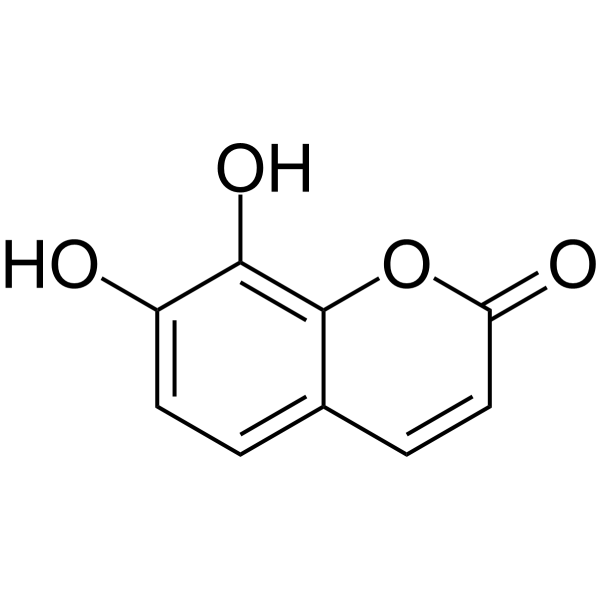
    Daphnetin
    5+ Cited Publications

    7,8-Dihydroxycoumarin

    EGFR PKA PKC Autophagy Apoptosis AMPK Akt mTOR Reactive Oxygen Species (ROS) Caspase Bcl-2 Family PARP Parasite Cardiovascular Disease Inflammation/Immunology Cancer
    Daphnetin (7,8-dihydroxycoumarin), one coumarin derivative can be found in plants of the Genus Daphne, is a potent, oral active protein kinase inhibitor, with IC50s of 7.67 μM, 9.33 μM and 25.01 μM for EGFR, PKA and PKC in vitro, respectively. Daphnetin triggers ROS-induced cell apoptosis and induces cytoprotective autophagy by modulating the AMPK/Akt/mTOR pathway. Daphnetin has anti-inflammation activitity and inhibits TNF-α, IL-1β, ROS, and MDA production. Daphnetin has schizontocidal activity against malaria parasites. Daphnetin can be used for rheumatoid arthritis , cancer and anti-malarian research [1] .
    Daphnetin
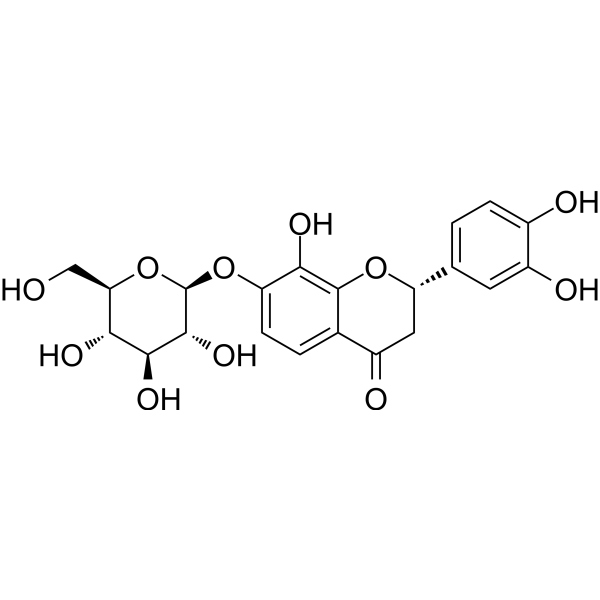
  • HY-N7675

    NF-κB TGF-beta/Smad Syk Cardiovascular Disease Neurological Disease Metabolic Disease
    Flavanomarein is a substance with cytoprotective, anti-inflammatory and antioxidant activities, with a Ka of 3.064e-5 M against human Syk. Flavanomarein enhances the phosphorylation level of AKT, regulates the expression of PKC-δ, P85α, PKC-β1, Sirt1, Bcl-2 and ICAD, and inhibits the nuclear translocation of NF-κB p65. Flavanomarein regulates EMT marker proteins, promotes the proliferation of HK-2 cells, and protects neuronal cells from 6-OHDA-induced neurotoxic damage. Flavanomarein can be used in studies related to Parkinson's disease and diabetic nephropathy. [1]
    Flavanomarein
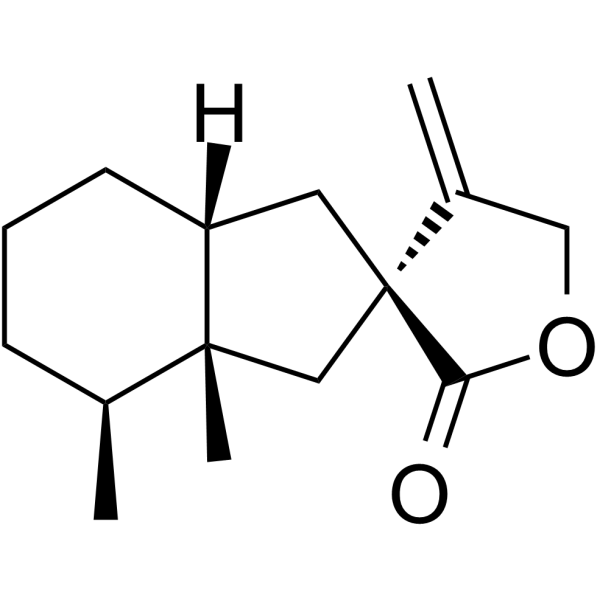
  • HY-N6017

    HDAC TNF Receptor Interleukin Related TGF-β Receptor IFNAR PI3K PKC Akt GSK-3 Caspase Apoptosis Cancer
    Bakkenolide A is an anticancer agent. Bakkenolide A reduces the viability of leukemia cells, inhibits cell colony formation and invasion, and downregulates the expression of HDAC3 in cells. Bakkenolide A downregulates the expression of pro-inflammatory cytokines including TNF-α, interleukins such as IL-1β, TGF-β1 and IFN-γ, as well as the expression of PI3K, PDK and PKC in leukemia cells. Bakkenolide A downregulates activated Akt, GSK and Bad, while upregulates Cyto-c, cleaved Caspase3 and cleaved Caspase7, induces apoptosis (apoptosis) in leukemia cells and thereby inhibits inflammatory responses in leukemia cells. Bakkenolide A significantly slows the growth of subcutaneous leukemia tumors in nude mice. Bakkenolide A is applicable to leukemia-related research [1].
    Bakkenolide A
  • HY-18719A
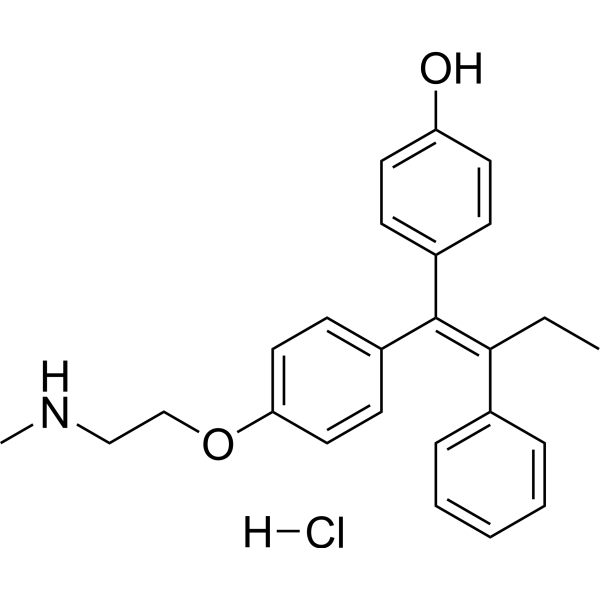
    Endoxifen Z-isomer hydrochloride
    3 Publications Verification

    Estrogen Receptor/ERR Drug Metabolite PKC Akt Apoptosis Neurological Disease Cancer
    Endoxifen Z-isomer hydrochloride, an orally active Tamoxifen (HY-13757A) metabolite, is a selective estrogen receptor modulator with 100-fold more potency than its parent agent, Tamoxifen. Endoxifen Z-isomer hydrochloride inhibits PKCβ1 kinase activity. Endoxifen Z-isomer hydrochloride attenuates PKCβ1-activated AKT Ser473 phosphorylation, diminishes AKT substrate phosphorylation, and induces Apoptosis. Endoxifen Z-isomer hydrochloride exhibits anticancer activity against hormone-resistant metastatic breast cancer [1] .
    Endoxifen Z-isomer hydrochloride
  • HY-13335
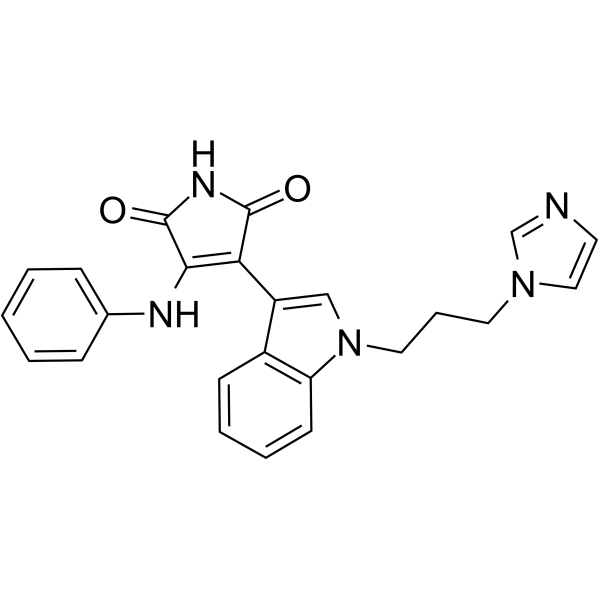
    PKCβ inhibitor 1
    1 Publications Verification

    PKC Apoptosis Cancer
    PKCβ inhibitor 1 is a potent, ATP-competitive, and selective PKCβ inhibitor with IC50s of 21 and 5 nM for human PKCβ1 and PKCβ2, respectively. PKCβ inhibitor 1 exhibits selectivity of more than 60-fold in favor of PKCβ2 relative to other PKC isozymes (PKCα, PKCγ, and PKCε) [1] .
    PKCβ inhibitor 1
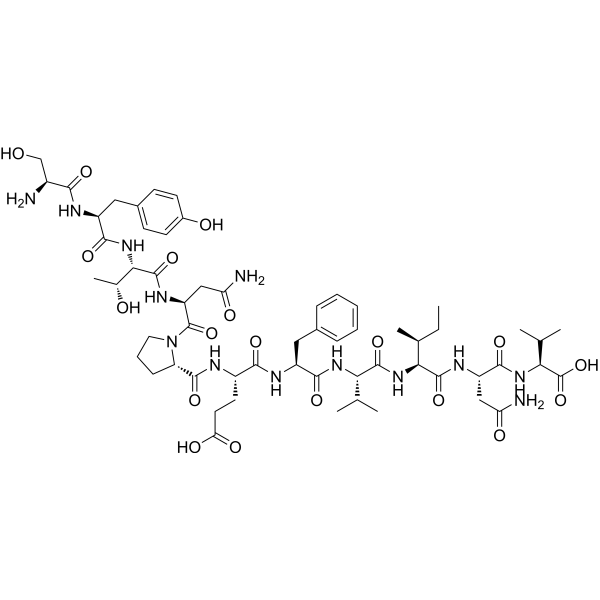
  • HY-P3842

    PKC Cancer
    Protein Kinase C (661-671) is a fragment peptide of β1 subspecies of protein kinase C (PKC). PKC plays a role in cellular growth control and tumor promotion [1] .
    Protein Kinase C (661-671)
  • HY-167114

    Aurora Kinase PKC Cancer
    (Rac)-Aurora A/PKC-IN-1 (Compund 2e) is an orally active Aurora A and PKC (α, β1, β2 and θ) kinase inhibitor. (Rac)-Aurora A/PKC-IN-1 has antiproliferative activity in breast cancer cells in vitro and antimetastatic activity in vivo [1].
    (Rac)-Aurora A/PKC-IN-1
  • HY-144307

    Aurora Kinase PKC Cancer
    Aurora A/PKC-IN-1 (Compound 2e) is a potent dual inhibitor of Aurora A (AurA) and PKC (α, β1, β2, and θ) kinases with IC50s of 6.9 nM and 16.9 nM for AurA and PKCα, respectively. Aurora A/PKC-IN-1 has antiproliferative activity in breast cancer cells and antimetastatic activity [1].
    Aurora A/PKC-IN-1
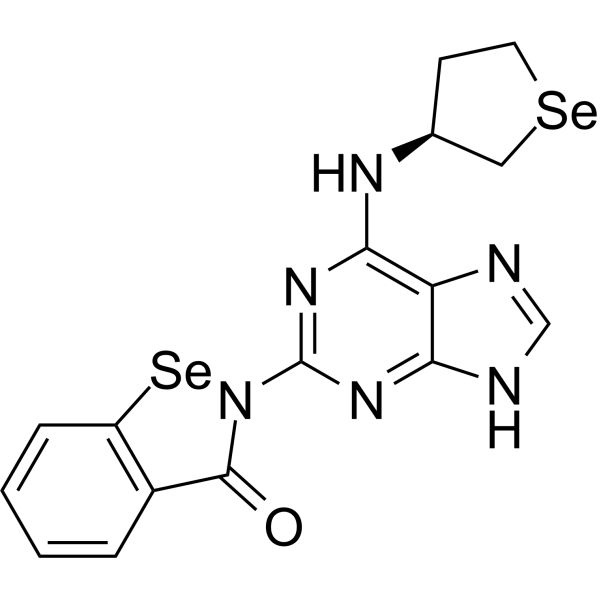
  • HY-169006

    Apoptosis PKC Cancer
    Evo312 is a dose-dependent inhibitor of protein kinase CβⅠ (PKCβⅠ) (IC50 is 117.34 nM). Evo312 induces PANC-GR (acquired gemcitabine-resistant PC cells) cell cycle arrest and apoptosis by inhibiting PKCβ1 protein expression. Evo312 has antiproliferative effects in pancreatic cancer cells PANC-1 and PANC-GR cells with IC50 of 0.08 μM and 0.07 μM, and in human normal pancreatic ductal epithelial cells HPDE6-c7 with IC50 of 2.95 μM. Evo312 exhibits antitumor activity in a PANC-GR cell transplantation mouse model [1].
    Evo312
  • HY-149151

    Endogenous Metabolite PKC Glycosidase TNF Receptor Reactive Oxygen Species (ROS) Infection Inflammation/Immunology
    Variegatic acid is a secondary metabolite derived from basidiomycete fungi. Variegatic acid is a PKCβ1 inhibitor with an IC₅₀ of 36.2 μM. Variegatic acid inhibits antigen- or calcium ionophore-induced β-hexosaminidase release (IC₅₀ values of 10.4 μM and 22.2 μM, respectively) and TNF-α secretion (IC₅₀ values of 16.8 μM and 20.1 μM, respectively). Variegatic acid suppresses the enzymatic activity of calcium-activated PKCβ1 and reduces Fe(III) to Fe(II) in a pH-dependent manner, enabling the generation of hydroxyl radicals (·OH) through reaction with H₂O₂, which facilitates the degradation of lignocellulose. Variegatic acid is useful for studying biological degradation and allergic responses.
    Variegatic acid
  • HY-172619

    NF-κB Inflammation/Immunology
    BS-153 is a novel synthetic oxazolidinone agent with anti-inflammatory activities by blocking the activation of the NF-κB/PKCθ pathway. BS-153 inhibits the expression levels of iNOS and COX-2 and pro-inflammatory cytokines (TNF-α, IL-1β, and IL-6) on LPS-stimulated RAW264.7 cells [1].
    BS-153

Inquiry Online

Your information is safe with us. * Required Fields.

Salutation


Country or Region *

Applicant Name *


Organization Name *

Department *


Email Address *


Product Name *

Cat. No.


Requested quantity *

Phone Number *


Remarks

Inquiry Online

Inquiry Information

Product Name:
Cat. No.:
Quantity:
MCE Japan Authorized Agent:

