



Endoxifen (Z-isomer hydrochloride)
Based on 3 publication(s) in Google Scholar
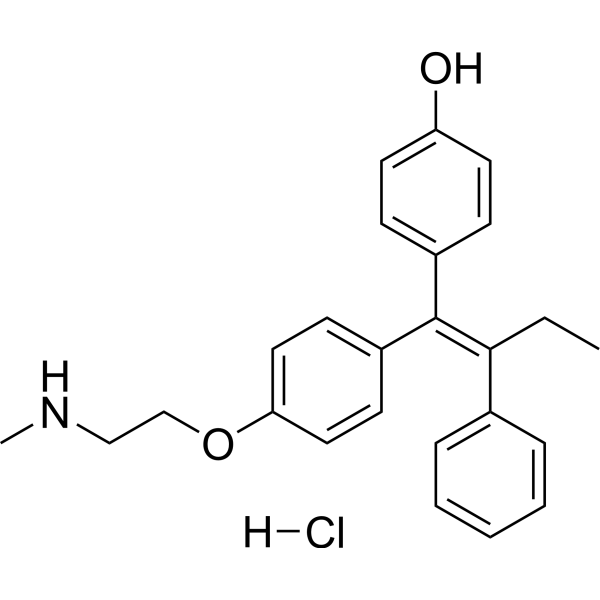
Endoxifen Z-isomer hydrochloride is an orally active selective PKCβ1 inhibitor with an IC50 of 360 nM against human PKCβ1. It also acts as an estrogen receptor modulator and antiestrogen. Endoxifen Z-isomer hydrochloride binds to and blocks ERα, ERβ and PKCβ1, inhibits estrogen and PI3K/AKT/mTORC1 signaling pathways, suppresses the expression of genes associated with cell cycle, cell proliferation and extracellular matrix remodeling, and induces apoptosis, reactive oxygen species (ROS) production and hypoxic features. Endoxifen Z-isomer hydrochloride inhibits tumor growth in breast tumor and glioblastoma models, reduces bone turnover and blood lipid levels, and does not require metabolism via CYP2D6. It can be used in research related to ER+ breast cancer, invasive breast cancer, glioblastoma multiforme, type I bipolar disorder, desmoid tumor, gynecological malignancies, melanoma and hormone receptor-positive solid tumors.
For research use only. We do not sell to patients.
- Purity: 98.98%
- CAS No.: 1032008-74-4
- Formula: C25H28ClNO2
- Molecular Weight:409.95
-
Storage:
4°C, sealed storage, away from moisture
* In solvent : -80°C, 6 months; -20°C, 1 month (sealed storage, away from moisture)

To place orders, for customer services and technical support, please contact: MedChemExpress USA
Tel: 609-228-6898 E-mail: [email protected] [email protected]


-
 Biological Activity
-
Chemical Information
-
Solvent & Solubility
- Purity & Documentation
- References
-
 Help & FAQs


Publications Citing Use of MedChemExpress (MCE) Endoxifen (Z-isomer hydrochloride)
More

Biological Activity
Description
|
Human PKCβI 360 nM (IC50) |
ERα |
ERβ |
PI3K |
Akt |
mTORC1 |
In Vitro
Endoxifen Z-isomer (concentrations matching CYP2D6 extensive metabolizers) hydrochloride is a potent antiestrogen that induces cell-cycle arrest and apoptosis pathways in MCF7 human ER+ breast cancer cells, and completely blocks estrogen-stimulated gene expression unlike Tamoxifen (HY-13757A) and its other metabolites[3].
Endoxifen Z-isomer (0.08-20 μM; 8 days) hydrochloride potently reduces cell proliferation and induces apoptosis in CRT435 GBM cells, with 20 μM endoxifen alone and in combination with 150 μM TMZ (Temozolomide) (HY-17364) demonstrating significantly greater activity than 250 μM TMZ alone[4].
Endoxifen Z-isomer (2.5-10 μM; 48 h) hydrochloride induces significant dose-dependent apoptosis in estrogen-deprived ERα+/HER2- MCF7AC1 breast cancer cells, with the strongest effect observed at 10 μM[7].
Endoxifen Z-isomer (0.01-5 μM; 72 h) hydrochloride induces significant apoptosis in estrogen-deprived ERα+/HER2- T47D-LTED breast cancer cells, while lower concentrations (0.01, 0.1 μM) do not[7].
Endoxifen Z-isomer (5 μM; 24 h) hydrochloride attenuates AKTSer473 phosphorylation and induces PARP cleavage in estrogen-deprived ERα+/HER2- T47D-LTED breast cancer cells[7].
Endoxifen Z-isomer (5 μM; 48 h incubation, after 48 h cumate pretreatment where applicable) hydrochloride has its apoptosis-inducing effect significantly diminished by overexpression of constitutively active AKT in estrogen-deprived ERα+/HER2- MCF7AC1caAKT breast cancer cells[7].
Endoxifen Z-isomer (10 nM-10000 nM; 7 days) hydrochloride potently inhibits the proliferation of AI-sensitive MCF7AC1 human breast cancer cells in both the presence and absence of Androstenedione[6].
Endoxifen Z-isomer (10 nM-10000 nM; 7 days) hydrochloride potently inhibits the proliferation of Letrozole (HY-14248)-resistant MCF7LR human breast cancer cells in both the presence and absence of Androstenedione[6].
Endoxifen Z-isomer (7 days) hydrochloride potently inhibits the proliferation of ER+ human breast cancer cells regardless of HER2 status[6].
Endoxifen Z-isomer (>5 μM; 7 days) hydrochloride inhibits the proliferation of ER−/HER2− MDA-MB-231, MDA-MB-468, and BT20 human breast cancer cells at concentrations greater than 5 μM[6].
Endoxifen Z-isomer (2.5-10 μM; 48 h) hydrochloride significantly reduces cell viability in estrogen-deprived ERα+/HER2- MCF7AC1 breast cancer cells, with the strongest effect observed at 10 μM[7].
Endoxifen Z-isomer (0.01-5 μM; 24 h) hydrochloride has a minimal impact on the total proteome of estrogen-deprived ERα+/HER2- MCF7AC1 breast cancer cells but induces robust, concentration-dependent changes to the phosphoproteome at 5 μM, with downregulated phosphosites enriched in the PI3K-AKT signaling pathway[7].
Endoxifen Z-isomer (0.01-5 μM; 24 h) hydrochloride attenuates AKTSer473 phosphorylation and AKT substrate phosphorylation in estrogen-deprived ERα+/HER2- MCF7AC1 breast cancer cells, while lower concentrations (0.01, 0.1 μM) increase AKTThr308 phosphorylation without altering AKTSer473 or AKT substrate phosphorylation[7].
Endoxifen Z-isomer (~0.0002-50 μM) hydrochloride potently inhibits purified PKCβ1 kinase activity in vitro with an IC50 of 360 nM[7].
Endoxifen Z-isomer (0.01-5 μM; 2 h pretreatment, followed by 20 min 200 nM PMA stimulation) hydrochloride reduces total PKCβ1 protein levels and attenuates PMA-stimulated AKTSer473 phosphorylation and AKT substrate phosphorylation in serum-starved ERα+/HER2- MCF7AC1 breast cancer cells, while lower concentrations (0.01, 0.1 μM) do not elicit these effects[7].
Endoxifen Z-isomer (100-1000 nM) hydrochloride inhibits estrogen-induced proliferation in wild-type and ESR1-mutant ER-positive breast cancer cells, with maximum inhibition of ER transcription and estrogen-induced stimulation occurring at concentrations between 100 and 1000 nM, and higher concentrations required for cells with ESR1 mutations or exposed to estradiol concentrations mimicking premenopausal or postmenopausal settings[9].
Endoxifen Z-isomer (0.1-5 μM; 1 h) hydrochloride inhibits p-Akt and total Akt protein expression in serum-starved MCF7LR human breast cancer cells after 1 hour of treatment[6].
MedChemExpress (MCE) has not independently confirmed the accuracy of these methods. They are for reference only.
-
Cell Line:CRT435 glioblastoma multiforme (GBM) cell line
-
Concentration:0.08-20 μM; 20 μM in combination with 150 μM TMZ
-
Incubation Time:8 days
-
Result:Reduced cell proliferation with a mean difference (Δ) of 269.7 compared to vehicle control, a more pronounced effect than 250 μM TMZ alone (Δ = 142.6).
Reduced cell proliferation with a Δ of 272.8 compared to vehicle control when combined with 150 μM TMZ; both 20 μM endoxifen alone and the combination showed significantly greater inhibition of proliferation than 250 μM TMZ alone (Δ = 127.1 and Δ = 130.2, respectively).
Induced cell death with a Δ of -283181.9 compared to vehicle control, a stronger effect than 250 μM TMZ alone (Δ = -192842.7).
Induced apoptosis with a Δ of -536528.8 compared to vehicle control when combined with 150 μM TMZ, a significantly greater effect than 250 μM TMZ alone (Δ = 343686.2) and comparable to the positive control (10% DMSO, Δ = -581979.3).
-
Cell Line:Aromatase-expressing MCF7AC1 (AI-sensitive) human breast cancer cells
-
Concentration:10 nM-10000 nM (presence of androstenedione); 10 nM-10000 nM (absence of androstenedione)
-
Incubation Time:7 days (presence of androstenedione); 7 days (absence of androstenedione)
-
Result:Potently inhibited MCF7AC1 cell growth, with activity superior to tamoxifen and similar to fulvestrant.
Reduced cell growth to near 0% of control at 10000 nM in the presence of androstenedione.
Reduced cell growth to near 0% of control at 10000 nM in the absence of androstenedione.
-
Cell Line:Letrozole-resistant MCF7LR human breast cancer cells
-
Concentration:10 nM-10000 nM (presence of androstenedione); 10 nM-10000 nM (absence of androstenedione)
-
Incubation Time:7 days (presence of androstenedione); 7 days (absence of androstenedione)
-
Result:Potently inhibited MCF7LR cell growth, with activity superior to tamoxifen and similar to fulvestrant.
Reduced cell growth to near 0% of control at 10000 nM in the presence of androstenedione.
Reduced cell growth to near 0% of control at 10000 nM in the absence of androstenedione.
-
Cell Line:ER−/HER2− human breast cancer cells (MDA-MB-231, MDA-MB-468, BT20)
-
Concentration:>5 μM (presence of estrogen); >5 μM (absence of estrogen)
-
Incubation Time:7 days (presence of estrogen); 7 days (absence of estrogen)
-
Result:Exhibited antiproliferative activity at concentrations >5 μM, with a pattern of activity similar to tamoxifen and 4-hydroxytamoxifen, both in the presence and absence of estrogen.
-
Cell Line:Serum-starved MCF7LR human breast cancer cells
-
Concentration:0.1 μM; 5 μM
-
Incubation Time:1 h
-
Result:Effectively inhibited both p-Akt and total Akt protein levels relative to ethanol control at 5 μM.
Did not induce p-Akt levels, unlike letrozole, tamoxifen, and 4-hydroxytamoxifen treatments.
-
Cell Line:Estrogen-deprived ERα+/HER2- MCF7AC1 breast cancer cells
-
Concentration:0.01-10 μM
-
Incubation Time:48 h
-
Result:Reduced cell viability to ~55% of control at 10 μM.
Reduced cell viability to ~75% of control at 7.5 μM.
Reduced cell viability to ~85% of control at 5 μM.
Did not significantly affect cell viability at concentrations below 2.5 μM.
-
Cell Line:Estrogen-deprived ERα+/HER2- MCF7AC1 breast cancer cells
-
Concentration:0.01-10 μM
-
Incubation Time:48 h
-
Result:Induced ~80% apoptosis at 10 μM.
Induced ~75% apoptosis at 7.5 μM.
Induced ~50% apoptosis at 5 μM.
Did not significantly induce apoptosis at concentrations below 2.5 μM.
-
Cell Line:Estrogen-deprived ERα+/HER2- MCF7AC1 breast cancer cells
-
Concentration:0.01 μM; 0.1 μM; 5 μM
-
Incubation Time:24 h
-
Result:Reduced pAKTSer473 levels to 50% of control at 5 μM, with no significant effect at 0.01 μM and 0.1 μM.
Increased pAKTThr308 levels to 221% of control at 0.01 μM and 0.1 μM, with no significant effect at 5 μM.
Reduced phosphorylation of AKT substrates only at 5 μM.
-
Cell Line:serum-starved ERα+/HER2- MCF7AC1 breast cancer cells
-
Concentration:0.01 μM; 0.1 μM; 5 μM
-
Incubation Time:2 h pretreatment, followed by 1 h 100 nM insulin stimulation
-
Result:Blocked insulin-stimulated pAKTSer473 and pAKTThr308 phosphorylation at 5 μM, with no effect at 0.01 μM and 0.1 μM.
Diminished insulin-stimulated phosphorylation of AKT substrates at 5 μM, with no effect at lower concentrations.
-
Cell Line:serum-starved ERα+/HER2- MCF7AC1 breast cancer cells
-
Concentration:0.01-5 μM
-
Incubation Time:2 h pretreatment, followed by 20 min 200 nM PMA stimulation
-
Result:Reduced total PKCβ1 levels to 29% of control at 5 μM, with no significant effect at 0.01 μM and 0.1 μM.
Attenuated PMA-stimulated pAKTSer473 phosphorylation and AKT substrate phosphorylation at 5 μM, with no effect at lower concentrations.
Had minimal to no effect on PMA-stimulated pPKCβ1Ser661 phosphorylation at all tested concentrations.
-
Cell Line:estrogen-deprived ERα+/HER2- T47D-LTED breast cancer cells
-
Concentration:0.01-5 μM
-
Incubation Time:72 h
-
Result:Induced significant apoptosis reaching ~50% at 5 μM.
Did not significantly induce apoptosis at 0.01 μM and 0.1 μM.
-
Cell Line:estrogen-deprived ERα+/HER2- T47D-LTED breast cancer cells
-
Concentration:0.01-5 μM
-
Incubation Time:24 h
-
Result:Reduced pAKTSer473 levels to 61% of control at 5 μM, with no significant effect at 0.01 μM and 0.1 μM.
Increased cleaved PARP levels to 1.58-fold of control at 5 μM, with no significant effect at lower concentrations.
-
Cell Line:estrogen-deprived ERα+/HER2- MCF7AC1caAKT breast cancer cells (with cumate-induced constitutively active AKT expression)
-
Concentration:5 μM
-
Incubation Time:48 h incubation, after 48 h cumate pretreatment where applicable
-
Result:Induced significant apoptosis reaching ~90% by 48 hours in the absence of cumate.
Induced significantly less apoptosis reaching ~45% by 48 hours with no significant difference vs control in the presence of cumate (active AKT overexpression).
In Vivo
Endoxifen Z-isomer (5 mg/kg; s.c.; daily; via extended-release pellet replaced every 90 days) hydrochloride combined with Ulipristal acetate (HY-16508) (16.7 mg/kg/day; s.c.; daily; via extended-release pellet replaced every 30 days) shows no improvement in breast cancer preventive efficacy compared to endoxifen monotherapy; this combination fails to significantly prolong tumor latency, decrease tumor burden, or suppress the expression of critical poor-prognosis genes[2].
Endoxifen Z-isomer (50 mg/kg; p.o.; daily; 4 weeks) hydrochloride demonstrates superior antitumor activity against Letrozole-resistant ER+ breast cancer xenografts, with potent suppression of proliferation marker Ki-67, ERα target genes, and Akt signaling[6].
Endoxifen Z-isomer (25-75 mg/kg; p.o.; daily; 28 days) hydrochloride, administered as monotherapy or in combination with TMZ, does not significantly reduce tumor volume in a subcutaneous CRT435 GBM PDX athymic nude mouse model, despite being well tolerated[4].
Endoxifen Z-isomer (25-75 mg/kg; p.o.; daily; 4 weeks) hydrochloride exhibits superior antitumor activity against AI-sensitive ER+ breast cancer xenografts, with the 75 mg/kg dose also outperforming letrozole[6].
Endoxifen Z-isomer (50 mg/kg; p.o.; 5 days a week) hydrochloride exhibits potent, prolonged antitumor activity against Letrozole-resistant ER+ breast cancer xenografts[6].
Endoxifen Z-isomer (10-50 mg/kg) hydrochloride at 10 mg/kg and 50 mg/kg exerts beneficial skeletal effects and modulates uterine gene expression in intact and ovariectomized Sprague-Dawley rats[7].
MedChemExpress (MCE) has not independently confirmed the accuracy of these methods. They are for reference only.
-
Animal Model:C3(1)-TAg (FVB/NJ × FVB/C3(1)-TAg) (female, 8 weeks old)[2]
-
Dosage:5 mg/kg
-
Administration:s.c.; daily; via extended-release pellet replaced every 90 days
-
Result:Produced a tumor penetrance of 92% (11/12 mice) with a significant increase in tumor latency to 111 days compared to untreated controls.
Reduced median tumor burden by 76% to 0.273 cm3 and reduced median tumor multiplicity by 63% to 3 tumors per animal compared to controls.
Reduced mammary intraepithelial neoplasia (MIN) multiplicity in tumor-bearing glands by 43% to 4 lesions per gland, and had the highest proportion of mice with at least one tumor-free gland (92%, 11/12 mice).
Induced a nonsignificant 17% decline in pHH3 labeling index (cell proliferation marker) in MIN lesions (7.2 vs. 8.7) and 23% decrease in benign tissue (7 vs. 9.1) compared to controls.
Significantly downregulated 39% (43/111) of a panel of target genes, including 24 genes unique to endoxifen therapy; these genes mapped to downregulated biological pathways including cell cycle, oocyte meiosis, E2F transcription factor network, cytokine-cytokine receptor interaction, EGF/EGFR signaling pathway, and integrated breast cancer pathway.
Also significantly downregulated genes associated with poor breast cancer prognosis (Col11a1, Il17b, Pdgfa, Tnfrsf11a).
Median plasma endoxifen concentration was 8.7 ng/mL (22.4 nM).
-
Animal Model:C3(1)-TAg (FVB/NJ × FVB/C3(1)-TAg) (female, 8 weeks old)[2]
-
Dosage:5 mg/kg/day endoxifen + 16.7 mg/kg/day ulipristal acetate
-
Administration:s.c.; daily; endoxifen via extended-release pellet replaced every 90 days, ulipristal acetate via extended-release pellet replaced every 30 days
-
Result:Produced a tumor penetrance of 88% (7/8 mice) with a nonsignificant increase in tumor latency to 108 days and nonsignificant 59% reduction in median tumor burden to 0.45 cm3 compared to controls.
Did not significantly affect tumor multiplicity (9 vs. 8 tumors per animal) or MIN multiplicity in tumor-bearing glands (6 vs. 7 lesions per gland).
Induced a reduction in pHH3 labeling index in tumor-free glands, which was significantly less effective than endoxifen monotherapy.
Modulated 32% (36/111) of a panel of target genes, with 75% overlap with endoxifen-modulated genes; unlike endoxifen monotherapy, it did not repress several genes associated with poor prognosis (Dbc1, Il17b, Il24, Pdgfa, Serpina5, Tnfrsf11a).
Median plasma endoxifen concentration was 12 ng/mL (31.3 nM), significantly higher than in mice treated with tamoxifen alone.
-
Animal Model:athymic nude mice (female, 6-12 weeks old, average weight ~26 g, implanted subcutaneously with CRT435 patient-derived xenograft tumor)[4]
-
Dosage:25 mg/kg; 50 mg/kg; 75 mg/kg
-
Administration:p.o.; daily; 28 days
-
Result:Did not produce significant tumor growth reduction compared to vehicle control group.
Did not produce significant tumor regression when combined with intratumoral TMZ compared to vehicle control group.
Showed no significant impact on mouse body weight over the 28-day study period.
-
Animal Model:BALB/c athymic nude mice (4-6-week-old, ovariectomized female, subcutaneous xenograft of MCF7AC1 aromatase-expressing ER+ breast cancer cells, supplemented with 1.4-mg 90-day-release estrogen pellets)[6]
-
Dosage:25 mg/kg; 75 mg/kg
-
Administration:p.o.; daily; 4 weeks
-
Result:Significantly reduced tumor volumes compared to control and tamoxifen at 4 weeks.
Yielded plasma concentrations of 11.8 ng/mL (25 mg/kg) and 391.3 ng/mL (75 mg/kg) at 2 weeks.
Significantly reduced murine body weight at 4 weeks (75 mg/kg dose).
Was superior to letrozole at 75 mg/kg dose.
-
Animal Model:Athymic nude mice (ovariectomized female, subcutaneous xenograft of letrozole-resistant MCF7LR ER+ breast cancer cells derived from MCF7AC1 tumors)[6]
-
Dosage:50 mg/kg
-
Administration:p.o.; daily; 4 weeks
-
Result:Significantly reduced tumor volume compared to tamoxifen.
Significantly suppressed nuclear Ki-67 expression compared to letrozole-treated MCF7LR tumors.
Downregulated ERα target genes AREG (-3.2 fold), PGR (-4.8 fold, p = 4.34×10⁻⁸), and TFF1 (-6.8 fold).
Reduced p-Akt protein levels in tumor tissue.
-
Animal Model:Athymic nude mice (6-7-week-old, ovariectomized female, subcutaneous xenograft of MCF7LR ER+ breast cancer cells, supplemented with 100 μg/day androstenedione 5 days a week)[6]
-
Dosage:50 mg/kg
-
Administration:p.o.; 5 days a week
-
Result:Potently inhibited tumor growth over 9 weeks (63 days), with antitumor activity superior to letrozole and exemestane (p = 0.03), and not significantly different from exemestane plus everolimus or fulvestrant.
Reduced mean tumor volume compared to letrozole, which failed to inhibit growth, and delayed tumor growth beyond the 23-week time point seen with exemestane plus everolimus.
Significantly reduced body weight, which was mitigated by oral nutritional supplement.


Chemical Information
-
CAS No. 1032008-74-4
-
Appearance Solid
-
Molecular Weight 409.95
-
Formula C25H28ClNO2
-
Color White to off-white
-
SMILES
OC1=CC=C(/C(C2=CC=C(OCCNC)C=C2)=C(C3=CC=CC=C3)\CC)C=C1.[H]Cl
-
Shipping
Room temperature in continental US; may vary elsewhere.
-
Storage
4°C, sealed storage, away from moisture
* In solvent : -80°C, 6 months; -20°C, 1 month (sealed storage, away from moisture)


Publications (3)
-
Journal Impact Factor
-
Most Recent
-
Sci Rep
Preliminary results using a kit to measure tamoxifen and metabolites concentrations in capillary blood samples from women with breast cancer. [Abstract]2022 Jan 31;12(1):1643. PMID: 35102224 -
J Chromatogr B Analyt Technol Biomed Life Sci
Simultaneous determination of 11 oral targeted antineoplastic drugs and 2 active metabolites by LC-MS/MS in human plasma and its application to therapeutic drug monitoring in cancer patients. [Abstract]2024 Apr 15:1237:124100. PMID: 38547701 -


Solvent & Solubility
In Vitro:
DMSO : 100 mg/mL (243.93 mM; Need ultrasonic; Hygroscopic DMSO has a significant impact on the solubility of product, please use newly opened DMSO)
Please refer to the solubility information to select the appropriate solvent. Once prepared, please aliquot and store the solution to prevent product inactivation from repeated freeze-thaw cycles.
Storage method and period of stock solution: -80°C, 6 months; -20°C, 1 month (sealed storage, away from moisture). When stored at -80°C, please use it within 6 months. When stored at -20°C, please use it within 1 month.
Please refer to the solubility information to select the appropriate solvent. Once prepared, please aliquot and store the solution to prevent product inactivation from repeated freeze-thaw cycles.
Storage method and period of stock solution: -80°C, 6 months; -20°C, 1 month (sealed storage, away from moisture). When stored at -80°C, please use it within 6 months. When stored at -20°C, please use it within 1 month.
Concentration (start) × Volume (start) = Concentration (final) × Volume (final)
In Vivo:
Select the appropriate dissolution method based on your experimental animal and administration route.
- For the following dissolution methods, please ensure to first prepare a clear stock solution using an In Vitro approach and then sequentially add co-solvents:
- To ensure reliable experimental results, the clarified stock solution can be appropriately stored based on storage conditions. As for the working solution for In Vivo experiments, it is recommended to prepare freshly and use it on the same day.
- The percentages shown for the solvents indicate their volumetric ratio in the final prepared solution. If precipitation or phase separation occurs during preparation, heat and/or sonication can be used to aid dissolution.
Add each solvent one by one: 10% DMSO 40% PEG300 5% Tween-80 45% Saline
Solubility: 2.5 mg/mL (6.10 mM); Suspended solution; Need ultrasonic
This protocol yields a suspended solution of 2.5 mg/mL. Suspended solution can be used for oral and intraperitoneal injection.
Taking 1 mL working solution as an example, add 100 μL DMSO stock solution (25.0 mg/mL) to 400 μL PEG300, and mix evenly; then add 50 μL Tween-80 and mix evenly; then add 450 μL Saline to adjust the volume to 1 mL.
Preparation of Saline: Dissolve 0.9 g sodium chloride in ddH₂O and dilute to 100 mL to obtain a clear Saline solution.
Add each solvent one by one: 10% DMSO 90% (20% SBE-β-CD in Saline)
Solubility: 2.5 mg/mL (6.10 mM); Suspended solution; Need ultrasonic
This protocol yields a suspended solution of 2.5 mg/mL. Suspended solution can be used for oral and intraperitoneal injection.
Taking 1 mL working solution as an example, add 100 μL DMSO stock solution (25.0 mg/mL) to 900 μL 20% SBE-β-CD in Saline, and mix evenly.
Preparation of 20% SBE-β-CD in Saline (4°C, storage for one week): 2 g SBE-β-CD powder is dissolved in 10 mL Saline, completely dissolve until clear.
In Vivo Dissolution Calculator
Please enter the basic information of animal experiments:
-
-
-
-
Recommended: Prepare an additional quantity of animals to account for potential losses during experiments.
Please enter your animal formula composition:
-
%DMSO +
Recommended: Keep the proportion of DMSO in working solution below 2% if your animal is weak.
-
%+
-
+%Tween-80 + +
-
%Saline +
The co-solvents required include: DMSO, . All of co-solvents are available by MedChemExpress (MCE). , Tween 80. All of co-solvents are available by MedChemExpress (MCE).
Working solution concentration: 0.22 mg/mL
Method for preparing stock solution: mg drug dissolved in μL DMSO. Stock solution concentration: mg/mL. * In solvent : -80°C, 6 months; -20°C, 1 month (sealed storage, away from moisture)
1. Take μL DMSO stock solution;
2. Add μL .
μL , mix evenly;
3. Then add μL Tween 80, mix evenly;
4. Then add μL
Please ensure that the stock solution in the first step is dissolved to a clear state, and add co-solvents in sequence. You can use ultrasonic heating (ultrasonic cleaner, recommended frequency 20-40 kHz), vortexing, etc. to assist dissolution.


Purity & Documentation
-
Data Sheet (313 KB)
-
SDS (563 KB)
- English - EN (563 KB)
- Français - FR (563 KB)
- Deutsch - DE (563 KB)
- Norwegian - NO (563 KB)
- Español - ES (563 KB)
- Swedish - SV (563 KB)
- Italian - IT (563 KB)
- Korean - KR (563 KB)
- Portuguese - PT (563 KB)
-
Handling Instructions (2659 KB)
References
[1]. Elkins P, et al. Characterization of the isomeric configuration and impurities of (Z)-endoxifen by 2D NMR, high resolution LC⬜MS, and quantitative HPLC analysis. Journal of pharmaceutical and biomedical analysis. 2014 Jan;88:174-9. [Content Brief]
[2]. Lee O, et al. Z-Endoxifen prevents aggressive mammary cancers in mice by inhibiting cell proliferation and creating a tumor suppressive microenvironment. Biomedicine & pharmacotherapy = Biomedecine & pharmacotherapie. 2023 Jun;162:114607. [Content Brief]
[3]. Jayaraman S, et al. Endoxifen, an Estrogen Receptor Targeted Therapy: From Bench to Bedside. Endocrinology. 2021 Dec 01;162(12):bqab191. [Content Brief]
[4]. Shneyderman A, et al. Evaluation of (Z)-endoxifen as a potential therapy for glioblastoma multiforme through computational and experimental analyses. Scientific reports. 2025 Oct 31;15(1):38225. [Content Brief]
[5]. Nardin JM, et al. The Influences of Adherence to Tamoxifen and CYP2D6 Pharmacogenetics on Plasma Concentrations of the Active Metabolite (Z)-Endoxifen in Breast Cancer. Clinical and translational science. 2020 Mar;13(2):284-292. [Content Brief]
[6]. Jayaraman S, et al. Antitumor activity of Z-endoxifen in aromatase inhibitor-sensitive and aromatase inhibitor-resistant estrogen receptor-positive breast cancer. Breast cancer research : BCR. 2020 May 19;22(1):51. [Content Brief]
[7]. Jayaraman S, et al. Endoxifen downregulates AKT phosphorylation through protein kinase C beta 1 inhibition in ERα+ breast cancer. NPJ breast cancer. 2023 Dec 19;9(1):101. [Content Brief]
[8]. Sanchez-Spitman AB, et al. Clinical pharmacokinetics and pharmacogenetics of tamoxifen and endoxifen. Expert review of clinical pharmacology. 2019 Jun;12(6):523-536. [Content Brief]
[9]. Goetz MP, et al. First-in-Human Phase I Study of the Tamoxifen Metabolite Z-Endoxifen in Women With Endocrine-Refractory Metastatic Breast Cancer. Journal of clinical oncology : official journal of the American Society of Clinical Oncology. 2017 Oct 20;35(30):3391-3400. [Content Brief]
[10]. Takebe N, et al. Phase 1 study of Z-endoxifen in patients with advanced gynecologic, desmoid, and hormone receptor-positive solid tumors. Oncotarget. 2021 Feb 16;12(4):268-277. [Content Brief]


Complete Stock Solution Preparation Table
Please refer to the solubility information to select the appropriate solvent. Once prepared, please aliquot and store the solution to prevent product inactivation from repeated freeze-thaw cycles.
Storage method and period of stock solution: -80°C, 6 months; -20°C, 1 month (sealed storage, away from moisture). When stored at -80°C, please use it within 6 months. When stored at -20°C, please use it within 1 month.
| Optional Solvent | Concentration Solvent Mass | 1 mg | 5 mg | 10 mg | 25 mg |
|---|---|---|---|---|---|
| DMSO | 1 mM | 2.4393 mL | 12.1966 mL | 24.3932 mL | 60.9830 mL |
| 5 mM | 0.4879 mL | 2.4393 mL | 4.8786 mL | 12.1966 mL | |
| 10 mM | 0.2439 mL | 1.2197 mL | 2.4393 mL | 6.0983 mL | |
| 15 mM | 0.1626 mL | 0.8131 mL | 1.6262 mL | 4.0655 mL | |
| 20 mM | 0.1220 mL | 0.6098 mL | 1.2197 mL | 3.0492 mL | |
| 25 mM | 0.0976 mL | 0.4879 mL | 0.9757 mL | 2.4393 mL | |
| 30 mM | 0.0813 mL | 0.4066 mL | 0.8131 mL | 2.0328 mL | |
| 40 mM | 0.0610 mL | 0.3049 mL | 0.6098 mL | 1.5246 mL | |
| 50 mM | 0.0488 mL | 0.2439 mL | 0.4879 mL | 1.2197 mL | |
| 60 mM | 0.0407 mL | 0.2033 mL | 0.4066 mL | 1.0164 mL | |
| 80 mM | 0.0305 mL | 0.1525 mL | 0.3049 mL | 0.7623 mL | |
| 100 mM | 0.0244 mL | 0.1220 mL | 0.2439 mL | 0.6098 mL |


Endoxifen (Z-isomer hydrochloride) Related Classifications
HY-18719A Related Classifications
 Powered by Bioz
Keywords
- Endoxifen (Z-isomer hydrochloride)
- 1032008-74-4
- PKC
- Estrogen Receptor/ERR
- PI3K
- Akt
- mTOR
- Apoptosis
- Reactive Oxygen Species (ROS)
- CRT435 GBM cells
- glioblastoma multiforme
- ERα
- MCF7AC1 human breast cancer cells
- PKCβ1
- ERβ
- MCF7LR human breast cancer cells
- PI3K/AKT/mTORC1 signaling
- ER+ breast cancer
- MCF7 human ER+ breast cancer cells
- Inhibitor
- inhibitor
- inhibit