Search Result
Results for "
μ-opioid receptor Antagonist
" in MedChemExpress (MCE) Product Catalog:
6
Isotope-Labeled Compounds
| Cat. No. |
상품명 |
Target |
연구분야 |
Chemical Structure |
-
- HY-19627A
-
|
S-297995 tosylate
|
Opioid Receptor
|
Neurological Disease
Metabolic Disease
|
|
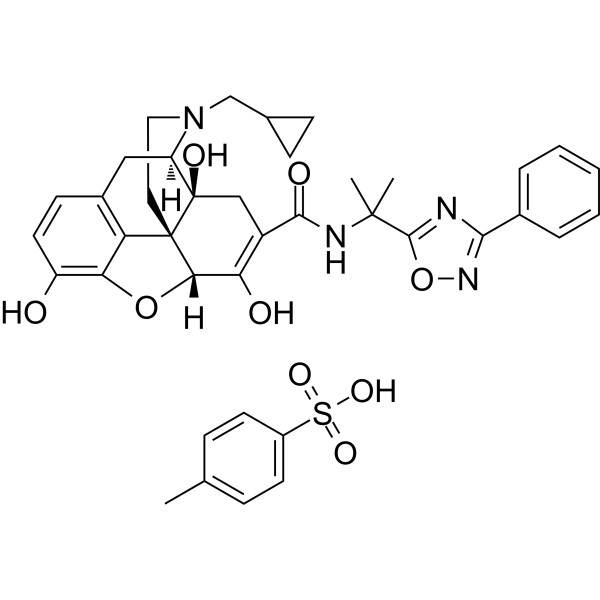
Naldemedine (S-297995) tosylate is an orally active μ-opioid receptor antagonist (PAMORA) . Naldemedine tosylate shows potent binding affinities (Ki=0.34, 0.43, 0.94 nM, respectively) and antagonist activities (IC50=25.57, 7.09, 16.1 nM, respectively) for recombinant human μ-, δ-, and κ- opioid receptors . Naldemedine can be used in opioid-induced constipation (OIC) research . Naldemedine tosylate is predicted to bind to 3CL pro encoded by SARS-CoV2 genome .
|
-
-
- HY-A0118A
-
|
NKTR-118 oxalate; AZ-13337019 oxalate
|
Opioid Receptor
|
Metabolic Disease
|
|
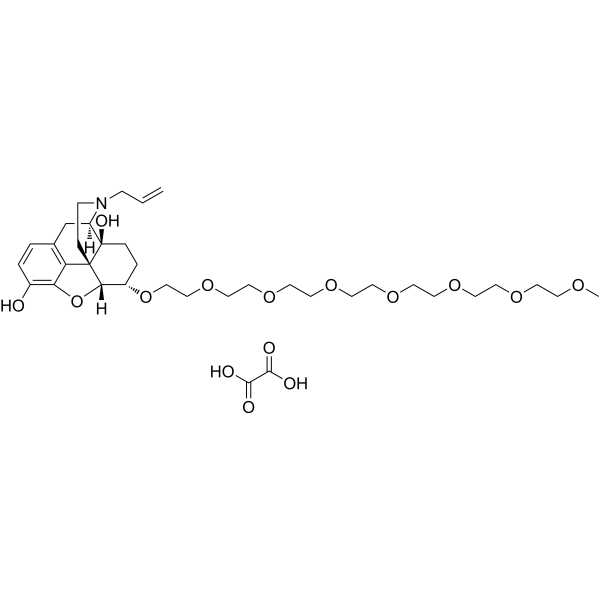
Naloxegol oxalate (NKTR-118 oxalate; AZ-13337019 oxalate) is an orally active peripherally acting μ-opioid receptor antagonist with a target Ki of 7.42 nM. Naloxegol oxalate inhibits the binding of opioids to μ-opioid receptors in the gastrointestinal tract, and alleviates opioid-induced gastrointestinal hypomotility, delayed transit, hypertonicity, and increased fluid reabsorption. Naloxegol oxalate is applicable to research related to opioid-induced constipation .
|
-
-
- HY-13243
-
|
ADL 8-2698; LY 246736
|
Opioid Receptor
|
Neurological Disease
|
|
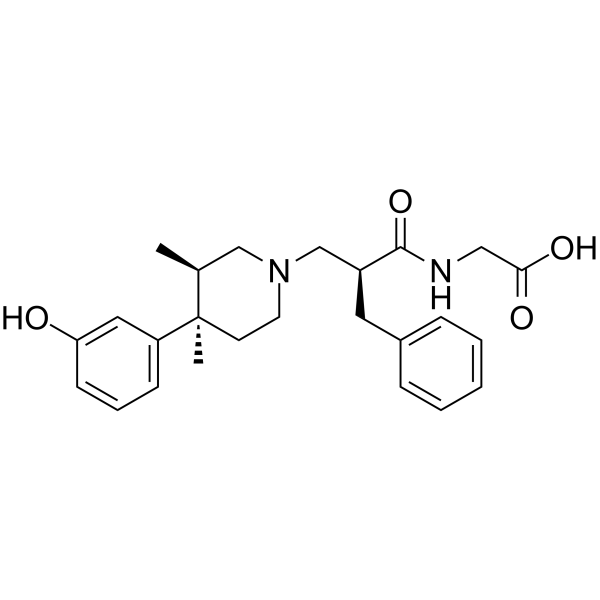
Alvimopan (ADL 8-2698) is a potent, selective, orally active and reversible μ-opioid receptor antagonist, with an IC50 of 1.7 nM. Alvimopan has selectivity for μ-opioid receptor (Ki=0.47 nM) over κ- and δ-opioid receptors (Kis=100, 12 nM, respectively). Alvimopan can be used for the research of postoperative ileus .
|
-
-
- HY-P1335
-
CTAP
2 Publications Verification
|
Opioid Receptor
|
Neurological Disease
|
|
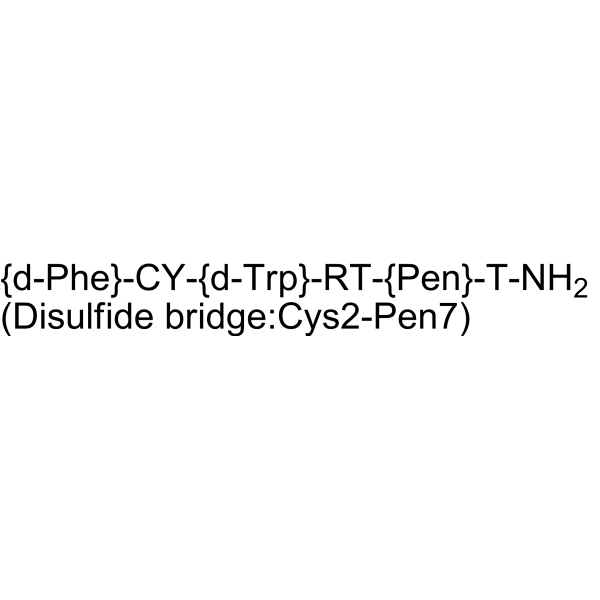
CTAP is a potent, highly selective, and BBB penetrant μ opioid receptor antagonist, with an IC50 of 3.5 nM. CTAP displays over 1200-fold selectivity over δ opioid (IC50=4500 nM) and somatostatin receptors. CTAP can be used for the study of L-DOPA-induced dyskinesia (LID) and opiate overdose or addiction .
|
-
-
- HY-145404
-
|
|
Opioid Receptor
|
Metabolic Disease
|
|
Mitragynine pseudoindoxyl is a potent orally active agonist of the μ-opioid receptor (MOR-1, Ki=0.8 nM) and an antagonist of the δ-opioid receptor (DOR-1, Ki=3.0 nM). Mitragynine pseudoindoxyl has moderate affinity for the κ-opioid receptor (KOR-1, Ki=24 nM) and does not recruit β-arrestin-2, acting through G protein-mediated signaling pathways without β-arrestin-2-related activation. Mitragynine pseudoindoxyl produces potent analgesic activity through a mixed μ-agonist/δ-antagonist mechanism, with low side effects such as physical dependence, respiratory depression, and constipation, and no rewarding or aversive behaviors. Mitragynine pseudoindoxyl reduces hyperactivity, inhibits GI transit, and enhances characteristics, making it a potential analgesic .
|
-

-
- HY-123689
-
|
ALKS-33; RDC-0313
|
Opioid Receptor
|
Neurological Disease
|
|
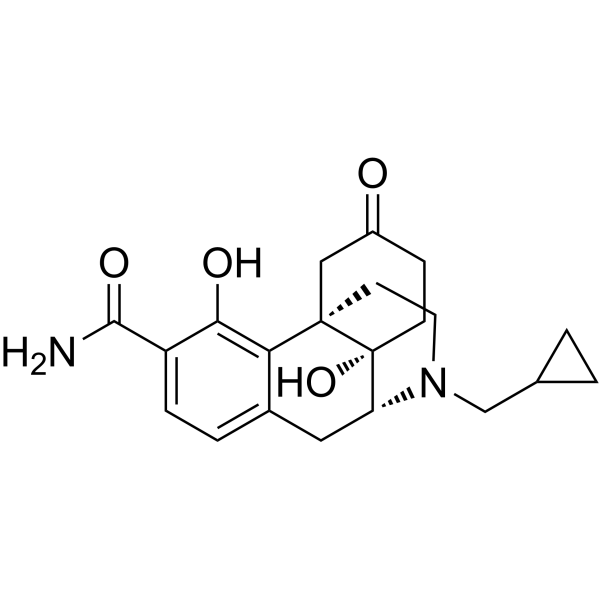
Samidorphan (ALKS-33) is an orally active opioid system modulator that has a high affinity for binding with μ‐opioid, κ‐opioid, and δ‐opioid receptors. Samidorphan acts as an antagonist at μ‐opioid receptors and acts as a partial agonist at k-opioid and δ‐opioid receptors. Samidorphan primarily acts as an opioid receptor antagonist in vivo. Samidorphan can improve the behavior of depressed animals .
|
-
-
- HY-101011
-
-
-
- HY-115066
-
|
|
Opioid Receptor
|
Neurological Disease
|
|
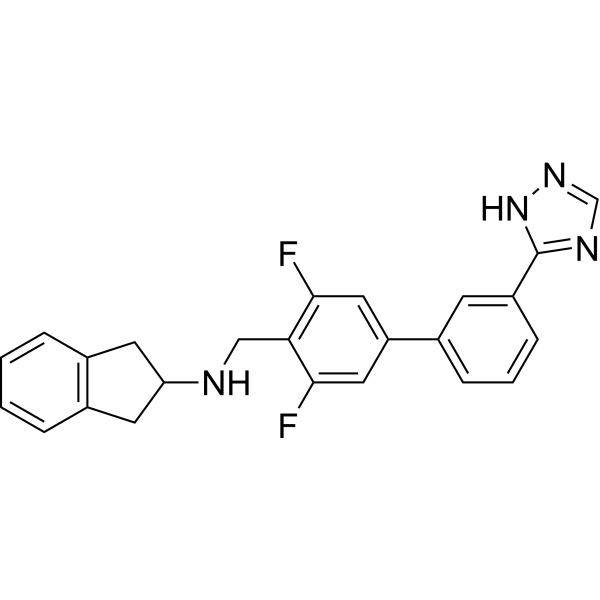
GSK1521498 free base is a potent and selective μ-opioid receptor (MOR) antagonist. GSK1521498 free base has the potential for disorders of compulsive consumption of food, alcohol, and agents .
|
-
-
- HY-101318
-
|
β-FNA hydrochloride
|
Opioid Receptor
p38 MAPK
STAT
NF-κB
NO Synthase
Toll-like Receptor (TLR)
|
Cardiovascular Disease
Neurological Disease
|
|
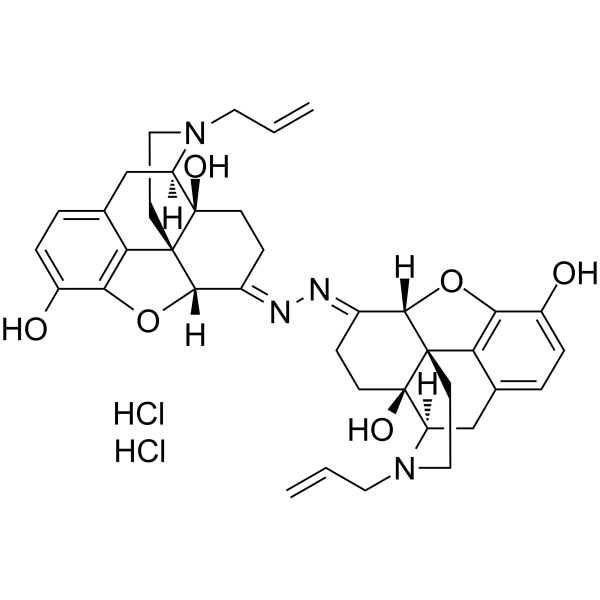
β-Funaltrexamine (β-FNA) hydrochloride is a blood-brain barrier-permeable, selective and irreversible μ-opioid receptor antagonist with immunomodulatory, anti-inflammatory and neuroprotective activities. β-Funaltrexamine hydrochloride inhibits p38 MAPK and TLR4 signaling by blocking μ-opioid receptors, and reduces the transcriptional activities of NF-κB, AP-1, CREB and Stat. Furthermore, β-Funaltrexamine hydrochloride inhibits iNOS activation and pro-inflammatory microglial polarization, converting microglia to an anti-inflammatory phenotype, thereby downregulating neuroinflammation and ameliorating neuronal degeneration. β-Funaltrexamine hydrochloride is widely applicable to research related to stroke, cerebral ischemia/reperfusion injury and neurodegenerative diseases .
|
-

-
- HY-100122
-
-
-
- HY-P1329A
-
|
|
Opioid Receptor
|
Neurological Disease
|
|
CTOP TFA is a potent and highly selective μ-opioid receptor antagonist. CTOP TFA antagonizes the acute analgesic effect and hypermotility. CTOP TFA enhances extracellular dopamine levels in the nucleus accumbens. CTOP TFA dose-dependently enhances locomotor activity .
|
-

-
- HY-19627
-
|
S-297995
|
Opioid Receptor
|
Neurological Disease
Metabolic Disease
|
|
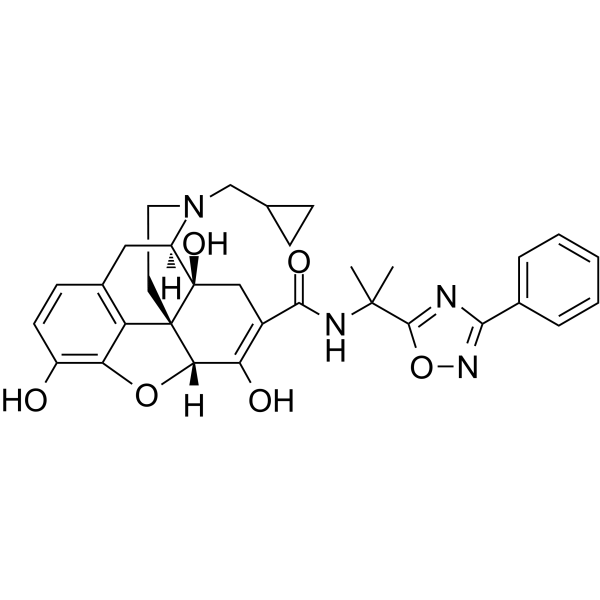
Naldemedine (S-297995) is an orally active μ-opioid receptor antagonist (PAMORA) . Naldemedine shows potent binding affinities (Ki=0.34, 0.43, 0.94 nM, respectively) and antagonist activities (IC50=25.57, 7.09, 16.1 nM, respectively) for recombinant human μ-, δ-, and κ- opioid receptors . Naldemedine can be used in opioid-induced constipation (OIC) research . Naldemedine is predicted to bind to 3CL pro encoded by SARS-CoV2 genome .
|
-
-
- HY-136208
-
|
|
Opioid Receptor
|
Neurological Disease
|
|
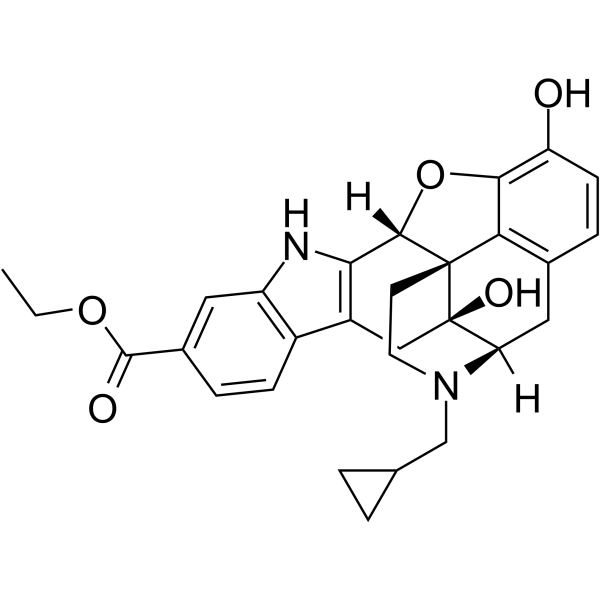
TAN-452 is an orally active, selective peripherally acting δ-opioid receptor (DOR) antagonist with a Ki of 0.47 nM and a Kb of 0.21 nM. TAN-452 is an antagonist for μ-opioid receptor (MOR; Ki=36.56 nM and Kb=9.43 nM) and κ-opioid receptor (KOR; Ki=5.31 nM and Kb=7.18 nM). TAN-452, a derivative of Naltrindole, demonstrates low brain penetrability and attenuates morphine-induced side effects without affecting pain control .
|
-
-
- HY-P1335A
-
|
|
Opioid Receptor
|
Neurological Disease
|
|
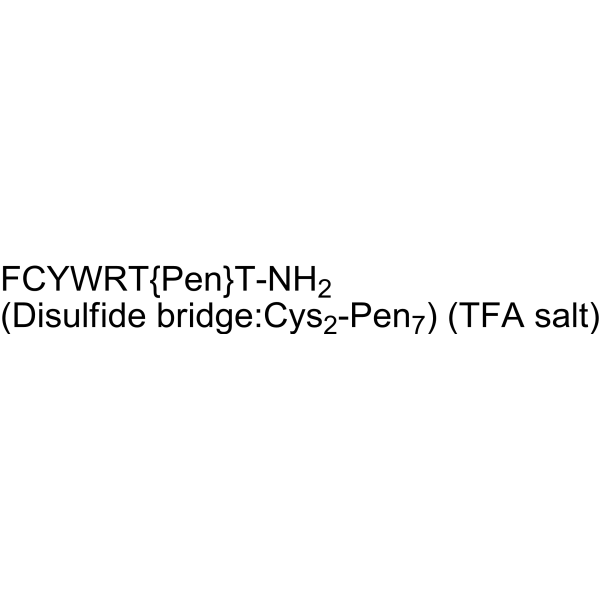
CTAP TFA is a potent, highly selective, and BBB penetrant μ opioid receptor antagonist, with an IC50 of 3.5 nM. CTAP TFA displays over 1200-fold selectivity over δ opioid (IC50=4500 nM) and somatostatin receptors. CTAP TFA can be used for the study of L-DOPA-induced dyskinesia (LID) and opiate overdose or addiction .
|
-
-
- HY-76657A
-
|
ADL 8-2698 dihydrate; LY 246736 dihydrate
|
Opioid Receptor
|
Neurological Disease
Cancer
|
|
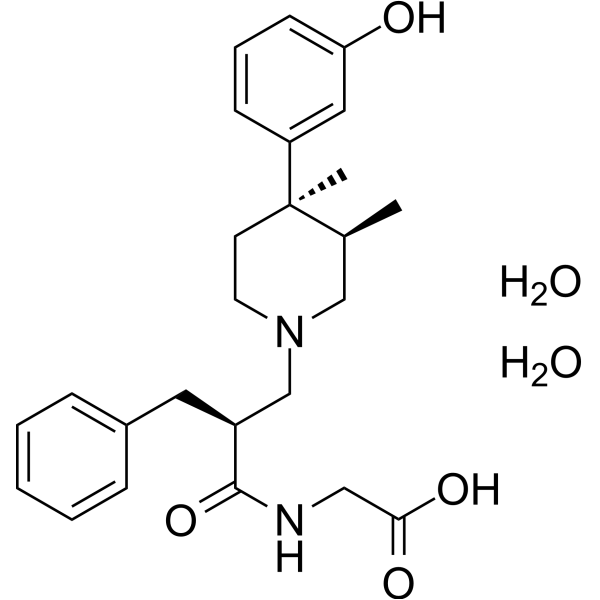
Alvimopan dihydrate (ADL 8-2698 dihydrate) is a potent, selective, orally active and reversible μ-opioid receptor antagonist, with an IC50 of 1.7 nM. Alvimopan dihydrate has selectivity for μ-opioid receptor (Ki=0.47 nM) over κ- and δ-opioid receptors (Kis=100, 12 nM, respectively). Alvimopan dihydrate can be used for the research of postoperative ileus .
|
-
-
- HY-107750A
-
|
|
Opioid Receptor
|
Neurological Disease
|
|
Cyprodime hydrochloride is a highly selective μ-opioid receptor antagonist with Ki values of 5.4 nM, 244.6 nM and 2187 nM for μ-, δ- and κ-opioid receptors, respectively. Cyprodime hydrochloride has anti-depressant-like effect .
|
-

-
- HY-144609
-
|
|
Opioid Receptor
|
Neurological Disease
|
|
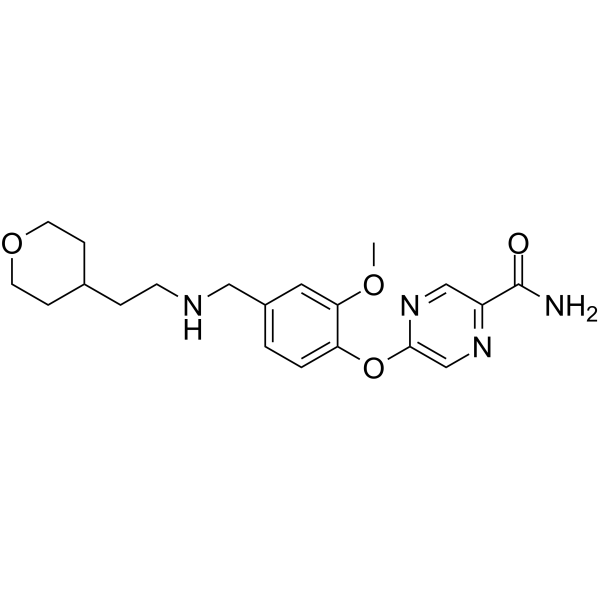
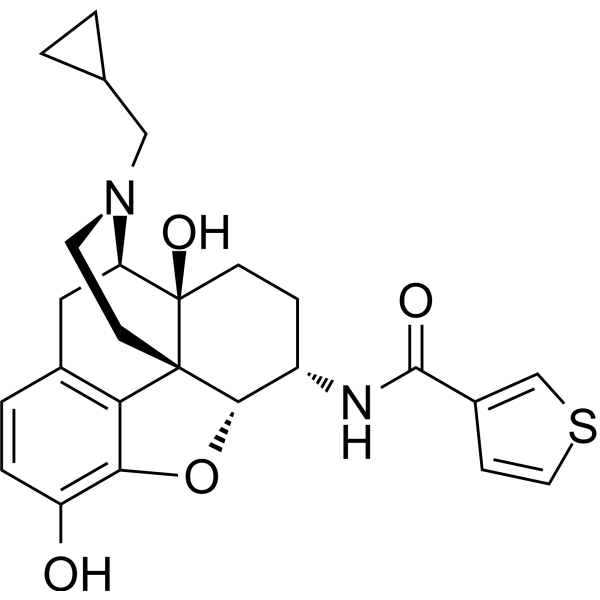
Mu opioid receptor antagonist 4 (compound 31) is a potent and selective μ opioid receptor (MOR) antagonist with a Ki of 0.38 nM and an EC50 of 1.07 nM. Mu opioid receptor antagonist 4 has remarkable CNS antagonism against morphine, and precipitated fewer withdrawal symptoms than Naloxone. Mu opioid receptor antagonist 4 Mu opioid receptor antagonist 4 can be used for researching opioid use disorders (OUD) .
|
-
-
- HY-144606
-
|
|
Opioid Receptor
|
Neurological Disease
|
|
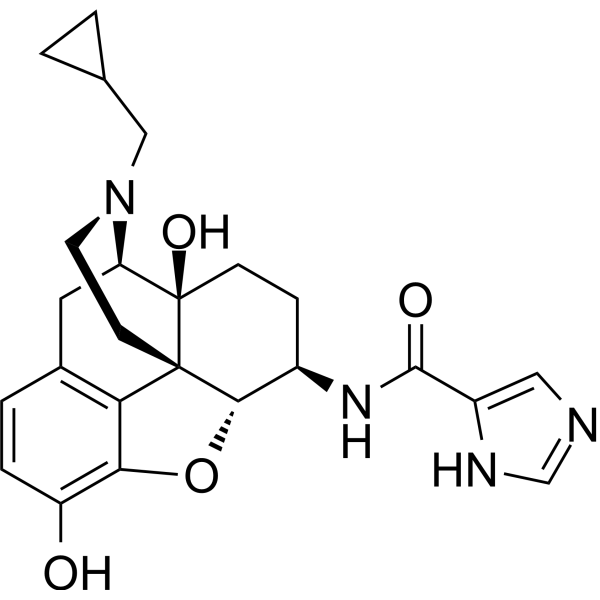
Mu opioid receptor antagonist 1 (compound 19) is a selective and orally active μ opioid receptor (MOR) ligand with an Ki value of 0.58 nM and an EC50 of 1.15 nM. Orally administrating with Mu opioid receptor antagonist 1 increases intestinal motility during morphine-induced constipation. Mu opioid receptor antagonist 1 can be used for researching opioid-induced constipation (OIC) .
|
-
-
- HY-144607
-
|
|
Opioid Receptor
|
Neurological Disease
|
|
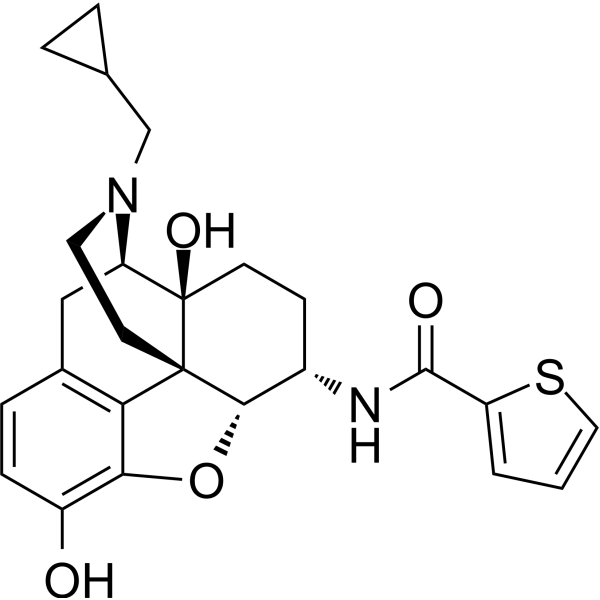
Mu opioid receptor antagonist 2 (compound 25) is a potent, selective and blood-brain barrier (BBB) penetrant μ opioid receptor (MOR) antagonist with a Ki of 0.37 nM and an EC50 of 0.44 nM. Mu opioid receptor antagonist 2 has remarkable CNS antagonism against morphine, and precipitated fewer withdrawal symptoms than Naloxone. Mu opioid receptor antagonist 2 can be used for researching opioid use disorders (OUD) .
|
-
-
- HY-155320
-
|
|
Opioid Receptor
|
Neurological Disease
|
|
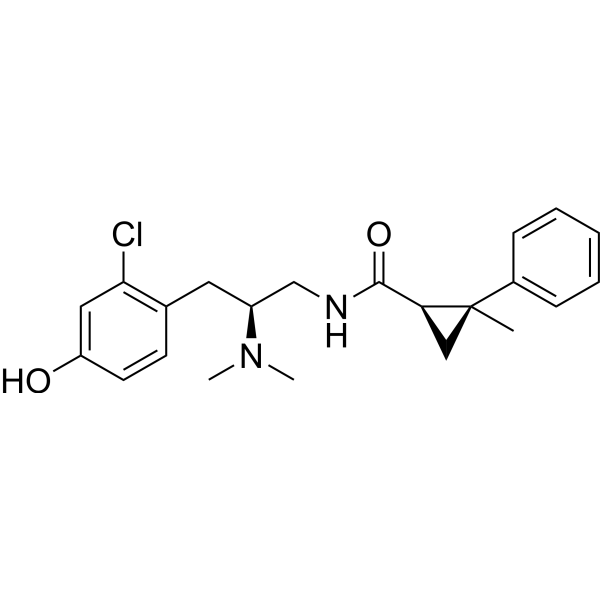
Mu opioid receptor antagonist 7 (compound 24) is a potent and CNS permeable antagonist of µOR (µ-opioid receptor), with an IC50 of 29 ± 3.0 nM. Mu opioid receptor antagonist 7 can be used for the research of pain and opioid use disorder .
|
-
-
- HY-19902
-
|
|
Opioid Receptor
|
Neurological Disease
|
|
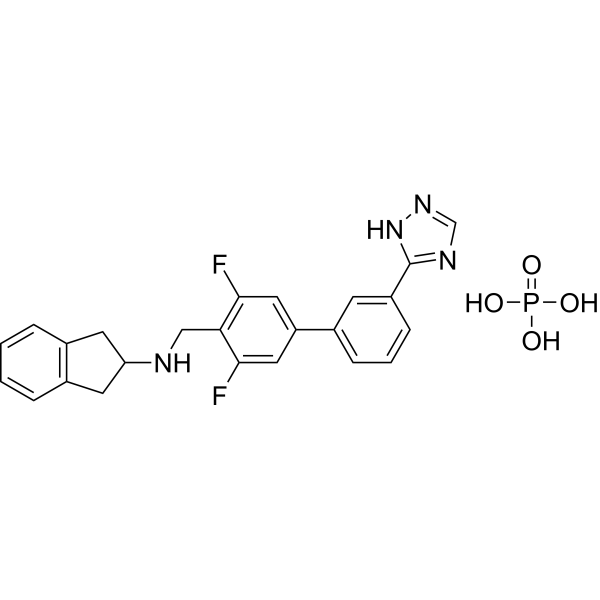
GSK1521498 is a potent and selective μ-opioid receptor (MOR) antagonist. GSK1521498 has the potential for disorders of compulsive consumption of food, alcohol, and agents .
|
-
-
- HY-115066A
-
|
|
Opioid Receptor
|
Neurological Disease
|
|
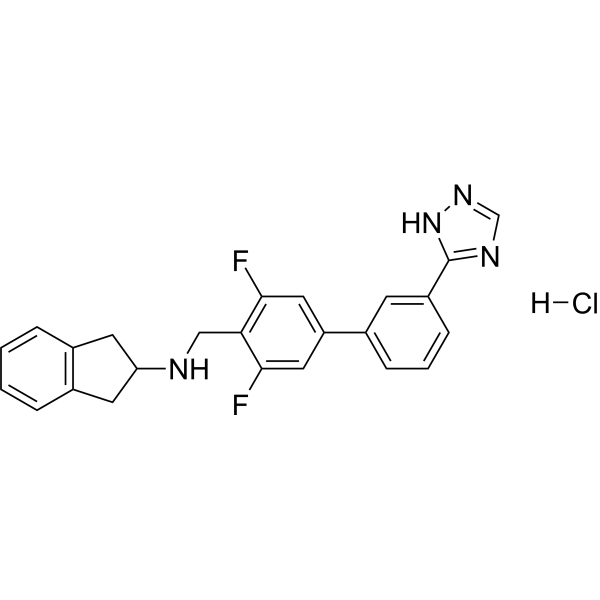
GSK1521498 free base (hydrochloride) is a potent and selective μ-opioid receptor (MOR) antagonist. GSK1521498 free base (hydrochloride) is being used for the treatment of disorders of compulsive consumption of food, alcohol, and agents .
|
-
-
- HY-A0115R
-
|
HOE 498 diacid (Standard); Ramipril diacid (Standard)
|
Drug Metabolite
Reference Standards
Angiotensin-converting Enzyme (ACE)
Endogenous Metabolite
|
Cardiovascular Disease
|
|
Alvimopan (dihydrate) (Standard) is the analytical standard of Alvimopan (dihydrate). This product is intended for research and analytical applications. Alvimopan dihydrate (ADL 8-2698 dihydrate) is a potent, selective, orally active and reversible μ-opioid receptor antagonist, with an IC50 of 1.7 nM. Alvimopan dihydrate has selectivity for μ-opioid receptor (Ki=0.47 nM) over κ- and δ-opioid receptors (Kis=100, 12 nM, respectively). Alvimopan dihydrate can be used for the research of postoperative ileus .
|
-

-
- HY-162669
-
|
|
Opioid Receptor
|
Neurological Disease
|
|
Mu opioid receptor antagonist 8 (368) is a μ-opioid receptor antagonist. Mu opioid receptor antagonist 8 (368) significantly inhibits met-enkephalin-induced µOR activation of Gi .
|
-

-
- HY-A0118
-
|
NKTR-118; AZ-13337019
|
Opioid Receptor
|
Neurological Disease
Cancer
|
|
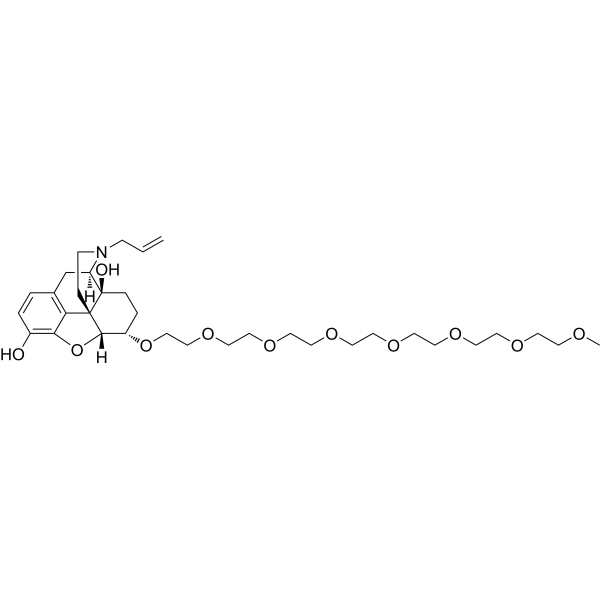
Naloxegol (NKTR-118; AZ-13337019) is an orally active peripherally acting μ-opioid receptor antagonist with a target Ki of 7.42 nM. Naloxegol inhibits the binding of opioids to μ-opioid receptors in the gastrointestinal tract, and alleviates opioid-induced gastrointestinal hypomotility, delayed transit, hypertonicity, and increased fluid reabsorption. Naloxegol is applicable to research related to opioid-induced constipation .
|
-
-
- HY-P1329
-
|
|
Opioid Receptor
|
Neurological Disease
|
|
CTOP is a potent and highly selective μ-opioid receptor antagonist. CTOP antagonizes the acute morphine-induced analgesic effect and hypermotility. CTOP enhances extracellular dopamine levels in the nucleus accumbens. CTOP dose-dependently enhances locomotor activity .
|
-

-
- HY-178235
-
|
|
Opioid Receptor
|
Neurological Disease
|
|
MDAN-21 is a bivalent opioid ligand that contains both μ-opioid receptor agonists and δ-opioid receptor antagonists. MDAN-21 has a strong analgesic effect and does not produce tolerance in mouse studies. MDAN-21 can effectively inhibit the withdrawal of morphine dependent monkeys and alleviate abnormal pain in the study of rhesus monkeys. MDAN-21 can be used for the study of allodynia .
|
-

-
- HY-144608
-
|
|
Opioid Receptor
|
Neurological Disease
|
|
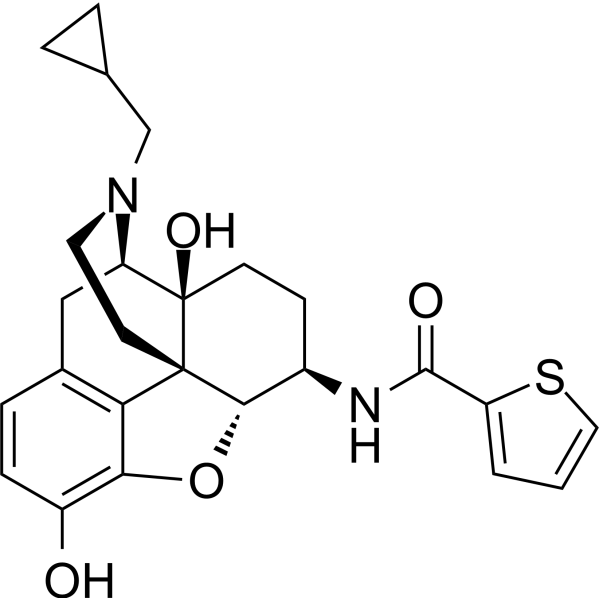
Mu opioid receptor antagonist 3 (compound 26) is a potent and selective μ opioid receptor (MOR) antagonist with a Ki of 0.24 nM and an EC50 of 0.54 nM. Mu opioid receptor antagonist 3 has remarkable CNS antagonism against morphine, and precipitated fewer withdrawal symptoms than Naloxone. Mu opioid receptor antagonist 3 can be used for researching opioid use disorders (OUD) .
|
-
-
- HY-144610
-
|
|
Opioid Receptor
|
Neurological Disease
|
|
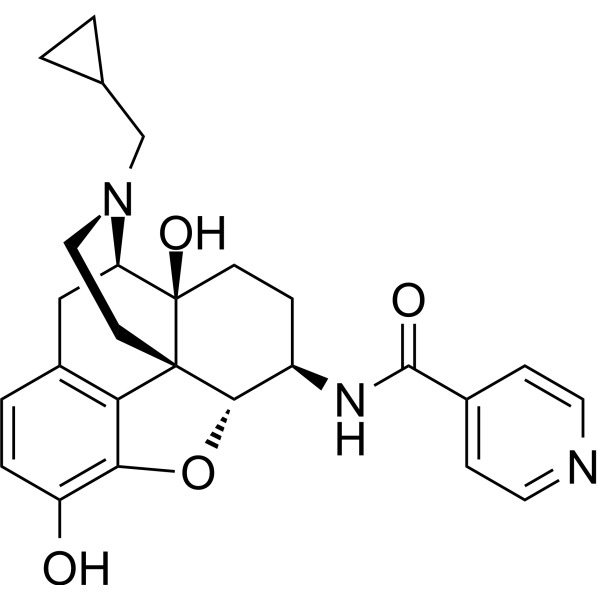
Mu opioid receptor antagonist 5 (compound NAP) is a selective and blood-brain barrier (BBB) penetrant μ opioid receptor (MOR) antagonist with an EC50 value of 1.14 nM and a Ki value of 0.37 nM. Mu opioid receptor antagonist 5 can be used for researching opioid use disorders (OUD) .
|
-
-
- HY-76657
-
|
ADL 8-2698 monohydrate; LY 246736 monohydrate
|
Opioid Receptor
|
Neurological Disease
Cancer
|
|
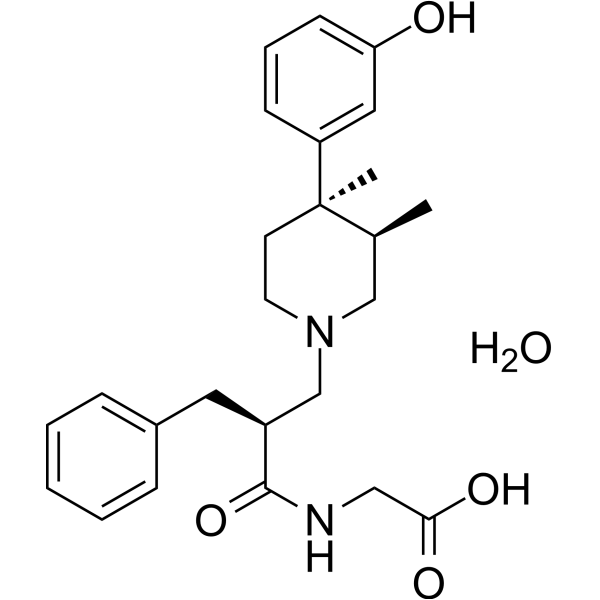
Alvimopan monohydrate (ADL 8-2698 monohydrate) is a potent, selective, orally active and reversible μ-opioid receptor antagonist, with an IC50 of 1.7 nM. Alvimopan monohydrate has selectivity for μ-opioid receptor (Ki=0.47 nM) over κ- and δ-opioid receptors (Kis=100, 12 nM, respectively). Alvimopan monohydrate can be used for the research of postoperative ileus .
|
-
-
- HY-123689S1
-
|
ALKS-33-d5; RDC-0313-d5
|
Isotope-Labeled Compounds
Opioid Receptor
|
Neurological Disease
|
|
Samidorphan-d5 (ALKS-33-d5) is is a deuterated compound of Samidorphan. Samidorphan is an orally active opioid system modulator that binds with high affinity to μ-opioid, κ-opioid, and δ-opioid receptors. Samidorphan is a μ-opioid receptor antagonist and a partial agonist at k-opioid and δ-opioid receptors. Samidorphan acts primarily as an opioid receptor antagonist in vivo .
|
-

-
- HY-106601A
-
|
LY-150720 hydrochloride
|
Opioid Receptor
|
Neurological Disease
|
|
Picenadol (LY-150720) hydrochloride is an opioid mixed agonist-antagonist analgesic. Picenadol hydrochloride is an external racemic mixture, where its d-isomer (LY136596) is a potent μ-opioid receptor agonist, and the l-isomer (LY136595) is a weak μ-receptor competitive antagonist, which can inhibit the agonist effect and reduce the risk of dependence. Picenadol hydrochloride has anticholinergic activity .
|
-

-
- HY-176063
-
|
|
TRP Channel
Opioid Receptor
|
Neurological Disease
|
|
TRPV1 antagonist 11 (compound 2ac) is a potent TRPV1 antagonist with an IC50 of 29.3 nM. TRPV1 antagonist 11 is a potent μ-opioid receptor (MOR) agonist with a Ki of 60.3 nM. TRPV1 antagonist 11, a pyrimidine piperazine, exhibits pain relieving effects by antagonizing TRPV1 and stimulating MOR. TRPV1 antagonist 11 shows a potent, dose-dependent anti-nociceptive effect in a Formalin-induced pain model in mice .
|
-

-
- HY-135698
-
|
M-CAM
|
Opioid Receptor
|
Neurological Disease
|
|
Methocinnamox (M-CAM) a selective and long-acting μ-opioid receptor (MOR) antagonist with a Ki of 0.6 nM. Methocinnamox binds to the orthosteric site of the MOR in a pseudo-irreversible, non-covalent manner, resulting in prolonged receptor blockade that persists until new receptors are synthesized. Methocinnamox acts as a reversible antagonist at both the kappa-opioid receptor (KOR) (Ki = 4.9 nM) and delta-opioid receptor (DOR) (Ki = 2.2 nM), and it exhibits no intrinsic agonist activity at these receptors. Methocinnamox can be used to reverse and prevent opioid overdose and addiction .
|
-

-
- HY-179282
-
|
|
Opioid Receptor
|
Neurological Disease
|
|
Mu opioid receptor antagonist 9 is potent, selective and CNS-pentrant mu-opioid receptor (MOR) antagonist with a Ki of 77.3 nM. Mu opioid receptor antagonist 9 exhibits selectivity over kappa-opioid receptor (KOR), and delta-opioid receptor (DOR). Mu opioid receptor antagonist 9 effectively blocks the antinociceptive effects of psychoactive substances. Mu opioid receptor antagonist 9 can reverse psychoactive substances-induced respiratory depression in mice. Mu opioid receptor antagonist 9 can be used for the research of Opioid Use Disorder (OUD) .
|
-

-
- HY-123689A
-
|
ALKS-33 hydrochloride; RDC-0313 hydrochloride
|
Opioid Receptor
|
Neurological Disease
|
|
Samidorphan hydrochloride is an orally active opioid system modulator that has a high affinity for binding with μ‐opioid, κ‐opioid, and δ‐opioid receptors. Samidorphan hydrochloride acts as an antagonist at μ‐opioid receptors and acts as a partial agonist at k-opioid and δ‐opioid receptors. Samidorphan hydrochloride primarily acts as an opioid receptor antagonist in vivo. Samidorphan can improve the behavior of depressed animals .
|
-

-
- HY-123689S
-
|
ALKS-33-d4; RDC-0313-d4
|
Isotope-Labeled Compounds
Opioid Receptor
|
Neurological Disease
|
|
Samidorphan-d4 is the deuterium labeled Samidorphan(HY-123689).Samidorphan (ALKS-33) is an orally active opioid system modulator that has a high affinity for binding with μ‐opioid, κ‐opioid, and δ‐opioid receptors. Samidorphan acts as an antagonist at μ‐opioid receptors and acts as a partial agonist at k-opioid and δ‐opioid receptors. Samidorphan primarily acts as an opioid receptor antagonist in vivo .
|
-

-
- HY-123689R
-
|
ALKS-33 (Standard); RDC-0313 (Standard)
|
Opioid Receptor
Reference Standards
|
Neurological Disease
|
|
Samidorphan (Standard) is the analytical standard of Samidorphan. This product is intended for research and analytical applications. Samidorphan (ALKS-33) is an orally active opioid system modulator that has a high affinity for binding with μ‐opioid, κ‐opioid, and δ‐opioid receptors. Samidorphan acts as an antagonist at μ‐opioid receptors and acts as a partial agonist at k-opioid and δ‐opioid receptors. Samidorphan primarily acts as an opioid receptor antagonist in vivo. Samidorphan can improve the behavior of depressed animals.
|
-

-
- HY-13243R
-
|
ADL 8-2698 (Standard); LY 246736 (Standard)
|
Opioid Receptor
Reference Standards
|
Neurological Disease
Cancer
|
|
Alvimopan (Standard) is the analytical standard of Alvimopan. This product is intended for research and analytical applications. Alvimopan (ADL 8-2698) is a potent, selective, orally active and reversible μ-opioid receptor antagonist, with an IC50 of 1.7 nM. Alvimopan has selectivity for μ-opioid receptor (Ki=0.47 nM) over κ- and δ-opioid receptors (Kis=100, 12 nM, respectively). Alvimopan can be used for the research of postoperative ileus .
|
-

-
- HY-A0118AS
-
|
|
Isotope-Labeled Compounds
Opioid Receptor
|
Neurological Disease
|
|
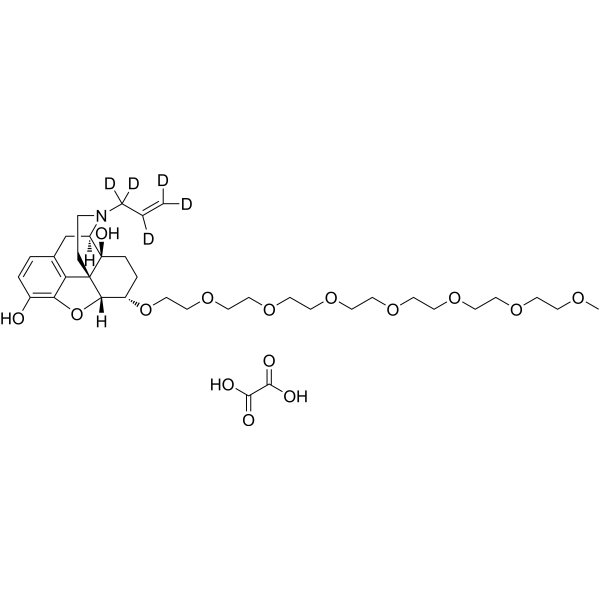
Naloxegol-d5 (oxalate) is deuterium labeled Naloxegol (oxalate). Naloxegol oxalate (NKTR-118 oxalate; AZ-13337019 oxalate) is a μ-opioid-receptor antagonist. Naloxegol oxalate inhibits opioid binding in μ-opioid receptors in the gastrointestinal tract and effective for alleviating opioid-induced constipation .
|
-
-
- HY-76657AR
-
|
ADL 8-2698 dihydrate (Standard); LY 246736 dihydrate (Standard)
|
Reference Standards
Opioid Receptor
|
Neurological Disease
Cancer
|
|
Alvimopan (dihydrate) (Standard) is the analytical standard of Alvimopan (dihydrate). This product is intended for research and analytical applications. Alvimopan dihydrate (ADL 8-2698 dihydrate) is a potent, selective, orally active and reversible μ-opioid receptor antagonist, with an IC50 of 1.7 nM. Alvimopan dihydrate has selectivity for μ-opioid receptor (Ki=0.47 nM) over κ- and δ-opioid receptors (Kis=100, 12 nM, respectively). Alvimopan dihydrate can be used for the research of postoperative ileus .
|
-

-
- HY-A0118S1
-
|
NKTR-118-13C,d2; AZ-13337019-13C,d2
|
Isotope-Labeled Compounds
Opioid Receptor
|
Neurological Disease
Cancer
|
|
Naloxegol- 13C,d2 (NKTR-118- 13C,d2) is 13C labeled Naloxegol. Naloxegol (NKTR-118; AZ-13337019) is a μ-opioid-receptor antagonist. Naloxegol inhibits opioid binding in μ-opioid receptors in the gastrointestinal tract and effective for alleviating opioid-induced constipation .
|
-

-
- HY-A0118S
-
|
NKTR-118-13C,d3; AZ-13337019-13C,d3
|
Isotope-Labeled Compounds
|
Neurological Disease
Cancer
|
|
Naloxegol- 13C,d3 (NKTR-118- 13C,d3) is 13C labeled Naloxegol. Naloxegol (NKTR-118; AZ-13337019) is a μ-opioid-receptor antagonist. Naloxegol inhibits opioid binding in μ-opioid receptors in the gastrointestinal tract and effective for alleviating opioid-induced constipation .
|
-

-
- HY-147560
-
|
|
Sigma Receptor
Opioid Receptor
|
Neurological Disease
|
|
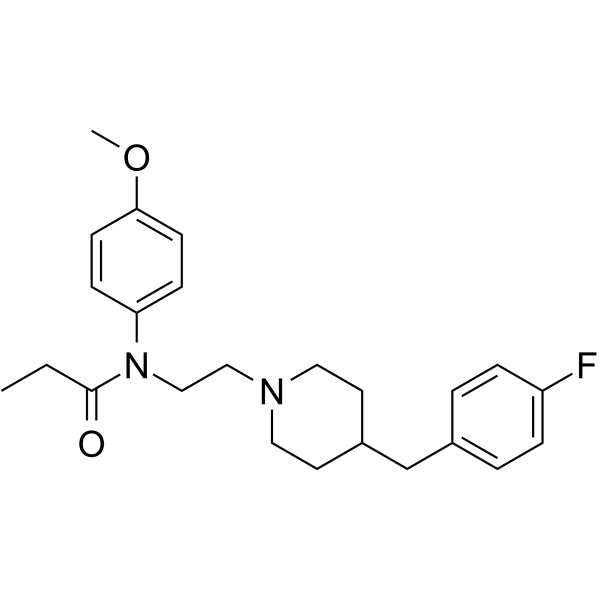
σ1 Receptor/μ Opioid receptor modulator 1 (Compound 44) is a potent σ1 receptor antagonist and μ opioid receptor agonist with Kis of 1.86 nM and 2.1 nM, respectively.σ1 Receptor/μ Opioid receptor modulator 1 exhibits potent analgesic activity. σ1 Receptor/μ Opioid receptor modulator 1 can be used for the research of neuropathic pain .
|
-
-
- HY-134189
-
|
|
Opioid Receptor
Sigma Receptor
|
Neurological Disease
|
|
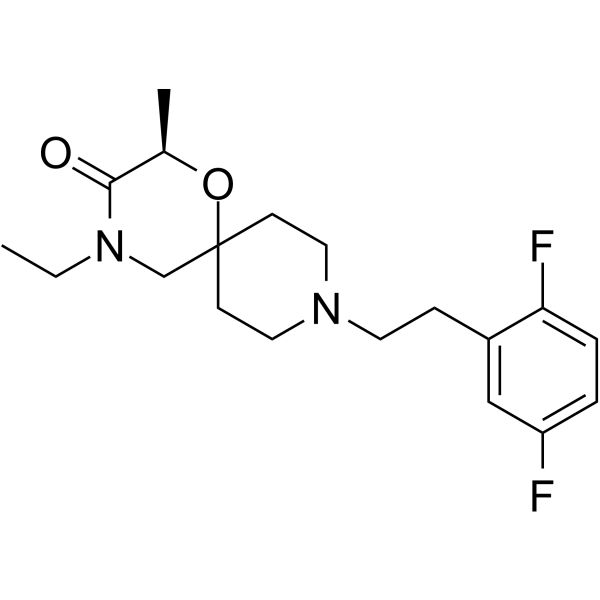
EST73502 is a selective, orally active and blood-brain barrier (BBB) penetrant dual μ-opioid receptor (MOR) agonist and σ1 receptor (σ1R) antagonist, with Kis of 64 nM and 118 nM for MOR and σ1R, respectively. EST73502 has antinociceptive activity .
|
-
-
- HY-134189A
-
|
|
Sigma Receptor
Opioid Receptor
|
Neurological Disease
|
|
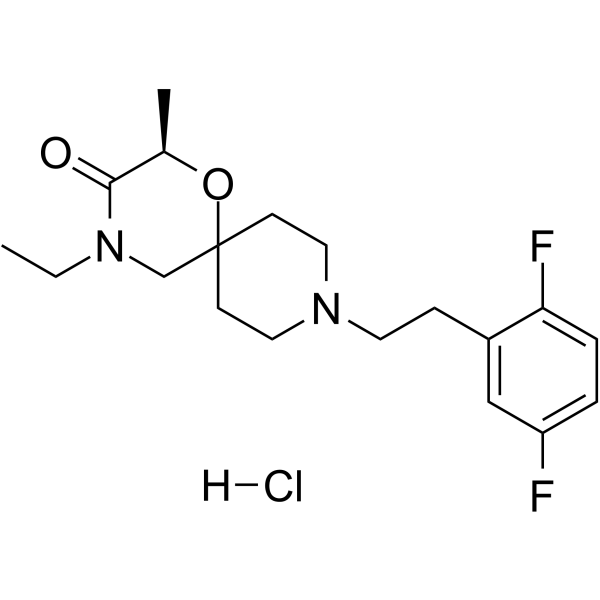
EST73502 monohydrochloride is a selective, orally active and blood-brain barrier (BBB) penetrant dual μ-opioid receptor (MOR) agonist and σ1 receptor (σ1R) antagonist, with Kis of 64 nM and 118 nM for MOR and σ1R, respectively. EST73502 monohydrochloride has antinociceptive activity .
|
-
-
- HY-106601
-
|
LY-150720
|
Opioid Receptor
|
Neurological Disease
|
|
Picenadol (LY-150720) is an opioid mixed agonist-antagonist analgesic. Picenadol is an external racemic mixture, where its d-isomer (LY136596) is a potent μ-opioid receptor agonist, and the l-isomer (LY136595) is a weak μ-receptor competitive antagonist, which can inhibit the agonist effect and reduce the risk of dependence. Picenadol has anticholinergic activity .
|
-

-
- HY-120927
-
|
|
Opioid Receptor
|
Neurological Disease
|
|
Alvimopan metabolite is a μ opioid receptor antagonist with activity that selectively interacts with μ peripheral receptors. Alvimopan metabolite can be used as a potential inhibitory drug to alleviate the side effects caused by opioids. Alvimopan metabolite was identified as a highly selective μ opioid receptor antagonist during research and development .
|
-

-
- HY-122286
-
|
|
Neurokinin Receptor
|
Neurological Disease
|
|
SB 414240 is a selective neurokinin-2 receptor (NK-2R) antagonist with Kis of 1 nM and 193 nM for human NK-3R and human NK-2R, respectively. SB 414240 does not bind the human μ-opioid receptor (hMOR). SB 414240 can be used for the study of neurological disease .
|
-

-
- HY-123582
-
|
|
Opioid Receptor
|
Neurological Disease
|
|
CP-866,087 is a novel, potent and selective μ-opioid receptor antagonist with activity to inhibit opioid effects. CP-866,087 has shown promising preclinical efficacy data in disease models associated with alcohol consumption. CP-866,087 has also been used to study female sexual dysfunction .
|
-

- HY-159923
-
|
|
Opioid Receptor
|
Neurological Disease
|
|
BPRMU191 is a μ-opioid receptor (MOR) modulator that converts small-molecule morphinan antagonists into G protein-biased MOR agonists, thereby inducing MOR-dependent activation and analgesic effects. Co-administration of BPRMU191 with morphinan antagonists provides analgesia while reducing side effects such as gastrointestinal dysfunction, antinociceptive tolerance, and dependency-related adverse effects. BPRMU191, in combination with morphinan antagonists, offers a potential strategy for studying severe pain management and G protein-coupled receptor modulation .
|
-

- HY-167946
-
|
|
Opioid Receptor
|
Others
|
|
CP-866087 is a new, highly effective, and selective antagonist of the mu-opioid receptor designed for exploring female sexual dysfunction.
|
-

- HY-155707
-
|
|
Dopamine Receptor
|
Inflammation/Immunology
|
|
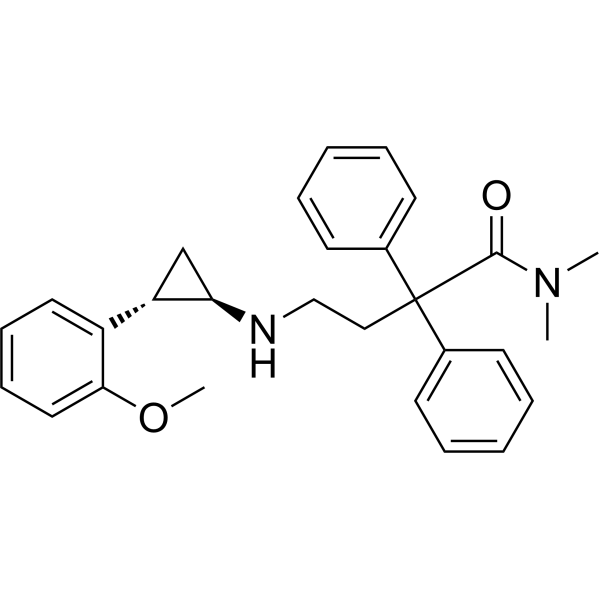
MOR agonist-3 (Compound 84) is a D3R/MOR antagonist/partial agonist a(Ki 382 nM and 55.2 nM respectively). MOR agonist-3 has the potential to produce analgesic effects through MOR (μ-opioid receptor) (HY-149337) partial agonists. MOR agonist-3 can be used in the inflammation and neuropathic pain research .
|
-
- HY-107750
-
-

- HY-N2304A
-
|
|
Opioid Receptor
|
Inflammation/Immunology
|
|
Methyl-6-alpha-Naltrexol is a metabolite of Methylnaltrexone (MNTX). Methylnaltrexone is a selective mu-opioid receptor antagonist and functions as a peripherally acting receptor antagonist in tissues of the gastrointestinal tract .
|
-

- HY-163065
-
|
|
Opioid Receptor
Sigma Receptor
|
Neurological Disease
|
|
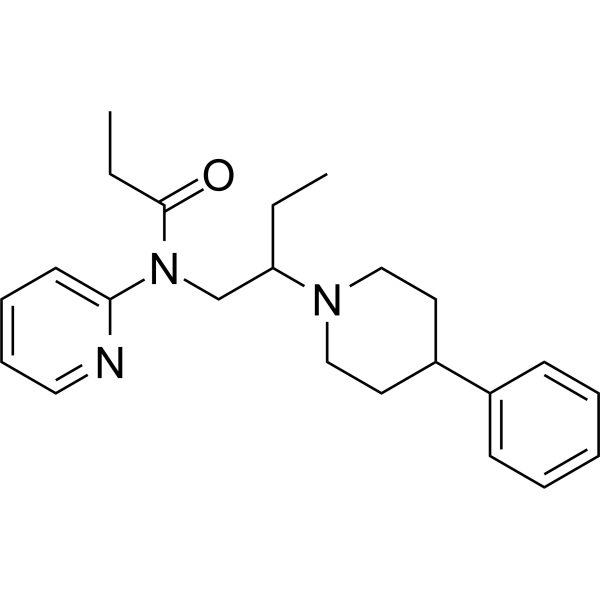
σ1 Receptor/μ Opioid receptor modulator 2 (compound 4x) is a dual μOR agonist/σ1R antagonist, and displays picomolar μOR agonism activity (EC50: 0.6 ± 0.2 nM) and good σ1R inhibitory activity (Ki: 363.7 ± 5.6 nM). σ1 Receptor/μ Opioid receptor modulator 2 exhibits robust analgesic effects in various pain models .
|
-
- HY-P10177
-
|
|
Opioid Receptor
|
Neurological Disease
|
|
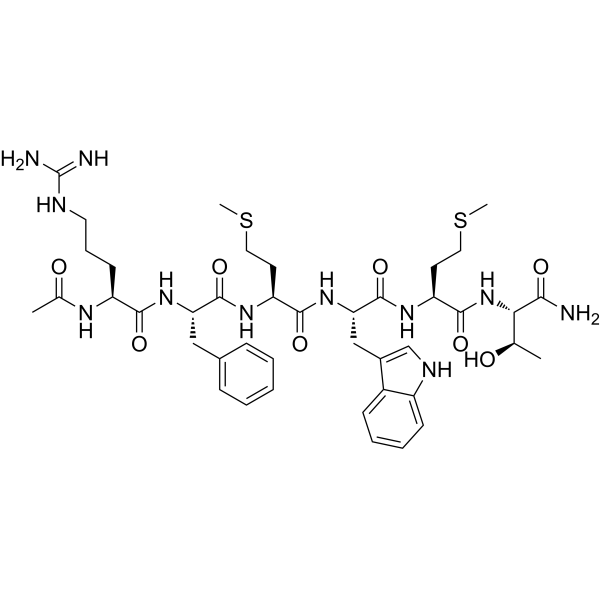
Acetalin-3 (Ac-RFMWMT-NH2), a hexapeptide, is a μ opioid receptor antagonist with high affinity for μ and κ3 opioid receptor, weak affinity for κ1 receptors and no affinity for κ2 receptors .
|
-
- HY-P10175
-
|
|
Opioid Receptor
|
Neurological Disease
|
|
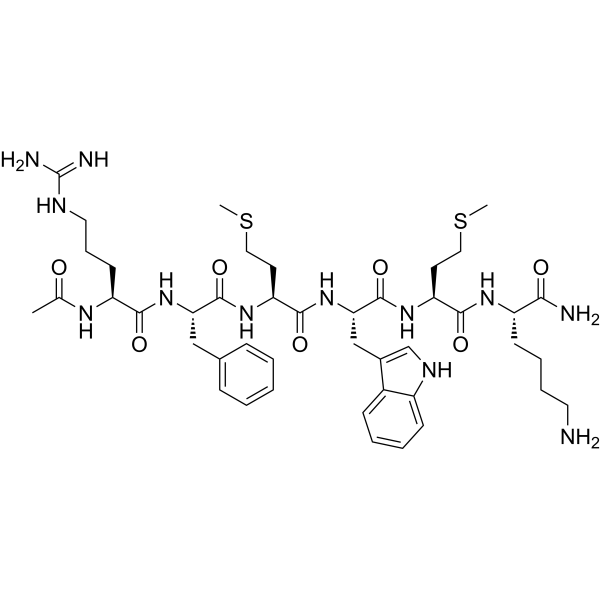
Acetalin-1 (Ac-RFMWMK-NH2), a hexapeptide, is a μ opioid receptor antagonist with high affinity for μ and κ3 opioid receptor, weak affinity for κ1 receptors and no affinity for κ2 receptors .
|
-
- HY-170437
-
|
|
Opioid Receptor
|
Neurological Disease
|
|
MOR modulator-1 (compound 6) is a potent and selective μ opioid receptor (MOR) modulator. MOR modulator-1 exhibits improved opioid receptor selectivity, enhanced in vivo antagonistic effect, and overall fewer withdrawal symptoms compared to NAT (6α-configuration). MOR modulator-1 links with carboxamido linker μ, δ, γ with Kis of 0.25, 41.1, 1.30 nM, respectively[1]
|
-

- HY-181605
-
|
|
Opioid Receptor
|
Neurological Disease
|
|
MOR antagonist 2 hydrochloride is a blood-brain barrier-permeable μ-opioid receptor (MOR) antagonist, with an IC50 of 28.37 nM, an EC50 of 4.25 nM, and a Ki of 0.18 nM against MOR. MOR antagonist 2 hydrochloride stabilizes the inactive conformation of MOR to reduce receptor activation levels. MOR antagonist 2 hydrochloride antagonizes analgesic effects in the mouse warm-water tail-flick test. MOR antagonist 2 hydrochloride induces fewer opioid withdrawal symptoms (wet dog shakes, paw tremors) in mice with opioid withdrawal symptoms. MOR antagonist 2 hydrochloride can be used for the research of opioid use disorder .
|
-

- HY-13243S1
-
|
ADL 8-2698-d7; LY 246736-d7
|
Isotope-Labeled Compounds
Opioid Receptor
|
Neurological Disease
Cancer
|
|
Alvimopan-d7 (ADL 8-2698-d7) is deuterium labeled Alvimopan. Alvimopan (ADL 8-2698) is a potent, selective, orally active and reversible μ-opioid receptor antagonist, with an IC50 of 1.7 nM. Alvimopan has selectivity for μ-opioid receptor (Ki=0.47 nM) over κ- and δ-opioid receptors (Kis=100, 12 nM, respectively). Alvimopan can be used for the research of postoperative ileus .
|
-

- HY-160938
-
|
β-FNA
|
Opioid Receptor
STAT
NF-κB
Toll-like Receptor (TLR)
NO Synthase
p38 MAPK
|
Cardiovascular Disease
Neurological Disease
|
|
β-Funaltrexamine (β-FNA) is a blood-brain barrier-permeable, selective and irreversible μ-opioid receptor antagonist with immunomodulatory, anti-inflammatory and neuroprotective activities. β-Funaltrexamine inhibits p38 MAPK and TLR4 signaling by blocking μ-opioid receptors, and reduces the transcriptional activities of NF-κB, AP-1, CREB and Stat. Furthermore, β-Funaltrexamine inhibits iNOS activation and pro-inflammatory microglial polarization, converting microglia to an anti-inflammatory phenotype, thereby downregulating neuroinflammation and ameliorating neuronal degeneration. β-Funaltrexamine is widely applicable to research related to stroke, cerebral ischemia/reperfusion injury and neurodegenerative diseases .
|
-

| Cat. No. |
상품명 |
Target |
Research Area |
-
- HY-P1335
-
CTAP
2 Publications Verification
|
Opioid Receptor
|
Neurological Disease
|
|
CTAP is a potent, highly selective, and BBB penetrant μ opioid receptor antagonist, with an IC50 of 3.5 nM. CTAP displays over 1200-fold selectivity over δ opioid (IC50=4500 nM) and somatostatin receptors. CTAP can be used for the study of L-DOPA-induced dyskinesia (LID) and opiate overdose or addiction .
|
-
- HY-P1329A
-
|
|
Opioid Receptor
|
Neurological Disease
|
|
CTOP TFA is a potent and highly selective μ-opioid receptor antagonist. CTOP TFA antagonizes the acute analgesic effect and hypermotility. CTOP TFA enhances extracellular dopamine levels in the nucleus accumbens. CTOP TFA dose-dependently enhances locomotor activity .
|
-
- HY-P1335A
-
|
|
Opioid Receptor
|
Neurological Disease
|
|
CTAP TFA is a potent, highly selective, and BBB penetrant μ opioid receptor antagonist, with an IC50 of 3.5 nM. CTAP TFA displays over 1200-fold selectivity over δ opioid (IC50=4500 nM) and somatostatin receptors. CTAP TFA can be used for the study of L-DOPA-induced dyskinesia (LID) and opiate overdose or addiction .
|
-
- HY-P1329
-
|
|
Opioid Receptor
|
Neurological Disease
|
|
CTOP is a potent and highly selective μ-opioid receptor antagonist. CTOP antagonizes the acute morphine-induced analgesic effect and hypermotility. CTOP enhances extracellular dopamine levels in the nucleus accumbens. CTOP dose-dependently enhances locomotor activity .
|
-
- HY-P10177
-
|
|
Opioid Receptor
|
Neurological Disease
|
|
Acetalin-3 (Ac-RFMWMT-NH2), a hexapeptide, is a μ opioid receptor antagonist with high affinity for μ and κ3 opioid receptor, weak affinity for κ1 receptors and no affinity for κ2 receptors .
|
-
- HY-P10175
-
|
|
Opioid Receptor
|
Neurological Disease
|
|
Acetalin-1 (Ac-RFMWMK-NH2), a hexapeptide, is a μ opioid receptor antagonist with high affinity for μ and κ3 opioid receptor, weak affinity for κ1 receptors and no affinity for κ2 receptors .
|
| Cat. No. |
상품명 |
Category |
Target |
Chemical Structure |
| Cat. No. |
상품명 |
Chemical Structure |
-
- HY-123689S1
-
|
|
|
Samidorphan-d5 (ALKS-33-d5) is is a deuterated compound of Samidorphan. Samidorphan is an orally active opioid system modulator that binds with high affinity to μ-opioid, κ-opioid, and δ-opioid receptors. Samidorphan is a μ-opioid receptor antagonist and a partial agonist at k-opioid and δ-opioid receptors. Samidorphan acts primarily as an opioid receptor antagonist in vivo .
|
-
-
- HY-123689S
-
|
|
|
Samidorphan-d4 is the deuterium labeled Samidorphan(HY-123689).Samidorphan (ALKS-33) is an orally active opioid system modulator that has a high affinity for binding with μ‐opioid, κ‐opioid, and δ‐opioid receptors. Samidorphan acts as an antagonist at μ‐opioid receptors and acts as a partial agonist at k-opioid and δ‐opioid receptors. Samidorphan primarily acts as an opioid receptor antagonist in vivo .
|
-
-
- HY-A0118AS
-
|
|
|
Naloxegol-d5 (oxalate) is deuterium labeled Naloxegol (oxalate). Naloxegol oxalate (NKTR-118 oxalate; AZ-13337019 oxalate) is a μ-opioid-receptor antagonist. Naloxegol oxalate inhibits opioid binding in μ-opioid receptors in the gastrointestinal tract and effective for alleviating opioid-induced constipation .
|
-
-
- HY-A0118S1
-
|
|
|
Naloxegol- 13C,d2 (NKTR-118- 13C,d2) is 13C labeled Naloxegol. Naloxegol (NKTR-118; AZ-13337019) is a μ-opioid-receptor antagonist. Naloxegol inhibits opioid binding in μ-opioid receptors in the gastrointestinal tract and effective for alleviating opioid-induced constipation .
|
-
-
- HY-A0118S
-
|
|
|
Naloxegol- 13C,d3 (NKTR-118- 13C,d3) is 13C labeled Naloxegol. Naloxegol (NKTR-118; AZ-13337019) is a μ-opioid-receptor antagonist. Naloxegol inhibits opioid binding in μ-opioid receptors in the gastrointestinal tract and effective for alleviating opioid-induced constipation .
|
-
-
- HY-13243S1
-
|
|
|
Alvimopan-d7 (ADL 8-2698-d7) is deuterium labeled Alvimopan. Alvimopan (ADL 8-2698) is a potent, selective, orally active and reversible μ-opioid receptor antagonist, with an IC50 of 1.7 nM. Alvimopan has selectivity for μ-opioid receptor (Ki=0.47 nM) over κ- and δ-opioid receptors (Kis=100, 12 nM, respectively). Alvimopan can be used for the research of postoperative ileus .
|
-
Your information is safe with us. * Required Fields.
Inquiry Information
- 상품명:
- Cat. No.:
- 수량:
- MCE Japan Authorized Agent:








