



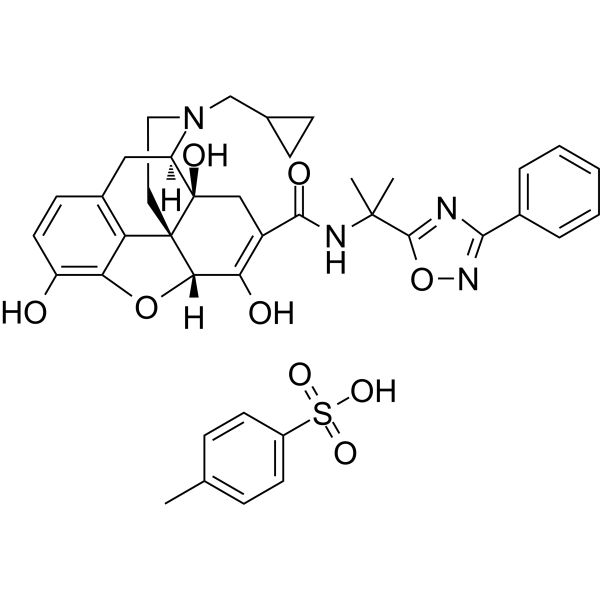
Naldemedine tosylate
Based on 2 publication(s) in Google Scholar
Naldemedine (S-297995) tosylate is an orally active μ-opioid receptor antagonist (PAMORA). Naldemedine tosylate shows potent binding affinities (Ki=0.34, 0.43, 0.94 nM, respectively) and antagonist activities (IC50=25.57, 7.09, 16.1 nM, respectively) for recombinant human μ-, δ-, and κ- opioid receptors. Naldemedine can be used in opioid-induced constipation (OIC) research. Naldemedine tosylate is predicted to bind to 3CLpro encoded by SARS-CoV2 genome.
商品は「研究用試薬」です。人や動物の医療用・臨床診断用・食品用の製品ではありません。
研究用途以外に使用した場合、当社は一切の責任を負いかねます。
- 純度 : 90.0%
- CAS 番号: 1345728-04-2
- 分子式: C39H42N4O9S
- 分子量:742.84
-
保管条件:
-20°C, stored under nitrogen, away from moisture
* In solvent : -80°C, 6 months; -20°C, 1 month (stored under nitrogen, away from moisture)

To place orders, for customer services and technical support, please contact: MedChemExpress USA
Tel: 609-228-6898 E-mail: [email protected] [email protected]


-
 生物活性
生物活性
-
化学情報
-
溶剤 & 溶解度
- プロトコル
- 純度とドキュメンテーション
- 参考文献
-
 Help & FAQs


-
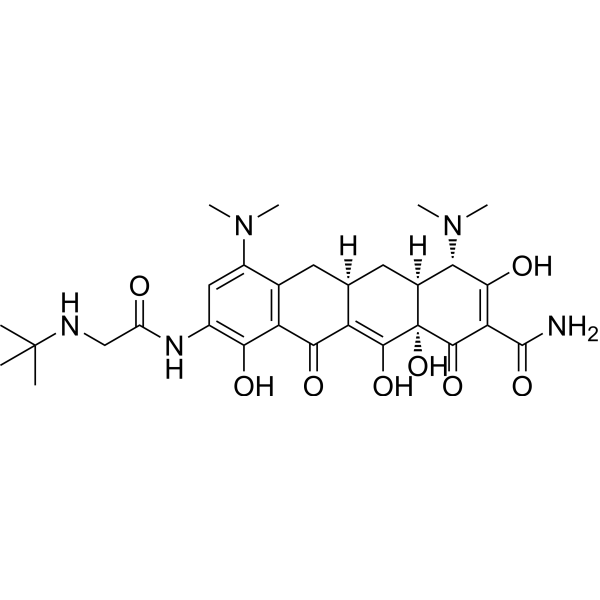
HY-B0117
TigecyclineBacterial Inhibitor -
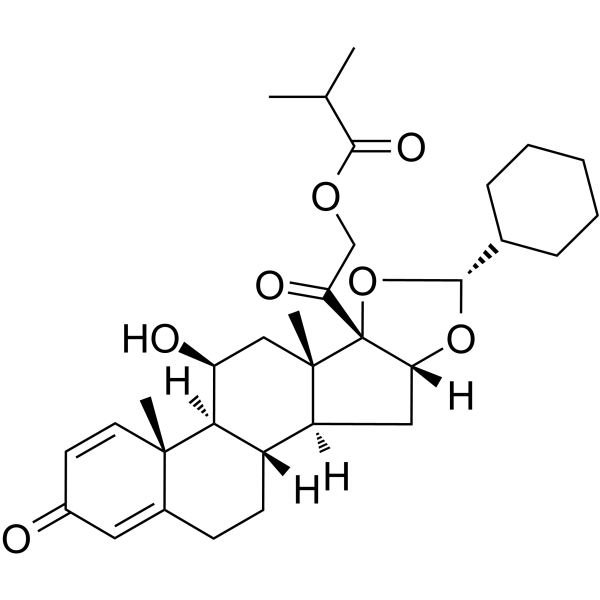
HY-B0625
CiclesonideGlucocorticoid -
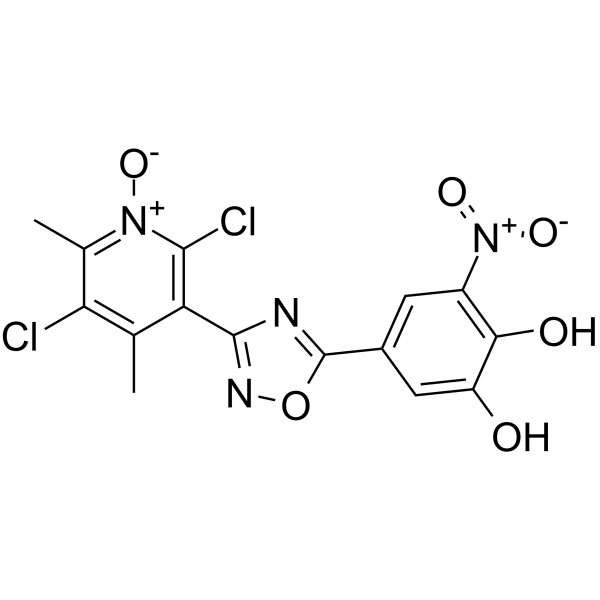
HY-14896
OpicaponeCOMT Inhibitor -
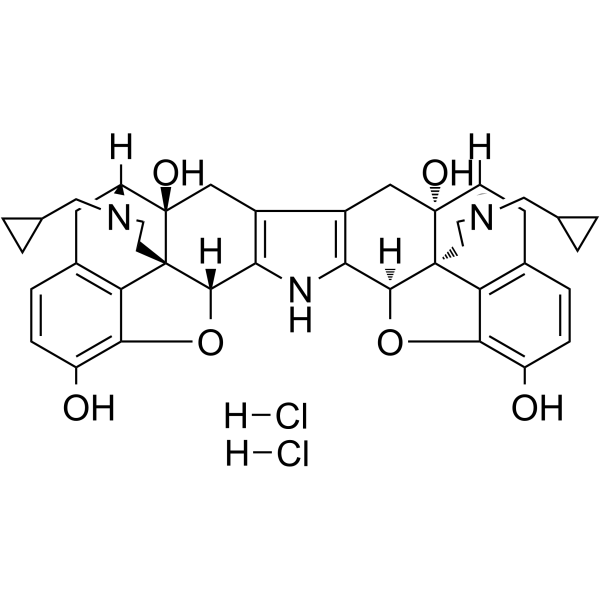
HY-100903
Norbinaltorphimine dihydrochlorideκ-opioid receptor Antagonist -
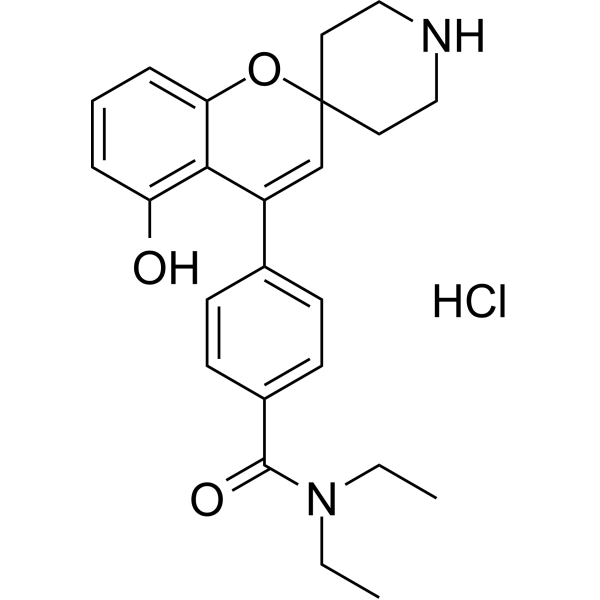
HY-13044
ADL-5859 hydrochlorideOpioid Receptor Agonist -

HY-15997B
(±)-U-50488 hydrochlorideKOR Agonist -
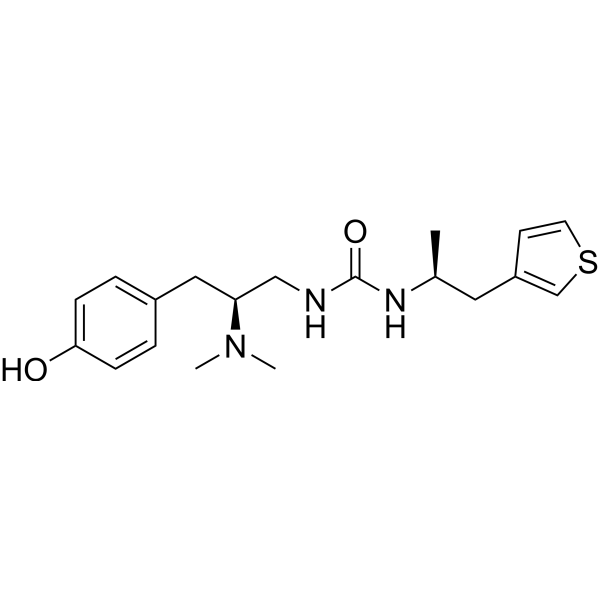
HY-101386
PZM21μ-opioid Receptor Agonist -
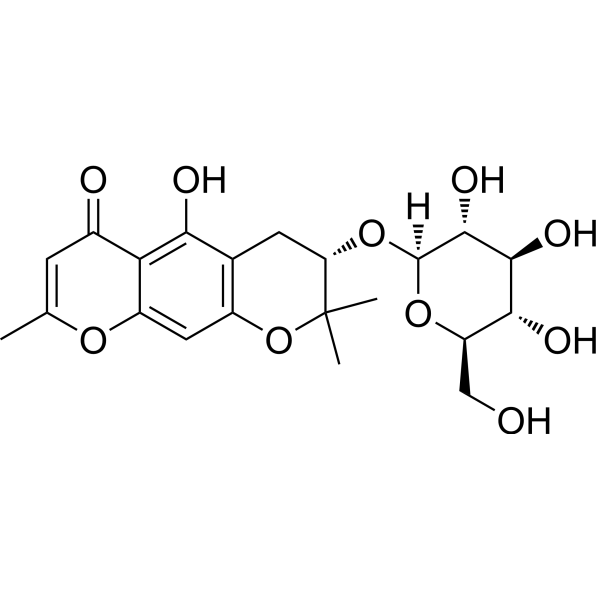
HY-N0398
Sec-O-GlucosylhamaudolOpioid Receptor Inhibitor -
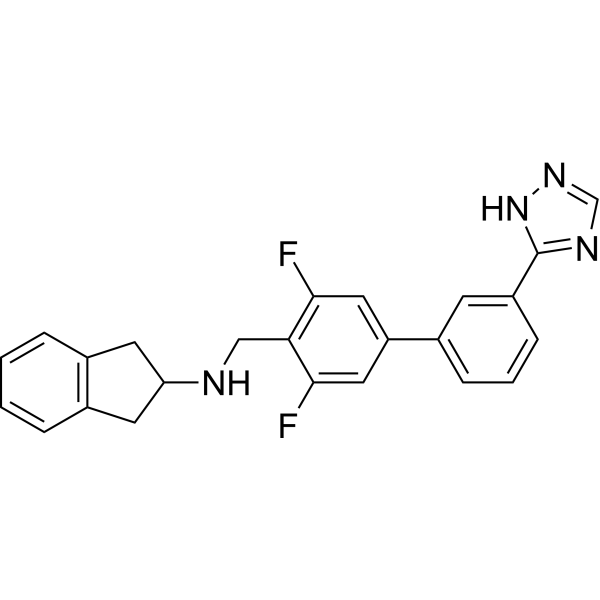
HY-115066
GSK1521498 free baseμ-opioid Receptor Antagonist -

HY-15997
(-)-U-50488 hydrochlorideKOR Agonist -
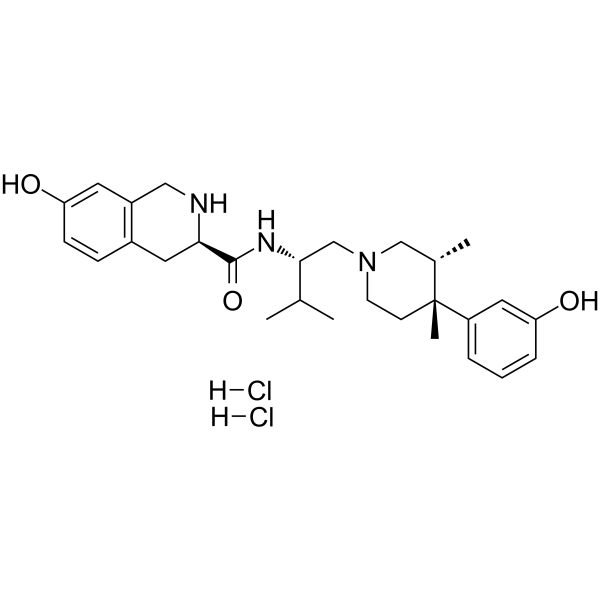
HY-10487
JDTic dihydrochloride -
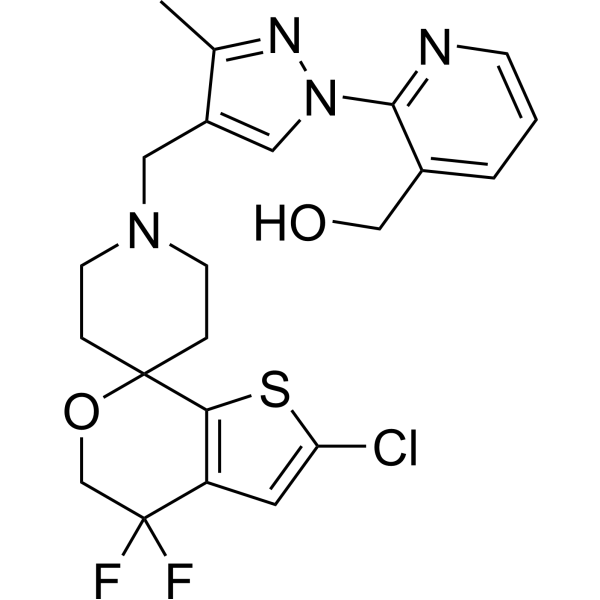
HY-114452
LY2940094NOP Antagonist
MedChemExpress(MCE)の使用を引用している文献 Naldemedine tosylate
MoreOpioid Receptor アイソフォーム固有の製品をすべて表示
More

生物活性
製品説明
IC50 & Target
|
μ Opioid Receptor/MOR |
体内実験
MedChemExpress (MCE) has not independently confirmed the accuracy of these methods. They are for reference only.
-
Animal Model:6-week-old Wistar and SD male rats[2]
-
Dosage:0.03-10 mg/kg
-
Administration:Oral gavage; 0.03-10 mg/kg; once
-
Result:Repressed the subcutaneous inhibition of small intestinal transit in rats with an ED50 of 0.03 mg/kg


化学情報
-
CAS 番号 1345728-04-2
-
性状 Solid
-
分子量 742.84
-
分子式 C39H42N4O9S
-
Color Off-white to light yellow
-
SMILES
O[C@@]1(CC(C(NC(C)(C2=NC(C3=CC=CC=C3)=NO2)C)=O)=C4O)[C@@]([C@@]4([H])OC5=C6O)(CC7)C5=C(C=C6)C[C@@]1([H])N7CC8CC8.CC9=CC=C(S(=O)(O)=O)C=C9
-
別名
S-297995 tosylate
-
輸送条件
Room temperature in continental US; may vary elsewhere.
-
保管条件
-20°C, stored under nitrogen, away from moisture
* In solvent : -80°C, 6 months; -20°C, 1 month (stored under nitrogen, away from moisture)


Publications (2)
-
Journal Impact Factor
-
Most Recent
-
Free Radic Biol Med
Targeted delivery of nebivolol via lactoferrin-modified liposomes inhibits NEK7-mediated pyroptosis to ameliorate inflammatory bowel disease. [Abstract]2026 Aug 16:252:493-508. PMID: 42061481 -
Biofactors
GRHL2/SENP1/VDR Signaling Axis: A Key Regulator of SUMOylation and Calcitriol Resistance in SHPT. [Abstract]2026 Mar-Apr;52(2):e70086. PMID: 41760369


溶剤 & 溶解度
体外:
DMSO : 50 mg/mL (67.31 mM; Need ultrasonic; Hygroscopic DMSO has a significant impact on the solubility of product, please use newly opened DMSO)
Please refer to the solubility information to select the appropriate solvent. Once prepared, please aliquot and store the solution to prevent product inactivation from repeated freeze-thaw cycles.
Storage method and period of stock solution: -80°C, 6 months; -20°C, 1 month (stored under nitrogen, away from moisture). When stored at -80°C, please use it within 6 months. When stored at -20°C, please use it within 1 month.
Please refer to the solubility information to select the appropriate solvent. Once prepared, please aliquot and store the solution to prevent product inactivation from repeated freeze-thaw cycles.
Storage method and period of stock solution: -80°C, 6 months; -20°C, 1 month (stored under nitrogen, away from moisture). When stored at -80°C, please use it within 6 months. When stored at -20°C, please use it within 1 month.
濃度 (開始) × 体積 (開始) = 濃度 (終了) × 体積 (終了)
体内:
Select the appropriate dissolution method based on your experimental animal and administration route.
- For the following dissolution methods, please ensure to first prepare a clear stock solution using an In Vitro approach and then sequentially add co-solvents:
- To ensure reliable experimental results, the clarified stock solution can be appropriately stored based on storage conditions. As for the working solution for In Vivo experiments, it is recommended to prepare freshly and use it on the same day.
- The percentages shown for the solvents indicate their volumetric ratio in the final prepared solution. If precipitation or phase separation occurs during preparation, heat and/or sonication can be used to aid dissolution.
Add each solvent one by one: 10% DMSO 40% PEG300 5% Tween-80 45% Saline
Solubility: ≥ 2.5 mg/mL (3.37 mM); Clear solution
This protocol yields a clear solution of ≥ 2.5 mg/mL (saturation unknown).
Taking 1 mL working solution as an example, add 100 μL DMSO stock solution (25.0 mg/mL) to 400 μL PEG300, and mix evenly; then add 50 μL Tween-80 and mix evenly; then add 450 μL Saline to adjust the volume to 1 mL.
Preparation of Saline: Dissolve 0.9 g sodium chloride in ddH₂O and dilute to 100 mL to obtain a clear Saline solution.
Add each solvent one by one: 10% DMSO 90% (20% SBE-β-CD in Saline)
Solubility: ≥ 2.5 mg/mL (3.37 mM); Clear solution
This protocol yields a clear solution of ≥ 2.5 mg/mL (saturation unknown).
Taking 1 mL working solution as an example, add 100 μL DMSO stock solution (25.0 mg/mL) to 900 μL 20% SBE-β-CD in Saline, and mix evenly.
Preparation of 20% SBE-β-CD in Saline (4°C, storage for one week): 2 g SBE-β-CD powder is dissolved in 10 mL Saline, completely dissolve until clear.
In Vivo Dissolution Calculator
Please enter the basic information of animal experiments:
-
-
-
-
Recommended: Prepare an additional quantity of animals to account for potential losses during experiments.
Please enter your animal formula composition:
-
%DMSO +
Recommended: Keep the proportion of DMSO in working solution below 2% if your animal is weak.
-
%+
-
+%Tween-80 + +
-
%Saline +
The co-solvents required include: DMSO, . All of co-solvents are available by MedChemExpress (MCE). , Tween 80. All of co-solvents are available by MedChemExpress (MCE).
Working solution concentration: 0.22 mg/mL
Method for preparing stock solution: mg drug dissolved in μL DMSO. Stock solution concentration: mg/mL. * In solvent : -80°C, 6 months; -20°C, 1 month (stored under nitrogen, away from moisture)
1. Take μL DMSO stock solution;
2. Add μL .
μL , mix evenly;
3. Then add μL Tween 80, mix evenly;
4. Then add μL
Please ensure that the stock solution in the first step is dissolved to a clear state, and add co-solvents in sequence. You can use ultrasonic heating (ultrasonic cleaner, recommended frequency 20-40 kHz), vortexing, etc. to assist dissolution.

プロトコル
-
Cell Cytotoxicity Assay
Cytotoxicity assays are usually based on the assessment of cell membrane damage, which can also be indirectly detected by measuring cell viability. Detection methods include MTT assay, CKK-8 assay, LDH assay and ATP assay, etc.


純度とドキュメンテーション
-
データシート (281 KB)
-
SDS (393 KB)
- English - EN (393 KB)
- Français - FR (393 KB)
- Deutsch - DE (393 KB)
- Norwegian - NO (393 KB)
- Español - ES (393 KB)
- Swedish - SV (393 KB)
- Italian - IT (393 KB)
- Korean - KR (393 KB)
- Portuguese - PT (393 KB)
-
取扱説明書 (2659 KB)
参考文献
[1]. Hannah A. Blair. Naldemedine: A Review in Opioid-Induced Constipation. Drugs. 2019 Jul;79(11):1241-1247. [Content Brief]
[2]. Toshiyuki Kanemasa, et al. Pharmacologic effects of naldemedine, a peripherally acting μ-opioid receptor antagonist, in in vitro and in vivo models of opioid-induced constipation. Neurogastroenterol Motil. 2019 May;31(5):e13563. [Content Brief]
[3]. Sugandh Kumar, et al. Identification of multipotent drugs for COVID-19 therapeutics with the evaluation of their SARS-CoV2 inhibitory activity. Comput Struct Biotechnol J. 2021;19:1998-2017. [Content Brief]


Complete Stock Solution Preparation Table
Please refer to the solubility information to select the appropriate solvent. Once prepared, please aliquot and store the solution to prevent product inactivation from repeated freeze-thaw cycles.
Storage method and period of stock solution: -80°C, 6 months; -20°C, 1 month (stored under nitrogen, away from moisture). When stored at -80°C, please use it within 6 months. When stored at -20°C, please use it within 1 month.
| Optional Solvent | Concentration Solvent Mass | 1 mg | 5 mg | 10 mg | 25 mg |
|---|---|---|---|---|---|
| DMSO | 1 mM | 1.3462 mL | 6.7309 mL | 13.4618 mL | 33.6546 mL |
| 5 mM | 0.2692 mL | 1.3462 mL | 2.6924 mL | 6.7309 mL | |
| 10 mM | 0.1346 mL | 0.6731 mL | 1.3462 mL | 3.3655 mL | |
| 15 mM | 0.0897 mL | 0.4487 mL | 0.8975 mL | 2.2436 mL | |
| 20 mM | 0.0673 mL | 0.3365 mL | 0.6731 mL | 1.6827 mL | |
| 25 mM | 0.0538 mL | 0.2692 mL | 0.5385 mL | 1.3462 mL | |
| 30 mM | 0.0449 mL | 0.2244 mL | 0.4487 mL | 1.1218 mL | |
| 40 mM | 0.0337 mL | 0.1683 mL | 0.3365 mL | 0.8414 mL | |
| 50 mM | 0.0269 mL | 0.1346 mL | 0.2692 mL | 0.6731 mL | |
| 60 mM | 0.0224 mL | 0.1122 mL | 0.2244 mL | 0.5609 mL |


Naldemedine tosylate 関連分類
HY-19627A 関連分類
 Powered by Bioz