



Alvimopan
Based on 2 publication(s) in Google Scholar
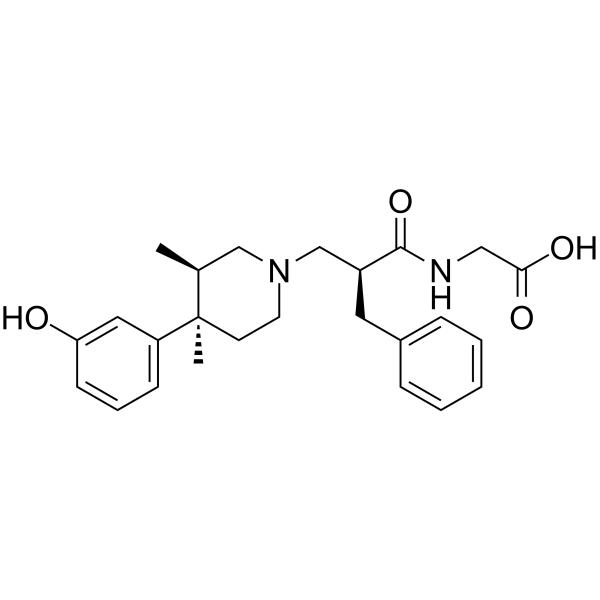
Alvimopan (ADL 8-2698) is a potent, selective, orally active and reversible μ-opioid receptor antagonist, with an IC50 of 1.7 nM. Alvimopan has selectivity for μ-opioid receptor (Ki=0.47 nM) over κ- and δ-opioid receptors (Kis=100, 12 nM, respectively). Alvimopan can be used for the research of postoperative ileus.
For research use only. We do not sell to patients.
- Purity : 98.42%
- CAS No.: 156053-89-3
- Formula: C25H32N2O4
- Molecular Weight:424.53
-
Storage:Powder -20°C, 3 years , 4°C, 2 years ; In solvent -80°C, 6 months , -20°C, 1 month

To place orders, for customer services and technical support, please contact: MedChemExpress USA
Tel: 609-228-6898 E-mail: [email protected] [email protected]


-
 Biological Activity
-
Chemical Information
-
Solvent & Solubility
- Purity & Documentation
- References
-
 Help & FAQs


-
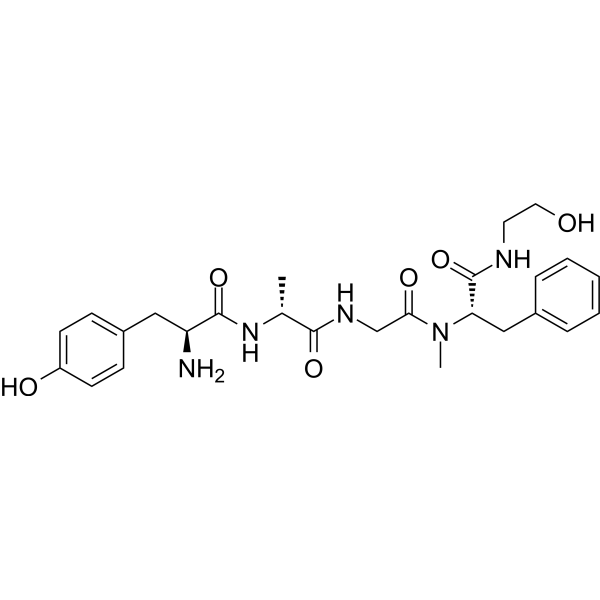
HY-P0210
DAMGOμ-OPR Agonist -
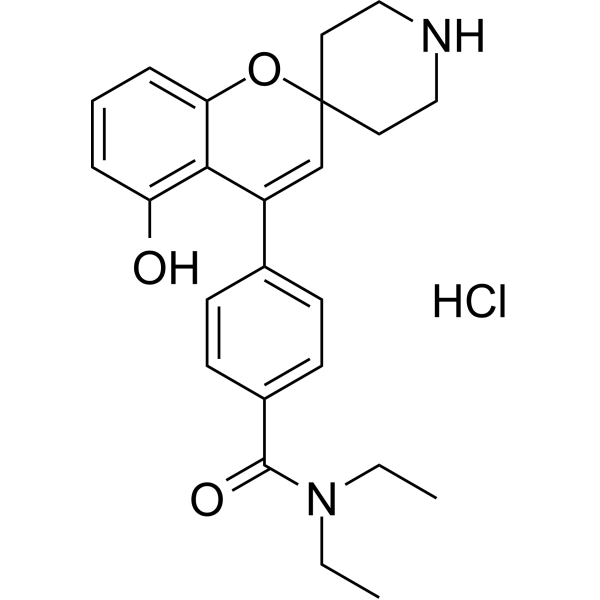
HY-13044
ADL-5859 hydrochlorideOpioid Receptor Agonist -
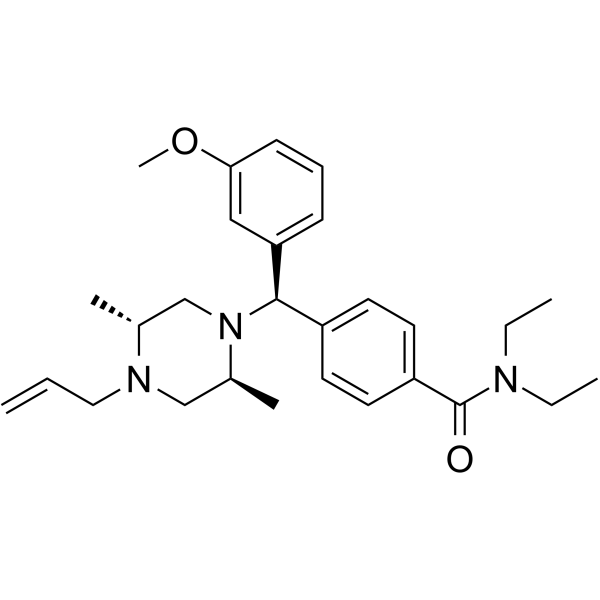
HY-101202
SNC80δ-opioid Receptor Agonist -
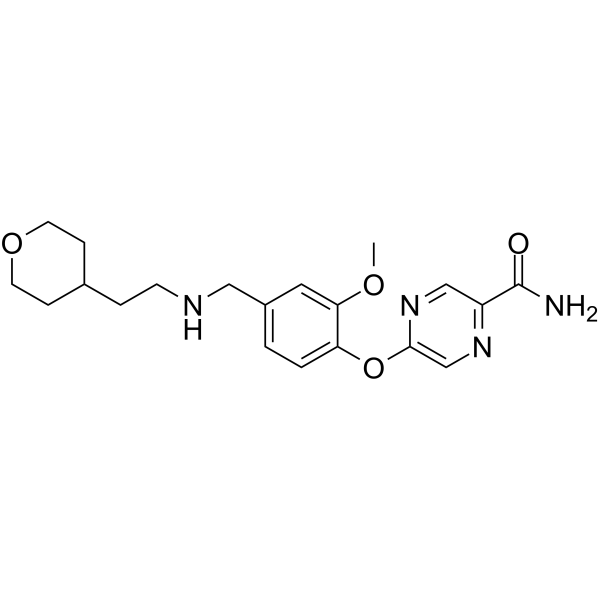
HY-100122
Bevenopranμ-opioid receptor antagonist t -
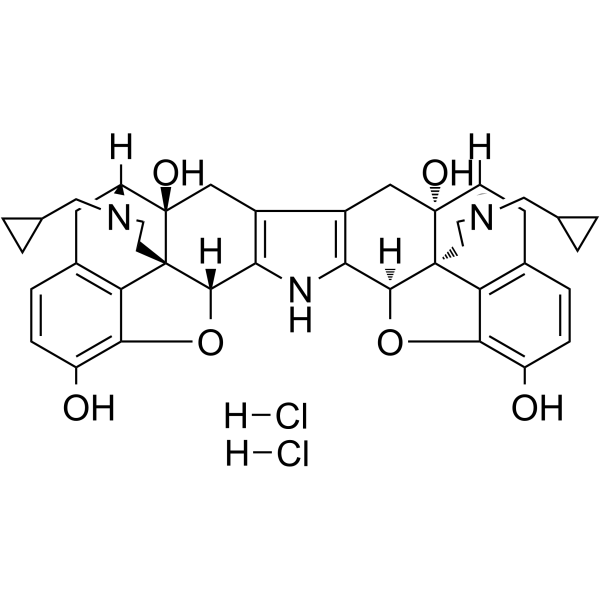
HY-100903
Norbinaltorphimine dihydrochlorideκ-opioid receptor Antagonist -
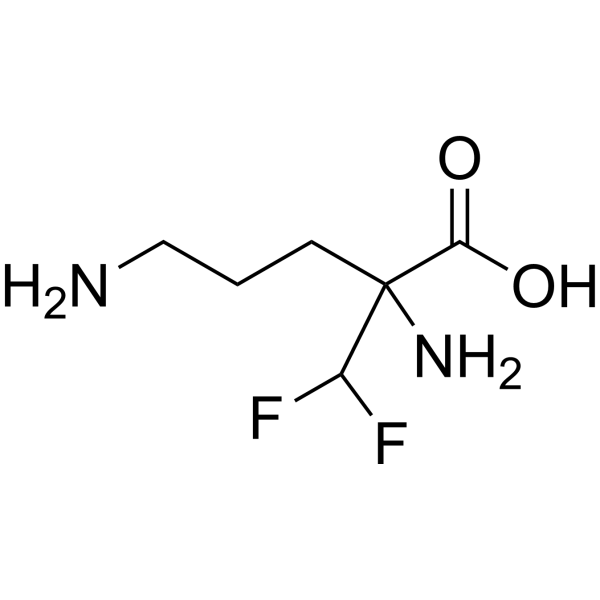
HY-B0744
EflornithineOrnithine Decarboxylase Inhibitor -
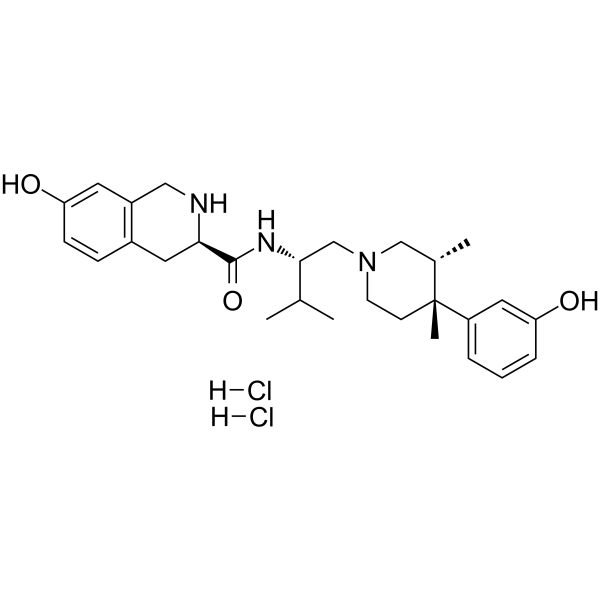
HY-10487
JDTic dihydrochloride -
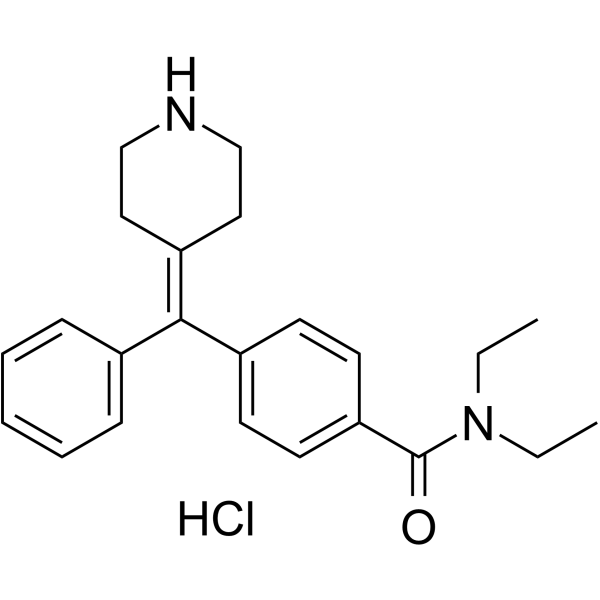
HY-101039A
AR-M 1000390 hydrochlorideδ Opioid Receptor Agonist -
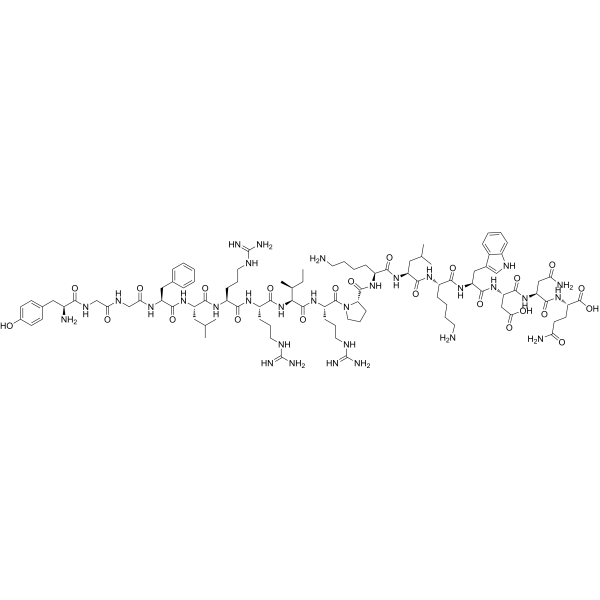
HY-P1333
Dynorphin AKOR Agonist -

HY-13243R
Alvimopan (Standard)μ-opioid Receptor Antagonist -

HY-14157
ADL-5747DOR Agonist -
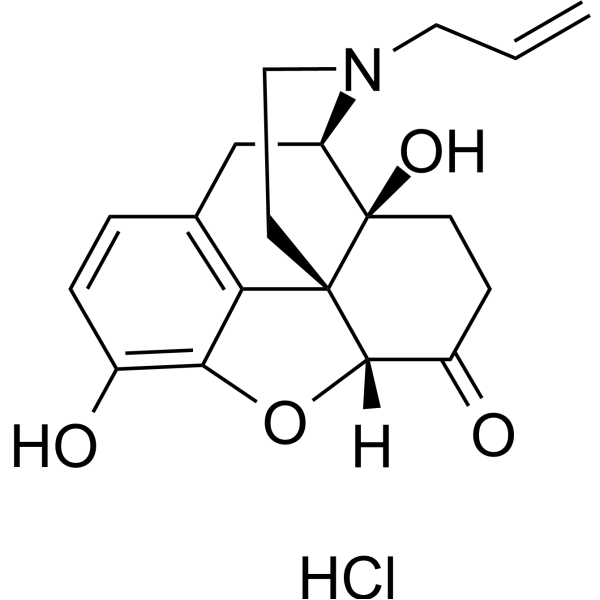
HY-17417
Naloxone hydrochlorideOpioid Receptor Antagonist
Publications Citing Use of MedChemExpress (MCE) Alvimopan
MoreAll Opioid Receptor Isoforms
More

Biological Activity
Description
IC50 & Target
IC50: 1.7 nM (μ-opioid receptor)[1]
Cellular Effect
|
Cell Line

|
Type | Value | Description | References |
|---|---|---|---|---|
| HEK-293T | IC50 |
0.003 μM
Compound: 1
|
Antagonist activity at recombinant human MOR expressed in HEK293T cells assessed as reduction in DAMGO-induced inhibition of forskolin-stimulated cAMP level preincubated for 15 to 20 mins followed by DAMGO and forskolin addition by GloSensor assay
Antagonist activity at recombinant human MOR expressed in HEK293T cells assessed as reduction in DAMGO-induced inhibition of forskolin-stimulated cAMP level preincubated for 15 to 20 mins followed by DAMGO and forskolin addition by GloSensor assay
|
[PMID: 28726402] |
In Vitro
Alvimopan inhibits the loperamide-stimulated [35S]GTPγS binding to membranes containing the cloned human μ-opioid receptor, with an IC50 value of 1.7 nM[1].
MedChemExpress (MCE) has not independently confirmed the accuracy of these methods. They are for reference only.
In Vivo
Alvimopan (3 mg/kg; p.o.) has no effect on the visceromotor behavioural responses (VMR) induced by noxious colorectal distension (CRD) in conscious rats[3].
MedChemExpress (MCE) has not independently confirmed the accuracy of these methods. They are for reference only.
Clinical Trial
| NCT Number | Sponsor | Condition | Start Date |
Phase
|
|---|---|---|---|---|
| NCT01329991 | Plexxikon| | 2011-05 | PHASE1 |


Chemical Information
-
CAS No. 156053-89-3
-
Appearance Solid
-
Molecular Weight 424.53
-
Formula C25H32N2O4
-
Color Off-white to light yellow
-
SMILES
O=C(CNC([C@@H](CC1=CC=CC=C1)CN2C[C@@H]([C@](C3=CC=CC(O)=C3)(CC2)C)C)=O)O
-
Synonyms
ADL 8-2698; LY 246736
-
Shipping
Room temperature in continental US; may vary elsewhere.
-
Storage
Powder -20°C 3 years 4°C 2 years In solvent -80°C 6 months -20°C 1 month


Publications (2)
-
Journal Impact Factor
-
Most Recent


Solvent & Solubility
In Vitro:
DMSO : ≥ 100 mg/mL (235.55 mM; Hygroscopic DMSO has a significant impact on the solubility of product, please use newly opened DMSO)
* "≥" means soluble, but saturation unknown.
Please refer to the solubility information to select the appropriate solvent. Once prepared, please aliquot and store the solution to prevent product inactivation from repeated freeze-thaw cycles.
Storage method and period of stock solution: -80°C, 6 months; -20°C, 1 month. When stored at -80°C, please use it within 6 months. When stored at -20°C, please use it within 1 month.
Please refer to the solubility information to select the appropriate solvent. Once prepared, please aliquot and store the solution to prevent product inactivation from repeated freeze-thaw cycles.
Storage method and period of stock solution: -80°C, 6 months; -20°C, 1 month. When stored at -80°C, please use it within 6 months. When stored at -20°C, please use it within 1 month.
Concentration (start) × Volume (start) = Concentration (final) × Volume (final)
In Vivo:
Select the appropriate dissolution method based on your experimental animal and administration route.
- For the following dissolution methods, please ensure to first prepare a clear stock solution using an In Vitro approach and then sequentially add co-solvents:
- To ensure reliable experimental results, the clarified stock solution can be appropriately stored based on storage conditions. As for the working solution for In Vivo experiments, it is recommended to prepare freshly and use it on the same day.
- The percentages shown for the solvents indicate their volumetric ratio in the final prepared solution. If precipitation or phase separation occurs during preparation, heat and/or sonication can be used to aid dissolution.
Add each solvent one by one: 10% DMSO 40% PEG300 5% Tween-80 45% Saline
Solubility: ≥ 2.5 mg/mL (5.89 mM); Clear solution
This protocol yields a clear solution of ≥ 2.5 mg/mL (saturation unknown).
Taking 1 mL working solution as an example, add 100 μL DMSO stock solution (25.0 mg/mL) to 400 μL PEG300, and mix evenly; then add 50 μL Tween-80 and mix evenly; then add 450 μL Saline to adjust the volume to 1 mL.
Preparation of Saline: Dissolve 0.9 g sodium chloride in ddH₂O and dilute to 100 mL to obtain a clear Saline solution.
Add each solvent one by one: 10% DMSO 90% (20% SBE-β-CD in Saline)
Solubility: ≥ 2.5 mg/mL (5.89 mM); Clear solution
This protocol yields a clear solution of ≥ 2.5 mg/mL (saturation unknown).
Taking 1 mL working solution as an example, add 100 μL DMSO stock solution (25.0 mg/mL) to 900 μL 20% SBE-β-CD in Saline, and mix evenly.
Preparation of 20% SBE-β-CD in Saline (4°C, storage for one week): 2 g SBE-β-CD powder is dissolved in 10 mL Saline, completely dissolve until clear.
In Vivo Dissolution Calculator
Please enter the basic information of animal experiments:
-
-
-
-
Recommended: Prepare an additional quantity of animals to account for potential losses during experiments.
Please enter your animal formula composition:
-
%DMSO +
Recommended: Keep the proportion of DMSO in working solution below 2% if your animal is weak.
-
%+
-
+%Tween-80 + +
-
%Saline +
The co-solvents required include: DMSO, . All of co-solvents are available by MedChemExpress (MCE). , Tween 80. All of co-solvents are available by MedChemExpress (MCE).
Working solution concentration: 0.22 mg/mL
Method for preparing stock solution: mg drug dissolved in μL DMSO. Stock solution concentration: mg/mL.
1. Take μL DMSO stock solution;
2. Add μL .
μL , mix evenly;
3. Then add μL Tween 80, mix evenly;
4. Then add μL
Please ensure that the stock solution in the first step is dissolved to a clear state, and add co-solvents in sequence. You can use ultrasonic heating (ultrasonic cleaner, recommended frequency 20-40 kHz), vortexing, etc. to assist dissolution.


Purity & Documentation
-
Data Sheet (274 KB)
-
SDS (537 KB)
- English - EN (537 KB)
- Français - FR (537 KB)
- Deutsch - DE (537 KB)
- Norwegian - NO (537 KB)
- Español - ES (537 KB)
- Swedish - SV (537 KB)
- Italian - IT (537 KB)
- Korean - KR (537 KB)
- Portuguese - PT (537 KB)
-
Handling Instructions (2659 KB)
References
[1]. Bourdonnec BL, et, al. Novel trans-3,4-dimethyl-4-(3-hydroxyphenyl)piperidines as mu opioid receptor antagonists with improved opioid receptor selectivity profiles. Bioorg Med Chem Lett. 2008 Mar 15;18(6):2006-12. [Content Brief]
[2]. Erowele GI, et, al. Alvimopan (Entereg), a Peripherally Acting mu-Opioid Receptor Antagonist For Postoperative Ileus. P T. 2008 Oct;33(10):574-83. [Content Brief]
[3]. Meerveld BG, et, al. Preclinical studies of opioids and opioid antagonists on gastrointestinal function. Neurogastroenterol Motil. 2004 Oct;16 Suppl 2:46-53. [Content Brief]


Complete Stock Solution Preparation Table
Please refer to the solubility information to select the appropriate solvent. Once prepared, please aliquot and store the solution to prevent product inactivation from repeated freeze-thaw cycles.
Storage method and period of stock solution: -80°C, 6 months; -20°C, 1 month. When stored at -80°C, please use it within 6 months. When stored at -20°C, please use it within 1 month.
| Optional Solvent | Concentration Solvent Mass | 1 mg | 5 mg | 10 mg | 25 mg |
|---|---|---|---|---|---|
| DMSO | 1 mM | 2.3555 mL | 11.7777 mL | 23.5555 mL | 58.8887 mL |
| 5 mM | 0.4711 mL | 2.3555 mL | 4.7111 mL | 11.7777 mL | |
| 10 mM | 0.2356 mL | 1.1778 mL | 2.3555 mL | 5.8889 mL | |
| 15 mM | 0.1570 mL | 0.7852 mL | 1.5704 mL | 3.9259 mL | |
| 20 mM | 0.1178 mL | 0.5889 mL | 1.1778 mL | 2.9444 mL | |
| 25 mM | 0.0942 mL | 0.4711 mL | 0.9422 mL | 2.3555 mL | |
| 30 mM | 0.0785 mL | 0.3926 mL | 0.7852 mL | 1.9630 mL | |
| 40 mM | 0.0589 mL | 0.2944 mL | 0.5889 mL | 1.4722 mL | |
| 50 mM | 0.0471 mL | 0.2356 mL | 0.4711 mL | 1.1778 mL | |
| 60 mM | 0.0393 mL | 0.1963 mL | 0.3926 mL | 0.9815 mL | |
| 80 mM | 0.0294 mL | 0.1472 mL | 0.2944 mL | 0.7361 mL | |
| 100 mM | 0.0236 mL | 0.1178 mL | 0.2356 mL | 0.5889 mL |


Alvimopan Related Classifications
HY-13243 Related Classifications
 Powered by Bioz