



Search Result
Results for "
Lys-Pro-Val
" in MedChemExpress (MCE) Product Catalog:
| Cat. No. |
Product Name |
Target |
Research Areas |
Chemical Structure |
-
- HY-P0252
-
α-MSH
Maximum Cited Publications
23 Publications Verification
α-Melanocyte-Stimulating Hormone
|
Melanocortin Receptor
|
Neurological Disease
Metabolic Disease
Inflammation/Immunology
|
|
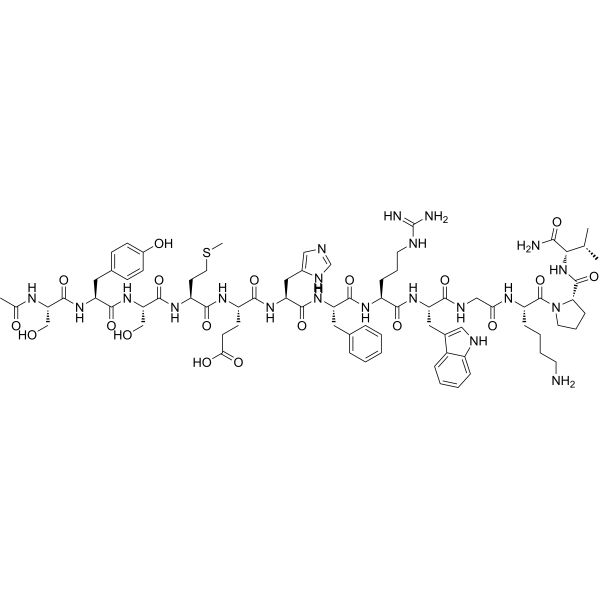
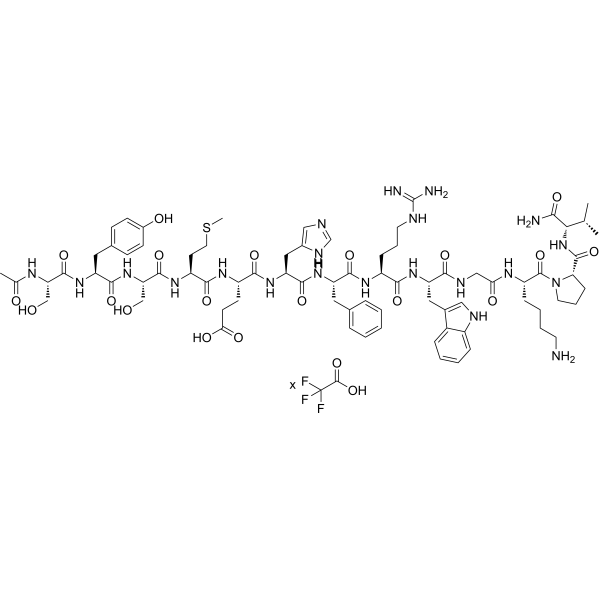
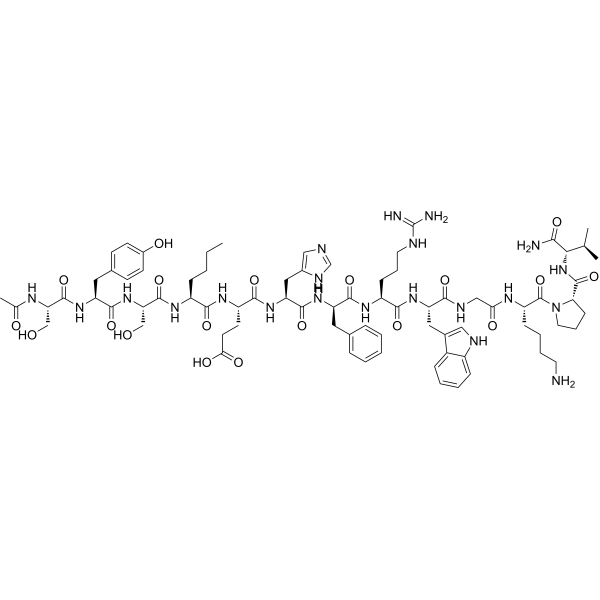
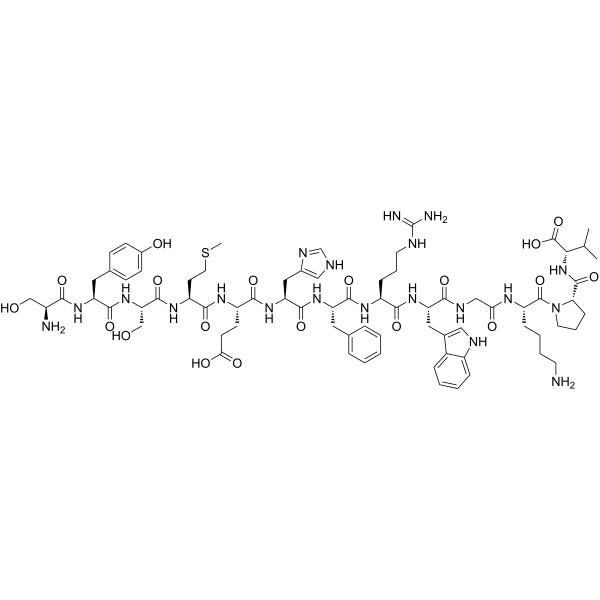
α-MSH (α-Melanocyte-Stimulating Hormone), an endogenous neuropeptide, is an endogenous melanocortin receptor 4 (MC4R) agonist with anti-inflammatory and antipyretic activities. α-MSH is a post-translational derivative of pro-opiomelanocortin (POMC) .
|
-
-
- HY-P1211
-
-
-
- HY-N2466
-
|
MT-I; [Nle4,D-Phe7]-α-MSH
|
Melanocortin Receptor
|
Neurological Disease
Cancer
|
|
Melanotan I is a potent non-selective melanocortin receptor (MCR) agonist. Melanotan I is a synthetic analogue of α-melanocyte stimulating hormone (α-MSH) that stimulates melanogenesis. Melanotan I can induce skin tanning by mimicking the actions of a-MSH on the melanocortin type 1 receptors (MC1R) of melanocytes. Melanotan I can be used for the research of sun-induced skin cancer, melanoma, inflammation and male erectile dysfunction .
|
-
-
- HY-129724A
-
|
ACTH-(11-13) acetate; Lys-Pro-Val acetate; H-Lys-Pro-Val-OH acetate
|
Melanocortin Receptor
NF-κB
Bacterial
Interleukin Related
Apoptosis
|
Infection
Neurological Disease
Metabolic Disease
Inflammation/Immunology
|
|
α-MSH (11-13) (ACTH-(11-13)) acetate is a C-terminal tripeptide of α-MSH that can cross the blood-brain barrier. α-MSH (11-13) acetate exhibits antipyretic, anti-inflammatory, and antibacterial activities. α-MSH (11-13) acetate also exerts neuroprotective effects after traumatic brain injury by inhibiting excessive activation of microglia and reducing neuronal apoptosis. α-MSH (11-13) acetate can be used in research related to traumatic brain injury, fever, and bacterial infections .
|
-
-
- HY-P0097
-
|
Melanostatine-5
|
Melanocortin Receptor
|
Metabolic Disease
Endocrinology
Cancer
|
|
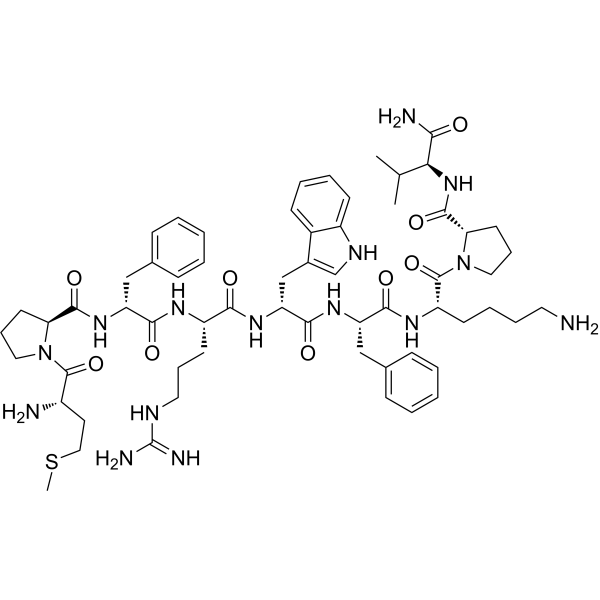
Nonapeptide-1 (Melanostatine-5), a peptide hormone, is a selective antagonist of MC1R (Ki: 40 nM). Nonapeptide-1 is a competitive α-MSH antagonist that potently inhibits intracellular cAMP and melanosome dispersion induced by α-MSH in melanocytes (IC50: 2.5 nM and 11 nM, respectively). Nonapeptide-1 inhibits melanin synthesis, and can be used in the research of skin pigmentation and regulation of steroid production in the adrenal gland, skin cancer .
|
-
-
- HY-106373
-
|
ACTH; Adrenocorticotrophic hormone
|
Androgen Receptor
Reactive Oxygen Species (ROS)
Mitochondrial Metabolism
Interleukin Related
TNF Receptor
|
Metabolic Disease
Inflammation/Immunology
|
|
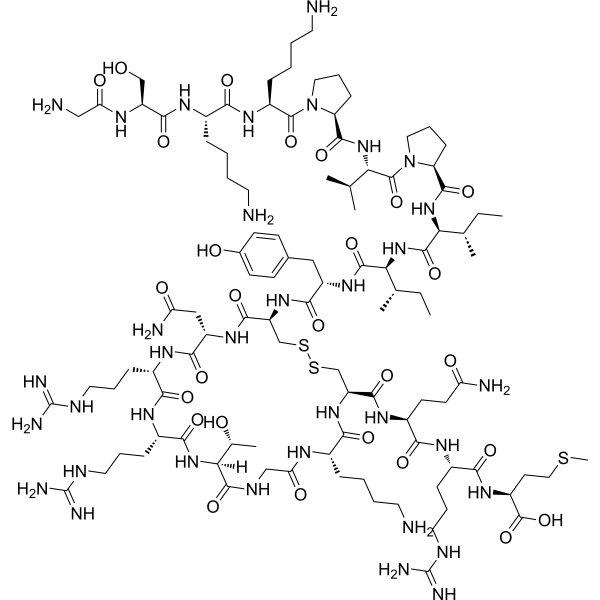
Adrenocorticotropic hormone (ACTH; Adrenocorticotrophic hormone) is a polypeptide tropic hormone produced by the anterior pituitary gland. Adrenocorticotropic hormone stimulates cortisol secretion from the adrenal cortex via the hypothalamic-pituitary-adrenal (HPA) axis. Adrenocorticotropic hormone regulates cortisol and androgen production. Adrenocorticotropic hormone can promote the development of spermatogenesis. Adrenocorticotropic hormone can relieve acute inflammation in gout models by inhibiting the polarization of macrophages to M1 type, inhibiting ROS and proinflammatory factor production and protecting mitochondrial function. Adrenocorticotropic hormone can be used for the researches of inflammation, endocrinology, metabolic disease, such as gout and nephrotic syndrome .
|
-
-
- HY-P5601
-
|
|
Bacterial
Fungal
|
Infection
|
|
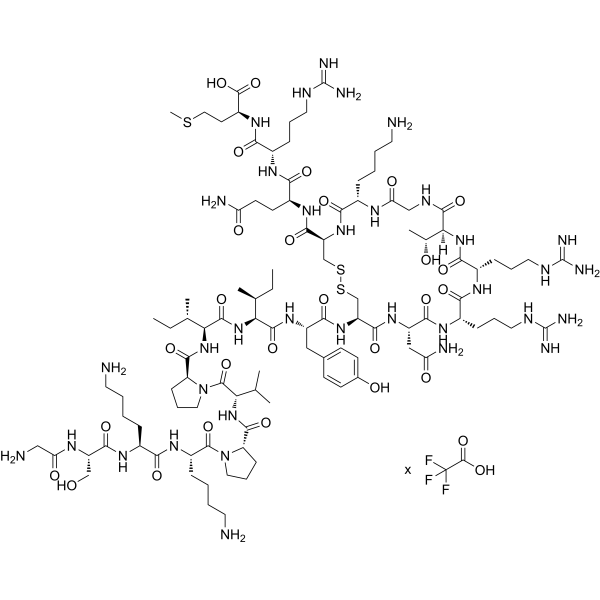
Thanatin is an inducible cationic antimicrobial peptide. Thanatin is a pathogen-inducible single-disulfide-bond-containing β-hairpin AMP. Thanatin displays broad-spectrum activity against both Gram-negative and Gram-positive bacteria as well as against various species of fungi with MICs of 0.3-40 µM, 0.6-40 µM and 0.6-20 µM, respectively. Thanatin has the property of competitive replacement of divalent cations from bacterial outer membrane (OM), leading to OM disruption .
|
-
-
- HY-P0060
-
|
Tetracosactrin; ACTH(1–24)
|
CRFR
Melanocortin Receptor
|
Neurological Disease
Inflammation/Immunology
|
|
Tetracosactide (Tetracosactrin) is an analogue of adrenocorticotrophic hormone (ACTH). Tetracosactide is the agonist for melanocortin-4 receptor (MC4R) that activates human MC4R with an EC50 of 0.65 nM. Tetracosactide can stimulate the release of corticosteroids such as cortisol from the adrenal gland. Tetracosactide is currently used for the research of ulcerative colitis and Crohn's disease, juvenile/adult rheumatoid arthritis and osteoarthrosis .
|
-
-
- HY-P5601A
-
|
|
Bacterial
Fungal
|
Infection
|
|
Thanatin TFA is an inducible cationic antimicrobial peptide. Thanatin TFA s a pathogen-inducible single-disulfide-bond-containing β-hairpin AMP. Thanatin TFA displays broad-spectrum activity against both Gram-negative and Gram-positive bacteria as well as against various species of fungi with MICs of 0.3-40 µM, 0.6-40 µM and 0.6-20 µM, respectively. Thanatin TFA has the property of competitive replacement of divalent cations from bacterial outer membrane (OM), leading to OM disruption .
|
-
-
- HY-129724
-
-
-
- HY-P0097A
-
|
Melanostatine-5 acetate salt
|
Melanocortin Receptor
|
Metabolic Disease
Endocrinology
Cancer
|
|
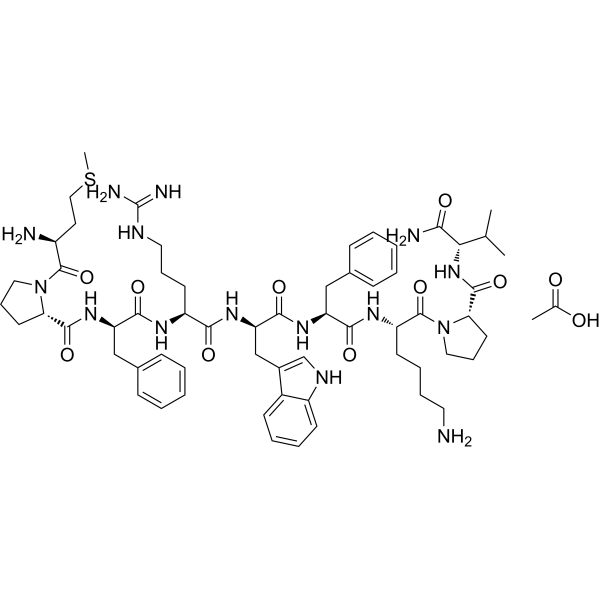
Nonapeptide-1 (Melanostatine-5) acetate salt, a peptide hormone, is a selective antagonist of MC1R (Ki: 40 nM). Nonapeptide-1 acetate salt is a competitive α-MSH antagonist that potently inhibits intracellular cAMP and melanosome dispersion induced by α-MSH in melanocytes (IC50: 2.5 nM and 11 nM, respectively). Nonapeptide-1 acetate salt inhibits melanin synthesis, and can be used in the research of skin pigmentation and regulation of steroid production in the adrenal gland, skin cancer .
|
-
-
- HY-P0252A
-
-
-
- HY-P3564
-
|
|
Melanocortin Receptor
|
Others
|
|
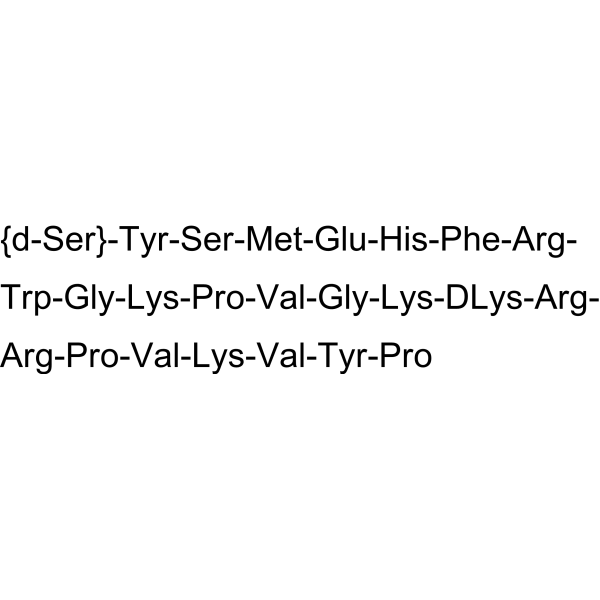
(D-Ser1)-ACTH (1-24) (human, bovine, mouse, ovine, porcine, rabbit, rat) is an adrenocorticotropic hormone (ACTH) analogue .
|
-
-
- HY-P10233A
-
|
|
Bacterial
|
Infection
|
|
SAAP 148 TFA is a synthetic antimicrobial peptide (bacteria) that interacts with and disrupts the lipid bilayer of bacterial cytoplasmic membranes, thereby inducing changes in membrane permeability and bacterial death. SAAP 148 TFA kills drug-resistant, multidrug-resistant and persister bacterial strains, inhibits biofilm formation, eliminates established biofilms, and blocks bacterial colonization on implant surfaces. SAAP 148 TFA retains its activity after modification or immobilization, exhibits variable cytotoxicity in different human cell models, and shows reduced efficacy in protein-rich environments. SAAP 148 TFA can be used in infection-related research .
|
-
-
- HY-P1477
-
-
-
- HY-P1477A
-
-
-
- HY-P2185A
-
|
|
MMP
|
Others
|
|
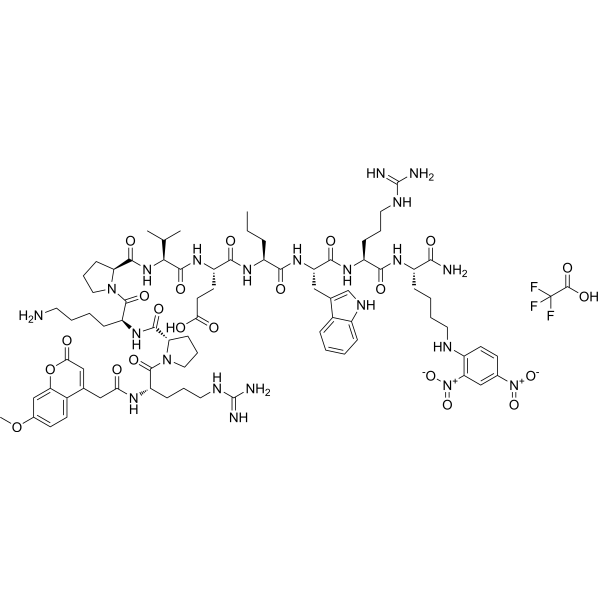
NFF-3 TFA, the peptide, is a selective MMP substrate. NFF-3 TFA selectively binds to MMP-3 and MMP-10 to be hydrolyzed. NFF-3 TFA is also cleaved by trypsin, hepatocyte growth factor activator, and factor Xa. Label NFF-3 TFA with a CyDye pair, Cy3/Cy5Q, can produce fluorescence in cell assays to detect cell activity .
|
-
-
- HY-P1582A
-
|
Adrenocorticotropic Hormone Fragment 1-14 TFA
|
Adrenergic Receptor
|
Others
|
|
ACTH (1-14) (TFA) is a fragment of adrenocorticotrophin, which regulates cortisol and androgen production .
|
-
-
- HY-P3068
-
|
Adrenocorticotropic hormone (1-16)
|
Melanocortin Receptor
|
Cardiovascular Disease
|
|
ACTH (1-16) (human) (Adrenocorticotropic hormone (1-16)) is an ACTH fragment. ACTH (1-16) (human) improves cardiovascular function and survival in experimental hemorrhagic shock .
|
-
-
- HY-P1208
-
|
|
Melanocortin Receptor
|
Inflammation/Immunology
|
|
PG-931, an analog of SHU 9119 (HY-P0227), is a potent melanocortin 4 (MC4) receptor (IC50=0.58 nM) agonist and is more selective than for the hMC3R (IC50=55 nM) or the hMC5R (IC50=2.4 nM). PG-931 can reverse haemorrhagic shock and prevent multiple organ damage in vivo .
|
-
-
- HY-P1545A
-
-
-
- HY-106373A
-
|
ACTH TFA; Adrenocorticotrophic hormone TFA
|
Androgen Receptor
Reactive Oxygen Species (ROS)
Mitochondrial Metabolism
Interleukin Related
TNF Receptor
|
Metabolic Disease
Inflammation/Immunology
|
|
Adrenocorticotropic hormone (ACTH; Adrenocorticotrophic hormone) TFA is a polypeptide tropic hormone produced by the anterior pituitary gland. Adrenocorticotropic hormone TFA stimulates cortisol secretion from the adrenal cortex via the hypothalamic-pituitary-adrenal (HPA) axis. Adrenocorticotropic hormone TFA regulates cortisol and androgen production. Adrenocorticotropic hormone TFA can promote the development of spermatogenesis. Adrenocorticotropic hormone TFA can relieve acute inflammation in gout models by inhibiting the polarization of macrophages to M1 type, inhibiting ROS and proinflammatory factor production and protecting mitochondrial function. Adrenocorticotropic hormone TFA can be used for the researches of inflammation, endocrinology, metabolic disease, such as gout and nephrotic syndrome .
|
-
-
- HY-P4933
-
|
Tau-F Protein (255-314)
|
Tau Protein
|
Neurological Disease
|
|
Tau Peptide (255-314) (Repeat 2 Domain) (human) (Tau-F protein (255-314)) is a polypeptide. Tau Peptide (255-314) (human) is the 255-314 fragment of Tau-F (also known as Tau-4, the 2N4 isoform), a major isoform of the Tau protein. Tau Peptide (255-314) (human) contains two core driving sequences for Tau aggregation, namely PHF6* (275-280, VQIINK) and PHF6 (306-311, VQIVYK), and spans the C-terminal half of repeat domain R1, the entire repeat domain R2, and the N-terminal half of repeat domain R3 within the microtubule-binding region (MTBR).
|
-
-
- HY-P4911A
-
|
|
CXCR
|
Cardiovascular Disease
|
|
SDF-1α (human) TFA is a mononuclear cells chemoattractant that can bind to CXCR4. SDF-1α plays a central role in stem cell homing, retention, survival, proliferation, cardiomyocyte repair, angiogenesis and ventricular remodelling following myocardial infarction. SDF-1α (human) TFA can be used in cardiovascular disease research .
|
-
-
- HY-P1558
-
|
Adrenocorticotropic Hormone (11-24)
|
Melanocortin Receptor
|
Neurological Disease
|
|
ACTH (11-24) is an adrenocorticotropic hormone (ACTH) receptor antagonist. ACTH (11-24) is a fragment of adrenocorticotropic and induces cortisol release. ACTH (11-24) can be used for the research of central nervous system .
|
-
-
- HY-P1558A
-
|
Adrenocorticotropic Hormone (11-24) acetate
|
Melanocortin Receptor
|
Neurological Disease
|
|
ACTH (11-24) (acetate) is an adrenocorticotropic hormone (ACTH) receptor antagonist. ACTH (11-24) is a fragment of adrenocorticotropic and induces cortisol release. ACTH (11-24) can be used for the research of central nervous system .
|
-
-
- HY-P1382A
-
|
|
Ras
|
Cancer
|
|
Rac1 Inhibitor W56 TFA is a peptide containing residues 45-60 of Rac1. Rac1 Inhibitor W56 TFA inhibits Rac1 interaction with guanine nucleotide exchange factors TrioN, GEF-H1, and Tiam .
|
-
-
- HY-105305
-
|
ABT-719; AP-214
|
Melanocortin Receptor
|
Inflammation/Immunology
|
|
Modimelanotide (ABT-719) is an α-melanocyte-stimulating hormone analog. Modimelanotide has high specific binding ability to melanocortin receptors (MCR1, 3, 4, 5). Modimelanotide possesses anti-inflammatory and organ-protective effects. Modimelanotide can be used in the research of diseases such as acute kidney injury .
|
-
-
- HY-P10233
-
|
|
Bacterial
|
Infection
|
|
SAAP 148 is a synthetic antimicrobial peptide (bacteria) that interacts with and disrupts the lipid bilayer of bacterial cytoplasmic membranes, thereby inducing changes in membrane permeability and bacterial death. SAAP 148 kills drug-resistant, multidrug-resistant and persister bacterial strains, inhibits biofilm formation, eliminates established biofilms, and blocks bacterial colonization on implant surfaces. SAAP 148 retains its activity after modification or immobilization, exhibits variable cytotoxicity in different human cell models, and shows reduced efficacy in protein-rich environments. SAAP 148 can be used in infection-related research .
|
-
-
- HY-P4911
-
|
|
CXCR
|
Cardiovascular Disease
|
|
SDF-1α (human) is a mononuclear cells chemoattractant that can bind to CXCR4. SDF-1α plays a central role in stem cell homing, retention, survival, proliferation, cardiomyocyte repair, angiogenesis and ventricular remodelling following myocardial infarction. SDF-1α (human) can be used in cardiovascular disease research .
|
-
-
- HY-P2185
-
|
|
MMP
|
Others
|
|
NFF-3, the peptide, is a selective MMP substrate. NFF-3 selectively binds to MMP-3 and MMP-10 to be hydrolyzed. NFF-3 is also cleaved by trypsin, hepatocyte growth factor activator, and factor Xa. Label NFF-3 with a CyDye pair, Cy3/Cy5Q, can produce fluorescence in cell assays to detect cell activity .
|
-
-
- HY-P11165
-
|
|
Bacterial
|
Infection
|
|
DRGN-1 is an antimicrobial peptide. DRGN-1 exhibits potent antimicrobial and anti-biofilm activities, inhibiting both Gram-negative and Gram-positive bacteria, with an EC50 range of 0.50-4.62 μM. DRGN-1 exerts its antimicrobial effect by disrupting bacterial membrane permeability and slightly depolarizing the membrane potential. DRGN-1 inhibits the formation of biofilms of single bacterial species and mixed species of Pseudomonas aeruginosa and Staphylococcus aureus. DRGN-1 can significantly promote the healing of uninfected and mixed biofilm-infected mouse wounds. DRGN-1 can be used for the study of infections .
|
-
-
- HY-P4786
-
-
-
- HY-P4413
-
|
|
Androgen Receptor
|
Endocrinology
|
|
(Des-Glu5)-ACTH (1-24) (human, bovine, rat) is an analogue of Adrenocorticotropic hormone (ACTH; HY-106373). ACTH is a polypeptide tropic hormone produced by the anterior pituitary gland, regulating cortisol and androgen production .
|
-
-
- HY-P4779
-
|
|
Androgen Receptor
|
Neurological Disease
|
|
Acetyl-ACTH (2-24) (human, bovine, rat) is a fragment of proopiomelanocortin (POMC) peptide. POMC peptides such as adrenocorticotrophin (ACTH), which is the precursor of α-MSH, is also an agonist at the MC-1 receptor .
|
-
-
- HY-P4681
-
|
|
Melanocortin Receptor
|
Metabolic Disease
|
|
(Phe2,Nle4)-ACTH (1-24) (human, bovine, rat) is a fragment of the ACTH hormone. (Phe2,Nle4)-ACTH (1-24) (human, bovine, rat) can be labeled with I125 on Tyr23 to produce a radiolabeled ligand .
|
-
-
- HY-P3566
-
|
|
Biochemical Assay Reagents
|
Others
|
|
(D-Lys16)-ACTH (1-24) (human, bovine, mouse, ovine, porcine, rabbit, rat) is the reaction product with gadolinium tetraazacyclododecanetriacetate derivative. (D-Lys16)-ACTH (1-24) (human, bovine, mouse, ovine, porcine, rabbit, rat) involves in preparation of tetraazacyclododecane macrocycle metal complexes for production of conjugates with biomolecules and for use as NMR contrast agents, radiodiagnostic agents and for radioresearch .
|
-
-
- HY-P10638A
-
|
|
CaMK
|
Cardiovascular Disease
Neurological Disease
|
|
TAT-CN21 (scrambled) is a nonsense sequence control peptide fused with the TAT cell-penetrating sequence. It exerts no inhibitory effect on CaMKII activity and serves as a negative control for TatCN21 (HY-P10638) .
|
-
-
- HY-P10693
-
-
-
- HY-P1382
-
|
|
Ras
|
Cancer
|
|
Rac1 Inhibitor W56 is a peptide containing residues 45-60 of Rac1. Rac1 Inhibitor W56 inhibits Rac1 interaction with guanine nucleotide exchange factors TrioN, GEF-H1, and Tiam .
|
-
-
- HY-P5950
-
|
Adrenocorticotropic hormone (6-24)
|
Mineralocorticoid Receptor
|
Cardiovascular Disease
|
|
ACTH (6-24) (human) (Adrenocorticotropic hormone (6-24)) is an ACTH fragment. ACTH (6-24) (human) is a competitive inhibitor of steroidogenesis induced by ACTH (1-39) and ACTH (5-24) (Kd:13.4 and 3.4 nM). ACTH (6-24) (human) inhibits corticosterone production and cAMP accumulation induced by hPTH 1-34 .
|
-
-
- HY-P1558B
-
|
Adrenocorticotropic Hormone (11-24) hexaacetate
|
Endogenous Metabolite
|
Others
|
ACTH (11-24) (hexaacetate) is a type of adrenocorticotropic hormone that can trigger cortisol secretion in bovine adrenal cortex cells .
|
-
-
- HY-P1582
-
|
Adrenocorticotropic Hormone Fragment 1-14
|
Adrenergic Receptor
|
Cancer
|
|
ACTH (1-14) is a fragment of adrenocorticotrophin, which regulates cortisol and androgen production.
|
-
-
- HY-P1383A
-
|
|
Ras
|
Others
|
|
Rac1 Inhibitor F56, control peptide TFA is a peptide containing residues 45-60 of Rac1. Rac1 Inhibitor F56, control peptide TFA contains a Trp 56 to Phe 56 mutation. Rac1 Inhibitor F56, control peptide TFA has no effect on Rac1 interaction with its guanine nucleotide exchange factors (GEFs) .
|
-
-
- HY-P1545
-
-
-
- HY-P3553
-
-
-
- HY-P10013
-
-
-
- HY-P10228
-
|
|
Fungal
Bacterial
|
Infection
|
|
S-Thanatin is an insect antimicrobial peptide with potent broad-spectrum antibacterial activity. S-Thanatin can inhibit the activity of Gram-negative bacteria, Gram-positive bacteria, and fungi, without cytotoxicity. The antibacterial activity of S-Thanatin is not affected by PH value, but monovalent cations (Na +/K +) can reduce its antibacterial activity against Gram-negative bacteria in a dose-dependent manner .
|
-
-
- HY-P4784
-
|
|
Androgen Receptor
|
Neurological Disease
|
|
Acetyl-ACTH (4-24) (human, bovine, rat) is a fragment of proopiomelanocortin (POMC) peptide. POMC peptides such as adrenocorticotrophin (ACTH), which is the precursor of α-MSH, is also an agonist at the MC-1 receptor .
|
-
-
- HY-P4456
-
|
|
Adrenergic Receptor
|
Endocrinology
|
|
(Des-His6)-ACTH (1-24) (human, bovine, rat) is an analogue of Adrenocorticotropic hormone (ACTH; HY-106373). ACTH is a polypeptide tropic hormone produced by the anterior pituitary gland, regulating cortisol and androgen production .
|
-
- HY-P4782
-
|
|
Androgen Receptor
|
Neurological Disease
|
|
Acetyl-ACTH (3-24) (human, bovine, rat) is a fragment of proopiomelanocortin (POMC) peptide. POMC peptides such as adrenocorticotrophin (ACTH), which is the precursor of α-MSH, is also an agonist at the MC-1 receptor .
|
-
- HY-P4966
-
-
- HY-P4874
-
|
|
Melanocortin Receptor
|
Metabolic Disease
|
|
ACTH (7-38) (human) is the 7-38 fragment of human ACTH (1-39). human ACTH (1-39), known as a corticotropin inhibitory peptide (CIP), is an antagonist of the ACTH receptor and has no any corticosteroid activity .
|
-
- HY-P1211B
-
|
1-39-Corticotropin (human) acetate
|
Biochemical Assay Reagents
|
Others
|
|
Adrenocorticotropic Hormone (ACTH) (1-39), human acetate is a full length human adrenocorticotropic hormone .
|
-
- HY-P4864
-
-
- HY-P3171
-
|
|
Biochemical Assay Reagents
|
Others
|
|
Acetyl-(Cys4,D-Phe7,Cys10)-a-MSH (4-13) is a melanotropin cyclic peptide. Acetyl-(Cys4,D-Phe7,Cys10)-a-MSH (4-13) ultraprolongs melanotropic activity in frog and lizard skin model with great agonisim. Acetyl-(Cys4,D-Phe7,Cys10)-a-MSH (4-13) exhibits a complete resistance to tryptic degradation .
|
-
- HY-105305A
-
|
ABT-719 acetate; AP-214 acetate
|
Melanocortin Receptor
|
Endocrinology
|
|
Modimelanotide (ABT-719) acetate is an α-melanocyte-stimulating hormone analog. Modimelanotide acetate has high specific binding ability to melanocortin receptors (MCR1, 3, 4, 5). Modimelanotide acetate possesses anti-inflammatory and organ-protective effects. Modimelanotide acetate can be used in the research of diseases such as acute kidney injury .
|
-
| Cat. No. |
Product Name |
Type |
-
- HY-P2185
-
|
|
Fluorescent Dyes
|
|
NFF-3, the peptide, is a selective MMP substrate. NFF-3 selectively binds to MMP-3 and MMP-10 to be hydrolyzed. NFF-3 is also cleaved by trypsin, hepatocyte growth factor activator, and factor Xa. Label NFF-3 with a CyDye pair, Cy3/Cy5Q, can produce fluorescence in cell assays to detect cell activity .
|
| Cat. No. |
Product Name |
Target |
Research Area |
-
- HY-P0252
-
α-MSH
Maximum Cited Publications
23 Publications Verification
α-Melanocyte-Stimulating Hormone
|
Melanocortin Receptor
|
Neurological Disease
Metabolic Disease
Inflammation/Immunology
|
|
α-MSH (α-Melanocyte-Stimulating Hormone), an endogenous neuropeptide, is an endogenous melanocortin receptor 4 (MC4R) agonist with anti-inflammatory and antipyretic activities. α-MSH is a post-translational derivative of pro-opiomelanocortin (POMC) .
|
-
- HY-P1211
-
-
- HY-N2466
-
|
MT-I; [Nle4,D-Phe7]-α-MSH
|
Melanocortin Receptor
|
Neurological Disease
Cancer
|
|
Melanotan I is a potent non-selective melanocortin receptor (MCR) agonist. Melanotan I is a synthetic analogue of α-melanocyte stimulating hormone (α-MSH) that stimulates melanogenesis. Melanotan I can induce skin tanning by mimicking the actions of a-MSH on the melanocortin type 1 receptors (MC1R) of melanocytes. Melanotan I can be used for the research of sun-induced skin cancer, melanoma, inflammation and male erectile dysfunction .
|
-
- HY-129724A
-
|
ACTH-(11-13) acetate; Lys-Pro-Val acetate; H-Lys-Pro-Val-OH acetate
|
Melanocortin Receptor
NF-κB
Bacterial
Interleukin Related
Apoptosis
|
Infection
Neurological Disease
Metabolic Disease
Inflammation/Immunology
|
|
α-MSH (11-13) (ACTH-(11-13)) acetate is a C-terminal tripeptide of α-MSH that can cross the blood-brain barrier. α-MSH (11-13) acetate exhibits antipyretic, anti-inflammatory, and antibacterial activities. α-MSH (11-13) acetate also exerts neuroprotective effects after traumatic brain injury by inhibiting excessive activation of microglia and reducing neuronal apoptosis. α-MSH (11-13) acetate can be used in research related to traumatic brain injury, fever, and bacterial infections .
|
-
- HY-P0097
-
|
Melanostatine-5
|
Melanocortin Receptor
|
Metabolic Disease
Endocrinology
Cancer
|
|
Nonapeptide-1 (Melanostatine-5), a peptide hormone, is a selective antagonist of MC1R (Ki: 40 nM). Nonapeptide-1 is a competitive α-MSH antagonist that potently inhibits intracellular cAMP and melanosome dispersion induced by α-MSH in melanocytes (IC50: 2.5 nM and 11 nM, respectively). Nonapeptide-1 inhibits melanin synthesis, and can be used in the research of skin pigmentation and regulation of steroid production in the adrenal gland, skin cancer .
|
-
- HY-106373
-
|
ACTH; Adrenocorticotrophic hormone
|
Androgen Receptor
Reactive Oxygen Species (ROS)
Mitochondrial Metabolism
Interleukin Related
TNF Receptor
|
Metabolic Disease
Inflammation/Immunology
|
|
Adrenocorticotropic hormone (ACTH; Adrenocorticotrophic hormone) is a polypeptide tropic hormone produced by the anterior pituitary gland. Adrenocorticotropic hormone stimulates cortisol secretion from the adrenal cortex via the hypothalamic-pituitary-adrenal (HPA) axis. Adrenocorticotropic hormone regulates cortisol and androgen production. Adrenocorticotropic hormone can promote the development of spermatogenesis. Adrenocorticotropic hormone can relieve acute inflammation in gout models by inhibiting the polarization of macrophages to M1 type, inhibiting ROS and proinflammatory factor production and protecting mitochondrial function. Adrenocorticotropic hormone can be used for the researches of inflammation, endocrinology, metabolic disease, such as gout and nephrotic syndrome .
|
-
- HY-P5601
-
|
|
Bacterial
Fungal
|
Infection
|
|
Thanatin is an inducible cationic antimicrobial peptide. Thanatin is a pathogen-inducible single-disulfide-bond-containing β-hairpin AMP. Thanatin displays broad-spectrum activity against both Gram-negative and Gram-positive bacteria as well as against various species of fungi with MICs of 0.3-40 µM, 0.6-40 µM and 0.6-20 µM, respectively. Thanatin has the property of competitive replacement of divalent cations from bacterial outer membrane (OM), leading to OM disruption .
|
-
- HY-P0060
-
|
Tetracosactrin; ACTH(1–24)
|
CRFR
Melanocortin Receptor
|
Neurological Disease
Inflammation/Immunology
|
|
Tetracosactide (Tetracosactrin) is an analogue of adrenocorticotrophic hormone (ACTH). Tetracosactide is the agonist for melanocortin-4 receptor (MC4R) that activates human MC4R with an EC50 of 0.65 nM. Tetracosactide can stimulate the release of corticosteroids such as cortisol from the adrenal gland. Tetracosactide is currently used for the research of ulcerative colitis and Crohn's disease, juvenile/adult rheumatoid arthritis and osteoarthrosis .
|
-
- HY-P5601A
-
|
|
Bacterial
Fungal
|
Infection
|
|
Thanatin TFA is an inducible cationic antimicrobial peptide. Thanatin TFA s a pathogen-inducible single-disulfide-bond-containing β-hairpin AMP. Thanatin TFA displays broad-spectrum activity against both Gram-negative and Gram-positive bacteria as well as against various species of fungi with MICs of 0.3-40 µM, 0.6-40 µM and 0.6-20 µM, respectively. Thanatin TFA has the property of competitive replacement of divalent cations from bacterial outer membrane (OM), leading to OM disruption .
|
-
- HY-129724
-
-
- HY-P0097A
-
|
Melanostatine-5 acetate salt
|
Melanocortin Receptor
|
Metabolic Disease
Endocrinology
Cancer
|
|
Nonapeptide-1 (Melanostatine-5) acetate salt, a peptide hormone, is a selective antagonist of MC1R (Ki: 40 nM). Nonapeptide-1 acetate salt is a competitive α-MSH antagonist that potently inhibits intracellular cAMP and melanosome dispersion induced by α-MSH in melanocytes (IC50: 2.5 nM and 11 nM, respectively). Nonapeptide-1 acetate salt inhibits melanin synthesis, and can be used in the research of skin pigmentation and regulation of steroid production in the adrenal gland, skin cancer .
|
-
- HY-P0252A
-
-
- HY-P3564
-
|
|
Melanocortin Receptor
|
Others
|
|
(D-Ser1)-ACTH (1-24) (human, bovine, mouse, ovine, porcine, rabbit, rat) is an adrenocorticotropic hormone (ACTH) analogue .
|
-
- HY-P10233A
-
|
|
Bacterial
|
Infection
|
|
SAAP 148 TFA is a synthetic antimicrobial peptide (bacteria) that interacts with and disrupts the lipid bilayer of bacterial cytoplasmic membranes, thereby inducing changes in membrane permeability and bacterial death. SAAP 148 TFA kills drug-resistant, multidrug-resistant and persister bacterial strains, inhibits biofilm formation, eliminates established biofilms, and blocks bacterial colonization on implant surfaces. SAAP 148 TFA retains its activity after modification or immobilization, exhibits variable cytotoxicity in different human cell models, and shows reduced efficacy in protein-rich environments. SAAP 148 TFA can be used in infection-related research .
|
-
- HY-P1477
-
-
- HY-P1477A
-
-
- HY-P2185A
-
|
|
MMP
|
Others
|
|
NFF-3 TFA, the peptide, is a selective MMP substrate. NFF-3 TFA selectively binds to MMP-3 and MMP-10 to be hydrolyzed. NFF-3 TFA is also cleaved by trypsin, hepatocyte growth factor activator, and factor Xa. Label NFF-3 TFA with a CyDye pair, Cy3/Cy5Q, can produce fluorescence in cell assays to detect cell activity .
|
-
- HY-P1555
-
|
Adrenocorticotropic Hormone (1-13)
|
Peptides
|
Inflammation/Immunology
|
|
ACTH (1-13) is a 13-aa peptide, with cytoprotective effects in the model of ethanol induced gastric lesions in rats.
|
-
- HY-P1582A
-
|
Adrenocorticotropic Hormone Fragment 1-14 TFA
|
Adrenergic Receptor
|
Others
|
|
ACTH (1-14) (TFA) is a fragment of adrenocorticotrophin, which regulates cortisol and androgen production .
|
-
- HY-P3068
-
|
Adrenocorticotropic hormone (1-16)
|
Melanocortin Receptor
|
Cardiovascular Disease
|
|
ACTH (1-16) (human) (Adrenocorticotropic hormone (1-16)) is an ACTH fragment. ACTH (1-16) (human) improves cardiovascular function and survival in experimental hemorrhagic shock .
|
-
- HY-P1208
-
|
|
Melanocortin Receptor
|
Inflammation/Immunology
|
|
PG-931, an analog of SHU 9119 (HY-P0227), is a potent melanocortin 4 (MC4) receptor (IC50=0.58 nM) agonist and is more selective than for the hMC3R (IC50=55 nM) or the hMC5R (IC50=2.4 nM). PG-931 can reverse haemorrhagic shock and prevent multiple organ damage in vivo .
|
-
- HY-P1545A
-
-
- HY-106373A
-
|
ACTH TFA; Adrenocorticotrophic hormone TFA
|
Androgen Receptor
Reactive Oxygen Species (ROS)
Mitochondrial Metabolism
Interleukin Related
TNF Receptor
|
Metabolic Disease
Inflammation/Immunology
|
|
Adrenocorticotropic hormone (ACTH; Adrenocorticotrophic hormone) TFA is a polypeptide tropic hormone produced by the anterior pituitary gland. Adrenocorticotropic hormone TFA stimulates cortisol secretion from the adrenal cortex via the hypothalamic-pituitary-adrenal (HPA) axis. Adrenocorticotropic hormone TFA regulates cortisol and androgen production. Adrenocorticotropic hormone TFA can promote the development of spermatogenesis. Adrenocorticotropic hormone TFA can relieve acute inflammation in gout models by inhibiting the polarization of macrophages to M1 type, inhibiting ROS and proinflammatory factor production and protecting mitochondrial function. Adrenocorticotropic hormone TFA can be used for the researches of inflammation, endocrinology, metabolic disease, such as gout and nephrotic syndrome .
|
-
- HY-P4933
-
|
Tau-F Protein (255-314)
|
Tau Protein
|
Neurological Disease
|
|
Tau Peptide (255-314) (Repeat 2 Domain) (human) (Tau-F protein (255-314)) is a polypeptide. Tau Peptide (255-314) (human) is the 255-314 fragment of Tau-F (also known as Tau-4, the 2N4 isoform), a major isoform of the Tau protein. Tau Peptide (255-314) (human) contains two core driving sequences for Tau aggregation, namely PHF6* (275-280, VQIINK) and PHF6 (306-311, VQIVYK), and spans the C-terminal half of repeat domain R1, the entire repeat domain R2, and the N-terminal half of repeat domain R3 within the microtubule-binding region (MTBR).
|
-
- HY-P4911A
-
|
|
CXCR
|
Cardiovascular Disease
|
|
SDF-1α (human) TFA is a mononuclear cells chemoattractant that can bind to CXCR4. SDF-1α plays a central role in stem cell homing, retention, survival, proliferation, cardiomyocyte repair, angiogenesis and ventricular remodelling following myocardial infarction. SDF-1α (human) TFA can be used in cardiovascular disease research .
|
-
- HY-P1558
-
|
Adrenocorticotropic Hormone (11-24)
|
Melanocortin Receptor
|
Neurological Disease
|
|
ACTH (11-24) is an adrenocorticotropic hormone (ACTH) receptor antagonist. ACTH (11-24) is a fragment of adrenocorticotropic and induces cortisol release. ACTH (11-24) can be used for the research of central nervous system .
|
-
- HY-P1558A
-
|
Adrenocorticotropic Hormone (11-24) acetate
|
Melanocortin Receptor
|
Neurological Disease
|
|
ACTH (11-24) (acetate) is an adrenocorticotropic hormone (ACTH) receptor antagonist. ACTH (11-24) is a fragment of adrenocorticotropic and induces cortisol release. ACTH (11-24) can be used for the research of central nervous system .
|
-
- HY-P1382A
-
|
|
Ras
|
Cancer
|
|
Rac1 Inhibitor W56 TFA is a peptide containing residues 45-60 of Rac1. Rac1 Inhibitor W56 TFA inhibits Rac1 interaction with guanine nucleotide exchange factors TrioN, GEF-H1, and Tiam .
|
-
- HY-105305
-
|
ABT-719; AP-214
|
Melanocortin Receptor
|
Inflammation/Immunology
|
|
Modimelanotide (ABT-719) is an α-melanocyte-stimulating hormone analog. Modimelanotide has high specific binding ability to melanocortin receptors (MCR1, 3, 4, 5). Modimelanotide possesses anti-inflammatory and organ-protective effects. Modimelanotide can be used in the research of diseases such as acute kidney injury .
|
-
- HY-P10233
-
|
|
Bacterial
|
Infection
|
|
SAAP 148 is a synthetic antimicrobial peptide (bacteria) that interacts with and disrupts the lipid bilayer of bacterial cytoplasmic membranes, thereby inducing changes in membrane permeability and bacterial death. SAAP 148 kills drug-resistant, multidrug-resistant and persister bacterial strains, inhibits biofilm formation, eliminates established biofilms, and blocks bacterial colonization on implant surfaces. SAAP 148 retains its activity after modification or immobilization, exhibits variable cytotoxicity in different human cell models, and shows reduced efficacy in protein-rich environments. SAAP 148 can be used in infection-related research .
|
-
- HY-P4911
-
|
|
CXCR
|
Cardiovascular Disease
|
|
SDF-1α (human) is a mononuclear cells chemoattractant that can bind to CXCR4. SDF-1α plays a central role in stem cell homing, retention, survival, proliferation, cardiomyocyte repair, angiogenesis and ventricular remodelling following myocardial infarction. SDF-1α (human) can be used in cardiovascular disease research .
|
-
- HY-P4834
-
-
- HY-P2185
-
|
|
MMP
|
Others
|
|
NFF-3, the peptide, is a selective MMP substrate. NFF-3 selectively binds to MMP-3 and MMP-10 to be hydrolyzed. NFF-3 is also cleaved by trypsin, hepatocyte growth factor activator, and factor Xa. Label NFF-3 with a CyDye pair, Cy3/Cy5Q, can produce fluorescence in cell assays to detect cell activity .
|
-
- HY-P4411
-
|
Desacetyl-α-MSH
|
Peptides
|
Others
|
|
(Des-acetyl)-α-MSH is a polypeptide that can be found by peptide screening. Peptide screening is a research tool that pools active peptides primarily by immunoassay. Peptide screening can be used for protein interaction, functional analysis, epitope screening, especially in the field of agent research and development .
|
-
- HY-P11165
-
|
|
Bacterial
|
Infection
|
|
DRGN-1 is an antimicrobial peptide. DRGN-1 exhibits potent antimicrobial and anti-biofilm activities, inhibiting both Gram-negative and Gram-positive bacteria, with an EC50 range of 0.50-4.62 μM. DRGN-1 exerts its antimicrobial effect by disrupting bacterial membrane permeability and slightly depolarizing the membrane potential. DRGN-1 inhibits the formation of biofilms of single bacterial species and mixed species of Pseudomonas aeruginosa and Staphylococcus aureus. DRGN-1 can significantly promote the healing of uninfected and mixed biofilm-infected mouse wounds. DRGN-1 can be used for the study of infections .
|
-
- HY-P4967
-
|
|
Peptides
|
Others
|
|
Tau Peptide (307-321) is a polypeptide that can be found by peptide screening. Peptide screening is a research tool that pools active peptides primarily by immunoassay. Peptide screening can be used for protein interaction, functional analysis, epitope screening, especially in the field of agent research and development .
|
-
- HY-P4963
-
|
|
Peptides
|
Others
|
|
Tau Peptide (301-315) is a polypeptide that can be found by peptide screening. Peptide screening is a research tool that pools active peptides primarily by immunoassay. Peptide screening can be used for protein interaction, functional analysis, epitope screening, especially in the field of agent research and development .
|
-
- HY-P4786
-
-
- HY-P4413
-
|
|
Androgen Receptor
|
Endocrinology
|
|
(Des-Glu5)-ACTH (1-24) (human, bovine, rat) is an analogue of Adrenocorticotropic hormone (ACTH; HY-106373). ACTH is a polypeptide tropic hormone produced by the anterior pituitary gland, regulating cortisol and androgen production .
|
-
- HY-P4779
-
|
|
Androgen Receptor
|
Neurological Disease
|
|
Acetyl-ACTH (2-24) (human, bovine, rat) is a fragment of proopiomelanocortin (POMC) peptide. POMC peptides such as adrenocorticotrophin (ACTH), which is the precursor of α-MSH, is also an agonist at the MC-1 receptor .
|
-
- HY-P4681
-
|
|
Melanocortin Receptor
|
Metabolic Disease
|
|
(Phe2,Nle4)-ACTH (1-24) (human, bovine, rat) is a fragment of the ACTH hormone. (Phe2,Nle4)-ACTH (1-24) (human, bovine, rat) can be labeled with I125 on Tyr23 to produce a radiolabeled ligand .
|
-
- HY-P3566
-
|
|
Biochemical Assay Reagents
|
Others
|
|
(D-Lys16)-ACTH (1-24) (human, bovine, mouse, ovine, porcine, rabbit, rat) is the reaction product with gadolinium tetraazacyclododecanetriacetate derivative. (D-Lys16)-ACTH (1-24) (human, bovine, mouse, ovine, porcine, rabbit, rat) involves in preparation of tetraazacyclododecane macrocycle metal complexes for production of conjugates with biomolecules and for use as NMR contrast agents, radiodiagnostic agents and for radioresearch .
|
-
- HY-P10638A
-
|
|
CaMK
|
Cardiovascular Disease
Neurological Disease
|
|
TAT-CN21 (scrambled) is a nonsense sequence control peptide fused with the TAT cell-penetrating sequence. It exerts no inhibitory effect on CaMKII activity and serves as a negative control for TatCN21 (HY-P10638) .
|
-
- HY-P10693
-
-
- HY-P1382
-
|
|
Ras
|
Cancer
|
|
Rac1 Inhibitor W56 is a peptide containing residues 45-60 of Rac1. Rac1 Inhibitor W56 inhibits Rac1 interaction with guanine nucleotide exchange factors TrioN, GEF-H1, and Tiam .
|
-
- HY-P5950
-
|
Adrenocorticotropic hormone (6-24)
|
Mineralocorticoid Receptor
|
Cardiovascular Disease
|
|
ACTH (6-24) (human) (Adrenocorticotropic hormone (6-24)) is an ACTH fragment. ACTH (6-24) (human) is a competitive inhibitor of steroidogenesis induced by ACTH (1-39) and ACTH (5-24) (Kd:13.4 and 3.4 nM). ACTH (6-24) (human) inhibits corticosterone production and cAMP accumulation induced by hPTH 1-34 .
|
-
- HY-P4852
-
-
- HY-P4493
-
|
|
Peptides
|
Others
|
|
(Des-Ser3)-ACTH (1-24) (human, bovine, rat) is a peptide analog of the adrenocorticotropic hormone (ACTH). ACTH stimulates the production of cortisol .
|
-
- HY-P4965
-
|
|
Peptides
|
Others
|
|
Tau Peptide (306-317) is a polypeptide that can be found by peptide screening. Peptide screening is a research tool that pools active peptides primarily by immunoassay. Peptide screening can be used for protein interaction, functional analysis, epitope screening, especially in the field of agent research and development .
|
-
- HY-P1558B
-
|
Adrenocorticotropic Hormone (11-24) hexaacetate
|
Endogenous Metabolite
|
Others
|
ACTH (11-24) (hexaacetate) is a type of adrenocorticotropic hormone that can trigger cortisol secretion in bovine adrenal cortex cells .
|
- HY-P1582
-
|
Adrenocorticotropic Hormone Fragment 1-14
|
Adrenergic Receptor
|
Cancer
|
|
ACTH (1-14) is a fragment of adrenocorticotrophin, which regulates cortisol and androgen production.
|
- HY-P4964
-
|
|
Peptides
|
Others
|
|
Tau Peptide (304-318) is a polypeptide that can be found by peptide screening. Peptide screening is a research tool that pools active peptides primarily by immunoassay. Peptide screening can be used for protein interaction, functional analysis, epitope screening, especially in the field of agent research and development .
|
- HY-P1383A
-
|
|
Ras
|
Others
|
|
Rac1 Inhibitor F56, control peptide TFA is a peptide containing residues 45-60 of Rac1. Rac1 Inhibitor F56, control peptide TFA contains a Trp 56 to Phe 56 mutation. Rac1 Inhibitor F56, control peptide TFA has no effect on Rac1 interaction with its guanine nucleotide exchange factors (GEFs) .
|
- HY-P4760
-
|
|
Peptides
|
Others
|
|
(Diacetyl)-α-MSH is a peptide compound, which introduces an oxalyl (Diacetyl) group into the α-MSH molecule, which can increase the biological activity of the polypeptide .
|
- HY-P1545
-
- HY-P3553
-
- HY-P10013
-
- HY-P10228
-
|
|
Fungal
Bacterial
|
Infection
|
|
S-Thanatin is an insect antimicrobial peptide with potent broad-spectrum antibacterial activity. S-Thanatin can inhibit the activity of Gram-negative bacteria, Gram-positive bacteria, and fungi, without cytotoxicity. The antibacterial activity of S-Thanatin is not affected by PH value, but monovalent cations (Na +/K +) can reduce its antibacterial activity against Gram-negative bacteria in a dose-dependent manner .
|
- HY-P4784
-
|
|
Androgen Receptor
|
Neurological Disease
|
|
Acetyl-ACTH (4-24) (human, bovine, rat) is a fragment of proopiomelanocortin (POMC) peptide. POMC peptides such as adrenocorticotrophin (ACTH), which is the precursor of α-MSH, is also an agonist at the MC-1 receptor .
|
- HY-P4456
-
|
|
Adrenergic Receptor
|
Endocrinology
|
|
(Des-His6)-ACTH (1-24) (human, bovine, rat) is an analogue of Adrenocorticotropic hormone (ACTH; HY-106373). ACTH is a polypeptide tropic hormone produced by the anterior pituitary gland, regulating cortisol and androgen production .
|
- HY-P4782
-
|
|
Androgen Receptor
|
Neurological Disease
|
|
Acetyl-ACTH (3-24) (human, bovine, rat) is a fragment of proopiomelanocortin (POMC) peptide. POMC peptides such as adrenocorticotrophin (ACTH), which is the precursor of α-MSH, is also an agonist at the MC-1 receptor .
|
- HY-P4966
-
- HY-P4874
-
|
|
Melanocortin Receptor
|
Metabolic Disease
|
|
ACTH (7-38) (human) is the 7-38 fragment of human ACTH (1-39). human ACTH (1-39), known as a corticotropin inhibitory peptide (CIP), is an antagonist of the ACTH receptor and has no any corticosteroid activity .
|
- HY-P1211B
-
|
1-39-Corticotropin (human) acetate
|
Biochemical Assay Reagents
|
Others
|
|
Adrenocorticotropic Hormone (ACTH) (1-39), human acetate is a full length human adrenocorticotropic hormone .
|
- HY-P4864
-
- HY-P1383
-
|
|
Peptides
|
Others
|
|
Rac1 Inhibitor F56, control peptide is a peptide containing residues 45-60 of Rac1. Rac1 Inhibitor F56, control peptide contains a Trp 56 to Phe 56 mutation. Rac1 Inhibitor F56, control peptide has no effect on Rac1 interaction with its guanine nucleotide exchange factors (GEFs) .
|
- HY-P3171
-
|
|
Biochemical Assay Reagents
|
Others
|
|
Acetyl-(Cys4,D-Phe7,Cys10)-a-MSH (4-13) is a melanotropin cyclic peptide. Acetyl-(Cys4,D-Phe7,Cys10)-a-MSH (4-13) ultraprolongs melanotropic activity in frog and lizard skin model with great agonisim. Acetyl-(Cys4,D-Phe7,Cys10)-a-MSH (4-13) exhibits a complete resistance to tryptic degradation .
|
- HY-105305A
-
|
ABT-719 acetate; AP-214 acetate
|
Melanocortin Receptor
|
Endocrinology
|
|
Modimelanotide (ABT-719) acetate is an α-melanocyte-stimulating hormone analog. Modimelanotide acetate has high specific binding ability to melanocortin receptors (MCR1, 3, 4, 5). Modimelanotide acetate possesses anti-inflammatory and organ-protective effects. Modimelanotide acetate can be used in the research of diseases such as acute kidney injury .
|
Your information is safe with us. * Required Fields.
Inquiry Information
- Product Name:
- Cat. No.:
- Quantity:
- MCE Japan Authorized Agent:

