1. Search Result
Search Result
Results for "

5-HT derivative

" in MedChemExpress (MCE) Product Catalog:

39

Inhibitors & Agonists

2

Isotope-Labeled Compounds

1

Click Chemistry

Cat. No. Product Name Target Research Areas Chemical Structure
  • HY-B0781
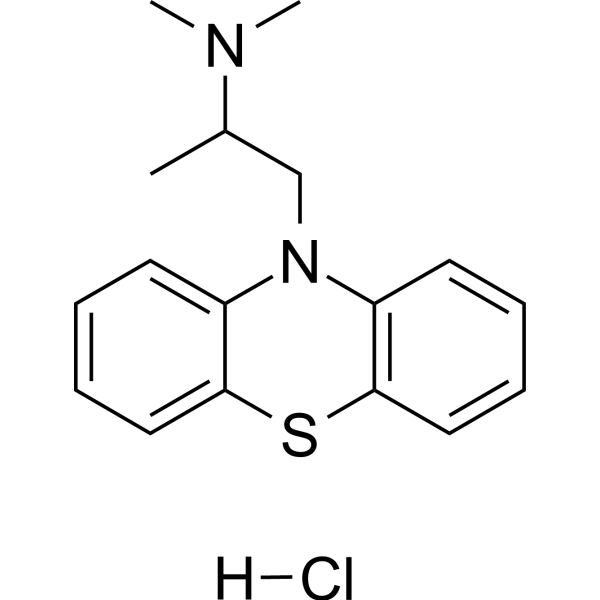
    Promethazine hydrochloride
    1 Publications Verification

    Histamine Receptor mAChR Adrenergic Receptor Neurological Disease Endocrinology
    Promethazine hydrochloride is an orally active phenothiazine derivative with antihistaminic (H1), sedative, antiemetic, anticholinergic, and antimotion sickness properties. Promethazine hydrochloride is a potent H1 receptor antagonist and a mAChR antagonist. It also has a certain affinity for 5-HT2A and 5-HT2C receptors .
    Promethazine hydrochloride
  • HY-156562A
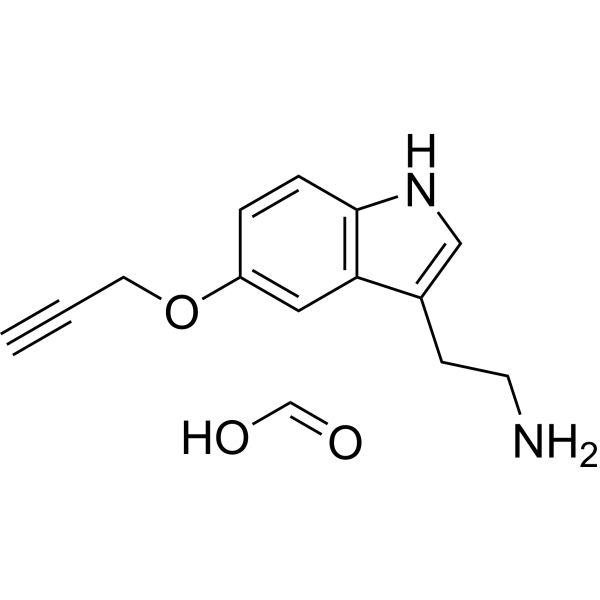
    5-PT formic
    1 Publications Verification

    5-Propargyltryptamide formic

    Drug Derivative Inflammation/Immunology
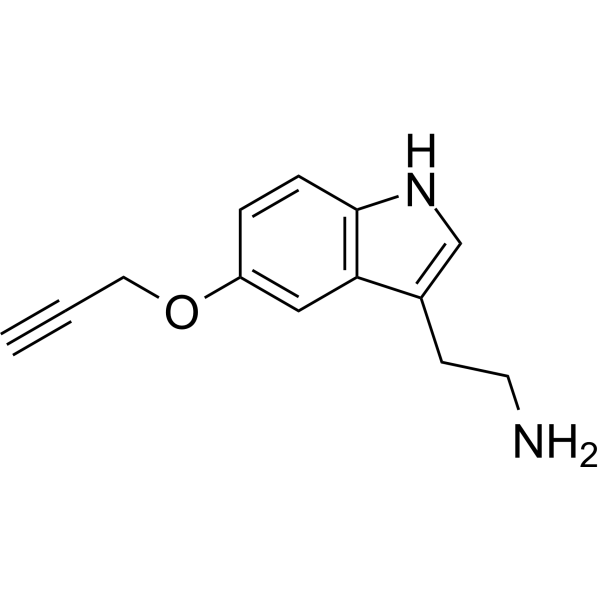
    5-PT (5-Propargyltryptamide) formic is an alkyne-functionalized 5-HT (HY-B1473A) derivative and serotonylation substrate, taken up by living cells. 5-PT formic conjugated to a biotin enables identification of serotonylated proteins via copper-click chemistry and mass spectrometry. 5-PT formic labels and isolates serotonylated cells in alveolar epithelial cells for proteomic analysis. 5-PT formic can be used for the research of bronchopulmonary dysplasia .
    5-PT formic
  • HY-19469
    Roluperidone
    1 Publications Verification

    CYR-101; MIN-101; MT-210

    5-HT Receptor Sigma Receptor Neurological Disease
    Roluperidone (CYR-101) is a novel cyclic amide derivative that has high equipotent affinities for 5-HT2A and sigma-2 receptors (Ki of 7.53 nM and 8.19 nM for 5-HT2A and sigma-2, respectively).
    Roluperidone
  • HY-B0068
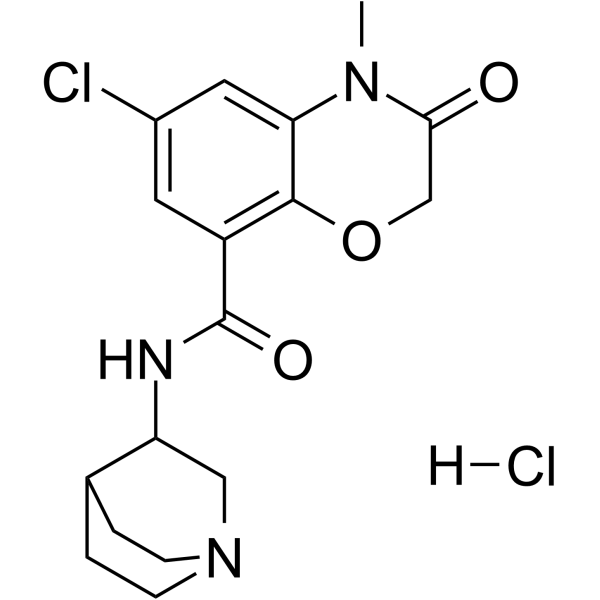
    Azasetron hydrochloride
    2 Publications Verification

    Y-25130 hydrochloride

    5-HT Receptor Neurological Disease
    Azasetron (Y-25130) hydrochloride, a benzamide derivative, is a potent and selective 5-HT3 receptor antagonist. Azasetron is used in the study for Chemotherapy-induced nausea and vomiting (CINV) .
    Azasetron hydrochloride
  • HY-100703

    Floropipamide; McN-JR 3345; R 3345

    5-HT Receptor Dopamine Receptor Neurological Disease
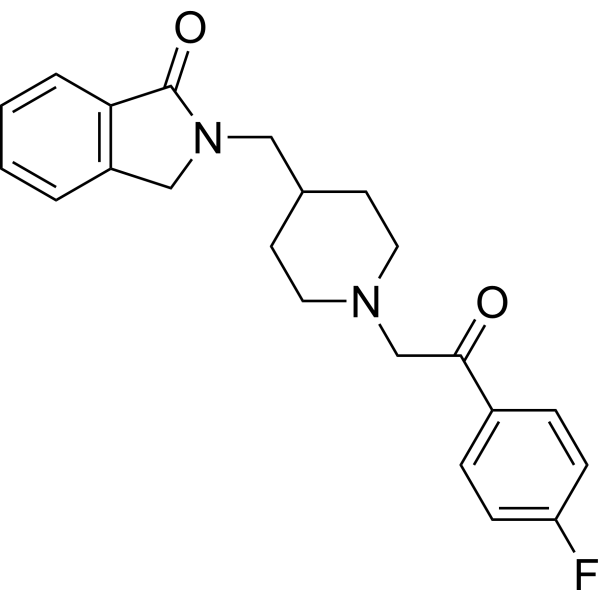
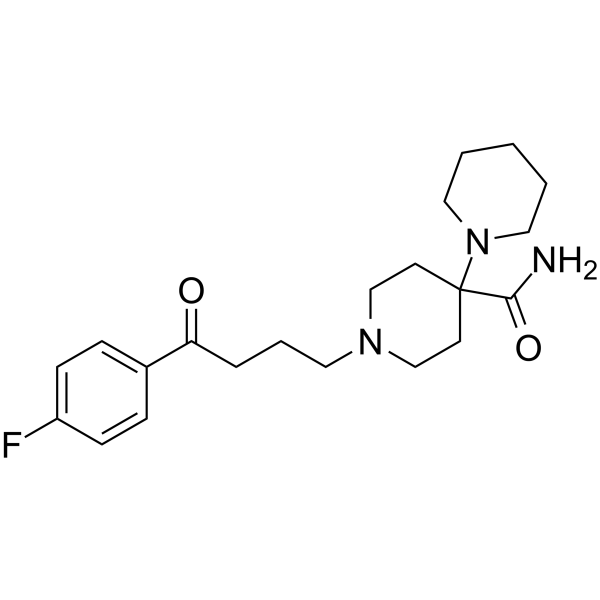
    Pipamperone (Floropipamide) is a butyrophenone derivative and high-affinity antagonist of 5-HT2A receptor (pKi=8.2) and D4 receptor (pKi=8.0). Pipamperone is also a low-affinity antagonist of D2 receptor (pKi=6.7). Pipamperone affects neurotransmitter functions and exerts antipsychotic activity. Pipamperone is used in the research of mental disorders such as autism-related behavioral disorders and Alzheimer's disease .
    Pipamperone
  • HY-156562

    5-Propargyltryptamide

    Drug Derivative Inflammation/Immunology
    5-PT (5-Propargyltryptamide) is an alkyne-functionalized 5-HT (HY-B1473A) derivative and serotonylation substrate, taken up by living cells. 5-PT conjugated to a biotin enables identification of serotonylated proteins via copper-click chemistry and mass spectrometry. 5-PT labels and isolates serotonylated cells in alveolar epithelial cells for proteomic analysis. 5-PT can be used for the research of bronchopulmonary dysplasia .
    5-PT
  • HY-121920
    25C-NBOH hydrochloride
    1 Publications Verification

    5-HT Receptor Neurological Disease
    25C-NBOH hydrochloride is a derivative of 2C-C having an N-(2-hydroxybenzyl) addition at the amine and is a potent agonist of 5-HT receptors that shows selectivity for 5-HT2A over 5-HT2C (EC50s = ~ 0.40 and 15 nM, respectively) .
    25C-NBOH hydrochloride
  • HY-136621

    5-HT Receptor Neurological Disease
    5-HT1A modulator 2 hydrochloride, a derivative of 8-OH-DPAT (HY-112061), is a modulator of 5-HT1A with a Ki of 53 nM for 5-HT1A binding .
    5-HT1A modulator 2 hydrochloride
  • HY-111419

    Serotonin Transporter 5-HT Receptor Neurological Disease
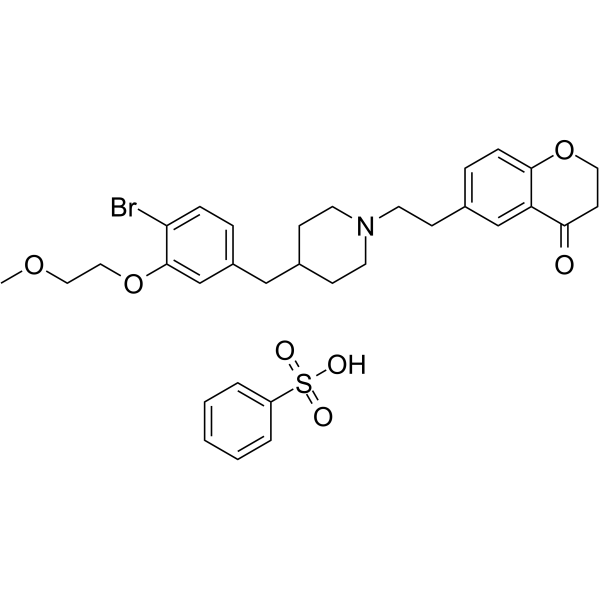
    DSP-1053, a benzylpiperidine derivative, is a potent Serotonin Transporter (SERT) inhibitor with a Ki of 1.02 nM. DSP-1053 shows partial 5-HT1A receptor agonistic activity with a Ki of 5.05 nM. DSP-1053 has antidepressant activity .
    DSP-1053
  • HY-123207

    5-HT Receptor Metabolic Disease
    BP 554 is a selective 5-HT1A receptor agonist and Piperazine derivative. BP 554 leads to hypothermia .
    BP 554
  • HY-103118

    5-HT Receptor Apoptosis Neurological Disease Cancer
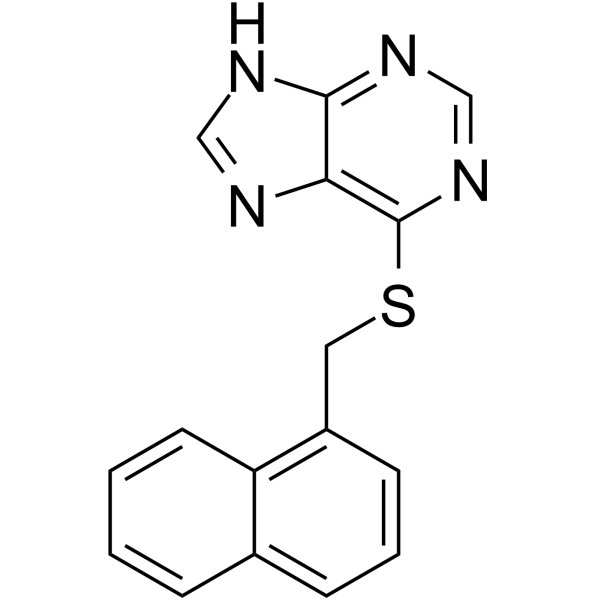
    PU02, a derivative of 6-MP (HY-13677), is a negative allosteric modulator (NAM) of 5-HT3 receptor, with IC50 values of 0.36 and 0.73 μM in HEK293 cells transfected with human 5-HT3A and 5-HT3AB receptors respectively .
    PU02
  • HY-106136

    PD-6735; LY-156735

    Melatonin Receptor 5-HT Receptor Neurological Disease
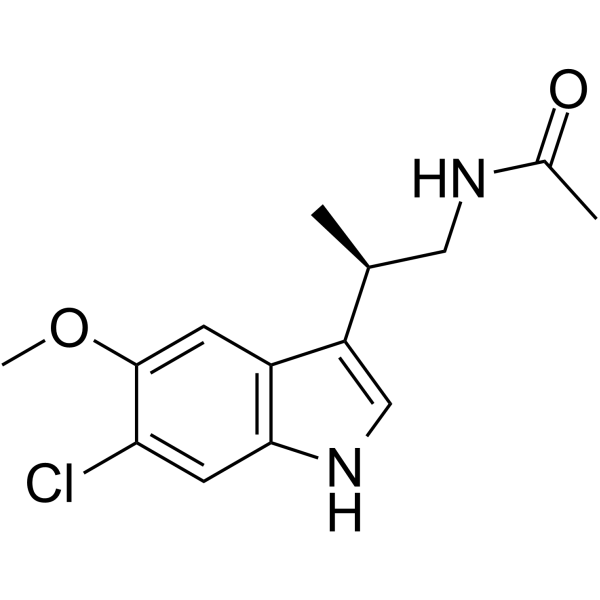
    TIK-301 (PD-6735) is a chlorinated melatonin derivative and a potent, high-affinity and orally active melatonin MT1 and MT2 receptors agonist with Kis of 0.081 nM and 0.042 nM, respectively. TIK-301 is also a 5-HT2B/5-HT2C receptors antagonist with antidepressant action. TIK-301 has the potential for sleep disorders and other circadian rhythm disorders treatment .
    TIK-301
  • HY-165624

    Drug Derivative 5-HT Receptor Neurological Disease
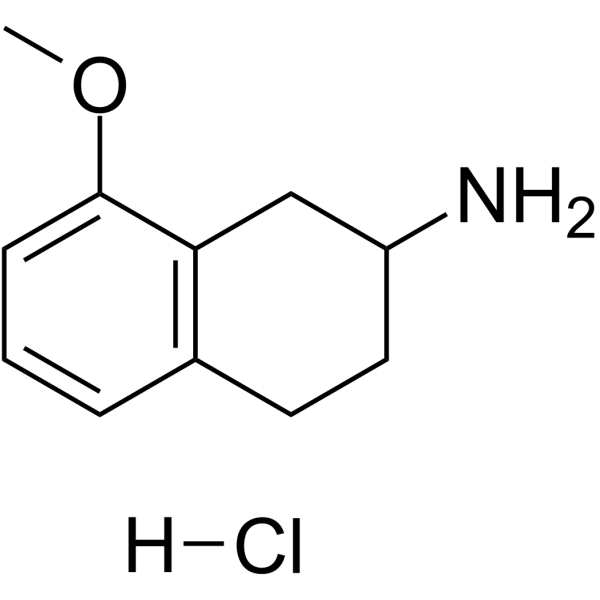
    LY-41 is a 2-aminotetralin (HY-W022362) derivative related to 8-OH-DPAT (HY-112061). LY-41 decreases 5-HT synthesis. LY-41 induces 5-HT motor syndrome. (R)-LY-41 and (S)-LY-41 are novel 5-HT1A receptor agonists .
    LY-41
  • HY-137162

    Drug Derivative Calcium Channel Lactate Dehydrogenase 5-HT Receptor Neurological Disease
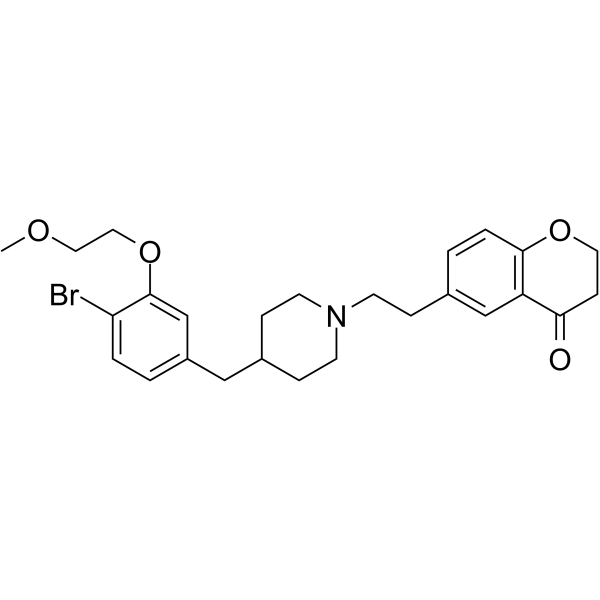
    Dotarizine is a novel Piperazine (HY-B0912) derivative and antimigraine agent. Dotarizine exhibits Ca 2+ channel blocking properties. Dotarizine decreases the release of lactate dehydrogenase. Dotarizine shows 5-HT receptor blocking effect .
    Dotarizine
  • HY-165624A

    Drug Isomer Drug Derivative 5-HT Receptor Neurological Disease
    (S)-LY-41, R-enantiomer of LY-41 (HY-165624), is 2-Sminotetralin (HY-W022362) derivative and 8-OH-DPAT (HY-112061) analogue. (S)-LY-41 is a potent and selective 5-HT1A receptor agonist. (S)-LY-41 can reduce the accumulation of 5-hydroxytryptophan (the precursor for 5-HT synthesis) in the rat brain induced by decarboxylase inhibitors (NSD 1015). (S)-LY-41 can lower the body temperature of rats and inhibit the escape response from the cage. (S)-LY-41 can induce the 5-HT behavioral syndrome. (S)-LY-41can be used for the research of neurological disease, such as depression and anxiety .
    (S)-LY-41
  • HY-165624B

    Drug Isomer Drug Derivative 5-HT Receptor Neurological Disease
    (R)-LY-41, R-enantiomer of LY-41 (HY-165624), is 2-Sminotetralin (HY-W022362) derivative and 8-OH-DPAT (HY-112061) analogue. (R)-LY-41 is a potent and selective 5-HT1A receptor agonist. (R)-LY-41 can reduce the accumulation of 5-hydroxytryptophan (the precursor for 5-HT synthesis) in the rat brain induced by decarboxylase inhibitors (NSD 1015). (R)-LY-41 can lower the body temperature of rats and inhibit the escape response from the cage. (R)-LY-41 can induce the 5-HT behavioral syndrome but is weaker than (S)-LY-41 (HY-165624A). (R)-LY-41 can be used for the research of neurological disease, such as depression and anxiety .
    (R)-LY-41
  • HY-W284026

    Drug Derivative 5-HT Receptor Dopamine Receptor Adrenergic Receptor Neurological Disease
    PIM-35 is a derivative of Indole (HY-W001132). PIM-35 significantly inhibits serotonin (5HT) and dopamine (DA) uptake with a weak inhibitory effect on noradrenaline (NA) uptake.PIM-35 has antidepressant activity and can be used for depression research .
    PIM-35
  • HY-W128798

    5-HT Receptor Neurological Disease
    Sulfabenz (Compound 9) is an amine-substituted N1-phenylsulfonyl indole derivative. Sulfabenz has binding activity to human 5-HT6 serotonin receptor (Ki: 200 nM). Sulfabenz can be used to study the ligand binding mechanism of 5-HT6 receptor and 5-HT6 receptor-related neurological diseases .
    Sulfabenz
  • HY-169785

    7-TMT

    5-HT Receptor Neurological Disease
    7-Methyl DMT (7-TMT) is a 5-HT2 receptor agonist. Structurally, 7-Methyl DMT is a tryptamine derivative. It can be used as an analytical reference standard for the psychoactive substance DOM. 7-Methyl DMT is also used in research in the field of neurological diseases .
    7-Methyl DMT
  • HY-34763

    7-Hydroxyquinolinone; 2,7-Dihydroxyquinoline

    Drug Derivative Others
    7-Hydroxycarbostyril (7-Hydroxy-2(1H)-quinolinone) (Compound 7) is a quinolinone derivative. 7-Hydroxycarbostyril can be used for synthesis of Brexpiprazole (HY-15780). Brexpiprazole, a typical orally active antipsychotic agent, is a partial agonist of human 5-HT1A and dopamine D2L receptor .
    7-Hydroxycarbostyril
  • HY-100703A

    Floropipamide dihydrochloride; McN-JR 3345 dihydrochloride; R 3345 dihydrochloride

    Dopamine Receptor 5-HT Receptor Neurological Disease
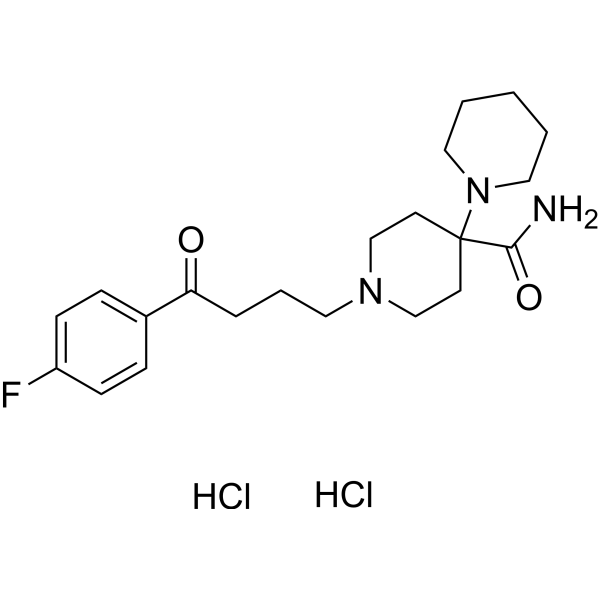
    Pipamperone dihydrochloride (Floropipamide dihydrochloride) is a butyrophenone derivative and high-affinity antagonist of 5-HT2A receptor (pKi=8.2) and D4 receptor (pKi=8.0). Pipamperone dihydrochloride is also a low-affinity antagonist of D2 receptor (pKi=6.7). Pipamperone dihydrochloride affects neurotransmitter functions and exerts antipsychotic activity. Pipamperone dihydrochloride is used in the research of mental disorders such as autism-related behavioral disorders and Alzheimer's disease .
    Pipamperone dihydrochloride
  • HY-106484

    BAY-P 4495

    5-HT Receptor Neurological Disease
    Tiflucarbine (BAY-P 4495) is a tetrahydrothieno-7-carboline derivative. Tiflucarbine is a potent antidepressant agent that binds at central serotonin (5-HT) binding sites. Tiflucarbine is a nonselective 5-HT (5-HT1 and 5-HT2) agonist .
    Tiflucarbine
  • HY-101062

    5-HT Receptor Neurological Disease
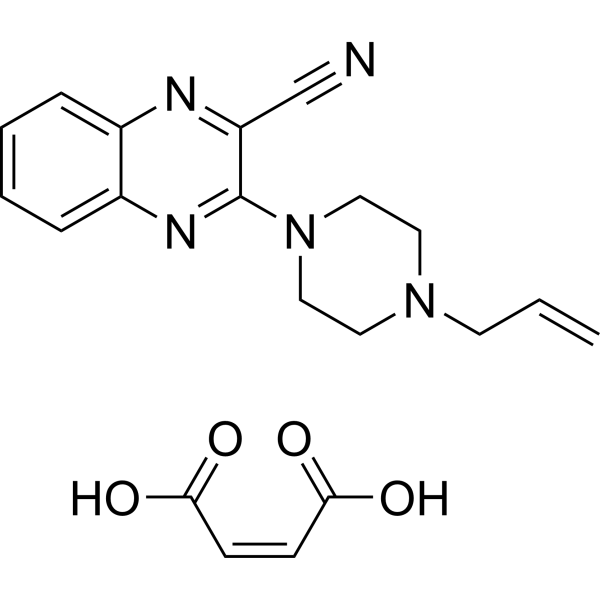
    3-AQC, a piperazinylquinoxaline derivative, is a potent and competitive 5-HT3 receptor antagonist .
    3-AQC
  • HY-138237

    5-HT Receptor Neurological Disease
    25I-NBMD hydrochloride is a derivative of the phenethylamine 2C-I that increases the affinity and activity at the 5-HT2A receptor .
    25I-NBMD hydrochloride
  • HY-123567

    5-HT Receptor Neurological Disease
    LY86057 is an ergoline derivative without N1 substituents. It has higher affinity for porcine, squirrel monkey and human 5-HT2 receptors than rats and is an antagonist of 5-HT2 receptors. When studying the differences in recognition of a series of ergolines between species, LY86057 was found to be more selective for 5-HT2 receptors. Compared with LY53857, LY108742 resulted in a higher affinity for rat 5-HT2 receptors even when the N1 substituent was only methyl.
    LY86057
  • HY-112538

    1-NP hydrochloride; 1-NapHThylpiperazine hydrochloride

    5-HT Receptor Apoptosis Inflammation/Immunology Cancer
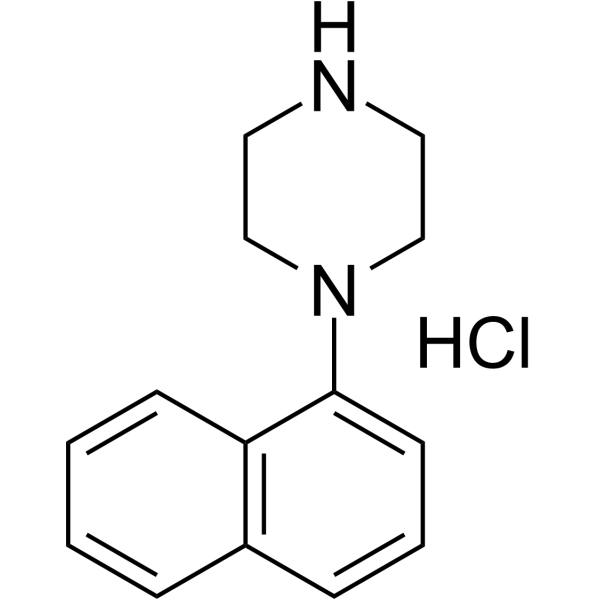
    1-1-Naphthylpiperazine hydrochloride (1-NP hydrochloride; 1-Naphthylpiperazine hydrochloride) is a serotonergic derivative of quipazine, which is both an agonist for 5-HT1A receptor and an antagonist for 5-HT2A receptor. 1-1-Naphthylpiperazine hydrochloride induces cell apoptosis. 1-1-Naphthylpiperazine hydrochloride prevents the immunosuppression and photocarcinogenesis .
    1-(1-Naphthyl)piperazine hydrochloride
  • HY-133858

    5-HT Receptor Neurological Disease
    25N-NBOMe hydrochloride, a 2C-N derivative, is a 5-HT2A and 5-HT2C receptors agonist with Ki values of 0.144 nM and 1.06 nM, respectively. 25N-NBOMe hydrochloride has little to no efficacy at inducing release of preloaded neurotransmitter from recombinant dopamine, serotonin and norepinephrine transporters .
    25N-NBOMe hydrochloride
  • HY-B0781S1

    Isotope-Labeled Compounds mAChR Adrenergic Receptor Histamine Receptor Neurological Disease Endocrinology
    Promethazine-d3 (hydrochloride) is deuterium labeled Promethazine (hydrochloride). Promethazine hydrochloride is an orally active phenothiazine derivative with antihistaminic (H1), sedative, antiemetic, anticholinergic, and antimotion sickness properties. Promethazine hydrochloride is a potent H1 receptor antagonist and a mAChR antagonist. It also has a certain affinity for 5-HT2A and 5-HT2C receptors .
    Promethazine-d3 hydrochloride
  • HY-158627

    5-HT Receptor Others
    JPC0323 Oleate is a derivative of JPC0323 (HY-155672). JPC0323 is a dual 5-HT2C/5-HT2A receptor positive allosteric modulator. JPC0323 has on-target properties, acceptable plasma exposure and brain penetration. JPC0323 can be used for the research of neurological disease .
    JPC0323 Oleate
  • HY-B0781R

    Reference Standards Histamine Receptor mAChR Adrenergic Receptor Neurological Disease Endocrinology
    Promethazine (hydrochloride) (Standard) is the analytical standard of Promethazine (hydrochloride). This product is intended for research and analytical applications. Promethazine hydrochloride is an orally active phenothiazine derivative with antihistaminic (H1), sedative, antiemetic, anticholinergic, and antimotion sickness properties. Promethazine hydrochloride is a potent H1 receptor antagonist and a mAChR antagonist. It also has a certain affinity for 5-HT2A and 5-HT2C receptors .
    Promethazine hydrochloride (Standard)
  • HY-W708033

    5-HT Receptor Neurological Disease
    25E-NBOMe hydrochloride is a derivative of 2C-E having an N-(2-methoxybenzyl) addition at the amine. 25E-NBOMe hydrochloride is a selective /b>5-HT2A receptor agonist.
    25E-NBOMe hydrochloride
  • HY-B0068R

    5-HT Receptor Reference Standards Neurological Disease
    Azasetron (hydrochloride) (Standard) is the analytical standard of Azasetron (hydrochloride). This product is intended for research and analytical applications. Azasetron (Y-25130) hydrochloride, a benzamide derivative, is a potent and selective 5-HT3 receptor antagonist. Azasetron is used in the study for Chemotherapy-induced nausea and vomiting (CINV) .
    Azasetron hydrochloride (Standard)
  • HY-111419A

    Serotonin Transporter 5-HT Receptor Neurological Disease
    DSP-1053, a benzylpiperidine derivative, is a potent serotonin transporter (SERT) inhibitor with a Ki of 1.02 nM. DSP-1053 shows partial 5-HT1A receptor agonistic activity with a Ki of 5.05 nM. DSP-1053 has antidepressant activity .
    DSP-1053 benzenesulfonate
  • HY-105161

    5-HT Receptor Neurological Disease
    AP-521 (free base) is a benzothienopyridine derivative that exhibits potent anxiolytic effects by acting as a postsynaptic 5-HT1A receptor agonist and by enhancing serotonergic neural transmission in the medial prefrontal cortex (mPFC). AP-521 (free base) is promising for research of anxiety disorders .
    AP-521 free base
  • HY-100703S

    Floropipamide-d10 dihydrochloride; McN-JR 3345-d10 dihydrochloride; R 3345-d10 dihydrochloride

    Isotope-Labeled Compounds Dopamine Receptor 5-HT Receptor Neurological Disease
    Pipamperone-d10 (Floropipamide-d10) dihydrochloride is a deuterated Pipamperone dihydrochloride (HY-100703A). Pipamperone dihydrochloride (Floropipamide dihydrochloride) is a butyrophenone derivative and high-affinity antagonist of 5-HT2A receptor (pKi=8.2) and D4 receptor (pKi=8.0). Pipamperone dihydrochloride is also a low-affinity antagonist of D2 receptor (pKi=6.7). Pipamperone dihydrochloride affects neurotransmitter functions and exerts antipsychotic activity. Pipamperone dihydrochloride is used in the research of mental disorders such as autism-related behavioral disorders and Alzheimer's disease .
    Pipamperone-d10 dihydrochloride
  • HY-100703R

    Floropipamide (Standard); McN-JR 3345 (Standard); R 3345 (Standard)

    Reference Standards 5-HT Receptor Dopamine Receptor Neurological Disease
    Pipamperone (Standard) is the analytical standard of Pipamperone (HY-100703). This product is intended for research and analytical applications. Pipamperone (Floropipamide) is a butyrophenone derivative and high-affinity antagonist of 5-HT2A receptor (pKi=8.2) and D4 receptor (pKi=8.0). Pipamperone is also a low-affinity antagonist of D2 receptor (pKi=6.7). Pipamperone affects neurotransmitter functions and exerts antipsychotic activity. Pipamperone is used in the research of mental disorders such as autism-related behavioral disorders and Alzheimer's disease .
    Pipamperone (Standard)
  • HY-156562B

    5-Propargyltryptamide TFA

    Drug Derivative Inflammation/Immunology
    5-PT (5-Propargyltryptamide) TFA is an alkyne-functionalized derivative of 5-HT (HY-B1473A) and serotonylation substrate that can be taken up by living cells. After conjugation with biotin, 5-PT TFA enables the identification of serotonylated proteins via copper click chemistry and mass spectrometry. 5-PT TFA can label and isolate serotonylated cells in alveolar epithelial cells for proteomic analysis. 5-PT TFA is applicable to research related to bronchopulmonary dysplasia .
    5-PT TFA
  • HY-172763

    Drug Derivative Serotonin Transporter Dopamine Transporter 5-HT Receptor Neurological Disease
    EDMA hydrochloride is a derivative of MDMA. EDMA hydrochloride is a substrate for multiple neurotransmitter transporters, including serotonin transporter (SERT), dopamine transporter (DAT), and norepinephrine transporter (NET). EDMA hydrochloride has 5-HT releasing activity at SERT (EC50 = 117 nM) and MPP + releasing activity at DAT (EC50 = 597 nM) and NET (EC50 = 325 nM) .
    EDMA hydrochloride
  • HY-100926

    5-HT Receptor Others
    MDL 72832 (hydrochloride) is a 2,3-dihydro-1,4-benzodioxane derivative and a 5-HT1a receptor ligand with high affinity for the 5-HT1a receptor.
    MDL 72832 hydrochloride

Inquiry Online

Your information is safe with us. * Required Fields.

Salutation


Country or Region *

Applicant Name *


Organization Name *

Department *


Email Address *


Product Name *

Cat. No.


Requested quantity *

Phone Number *


Remarks

Inquiry Online

Inquiry Information

Product Name:
Cat. No.:
Quantity:
MCE Japan Authorized Agent: