



Promethazine hydrochloride
Based on 1 publication(s) in Google Scholar
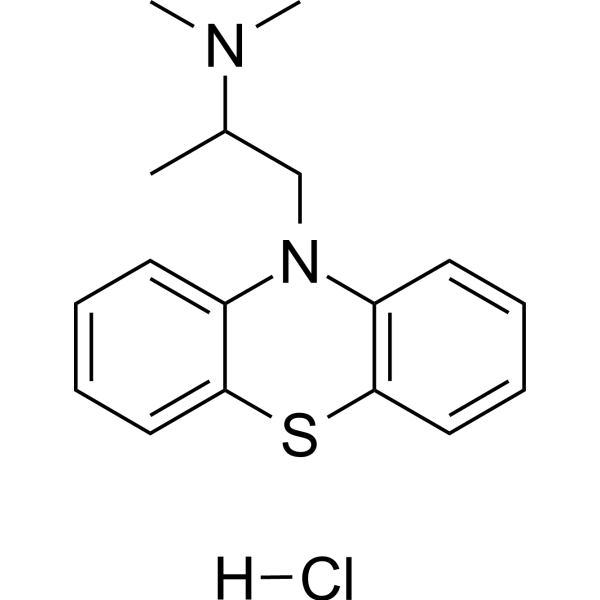
Promethazine hydrochloride is an orally active phenothiazine derivative with antihistaminic (H1), sedative, antiemetic, anticholinergic, and antimotion sickness properties. Promethazine hydrochloride is a potent H1 receptor antagonist and a mAChR antagonist. It also has a certain affinity for 5-HT2A and 5-HT2C receptors.
Nos produits utilisent uniquement pour la recherche. Nous ne vendons pas aux patients.
- Pureté : 99.85%
- CAS No.: 58-33-3
- Formule: C17H21ClN2S
- Masse moléculaire:320.88
-
Stockage:
4°C, sealed storage, away from moisture and light
* The compound is unstable in solutions, freshly prepared is recommended.

To place orders, for customer services and technical support, please contact: MedChemExpress USA
Tel: 609-228-6898 E-mail: [email protected] [email protected]


-
 Activité biologique
-
Chemical Information
-
Solvant et solubilité
- Pureté et documentation
- Références
-
 Help & FAQs


-
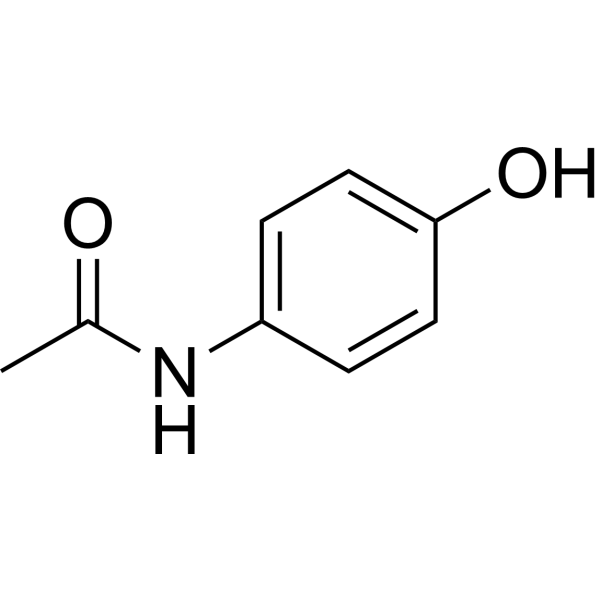
HY-66005
AcetaminophenCOX-2 Inhibitor -
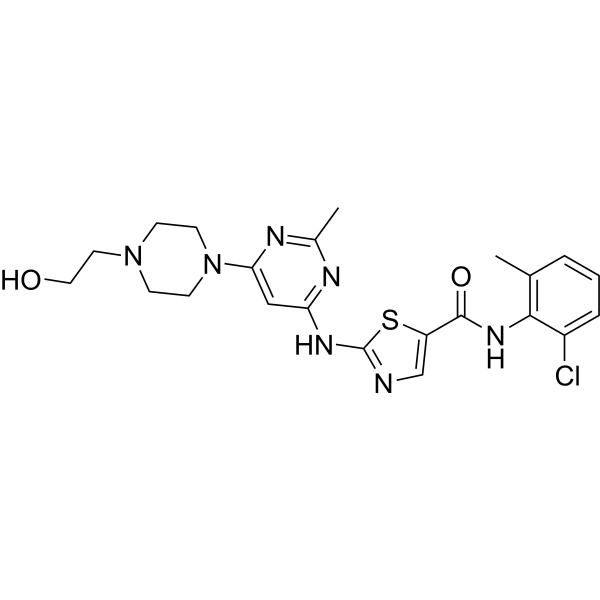
HY-10181
DasatinibSrc/Bcr-Abl Inhibitor -
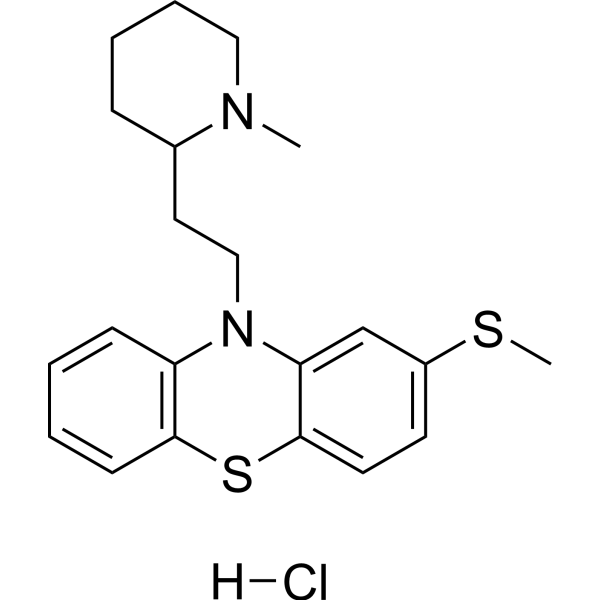
HY-B0965
Thioridazine hydrochlorideDopamine Receptor Antagonist -

HY-B0807A
Prochlorperazine dimaleateD2R Antagonist -

HY-B1225
Promazine hydrochlorideDopamine Receptor D2 Antagonist -
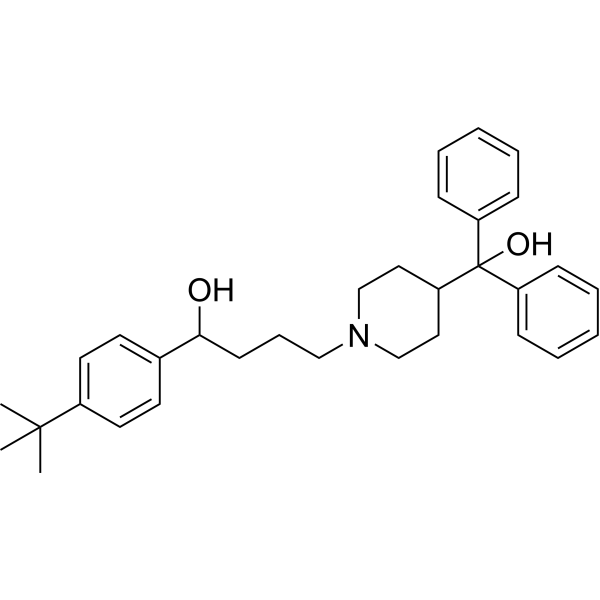
HY-B1193
TerfenadineCaspase Activator -
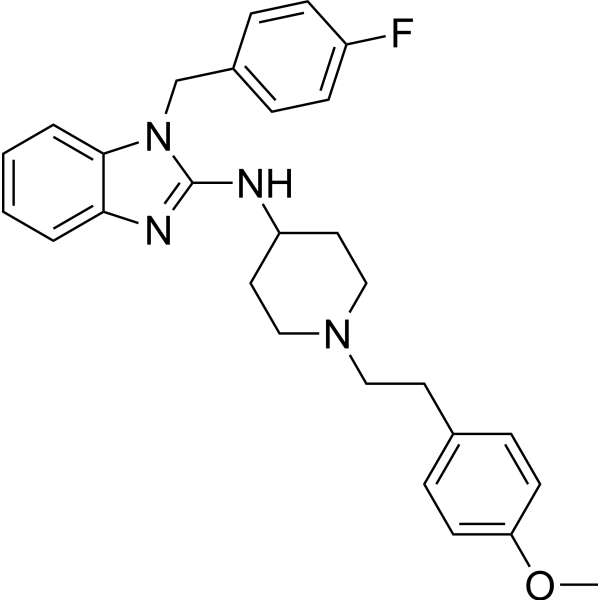
HY-12532
AstemizoleH1 Receptor Antagonist -
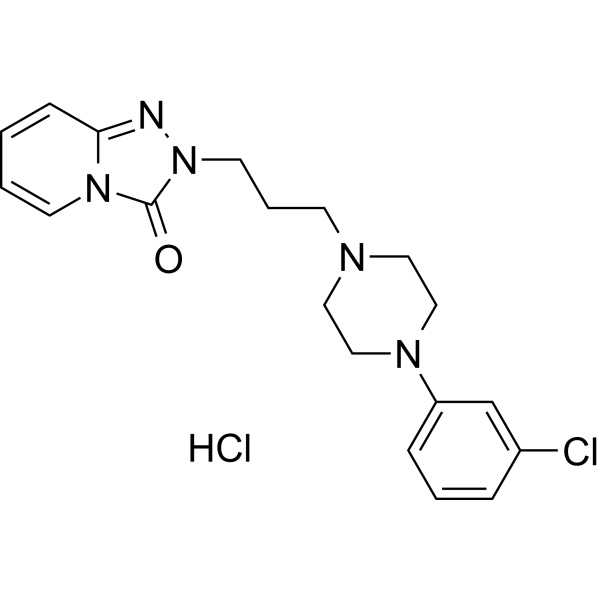
HY-B0478
Trazodone hydrochloride5-HT Receptor Antagonist -
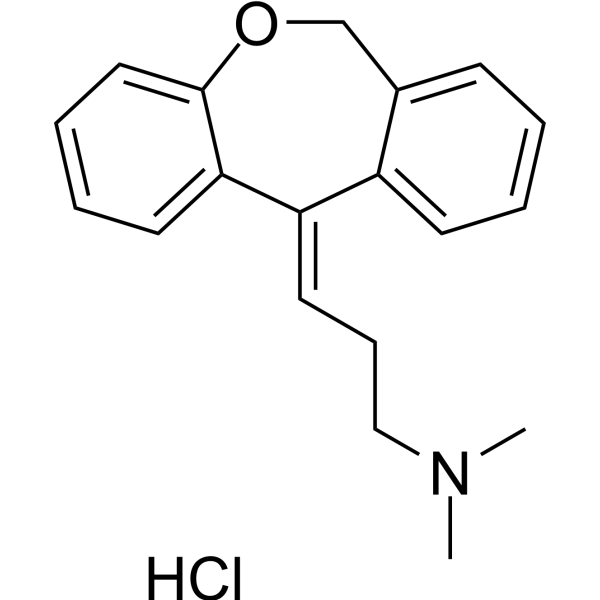
HY-B0725
Doxepin HydrochlorideAntidepressant -
HY-B0539
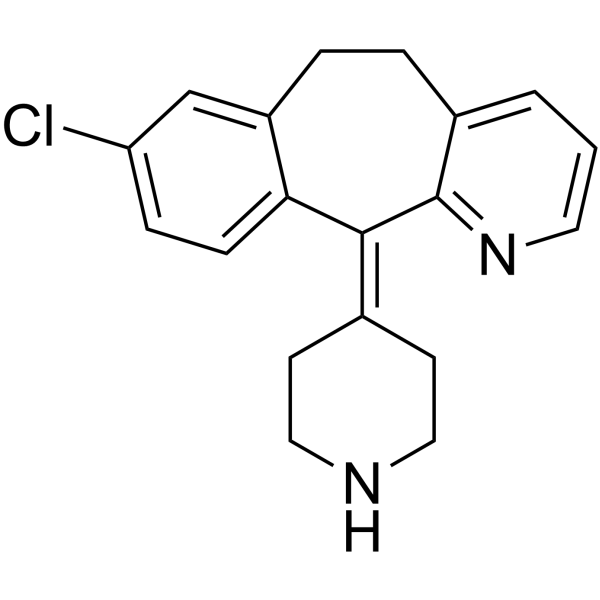
DesloratadineH1-Receptor Antagonist -
HY-B0527AR
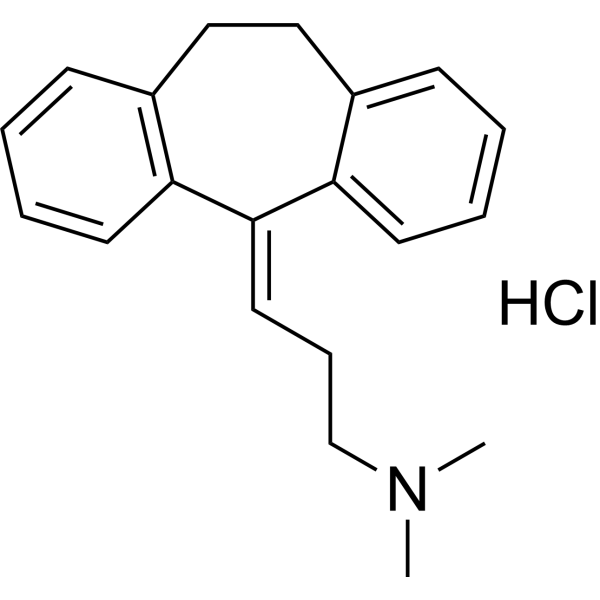
Amitriptyline hydrochloride (Standard)Stanard of Amitriptyline hydrochloride
Publications Citing Use of MedChemExpress (MCE) Promethazine hydrochloride
MoreVoir tous les produits spécifiques à Isoform Histamine Receptor
MoreVoir tous les produits spécifiques à Isoform Adrenergic Receptor
More

Activité biologique
Description
IC50 & Target
|
H1 Receptor |
5-HT2A Receptor |
5-HT2C Receptor |
Cellular Effect
|
Cell Line

|
Type | Value | Description | References |
|---|---|---|---|---|
| Vero C1008 | CC50 |
>42.59 μM
Compound: Promethazine Hydrochloride
|
CC50 determination at MOI 0.004 using CellTiter- Glo (CTG) assay, performed 3 days post-infection in Vero E6 cells
CC50 determination at MOI 0.004 using CellTiter- Glo (CTG) assay, performed 3 days post-infection in Vero E6 cells
|
10.1101/2020.03.25.008482 |
| Vero C1008 | CC50 |
>42.59 μM
Compound: Promethazine Hydrochloride
|
CC50 determination at MOI 0.01 using CellTiter- Glo (CTG) assay, performed 3 days post-infection in Vero E6 cells
CC50 determination at MOI 0.01 using CellTiter- Glo (CTG) assay, performed 3 days post-infection in Vero E6 cells
|
10.1101/2020.03.25.008482 |
| Vero C1008 | IC50 |
10.44 μM
Compound: Promethazine Hydrochloride
|
IC50 determination at MOI 0.01 using CellTiter- Glo (CTG) assay, performed 3 days post-infection in SARS-CoV-2 infected Vero E6 cells
IC50 determination at MOI 0.01 using CellTiter- Glo (CTG) assay, performed 3 days post-infection in SARS-CoV-2 infected Vero E6 cells
|
10.1101/2020.03.25.008482 |
| Vero C1008 | IC50 |
9.21 μM
Compound: Promethazine Hydrochloride
|
IC50 determination at MOI 0.004 using CellTiter- Glo (CTG) assay, performed 3 days post-infection in SARS-CoV-2 infected Vero E6 cells
IC50 determination at MOI 0.004 using CellTiter- Glo (CTG) assay, performed 3 days post-infection in SARS-CoV-2 infected Vero E6 cells
|
10.1101/2020.03.25.008482 |
In Vitro
Promethazine hydrochloride (1.25-10 μM, 3 days) inhibits adipocyte formation in a dose-dependent manner[1].
Promethazine hydrochloride (10 μM, 0-12 days) decreases the expression of peroxisome proliferator activated receptor γ (PPARG) and reduces the phosphorylation level of CREB in PDGFRα+ cells[1].
Promethazine hydrochloride (10-1000 μM, 1-24 h) has cytotoxic at concentrations greater than 100 μM in L929 lung fibroblast cells[3].
MedChemExpress (MCE) has not independently confirmed the accuracy of these methods. They are for reference only.
In Vivo
Promethazine hydrochloride (2.4-9.6 mg/kg, p.o.) has no effect on the development of femoral osteoporosis and retarded normal femoral expansion in the adult castrate male rats[4].
MedChemExpress (MCE) has not independently confirmed the accuracy of these methods. They are for reference only.


Chemical Information
-
CAS No. 58-33-3
-
Appearance Solid
-
Masse moléculaire 320.88
-
Formule C17H21ClN2S
-
Color White to off-white
-
SMILES
CC(N(C)C)CN1C(C=CC=C2)=C2SC3=CC=CC=C13.[H]Cl
-
Livraison
Room temperature in continental US; may vary elsewhere.
-
Stockage
4°C, sealed storage, away from moisture and light
* The compound is unstable in solutions, freshly prepared is recommended.


Publications (1)
-
Journal Impact Factor
-
Most Recent
-
PLoS Negl Trop Dis
Identification of anti-flaviviral drugs with mosquitocidal and anti-Zika virus activity in Aedes aegypti. [Abstract]2019 Aug 20;13(8):e0007681. PMID: 31430351


Solvant et solubilité
In Vitro:
H2O : 100 mg/mL (311.64 mM; Need ultrasonic)
DMSO : 50 mg/mL (155.82 mM; Need ultrasonic; Hygroscopic DMSO has a significant impact on the solubility of product, please use newly opened DMSO)
Please refer to the solubility information to select the appropriate solvent. The compound is unstable in solutions, freshly prepared is recommended.
* Note: If you choose water as the stock solution, please dilute it to the working solution, then filter and sterilize it with a 0.22 μm filter before use.
Please refer to the solubility information to select the appropriate solvent. The compound is unstable in solutions, freshly prepared is recommended.
* Note: If you choose water as the stock solution, please dilute it to the working solution, then filter and sterilize it with a 0.22 μm filter before use.
Concentration (start) × Volume (start) = Concentration (final) × Volume (final)
In Vivo:
Select the appropriate dissolution method based on your experimental animal and administration route.
- For the following dissolution methods, please ensure to first prepare a clear stock solution using an In Vitro approach and then sequentially add co-solvents:
- To ensure reliable experimental results, the clarified stock solution can be appropriately stored based on storage conditions. As for the working solution for In Vivo experiments, it is recommended to prepare freshly and use it on the same day.
- The percentages shown for the solvents indicate their volumetric ratio in the final prepared solution. If precipitation or phase separation occurs during preparation, heat and/or sonication can be used to aid dissolution.
Add each solvent one by one: 10% DMSO 40% PEG300 5% Tween-80 45% Saline
Solubility: ≥ 2.5 mg/mL (7.79 mM); Clear solution
This protocol yields a clear solution of ≥ 2.5 mg/mL (saturation unknown).
Taking 1 mL working solution as an example, add 100 μL DMSO stock solution (25.0 mg/mL) to 400 μL PEG300, and mix evenly; then add 50 μL Tween-80 and mix evenly; then add 450 μL Saline to adjust the volume to 1 mL.
Preparation of Saline: Dissolve 0.9 g sodium chloride in ddH₂O and dilute to 100 mL to obtain a clear Saline solution.
Add each solvent one by one: 10% DMSO 90% (20% SBE-β-CD in Saline)
Solubility: ≥ 2.5 mg/mL (7.79 mM); Clear solution
This protocol yields a clear solution of ≥ 2.5 mg/mL (saturation unknown).
Taking 1 mL working solution as an example, add 100 μL DMSO stock solution (25.0 mg/mL) to 900 μL 20% SBE-β-CD in Saline, and mix evenly.
Preparation of 20% SBE-β-CD in Saline (4°C, storage for one week): 2 g SBE-β-CD powder is dissolved in 10 mL Saline, completely dissolve until clear.
For the following dissolution methods, please prepare the working solution directly:
It is recommended to prepare fresh solutions and use them promptly within a short period of time.
The percentages shown for the solvents indicate their volumetric ratio in the final prepared solution. If precipitation or phase separation occurs during preparation, heat and/or sonication can be used to aid dissolution.
Add each solvent one by one: PBS
Solubility: 120 mg/mL (373.97 mM); Clear solution; Need ultrasonic
In Vivo Dissolution Calculator
Please enter the basic information of animal experiments:
-
-
-
-
Recommended: Prepare an additional quantity of animals to account for potential losses during experiments.
Working solution concentration: 0.22 mg/mL
This product has good water solubility, please refer to the measured solubility data in water/PBS/Saline for details.


Pureté et documentation
-
Fiche technique (277 KB)
-
SDS (538 KB)
- English - EN (538 KB)
- Français - FR (538 KB)
- Deutsch - DE (538 KB)
- Norwegian - NO (538 KB)
- Español - ES (538 KB)
- Swedish - SV (538 KB)
- Italian - IT (538 KB)
- Korean - KR (538 KB)
- Portuguese - PT (538 KB)
-
Instruction de manipulation (2659 KB)
Références
[1]. Kasai T, et al. Promethazine Hydrochloride Inhibits Ectopic Fat Cell Formation in Skeletal Muscle. Am J Pathol. 2017 Dec;187(12):2627-2634. [Content Brief]
[2]. Fiorella D, et al. The role of the 5-HT2A and 5-HT2C receptors in the stimulus effects of hallucinogenic drugs. I: Antagonist correlation analysis. Psychopharmacology (Berl). 1995 Oct;121(3):347-56. [Content Brief]
[3]. McDonough JA, et al. Microcapsule-gel formulation of promethazine HCl for controlled nasal delivery: a motion sickness medication. J Microencapsul. 2007 Mar;24(2):109-16. [Content Brief]
[4]. Wink CS, et al. Effects of promethazine HCl on osteoporotic femora of adult castrated male rats. Acta Anat (Basel). [Content Brief]


Complete Stock Solution Preparation Table
Please refer to the solubility information to select the appropriate solvent. The compound is unstable in solutions, freshly prepared is recommended.
| Optional Solvent | Concentration Solvent Mass | 1 mg | 5 mg | 10 mg | 25 mg |
|---|---|---|---|---|---|
| DMSO / H2O | 1 mM | 3.1164 mL | 15.5821 mL | 31.1643 mL | 77.9107 mL |
| 5 mM | 0.6233 mL | 3.1164 mL | 6.2329 mL | 15.5821 mL | |
| 10 mM | 0.3116 mL | 1.5582 mL | 3.1164 mL | 7.7911 mL | |
| 15 mM | 0.2078 mL | 1.0388 mL | 2.0776 mL | 5.1940 mL | |
| 20 mM | 0.1558 mL | 0.7791 mL | 1.5582 mL | 3.8955 mL | |
| 25 mM | 0.1247 mL | 0.6233 mL | 1.2466 mL | 3.1164 mL | |
| 30 mM | 0.1039 mL | 0.5194 mL | 1.0388 mL | 2.5970 mL | |
| 40 mM | 0.0779 mL | 0.3896 mL | 0.7791 mL | 1.9478 mL | |
| 50 mM | 0.0623 mL | 0.3116 mL | 0.6233 mL | 1.5582 mL | |
| 60 mM | 0.0519 mL | 0.2597 mL | 0.5194 mL | 1.2985 mL | |
| 80 mM | 0.0390 mL | 0.1948 mL | 0.3896 mL | 0.9739 mL | |
| 100 mM | 0.0312 mL | 0.1558 mL | 0.3116 mL | 0.7791 mL |
* Note: If you choose water as the stock solution, please dilute it to the working solution, then filter and sterilize it with a 0.22 μm filter before use.


Promethazine hydrochloride Related Classifications
HY-B0781 Related Classifications
 Powered by Bioz