



Search Result
Results for "
BH3 peptide
" in MedChemExpress (MCE) Product Catalog:
-
- HY-12048
-
-
-
- HY-P1889
-
|
|
Bcl-2 Family
|
Inflammation/Immunology
|
|
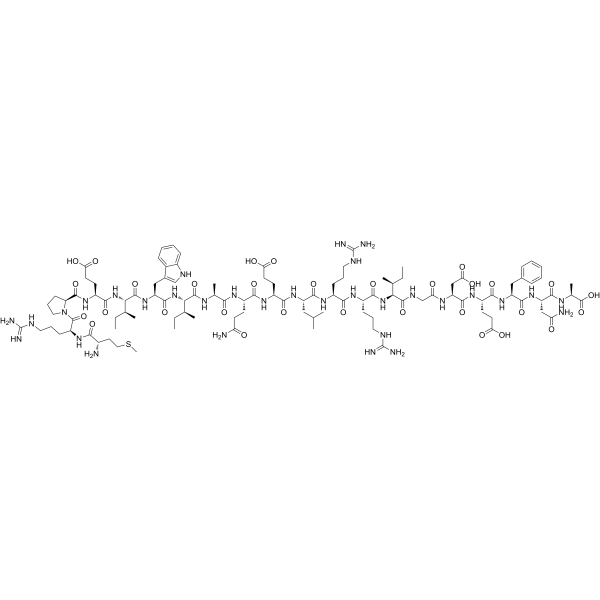
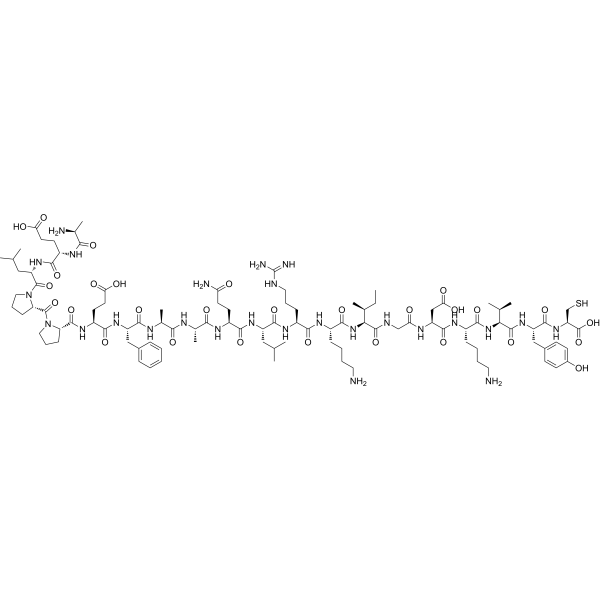
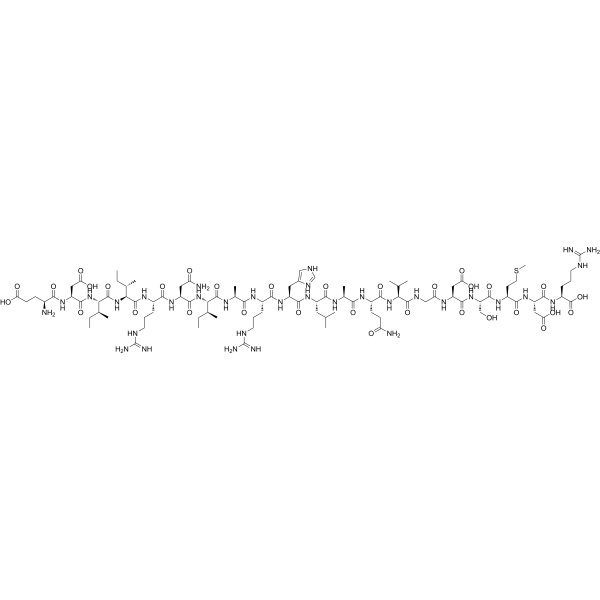
Bim BH3, Peptide IV is a 26-residue peptide from BH3-only protein Bim, which belongs to the pro-apoptotic group of the Bcl-2 family of proteins .
|
-
-
- HY-N2359
-
|
|
Beta-lactamase
PKC
Bcl-2 Family
Apoptosis
Autophagy
|
Metabolic Disease
Inflammation/Immunology
Cancer
|
|
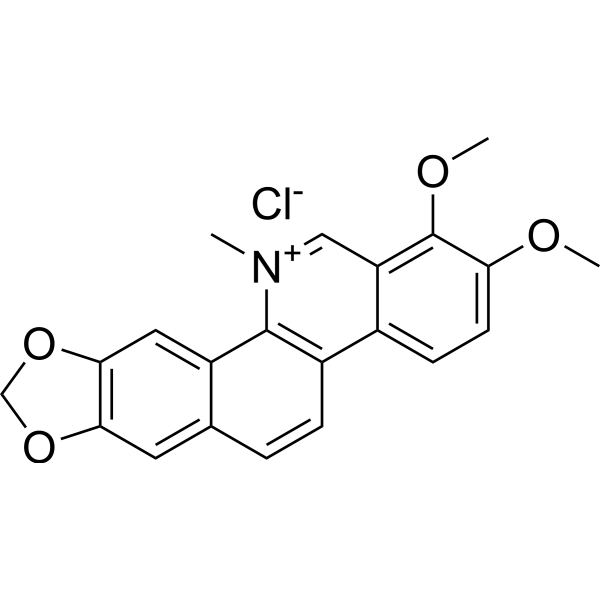
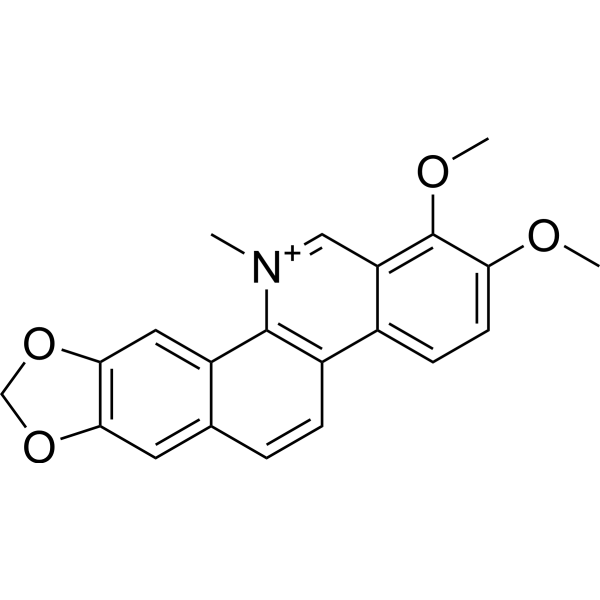
Chelerythrine is a natural alkaloid, acts as a potent and selective Ca 2+/phospholopid-dependent PKC antagonist, with an IC50 of 0.7 μM . Chelerythrine has antitumor, antidiabetic and anti-inflammatory activity . Chelerythrine inhibits the BclXL-Bak BH3 peptide binding with IC50 of 1.5 μM and displaces Bax from BclXL. Chelerythrine triggers apoptosis and autophagy .
|
-
-
- HY-P1527
-
Bim BH3
1 Publications Verification
|
Bcl-2 Family
|
Others
|
|
Bim BH3 is a biological active peptide. (This Bim peptide belongs to the pro-apoptotic Bcl-2 family of proteins.)
|
-
-
- HY-100383
-
|
BHI1
|
Bcl-2 Family
MDM-2/p53
E1/E2/E3 Enzyme
|
Cancer
|
|
BH3I-1 is a Bcl-2 family antagonist, which inhibits the binding of the Bak BH3 peptide to Bcl-xL with a Ki of 2.4±0.2 μM in FP assay. BH3I-1 has a Kd of 5.3 μM against the p53/MDM2 pair.
|
-
-
- HY-P5328
-
-
-
- HY-P2343
-
|
|
Apoptosis
|
Cancer
|
|
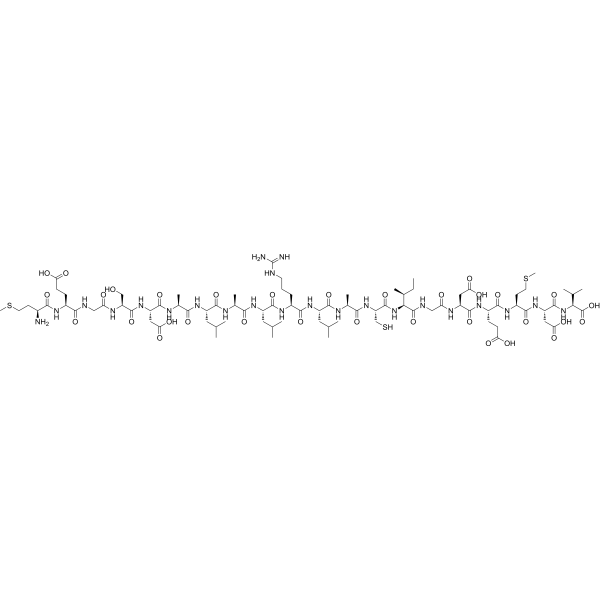
BH3 hydrochloride, a BBB penetrated peptide, provoke apoptosis either by direct activation of pro-apoptotic Bax/Bak or by neutralizing anti-apoptotic Bcl-2 proteins (Bcl-2, Bcl-XL, Bcl-w, Mcl-1 and A-1) via their BH3 domian .
|
-
-
- HY-P10614
-
|
|
Apoptosis
Bcl-2 Family
|
Others
|
|
Bid BH3 peptide is a small peptide derived from Bid protein that can bind and activate the pro-apoptotic proteins Bax and Bak, leading to mitochondrial outer membrane permeabilization (MOMP) and apoptosis. Bid BH3 peptide can be used to study mitochondrial bioenergetics .
|
-
-
- HY-P5342
-
-
-
- HY-P1562
-
|
|
Bcl-2 Family
|
Cancer
|
|
PUMA BH3 is a p53 upregulated modulator of apoptosis (PUMA) BH3 domain peptide, acts as a direct activator of Bak, with a Kd of 26 nM.
|
-
-
- HY-P2499A
-
|
|
Bcl-2 Family
|
Cancer
|
|
BAD (103-127) (human), FAM-labeled TFA is a FAM-labeled human BAD (103-127) (HY-P2468). BAD (103-127) (human) TFA, the 25-mer Bad peptide, is derived from the BH3 domain of BAD and can antagonize the function of Bcl-xL .
|
-
-
- HY-P2468
-
|
BADBH3 103-127 (human); BADBH3 (human)
|
Bcl-2 Family
|
Cancer
|
|
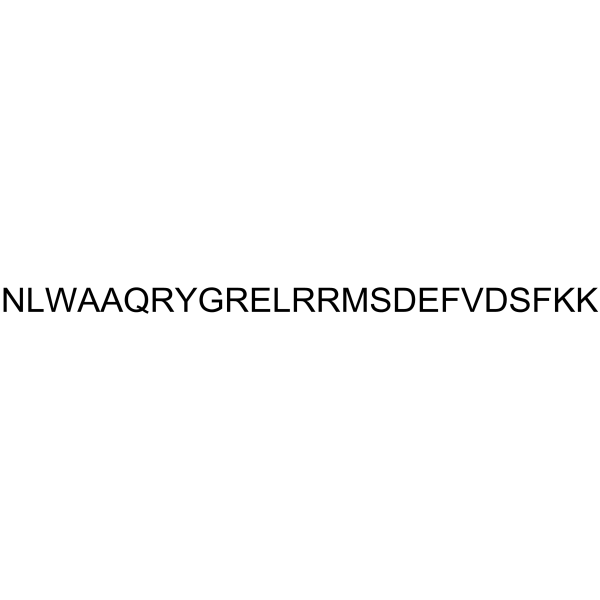
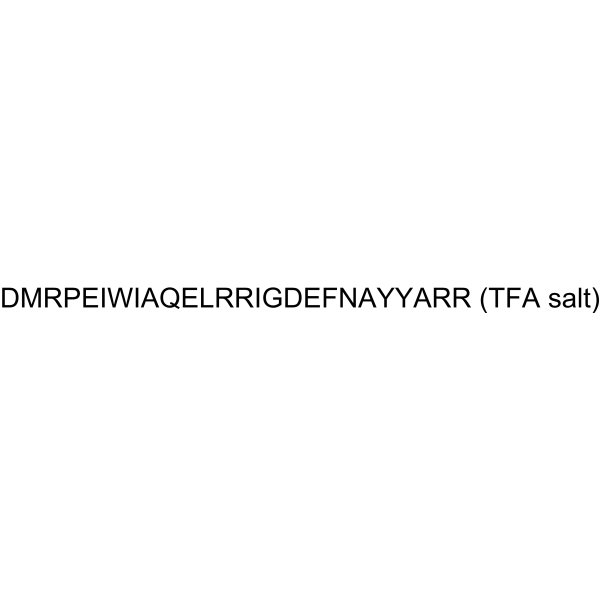
BAD (103-127) (human), the 25-mer Bad peptide, is derived from the BH3 domain of BAD, can antagonize the function of Bcl-xL. BAD (103-127) (human) is reported to have almost 800-fold higher affinity for Bcl-XL than the 16-mer peptide .
|
-
-
- HY-P2466
-
|
|
Apoptosis
|
Cancer
|
|
Bax BH3 peptide (55-74), wild type is a 20-amino acid Bax BH3 peptide (Bax 1) capable of inducing apoptosis in a variety of cell line models .
|
-
-
- HY-P1889A
-
|
|
Bcl-2 Family
|
Inflammation/Immunology
|
|
Bim BH3, Peptide IV TFA is a 26-residue peptide from BH3-only protein Bim, which belongs to the pro-apoptotic group of the Bcl-2 family of proteins .
|
-
-
- HY-P5325A
-
|
|
Bcl-2 Family
|
Others
|
|
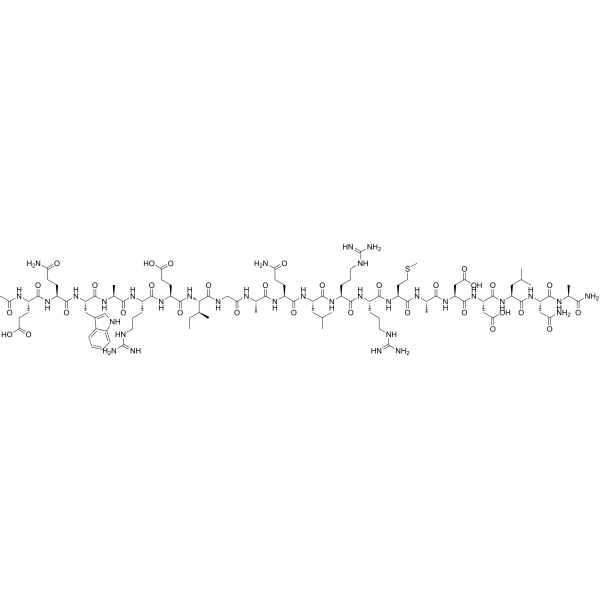
Bid BH3 (80-99) acetate is a biological active peptide. (BID is a pro-apoptotic member of the 'BH3-only' (BOPS) subset of the BCL-2 family of proteins that constitute a critical control point in apoptosis. Bid is the first of the BOPs reported to bind and activate Bcl-2, Bax, and Bak. Bid serves as a death-inducing ligand that moves from the cytosol to the mitochondrial membrane to inactivate Bcl-2 or to activate Bax.Pyroglutamyl (pGlu) peptides may spontaneously form when either Glutamine (Q) or Glutamic acid (E) is located at the sequence N-terminus. The conversion of Q or E to pGlu is a natural occurrence and in general it is believed that the hydrophobic γ-lactam ring of pGlu may play a role in peptide stability against gastrointestinal proteases. Pyroglutamyl peptides are therefore considered a normal subset of such peptides and are included as part of the peptide purity during HPLC analysis.)
|
-
-
- HY-P5325
-
|
|
Bcl-2 Family
|
Others
|
|
Bid BH3 (80-99) is a biological active peptide. (BID is a pro-apoptotic member of the 'BH3-only' (BOPS) subset of the BCL-2 family of proteins that constitute a critical control point in apoptosis. Bid is the first of the BOPs reported to bind and activate Bcl-2, Bax, and Bak. Bid serves as a death-inducing ligand that moves from the cytosol to the mitochondrial membrane to inactivate Bcl-2 or to activate Bax.Pyroglutamyl (pGlu) peptides may spontaneously form when either Glutamine (Q) or Glutamic acid (E) is located at the sequence N-terminus. The conversion of Q or E to pGlu is a natural occurrence and in general it is believed that the hydrophobic γ-lactam ring of pGlu may play a role in peptide stability against gastrointestinal proteases. Pyroglutamyl peptides are therefore considered a normal subset of such peptides and are included as part of the peptide purity during HPLC analysis.)
|
-
-
- HY-P11374
-
|
|
Bcl-2 Family
Apoptosis
|
Cancer
|
|
Bid BH3-Gly-r8 is Bid BH3 linked to eight arginine residues. Bid BH3-Gly-r8 shows no difference in apoptotic effects compared to its unmodified peptide homologue. Bid BH3 has high affinity for Bax and Bcl-2. Bid BH3-Gly-r8 can be used in the research of tumors .
|
-
-
- HY-P5341
-
-
-
- HY-123244
-
|
|
Bcl-2 Family
Apoptosis
|
Cancer
|
|
YC137 is a potent Bcl-2 antagonist with Kis of 1.3 μM and >100 μM for Bcl-2 and Bcl-xL when assayed in Bis-Tris buffer, respectively. YC137 inhibits the binding of the Bid BH3 peptide to Bcl-2, thus disrupting an interaction essential for the antiapoptotic activity of Bcl-2. YC137 selectively induces apoptosis of Bcl-2-dependent cells. YC137 has the potential for breast cancer research .
|
-
-
- HY-P5330
-
-
-
- HY-P5325F
-
|
|
Bcl-2 Family
|
Others
|
|
Bid BH3 (80-99), FAM labeled is a biological active peptide. (This is a 5-FAM-labeled Bid BH3 HY-P5325 peptide.)
|
-
-
- HY-P5324
-
|
|
Bcl-2 Family
|
Others
|
|
Bad BH3 (mouse) is a biological active peptide. (This is a bcl-2 binding peptide. This peptide is derived from the BH3 domain (a death domain) of Bad, amino acid residues 140 to 165.)
|
-
-
- HY-P1562A
-
|
|
Bcl-2 Family
|
Cancer
|
|
PUMA BH3 TFA is a p53 upregulated modulator of apoptosis (PUMA) BH3 domain peptide, acts as a direct activator of Bak, with a Kd of 26 nM .
|
-
-
- HY-P5327
-
|
|
Bcl-2 Family
|
Others
|
|
r8 Bid BH3 is a biological active peptide. (The Bid BH3 is a pro-apoptotic member of the 'BH3-only' subset of BCL-2 family proteins that constitute a critical control point in apoptosis. r8BIDBH3 is lethal to human leukemia cell lines that expresse Bcl-2. The Bcl-2 antagonists may have the potential to be efficacious in cancer therapy. Poly-D-arginine (d-isomer as denoted by rrrrrrrr) is fused to the Bid BH3 peptide to facilitate cellular uptake of the peptide.)
|
-
-
- HY-P0300F
-
-
-
- HY-P5329
-
|
|
NADPH Oxidase
|
Others
|
|
r8-Gly-Noxa A BH3 is a biological active peptide. (This cell permeable peptide is derived from the BH3 domain (a death domain) of Noxa A, amino acid residues 17 to 36. Eight D-Arginine residues and a Glycine linker residue are added to the amino terminal of the peptide.)
|
-
-
- HY-W286906
-
|
|
Bcl-2 Family
Apoptosis
|
Cancer
|
|
Mcl1-IN-15 (Compound 7) is the inhibitor for myeloid cell leukemia 1 (Mcl-1) with an IC50 of 8.73 μM. Mcl1-IN-15 inhibits Mcl1-BH3 peptide interaction, activates the Bak/Bax-mediated apoptosis and exhibits antitumor activity .
|
-
-
- HY-P2499
-
|
|
Bcl-2 Family
|
Cancer
|
|
BAD (103-127) (human), FAM-labeled is a FAM-labeled human BAD (103-127) (HY-P2468). BAD (103-127) (human), the 25-mer Bad peptide, is derived from the BH3 domain of BAD and can antagonize the function of Bcl-xL .
|
-
-
- HY-12048R
-
|
|
Reference Standards
PKC
Bcl-2 Family
Apoptosis
Autophagy
|
Metabolic Disease
Inflammation/Immunology
Cancer
|
|
Chelerythrine (chloride) (Standard) is the analytical standard of Chelerythrine (chloride). This product is intended for research and analytical applications. Chelerythrine chloride is a potent, cell-permeable inhibitor of protein kinase C, with an IC50 of 660 nM. Chelerythrine chloride inhibits the Bcl-XL-Bak BH3 peptide binding with IC50 of 1.5 μM and displaces Bax from Bcl-XL. Chelerythrine chloride induces apoptosis and autophagy.
|
-
-
- HY-P11705
-
|
|
Biochemical Assay Reagents
|
Cancer
|
|
PUMA2A is a PUMA BH3-only peptide. PUMA2A can be used as a negative control in Cytochrome C release assays and BH3 profiling. PUMA2A can be used in the research of chronic myeloid leukemia .
|
-
-
- HY-P11707
-
|
|
Apoptosis
Bcl-2 Family
|
Inflammation/Immunology
|
|
FS1 peptide is a synthetic BH3 mimetic peptide that shows potential in enhancing NK cell-mediated cancer immunity. FS1 peptide targets anti-apoptotic BCL-2 family proteins, triggers the release of cytochrome c, and thereby promotes apoptosis (Apoptosis). FS1 peptide can be used for NK cell-based immunological research .
|
-
-
- HY-15191B
-
|
(S)-BI-97C1
|
Bcl-2 Family
|
Cancer
|
|
(S)-Sabutoclax ((S)-BI-97C1), an optically pure apogossypol derivative, is pan-active inhibitor of antiapoptotic B-cell lymphoma/leukemia-2 (Bcl-2) family proteins. (S)-Sabutoclax (Compound II) inhibits the binding of BH3 peptides to Bcl-XL, Bcl-2, Mcl-1, and Bfl-1 with IC50 values of 0.31, 0.32, 0.20, and 0.62 μM, respectively. (S)-Sabutoclax also potently inhibits cell growth of human prostate cancer, lung cancer, and lymphoma cell lines with EC50 values of 0.13, 0.56, and 0.049 μM, respectively. (S)-Sabutoclax can be used for the research of apoptosis-based therapies against cancer .
|
-
-
- HY-P11706
-
|
|
Bcl-2 Family
|
Cancer
|
|
MS-1 peptide is a peptide for BH3 profiling. MS-1 peptide triggers higher depolarization of mitochondrial membrane in melanoma cells pre-treated with Encorafenib (HY-15605). MS1 peptide can be used for the research of BRAF V600E melanoma .
|
-
-
- HY-N9826
-
|
|
Bcl-2 Family
|
Cancer
|
|
Icterogenin is a selective inhibitor targeting the Bcl-XL/Bak BH3 domain peptide interaction and exhibits anti-leukemic activity. Icterogenin regulates protein interactions and affects tumor cell survival. Icterogenin is an oleanane-type triterpenoid compound that can be isolated from Lantana camara and is useful in the field of anti-tumor drug development .
|
-
-
- HY-N2359S
-
-
-
- HY-W043574
-
|
|
Bcl-2 Family
Drug Derivative
|
Cancer
|
|
6-Ethyl-7-hydroxy-4-methyl-2H-chromen-2-one (Compound 32), a derivative of Coumarin (HY-N0709), acts as a Mcl-1 inhibitor with a Ki of 5.47 μM and an IC50 of 30.88 μM. 6-Ethyl-7-hydroxy-4-methyl-2H-chromen-2-one is applicable for cancer research .
|
-
-
- HY-P1889
-
|
|
Bcl-2 Family
|
Inflammation/Immunology
|
|
Bim BH3, Peptide IV is a 26-residue peptide from BH3-only protein Bim, which belongs to the pro-apoptotic group of the Bcl-2 family of proteins .
|
-
- HY-P1527
-
Bim BH3
1 Publications Verification
|
Bcl-2 Family
|
Others
|
|
Bim BH3 is a biological active peptide. (This Bim peptide belongs to the pro-apoptotic Bcl-2 family of proteins.)
|
-
- HY-P5328
-
-
- HY-P2343
-
|
|
Apoptosis
|
Cancer
|
|
BH3 hydrochloride, a BBB penetrated peptide, provoke apoptosis either by direct activation of pro-apoptotic Bax/Bak or by neutralizing anti-apoptotic Bcl-2 proteins (Bcl-2, Bcl-XL, Bcl-w, Mcl-1 and A-1) via their BH3 domian .
|
-
- HY-P10614
-
|
|
Apoptosis
Bcl-2 Family
|
Others
|
|
Bid BH3 peptide is a small peptide derived from Bid protein that can bind and activate the pro-apoptotic proteins Bax and Bak, leading to mitochondrial outer membrane permeabilization (MOMP) and apoptosis. Bid BH3 peptide can be used to study mitochondrial bioenergetics .
|
-
- HY-P5342
-
-
- HY-P1562
-
|
|
Bcl-2 Family
|
Cancer
|
|
PUMA BH3 is a p53 upregulated modulator of apoptosis (PUMA) BH3 domain peptide, acts as a direct activator of Bak, with a Kd of 26 nM.
|
-
- HY-P2499A
-
|
|
Bcl-2 Family
|
Cancer
|
|
BAD (103-127) (human), FAM-labeled TFA is a FAM-labeled human BAD (103-127) (HY-P2468). BAD (103-127) (human) TFA, the 25-mer Bad peptide, is derived from the BH3 domain of BAD and can antagonize the function of Bcl-xL .
|
-
- HY-P2468
-
|
BADBH3 103-127 (human); BADBH3 (human)
|
Bcl-2 Family
|
Cancer
|
|
BAD (103-127) (human), the 25-mer Bad peptide, is derived from the BH3 domain of BAD, can antagonize the function of Bcl-xL. BAD (103-127) (human) is reported to have almost 800-fold higher affinity for Bcl-XL than the 16-mer peptide .
|
-
- HY-P2466
-
|
|
Apoptosis
|
Cancer
|
|
Bax BH3 peptide (55-74), wild type is a 20-amino acid Bax BH3 peptide (Bax 1) capable of inducing apoptosis in a variety of cell line models .
|
-
- HY-P1889A
-
|
|
Bcl-2 Family
|
Inflammation/Immunology
|
|
Bim BH3, Peptide IV TFA is a 26-residue peptide from BH3-only protein Bim, which belongs to the pro-apoptotic group of the Bcl-2 family of proteins .
|
-
- HY-P5325A
-
|
|
Bcl-2 Family
|
Others
|
|
Bid BH3 (80-99) acetate is a biological active peptide. (BID is a pro-apoptotic member of the 'BH3-only' (BOPS) subset of the BCL-2 family of proteins that constitute a critical control point in apoptosis. Bid is the first of the BOPs reported to bind and activate Bcl-2, Bax, and Bak. Bid serves as a death-inducing ligand that moves from the cytosol to the mitochondrial membrane to inactivate Bcl-2 or to activate Bax.Pyroglutamyl (pGlu) peptides may spontaneously form when either Glutamine (Q) or Glutamic acid (E) is located at the sequence N-terminus. The conversion of Q or E to pGlu is a natural occurrence and in general it is believed that the hydrophobic γ-lactam ring of pGlu may play a role in peptide stability against gastrointestinal proteases. Pyroglutamyl peptides are therefore considered a normal subset of such peptides and are included as part of the peptide purity during HPLC analysis.)
|
-
- HY-P5325
-
|
|
Bcl-2 Family
|
Others
|
|
Bid BH3 (80-99) is a biological active peptide. (BID is a pro-apoptotic member of the 'BH3-only' (BOPS) subset of the BCL-2 family of proteins that constitute a critical control point in apoptosis. Bid is the first of the BOPs reported to bind and activate Bcl-2, Bax, and Bak. Bid serves as a death-inducing ligand that moves from the cytosol to the mitochondrial membrane to inactivate Bcl-2 or to activate Bax.Pyroglutamyl (pGlu) peptides may spontaneously form when either Glutamine (Q) or Glutamic acid (E) is located at the sequence N-terminus. The conversion of Q or E to pGlu is a natural occurrence and in general it is believed that the hydrophobic γ-lactam ring of pGlu may play a role in peptide stability against gastrointestinal proteases. Pyroglutamyl peptides are therefore considered a normal subset of such peptides and are included as part of the peptide purity during HPLC analysis.)
|
-
- HY-P11374
-
|
|
Bcl-2 Family
Apoptosis
|
Cancer
|
|
Bid BH3-Gly-r8 is Bid BH3 linked to eight arginine residues. Bid BH3-Gly-r8 shows no difference in apoptotic effects compared to its unmodified peptide homologue. Bid BH3 has high affinity for Bax and Bcl-2. Bid BH3-Gly-r8 can be used in the research of tumors .
|
-
- HY-P5341
-
-
- HY-P5330
-
-
- HY-P5325F
-
|
|
Bcl-2 Family
|
Others
|
|
Bid BH3 (80-99), FAM labeled is a biological active peptide. (This is a 5-FAM-labeled Bid BH3 HY-P5325 peptide.)
|
-
- HY-P5324
-
|
|
Bcl-2 Family
|
Others
|
|
Bad BH3 (mouse) is a biological active peptide. (This is a bcl-2 binding peptide. This peptide is derived from the BH3 domain (a death domain) of Bad, amino acid residues 140 to 165.)
|
-
- HY-P1562A
-
|
|
Bcl-2 Family
|
Cancer
|
|
PUMA BH3 TFA is a p53 upregulated modulator of apoptosis (PUMA) BH3 domain peptide, acts as a direct activator of Bak, with a Kd of 26 nM .
|
-
- HY-P5327
-
|
|
Bcl-2 Family
|
Others
|
|
r8 Bid BH3 is a biological active peptide. (The Bid BH3 is a pro-apoptotic member of the 'BH3-only' subset of BCL-2 family proteins that constitute a critical control point in apoptosis. r8BIDBH3 is lethal to human leukemia cell lines that expresse Bcl-2. The Bcl-2 antagonists may have the potential to be efficacious in cancer therapy. Poly-D-arginine (d-isomer as denoted by rrrrrrrr) is fused to the Bid BH3 peptide to facilitate cellular uptake of the peptide.)
|
-
- HY-P0300F
-
-
- HY-P5329
-
|
|
NADPH Oxidase
|
Others
|
|
r8-Gly-Noxa A BH3 is a biological active peptide. (This cell permeable peptide is derived from the BH3 domain (a death domain) of Noxa A, amino acid residues 17 to 36. Eight D-Arginine residues and a Glycine linker residue are added to the amino terminal of the peptide.)
|
-
- HY-P2499
-
|
|
Bcl-2 Family
|
Cancer
|
|
BAD (103-127) (human), FAM-labeled is a FAM-labeled human BAD (103-127) (HY-P2468). BAD (103-127) (human), the 25-mer Bad peptide, is derived from the BH3 domain of BAD and can antagonize the function of Bcl-xL .
|
-
- HY-P11705
-
|
|
Biochemical Assay Reagents
|
Cancer
|
|
PUMA2A is a PUMA BH3-only peptide. PUMA2A can be used as a negative control in Cytochrome C release assays and BH3 profiling. PUMA2A can be used in the research of chronic myeloid leukemia .
|
-
- HY-P11707
-
|
|
Apoptosis
Bcl-2 Family
|
Inflammation/Immunology
|
|
FS1 peptide is a synthetic BH3 mimetic peptide that shows potential in enhancing NK cell-mediated cancer immunity. FS1 peptide targets anti-apoptotic BCL-2 family proteins, triggers the release of cytochrome c, and thereby promotes apoptosis (Apoptosis). FS1 peptide can be used for NK cell-based immunological research .
|
-
- HY-P11706
-
|
|
Bcl-2 Family
|
Cancer
|
|
MS-1 peptide is a peptide for BH3 profiling. MS-1 peptide triggers higher depolarization of mitochondrial membrane in melanoma cells pre-treated with Encorafenib (HY-15605). MS1 peptide can be used for the research of BRAF V600E melanoma .
|
| 製品番号 |
製品名 |
Category |
Target |
構造式 |
-
- HY-N2359S
-
|
|
|
Chelerythrine-d6 is the deuterium labeled Chelerythrine (HY-N2359). Chelerythrine is a natural alkaloid, acts as a potent and selective Ca 2+/phospholopid-dependent PKC antagonist, with an IC50 of 0.7 μM . Chelerythrine has antitumor, antidiabetic and anti-inflammatory activity . Chelerythrine inhibits the BclXL-Bak BH3 peptide binding with an IC50 of 1.5 μM and displaces Bax from Bcl-XL. Chelerythrine triggers apoptosis and autophagy .
|
-
入力情報は安全に管理されます. ※ 必須入力項目.
Inquiry Information
- 製品名:
- 製品番号:
- 数量:
- MCE 日本正規代理店:

