

Search Result
Results for "
Flame Retardant
" in MedChemExpress (MCE) Product Catalog:
7
Biochemical Assay Reagents
5
Isotope-Labeled Compounds
| Cat. No. |
Product Name |
Target |
Research Areas |
Chemical Structure |
-
- HY-107859
-
-
-
- HY-W018587
-
-
-
- HY-108712
-
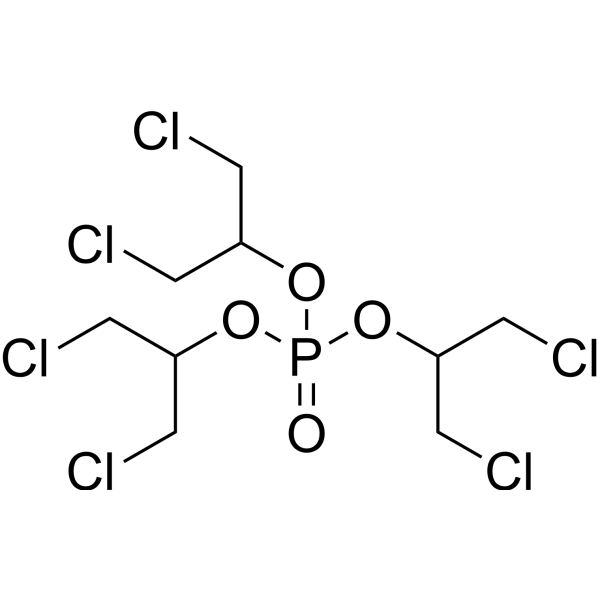
TDCPP
Maximum Cited Publications
8 Publications Verification
Tris(1,3-dichloroisopropyl)phosphate
|
Biochemical Assay Reagents
|
Cancer
|
|
TDCPP is a chlorinated analog of tris(2,3-dibromopropyl)phosphate (Tris) which is one of the most detected organophosphorus flame retardants (OPFRs) in the environment.
|
-
-
- HY-15929
-
TBHBA
1 Publications Verification
2,4,6-Tribromo-3-hydroxybenzoic acid
|
Biochemical Assay Reagents
|
Others
|
|
TBHBA (2,4,6-Tribromo-3-hydroxybenzoic acid) is a chemical colorimetric agent and nanomaterial surface modifier. TBHBA can react with some oxidants (such as H2O2) to generate high-absorbance quinoneimine dyes, which enhance the sensitivity of HDL cholesterol enzymatic determination. TBHBA can be used as a bromine-containing coupling agent to modify the surface of silica nanoparticles through esterification reaction. Thereby, organic flame retardant groups are introduced to improve the thermal stability and flame retardant properties of nanocomposites. TBHBA can be used in clinical biochemical testing (such as serum lipoprotein analysis) and the preparation of flame-retardant polymer nanocomposites .
|
-
-
- HY-Y1322
-
|
|
Environmental Pollutants
Mitophagy
Apoptosis
NF-κB
p38 MAPK
ERK
JNK
PI3K
Akt
Monoamine Oxidase
Reactive Oxygen Species (ROS)
PPAR
Indoleamine 2,3-Dioxygenase (IDO)
|
Cardiovascular Disease
Neurological Disease
Metabolic Disease
Inflammation/Immunology
Endocrinology
|
|
Triphenyl phosphate is an orally active, blood-brain barrier-permeable aryl organophosphate flame retardant and endocrine disruptor. Triphenyl phosphate disrupts mitochondrial dynamic balance through oxidative stress, induces excessive mitophagy and apoptosis, and ultimately leads to myocardial fibrosis. In the brain, Triphenyl phosphate activates the NF-κB inflammatory pathway by disrupting the gut microbiota, alters tryptophan metabolism and elevates neurotoxins, thereby inducing anxiety- and depression-like behaviors. In the skeletal and reproductive systems, Triphenyl phosphate inhibits osteoblast differentiation and induces germ cell apoptosis by suppressing the MAPK/ERK pathway and activating the JNK signal, respectively. In adipose and placental tissues, Triphenyl phosphate promotes lipid accumulation by activating the PI3K/AKT-PPARγ axis, and disrupts placental metabolism via the MAOA/ROS/NF-κB cascade, impairing neurodevelopment of offspring .
|
-
-
- HY-W399311
-
|
|
Drug Metabolite
|
Others
|
|
4-Hydroxyphenyl diphenyl phosphate is a hydroxylated metabolite of organophosphate flame retardant .
|
-
-
- HY-W013058
-
|
DBDPE; 1,2-Bis(perbromophenyl)ethane
|
Biochemical Assay Reagents
|
Neurological Disease
Metabolic Disease
|
|
Decabromodiphenyl ethane (DBDPE; 1,2-Bis(perbromophenyl)ethane) is a brominated flame retardant. Decabromodiphenyl ethane can exhibit neurotoxicity, thyroid toxicity, reproductive developmental toxicity, hepatotoxicity, and oxidative stress in living organisms .
|
-
-
- HY-Y1155
-
-
-
- HY-W009066
-
|
EHDPP; Octicizer
|
PPAR
Progesterone Receptor
Estrogen Receptor/ERR
|
Endocrinology
|
|
2-Ethylhexyl diphenyl phosphate is an organophosphate flame retardants (OPFRs) and a PPARG agonist (EC20: 2.04 µM). 2-Ethylhexyl diphenyl phosphate also inhibits ERRγ transcriptional activity (IC50: 1.3 µM). 2-Ethylhexyl diphenyl phosphate upregulates 3β-HSD1, human chorionic gonadotropin (hCG) and progesterone secretion. 2-Ethylhexyl diphenyl phosphate can be used in studies of female reproduction and fetal development .
|
-
-
- HY-W008954
-
|
|
Environmental Pollutants
Biochemical Assay Reagents
|
Others
|
|
Tris(2-ethylhexyl) phosphate is an organophosphorus flame retardant analog with considerable ecological toxicity. Tris(2-ethylhexyl) phosphate can be used as neutral carriers to make organic ammonium ion-selective membrane electrodes. Tris(2-ethylhexyl) phosphate is widely applied in furniture, textiles, building materials, electronics, and other chemicals .
|
-
-
- HY-W105318
-
|
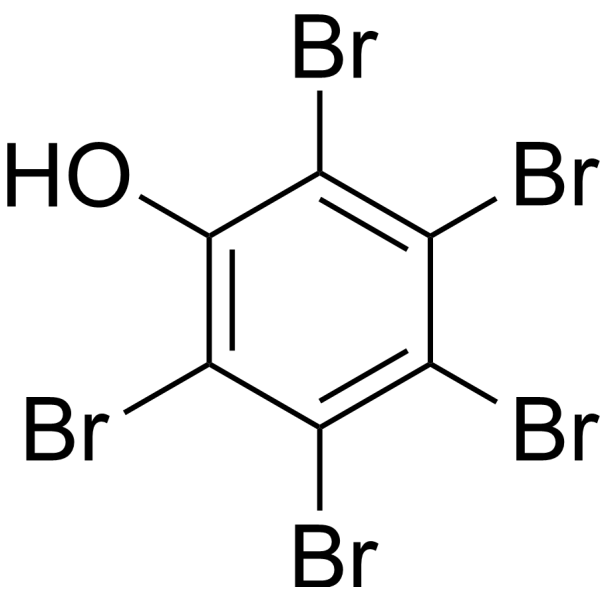
PBP
|
TGF-beta/Smad
Apoptosis
|
Cancer
|
|
Pentabromophenol (PBP) is a brominated flame retardant (BFR) widely used in various consumer products to reduce the flammability of materials used in different utility items. Pentabromophenol can accelerate the degradation of transforming growth factor-β (TGF-β) receptors by promoting clathrin-mediated endocytosis, thereby inhibiting the TGF-β signaling pathway. Additionally, Pentabromophenol can also induce apoptosis in peripheral blood mononuclear cells (PBMCs) .
|
-
-
- HY-W023144
-
-
-
- HY-Y1219E
-
|
|
Biochemical Assay Reagents
|
Others
|
|
Silica gel, high-purity grade, 130-270 mesh is a low-density, high-surface-area, high-purity inert additive that can be used to prepare chromatographic column sieve plates based on the sol-gel method. Silica gel, high-purity grade prevents DNA degradation by absorbing water from plant leaves, and is suitable for the preservation of field-collected samples for subsequent DNA extraction, restriction endonuclease digestion, PCR amplification and gene sequencing. It can also be reused after being saturated with water. Silica gel, high-purity grade can provide a non-toxic, inert aquatic environment for embedded cells, allowing nutrients, oxygen and metabolic waste to diffuse freely and blocking external pollution, thereby maintaining the activity of fibroblasts and epithelial cells .
|
-
-
- HY-W019994
-
-
-
- HY-W337886
-
-
-
- HY-W585872
-
|
BBOEP
|
Biochemical Assay Reagents
|
Others
|
|
Bis(2-butoxyethyl) phosphate (BBOEP) is a metabolite of the flame retardant tris(2-butoxyethyl) phosphate (TBOEP). Bis(2-butoxyethyl) phosphate (BBOEP) can be used in biomonitoring studies and risk assessments .
|
-
-
- HY-W718423
-
|
IDPP
|
DNA/RNA Synthesis
MDM-2/p53
|
Cancer
|
|
Isodecyl diphenyl phosphate (IDPP) is a flame retardant. Isodecyl diphenyl phosphate induces cytotoxicity, DNA damage, mitochondrial dysfunction and oxidative stress in cancer cells, and mediates DNA damage and cell cycle arrest via a p53-dependent pathway .
|
-
-
- HY-W585826
-
-
-
- HY-W587835
-
-
-
- HY-W549227
-
-
-
- HY-W185336
-
-
-
- HY-W392122
-
|
Tetraphenyl resorcinol bisdiphenylphosphate
|
Biochemical Assay Reagents
|
Others
|
|
1,3-Phenylene tetraphenyl bis(phosphate) (Tetraphenyl resorcinol bis(diphenylphosphate)) is a flame retardant.
|
-
-
- HY-W292950
-
|
o-Phenylphenyl bisphenyl phosphate
|
Biochemical Assay Reagents
|
Others
|
|
2-Biphenylyl phenyl phosphate (o-Phenylphenyl bisphenyl phosphate) is mainly used as a flame retardant and a plastic additive.
|
-
-
- HY-W877743
-
|
p-t-Butylphenyl diphenyl phosphate
|
Biochemical Assay Reagents
|
Others
|
|
4-(tert-Butyl)phenyl diphenyl phosphate (p-t-Butylphenyl diphenyl phosphate) is mainly used as a flame retardant and lubricant.
|
-
-
- HY-108712R
-
|
Tris(1,3-dichloroisopropyl)phosphate (Standard)
|
Biochemical Assay Reagents
Reference Standards
|
Cancer
|
|
TDCPP (Standard) is the analytical standard of TDCPP. This product is intended for research and analytical applications. TDCPP is a chlorinated analog of tris(2,3-dibromopropyl)phosphate (Tris) which is one of the most detected organophosphorus flame retardants (OPFRs) in the environment.
|
-
-
- HY-W585831
-
|
BDCPP
|
Biochemical Assay Reagents
|
Others
|
|
Bis(1,3-dichloro-2-propyl) phosphate (BDCPP) is a metabolite of the flame retardant TDCPP (HY-108712) and has endocrine disrupting properties. Bis(1,3-dichloro-2-propyl) phosphate can be used in environmental monitoring, toxicology, and exposure assessment studies .
|
-
-
- HY-W592622
-
|
|
Biochemical Assay Reagents
|
Others
|
|
Polyacrylonitrile is a fiber. Polyacrylonitrile is widely used as a material for the preparation of ultrafiltration membranes, hemodialysis membranes, textiles, flame retardants and carbon fibers. Polyacrylonitrile (MW 250000) can be electrospun .
|
-
-
- HY-107859S
-
|
TCEP-d12
|
Isotope-Labeled Compounds
Reactive Oxygen Species (ROS)
Apoptosis
DNA/RNA Synthesis
Calcium Channel
FXR
Toll-like Receptor (TLR)
NF-κB
SOD
Interleukin Related
TNF Receptor
|
Others
|
|
Tris(2-chloroethyl)phosphate-d12 is the deuterium labeled Tris(β-chloroethyl) phosphate. Tris(2-chloroethyl) phosphate is a widely used organic phosphorus flame retardant, mainly used as a plasticizer. Tris(2-chloroethyl) phosphate has orally active hepatotoxicity, inducing an increase in reactive oxygen species (ROS) and calcium ions (Ca²⁺) influx, a decrease in mitochondrial membrane potential (△Ψm), and causing DNA damage and cell apoptosis. Tris(2-chloroethyl) phosphate directly binds to FXR, inducing obesity and the formation of fatty liver in mice. Chloroethyl) phosphate activates the TLR4/NF-κB pathway, triggering liver inflammation.
|
-
-
- HY-Y1322S
-
|
Celluflex TPP-d15; DHPF 005-d15; Disflamol TP-d15; Disflamoll TP-d15; NSC 57868-d15; Phenyl phosphate ((PhO)3PO)-d15; Phoscon FR 903N-d15
|
Isotope-Labeled Compounds
Environmental Pollutants
ERK
Indoleamine 2,3-Dioxygenase (IDO)
p38 MAPK
NF-κB
Akt
Monoamine Oxidase
Mitophagy
Reactive Oxygen Species (ROS)
JNK
PI3K
PPAR
Apoptosis
|
Cardiovascular Disease
Neurological Disease
Metabolic Disease
Inflammation/Immunology
Endocrinology
|
|
Triphenyl phosphate-d15 is the deuterium labeled Triphenyl phosphate. Triphenyl phosphate is an orally active, blood-brain barrier-permeable aryl organophosphate flame retardant and endocrine disruptor. Triphenyl phosphate disrupts mitochondrial dynamic balance through oxidative stress, induces excessive mitophagy and apoptosis, and ultimately leads to myocardial fibrosis. In the brain, Triphenyl phosphate activates the NF-κB inflammatory pathway by disrupting the gut microbiota, alters tryptophan metabolism and elevates neurotoxins, thereby inducing anxiety- and depression-like behaviors. In the skeletal and reproductive systems, Triphenyl phosphate inhibits osteoblast differentiation and induces germ cell apoptosis by suppressing the MAPK/ERK pathway and activating the JNK signal, respectively. In adipose and placental tissues, Triphenyl phosphate promotes lipid accumulation by activating the PI3K/AKT-PPARγ axis, and disrupts placental metabolism via the MAOA/ROS/NF-κB cascade, impairing neurodevelopment of offspring.
|
-
-
- HY-W585928
-
-
-
- HY-W587553
-
-
-
- HY-W715244
-
-
-
- HY-W585821
-
-
-
- HY-W722114
-
-
-
- HY-127074
-
|
HET acid
|
Biochemical Assay Reagents
|
Others
|
|
Chlorendic acid (HET acid) can be used as a diacid component for the synthesis of oligoesters with potential flame retardant properties with aliphatic diols. Degradation by chlorine radicals may be responsible for the flame retardancy of HET acid-based oligoesters .
|
-
-
- HY-W129561
-
|
|
Biochemical Assay Reagents
|
Others
|
|
Bisphenol A bis(diphenyl phosphate) is a flame retardant. Bisphenol A bis(diphenyl phosphate) shows a crucial condensed phase action in addition to a gas phase action .
|
-
-
- HY-W200537
-
|
Isopropyl thioglycolate
|
Biochemical Assay Reagents
|
Others
|
|
Propan-2-yl 2-sulfanylacetate (Isopropyl thioglycolate) can be used as a stabilizer for dyes, an additive for flame retardants, and a component in metal cleaning agents, etc .
|
-
-
- HY-N2296
-
|
|
Others
|
Others
|
|
(2R,3R)-3,7,4'-Trihydroxy-5-methoxy-8-prenylflavanone can be used in a flame retardant for transparent polycarbonate products or in elevator illumination devices research .
|
-
-
- HY-W288480
-
|
|
Apoptosis
|
Cancer
|
|
Trihexyl phosphate is an organophosphate flame retardant. Trihexyl phosphate causes mitochondrial impairment and induces cell apoptosis in CHO cells. Trihexyl phosphate promotes the proliferation of human breast cancer cells (MCF-7) in a dose-dependent manner and exerts estrogenicity via ERα-independent pathways .
|
-
-
- HY-141728
-
|
BCIPP
|
Endogenous Metabolite
|
Metabolic Disease
|
|
Bis(1-chloro-2-propyl) phosphate (BCIPP) is a metabolite of organophosphate flame retardants (OPFR) that may alter energy metabolism by influencing the levels of steroid hormones, such as cortisol and cortisone. Bis(1-chloro-2-propyl) phosphate holds potential for research on metabolism-related diseases caused by environmental exposure .
|
-
-
- HY-W585884
-
-
-
- HY-W877663
-
-
-
- HY-W588267
-
-
-
- HY-W588268
-
-
-
- HY-W703900
-
-
-
- HY-W585980
-
-
-
- HY-W722110
-
-
-
- HY-W722115
-
-
-
- HY-W040186
-
|
|
Biochemical Assay Reagents
|
Others
|
|
1-Naphthenyl phosphate hydrate sodium is commonly used as a flame retardant for various materials such as plastics, textiles, and construction materials. In addition, its potential use as a corrosion inhibitor and as an ingredient in fertilizers and detergents has been investigated. Its hydrated form contains variable amounts of water molecules, which affects its physical properties and applications.
|
-
-
- HY-Y1155S
-
|
|
Isotope-Labeled Compounds
Biochemical Assay Reagents
Cytochrome P450
DNA Alkylator/Crosslinker
|
Inflammation/Immunology
Endocrinology
Cancer
|
|
Hexamethylphosphoramide-d18 is the deuterium labeled Hexamethylphosphoramide (HY-Y1155). Hexamethylphosphoramide is an orally active polar aprotic solvent, flame retardant additive, and carcinogen. Hexamethylphosphoramide undergoes cytochrome P-450-mediated N-demethylation to Formaldehyde. Hexamethylphosphoramide induces DNA-protein crosslinks. Hexamethylphosphoramide has been linked to nasal tumors (squamous cell carcinoma, adenoid squamous cell carcinoma), squamous metaplasia, rhinitis, tracheitis, and reversible and irreversible infertility .
|
-
- HY-W653929
-
|
BCIPP-d12
|
Isotope-Labeled Compounds
Endogenous Metabolite
|
Metabolic Disease
|
|
Bis(1-chloro-2-propyl) phosphate-d12 is deuterium labeled Bis(1-chloro-2-propyl) phosphate. Bis(1-chloro-2-propyl) phosphate (BCIPP) is a metabolite of organophosphate flame retardants (OPFR) that may alter energy metabolism by influencing the levels of steroid hormones, such as cortisol and cortisone. Bis(1-chloro-2-propyl) phosphate holds potential for research on metabolism-related diseases caused by environmental exposure .
|
-
- HY-B1521B
-
|
|
Biochemical Assay Reagents
|
Others
|
|
Aluminum hydroxide (0.1 μm) is a nano-sized aluminum hydroxide flame retardant with a particle size of approximately 100 nm. Aluminum hydroxide (0.1 μm) can be used in flame-retardant composite materials and improves mechanical properties and processing flowability.
|
-
- HY-B1521A
-
|
|
Biochemical Assay Reagents
|
Others
|
|
Aluminum hydroxide (0.03 μm) is a nano-sized aluminum hydroxide flame retardant with a particle size of approximately 30 nm. Aluminum hydroxide (0.03 μm) can be used in flame-retardant composite materials and improves mechanical properties and processing flowability.
|
-
- HY-W460727
-
|
|
Insecticide
|
Infection
|
|
Boron sodium oxide (tetrahydrate) is an alkaline salt. Boron sodium oxide (tetrahydrate) can be used as an insecticide, a flame retardant, and an agricultural micronutrient .
|
-
- HY-W011086R
-
|
Tri-O-cresyl phosphate (Standard); TOTP (Standard)
|
Biochemical Assay Reagents
Reference Standards
Apoptosis
|
Neurological Disease
Metabolic Disease
|
|
Tri-O-tolyl phosphate (Tri-O-cresyl phosphate; TOTP) (Standard) is an analytical standard of Tri-O-tolyl phosphate (HY-W011086). This product is intended for research and analytical applications. Tri-O-tolyl phosphate is an aryl phosphate compounds commonly utilized as flame retardants and lubricant additives across various industrie. Tri-O-tolyl phosphate has neurotoxicity and reproductive toxicity, decreasing cell viability, inhibiting cell proliferation, triggering cell cycle arrest, induceing apoptosis, causing mitochondrial dysfunction, disrupts calcium homeostasis .
|
-
| Cat. No. |
Product Name |
Type |
-
- HY-15929
-
TBHBA
1 Publications Verification
2,4,6-Tribromo-3-hydroxybenzoic acid
|
Biochemical Assay Reagents
|
|
TBHBA (2,4,6-Tribromo-3-hydroxybenzoic acid) is a chemical colorimetric agent and nanomaterial surface modifier. TBHBA can react with some oxidants (such as H2O2) to generate high-absorbance quinoneimine dyes, which enhance the sensitivity of HDL cholesterol enzymatic determination. TBHBA can be used as a bromine-containing coupling agent to modify the surface of silica nanoparticles through esterification reaction. Thereby, organic flame retardant groups are introduced to improve the thermal stability and flame retardant properties of nanocomposites. TBHBA can be used in clinical biochemical testing (such as serum lipoprotein analysis) and the preparation of flame-retardant polymer nanocomposites .
|
-
- HY-Y1155
-
|
HMPA
|
Biochemical Assay Reagents
|
|
Hexamethylphosphoramide is an orally active polar aprotic solvent, flame retardant additive, and carcinogen. Hexamethylphosphoramide undergoes cytochrome P-450-mediated N-demethylation to Formaldehyde. Hexamethylphosphoramide induces DNA-protein crosslinks. Hexamethylphosphoramide has been linked to nasal tumors (squamous cell carcinoma, adenoid squamous cell carcinoma), squamous metaplasia, rhinitis, tracheitis, and reversible and irreversible infertility .
|
-
- HY-Y1219E
-
|
|
Biochemical Assay Reagents
|
|
Silica gel, high-purity grade, 130-270 mesh is a low-density, high-surface-area, high-purity inert additive that can be used to prepare chromatographic column sieve plates based on the sol-gel method. Silica gel, high-purity grade prevents DNA degradation by absorbing water from plant leaves, and is suitable for the preservation of field-collected samples for subsequent DNA extraction, restriction endonuclease digestion, PCR amplification and gene sequencing. It can also be reused after being saturated with water. Silica gel, high-purity grade can provide a non-toxic, inert aquatic environment for embedded cells, allowing nutrients, oxygen and metabolic waste to diffuse freely and blocking external pollution, thereby maintaining the activity of fibroblasts and epithelial cells .
|
-
- HY-W040186
-
|
|
Biochemical Assay Reagents
|
|
1-Naphthenyl phosphate hydrate sodium is commonly used as a flame retardant for various materials such as plastics, textiles, and construction materials. In addition, its potential use as a corrosion inhibitor and as an ingredient in fertilizers and detergents has been investigated. Its hydrated form contains variable amounts of water molecules, which affects its physical properties and applications.
|
-
- HY-B1521B
-
|
|
Biochemical Assay Reagents
|
|
Aluminum hydroxide (0.1 μm) is a nano-sized aluminum hydroxide flame retardant with a particle size of approximately 100 nm. Aluminum hydroxide (0.1 μm) can be used in flame-retardant composite materials and improves mechanical properties and processing flowability.
|
-
- HY-B1521A
-
|
|
Biochemical Assay Reagents
|
|
Aluminum hydroxide (0.03 μm) is a nano-sized aluminum hydroxide flame retardant with a particle size of approximately 30 nm. Aluminum hydroxide (0.03 μm) can be used in flame-retardant composite materials and improves mechanical properties and processing flowability.
|
-
- HY-W011086R
-
|
Tri-O-cresyl phosphate (Standard); TOTP (Standard)
|
Biochemical Assay Reagents
|
|
Tri-O-tolyl phosphate (Tri-O-cresyl phosphate; TOTP) (Standard) is an analytical standard of Tri-O-tolyl phosphate (HY-W011086). This product is intended for research and analytical applications. Tri-O-tolyl phosphate is an aryl phosphate compounds commonly utilized as flame retardants and lubricant additives across various industrie. Tri-O-tolyl phosphate has neurotoxicity and reproductive toxicity, decreasing cell viability, inhibiting cell proliferation, triggering cell cycle arrest, induceing apoptosis, causing mitochondrial dysfunction, disrupts calcium homeostasis .
|
| Cat. No. |
Product Name |
Category |
Target |
Chemical Structure |
| Cat. No. |
Product Name |
Chemical Structure |
-
- HY-107859S
-
|
|
|
Tris(2-chloroethyl)phosphate-d12 is the deuterium labeled Tris(β-chloroethyl) phosphate. Tris(2-chloroethyl) phosphate is a widely used organic phosphorus flame retardant, mainly used as a plasticizer. Tris(2-chloroethyl) phosphate has orally active hepatotoxicity, inducing an increase in reactive oxygen species (ROS) and calcium ions (Ca²⁺) influx, a decrease in mitochondrial membrane potential (△Ψm), and causing DNA damage and cell apoptosis. Tris(2-chloroethyl) phosphate directly binds to FXR, inducing obesity and the formation of fatty liver in mice. Chloroethyl) phosphate activates the TLR4/NF-κB pathway, triggering liver inflammation.
|
-
-
- HY-Y1322S
-
|
|
|
Triphenyl phosphate-d15 is the deuterium labeled Triphenyl phosphate. Triphenyl phosphate is an orally active, blood-brain barrier-permeable aryl organophosphate flame retardant and endocrine disruptor. Triphenyl phosphate disrupts mitochondrial dynamic balance through oxidative stress, induces excessive mitophagy and apoptosis, and ultimately leads to myocardial fibrosis. In the brain, Triphenyl phosphate activates the NF-κB inflammatory pathway by disrupting the gut microbiota, alters tryptophan metabolism and elevates neurotoxins, thereby inducing anxiety- and depression-like behaviors. In the skeletal and reproductive systems, Triphenyl phosphate inhibits osteoblast differentiation and induces germ cell apoptosis by suppressing the MAPK/ERK pathway and activating the JNK signal, respectively. In adipose and placental tissues, Triphenyl phosphate promotes lipid accumulation by activating the PI3K/AKT-PPARγ axis, and disrupts placental metabolism via the MAOA/ROS/NF-κB cascade, impairing neurodevelopment of offspring.
|
-
-
- HY-W722115
-
|
|
|
5-HO-Ehdpp-d10 is the deuterium labeled 5-HO-Ehdpp (HY-W722114). 5-HO-Ehdpp (5-OH-EHDPP) is a flame retardant.
|
-
-
- HY-Y1155S
-
|
|
|
Hexamethylphosphoramide-d18 is the deuterium labeled Hexamethylphosphoramide (HY-Y1155). Hexamethylphosphoramide is an orally active polar aprotic solvent, flame retardant additive, and carcinogen. Hexamethylphosphoramide undergoes cytochrome P-450-mediated N-demethylation to Formaldehyde. Hexamethylphosphoramide induces DNA-protein crosslinks. Hexamethylphosphoramide has been linked to nasal tumors (squamous cell carcinoma, adenoid squamous cell carcinoma), squamous metaplasia, rhinitis, tracheitis, and reversible and irreversible infertility .
|
-
-
- HY-W653929
-
|
|
|
Bis(1-chloro-2-propyl) phosphate-d12 is deuterium labeled Bis(1-chloro-2-propyl) phosphate. Bis(1-chloro-2-propyl) phosphate (BCIPP) is a metabolite of organophosphate flame retardants (OPFR) that may alter energy metabolism by influencing the levels of steroid hormones, such as cortisol and cortisone. Bis(1-chloro-2-propyl) phosphate holds potential for research on metabolism-related diseases caused by environmental exposure .
|
-
Your information is safe with us. * Required Fields.
Inquiry Information
- Product Name:
- Cat. No.:
- Quantity:
- MCE Japan Authorized Agent:

