From 11:00 pm to 12:00 pm EST ( 8:00 pm to 9:00 pm PST ) on January 6th, the website will be under maintenance. We are sorry for the inconvenience. Please arrange your schedule properly.
ODN 2395 is a C class oligodeoxynucleotide and can be used as vaccine adjuvant. ODN 2395 is also a TLR9 agonist. ODN 2395 can be used in the research of immunological vaccines. Sequence: 5'-tcgtcgttttcggcgc:gcgccg-3' (Note: The bases are phosphorothioate; ODN 2395 contains the partial palindromic sequence cggcgc:gcgccg) .
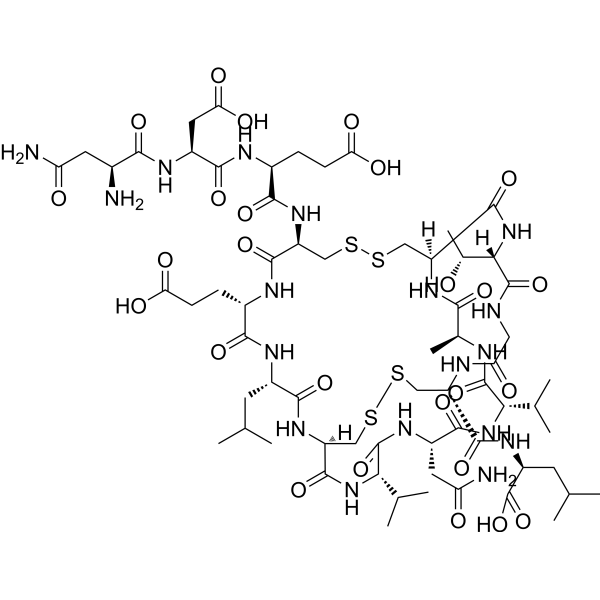
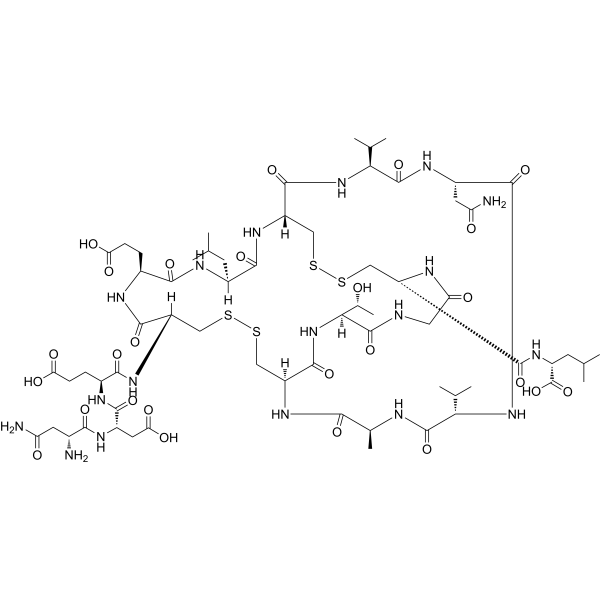
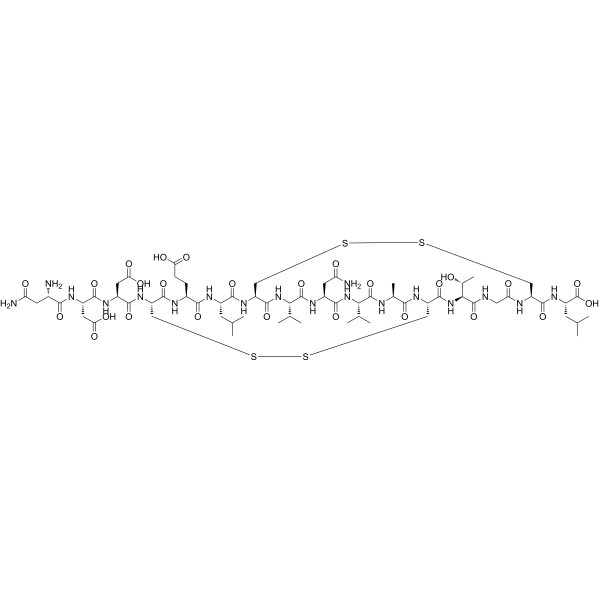
Plecanatide, an analogue of Uroguanylin, is an orally active guanylate cyclase-C (GC-C) receptor agonist. Plecanatide activates GC-C receptors to stimulate cGMP synthesis with an EC50 of 190 nM in T84 cells assay. Plecanatide shows anti-inflammatory activity in models of murine colitis .
Golodirsen (SRP-4053) is an antisense oligonucleotide of the phophorodiamidate morpholino oligomer (PMO). Golodirsen restores the reading frame of the Duchenne muscular dystrophy (DMD) gene by modifying the splicing process of the pre-mRNA, skipping exon 53. Golodirsen can restore the expression of the anti-myostatin protein. Golodirsen can be used for the research of duchenne muscular dystrophy (DMD) .
CpG ODN 10101 (ODN 10101; CPG 10101) is a selective agonist targeting TLR9, a synthetic oligodeoxynucleotide modified with phosphate thioester. CpG ODN 10101 activates B cells and plasmacytoid dendritic cells (pDCs), inducing the production of cytokines and chemokines such as interferon-IFN-α, interferon-inducible protein IP-10, and 2'5'-oligoadenylate synthase (2'5'-OAS), regulating innate immunity and promoting Th1 adaptive immune responses. CpG ODN 10101 also possesses antiviral properties and enhances vaccine immunogenicity, making it suitable as an immunomodulator and vaccine adjuvant for vaccine development in chronic hepatitis C and infectious diseases such as melioidosis, pertussis, and respiratory syncytial virus (RSV) .
Dolcanatide is an orally active GC-C (guanylate cyclase-C) agonist. Dolcanatide shows laxative, anti-nociceptive and anti-inflammatory activity. Dolcanatide can be used in inflammatory bowel disease research .
Emapticap pegol (NOX-E36) is a inhibitor of pro-inflammatory chemokine C-C motif-ligand 2 (CCL2). Emapticap pegol is a 40-nucleotide oligonucleotide aptamer, displays different Spiegelmers (L-RNA aptamer) isform in human (NOX-E36) and mouse (mNOX-E36). mNOX-E36 is a murine-specific analogue of NOX-E36, an anti-MCP-1 L-RNA aptamer that was previously shown to attenuate liver fibrosis in mice .
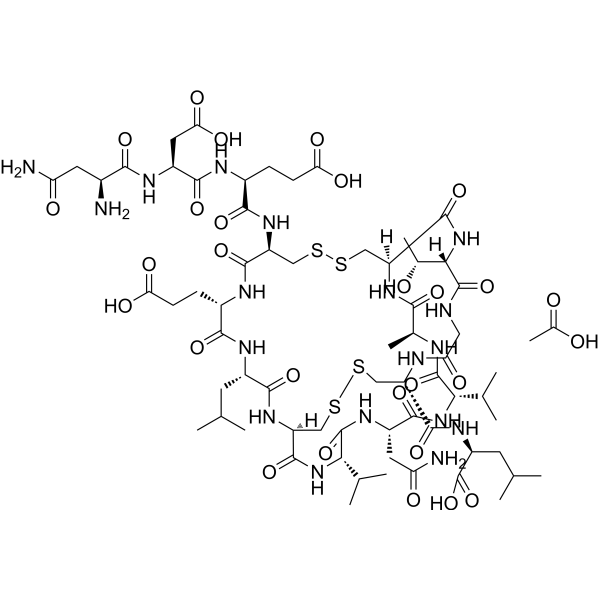
Plecanatide acetate, an analogue of Uroguanylin, is an orally active guanylate cyclase-C (GC-C) receptor agonist. Plecanatide acetate activates GC-C receptors to stimulate cGMP synthesis with an EC50 of 190 nM in T84 cells assay. Plecanatide acetate can be used for the research of chronic idiopathic constipation, and it also shows anti-inflammatory activity in models of murine colitis .
Uroguanylin (human) is a natural ligand for the Guanylyl Cyclase (GCC) receptor expressed in metastatic colorectal cancer tumors. Uroguanylin (human) has anti-tumor actions in an animal model for human colon cancer .
BPIPP is a guanylyl cyclase type C (GC-C) and adenylyl cyclase inhibitor that can suppress cyclic nucleotide synthesis. BPIPP inhibits chloride-ion transport stimulated by activation of guanylyl or adenylyl cyclases, and has the potential for diarrhea research .
Mongersen (GED-0301) is a specific and orally active SMAD7 antisense oligonucleotide. Mongersen restores TGF-β1 activity leading to inhibition of inflammatory signals. Mongersen can attenuate Crohn's disease-like experimental colitis in mice .
Brogidirsen (NS 089; NCNP 02) is a a dual-targeting antisense oligonucleotide. Brogidirsen can induce dystrophin protein experession. Brogidirsen can be used for the research of Duchenne muscular dystrophy .
Indusatumab vedotin (MLN-0264; AKT-264) is an antibody-drug conjugate (ADC) consisting of the human anti-guanylate cyclaseC (GCC) antibody linked to a microtubule-disruptor Monomethyl auristatin (HY-15162). Indusatumab vedotin has anti-proliferative effects on pancreas cancer cell lines. Indusatumab vedotin arrests cell cycle at G2/M phase, and induces apoptosis .
Alicaforsen is an oligonucleotide and immunostimulant targeting human ICAM-1 mRNA. Alicaforsen hybridizes to specific sites to reduce the expression level of ICAM-1. Alicaforsen is applicable to relevant research on psoriasis, rheumatoid arthritis and inflammatory bowel disease .
Uroguanylin (human) (TFA) is a natural ligand for the Guanylyl Cyclase (GCC) receptor expressed in metastatic colorectal cancer tumors. Uroguanylin (human) (TFA) has anti-tumor actions in an animal model for human colon cancer .
Oblimersen is a BCL-2 inhibitor targeting BCL-2 RNA. Oblimersen specifically binds to the first six codons of the bcl-2 mRNA sequence, resulting in degradation of bcl-2 mRNA and induces apoptosis by down-regulating expression of Bcl-2. Oblimersen can be used for cancer research .
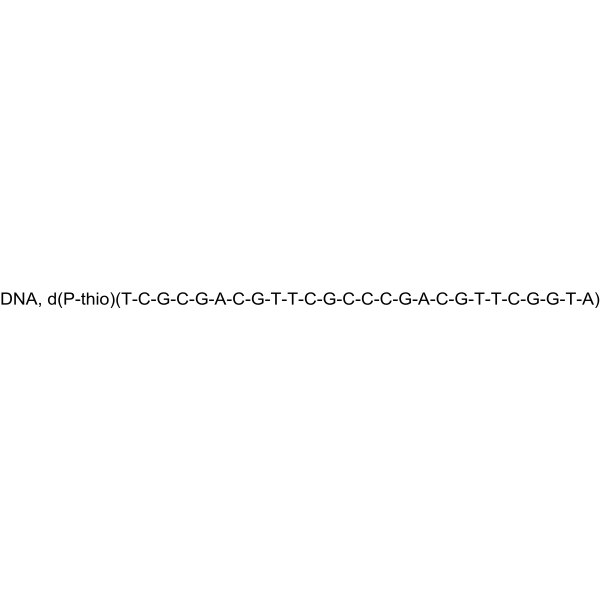
ODN D-SL01, a class B CpG ODN (oligodeoxynucleotide), is a TLR9 agonist. ODN D-SL01 has strong immunostimulatory activity in a variety of vertebrate species and has anticancer activity. ODN D-SL01 sequence: 5'- T-C-G-C-G-A-C-G-T-T-C-G-C-C-C-G-A-C-G-T-T-C-G-G-T-A-3' .
GCC2 Human Pre-designed siRNA Set A contains three designed siRNAs for GCC2 gene (Human), as well as a negative control, a positive control, and a FAM-labeled negative control.
GCC1 Human Pre-designed siRNA Set A contains three designed siRNAs for GCC1 gene (Human), as well as a negative control, a positive control, and a FAM-labeled negative control.
Gucy2c Rat Pre-designed siRNA Set A contains three designed siRNAs for Gucy2c gene (Rat), as well as a negative control, a positive control, and a FAM-labeled negative control.
GUCY2C Human Pre-designed siRNA Set A contains three designed siRNAs for GUCY2C gene (Human), as well as a negative control, a positive control, and a FAM-labeled negative control.
GEM231 is an 18mer antisense oligonucleotide targeting the mRNA of the PKA-I (RIα regulatory subunit of cAMP dependent protein kinase type I ). GEM231 induces cell growth arrest, apoptosis, and differentiation in a variety of cancer cell lines in vitro and in tumors in vivo.
Gucy2c Mouse Pre-designed siRNA Set A contains three designed siRNAs for Gucy2c gene (Mouse), as well as a negative control, a positive control, and a FAM-labeled negative control.
C2 Adamantanyl glucosylceramide (d18:1/2:0) (Adamantanyl GluCer (d18:1/2:0)) is an inhibitor of glucocerebrosidase (GCC) and LacCer synthase. At low doses, C2 Adamantanyl glucosylceramide (d18:1/2:0) increases intracellular glycolipid levels by inhibiting glucocerebrosidase. C2 Adamantanyl glucosylceramide (d18:1/2:0) alters glycolipid metabolism. C2 Adamantanyl glucosylceramide (d18:1/2:0) can be used for the research of Gaucher disease and Fabry disease .
Plecanatide, an analogue of Uroguanylin, is an orally active guanylate cyclase-C (GC-C) receptor agonist. Plecanatide activates GC-C receptors to stimulate cGMP synthesis with an EC50 of 190 nM in T84 cells assay. Plecanatide shows anti-inflammatory activity in models of murine colitis .
Dolcanatide is an orally active GC-C (guanylate cyclase-C) agonist. Dolcanatide shows laxative, anti-nociceptive and anti-inflammatory activity. Dolcanatide can be used in inflammatory bowel disease research .
Plecanatide acetate, an analogue of Uroguanylin, is an orally active guanylate cyclase-C (GC-C) receptor agonist. Plecanatide acetate activates GC-C receptors to stimulate cGMP synthesis with an EC50 of 190 nM in T84 cells assay. Plecanatide acetate can be used for the research of chronic idiopathic constipation, and it also shows anti-inflammatory activity in models of murine colitis .
Uroguanylin (human) is a natural ligand for the Guanylyl Cyclase (GCC) receptor expressed in metastatic colorectal cancer tumors. Uroguanylin (human) has anti-tumor actions in an animal model for human colon cancer .
Uroguanylin (human) (TFA) is a natural ligand for the Guanylyl Cyclase (GCC) receptor expressed in metastatic colorectal cancer tumors. Uroguanylin (human) (TFA) has anti-tumor actions in an animal model for human colon cancer .
Indusatumab vedotin (MLN-0264; AKT-264) is an antibody-drug conjugate (ADC) consisting of the human anti-guanylate cyclaseC (GCC) antibody linked to a microtubule-disruptor Monomethyl auristatin (HY-15162). Indusatumab vedotin has anti-proliferative effects on pancreas cancer cell lines. Indusatumab vedotin arrests cell cycle at G2/M phase, and induces apoptosis .
GUCY2C, a guanylyl cyclase, crucially catalyzes cGMP synthesis from GTP. As a receptor for E. coli heat-stable enterotoxin, GUCY2C significantly stimulates cGMP accumulation in mammalian cells, emphasizing its role in mediating responses to specific external stimuli and showcasing intricate regulatory mechanisms in cellular signaling. GUCY2C/Guanylyl cyclase C Protein, Canine (HEK293, His) is the recombinant canine-derived GUCY2C/Guanylyl cyclase C protein, expressed by HEK293 , with C-His labeled tag.
GUCY2C, a guanylyl cyclase, catalyzes cGMP synthesis from GTP and acts as a receptor for E. coli heat-stable enterotoxin, stimulating cGMP accumulation in expressing mammalian cells. Additionally, endogenous peptides guanylin and uroguanylin activate GUCY2C. This multifaceted role underscores intricate regulatory mechanisms in cellular signaling and GUCY2C's responsiveness to various stimuli, as confirmed by studies. GUCY2C/Guanylyl cyclase C Protein, Human (HEK293, His) is the recombinant human-derived GUCY2C/Guanylyl cyclase C protein, expressed by HEK293, with C-His labeled tag.
GUCY2C, a guanylyl cyclase, catalyzes cGMP synthesis from GTP and acts as a receptor for E. coli heat-stable enterotoxin, stimulating cGMP accumulation in expressing mammalian cells. Additionally, endogenous peptides guanylin and uroguanylin activate GUCY2C. This multifaceted role underscores intricate regulatory mechanisms in cellular signaling and GUCY2C's responsiveness to various stimuli, as confirmed by studies. GUCY2C/Guanylyl cyclase C Protein, Human (HEK293, His-Avi) is the recombinant human-derived GUCY2C/Guanylyl cyclase C protein, expressed by HEK293 , with C-Avi, C-His labeled tag.
GUCY2C, a vital guanylyl cyclase, catalyzes the synthesis of cyclic cGMP from GTP. GUCY2C/Guanylyl cyclase C Protein, Mouse (HEK293, His-Avi) is the recombinant mouse-derived GUCY2C/Guanylyl cyclase C protein, expressed by HEK293 , with C-Avi, C-His labeled tag.
GUCY2C, a vital guanylyl cyclase, catalyzes the synthesis of cyclic cGMP from GTP. GUCY2C/Guanylyl cyclase C Protein, Mouse (CHO, His) is the recombinant mouse-derived GUCY2C/Guanylyl cyclase C protein, expressed by CHO, with C-His labeled tag.
GUCY2C, a vital guanylyl cyclase, catalyzes the synthesis of cyclic cGMP from GTP. GUCY2C/Guanylyl cyclase C Protein, Mouse (HEK293, N-His, C-Myc) is the recombinant mouse-derived GUCY2C/Guanylyl cyclase C protein, expressed by HEK293 , with C-Myc, N-10*His labeled tag.
GUCY2C, a guanylyl cyclase, catalyzes cGMP synthesis from GTP and acts as a receptor for E. coli heat-stable enterotoxin, stimulating cGMP accumulation in expressing mammalian cells. Additionally, endogenous peptides guanylin and uroguanylin activate GUCY2C. This multifaceted role underscores intricate regulatory mechanisms in cellular signaling and GUCY2C's responsiveness to various stimuli, as confirmed by studies. GUCY2C/Guanylyl cyclase C Protein, Human (HEK293, N-His) is the recombinant human-derived GUCY2C/Guanylyl cyclase C protein, expressed by HEK293 , with N-10*His labeled tag.
GUCY2C, a guanylyl cyclase, catalyzes cGMP synthesis from GTP and acts as a receptor for E. coli heat-stable enterotoxin, stimulating cGMP accumulation in expressing mammalian cells. Additionally, endogenous peptides guanylin and uroguanylin activate GUCY2C. This multifaceted role underscores intricate regulatory mechanisms in cellular signaling and GUCY2C's responsiveness to various stimuli, as confirmed by studies. GUCY2C/Guanylyl cyclase C Protein, Human (Biotinylated, HEK293, His-Avi) is the recombinant human-derived GUCY2C/Guanylyl cyclase C protein, expressed by HEK293 , with C-Avi, C-His labeled tag.
GUCY2C, a vital guanylyl cyclase, catalyzes the synthesis of cyclic cGMP from GTP. GUCY2C/Guanylyl cyclase C Protein, Mouse (Biotinylated, HEK293, His-Avi) is the recombinant mouse-derived GUCY2C/Guanylyl cyclase C protein, expressed by HEK293 , with C-Avi, C-His labeled tag.
GUCY2C, a guanylyl cyclase, catalyzes cGMP synthesis from GTP and acts as a receptor for E. coli heat-stable enterotoxin, stimulating cGMP accumulation in expressing mammalian cells. Additionally, endogenous peptides guanylin and uroguanylin activate GUCY2C. This multifaceted role underscores intricate regulatory mechanisms in cellular signaling and GUCY2C's responsiveness to various stimuli, as confirmed by studies. GUCY2C/Guanylyl cyclase C Protein, Human (HEK293, Fc) is the recombinant human-derived GUCY2C/Guanylyl cyclase C protein, expressed by HEK293 , with C-hFc labeled tag.
GUCY2C, a guanylyl cyclase, crucially catalyzes cGMP synthesis from GTP. As a receptor for E. coli heat-stable enterotoxin, GUCY2C significantly stimulates cGMP accumulation in mammalian cells, emphasizing its role in mediating responses to specific external stimuli and showcasing intricate regulatory mechanisms in cellular signaling. GUCY2C/Guanylyl cyclase C Protein, Cynomolgus (HEK293, His) is the recombinant cynomolgus-derived GUCY2C/Guanylyl cyclase C protein, expressed by HEK293 , with C-His labeled tag.
GUCY2C, a vital guanylyl cyclase, catalyzes the synthesis of cyclic cGMP from GTP. GUCY2C/Guanylyl cyclase C Protein, Mouse (HEK293, Fc) is the recombinant mouse-derived GUCY2C/Guanylyl cyclase C protein, expressed by HEK293 , with C-hFc labeled tag.
GUCY2C, a guanylyl cyclase, catalyzes cGMP synthesis from GTP and acts as a receptor for E. coli heat-stable enterotoxin, stimulating cGMP accumulation in expressing mammalian cells. Additionally, endogenous peptides guanylin and uroguanylin activate GUCY2C. This multifaceted role underscores intricate regulatory mechanisms in cellular signaling and GUCY2C's responsiveness to various stimuli, as confirmed by studies. GUCY2C/Guanylyl cyclase C Protein, Human (Biotinylated, HEK293, Fc-Avi) is the recombinant human-derived GUCY2C/Guanylyl cyclase C protein, expressed by HEK293 , with C-Avi, C-hFc labeled tag. The total length of GUCY2C/Guanylyl cyclase C Protein, Human (Biotinylated, HEK293, Fc-Avi) is 407 a.a., with molecular weight of 90-110 kDa.
GUCY2C, a guanylyl cyclase, catalyzes cGMP synthesis from GTP and acts as a receptor for E. coli heat-stable enterotoxin, stimulating cGMP accumulation in expressing mammalian cells. Additionally, endogenous peptides guanylin and uroguanylin activate GUCY2C. This multifaceted role underscores intricate regulatory mechanisms in cellular signaling and GUCY2C's responsiveness to various stimuli, as confirmed by studies. FITC-labeled GUCY2C/Guanylyl cyclase C Protein, Human (HEK293, Fc) is the recombinant human-derived FITC-labeled GUCY2C/Guanylyl cyclase C protein, expressed by HEK293 , with Fc labeled tag.
GUCY2C, a guanylyl cyclase, catalyzes cGMP synthesis from GTP and acts as a receptor for E. coli heat-stable enterotoxin, stimulating cGMP accumulation in expressing mammalian cells. Additionally, endogenous peptides guanylin and uroguanylin activate GUCY2C. This multifaceted role underscores intricate regulatory mechanisms in cellular signaling and GUCY2C's responsiveness to various stimuli, as confirmed by studies. FITC-labeled GUCY2C/Guanylyl cyclase C Protein, Human (HEK293, His) is the recombinant human-derived FITC-labeled GUCY2C/Guanylyl cyclase C protein, expressed by HEK293 , with His labeled tag.
GUCY2C, a vital guanylyl cyclase, catalyzes the synthesis of cyclic cGMP from GTP. GUCY2C/Guanylyl cyclase C Protein, Mouse (HEK293, His) is the recombinant mouse-derived GUCY2C/Guanylyl cyclase C protein, expressed by HEK293 , with C-6*His labeled tag.
GUCY2C, a guanylyl cyclase, crucially catalyzes cGMP synthesis from GTP.As a receptor for E.coli heat-stable enterotoxin, GUCY2C significantly stimulates cGMP accumulation in mammalian cells, emphasizing its role in mediating responses to specific external stimuli and showcasing intricate regulatory mechanisms in cellular signaling.GUCY2C/Guanylyl cyclase C Protein, Rat (HEK293, Myc, His) is the recombinant rat-derived GUCY2C/Guanylyl cyclase C protein, expressed by HEK293 , with N-His, C-Myc labeled tag.
ODN 2395 is a C class oligodeoxynucleotide and can be used as vaccine adjuvant. ODN 2395 is also a TLR9 agonist. ODN 2395 can be used in the research of immunological vaccines. Sequence: 5'-tcgtcgttttcggcgc:gcgccg-3' (Note: The bases are phosphorothioate; ODN 2395 contains the partial palindromic sequence cggcgc:gcgccg) .
Golodirsen (SRP-4053) is an antisense oligonucleotide of the phophorodiamidate morpholino oligomer (PMO). Golodirsen restores the reading frame of the Duchenne muscular dystrophy (DMD) gene by modifying the splicing process of the pre-mRNA, skipping exon 53. Golodirsen can restore the expression of the anti-myostatin protein. Golodirsen can be used for the research of duchenne muscular dystrophy (DMD) .
CpG ODN 10101 (ODN 10101; CPG 10101) is a selective agonist targeting TLR9, a synthetic oligodeoxynucleotide modified with phosphate thioester. CpG ODN 10101 activates B cells and plasmacytoid dendritic cells (pDCs), inducing the production of cytokines and chemokines such as interferon-IFN-α, interferon-inducible protein IP-10, and 2'5'-oligoadenylate synthase (2'5'-OAS), regulating innate immunity and promoting Th1 adaptive immune responses. CpG ODN 10101 also possesses antiviral properties and enhances vaccine immunogenicity, making it suitable as an immunomodulator and vaccine adjuvant for vaccine development in chronic hepatitis C and infectious diseases such as melioidosis, pertussis, and respiratory syncytial virus (RSV) .
Emapticap pegol (NOX-E36) is a inhibitor of pro-inflammatory chemokine C-C motif-ligand 2 (CCL2). Emapticap pegol is a 40-nucleotide oligonucleotide aptamer, displays different Spiegelmers (L-RNA aptamer) isform in human (NOX-E36) and mouse (mNOX-E36). mNOX-E36 is a murine-specific analogue of NOX-E36, an anti-MCP-1 L-RNA aptamer that was previously shown to attenuate liver fibrosis in mice .
Mongersen (GED-0301) is a specific and orally active SMAD7 antisense oligonucleotide. Mongersen restores TGF-β1 activity leading to inhibition of inflammatory signals. Mongersen can attenuate Crohn's disease-like experimental colitis in mice .
Brogidirsen (NS 089; NCNP 02) is a a dual-targeting antisense oligonucleotide. Brogidirsen can induce dystrophin protein experession. Brogidirsen can be used for the research of Duchenne muscular dystrophy .
Alicaforsen is an oligonucleotide and immunostimulant targeting human ICAM-1 mRNA. Alicaforsen hybridizes to specific sites to reduce the expression level of ICAM-1. Alicaforsen is applicable to relevant research on psoriasis, rheumatoid arthritis and inflammatory bowel disease .
Oblimersen is a BCL-2 inhibitor targeting BCL-2 RNA. Oblimersen specifically binds to the first six codons of the bcl-2 mRNA sequence, resulting in degradation of bcl-2 mRNA and induces apoptosis by down-regulating expression of Bcl-2. Oblimersen can be used for cancer research .
ODN D-SL01, a class B CpG ODN (oligodeoxynucleotide), is a TLR9 agonist. ODN D-SL01 has strong immunostimulatory activity in a variety of vertebrate species and has anticancer activity. ODN D-SL01 sequence: 5'- T-C-G-C-G-A-C-G-T-T-C-G-C-C-C-G-A-C-G-T-T-C-G-G-T-A-3' .
GCC2 Human Pre-designed siRNA Set A contains three designed siRNAs for GCC2 gene (Human), as well as a negative control, a positive control, and a FAM-labeled negative control.
GCC1 Human Pre-designed siRNA Set A contains three designed siRNAs for GCC1 gene (Human), as well as a negative control, a positive control, and a FAM-labeled negative control.
Gucy2c Rat Pre-designed siRNA Set A contains three designed siRNAs for Gucy2c gene (Rat), as well as a negative control, a positive control, and a FAM-labeled negative control.
GUCY2C Human Pre-designed siRNA Set A contains three designed siRNAs for GUCY2C gene (Human), as well as a negative control, a positive control, and a FAM-labeled negative control.
GEM231 is an 18mer antisense oligonucleotide targeting the mRNA of the PKA-I (RIα regulatory subunit of cAMP dependent protein kinase type I ). GEM231 induces cell growth arrest, apoptosis, and differentiation in a variety of cancer cell lines in vitro and in tumors in vivo.
Gucy2c Mouse Pre-designed siRNA Set A contains three designed siRNAs for Gucy2c gene (Mouse), as well as a negative control, a positive control, and a FAM-labeled negative control.
Inquiry Online
Your information is safe with us. * Required Fields.
Western blot analysis of extracts from THP-1(lane 2(20μg), Jurkat (lane 3(20μg) and NIH3T3(lane 4(20μg) using FOXO1A (HY-P80132) Rabbit mAb. Proteins were transferred
to a PVDF membrane and blocked with 5% non-fat milk in TBST for 2 hour at room temperature. The primary antibody (1/1000) and Loading control antibody (Beta Actin, HY-P80438, 1/10000) was
used in 5% non-fat milk in TBST at 4°C overnight. Goat Anti-Mouse/Rabbit IgG-HRP Secondary Antibody (1/10000) was used for 1 hour at room temperature.
Western blot analysis of extracts from THP-1(lane 2(20μg), Jurkat (lane 3(20μg) and NIH3T3(lane 4(20μg) using FOXO1A (HY-P80132) Rabbit mAb. Proteins were transferred
to a PVDF membrane and blocked with 5% non-fat milk in TBST for 2 hour at room temperature. The primary antibody (1/1000) and Loading control antibody (Beta Actin, HY-P80438, 1/10000) was
used in 5% non-fat milk in TBST at 4°C overnight. Goat Anti-Mouse/Rabbit IgG-HRP Secondary Antibody (1/10000) was used for 1 hour at room temperature.
Western blot analysis of extracts from THP-1(lane 2(20μg), Jurkat (lane 3(20μg) and NIH3T3(lane 4(20μg) using FOXO1A (HY-P80132) Rabbit mAb. Proteins were transferred
to a PVDF membrane and blocked with 5% non-fat milk in TBST for 2 hour at room temperature. The primary antibody (1/1000) and Loading control antibody (Beta Actin, HY-P80438, 1/10000) was
used in 5% non-fat milk in TBST at 4°C overnight. Goat Anti-Mouse/Rabbit IgG-HRP Secondary Antibody (1/10000) was used for 1 hour at room temperature.
Western blot analysis of extracts from THP-1(lane 2(20μg), Jurkat (lane 3(20μg) and NIH3T3(lane 4(20μg) using FOXO1A (HY-P80132) Rabbit mAb. Proteins were transferred
to a PVDF membrane and blocked with 5% non-fat milk in TBST for 2 hour at room temperature. The primary antibody (1/1000) and Loading control antibody (Beta Actin, HY-P80438, 1/10000) was
MedchemExpress Validation 03
Western blot analysis of extracts from THP-1(lane 2(20μg), Jurkat (lane 3(20μg) and NIH3T3(lane 4(20μg) using FOXO1A (HY-P80132) Rabbit mAb. Proteins were transferred
MedchemExpress Validation 04
Western blot analysis of extracts from THP-1(lane 2(20μg), Jurkat (lane 3(20μg) and NIH3T3(lane 4(20μg) using FOXO1A (HY-P80132) Rabbit mAb. Proteins were transferred
to a PVDF membrane and blocked with 5% non-fat milk in TBST for 2 hour at room temperature. The primary antibody (1/1000) and Loading control antibody (Beta Actin, HY-P80438, 1/10000) was
used in 5% non-fat milk in TBST at 4°C overnight. Goat Anti-Mouse/Rabbit IgG-HRP Secondary Antibody (1/10000) was used for 1 hour at room temperature.
MedchemExpress Validation
Western blot analysis of extracts from THP-1(lane 2(20μg), Jurkat (lane 3(20μg) and NIH3T3(lane 4(20μg) using FOXO1A (HY-P80132) Rabbit mAb. Proteins were transferred
to a PVDF membrane and blocked with 5% non-fat milk in TBST for 2 hour at room temperature. The primary antibody (1/1000) and Loading control antibody (Beta Actin, HY-P80438, 1/10000) was
used in 5% non-fat milk in TBST at 4°C overnight. Goat Anti-Mouse/Rabbit IgG-HRP Secondary Antibody (1/10000) was used for 1 hour at room temperature.
Western blot analysis of extracts from THP-1(lane 2(20μg), Jurkat (lane 3(20μg) and NIH3T3(lane 4(20μg) using FOXO1A (HY-P80132) Rabbit mAb. Proteins were transferred
to a PVDF membrane and blocked with 5% non-fat milk in TBST for 2 hour at room temperature. The primary antibody (1/1000) and Loading control antibody (Beta Actin, HY-P80438, 1/10000) was
used in 5% non-fat milk in TBST at 4°C overnight. Goat Anti-Mouse/Rabbit IgG-HRP Secondary Antibody (1/10000) was used for 1 hour at room temperature.
MedchemExpress Validation
Western blot analysis of extracts from THP-1(lane 2(20μg), Jurkat (lane 3(20μg) and NIH3T3(lane 4(20μg) using FOXO1A (HY-P80132) Rabbit mAb. Proteins were transferred
to a PVDF membrane and blocked with 5% non-fat milk in TBST for 2 hour at room temperature. The primary antibody (1/1000) and Loading control antibody (Beta Actin, HY-P80438, 1/10000) was
used in 5% non-fat milk in TBST at 4°C overnight. Goat Anti-Mouse/Rabbit IgG-HRP Secondary Antibody (1/10000) was used for 1 hour at room temperature.
MedchemExpress Validation
Western blot analysis of extracts from THP-1(lane 2(20μg), Jurkat (lane 3(20μg) and NIH3T3(lane 4(20μg) using FOXO1A (HY-P80132) Rabbit mAb. Proteins were transferred
to a PVDF membrane and blocked with 5% non-fat milk in TBST for 2 hour at room temperature. The primary antibody (1/1000) and Loading control antibody (Beta Actin, HY-P80438, 1/10000) was
used in 5% non-fat milk in TBST at 4°C overnight. Goat Anti-Mouse/Rabbit IgG-HRP Secondary Antibody (1/10000) was used for 1 hour at room temperature.
MedchemExpress Validation
Western blot analysis of extracts from THP-1(lane 2(20μg), Jurkat (lane 3(20μg) and NIH3T3(lane 4(20μg) using FOXO1A (HY-P80132) Rabbit mAb. Proteins were transferred
to a PVDF membrane and blocked with 5% non-fat milk in TBST for 2 hour at room temperature. The primary antibody (1/1000) and Loading control antibody (Beta Actin, HY-P80438, 1/10000) was
used in 5% non-fat milk in TBST at 4°C overnight. Goat Anti-Mouse/Rabbit IgG-HRP Secondary Antibody (1/10000) was used for 1 hour at room temperature.
MedchemExpress Validation
Western blot analysis of extracts from THP-1(lane 2(20μg), Jurkat (lane 3(20μg) and NIH3T3(lane 4(20μg) using FOXO1A (HY-P80132) Rabbit mAb. Proteins were transferred
to a PVDF membrane and blocked with 5% non-fat milk in TBST for 2 hour at room temperature. The primary antibody (1/1000) and Loading control antibody (Beta Actin, HY-P80438, 1/10000) was
used in 5% non-fat milk in TBST at 4°C overnight. Goat Anti-Mouse/Rabbit IgG-HRP Secondary Antibody (1/10000) was used for 1 hour at room temperature.
MedchemExpress Validation
Western blot analysis of extracts from THP-1(lane 2(20μg), Jurkat (lane 3(20μg) and NIH3T3(lane 4(20μg) using FOXO1A (HY-P80132) Rabbit mAb. Proteins were transferred
to a PVDF membrane and blocked with 5% non-fat milk in TBST for 2 hour at room temperature. The primary antibody (1/1000) and Loading control antibody (Beta Actin, HY-P80438, 1/10000) was
used in 5% non-fat milk in TBST at 4°C overnight. Goat Anti-Mouse/Rabbit IgG-HRP Secondary Antibody (1/10000) was used for 1 hour at room temperature.
MedchemExpress Validation
Western blot analysis of extracts from THP-1(lane 2(20μg), Jurkat (lane 3(20μg) and NIH3T3(lane 4(20μg) using FOXO1A (HY-P80132) Rabbit mAb. Proteins were transferred
to a PVDF membrane and blocked with 5% non-fat milk in TBST for 2 hour at room temperature. The primary antibody (1/1000) and Loading control antibody (Beta Actin, HY-P80438, 1/10000) was
used in 5% non-fat milk in TBST at 4°C overnight. Goat Anti-Mouse/Rabbit IgG-HRP Secondary Antibody (1/10000) was used for 1 hour at room temperature.
MedChemExpress values your privacy and your trust is important to us. We use cookies to enhance your website experience. Some cookies are necessary to run the website.
Privacy and Cookie Policy