



ODN 2395

Based on 1 Customer Validation
ODN 2395 is a C class oligodeoxynucleotide and can be used as vaccine adjuvant. ODN 2395 is also a TLR9 agonist. ODN 2395 can be used in the research of immunological vaccines. Sequence: 5'-tcgtcgttttcggcgc:gcgccg-3' (Note: The bases are phosphorothioate; ODN 2395 contains the partial palindromic sequence cggcgc:gcgccg).
For research use only. We do not sell to patients.
- Purity : 95.77%
- CAS No.: 1254617-22-5
- Molecular Weight:7035.00
-
Storage:
-20°C, sealed storage, away from moisture
* In solvent : -80°C, 6 months; -20°C, 1 month (sealed storage, away from moisture)


To place orders, for customer services and technical support, please contact: MedChemExpress USA
Tel: 609-228-6898 E-mail: [email protected] [email protected]


-
 Biological Activity
-
Chemical Information
- Purity & Documentation
- References
-
 Help & FAQs


-
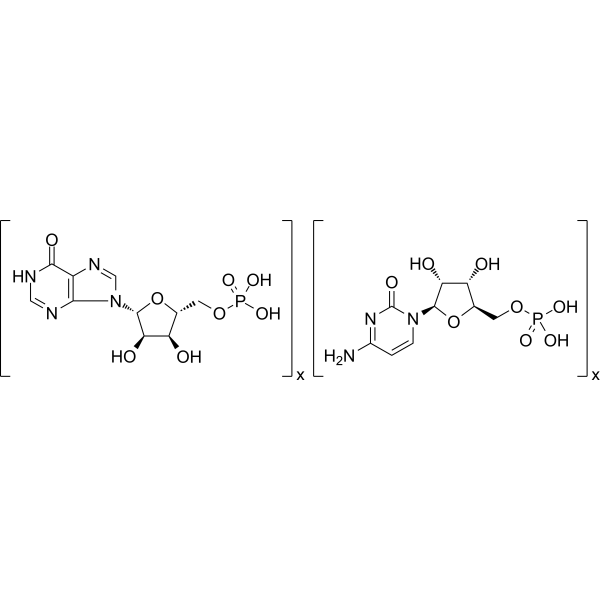
HY-107202
Polyinosinic-polycytidylic acidTLR-3 Agonist -

HY-146245
ODN 1826TLR9 Agonist -
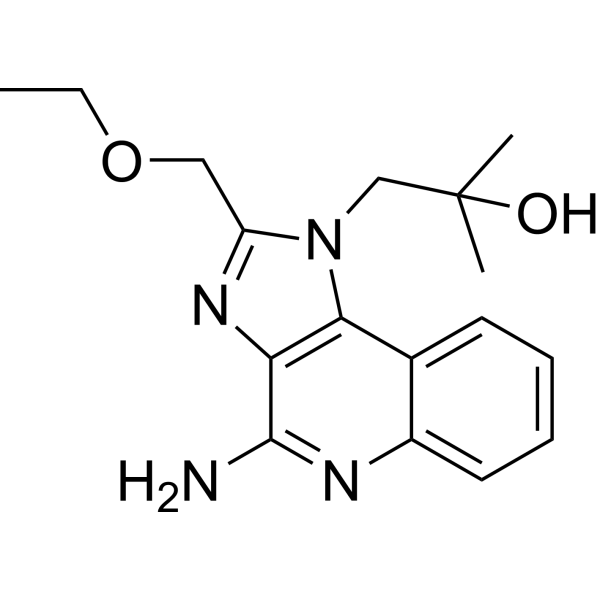
HY-13740
ResiquimodTLR7/8 Agonist -
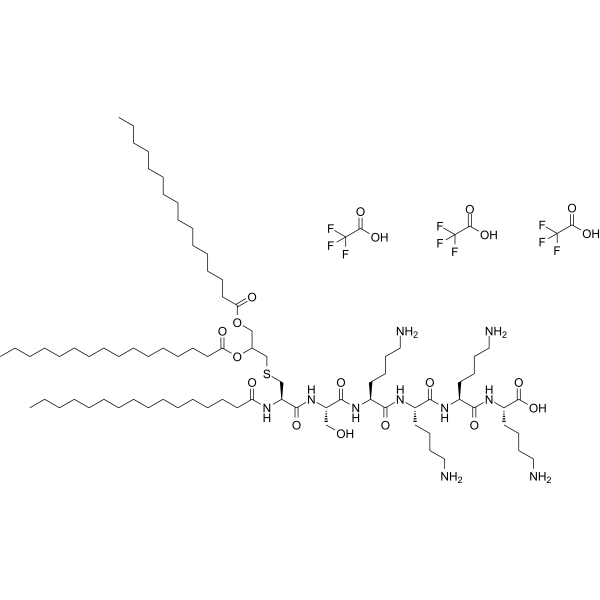
HY-P1180A
Pam3CSK4 TFATLR1/2 Agonist -
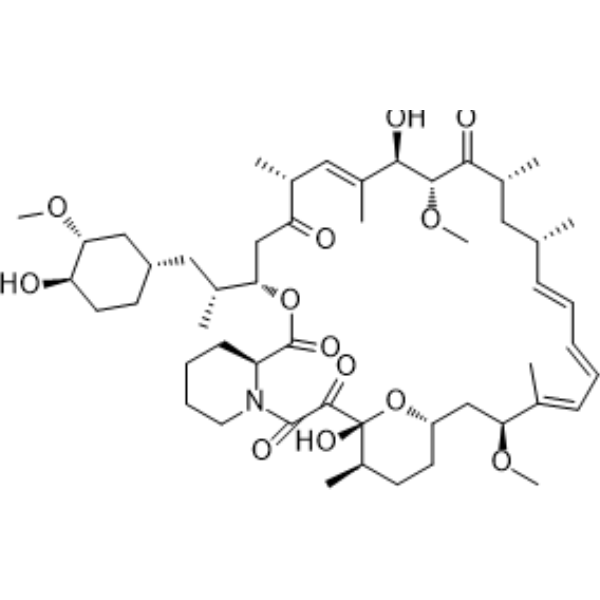
HY-10219
RapamycinmTOR Inhibitor -

HY-146244
AgatolimodTLR9 Agonist -

HY-150741
ODN 2216TLR9 Ligand -

HY-D1056
Lipopolysaccharides, from E. coli O55:B5Endotoxin -
HY-114116
ML-109TSHR Agonist


Biological Activity
Description
IC50 & Target
[1]|
TLR9 |
In Vivo
ODN 2395 (40 μg/per mouse; i.p.; 2 doses (5th and 6th weeks post-infection)) significantly reduces spleen parasite load, enhances Th1-type immune responses, increases serum HDL-C, and elevates IgG1 antibody levels in obesity mice infected with Leishmania donovani[1].
ODN 2395 (40 μg/per mouse; i.p.; 2 doses (5th and 6th weeks post-infection)) significantly reduces spleen parasite load, up-regulates key spleen immune activation genes, reduces inhibitory cytokine levels, increases CD3+ T cell proportions, and down-regulates most measured liver immune and apoptosis-related genes in undernutrition mice infected with Leishmania donovani[1].
ODN 2395 (50 μg/mouse; i.n.; single dose; 1 day pre-infection) confers 55% survival in HSV-1-infected BALB/c mice, significantly reduces brain viral load and pro-inflammatory cytokine production, and extends mean life expectancy to 17.4 days[2].
ODN 2395 (50 μg/mouse; i.n.; single dose; 3 days post-infection) results in 0% survival in HSV-1-infected BALB/c mice, does not reduce whole-brain viral load, and increases viral load in the olfactory bulb at day 5 post-infection[2].
MedChemExpress (MCE) has not independently confirmed the accuracy of these methods. They are for reference only.
-
Animal Model:BALB/c (female, 6-8 weeks old, fed high-fat, high-sugar diets for 5 weeks to establish obesity then intraperitoneally inoculated with Leishmania donovani promastigotes)[1]
-
Dosage:40 μg per mouse
-
Administration:I.p.; 2 doses (5th and 6th weeks post-infection)
-
Result:Caused a significant reduction in spleen parasite load.
Up-regulated spleen TCR, ICOS, and TLR4 gene expression.
Increased serum IFN-γ levels and the IFN-γ/IL-4 ratio.
Increased serum HDL-C levels.
Increased serum anti-Leishmania total IgG and IgG1 antibody levels.
Did not cause statistically significant changes to spleen T lymphocyte subsets proportions, liver parasite load, or serum anti-Leishmania IgG2a levels.


Chemical Information
-
CAS No. 1254617-22-5
-
Appearance Solid
-
Molecular Weight 7035.00
-
Color White to off-white
-
SMILES
[DNA, d(P-thio)(T-C-G-T-C-G-T-T-T-T-C-G-G-C-G-C-G-C-G-C-C-G)]
-
Sequence
DNA, d(P-thio)(T-C-G-T-C-G-T-T-T-T-C-G-G-C-G-C-G-C-G-C-C-G)
-
Shipping
Room temperature in continental US; may vary elsewhere.
-
Storage
-20°C, sealed storage, away from moisture
* In solvent : -80°C, 6 months; -20°C, 1 month (sealed storage, away from moisture)


Purity & Documentation
-
Data Sheet (268 KB)
-
SDS (251 KB)
- English - EN (251 KB)
- Français - FR (251 KB)
- Deutsch - DE (251 KB)
- Norwegian - NO (251 KB)
- Español - ES (251 KB)
- Swedish - SV (251 KB)
- Italian - IT (251 KB)
- Korean - KR (251 KB)
- Portuguese - PT (251 KB)
-
Handling Instructions (2242 KB)
References
[1]. He J, et al. TLR9 agonist CpG ODN 2395 promotes the immune response against Leishmania donovani in obesity and undernutrition mice. Acta Trop. 2023;242:106921. [Content Brief]
[2]. Boivin N, et al. Modulation of TLR9 response in a mouse model of herpes simplex virus encephalitis. Antiviral Res. 2012;96(3):414-421. [Content Brief]

Calculators
Concentration (start) × Volume (start) = Concentration (final) × Volume (final)


ODN 2395 Related Classifications
HY-150743 Related Classifications
 Powered by Bioz