Search Result
Results for "
Glycerophospholipids
" in MedChemExpress (MCE) Product Catalog:
8
Biochemical Assay Reagents
| Cat. No. |
Product Name |
Target |
Research Areas |
Chemical Structure |
-
- HY-P2812
-
|
PLD
|
Phospholipase
|
Neurological Disease
Inflammation/Immunology
Endocrinology
Cancer
|
|
Phospholipase D, Streptomyces chromofuscus (PLD) is an enzyme of the phospholipase superfamily, which widely exists in bacteria, yeast, plants, animals and viruses, and is often used in biochemical research. Phospholipase D can catalyze the hydrolysis of phosphodiester bonds in glycerophospholipids to produce phosphatidic acid and soluble choline. Phospholipase D is involved in a variety of disease-related processes, including diabetes, atherogenesis, obesity, tumorigenesis, immune response, and neuroendocrine function .
|
-

-
- HY-P3029
-
|
PLA2
|
Phospholipase
|
Cardiovascular Disease
Inflammation/Immunology
|
|
Phospholipase A2 (PLA2) is a calcium-dependent, heat-stable enzyme that catalyzes the hydrolysis of glycerophospholipids at the sn-2 position of cellular membranes, thereby releasing Arachidonic Acid (AA) (HY-109590). Phospholipase A2 is a key mediator in the biosynthesis of pro-inflammatory lipid mediators, critically involved in inflammatory processes. Phospholipase A2 can be used for cardiovascular and inflammatory diseases research .
|
-
-
- HY-148123
-
|
|
Biochemical Assay Reagents
|
Neurological Disease
|
|
Glycerophospholipids and cephalins are a class of phospholipid compounds and important components of neural membranes. Glycerophospholipids and cephalins are hydrolysis substrates of phospholipase (such as PLA2, PLC, and PLD). After complete hydrolysis, they produce 1 mol of glycerol, phosphate, ethanolamine, and 2 mol of fatty acids, respectively. Glycerophospholipids and cephalins can maintain membrane structure, fluidity, and ion permeability, and serve as precursors of second messengers such as arachidonic acid and diacylglycerol. Glycerophospholipids and cephalins can regulate signal transduction, cell apoptosis, and membrane transport, and are used in the study of neurodegenerative diseases (such as Alzheimer's disease) .
|
-
-
- HY-124370
-
|
9Z,11E-CLA; Methyl 9(Z),11(E)-octadecadienoate; (9Z,11E)-SFE 19:2
|
Endogenous Metabolite
|
Cardiovascular Disease
Cancer
|
|
9 (Z),11 (E)-Conjugated linoleic acid methyl ester (9Z,11E-CLA; Methyl 9 (Z),11 (E)-octadecadienoate; (9Z,11E)-SFE 19:2) is an isomer of Linoleic acid (HY-N0729), and is a conjugated linoleic acid mainly found in meat and dairy products. Conjugated linoleic acid is a bioactive fatty acid that improves body composition, enhances immune system function, and exhibits anti-cancer and anti-atherosclerotic effects .
|
-

-
- HY-N7814
-
|
|
Endogenous Metabolite
Drug Intermediate
|
Infection
|
|
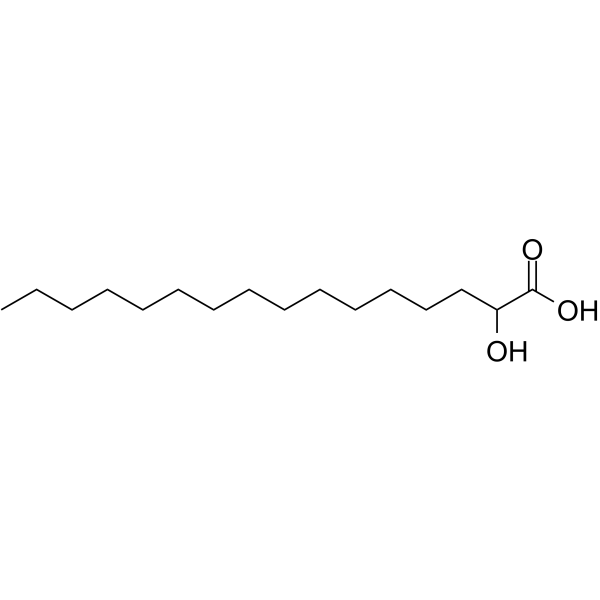
2-Hydroxypalmitic acid is an intermediate in the phytosphingosine metabolic pathway. 2-Hydroxypalmitic acid is exclusively incorporated into sphingolipids and not used for other lipids. 2-Hydroxypalmitic acid promotes the production of odd-carbon phosphatidylcholine species. 2-Hydroxypalmitic acid is applicable to studies of Saccharomyces cerevisiae infection .
|
-
-
- HY-126359
-
|
SLPC; 18:0-18:2 PC
|
Endogenous Metabolite
|
Cardiovascular Disease
Metabolic Disease
|
|
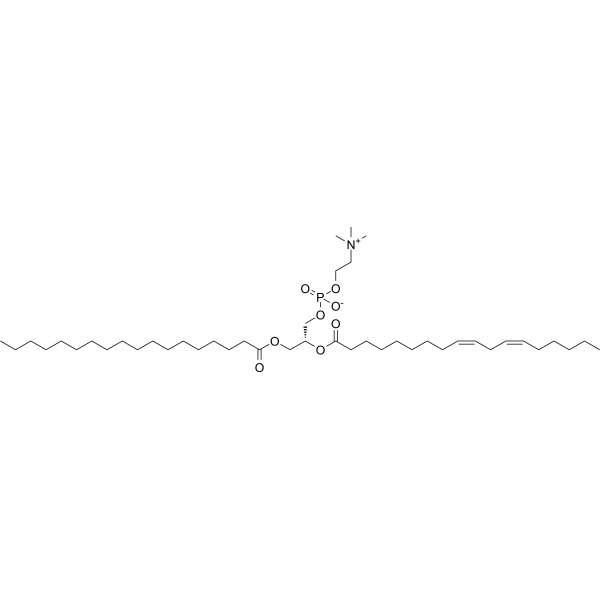
1-Stearoyl-2-linoleoyl-sn-glycero-3-phosphocholine (SLPC; 18:0-18:2 PC) is an endogenous phospholipid marker molecule in the glycerophospholipid metabolic pathway. 1-Stearoyl-2-linoleoyl-sn-glycero-3-phosphocholine is a core component of the phospholipid bilayer of biological membranes and a key responsive lipid for radiation injury and cardiometabolic diseases. 1-Stearoyl-2-linoleoyl-sn-glycero-3-phosphocholine constitutes the phospholipid bilayers of cell membranes and high-density lipoprotein (HDL), and regulates the core activity of lipoprotein functional homeostasis. The content of 1-Stearoyl-2-linoleoyl-sn-glycero-3-phosphocholine in mouse serum shows a significant dose-dependent decrease with increasing ionizing radiation dose, and its level in human HDL also decreases significantly in metabolic syndrome. 1-Stearoyl-2-linoleoyl-sn-glycero-3-phosphocholine can serve as a biological dosimeter marker for ionizing radiation injury, and is used for rapid and accurate assessment of radiation absorbed dose in exposed individuals. 1-Stearoyl-2-linoleoyl-sn-glycero-3-phosphocholine can also act as a lipidomics research target for cardiometabolic diseases such as lipid metabolic syndrome and early-onset coronary heart disease .
|
-
-
- HY-147072
-
|
18:0 -18:2 PS
|
Liposome
|
Others
|
|
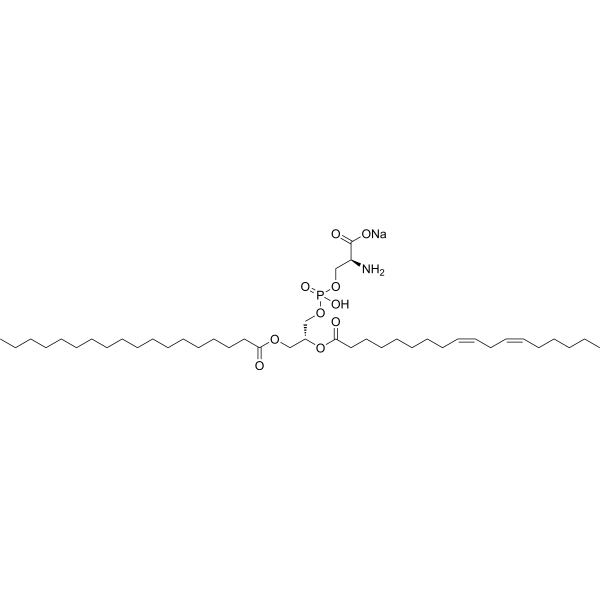
1-Stearoyl-2-linoleoyl-sn-glycero-3-phospho-L-serine sodium is a glycerophospholipid .
|
-
-
- HY-W013707
-
|
Cytidine triphosphate disodium dihydrate; 5'-CTP disodium dihydrate
|
Endogenous Metabolite
|
Metabolic Disease
|
|
Cytidine-5'-triphosphate disodium dihydrate (5'-CTP disodium dihydrate) is a molecule of high energy, and acts as a coenzyme in glycerophospholipid biosynthesis and protein glycosylation .
|
-

-
- HY-P3029A
-
|
PLA2, Crotalus adamanteus Venom
|
Phospholipase
|
Others
|
|
Phospholipase A2, Crotalus adamanteus Venom (PLA2) catalyzes the hydrolysis of the sn-2 position of membrane glycerophospholipids to liberate arachidonic acid (AA). Phospholipase A2, Crotalus adamanteus Venom is a member of the class of heat-stable, calcium-dependent enzymes, is often used in biochemical studies .
|
-

-
- HY-P10053
-
|
|
Phospholipase
|
Metabolic Disease
|
|
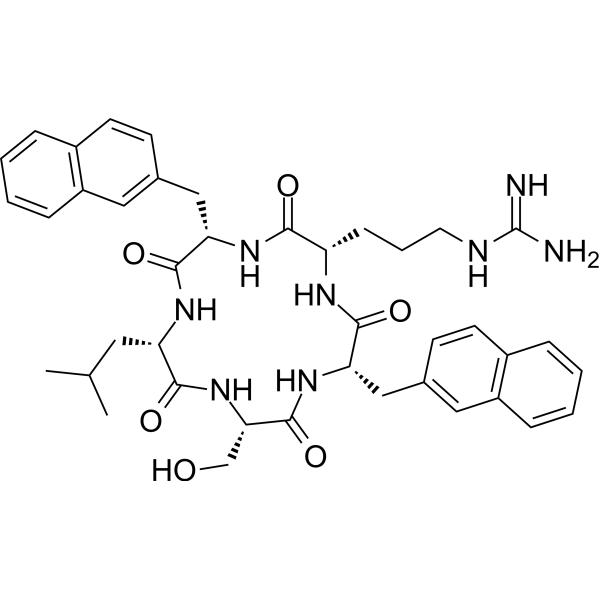
sPLA2-IIA Inhibitor is a cyclic pentapeptide analog of FLSYK (cyclic 2-Nal-Leu-Ser-2-Nal-Arg (c2)), that binds to hGIIA (human IIA phospholipase A2) and inhibits its hydrolytic ability. sPLA2 is a member of the esterase superfamily that catalyzes the hydrolysis of the ester bond at the sn-2 position of glycerophospholipids, releasing free fatty acids such as arachidonic acid and lysophospholipids .
|
-
-
- HY-145384
-
|
|
Phospholipase
|
Inflammation/Immunology
|
|
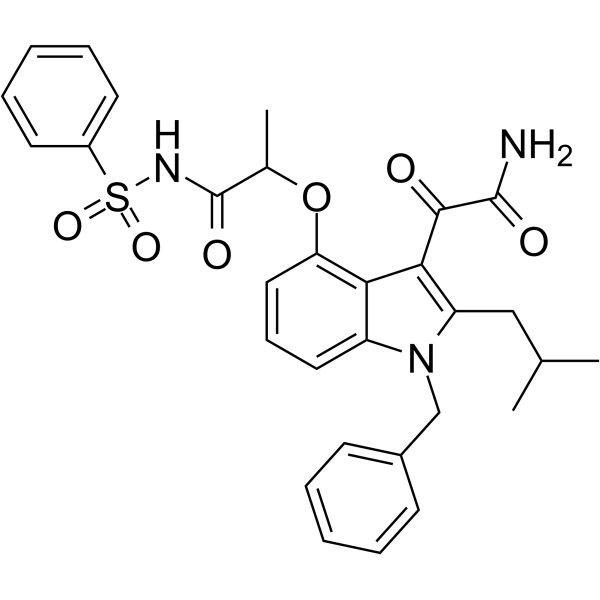
ROC-0929 (compound 13a) is a potent and selective inhibitor of secreted phospholipases A2 (sPLA2s) with an IC50 of 80 nM, specially targeting hGX. ROC-0929 inhibits the phosphorylation of ERK1/2 and p-38. Secreted phospholipases A2 (sPLA2s) are a family of disulfide-rich, Ca 2+-dependent enzymes that hydrolyze the sn-2 position of glycero-phospholipids to release a fatty acid and a lysophospholipid. ROC-0929 has the potential for researching inflammation related diseases .
|
-
-
- HY-W783247
-
-

-
- HY-P2812B
-
|
|
Phospholipase
|
Cardiovascular Disease
Neurological Disease
Inflammation/Immunology
Cancer
|
|
Phospholipase D, cabbage is an enzyme of the phospholipase superfamily. Phospholipase D, cabbage is widely found in bacteria, yeast, plants, animals and viruses and is often used in biochemical research. Phospholipase D, cabbage can catalyze the hydrolysis of the phosphodiester bond of glycerophospholipids to produce phosphatidic acid and soluble choline. Phospholipase D, cabbage is involved in a variety of disease-related processes, including diabetes, atherosclerosis, obesity, tumorigenesis, immune response and neuroendocrine function .
|
-

-
- HY-157622
-
|
|
Biochemical Assay Reagents
|
|
|
1-Palmitoyl-2-linoleoyl-sn-glycero-3-phosphocholine is a glycerophospholipid with activity for studying the effects of phosphatidylcholine (PC) on the lubrication of damaged mesothelial cells. 1-Palmitoyl-2-linoleoyl-sn-glycero-3-phosphocholine can be used to explore the function and repair mechanism of cell membranes. 1-Palmitoyl-2-linoleoyl-sn-glycero-3-phosphocholine has important application potential in biomedical research.
|
-

-
- HY-122949
-
-
-
- HY-W923483
-
|
1-O-Hexadecyl-2-oleoyl-sn-glycero-3-phosphocholine
|
Platelet-activating Factor Receptor (PAFR)
Endogenous Metabolite
|
Cardiovascular Disease
|
|
C16-18:1 PC (1-O-Hexadecyl-2-oleoyl-sn-glycero-3-phosphocholine), also known as 1-O-hexadecyl-2-oleoyl-sn-glycero-3-phosphocholine (HOPC), is a member of the platelet-activating factor (PAF) family of glycerophospholipids and serves as a pro-inflammatory lipid mediator with diverse biological and pharmacological effects; it features a mono-ether structure with an oleoyl chain (18:1) ester-linked at the sn-2 position and a hexadecyl chain (16:0) ether-linked at the sn-1 position.
|
-

-
- HY-W009194
-
|
|
Drug Intermediate
|
Infection
|
|
(R)-(+)-Trityl glycidyl ether, a heterocyclic compound, is a precursor that can be used to synthesize glycerophospholipids, as well as compounds with antiviral and antimalarial activities .
|
-

-
- HY-157716
-
-

-
- HY-W783249
-
-

-
- HY-176006
-
|
Diheptanoyl thio-PE
|
Lipase
|
Others
|
|
1,2-Bis(heptanoylthio)-sn-glycero-3-PE (Diheptanoyl thio-PE) is a sulfur-containing phosphoethanolamine.
|
-

-
- HY-W783248
-
-

-
- HY-W783245
-
-

-
- HY-W725300
-
-

-
- HY-W739252
-
-

-
- HY-157696
-
|
1,2-Di-O-octadecyl-sn-glycero-3-phosphocholine
|
Biochemical Assay Reagents
|
Others
|
|
18:0 Diether PC (1,2-Di-O-octadecyl-sn-glycero-3-phosphocholine) is a glycerophospholipid that can be used as a nonhydrolizable ether lipid in calcein-containing vesicles .
|
-

-
- HY-W339757
-
|
|
mTOR
Endogenous Metabolite
|
Cancer
|
|
Dioctanoylphosphatidic acid sodium functions as a modulator of phagocyte respiratory burst, acts as a precursor to diacylglycerol and lysophosphatidic acid, and influences the phosphorylation of the mammalian target of rapamycin (mTOR) while enhancing the viability of gallbladder carcinoma cells treated with histone deacetylase inhibitors (HDACIs); it is derived from glycerophospholipid through the action of phospholipase D.
|
-

-
- HY-157683
-
|
|
Biochemical Assay Reagents
|
Others
|
|
16:0-18:1 Diether PG is a type of glycerophospholipids, in which the hexadecane and octadecene chains are connected to the sn-1 and sn-2 positions of the glycerol backbone via ether bonds, respectively. 16:0-18:1 Diether PG can be used to prepare liposomes .
|
-

-
- HY-170458
-
|
1-Stearoyl-2-linoleoyl-sn-glycero-3-phospho-(1'-rac-glycerol) sodium
|
Biochemical Assay Reagents
|
Others
|
|
18:0-18:2 PG (1-Stearoyl-2-linoleoyl-sn-glycero-3-phospho-(1'-rac-glycerol)) sodium is a glycerophospholipid contains Stearic acid (HY-B2219), Linolenic acid (HY-N0728) and phospho-rac-(1-glycerol) .
|
-

-
- HY-W040172
-
|
1,2-Di-O-hexyl-sn-glycero-3-phosphocholine
|
Biochemical Assay Reagents
|
Others
|
|
06:0 Diether PC (1,2-Di-O-hexyl-sn-glycero-3-phosphocholine) is a glycerophospholipid that can be used for bicelles preparation .
|
-

-
- HY-171828
-
-

-
- HY-W725302
-
-

-
- HY-W753387
-
-

-
- HY-W783246
-
-

-
- HY-W725301
-
-

-
- HY-N18868
-
|
PC(16:0/8:0)
|
Endogenous Metabolite
|
Cardiovascular Disease
|
|
1-Palmitoyl-2-capryloyl-sn-glycero-3-phosphocholine (PC(16:0/8:0)) is a phosphatidylcholine glycerophospholipid. 1-Palmitoyl-2-capryloyl-sn-glycero-3-phosphocholine promotes platelet aggregation and flow-induced platelet-dependent thrombus formation. 1-Palmitoyl-2-capryloyl-sn-glycero-3-phosphocholine is a valid biomarker for CAD risk, severity, and subtype differentiation. 1-Palmitoyl-2-capryloyl-sn-glycero-3-phosphocholine is suitable for basic research on various types of coronary artery disease .
|
-

-
- HY-P3029E
-
|
|
Biochemical Assay Reagents
|
Metabolic Disease
|
|
Phospholipase A2, Naja mossambica mossambica (EC 3.1.1.4) hydrolyzes the β-ester bond of zwitterionic glycerophospholipids. Preferred substrates are phosphatidylcholine, phosphatidylethanolamine, and their plasmalogen analogues.
|
-

-
- HY-P3029D
-
|
|
Biochemical Assay Reagents
|
Metabolic Disease
|
|
Phospholipase A2, Honey bee venom (Apis mellifera) (EC 3.1.1.4) hydrolyzes the β-ester bond of zwitterionic glycerophospholipids. Preferred substrates are phosphatidylcholine, phosphatidylethanolamine, and their plasmalogen analogues.
|
-

-
- HY-147076
-
|
1,2-Diarachidonoyl-sn-glycero-3-[phospho-rac-(1-glycerol)] sodium
|
Biochemical Assay Reagents
|
Others
|
|
20:4 PG (1,2-Diarachidonoyl-sn-glycero-3-[phospho-rac-(1-glycerol)]) sodium is a glycerophospholipid that can be used as an oxidized phospholipid .
|
-

-
- HY-E71004
-
|
|
Biochemical Assay Reagents
|
Metabolic Disease
|
|
L-α-glycerophosphate oxidase, microorganism (EC 1.1.3.21), is an oxidoreductase that acts on the CH-OH group of donor molecules and uses oxygen as an acceptor. L-α-glycerophosphate oxidase participates in glycerophospholipid metabolism and utilizes a cofactor, FAD.
|
-

-
- HY-E71004A
-
|
|
Biochemical Assay Reagents
|
Metabolic Disease
|
|
L-α-glycerophosphate oxidase, Pediococcus sp. (EC 1.1.3.21), is an oxidoreductase that acts on the CH-OH group of donor molecules and uses oxygen as an acceptor. L-α-glycerophosphate oxidase participates in glycerophospholipid metabolism and utilizes a cofactor, FAD.
|
-

-
- HY-E70936A
-
|
|
Biochemical Assay Reagents
|
Metabolic Disease
|
|
Glycerokinase, Bacillus stearothermophilus (EC 2.7.1.30) is a phosphotransferase enzyme involved in triglycerides and glycerophospholipids synthesis. Glycerokinase catalyzes tge MgATP-dependent phosphorylation of glycerol to produce sn-glycerol-3-phosphate and is the rate limiting enzyme in the utilization of glycerol.
|
-

-
- HY-E70936B
-
|
|
Biochemical Assay Reagents
|
Metabolic Disease
|
|
Glycerokinase, Cellulomonas sp. (EC 2.7.1.30) is a phosphotransferase enzyme involved in triglycerides and glycerophospholipids synthesis. Glycerokinase catalyzes tge MgATP-dependent phosphorylation of glycerol to produce sn-glycerol-3-phosphate and is the rate limiting enzyme in the utilization of glycerol.
|
-

-
- HY-E70936C
-
|
|
Biochemical Assay Reagents
|
Metabolic Disease
|
|
Glycerokinase, Escherichia coli (EC 2.7.1.30) is a phosphotransferase enzyme involved in triglycerides and glycerophospholipids synthesis. Glycerokinase catalyzes tge MgATP-dependent phosphorylation of glycerol to produce sn-glycerol-3-phosphate and is the rate limiting enzyme in the utilization of glycerol.
|
-

-
- HY-E70936
-
|
|
Endogenous Metabolite
|
Metabolic Disease
|
|
Glycerokinase, Streptomyces canus (EC 2.7.1.30) is a phosphotransferase enzyme involved in triglycerides and glycerophospholipids synthesis. Glycerol kinase catalyzes tge MgATP-dependent phosphorylation of glycerol to produce sn-glycerol-3-phosphate and is the rate limiting enzyme in the utilization of glycerol.
|
-

-
- HY-P3029C
-
|
|
Phospholipase
|
Metabolic Disease
|
|
Phospholipase A2, Porcine (EC 3.1.1.4) hydrolyzes the β-ester bond of zwitterionic glycerophospholipids. Preferred substrates are phosphatidylcholine, phosphatidylethanolamine, and their plasmalogen analogues. Phosphatidylinositol and phosphatidylserine are also hydrolyzed. Phospholipase A2specifically recognizes the sn-2 acyl bond of phospholipids and catalytically hydrolyzes the bond releasing arachidonic acid and lysophospholipids.
|
-

-
- HY-P3029B
-
|
|
Phospholipase
|
Metabolic Disease
|
|
Phospholipase A2, Streptomyces violaceoruber (EC 3.1.1.4) hydrolyzes the β-ester bond of zwitterionic glycerophospholipids. Preferred substrates are phosphatidylcholine, phosphatidylethanolamine, and their plasmalogen analogues. Phosphatidylinositol and phosphatidylserine are also hydrolyzed. Phospholipase A2specifically recognizes the sn-2 acyl bond of phospholipids and catalytically hydrolyzes the bond releasing arachidonic acid and lysophospholipids.
|
-

-
- HY-P2817B
-
|
|
Biochemical Assay Reagents
|
Metabolic Disease
|
|
Phospholipase C, Bacillus cereus (EC 3.1.4.3) is induced by thrombin and platelet-activating factor, forming 1,2-diacylglycerol and phosphatidic acid. Phospholipase C, Bacillus cereus (EC 3.1.4.3) hydrolyzes the phosphate bond on phosphatidylcholine and other glycerophospholipids yielding diacylglycerol. Phospholipase C, Bacillus cereus (EC 3.1.4.3) hydrolyzes the phosphate bonds of sphingomyelin, cardiolipin, choline plasmalogen and ceramide phospholipids.
|
-

-
- HY-P2733D
-
|
|
Endogenous Metabolite
|
Metabolic Disease
|
|
Glycerol 3-phosphate Oxidase, Streptococcus thermophilus (EC 1.1.3.21), is an oxidoreductase that acts on the CH-OH group in donor molecules and uses oxygen as an acceptor. Glycerol 3-phosphate Oxidase participates in glycerophospholipid metabolism and utilizes a cofactor, FAD. The two substrates of Glycerol 3-phosphate Oxidase are sn-glycerol-3-phosphate and O2, while its two products are glycerophosphate and H2O2.
|
-

-
- HY-177192
-
|
DMPS
|
Biochemical Assay Reagents
|
Others
|
|
1,2-Dimyristoyl-sn-glycero-3-phosphoserine (DMPS) is an anionic, negatively charged phosphatidylserine phospholipid. 1,2-Dimyristoyl-sn-glycero-3-phosphoserine acts as an internal standard for liquid chromatography/mass spectrometry analyses .
|
-

| Cat. No. |
Product Name |
Type |
-
- HY-148123
-
|
|
Biochemical Assay Reagents
|
|
Glycerophospholipids and cephalins are a class of phospholipid compounds and important components of neural membranes. Glycerophospholipids and cephalins are hydrolysis substrates of phospholipase (such as PLA2, PLC, and PLD). After complete hydrolysis, they produce 1 mol of glycerol, phosphate, ethanolamine, and 2 mol of fatty acids, respectively. Glycerophospholipids and cephalins can maintain membrane structure, fluidity, and ion permeability, and serve as precursors of second messengers such as arachidonic acid and diacylglycerol. Glycerophospholipids and cephalins can regulate signal transduction, cell apoptosis, and membrane transport, and are used in the study of neurodegenerative diseases (such as Alzheimer's disease) .
|
-
- HY-157622
-
|
|
Biochemical Assay Reagents
|
|
1-Palmitoyl-2-linoleoyl-sn-glycero-3-phosphocholine is a glycerophospholipid with activity for studying the effects of phosphatidylcholine (PC) on the lubrication of damaged mesothelial cells. 1-Palmitoyl-2-linoleoyl-sn-glycero-3-phosphocholine can be used to explore the function and repair mechanism of cell membranes. 1-Palmitoyl-2-linoleoyl-sn-glycero-3-phosphocholine has important application potential in biomedical research.
|
-
- HY-157716
-
-
- HY-157696
-
|
1,2-Di-O-octadecyl-sn-glycero-3-phosphocholine
|
Biochemical Assay Reagents
|
|
18:0 Diether PC (1,2-Di-O-octadecyl-sn-glycero-3-phosphocholine) is a glycerophospholipid that can be used as a nonhydrolizable ether lipid in calcein-containing vesicles .
|
-
- HY-157683
-
|
|
Biochemical Assay Reagents
|
|
16:0-18:1 Diether PG is a type of glycerophospholipids, in which the hexadecane and octadecene chains are connected to the sn-1 and sn-2 positions of the glycerol backbone via ether bonds, respectively. 16:0-18:1 Diether PG can be used to prepare liposomes .
|
-
- HY-170458
-
|
1-Stearoyl-2-linoleoyl-sn-glycero-3-phospho-(1'-rac-glycerol) sodium
|
Biochemical Assay Reagents
|
|
18:0-18:2 PG (1-Stearoyl-2-linoleoyl-sn-glycero-3-phospho-(1'-rac-glycerol)) sodium is a glycerophospholipid contains Stearic acid (HY-B2219), Linolenic acid (HY-N0728) and phospho-rac-(1-glycerol) .
|
-
- HY-W040172
-
|
1,2-Di-O-hexyl-sn-glycero-3-phosphocholine
|
Biochemical Assay Reagents
|
|
06:0 Diether PC (1,2-Di-O-hexyl-sn-glycero-3-phosphocholine) is a glycerophospholipid that can be used for bicelles preparation .
|
-
- HY-147076
-
|
1,2-Diarachidonoyl-sn-glycero-3-[phospho-rac-(1-glycerol)] sodium
|
Biochemical Assay Reagents
|
|
20:4 PG (1,2-Diarachidonoyl-sn-glycero-3-[phospho-rac-(1-glycerol)]) sodium is a glycerophospholipid that can be used as an oxidized phospholipid .
|
| Cat. No. |
Product Name |
Target |
Research Area |
-
- HY-P10053
-
|
|
Phospholipase
|
Metabolic Disease
|
|
sPLA2-IIA Inhibitor is a cyclic pentapeptide analog of FLSYK (cyclic 2-Nal-Leu-Ser-2-Nal-Arg (c2)), that binds to hGIIA (human IIA phospholipase A2) and inhibits its hydrolytic ability. sPLA2 is a member of the esterase superfamily that catalyzes the hydrolysis of the ester bond at the sn-2 position of glycerophospholipids, releasing free fatty acids such as arachidonic acid and lysophospholipids .
|
| Cat. No. |
Product Name |
Category |
Target |
Chemical Structure |
| Cat. No. |
Product Name |
|
Classification |
-
- HY-145469
-
|
ω-Alkynyl linoleic acid
|
|
Alkynes
|
|
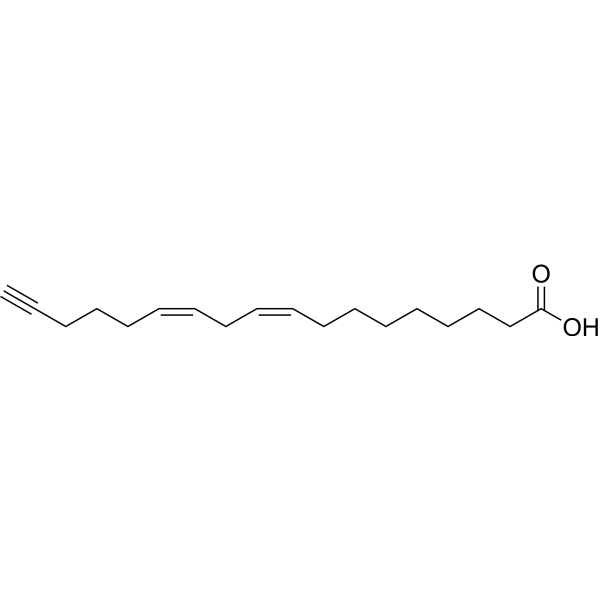
Linoleic acid alkyne is an ω-alkyne derivative of Linoleic acid (HY-N0729). Linoleic acid alkyne can be used to synthesize other alkyne-containing products,such as glycerophospholipids, for click chemistry .
|
| Cat. No. |
Product Name |
|
Classification |
-
- HY-147072
-
|
18:0 -18:2 PS
|
|
Phospholipids
|
|
1-Stearoyl-2-linoleoyl-sn-glycero-3-phospho-L-serine sodium is a glycerophospholipid .
|
-
- HY-W013707
-
|
Cytidine triphosphate disodium dihydrate; 5'-CTP disodium dihydrate
|
|
Nucleotide Analogs
Cytidine Nucleotide
|
|
Cytidine-5'-triphosphate disodium dihydrate (5'-CTP disodium dihydrate) is a molecule of high energy, and acts as a coenzyme in glycerophospholipid biosynthesis and protein glycosylation .
|
-
- HY-157622
-
|
|
|
Phospholipids
|
|
1-Palmitoyl-2-linoleoyl-sn-glycero-3-phosphocholine is a glycerophospholipid with activity for studying the effects of phosphatidylcholine (PC) on the lubrication of damaged mesothelial cells. 1-Palmitoyl-2-linoleoyl-sn-glycero-3-phosphocholine can be used to explore the function and repair mechanism of cell membranes. 1-Palmitoyl-2-linoleoyl-sn-glycero-3-phosphocholine has important application potential in biomedical research.
|
-
- HY-157716
-
|
|
|
Phospholipids
|
|
08:0 PI ammonium is a glycerophospholipid with a head group carrying a cyclohexanol moiety.
|
-
- HY-W783248
-
|
|
|
Phospholipids
|
|
18:1(n10)-16:0 PC-IsoPure is an isomerically pure mixed-acyl glycerophospholipid.
|
-
- HY-157696
-
|
1,2-Di-O-octadecyl-sn-glycero-3-phosphocholine
|
|
Phospholipids
|
|
18:0 Diether PC (1,2-Di-O-octadecyl-sn-glycero-3-phosphocholine) is a glycerophospholipid that can be used as a nonhydrolizable ether lipid in calcein-containing vesicles .
|
-
- HY-157683
-
|
|
|
Phospholipids
|
|
16:0-18:1 Diether PG is a type of glycerophospholipids, in which the hexadecane and octadecene chains are connected to the sn-1 and sn-2 positions of the glycerol backbone via ether bonds, respectively. 16:0-18:1 Diether PG can be used to prepare liposomes .
|
-
- HY-147076
-
|
1,2-Diarachidonoyl-sn-glycero-3-[phospho-rac-(1-glycerol)] sodium
|
|
Phospholipids
|
|
20:4 PG (1,2-Diarachidonoyl-sn-glycero-3-[phospho-rac-(1-glycerol)]) sodium is a glycerophospholipid that can be used as an oxidized phospholipid .
|
Your information is safe with us. * Required Fields.
Inquiry Information
- Product Name:
- Cat. No.:
- Quantity:
- MCE Japan Authorized Agent: