



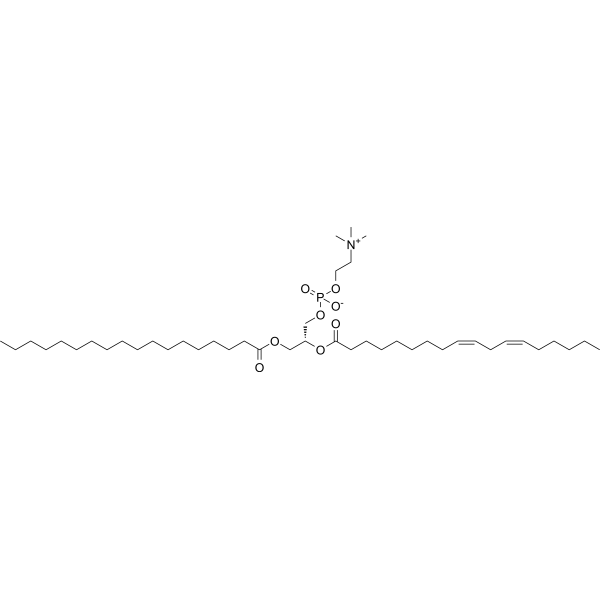
1-Stearoyl-2-linoleoyl-sn-glycero-3-phosphocholine

Based on 1 Customer Validation
1-Stearoyl-2-linoleoyl-sn-glycero-3-phosphocholine (SLPC; 18:0-18:2 PC) is an endogenous phospholipid marker molecule in the glycerophospholipid metabolic pathway. 1-Stearoyl-2-linoleoyl-sn-glycero-3-phosphocholine is a core component of the phospholipid bilayer of biological membranes and a key responsive lipid for radiation injury and cardiometabolic diseases. 1-Stearoyl-2-linoleoyl-sn-glycero-3-phosphocholine constitutes the phospholipid bilayers of cell membranes and high-density lipoprotein (HDL), and regulates the core activity of lipoprotein functional homeostasis. The content of 1-Stearoyl-2-linoleoyl-sn-glycero-3-phosphocholine in mouse serum shows a significant dose-dependent decrease with increasing ionizing radiation dose, and its level in human HDL also decreases significantly in metabolic syndrome. 1-Stearoyl-2-linoleoyl-sn-glycero-3-phosphocholine can serve as a biological dosimeter marker for ionizing radiation injury, and is used for rapid and accurate assessment of radiation absorbed dose in exposed individuals. 1-Stearoyl-2-linoleoyl-sn-glycero-3-phosphocholine can also act as a lipidomics research target for cardiometabolic diseases such as lipid metabolic syndrome and early-onset coronary heart disease.
For research use only. We do not sell to patients.
- Purity : 98.0%
- CAS No.: 27098-24-4
- Formula: C44H84NO8P
- Molecular Weight:786.11
-
Storage:
-20°C, stored under nitrogen
* In solvent : -80°C, 6 months; -20°C, 1 month (stored under nitrogen)

To place orders, for customer services and technical support, please contact: MedChemExpress USA
Tel: 609-228-6898 E-mail: [email protected] [email protected]


-
 Biological Activity
-
Chemical Information
-
Solvent & Solubility
- Protocols
- Purity & Documentation
- References
-
 Help & FAQs


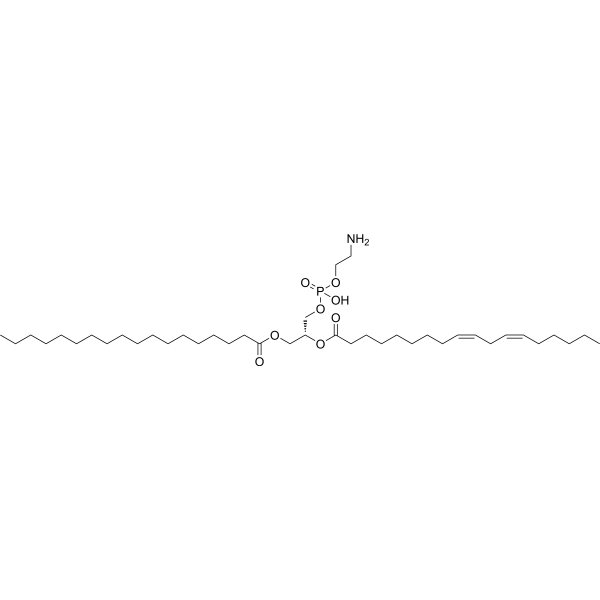

All Endogenous Metabolite Isoforms
More

Biological Activity
Description
In Vitro
1-Stearoyl-2-linoleoyl-sn-glycero-3-phosphocholine (endogenous relative quantitative concentration in mouse serum; detected via ex vivo serum treatment at 6 h post ionizing radiation exposure) is identified as an ionizing radiation-responsive lipid in mouse serum lipidomics LC-MS assays. Its serum abundance decreases significantly with increasing doses of 0-8 Gy 60Co source γ-ray irradiation, and shows a strong linear negative correlation with radiation dose [2].
1-Stearoyl-2-linoleoyl-sn-glycero-3-phosphocholine (endogenous relative quantitative concentration in mouse serum; detected via ex vivo serum treatment at 72 h after ionizing radiation exposure) shows a significant dose-dependent decrease in serum abundance with increasing irradiation doses of 0-8 Gy 60Co source γ-rays in mouse serum lipidomics LC-MS assays, and exhibits a strong linear negative correlation with radiation dose[2].
1-Stearoyl-2-linoleoyl-sn-glycero-3-phosphocholine shows a 15% lower level in the HDL3 subfraction of subjects with metabolic syndrome compared to non-diseased subjects in human HDL lipidomics LC-MS detection experiments[2].
MedChemExpress (MCE) has not independently confirmed the accuracy of these methods. They are for reference only. Further protocols information, click here.


Chemical Information
-
CAS No. 27098-24-4
-
Appearance Oil
-
Molecular Weight 786.11
-
Formula C44H84NO8P
-
Color Colorless to light yellow
-
SMILES
CCCCCCCCCCCCCCCCCC(OC[C@@H](OC(CCCCCCC/C=C\C/C=C\CCCCC)=O)COP(OCC[N+](C)(C)C)([O-])=O)=O
-
Synonyms
SLPC; 18:0-18:2 PC
-
Structure Classification
-
Initial Source
-
Shipping
Room temperature in continental US; may vary elsewhere.
-
Storage
-20°C, stored under nitrogen
* In solvent : -80°C, 6 months; -20°C, 1 month (stored under nitrogen)


Solvent & Solubility
In Vitro:
DMSO : 100 mg/mL (127.21 mM; Need ultrasonic; Hygroscopic DMSO has a significant impact on the solubility of product, please use newly opened DMSO)
Please refer to the solubility information to select the appropriate solvent. Once prepared, please aliquot and store the solution to prevent product inactivation from repeated freeze-thaw cycles.
Storage method and period of stock solution: -80°C, 6 months; -20°C, 1 month (stored under nitrogen). When stored at -80°C, please use it within 6 months. When stored at -20°C, please use it within 1 month.
Please refer to the solubility information to select the appropriate solvent. Once prepared, please aliquot and store the solution to prevent product inactivation from repeated freeze-thaw cycles.
Storage method and period of stock solution: -80°C, 6 months; -20°C, 1 month (stored under nitrogen). When stored at -80°C, please use it within 6 months. When stored at -20°C, please use it within 1 month.
Concentration (start) × Volume (start) = Concentration (final) × Volume (final)

Protocols
-
Research Protocol for Cardiovascular Diseases
Cardiovascular disease can be modeled as maladaptive cardiac remodeling, where ischemic injury or pressure overload activates inflammatory signaling, fibroblast activation, extracellular-matrix deposition, cardiomyocyte hypertrophy, vascular remodeling, and progressive ventricular dysfunction. The TGF-β/SMAD axis is a central profibrotic pathway after myocardial injury and pressure overload, while innate immune and cytokine pathways regulate leukocyte recruitment, scar formation, and adverse remodeling. Key unresolved questions include which inflammatory signals are reparative versus harmful, when fibrosis is protective versus maladaptive, and whether pathway inhibition improves function without weakening necessary infarct healing or compensatory remodeling.
-
Research Protocol for Metabolic Diseases
AMP-activated protein kinase, AMPK, is a conserved cellular energy sensor that responds to reduced cellular energy status and coordinates metabolism by increasing ATP-generating catabolic pathways while suppressing ATP-consuming anabolic processes. In metabolic disease research, the AMPK pathway is experimentally relevant because it regulates hepatic lipid synthesis, fatty acid oxidation, glucose production, skeletal-muscle glucose disposal, mTORC1-linked biosynthesis, autophagy, mitochondrial homeostasis, and whole-body energy balance. The central pathway logic is that energy stress, metformin, exercise-like stimulation, or direct AMPK activators increase AMPKα Thr172 phosphorylation and downstream substrate phosphorylation, including ACC and RAPTOR. Phosphorylation of ACC suppresses lipogenesis and supports fatty acid oxidation, whereas phosphorylation of RAPTOR suppresses mTORC1 signaling and links cellular energy status to growth and protein synthesis control. The pathway is linked


Purity & Documentation
-
Data Sheet (267 KB)
-
SDS (647 KB)
- English - EN (647 KB)
- Français - FR (647 KB)
- Deutsch - DE (647 KB)
- Norwegian - NO (647 KB)
- Español - ES (647 KB)
- Swedish - SV (647 KB)
- Italian - IT (647 KB)
- Korean - KR (647 KB)
- Portuguese - PT (647 KB)
-
Handling Instructions (2659 KB)
References


Complete Stock Solution Preparation Table
Please refer to the solubility information to select the appropriate solvent. Once prepared, please aliquot and store the solution to prevent product inactivation from repeated freeze-thaw cycles.
Storage method and period of stock solution: -80°C, 6 months; -20°C, 1 month (stored under nitrogen). When stored at -80°C, please use it within 6 months. When stored at -20°C, please use it within 1 month.
| Optional Solvent | Concentration Solvent Mass | 1 mg | 5 mg | 10 mg | 25 mg |
|---|---|---|---|---|---|
| DMSO | 1 mM | 1.2721 mL | 6.3604 mL | 12.7209 mL | 31.8022 mL |
| 5 mM | 0.2544 mL | 1.2721 mL | 2.5442 mL | 6.3604 mL | |
| 10 mM | 0.1272 mL | 0.6360 mL | 1.2721 mL | 3.1802 mL | |
| 15 mM | 0.0848 mL | 0.4240 mL | 0.8481 mL | 2.1201 mL | |
| 20 mM | 0.0636 mL | 0.3180 mL | 0.6360 mL | 1.5901 mL | |
| 25 mM | 0.0509 mL | 0.2544 mL | 0.5088 mL | 1.2721 mL | |
| 30 mM | 0.0424 mL | 0.2120 mL | 0.4240 mL | 1.0601 mL | |
| 40 mM | 0.0318 mL | 0.1590 mL | 0.3180 mL | 0.7951 mL | |
| 50 mM | 0.0254 mL | 0.1272 mL | 0.2544 mL | 0.6360 mL | |
| 60 mM | 0.0212 mL | 0.1060 mL | 0.2120 mL | 0.5300 mL | |
| 80 mM | 0.0159 mL | 0.0795 mL | 0.1590 mL | 0.3975 mL | |
| 100 mM | 0.0127 mL | 0.0636 mL | 0.1272 mL | 0.3180 mL |


1-Stearoyl-2-linoleoyl-sn-glycero-3-phosphocholine Related Classifications
HY-126359 Related Classifications
 Powered by Bioz