

1. Search Result
Search Result
Pathways Recommended: Neuronal Signaling JAK/STAT Signaling
Results for "

Gs signaling

" in MedChemExpress (MCE) Product Catalog:

21

Inhibitors & Agonists

4

Peptides

2

Inhibitory Antibodies

1

Natural
Products

1

Click Chemistry

Targets Recommended:
Cat. No. Product Name Target Research Areas Chemical Structure
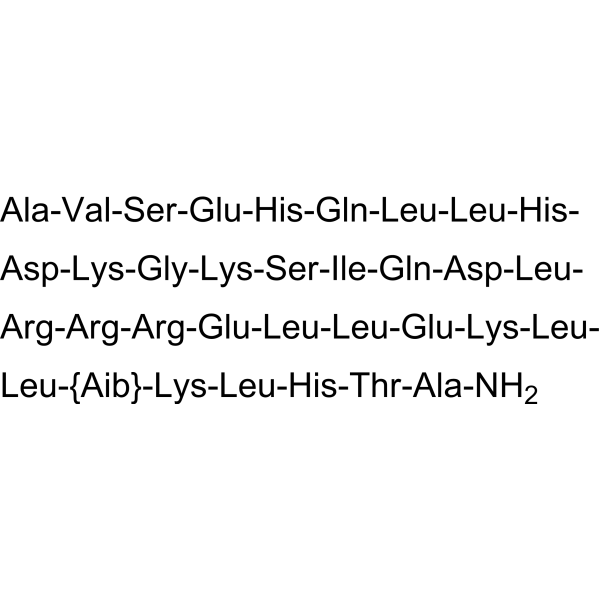
  • HY-108742
    Abaloparatide
    3 Publications Verification

    BA 058; BIM 44058

    PTHR Arrestin Metabolic Disease Cancer
    Abaloparatide (BA 058) is a parathyroid hormone receptor 1 (PTHR1) analog. Abaloparatide also is a selective PTHR1 activator. Abaloparatide enhances Gs/cAMP signaling and β-arrestin recruitment. Abaloparatide enhances bone formation and cortical structure in mice. Abaloparatide has the potential for the research of osteoporosis .
    Abaloparatide
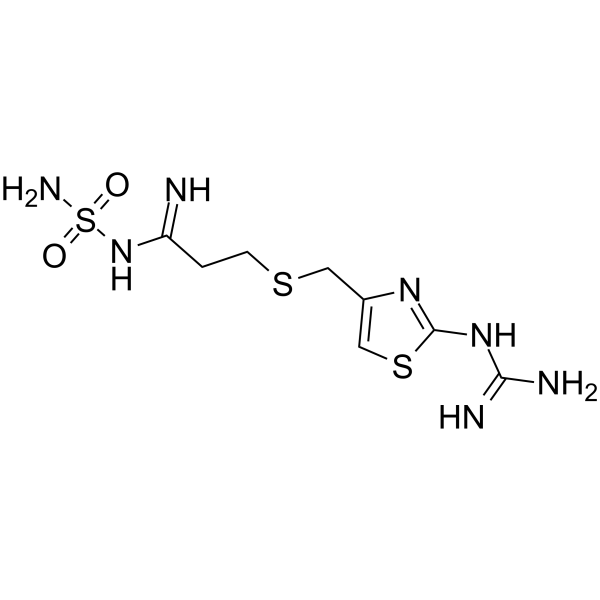
  • HY-18938
    Selonsertib
    Maximum Cited Publications
    23 Publications Verification

    Gs-4997

    MAP3K Apoptosis Cancer
    Selonsertib (GS-4997), an orally bioavailable, selective apoptosis signal-regulating kinase 1 (ASK1) inhibitor with a pIC50 of 8.3, has been evaluated as an experimental treatment for diabetic nephropathy and kidney fibrosis.
    Selonsertib
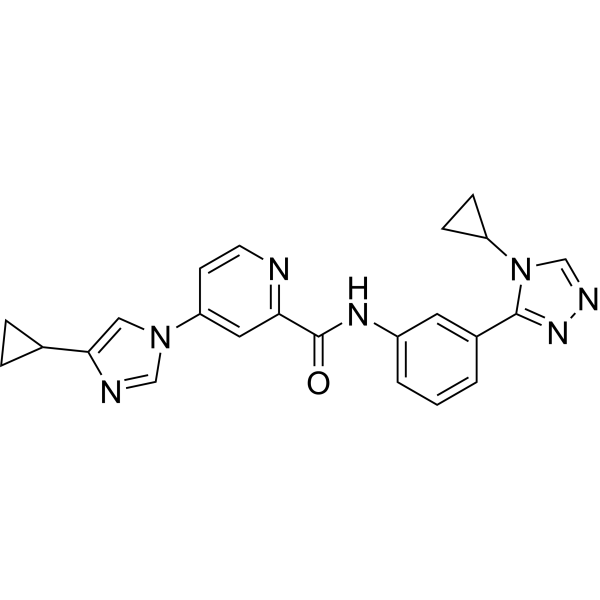
  • HY-100844
    GS-444217
    5+ Cited Publications

    MAP3K Apoptosis Cancer
    GS-444217 is a potent, orally available and selective ATP-competitive inhibitor of apoptosis signal-regulating kinase 1 (ASK1) with an IC50 of 2.87 nM .
    GS-444217
  • HY-P990914

    Gs-1811; JTX-1811

    CCR Inflammation/Immunology Cancer
    Denikitug (GS-1811; JTX-1811) is a humanized monoclonal antibody against CCR8 receptor with a KD of 16.8 pM. Denikitug specifically binds to human CCR8, inhibits CCL1-induced downstream CCR8 signaling. Denikitug selectively depletes cells expressing CCR8 via antibody-dependent cellular cytotoxicity (ADCC). Denikitug promotes anti-tumor immunity and can be used for the research of cancer and immunology .
    Denikitug
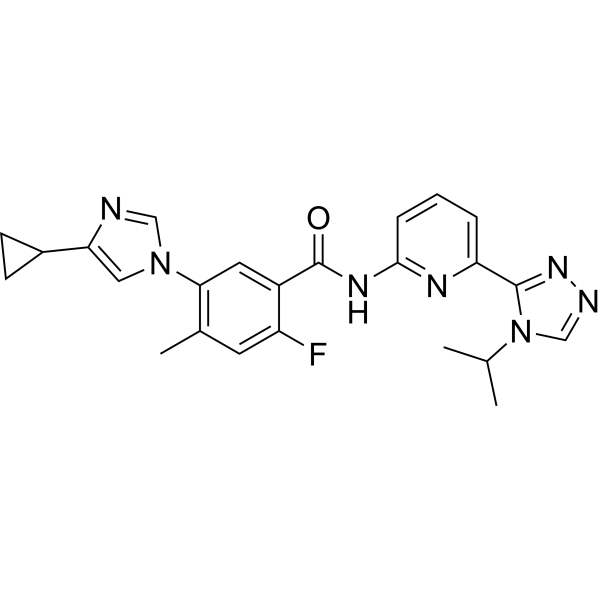
  • HY-P6292

    PACAP Receptor PKA ERK PI3K Akt GSK-3 Neurological Disease Cancer
    KS-133 is a bicyclic peptide with VIPR2 antagonistic activity that can cross the blood-brain barrier. KS-133 selectively blocks VIPR2-mediated Gq/Ca, Gs/cAMP, cAMP/PKA/ERK and PI3K/AKT/GSK3β signaling pathways. KS-133 inhibits VIPR2 agonist-induced CREB phosphorylation in the prefrontal cortex of mice. KS-133 shifts the polarization direction of macrophages toward M1. KS-133 attenuates cancer cell proliferation and reduces the cell cycle distribution level at the S-M phase. KS-133 exerts antitumor effects in a mouse model of colorectal cancer. KS-133 reverses cognitive decline in mouse models of psychiatric disorders. KS-133 can be used for research related to schizophrenia, colorectal cancer and breast cancer .
    KS-133
  • HY-42346

    Trace Amine-associated Receptor (TAAR) Neurological Disease
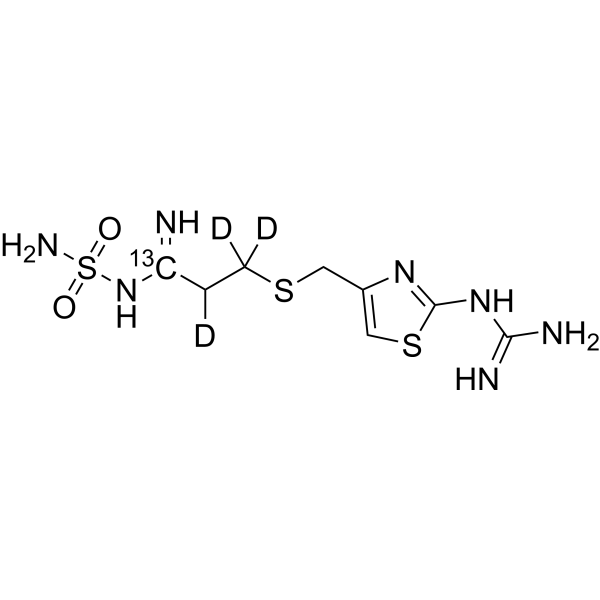
    ZH8651 is an agonist of TAAR1 which can activate both Gs and Gq signal pathway. ZH8651 can used in study schizophrenia .
    ZH8651
  • HY-108742A
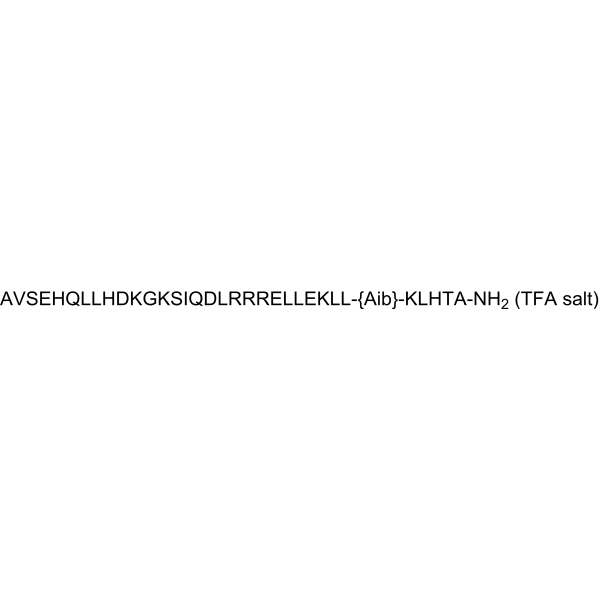
    Abaloparatide TFA
    3 Publications Verification

    BA 058 TFA; BIM 44058 TFA

    Arrestin PTHR Metabolic Disease Endocrinology Cancer
    Abaloparatide TFA (BA 058 TFA) is a parathyroid hormone receptor 1 (PTHR1) analogue. Abaloparatide TFA also is a selective PTHR1 activator. Abaloparatide TFA enhances Gs/cAMP signaling and β-arrestin recruitment. Abaloparatide TFA enhances bone formation and cortical structure in mice. Abaloparatide TFA has the potential for the research of osteoporosis .
    Abaloparatide TFA
  • HY-N0927

    Tetrahydrocolumbamine; (S)-Tetrahydrocolumbamine

    Dopamine Receptor Others Neurological Disease
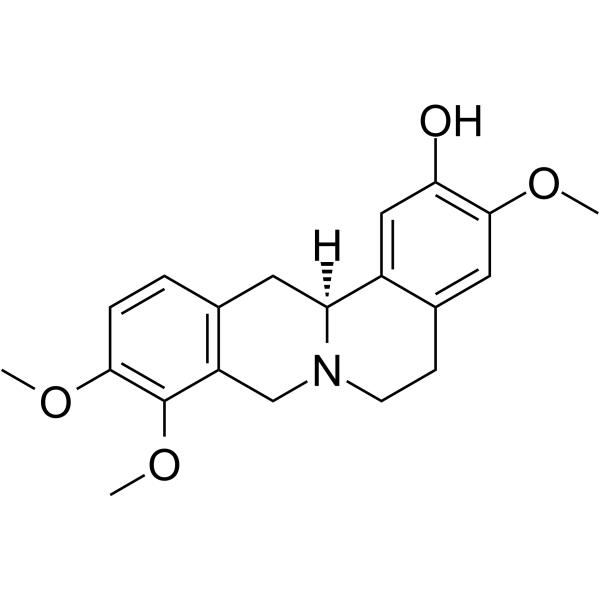
    (-)-Isocorypalmine (Tetrahydrocolumbamine; (S)-Tetrahydrocolumbamine) is a dopamine receptor ligand and modulator capable of crossing the blood-brain barrier. (-)-Isocorypalmine exhibits receptor selectivity, acting as a partial agonist of dopamine D1 and D5 receptors (coupled via Gs proteins), as well as an antagonist of D2, D3 and D4 receptors (by blocking Gi protein-mediated signaling). (-)-Isocorypalmine shows no significant binding to various non-dopamine receptors, ion channels and transporters. (-)-Isocorypalmine is metabolically stable in vivo, effectively inhibits spontaneous and cocaine-induced hyperlocomotion, sensitization and conditioned place preference in mice, and does not induce addictive place preference when administered alone. (-)-Isocorypalmine can be used in addiction research .
    (-)-Isocorypalmine
  • HY-134557

    GSK-3 Cancer
    GS87 is a highly specific and potent GSK3 inhibitor with IC50s of 415nM and 521nM for GSK3α and GSK3β, respectively. GS87 induces differentiation of acute myeloid leukemia (AML) cell lines by effectively activating GSK3-dependent signaling components including MAPK signaling. GS87 modulates key GSK3 target proteins involved in cell proliferation and differentiation more effectively than Lithium and SB415285 (SB). GS87 has the potential for acting as a differentiation agent for non-promyelocytic AML research .
    GS87
  • HY-175231

    5-HT Receptor Neurological Disease
    ST171 is a bitopic 5-HT1AR agonist with an Ki of 0.41  nM. ST171 selectively activates Gi/o signaling pathway and inhibits 5-HT1AR-mediated cAMP accumulation without Gs activation and marginal β-arrestin recruitment. T171 reduces hypersensitivity in chronic neuropathic and inflammatory pain mice model. ST171 can be used for pain research .
    ST171
  • HY-P10365

    Adhesion G Protein-coupled Receptors (AGPCRs) Others
    Vmm-p15 is a peptide agonist optimized for the adhesion G protein-coupled receptor GPR64 (also known as ADGRG2 or HE6). The affinity of VPM-p15 with GPR64 is significantly higher than that of the original p15 peptide. The cAMP level induced by VMM-P15 increased significantly, activated GPR64, and triggered downstream Gs, Gq, and G12/13 signaling. VPM-p15 can be used to study the activation mechanism of adherent GPCR family members .
    VPM-p15
  • HY-178371

    PI3K Metabolic Disease
    PI3KC2γ-IN-1 (Compound 23) is an orally active and selective PI3KC2γ inhibitor (IC50 = 4 nM). PI3KC2γ-IN-1 downregulats the Akt2-glycogen synthase (GS) signaling pathway, ultimately inhibiting the conversion of glucose to glycogen and reduces excessive glycogen accumulation in the liver. PI3KC2γ-IN-1 can significantly inhibit insulin-induced PI(3,4)P2 accumulation in both primary hepatocytes and HepG2 liver cancer cells. PI3KC2γ-IN-1 can be used for the study of glycogen storage diseases (GSDs) .
    PI3KC2γ-IN-1
  • HY-162682

    5-HT Receptor Neurological Disease
    5-HT6R antagonist 4 (compound 30) is a neutral antagonist of 5-HT6R, with the Ki of 1 nM .
    5-HT6R antagonist 4
  • HY-146677

    5-HT Receptor Monoamine Oxidase Neurological Disease
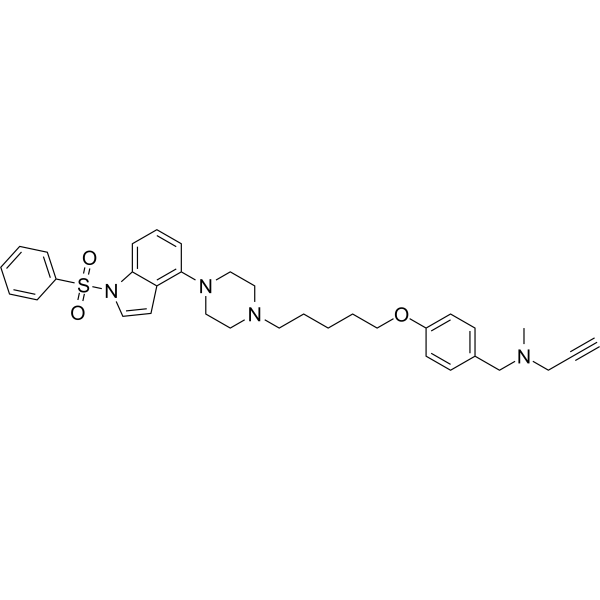
    5-HT6R/MAO-B modulator 1 (compound 48) is an antagonist of 5-HT6R at Gs signaling and an irreversible MAO-B inhibitor. 5-HT6R/MAO-B modulator 1 exhibits glioprotective properties. 5-HT6R/MAO-B modulator 1 can reverse Scopolamine-induced memory deficits . 5-HT6R/MAO-B modulator 1 is a click chemistry reagent, it contains an Alkyne group and can undergo copper-catalyzed azide-alkyne cycloaddition (CuAAc) with molecules containing Azide groups.
    5-HT6R/MAO-B modulator 1
  • HY-100844R

    MAP3K Reference Standards Apoptosis Cancer
    GS-444217 (Standard) is the analytical standard of GS-444217 (HY-100844). This product is intended for research and analytical applications. GS-444217 is a potent, orally available and selective ATP-competitive inhibitor of apoptosis signal-regulating kinase 1 (ASK1) with an IC50 of 2.87 nM .
    GS-444217 (Standard)
  • HY-145156

    GLP Receptor Metabolic Disease
    CHU-128 is an effective and selective GLP-1R agonist. CHU-128 exhibits strong signal specificity and can activate the Gs/cAMP pathway, but it cannot activate the Gq/calcium signal, ERK phosphorylation, or recruit β-inhibitory proteins. CHU-128 can be used for research on type 2 diabetes .
    CHU-128
  • HY-179721

    Cholecystokinin Receptor Neurological Disease
    CCKBR agonist-2 (Compound z-44) is a Gi-preferring CCKBR agonist. CCKBR agonist-2 effectively activates the CCKBR-Gi signaling pathway (EC50 = 0.27 nM), but has almost no activity on Gq and Gs signaling pathways. CCKBR agonist-2 shows no significant protective effect in the mouse Alzheimer's disease model, proving that the simple activation of the Gi signal pathway does not play a dominant role in the improvement of cognitive function .
    CCKBR agonist-2
  • HY-181984

    5-HT Receptor Neurological Disease
    AGH-194 is a 5-HT7 receptor agonist with a Ki value of 2 nM. AGH-194 activates Gs protein-coupled signaling pathways associated with neuroprotection and neurite outgrowth, and stimulates neurite outgrowth in neuronal cells. AGH-194 reduces cell damage in undifferentiated neuronal cells. AGH-194 can be used in the research of neurodegenerative diseases .
    AGH-194
  • HY-179725

    5-HT Receptor Dopamine Receptor Neurological Disease
    PZ-1129 is a selective 5-HT7 receptor ligand with a Ki of 7 nM. PZ-1129 shows Ki values of 159 and 24 nM for 5-HT1A receptor and D2 receptor. PZ-1129 can inhibit the constitutive cAMP production mediated by the Gs signaling pathway (EC50 = 13.7 nM). PZ-1129 can be used for the research of emotional disorders, such as depression and bipolar disorder .
    PZ-1129
  • HY-179724

    5-HT Receptor Dopamine Receptor MMP Cytochrome P450 Neurological Disease
    PZ-1657 (Compound 57) is an orally active, blood-brain barrier permeable, highly selective, and metabolically stable 5-HT7 receptor inverse agonist with a Ki value of 5 nM. PZ-1657 inhibits constitutive cyclic adenosine monophosphate (cAMP) production mediated by the Gs signaling pathway (EC50 value of 2.93 nM). PZ-1657 inhibits CYP3A4 P450 (IC50 = 12.2 μM) and hERG channels. PZ-1657 reduces 5-HT7 receptor-mediated MMP-9 activity. PZ-1657 reverses Phencyclidine-induced cognitive impairment. PZ-1657 possesses antidepressant properties .
    PZ-1657
  • HY-179724A

    5-HT Receptor Dopamine Receptor MMP Potassium Channel Neurological Disease
    PZ-1657 hydrochloride (Compound 57) is a potent, selective and orally active 5-HT7 receptor inverse agonist with a Ki of 5 nM. PZ-1657 hydrochloride can inhibit the constitutive cAMP production mediated by the Gs signaling pathway (EC50 = 2.93 nM). PZ-1657 hydrochloride can significantly reduce the MMP-9 activity mediated by 5-HT7 receptors in the hippocampus of mice, and the effect is comparable to that of SB-269970 (HY-15370). PZ-1657 hydrochloride can reverse the cognitive deficits observed in the rat novel object recognition test induced by Phencyclidine without affecting the animals' spontaneous activities. PZ-1657 hydrochloride can be used for the research of emotional disorders, such as depression and bipolar disorder .
    PZ-1657 hydrochloride

Inquiry Online

Your information is safe with us. * Required Fields.

Salutation


Country or Region *

Applicant Name *


Organization Name *

Department *


Email Address *


Product Name *

Cat. No.


Requested quantity *

Phone Number *


Remarks

Inquiry Online

Inquiry Information

Product Name:
Cat. No.:
Quantity:
MCE Japan Authorized Agent:

