



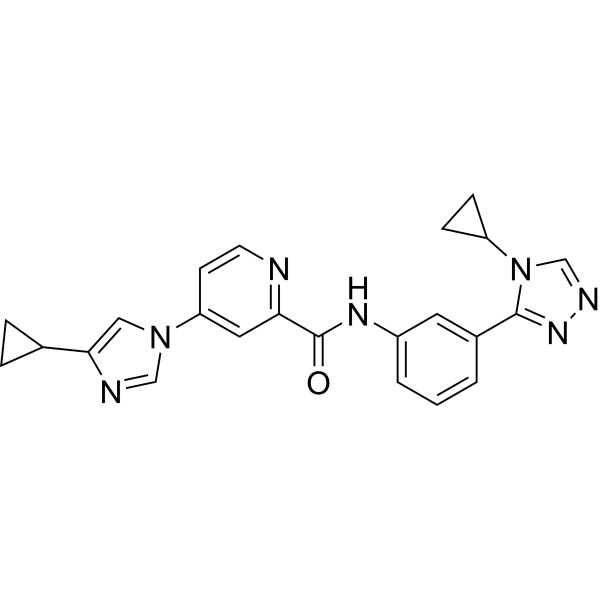
GS-444217
Based on 6 publication(s) in Google Scholar
GS-444217 is a potent, orally available and selective ATP-competitive inhibitor of apoptosis signal-regulating kinase 1 (ASK1) with an IC50 of 2.87 nM.
연구목적의 판매만을 진행합니다. 환자를 대상으로 한 판매는 하지 않습니다.
- Purity : 99.64%
- CAS No.: 1262041-49-5
- 화학식: C23H21N7O
- 분자량:411.46
-
보관:Powder -20°C, 3 years , 4°C, 2 years ; In solvent -80°C, 2 years , -20°C, 1 year

To place orders, for customer services and technical support, please contact: MedChemExpress USA
Tel: 609-228-6898 E-mail: [email protected] [email protected]


-
 Biological Activity
-
Chemical Information
-
용액&용해도
- Protocol
- 순도&문서
- References
-
 Help & FAQs


-
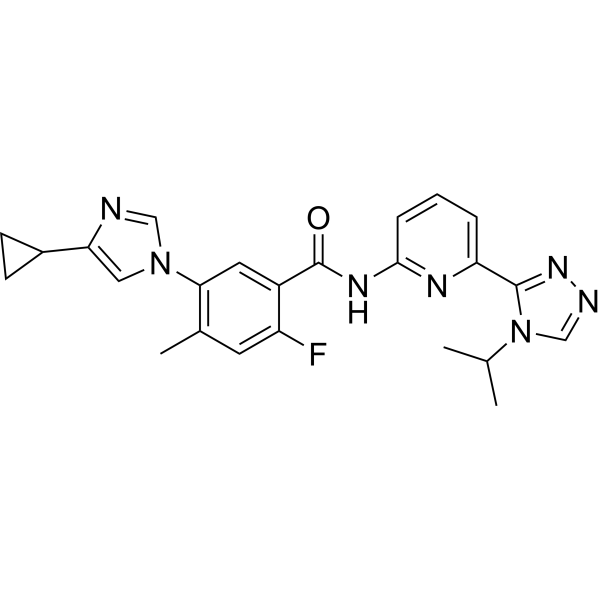
HY-18938
SelonsertibASK1 Inhibitor -
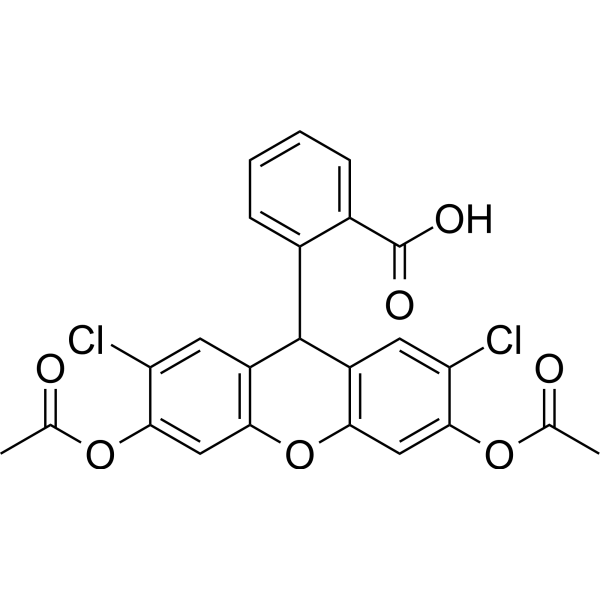
HY-D0940
H2DCFDAROS-Sensitive Probe -
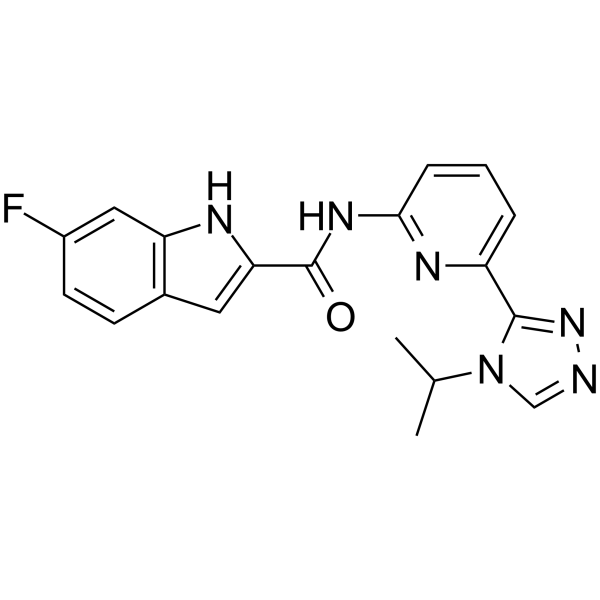
HY-131969
ASK1-IN-2ASK1 Inhibitor -

HY-D1056
Lipopolysaccharides, from E. coli O55:B5Endotoxin -
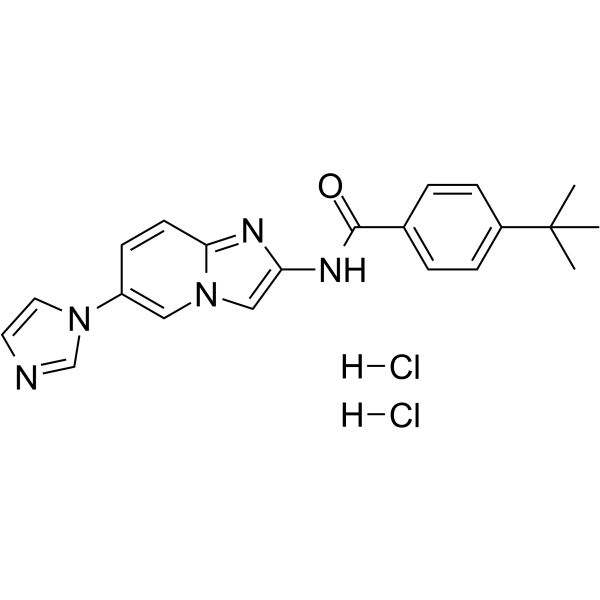
HY-103258
TC ASK 10ASK1 Inhibitor -
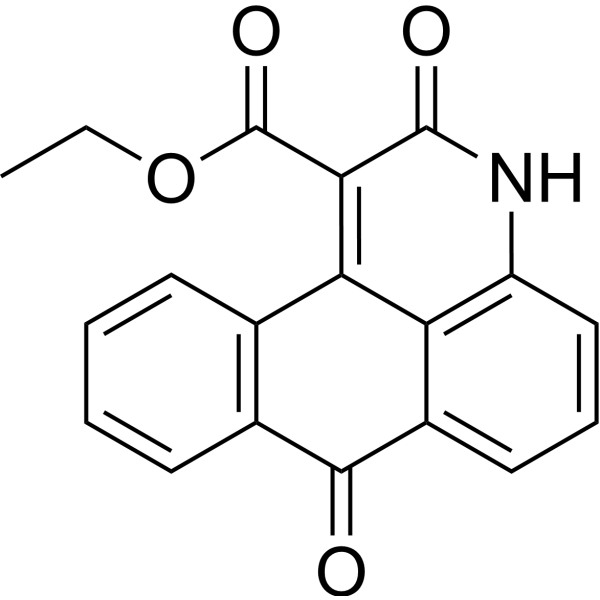
HY-19566
NQDI-1ASK1 Inhibitor -

HY-100844R
GS-444217 (Standard)ASK1 Inhibitor -
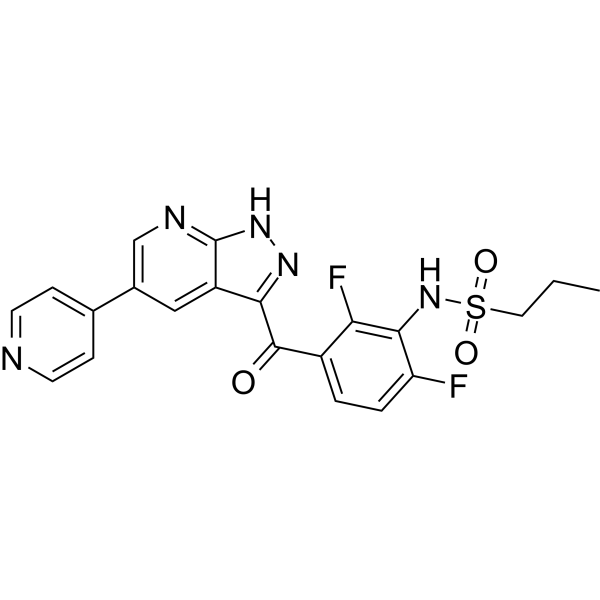
HY-152860
DarizmetinibMAP2K Inhibitor -

HY-103258R
TC ASK 10 (Standard)Reference Standard -
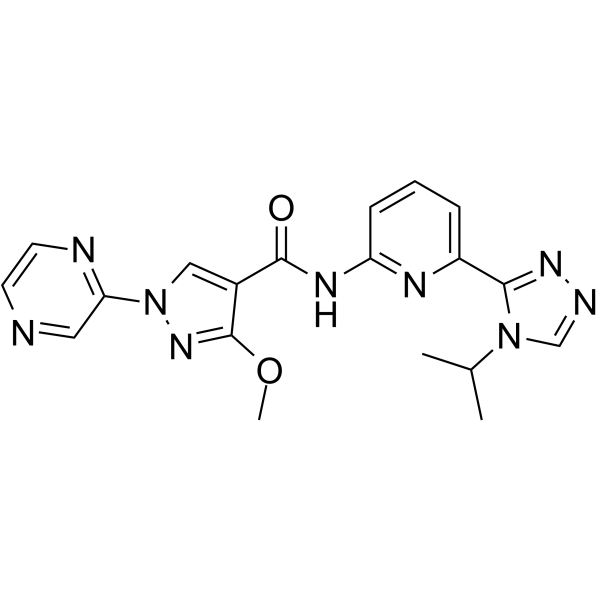
HY-133554
ASK1-IN-1ASK1 Inhibitor -
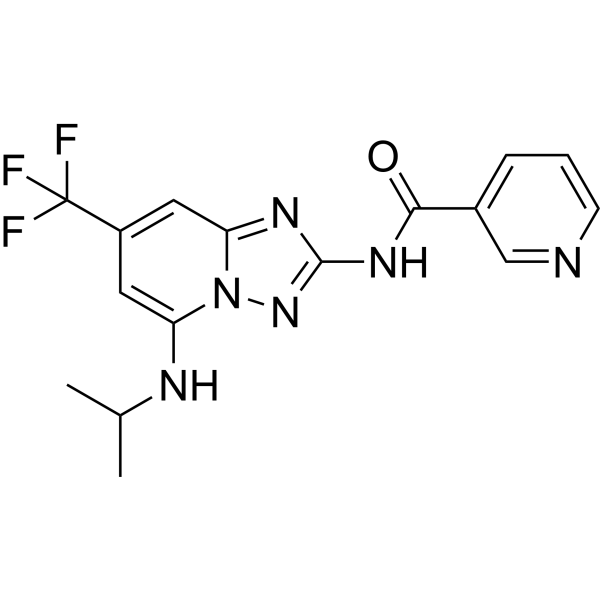
HY-18297
ASK1-IN-5ASK1 Inhibitor -
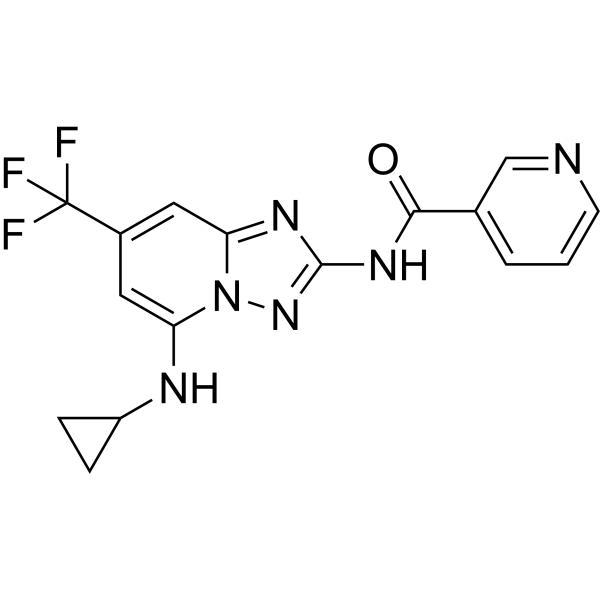
HY-110262
MSC 2032964AASK Inhibitor
Publications Citing Use of MedChemExpress (MCE) GS-444217
More- EMBO J. 2022 Mar 1;41(5):e109386. [Abstract]
- ACS Med Chem Lett. 2026 Feb 20;17(3):695-703. [Abstract]
- PLoS One. 2023 Jun 13;18(6):e0286903. [Abstract]
- In Vivo. 2024 May-Jun;38(3):1094-1103. [Abstract]
- Res Sq. 2025 Mar 5:rs.3.rs-6150649. [Abstract]
- Environ Toxicol. 2022 Jun;37(6):1288-1296. [Abstract]
All MAP3K Isoforms
More

Biological Activity
제품 설명
IC50 & Target
ASK1[1]
Cellular Effect
|
Cell Line

|
Type | Value | Description | References |
|---|---|---|---|---|
| BEAS-2B | IC50 |
90.17 μM
Compound: 2; GS-444217
|
Antiproliferative against human BEAS-2B cells measured after 48 hrs by CCK8 assay
Antiproliferative against human BEAS-2B cells measured after 48 hrs by CCK8 assay
|
[PMID: 36603508] |
| HFL1 | IC50 |
67.93 μM
Compound: 2; GS-444217
|
Antiproliferative against HLF1 cells measured after 48 hrs by CCK8 assay
Antiproliferative against HLF1 cells measured after 48 hrs by CCK8 assay
|
[PMID: 36603508] |
| HSC-T6 | IC50 |
33.43 μM
Compound: 2; GS-444217
|
Antiproliferative against rat HSC-T6 cells measured after 48 hrs by CCK8 assay
Antiproliferative against rat HSC-T6 cells measured after 48 hrs by CCK8 assay
|
[PMID: 36603508] |
| NRK-49F | IC50 |
34.36 μM
Compound: 2; GS-444217
|
Antiproliferative against rat NRK-49F cells measured after 48 hrs by CCK8 assay
Antiproliferative against rat NRK-49F cells measured after 48 hrs by CCK8 assay
|
[PMID: 36603508] |
In Vitro
Treatment with GS-444217 reduces ASK1 phosphorylation and prevents the phosphorylation of MKK3/6, MKK4, p38, and JNK at concentrations of 0.3 μM and above with full suppression of ASK1 activity at 1 μM. GS-444217 (1 μM) reduces ASK1 activity within 5 minutes of addition to the cultures, reaching a maximum level of inhibition by 30 minutes. Removal of GS-444217 from the cultures results in reactivation of ASK1 autophosphorylation within 10 minutes and near-complete recovery 2 hours after drug washout[1].
MedChemExpress (MCE) has not independently confirmed the accuracy of these methods. They are for reference only.
In Vivo
MedChemExpress (MCE) has not independently confirmed the accuracy of these methods. They are for reference only.


Chemical Information
-
CAS No. 1262041-49-5
-
Appearance Solid
-
분자량 411.46
-
화학식 C23H21N7O
-
Color White to off-white
-
SMILES
O=C(C1=NC=CC(N2C=C(C3CC3)N=C2)=C1)NC4=CC=CC(C5=NN=CN5C6CC6)=C4
-
선적
Room temperature in continental US; may vary elsewhere.
-
보관
Powder -20°C 3 years 4°C 2 years In solvent -80°C 2 years -20°C 1 year


Publications (6)
-
Journal Impact Factor
-
Most Recent
-
EMBO J
Neutrophils discriminate live from dead bacteria by integrating signals initiated by Fprs and TLRs. [Abstract]2022 Mar 1;41(5):e109386. PMID: 35112724 -
ACS Med Chem Lett
Serial PNA-Transformer-Based Virtual Screening Identifies Nanomolar DYRK1A Inhibitors for Pancreatic Ductal Adenocarcinoma. [Abstract]2026 Feb 20;17(3):695-703. PMID: 41847637 -
PLoS One
The angiotensin receptor neprilysin inhibitor LCZ696 attenuates renal fibrosis via ASK1/JNK/p38 MAPK-mediated apoptosis in unilateral ureteral obstruction. [Abstract]2023 Jun 13;18(6):e0286903. PMID: 37310976 -
In Vivo
HECTD2/TNFAIP1 Axis Regulating the p38/JNK Pathway to Promote an Inflammatory Response in Renal Cell Carcinoma Cells. [Abstract]2024 May-Jun;38(3):1094-1103. PMID: 38688591 -
Res Sq
JNK mediates serine phosphorylation of STAT3 in response to fatty acids released by lipolysis. [Abstract]2025 Mar 5:rs.3.rs-6150649. PMID: 40092442 -
Environ Toxicol
Hexavalent chromium induces hepatocyte apoptosis via regulation of apoptosis signal-regulating kinase 1/c-Jun amino-terminal kinase signaling. [Abstract]2022 Jun;37(6):1288-1296. PMID: 35166444


용액&용해도
In Vitro:
DMSO : 25 mg/mL (60.76 mM; ultrasonic and warming and heat to 60°C; Hygroscopic DMSO has a significant impact on the solubility of product, please use newly opened DMSO)
Please refer to the solubility information to select the appropriate solvent. Once prepared, please aliquot and store the solution to prevent product inactivation from repeated freeze-thaw cycles.
Storage method and period of stock solution: -80°C, 2 years; -20°C, 1 year. When stored at -80°C, please use it within 2 years. When stored at -20°C, please use it within 1 year.
Please refer to the solubility information to select the appropriate solvent. Once prepared, please aliquot and store the solution to prevent product inactivation from repeated freeze-thaw cycles.
Storage method and period of stock solution: -80°C, 2 years; -20°C, 1 year. When stored at -80°C, please use it within 2 years. When stored at -20°C, please use it within 1 year.
Concentration (start) × Volume (start) = Concentration (final) × Volume (final)
In Vivo:
Select the appropriate dissolution method based on your experimental animal and administration route.
- For the following dissolution methods, please ensure to first prepare a clear stock solution using an In Vitro approach and then sequentially add co-solvents:
- To ensure reliable experimental results, the clarified stock solution can be appropriately stored based on storage conditions. As for the working solution for In Vivo experiments, it is recommended to prepare freshly and use it on the same day.
- The percentages shown for the solvents indicate their volumetric ratio in the final prepared solution. If precipitation or phase separation occurs during preparation, heat and/or sonication can be used to aid dissolution.
Add each solvent one by one: 10% DMSO 40% PEG300 5% Tween-80 45% Saline
Solubility: ≥ 2.5 mg/mL (6.08 mM); Clear solution
This protocol yields a clear solution of ≥ 2.5 mg/mL (saturation unknown).
Taking 1 mL working solution as an example, add 100 μL DMSO stock solution (25.0 mg/mL) to 400 μL PEG300, and mix evenly; then add 50 μL Tween-80 and mix evenly; then add 450 μL Saline to adjust the volume to 1 mL.
Preparation of Saline: Dissolve 0.9 g sodium chloride in ddH₂O and dilute to 100 mL to obtain a clear Saline solution.
Add each solvent one by one: 10% DMSO 90% (20% SBE-β-CD in Saline)
Solubility: ≥ 2.5 mg/mL (6.08 mM); Clear solution
This protocol yields a clear solution of ≥ 2.5 mg/mL (saturation unknown).
Taking 1 mL working solution as an example, add 100 μL DMSO stock solution (25.0 mg/mL) to 900 μL 20% SBE-β-CD in Saline, and mix evenly.
Preparation of 20% SBE-β-CD in Saline (4°C, storage for one week): 2 g SBE-β-CD powder is dissolved in 10 mL Saline, completely dissolve until clear.
In Vivo Dissolution Calculator
Please enter the basic information of animal experiments:
-
-
-
-
Recommended: Prepare an additional quantity of animals to account for potential losses during experiments.
Please enter your animal formula composition:
-
%DMSO +
Recommended: Keep the proportion of DMSO in working solution below 2% if your animal is weak.
-
%+
-
+%Tween-80 + +
-
%Saline +
The co-solvents required include: DMSO, . All of co-solvents are available by MedChemExpress (MCE). , Tween 80. All of co-solvents are available by MedChemExpress (MCE).
Working solution concentration: 0.22 mg/mL
Method for preparing stock solution: mg drug dissolved in μL DMSO. Stock solution concentration: mg/mL.
1. Take μL DMSO stock solution;
2. Add μL .
μL , mix evenly;
3. Then add μL Tween 80, mix evenly;
4. Then add μL
Please ensure that the stock solution in the first step is dissolved to a clear state, and add co-solvents in sequence. You can use ultrasonic heating (ultrasonic cleaner, recommended frequency 20-40 kHz), vortexing, etc. to assist dissolution.


순도&문서
-
Data Sheet (274 KB)
-
SDS (393 KB)
- English - EN (393 KB)
- Français - FR (393 KB)
- Deutsch - DE (393 KB)
- Norwegian - NO (393 KB)
- Español - ES (393 KB)
- Swedish - SV (393 KB)
- Italian - IT (393 KB)
- Korean - KR (393 KB)
- Portuguese - PT (393 KB)
-
Handling Instructions (2659 KB)
References
[1]. Liles JT, et al. ASK1 contributes to fibrosis and dysfunction in models of kidney disease. J Clin Invest. 2018 Oct 1;128(10):4485-4500. [Content Brief]
[2]. Budas GR, et al. ASK1 Inhibition Halts Disease Progression in Preclinical Models of Pulmonary Arterial Hypertension. Am J Respir Crit Care Med. 2018 Feb 1;197(3):373-385. [Content Brief]


Complete Stock Solution Preparation Table
Please refer to the solubility information to select the appropriate solvent. Once prepared, please aliquot and store the solution to prevent product inactivation from repeated freeze-thaw cycles.
Storage method and period of stock solution: -80°C, 2 years; -20°C, 1 year. When stored at -80°C, please use it within 2 years. When stored at -20°C, please use it within 1 year.
| Optional Solvent | Concentration Solvent Mass | 1 mg | 5 mg | 10 mg | 25 mg |
|---|---|---|---|---|---|
| DMSO | 1 mM | 2.4304 mL | 12.1518 mL | 24.3037 mL | 60.7592 mL |
| 5 mM | 0.4861 mL | 2.4304 mL | 4.8607 mL | 12.1518 mL | |
| 10 mM | 0.2430 mL | 1.2152 mL | 2.4304 mL | 6.0759 mL | |
| 15 mM | 0.1620 mL | 0.8101 mL | 1.6202 mL | 4.0506 mL | |
| 20 mM | 0.1215 mL | 0.6076 mL | 1.2152 mL | 3.0380 mL | |
| 25 mM | 0.0972 mL | 0.4861 mL | 0.9721 mL | 2.4304 mL | |
| 30 mM | 0.0810 mL | 0.4051 mL | 0.8101 mL | 2.0253 mL | |
| 40 mM | 0.0608 mL | 0.3038 mL | 0.6076 mL | 1.5190 mL | |
| 50 mM | 0.0486 mL | 0.2430 mL | 0.4861 mL | 1.2152 mL | |
| 60 mM | 0.0405 mL | 0.2025 mL | 0.4051 mL | 1.0127 mL |


GS-444217 Related Classifications
HY-100844 Related Classifications
 Powered by Bioz