



TC ASK 10

Based on 1 Customer Validation
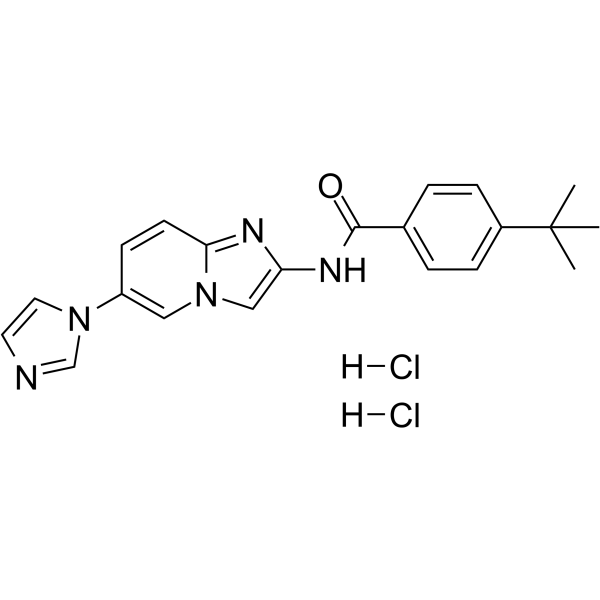
TC ASK 10 (Compound 10) is a potent, selective and orally active apoptosis signal-regulating kinase 1 (ASK1) inhibitor with an IC50 of 14 nM. The inhibitory activities of TC ASK 10 towards other representative panel of kinases are less than 50%, except for ASK2 (IC50 of 0.51 μM).
For research use only. We do not sell to patients.
- Purity : 99.52%
- CAS No.: 1005775-56-3
- Formula: C21H23Cl2N5O
- Molecular Weight:432.35
-
Storage:
4°C, sealed storage, away from moisture
* In solvent : -80°C, 6 months; -20°C, 1 month (sealed storage, away from moisture)

To place orders, for customer services and technical support, please contact: MedChemExpress USA
Tel: 609-228-6898 E-mail: [email protected] [email protected]


-
 Biological Activity
-
Chemical Information
-
Solvent & Solubility
- Protocols
- Purity & Documentation
- References
-
 Help & FAQs


-
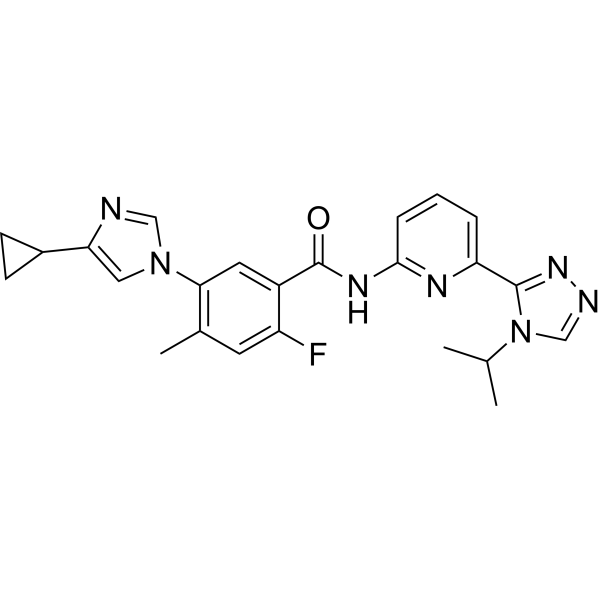
HY-18938
SelonsertibASK1 Inhibitor -
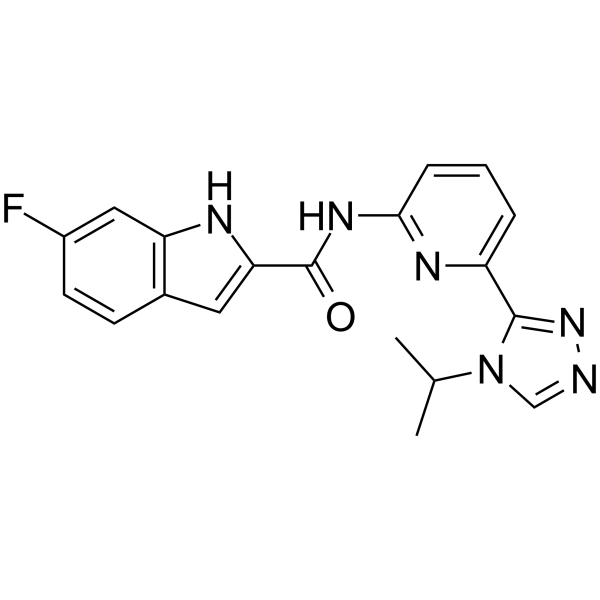
HY-131969
ASK1-IN-2ASK1 Inhibitor -
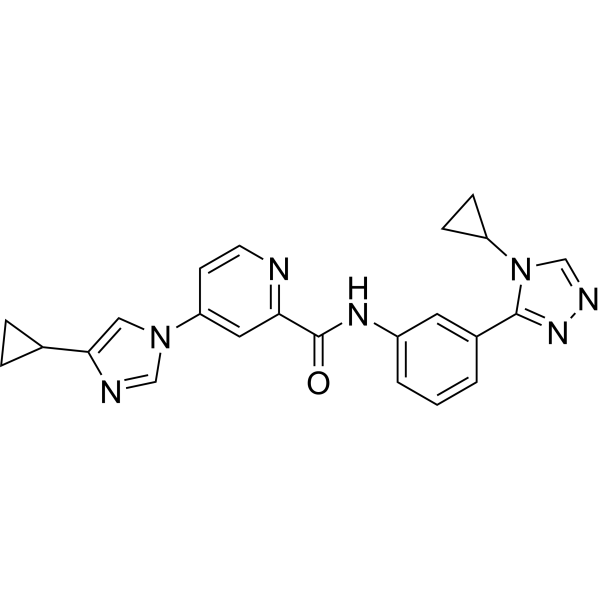
HY-100844
GS-444217ASK1 Inhibitor -
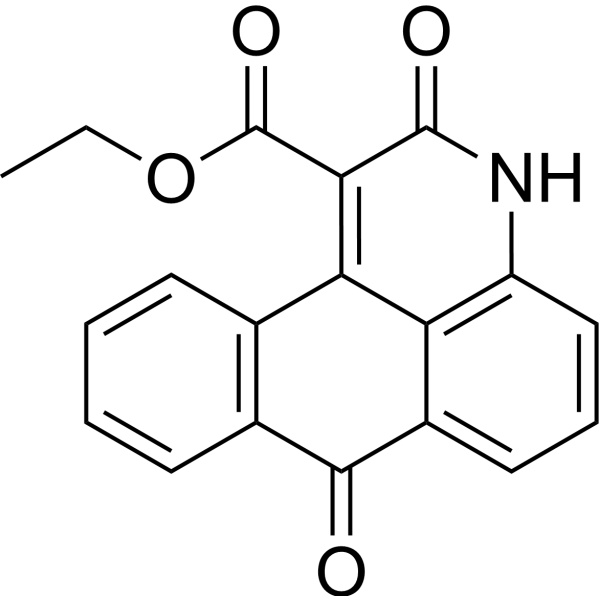
HY-19566
NQDI-1ASK1 Inhibitor -

HY-103258R
TC ASK 10 (Standard)Reference Standard -
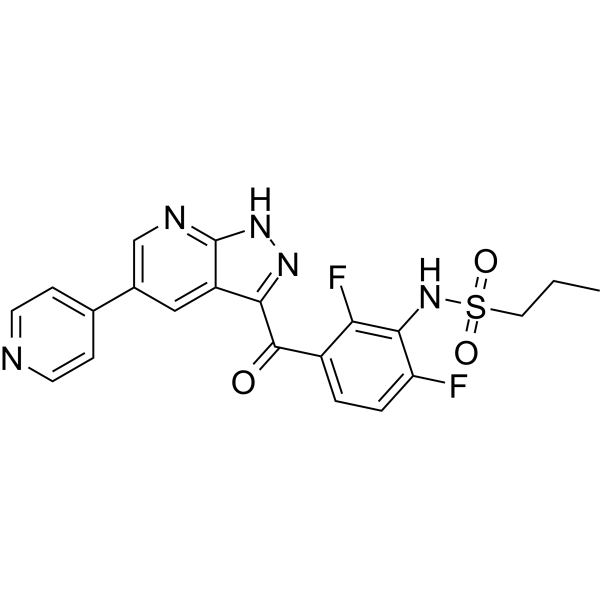
HY-152860
DarizmetinibMAP2K Inhibitor -
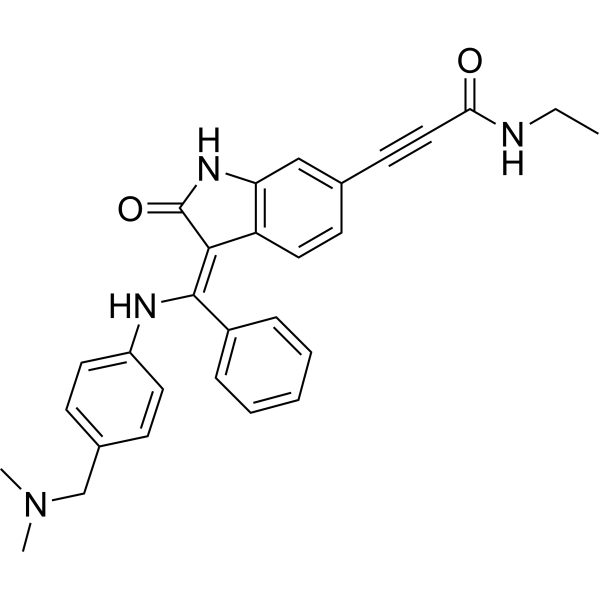
HY-18955
BI-847325MEK Inhibitor -

HY-100844R
GS-444217 (Standard)ASK1 Inhibitor -
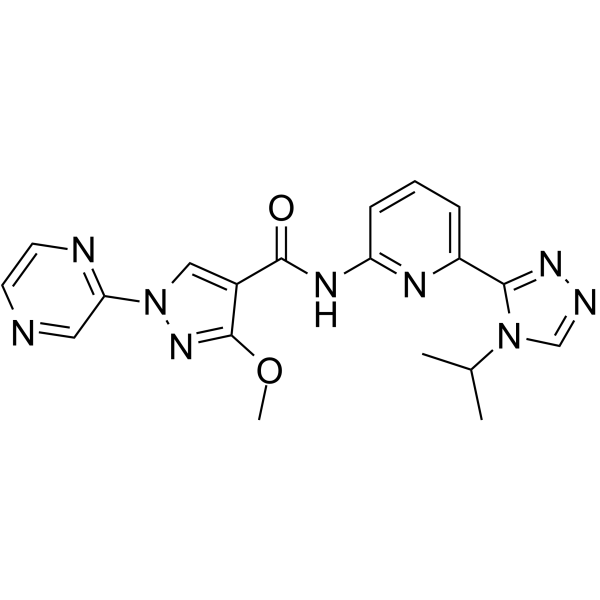
HY-133554
ASK1-IN-1ASK1 Inhibitor -
HY-18297
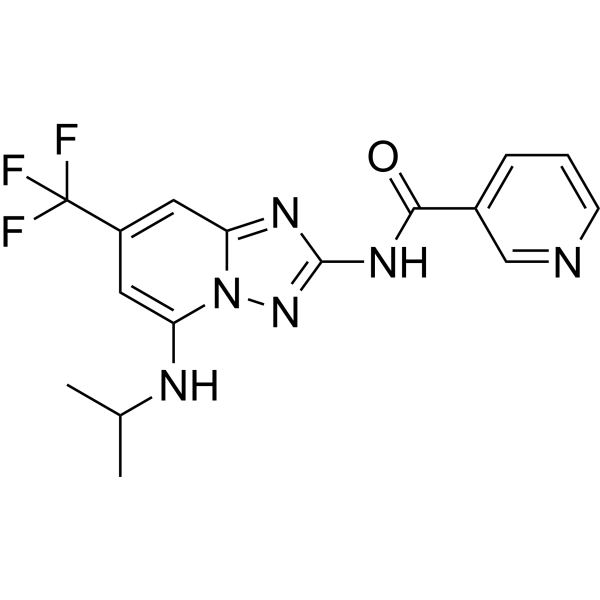
ASK1-IN-5ASK1 Inhibitor -
HY-110262
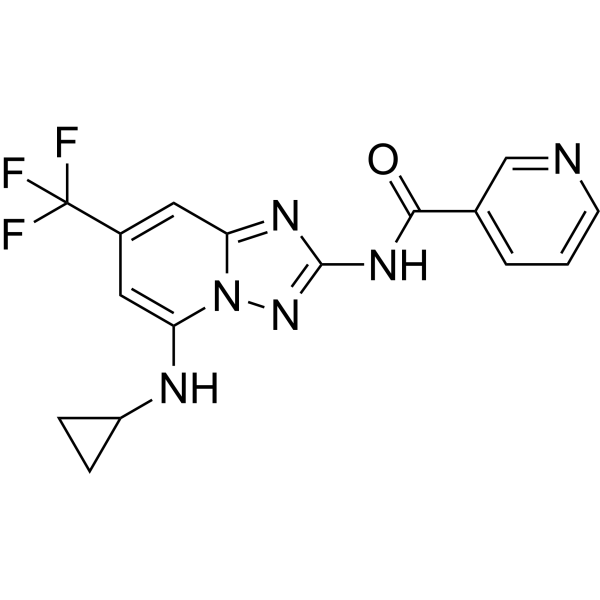
MSC 2032964AASK Inhibitor
All MAP3K Isoforms
More

Biological Activity
Description
IC50 & Target
[1]|
ASK1 14 nM (IC50) |
In Vitro
TC ASK 10 (Compound 10; 0-10 μM; 1 hour; INS-1 cells) treatment inhibits streptozotocin (STZ)-induced JNK in INS-1 pancreatic β cells from 0.3 μM. Phosphorylation of p38 is also inhibited in a dosedependent manner[1].
MedChemExpress (MCE) has not independently confirmed the accuracy of these methods. They are for reference only.
-
Cell Line:INS-1 cells
-
Concentration:0 μM, 0.3 μM, 1 μM, 3 μM, 10 μM
-
Incubation Time:1 hour
-
Result:Was found to inhibit streptozotocin (STZ)-induced JNK in INS-1 pancreatic β cells from 0.3 μM. Phosphorylation of p38 was also inhibited in a dosedependent manner.
In Vivo
MedChemExpress (MCE) has not independently confirmed the accuracy of these methods. They are for reference only.


Chemical Information
-
CAS No. 1005775-56-3
-
Appearance Solid
-
Molecular Weight 432.35
-
Formula C21H23Cl2N5O
-
Color White to pink
-
SMILES
O=C(NC1=CN2C=C(N3C=CN=C3)C=CC2=N1)C4=CC=C(C(C)(C)C)C=C4.[H]Cl.[H]Cl
-
Shipping
Room temperature in continental US; may vary elsewhere.
-
Storage
4°C, sealed storage, away from moisture
* In solvent : -80°C, 6 months; -20°C, 1 month (sealed storage, away from moisture)


Solvent & Solubility
In Vitro:
DMSO : 100 mg/mL (231.29 mM; Need ultrasonic; Hygroscopic DMSO has a significant impact on the solubility of product, please use newly opened DMSO)
Please refer to the solubility information to select the appropriate solvent. Once prepared, please aliquot and store the solution to prevent product inactivation from repeated freeze-thaw cycles.
Storage method and period of stock solution: -80°C, 6 months; -20°C, 1 month (sealed storage, away from moisture). When stored at -80°C, please use it within 6 months. When stored at -20°C, please use it within 1 month.
Please refer to the solubility information to select the appropriate solvent. Once prepared, please aliquot and store the solution to prevent product inactivation from repeated freeze-thaw cycles.
Storage method and period of stock solution: -80°C, 6 months; -20°C, 1 month (sealed storage, away from moisture). When stored at -80°C, please use it within 6 months. When stored at -20°C, please use it within 1 month.
Concentration (start) × Volume (start) = Concentration (final) × Volume (final)
In Vivo:
Select the appropriate dissolution method based on your experimental animal and administration route.
- For the following dissolution methods, please ensure to first prepare a clear stock solution using an In Vitro approach and then sequentially add co-solvents:
- To ensure reliable experimental results, the clarified stock solution can be appropriately stored based on storage conditions. As for the working solution for In Vivo experiments, it is recommended to prepare freshly and use it on the same day.
- The percentages shown for the solvents indicate their volumetric ratio in the final prepared solution. If precipitation or phase separation occurs during preparation, heat and/or sonication can be used to aid dissolution.
Add each solvent one by one: 10% DMSO 40% PEG300 5% Tween-80 45% Saline
Solubility: ≥ 2.5 mg/mL (5.78 mM); Clear solution
This protocol yields a clear solution of ≥ 2.5 mg/mL (saturation unknown).
Taking 1 mL working solution as an example, add 100 μL DMSO stock solution (25.0 mg/mL) to 400 μL PEG300, and mix evenly; then add 50 μL Tween-80 and mix evenly; then add 450 μL Saline to adjust the volume to 1 mL.
Preparation of Saline: Dissolve 0.9 g sodium chloride in ddH₂O and dilute to 100 mL to obtain a clear Saline solution.
Add each solvent one by one: 10% DMSO 90% (20% SBE-β-CD in Saline)
Solubility: ≥ 2.5 mg/mL (5.78 mM); Clear solution
This protocol yields a clear solution of ≥ 2.5 mg/mL (saturation unknown).
Taking 1 mL working solution as an example, add 100 μL DMSO stock solution (25.0 mg/mL) to 900 μL 20% SBE-β-CD in Saline, and mix evenly.
Preparation of 20% SBE-β-CD in Saline (4°C, storage for one week): 2 g SBE-β-CD powder is dissolved in 10 mL Saline, completely dissolve until clear.
In Vivo Dissolution Calculator
Please enter the basic information of animal experiments:
-
-
-
-
Recommended: Prepare an additional quantity of animals to account for potential losses during experiments.
Please enter your animal formula composition:
-
%DMSO +
Recommended: Keep the proportion of DMSO in working solution below 2% if your animal is weak.
-
%+
-
+%Tween-80 + +
-
%Saline +
The co-solvents required include: DMSO, . All of co-solvents are available by MedChemExpress (MCE). , Tween 80. All of co-solvents are available by MedChemExpress (MCE).
Working solution concentration: 0.22 mg/mL
Method for preparing stock solution: mg drug dissolved in μL DMSO. Stock solution concentration: mg/mL. * In solvent : -80°C, 6 months; -20°C, 1 month (sealed storage, away from moisture)
1. Take μL DMSO stock solution;
2. Add μL .
μL , mix evenly;
3. Then add μL Tween 80, mix evenly;
4. Then add μL
Please ensure that the stock solution in the first step is dissolved to a clear state, and add co-solvents in sequence. You can use ultrasonic heating (ultrasonic cleaner, recommended frequency 20-40 kHz), vortexing, etc. to assist dissolution.


Purity & Documentation
-
Data Sheet (273 KB)
-
SDS (393 KB)
- English - EN (393 KB)
- Français - FR (393 KB)
- Deutsch - DE (393 KB)
- Norwegian - NO (393 KB)
- Español - ES (393 KB)
- Swedish - SV (393 KB)
- Italian - IT (393 KB)
- Korean - KR (393 KB)
- Portuguese - PT (393 KB)
-
Handling Instructions (2659 KB)
References


Complete Stock Solution Preparation Table
Please refer to the solubility information to select the appropriate solvent. Once prepared, please aliquot and store the solution to prevent product inactivation from repeated freeze-thaw cycles.
Storage method and period of stock solution: -80°C, 6 months; -20°C, 1 month (sealed storage, away from moisture). When stored at -80°C, please use it within 6 months. When stored at -20°C, please use it within 1 month.
| Optional Solvent | Concentration Solvent Mass | 1 mg | 5 mg | 10 mg | 25 mg |
|---|---|---|---|---|---|
| DMSO | 1 mM | 2.3129 mL | 11.5647 mL | 23.1294 mL | 57.8235 mL |
| 5 mM | 0.4626 mL | 2.3129 mL | 4.6259 mL | 11.5647 mL | |
| 10 mM | 0.2313 mL | 1.1565 mL | 2.3129 mL | 5.7824 mL | |
| 15 mM | 0.1542 mL | 0.7710 mL | 1.5420 mL | 3.8549 mL | |
| 20 mM | 0.1156 mL | 0.5782 mL | 1.1565 mL | 2.8912 mL | |
| 25 mM | 0.0925 mL | 0.4626 mL | 0.9252 mL | 2.3129 mL | |
| 30 mM | 0.0771 mL | 0.3855 mL | 0.7710 mL | 1.9275 mL | |
| 40 mM | 0.0578 mL | 0.2891 mL | 0.5782 mL | 1.4456 mL | |
| 50 mM | 0.0463 mL | 0.2313 mL | 0.4626 mL | 1.1565 mL | |
| 60 mM | 0.0385 mL | 0.1927 mL | 0.3855 mL | 0.9637 mL | |
| 80 mM | 0.0289 mL | 0.1446 mL | 0.2891 mL | 0.7228 mL | |
| 100 mM | 0.0231 mL | 0.1156 mL | 0.2313 mL | 0.5782 mL |


TC ASK 10 Related Classifications
HY-103258 Related Classifications
 Powered by Bioz