



TNNI3K/HH498
Troponin I-interacting kinase (TNNI3K) is a cardiac-specific MAP kinase that directly interacts with cardiac troponin I (cTnI) to regulate myofilament function and contractility[1]. Mechanistically, TNNI3K phosphorylates cTnI at Ser43 and Thr143, enhancing cardiomyocyte contraction, while knockdown reduces contractile performance[1]. Compared with other MAP kinase isoforms, TNNI3K exhibits strict cardiac-restricted expression, minimizing systemic off-target effects[2][3]. In disease models, TNNI3K overexpression promotes cardiac myogenesis from pluripotent P19CL6 cells, increases beating frequency, and attenuates myocardial infarction-induced ventricular remodeling by suppressing p38/JNK-mediated apoptosis[4][5]. Genetic studies identify TNNI3K mutations as causative in familial conduction system disease, dilated cardiomyopathy, and atrial tachyarrhythmias, demonstrating its role in cardiac electrical conduction and structural integrity[6][7]. Selective inhibitors such as GSK114 demonstrate up to 250-fold preference for TNNI3K over B-Raf, enabling precise experimental modulation of TNNI3K activity in vitro and in vivo without affecting related kinases[8]. Therefore, TNNI3K serves as a pivotal molecular target for investigating cardiac hypertrophy, ischemia/reperfusion injury, and potential regenerative therapies[9][10].
References:
- [1]. Lai ZF. TNNI3K could be a novel molecular target for the treatment of cardiac diseases. Recent Pat Cardiovasc Drug Discov. 2009 Nov;4(3):203-10. doi: 10.2174/157489009789152285. PMID: 19925440. et al. TNNI3K could be a novel molecular target for the treatment of cardiac diseases. Recent Pat Cardiovasc Drug Discov. 2009 Nov;4(3):203-10. [Content Brief]
- [2]. Lai ZF, et al. Overexpression of TNNI3K, a cardiac-specific MAP kinase, promotes P19CL6-derived cardiac myogenesis and prevents myocardial infarction-induced injury. Am J Physiol Heart Circ Physiol. 2008 Aug;295(2):H708-16. [Content Brief]
- [3]. Lal H, et al. Troponin I-interacting protein kinase: a novel cardiac-specific kinase, emerging as a molecular target for the treatment of cardiac disease. Circ J. 2014;78(7):1514-9. [Content Brief]
- [4]. Lawhorn BG, et al. GSK114: A selective inhibitor for elucidating the biological role of TNNI3K. Bioorg Med Chem Lett. 2016 Jul 15;26(14):3355-3358. [Content Brief]
- [5]. Theis JL, et al. TNNI3K mutation in familial syndrome of conduction system disease, atrial tachyarrhythmia and dilated cardiomyopathy. Hum Mol Genet. 2014 Nov 1;23(21):5793-804. [Content Brief]
- [6]. Milano A, et al. TNNI3K in cardiovascular disease and prospects for therapy. J Mol Cell Cardiol. 2015 May;82:167-73. [Content Brief]
- [7]. Wang H, et al. TNNI3K is a novel mediator of myofilament function and phosphorylates cardiac troponin I. Braz J Med Biol Res. 2013 Feb;46(2):128-37. [Content Brief]
- [8]. Xi Y, et al. Whole exome sequencing identifies the TNNI3K gene as a cause of familial conduction system disease and congenital junctional ectopic tachycardia. Int J Cardiol. 2015 Apr 15;185:114-6. [Content Brief]
- [9]. Lai Z, et al. Overexpression of TNNI3K, a cardiac-specific MAP kinase, promotes P19CL6-derived cardiac myogenesis and prevents myocardial infarction-induced injury. American Journal of Physiology-Heart and Circulatory Physiology. 2008;295:H708-H716.
- [10]. Pham C, et al. The Diverse Roles of TNNI3K in Cardiac Disease and Potential for Treatment. Int J Mol Sci. 2021 Jun 15;22(12):6422. [Content Brief]
All Product Categories
-
TNNI3K/HH498 Related Products (1)
Related Products (1)

-
GSK854
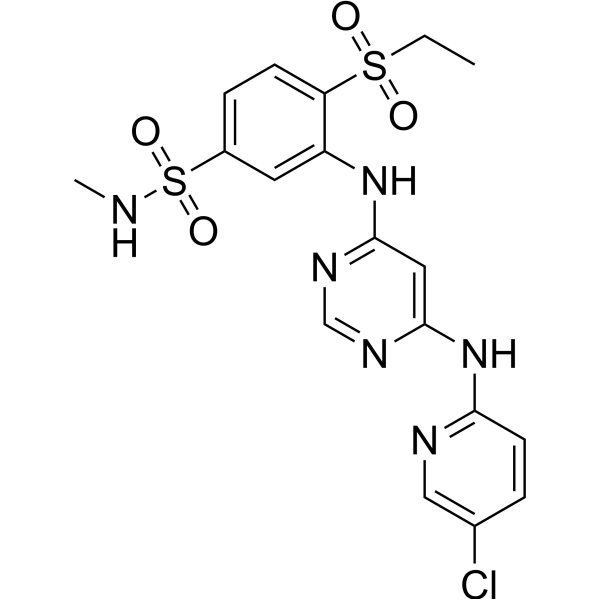 0 ImagesGSK854 is a TNNI3K inhibitor. GSK854 binds to the DFG-out conformation of the ATP-binding site and forms hydrogen bonds with the hinge and gatekeeper. GSK854 reduces mitochondrial superoxide production, ROS, and p38 MAPK activation, and protects mitochondrial membrane potential and cardiac function. GSK854 can be used in research on ischemia/reperfusion cardiac injury, heart failure, acute coronary syndrome, and ischemic heart disease.



