1. Search Result
Search Result
Results for "

amino acid modification

" in MedChemExpress (MCE) Product Catalog:

81

Inhibitors & Agonists

6

Screening Libraries

2

Fluorescent Dyes

58

Biochemical Assay Reagents

6

Peptides

2

MCE Kits

2

Natural
Products

3

Isotope-Labeled Compounds

1

Click Chemistry

Cat. No. Product Name Target Research Areas Chemical Structure
  • HY-W011696

    cis-1-amino-9-octadecene, 80-90%

    Environmental Pollutants Biochemical Assay Reagents Cancer
    Oleylamine, 80-90% (cis-1-Amino-9-octadecene, 80-90%) is a multifunctional reagent used for metal ion coordination and nanoparticle surface modification, and acts as a solvent, surfactant and reducing agent in the synthesis of metal oxide nanoparticles. Oleylamine, 80-90% regulates nanoparticle morphology, magnetization intensity and water proton relaxation rate via thiol-ene "click" reaction, and enhances the colloidal stability of nanoparticles in organic reagents. Oleylamine, 80-90% is mainly used in research and applications in fields such as nanomaterial synthesis, biomedical imaging (MRI contrast agents, fluorescent probes), cancer cell targeting and drug delivery .
    Oleylamine, 80-90%
  • HY-P3581

    Potassium Channel Neurological Disease
    PE 22-28 is a TREK-1 inhibitor with IC50 value of 0.12 nM. PE 22-28 also is a 7 amino-acid peptide that is used as a core sequence for preparing analogs by chemical modifications and also by substitution of amino-acids. PE 22-28 can be used for the research of depression .
    PE 22-28
  • HY-W116606

    Fluorescent Dye Others
    Coumarin boronic acid is a fluorescent probe. The excitation and emission wavelengths of coumarin boronic acid are set to 360 nm and 430 nm, respectively. Coumarin boronic acid can be used to monitor the formation of amino acid and protein hydroxyl peroxides in real time, which is beneficial for understanding the mechanisms of oxidative stress and protein post-translational modification .
    Coumarin boronic acid
  • HY-134222A

    N-Acetyl-L-serine

    Endogenous Metabolite Complement System Others
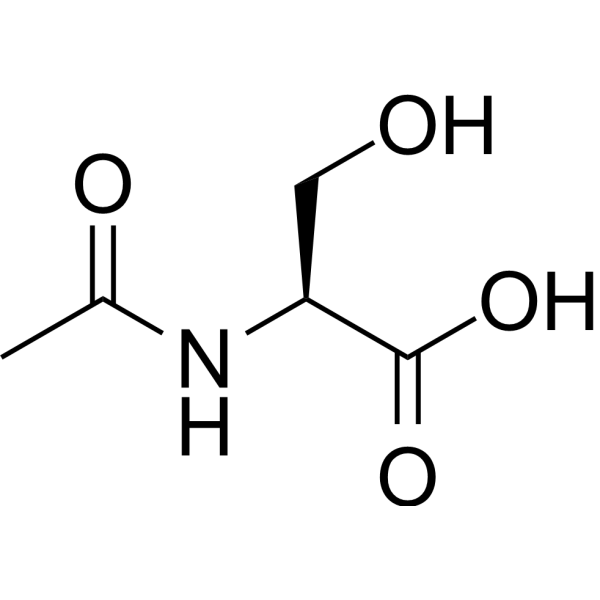
    N-Acetylserine (N-Acetyl-L-serine) is a complement pathway modulator targeting activated third complement protein (C3b) and an amino-terminal residue (an N-terminal acetylation modification group). N-Acetylserine reacts with the exposed thioester group of C3b via its hydroxyl group, thereby blocking the covalent binding of glycerol to this thioester group. N-Acetylserine widely exists in soluble proteins of mammalian cells (accounting for approximately 80% of such proteins). N-Acetylserine has a blocking property that prevents direct Edman sequencing of proteins; deblocking is achievable through trifluoroacetic acid-catalyzed N→O acetyl migration followed by β-elimination. N-Acetylserine is suitable for sequencing of proteins with N-terminal acetylserine modification .
    N-Acetylserine
  • HY-Y0973

    Biochemical Assay Reagents Drug Intermediate Others
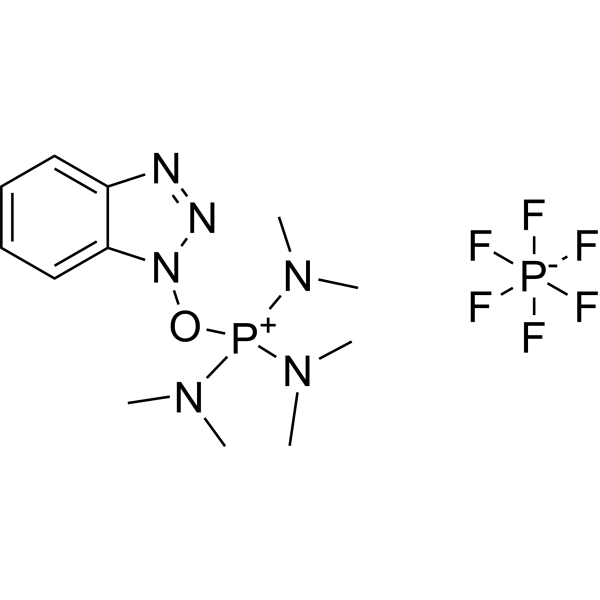
    BOP hexafluorophosphate is a phosphonium-type condensing agent. BOP hexafluorophosphate activates the carboxylic acid component to form a highly reactive O-benzotriazole ester (active ester) intermediate, which then reacts with the amino component to form an amide bond (peptide bond). BOP hexafluorophosphate is applicable to solid-phase polypeptide synthesis and nucleoside modification .
    BOP hexafluorophosphate
  • HY-P5506

    Complement System Others
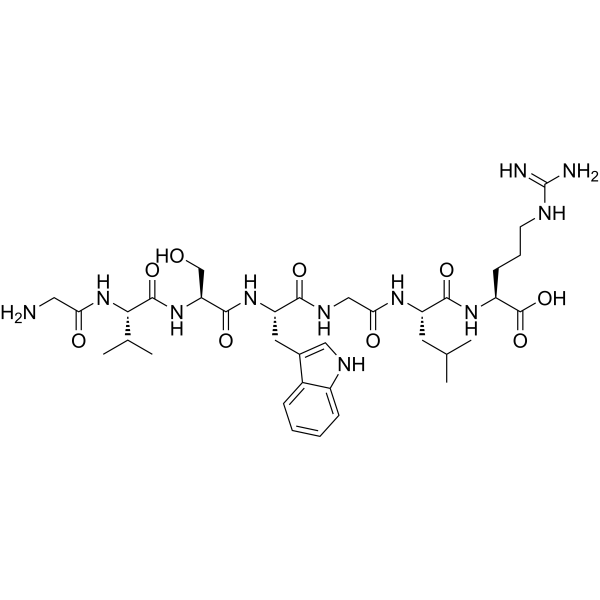
    C5a Receptor agonist, W5Cha (Peptide 1) is a selective complement C5a receptor (C5aR) agonist (EC50=0.2 μM), a hexapeptide derived from the C-terminus of C5a with specific amino acid modifications. C5a Receptor agonist, W5Cha is able to interact with the Arg-206 site of the C5a receptor through its C-terminal arginine, thereby activating the receptor .
    C5a Receptor agonist, W5Cha
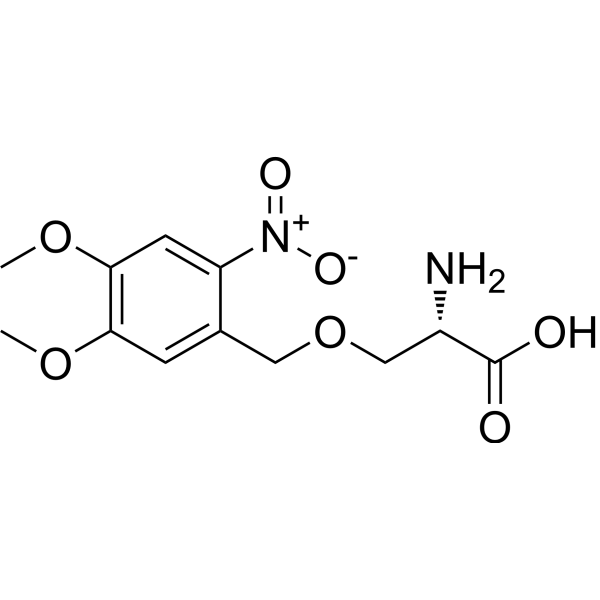
  • HY-136276

    Amino Acid Derivatives Others
    DMNB-caged-Serine is a photocaged amino acid. DMNB-caged-Serine can be used as a catalytic residue, hydrogen bonding partner or site of post-translational modification. DMNB-caged-Serine can be used for the control of protein phosphorylation .
    DMNB-caged-Serine
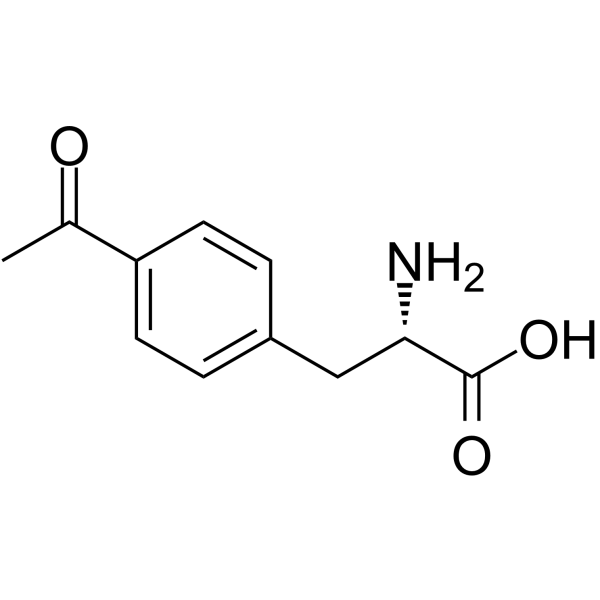
  • HY-W102456

    L-4-Acetylphenylalanine

    Biochemical Assay Reagents Amino Acid Derivatives Others
    H-Phe(4-Ac)-OH (L-4-Acetylphenylalanine) is a keto-amino acid that can be converted from α-keto acids containing an acetyl group. H-Phe(4-Ac)-OH can be added to the amber position to form mutant Z-domain proteins. H-Phe(4-Ac)-OH is used as a functional amino acid in peptide modification to achieve chemical bonding between peptides and solid surfaces .
    H-Phe(4-Ac)-OH
  • HY-78035

    Methylmaleic anhydride

    Biochemical Assay Reagents Others
    Citraconic anhydride (Methylmaleic anhydride) is a derivative of maleic anhydride (HY-Z0060) and novel antigen retrieval solution. Citraconic anhydride reversibly blocks protein amino groups, stabilizing specific enzymes and improving their catalytic performance. Citraconic anhydride reacts with free amino groups on proteins (especially lysine residues), converting positively charged NH3 + into carboxyl groups, thereby disrupting methylene bridge crosslinks caused by Formaldehyde during antigen retrieval. Citraconic anhydride functionalizes Isotactic polypropylene. Citraconic anhydride precisely responds to pH changes to achieve reversible modification. Citraconic anhydride is irritating to skin and eyes .
    Citraconic anhydride
  • HY-W414799

    Amino Acid Derivatives Endogenous Metabolite
    Nε,Nε-Dimethyl-L-lysine monohydrochloride is an unnatural amino acid with the activity of regulating protein post-translational modification. Nε,Nε-Dimethyl-L-lysine monohydrochloride can be used as a tool for epigenetic research to promote the research process of acetylation and methylation. Nε,Nε-Dimethyl-L-lysine monohydrochloride is also widely used in compound development and biochemical research.
    Nε,Nε-Dimethyl-L-lysine monohydrochloride
  • HY-W006886

    Amino Acid Derivatives Others
    Fmoc-(R)-2-(7-octenyl) Ala-OH is an unnatural Fmoc-protected amino acid and modification module. Fmoc-(R)-2-(7-octenyl) Ala-OH serves as a key building block for all-hydrocarbon cross-linking modification of antimicrobial peptides, and facilitates the generation of stapled peptide derivatives. When introduced into specific sites of the parent peptide, Fmoc-(R)-2-(7-octenyl) Ala-OH effectively increases the α-helix content of the peptide chain, thereby significantly enhancing its antimicrobial activity and proteolytic stability. Fmoc-(R)-2-(7-octenyl) Ala-OH is widely used in research on bacterial infections and the development of related antimicrobial agents . Stapled peptide is a specially chemically modified polypeptide. It locks the peptide chain into a stable α-helical structure by introducing a "staple"-like chemical bridge (usually an all-carbon backbone) at specific positions of the peptide chain.
    Fmoc-(R)-2-(7-octenyl)Ala-OH
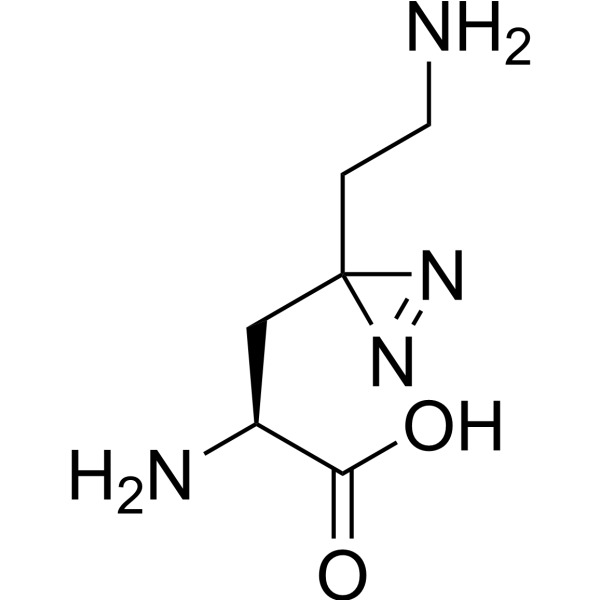
  • HY-19804

    Photo lysine

    Biochemical Assay Reagents Others
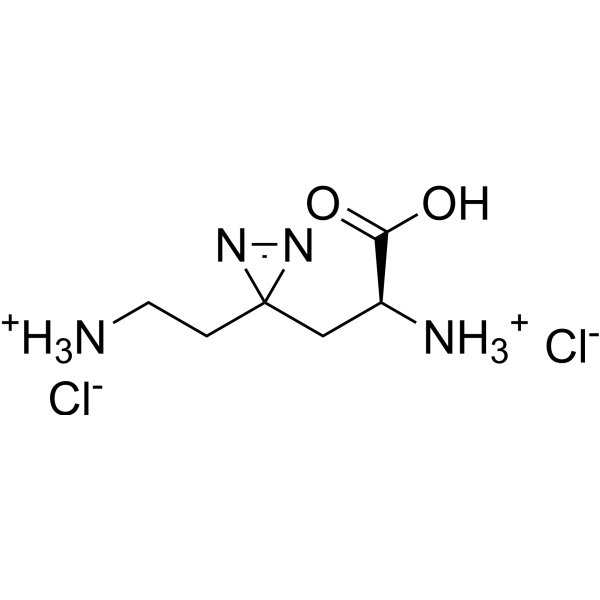
    Photo-lysine, a new lysine-based photo-reactive amino acid, captures proteins that bind lysine post-translational modifications.
    Photo-lysine
  • HY-N10479

    DNA/RNA Synthesis Drug Intermediate Endogenous Metabolite Bacterial Infection
    Chorismic acid is a precursor for the biosynthesis of aromatic amino acids and vitamins, as well as a key metabolite in tRNA modification. Chorismic acid is a critical metabolite for the synthesis of cmo 5U. Deficiency of Chorismic acid inhibits the formation of cmo 5U and mcmo 5U. Chorismic acid can be used in studies of S. typhimurium and E. coli infections .\n


    Chorismic acid
  • HY-W012166

    NHS-Bromoacetate

    Biochemical Assay Reagents Infection
    N-Succinimidyl bromoacetate (NHS-Bromoacetate) is a heterobifunctional crosslinking reagent, mainly used to modify the ɛ-amino group of lysine side chains. By covalently linking its bromoacetyl moiety to the ɛ-amino group of lysine in peptidomimetics, N-Succinimidyl bromoacetate enables their conjugation with thiol-modified nanoparticles via thioether bonds. N-Succinimidyl bromoacetate also performs bromoacetylation modification on carrier proteins, which then forms stable thioether bonds with the thiol groups of cysteine in peptides, thus efficiently preparing soluble peptide-protein conjugates with high substitution ratios. N-Succinimidyl bromoacetate can be used to prepare activated Sepharose derivatives for affinity chromatography, protein affinity labeling reagents, and peptide-protein immunogen conjugates with non-immunogenic linkages. N-Succinimidyl bromoacetate is applicable to studies related to HIV-1 infection and glioblastoma multiforme .
    N-Succinimidyl bromoacetate
  • HY-176960

    Biochemical Assay Reagents Others
    3-Amino-2-hydroxypropyl dihydrogen phosphate is a chemical modification complex of the DNA phosphate backbone, which can be used to study the interaction between HIV integrase (IN) and DNA .
    3-Amino-2-hydroxypropyl dihydrogen phosphate
  • HY-19804A
    Photo-lysine hydrochloride
    1 Publications Verification

    Biochemical Assay Reagents Others
    Photo-lysine hydrochloride, a new lysine-based photo-reactive amino acid, captures proteins that bind lysine post-translational modifications.
    Photo-lysine hydrochloride
  • HY-174358D

    Biochemical Assay Reagents Others
    HOOC-PEG10000-COOH has two active carboxyl groups at both ends, which can selectively react with the amino groups in peptide coupling agents. HOOC-PEG10000-COOH is a good cross-linking agent for PEGylation of proteins and peptides, nanoparticles and surface modification .
    HOOC-PEG10000-COOH
  • HY-P10499

    CaMK Others
    [Ala286]-Calmodulin-Dependent Protein Kinase II (281-302) is a modified fragment of calcium/calmodulin-dependent protein kinase II that contains the active domain of CaMKII and has an alanine substitution at position 286. [Ala286]-Calmodulin-Dependent Protein Kinase II (281-302) can be used to develop more potent CaMKII inhibitors .
    [Ala286]-Calmodulin-Dependent Protein Kinase II (281-302)
  • HY-D2283

    Amino Acid Derivatives Others
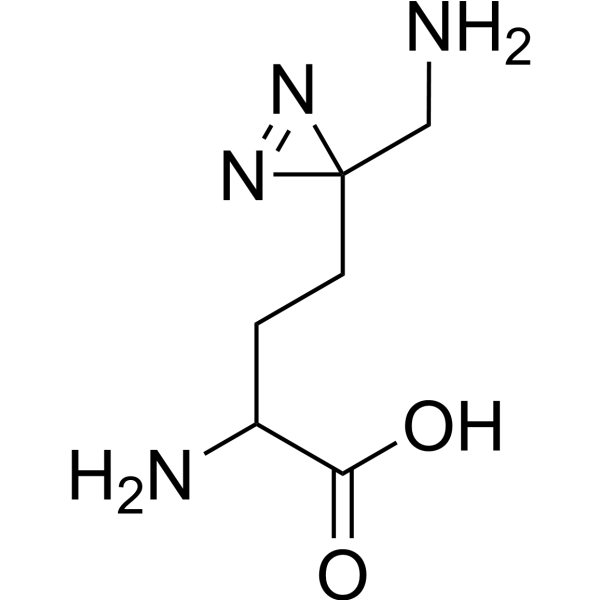
    Photo-DL-lysine is a DL-lysine-based photo-reactive amino acid, captures proteins that bind lysine post-translational modifications .
    Photo-DL-lysine
  • HY-121722

    Amino Acid Derivatives Cancer
    Deoxyhypusine is an unusual amino acid formed during the posttranslational modification of eukaryotic translation initiation factor 5A (eIF-5A) by the enzyme deoxyhypusine hydroxylase (DOHH) .
    Deoxyhypusine
  • HY-P2930

    Biochemical Assay Reagents Others
    Peptidylprolyl isomerase is an enzyme that catalyzes the cis-trans isomerization of peptidylprolyl amino groups. Peptidylprolyl isomerase may be involved in cellulase modification. Peptidylprolyl isomerase also functions as a chaperone protein .
    Peptidylprolyl isomerase
  • HY-D2283S1

    Isotope-Labeled Compounds Others
    Photo-lysine-d2 is the deuterium labeled Photo-lysine. Photo-lysine is a DL-lysine-based photo-reactive amino acid, captures proteins that bind lysine post-translational modifications .
    Photo-lysine-d2
  • HY-D2283S2

    Isotope-Labeled Compounds Others
    Photo-lysine-d2-1 is the deuterium labeled Photo-lysine. Photo-lysine is a DL-lysine-based photo-reactive amino acid, captures proteins that bind lysine post-translational modifications .
    Photo-lysine-d2-1
  • HY-D2283S

    Isotope-Labeled Compounds Others
    Photo-DL-lysine-d2 is the deuterium labeled Photo-DL-lysine (HY-D2283). Photo-DL-lysine is a DL-lysine-based photo-reactive amino acid, captures proteins that bind lysine post-translational modifications .
    Photo-DL-lysine-d2
  • HY-174961C

    Fmoc-NH-PEG5000-Mal

    Biochemical Assay Reagents Others
    Fmoc-PEG5000-Maleimide (Fmoc-NH-PEG5000-Mal) is a PEG derivative with an Fmoc protecting group and a Maleimide (HY-W007324) reactive group. Fmoc is a commonly used amino protecting group that protects the amino group from unwanted reactions until it is removed for a specific coupling reaction. Maleimide forms a stable thioether bond with sulfhydryl (-SH) groups. PEG modification can improve solubility and stability and reduce the immunogenicity of proteins and peptides .
    Fmoc-PEG5000-Maleimide
  • HY-174961

    Fmoc-NH-PEG1000-Mal

    Biochemical Assay Reagents Others
    Fmoc-PEG1000-Maleimide (Fmoc-NH-PEG1000-Mal) is a PEG derivative with an Fmoc protecting group and a Maleimide (HY-W007324) reactive group. Fmoc is a commonly used amino protecting group that protects the amino group from unwanted reactions until it is removed for a specific coupling reaction. Maleimide forms a stable thioether bond with sulfhydryl (-SH) groups. PEG modification can improve solubility and stability and reduce the immunogenicity of proteins and peptides .
    Fmoc-PEG1000-Maleimide
  • HY-174358A

    Biochemical Assay Reagents Others
    HOOC-PEG2000-COOH has two active carboxyl groups at both ends, which can selectively react with the amino groups in peptide coupling agents. HOOC-PEG2000-COOH is a good cross-linking agent for PEGylation of proteins and peptides, nanoparticles and surface modification .
    HOOC-PEG2000-COOH
  • HY-174358E

    Biochemical Assay Reagents Others
    HOOC-PEG20000-COOH has two active carboxyl groups at both ends, which can selectively react with the amino groups in peptide coupling agents. HOOC-PEG20000-COOH is a good cross-linking agent for PEGylation of proteins and peptides, nanoparticles and surface modification .
    HOOC-PEG20000-COOH
  • HY-P10490

    Drug Derivative GnRH Receptor Others Cancer
    (D-His(Bzl)6)-LHRH (1-7) free acid is a synthetic peptide compound that is a derivative of luteinizing hormone-releasing hormone (LHRH). (D-His(Bzl)6)-LHRH (1-7) free acid enhances its stability and biological activity by introducing unnatural amino acid residues at specific positions of the LHRH molecule. This modification can improve the drug's performance in the body half-life, reducing the rate at which it is rapidly metabolized and cleared, thereby enhancing its efficacy in inhibiting cell proliferation .
    (D-His(Bzl)6)-LHRH (1-7) free acid
  • HY-123558

    Y 14556

    Antibiotic Cancer
    Bactobolin C is an antibiotic produced by Pseudomonas sp. BMG13A7, which has strong antimicrobial and antitumor activities, can also inhibit antibody production and treat autoimmune encephalomyelitis. However, its undesirable toxicity limits its medicinal application. The unique chemical structure and promising biological activities of Bactobolin C have attracted people's interest in its total synthesis and new active analogs. So far, the structural modification of Bactobolin C has mainly focused on the hydroxyl groups on the amino acid side chains and backbone.
    Bactobolin C
  • HY-183015C

    Biochemical Assay Reagents Others
    Mannose-PEG5000-NH2 is composed of mannose, PEG chains, and terminal amino groups (–NH2). Mannose-PEG-NH2 combines the targeting recognition ability of mannose with the chemical modifiability of amino groups, making it suitable for applications such as targeted drug delivery systems and nanoparticle modification.
    Mannose-PEG5000-NH2
  • HY-183015

    Biochemical Assay Reagents Others
    Mannose-PEG1000-NH2 is composed of mannose, PEG chains, and terminal amino groups (–NH2). Mannose-PEG-NH2 combines the targeting recognition ability of mannose with the chemical modifiability of amino groups, making it suitable for applications such as targeted drug delivery systems and nanoparticle modification.
    Mannose-PEG1000-NH2
  • HY-183015A

    Biochemical Assay Reagents Others
    Mannose-PEG2000-NH2 is composed of mannose, PEG chains, and terminal amino groups (–NH2). Mannose-PEG-NH2 combines the targeting recognition ability of mannose with the chemical modifiability of amino groups, making it suitable for applications such as targeted drug delivery systems and nanoparticle modification.
    Mannose-PEG2000-NH2
  • HY-183015D

    Biochemical Assay Reagents Others
    Mannose-PEG10000-NH2 is composed of mannose, PEG chains, and terminal amino groups (–NH2). Mannose-PEG-NH2 combines the targeting recognition ability of mannose with the chemical modifiability of amino groups, making it suitable for applications such as targeted drug delivery systems and nanoparticle modification.
    Mannose-PEG10000-NH2
  • HY-183015B

    Biochemical Assay Reagents Others
    Mannose-PEG3400-NH2 is composed of mannose, PEG chains, and terminal amino groups (–NH2). Mannose-PEG-NH2 combines the targeting recognition ability of mannose with the chemical modifiability of amino groups, making it suitable for applications such as targeted drug delivery systems and nanoparticle modification.
    Mannose-PEG3400-NH2
  • HY-W1052523C

    Biochemical Assay Reagents Others
    DPPE-PEG1000-NH2 is a conjugate composed of DPPE, a PEG chain, and a terminal primary amino group (-NH2). The primary amino group in DPPE-PEG1000-NH2 can be covalently linked to functional groups such as carboxylic acids, NHS esters, and isocyanates for targeted modification of liposomes/nanoparticles.
    DPPE-PEG1000-NH2
  • HY-W1052523B

    Biochemical Assay Reagents Others
    DPPE-PEG5000-NH2 is a conjugate composed of DPPE, a PEG chain, and a terminal primary amino group (-NH2). The primary amino group in DPPE-PEG5000-NH2 can be covalently linked to functional groups such as carboxylic acids, NHS esters, and isocyanates for targeted modification of liposomes/nanoparticles.
    DPPE-PEG5000-NH2
  • HY-W1052523

    Biochemical Assay Reagents Others
    DPPE-PEG2000-NH2 is a conjugate composed of DPPE, a PEG chain, and a terminal primary amino group (-NH2). The primary amino group in DPPE-PEG2000-NH2 can be covalently linked to functional groups such as carboxylic acids, NHS esters, and isocyanates for targeted modification of liposomes/nanoparticles.
    DPPE-PEG2000-NH2
  • HY-W1052523D

    Biochemical Assay Reagents Others
    DPPE-PEG10000-NH2 is a conjugate composed of DPPE, a PEG chain, and a terminal primary amino group (-NH2). The primary amino group in DPPE-PEG10000-NH2 can be covalently linked to functional groups such as carboxylic acids, NHS esters, and isocyanates for targeted modification of liposomes/nanoparticles.
    DPPE-PEG10000-NH2
  • HY-W1052523A

    Biochemical Assay Reagents Others
    DPPE-PEG3400-NH2 is a conjugate composed of DPPE, a PEG chain, and a terminal primary amino group (-NH2). The primary amino group in DPPE-PEG3400-NH2 can be covalently linked to functional groups such as carboxylic acids, NHS esters, and isocyanates for targeted modification of liposomes/nanoparticles.
    DPPE-PEG3400-NH2
  • HY-W1053112B

    DOPE-PEG10000-NH2

    Biochemical Assay Reagents Others
    DOPE-PEG10000-Amine (DOPE-PEG1000-NH2) is a conjugate composed of dioleoylphosphatidylethanolamine (DOPE), a PEG chain, and a terminal amino group (-NH2). The amino group in DOPE-PEG10000-Amine can chemically react with carboxyl groups, activated esters, etc., participating in various bioconjugation reactions for targeted modification of liposomes/nanoparticles.
    DOPE-PEG10000-Amine
  • HY-W440990

    DOPE-PEG1000-NH2

    Biochemical Assay Reagents Others
    DOPE-PEG1000-Amine (DOPE-PEG1000-NH2) is a conjugate composed of dioleoylphosphatidylethanolamine (DOPE), a PEG chain, and a terminal amino group (-NH2). The amino group in DOPE-PEG1000-Amine can chemically react with carboxyl groups, activated esters, etc., participating in various bioconjugation reactions for targeted modification of liposomes/nanoparticles.
    DOPE-PEG1000-Amine
  • HY-W1052298

    DMPE-PEG2000-Amine

    Biochemical Assay Reagents Others
    DMPE-PEG2000-NH2 (DMPE-PEG2000-Amine) is a conjugate composed of DMPE, a PEG chain, and a terminal primary amino group (-NH2). The primary amino group in DMPE-PEG2000-NH2 can be covalently linked to functional groups such as carboxylic acids, NHS esters, and isocyanates for targeted modification of liposomes/nanoparticles.
    DMPE-PEG2000-NH2
  • HY-W1052298B

    DMPE-PEG5000-Amine

    Biochemical Assay Reagents Others
    DMPE-PEG5000-NH2 (DMPE-PEG5000-Amine) is a conjugate composed of DMPE, a PEG chain, and a terminal primary amino group (-NH2). The primary amino group in DMPE-PEG5000-NH2 can be covalently linked to functional groups such as carboxylic acids, NHS esters, and isocyanates for targeted modification of liposomes/nanoparticles.
    DMPE-PEG5000-NH2
  • HY-W1052298D

    DMPE-PEG10000-Amine

    Biochemical Assay Reagents
    DMPE-PEG2000-NH2 (DMPE-PEG2000-Amine) is a conjugate composed of DMPE, a PEG chain, and a terminal primary amino group (-NH2). The primary amino group in DMPE-PEG2000-NH2 can be covalently linked to functional groups such as carboxylic acids, NHS esters, and isocyanates for targeted modification of liposomes/nanoparticles.
    DMPE-PEG10000-NH2
  • HY-W1052298A

    DMPE-PEG3400-Amine

    Biochemical Assay Reagents Others
    DMPE-PEG3400-NH2 (DMPE-PEG3400-Amine) is a conjugate composed of DMPE, a PEG chain, and a terminal primary amino group (-NH2). The primary amino group in DMPE-PEG3400-NH2 can be covalently linked to functional groups such as carboxylic acids, NHS esters, and isocyanates for targeted modification of liposomes/nanoparticles.
    DMPE-PEG3400-NH2
  • HY-W1052298C

    DMPE-PEG1000-Amine

    Biochemical Assay Reagents Others
    DMPE-PEG1000-NH2 (DMPE-PEG1000-Amine) is a conjugate composed of DMPE, a PEG chain, and a terminal primary amino group (-NH2). The primary amino group in DMPE-PEG1000-NH2 can be covalently linked to functional groups such as carboxylic acids, NHS esters, and isocyanates for targeted modification of liposomes/nanoparticles.
    DMPE-PEG1000-NH2
  • HY-128401

    2-Lysylcytidine

    Nucleoside Antimetabolite/Analog Drug Derivative Bacterial Others
    Lysidine (2-lysyl cytidine) is a lysine-containing Cytidine (HY-B0158) derivative. Lysidine can be found at the wobble position of bacterial AUA codon-specific tRNA Ile. This modification determines both codon and amino acid specificities of tRNA Ile .
    Lysidine
  • HY-174961B

    Fmoc-NH-PEG3400-Mal

    Biochemical Assay Reagents Others
    Fmoc-PEG3400-Maleimide (Fmoc-NH-PEG3400-Mal) is a PEG derivative with an Fmoc protecting group and a Maleimide (HY-W007324) reactive group. Fmoc is a commonly used amino protecting group that protects the amino group from unwanted reactions until it is removed for a specific coupling reaction. Maleimide forms a stable thioether bond with sulfhydryl (-SH) groups. PEG modification can improve solubility and stability and reduce the immunogenicity of proteins and peptides .
    Fmoc-PEG3400-Maleimide
  • HY-174961A

    Fmoc-NH-PEG2000-Mal

    Biochemical Assay Reagents Others
    Fmoc-PEG2000-Maleimide (Fmoc-NH-PEG2000-Mal) is a PEG derivative with an Fmoc protecting group and a Maleimide (HY-W007324) reactive group. Fmoc is a commonly used amino protecting group that protects the amino group from unwanted reactions until it is removed for a specific coupling reaction. Maleimide forms a stable thioether bond with sulfhydryl (-SH) groups. PEG modification can improve solubility and stability and reduce the immunogenicity of proteins and peptides .
    Fmoc-PEG2000-Maleimide

Inquiry Online

Your information is safe with us. * Required Fields.

Salutation


Country or Region *

Applicant Name *


Organization Name *

Department *


Email Address *


Product Name *

Cat. No.


Requested quantity *

Phone Number *


Remarks

Inquiry Online

Inquiry Information

Product Name:
Cat. No.:
Quantity:
MCE Japan Authorized Agent:

