1. Search Result
Search Result
Results for "

diabetic brain disease

" in MedChemExpress (MCE) Product Catalog:

16

Inhibitors & Agonists

4

Natural
Products

1

Isotope-Labeled Compounds

Cat. No. 상품명 Target 연구분야 Chemical Structure
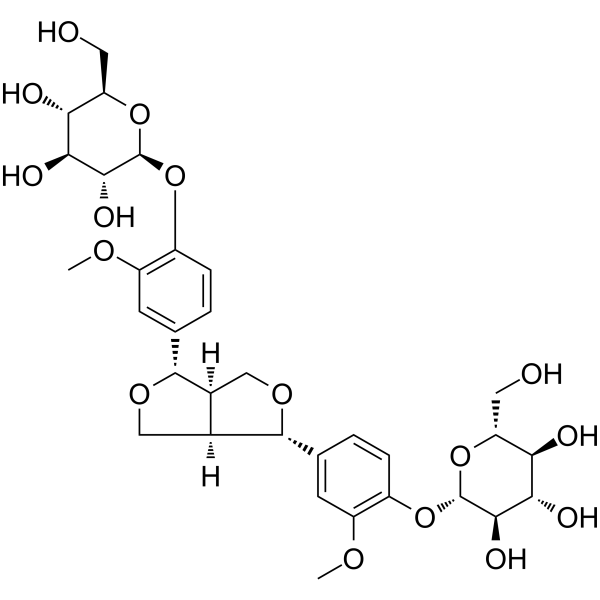
  • HY-N0657
    Pinoresinol Diglucoside
    1 Publications Verification

    NF-κB Keap1-Nrf2 Heme Oxygenase (HO) TGF-beta/Smad Akt mTOR PI3K Cardiovascular Disease Neurological Disease Metabolic Disease Inflammation/Immunology
    Pinoresinol Diglucoside is an orally active lignan with multifunctional bioactivity. Pinoresinol Diglucoside interacts with targets including ALB, HIF1A, GSK3B, BCL2, MARK3, IL6, NF-κB p65, Nrf2, HO-1, and TLR4, and modulates pathways including PI3K-Akt, estrogen, MAPK, Rap1, AKT/mTOR/NF-κB, and TGF-β1/Smads. Pinoresinol Diglucoside regulates osteogenesis, bone resorption, oxidative stress, inflammation, apoptosis, ferroptosis, ferritinophagy, cardiac fibrosis, and vasorelaxation. Pinoresinol Diglucoside can be used for the research of osteoporosis, ischemia/reperfusion-induced brain injury, Alzheimer’s disease, myocardial ischemia-reperfusion injury, chondrodysplasia, diabetic cardiomyopathy, cardiac hypertrophy, hypertension, cisplatin-induced hearing loss, atherosclerotic cardiovascular diseases, and disuse osteoporosis .
    Pinoresinol Diglucoside
  • HY-113355

    Endogenous Metabolite Apoptosis Neurological Disease Inflammation/Immunology Endocrinology
    NADH is an orally active dehydrogenase coenzyme that acts as a crucial electron carrier in cellular respiration and participates in ATP production. NADH promotes metabolism, supports brain function, and counteracts oxidative stress by transferring electrons to the electron transport chain. As a signaling molecule, NADH regulates multiple biological processes, including anti-apoptosis, synaptic plasticity, gene expression, and calcium homeostasis. Redox imbalance of NADH/NAD⁺ is one of the key pathological mechanisms of various diseases, such as diabetic nephropathy, neurodegenerative diseases, and ischemia-reperfusion injury.
    NADH
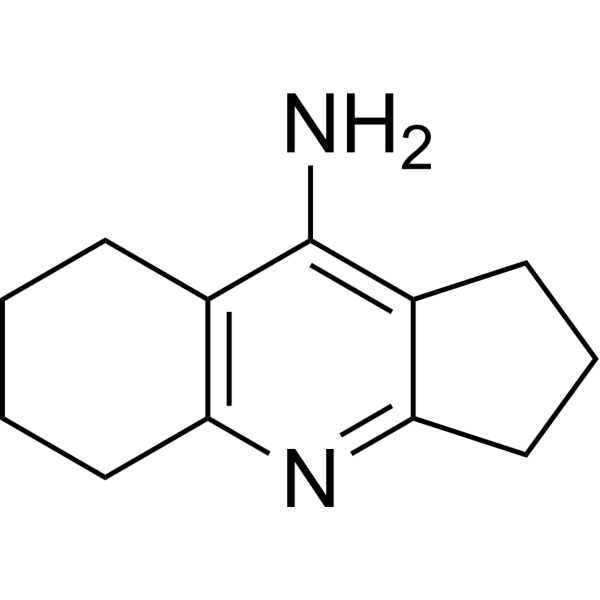
  • HY-W027553

    NIK-247 free base; Amiridine free base

    Cholinesterase (ChE) Potassium Channel Sodium Channel Neurological Disease Metabolic Disease
    Ipidacrine is orally active and brain-penetrant AChE and BuChE inhibitors with IC50 values of 1 μM and 1.9 μM, respectively, which is also a partial agonist of M2-cholinergic receptors and a reversible cholinesterase inhibitor. Ipidacrine has a stimulating effect on neuromuscular transmission and excitation along the nerve fibres with a moderately anti-pain effect. Ipidacrine is an aminopyridines and is structurally similar to Tacrine (HY-111338). Ipidacrine is effective in various amnesia models, improves erectile function and inhibits K + and Na +-channels in the neuronal membrane in diabetic rats. Ipidacrine is promising for research of Alzheimer’s disease, ischaemic stroke, idiopathic neuropathy of the facial nerve, diabetes mellitus-induced erectile dysfunction and other deficits in central or peripheral cholinergic deseases .
    Ipidacrine
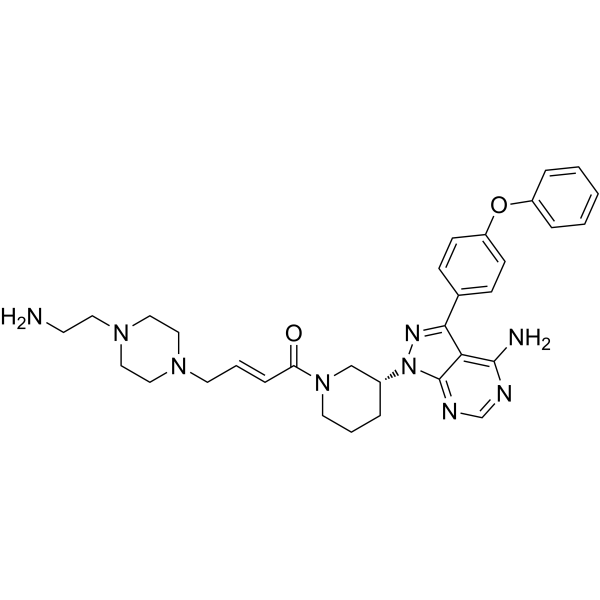
  • HY-43521

    Target Protein Ligand-Linker Conjugates Btk STAT Inflammation/Immunology Cancer
    Ibrutinib-MPEA is an orally active, blood-brain barrier permeable inhibitor of BTK and STAT5. As a derivative of Ibrutinib (HY-10997) conjugated with a PROTAC linker, Ibrutinib-MPEA allows the synthesis of a series of PROTAC molecules. Ibrutinib-MPEA significantly reduces the proliferation of neoplastic mast cells and primary mastocytoma cells by inducing apoptosis and inhibiting IgE-dependent histamine release. Ibrutinib-MPEA is applicable to the research of canine mast cell tumors, cerebral ischemia/reperfusion injury in diabetic mice, and neuroinflammation-related diseases .
    Ibrutinib-MPEA
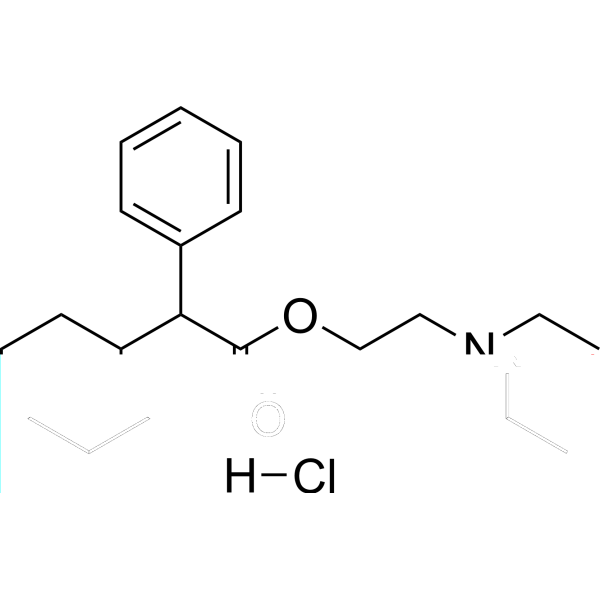
  • HY-B1239
    Drofenine hydrochloride
    1 Publications Verification

    Hexahydroadiphenine hydrochloride

    Cholinesterase (ChE) Potassium Channel Amyloid-β TRP Channel Tau Protein NOD-like Receptor (NLR) JNK NF-κB IKK Neurological Disease Metabolic Disease Inflammation/Immunology
    Drofenine (Cycloadiphene; Hexahydroadiphenine) hydrochloride is an brain-penetrant antispasmodic agent. Drofenine hydrochloride is a Kv2.1 channel inhibitor with human IC50 of 9.53 μM. Drofenine hydrochloride is a butyrylcholinesterase (BChE) inhibitor with Ki of 0.003 mM, and is a TRPV3 activator. Drofenine hydrochloride blocks Kv2.1-dependent potassium efflux, inhibits Kv2.1/JNK/NF-κB and IkBa/NF-kB signaling, suppresses Kv2.1 mRNA/protein expression. Drofenine suppresses oligomeric -induced microglial NLRP3 inflammasome activation and neuronal Tau hyperphosphorylation, improves cognitive impairment, promotes neurite outgrowth. Drofenine hydrochloride induces calcium influx in keratinocytes and exert cytotoxicity against keratinocytes. Drofenine hydrochloride ameliorates diabetic peripheral neuropathy -like pathology. Drofenine hydrochloride can be used for the researches of Alzheimer's disease, diabetic peripheral neuropathy and smooth muscle spasm .
    Drofenine hydrochloride
  • HY-14604
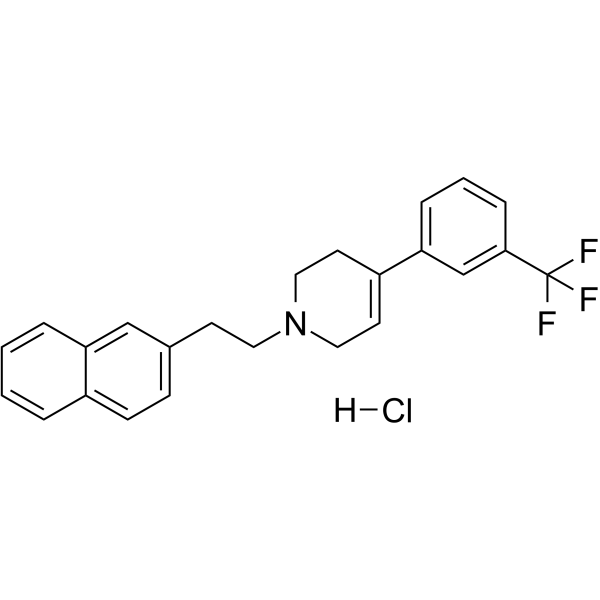
    Xaliproden hydrochloride
    1 Publications Verification

    SR57746A; SR57746 hydrochloride

    5-HT Receptor Dopamine Receptor Trk Receptor PKC ERK Akt JNK Neurological Disease Metabolic Disease
    Xaliproden (SR57746) hydrochloride (SR57746A) is an orally active, highly selective 5-HT1A receptor agonist. Xaliproden hydrochloride activates pertussis toxin-sensitive G protein-coupled signaling cascades, as well as the PKC, ERK1/ERK2, Akt and p21 Ras/MEK-1 pathways. Xaliproden hydrochloride also downregulates the JNK/p66/c-Jun signaling pathway, induces phosphorylation of the shc adaptor protein, regulates extracellular dopamine and 5-HT levels, and induces [ 35S]GTPγS labeling in rat brain structures rich in 5-HT1A receptors. Xaliproden hydrochloride exerts neurotrophic, neuroprotective, renoprotective, anti-inflammatory, anti-apoptotic, anti-fibrotic and analgesic effects. Xaliproden hydrochloride also enhances NGF-induced neurite outgrowth, promotes motor neuron survival, attenuates renal tubular injury and inhibits chemotherapy-induced mechanical allodynia, without activating or altering NGF-induced TrkA receptor activation. Xaliproden hydrochloride can be used in the research of motor neuron disease, diabetic nephropathy, chemotherapy-induced peripheral neuropathy, amyotrophic lateral sclerosis, Alzheimer's disease, acute tonic nociceptive pain, inflammatory pain, depression and anxiety .
    Xaliproden hydrochloride
  • HY-N5027
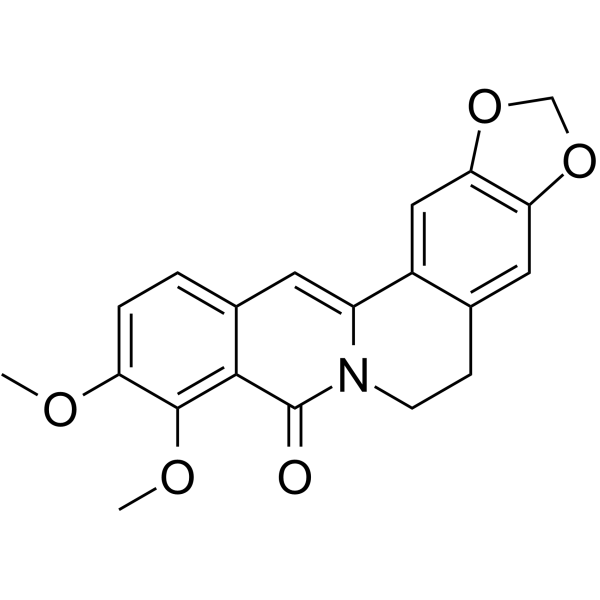
    Oxyberberine
    2 Publications Verification

    Oxyberberin; Berlambine; 8-Oxoberberine

    Others Infection Neurological Disease Inflammation/Immunology
    Oxyberberine (Oxyberberin; Berlambine) is an orally effective heme oxygenase HO-1 agonist that can activate antioxidant mechanisms by regulating the PI3K/Akt/AMPK signaling pathway. Oxyberberine induces HO-1 expression, increases SOD and GSH-Px activity, inhibits NF-κB-mediated inflammatory responses, and improves insulin sensitivity and glucose metabolism. Oxyberberine has anti-diabetic, neuroprotective, anti-inflammatory and antioxidant effects, and can be used to study type 2 diabetes, traumatic brain injury (TBI) and inflammatory bowel disease .
    Oxyberberine
  • HY-W027553R

    NIK-247 free base (Standard); Amiridine free base (Standard)

    Reference Standards Cholinesterase (ChE) Potassium Channel Sodium Channel Neurological Disease Metabolic Disease
    Ipidacrine (Standard) is the analytical reference standard of Ipidacrine. This product is used for research and analytical applications. Ipidacrine is orally active and blood-brain-barrier-penetrant AChE and BuChE inhibitors with IC50 values of 1 μM and 1.9 μM, respectively, which is also a partial agonist of M2-cholinergic receptors and a reversible cholinesterase inhibitor. Ipidacrine has a stimulating effect on neuromuscular transmission and excitation along the nerve fibres with a moderately anti-pain effect. Ipidacrine is an aminopyridines and is structurally similar to Tacrine (HY-111338). Ipidacrine is effective in various amnesia models, improves erectile function and inhibits K + and Na +-channels in the neuronal membrane in diabetic rats. Ipidacrine is promising for research of Alzheimer’s disease, ischaemic stroke, idiopathic neuropathy of the facial nerve, diabetes mellitus-induced erectile dysfunction and other deficits in central or peripheral cholinergic deseases .
    Ipidacrine (Standard)
  • HY-106661

    Amyloid-β Neurological Disease Metabolic Disease
    GLY-230 is an orally active compound. GLY-230 can inhibit nonenzymatic glycation and reduce glycated albumin. GLY-230 can reduce brain Aβ42 levels. GLY-230 can be used for the researches of metabolic and neurological disease, such as diabetic renal dysfunction .
    GLY-230
  • HY-B1239A

    Cycloadiphene; Hexahydroadiphenine

    Potassium Channel Cholinesterase (ChE) TRP Channel NOD-like Receptor (NLR) Amyloid-β Tau Protein JNK NF-κB IKK Neurological Disease Metabolic Disease Inflammation/Immunology
    Drofenine (Cycloadiphene; Hexahydroadiphenine) is an brain-penetrant antispasmodic agent. Drofenine is a Kv2.1 channel inhibitor with human IC50 of 9.53 μM. Drofenine is a butyrylcholinesterase (BChE) inhibitor with Ki of 0.003 mM, and is a TRPV3 activator. Drofenine blocks Kv2.1-dependent potassium efflux, inhibits Kv2.1/JNK/NF-κB and IkBa/NF-kB signaling, suppresses Kv2.1 mRNA/protein expression. Drofenine suppresses oligomeric -induced microglial NLRP3 inflammasome activation and neuronal Tau hyperphosphorylation, improves cognitive impairment, promotes neurite outgrowth. Drofenine induces calcium influx in keratinocytes and exert cytotoxicity against keratinocytes. Drofenine ameliorates diabetic peripheral neuropathy -like pathology. Drofenine can be used for the researches of Alzheimer's disease, diabetic peripheral neuropathy and smooth muscle spasm .
    Drofenine
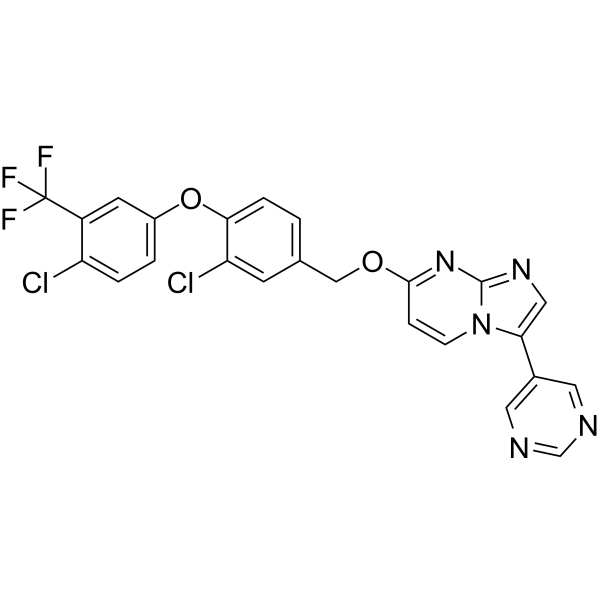
  • HY-160637

    Phospholipase Cardiovascular Disease Neurological Disease Metabolic Disease Inflammation/Immunology
    Lp-PLA2-IN-17 (Compound 39) is an inhibitor of Lp-PLA2. Lp-PLA2-IN-17 can be used to study disorders involving the hydrolysis of oxidized lipids into two inflammatory substances with the participation of Lp-PLA2 .
    Lp-PLA2-IN-17
  • HY-N0657R

    Reference Standards NF-κB Keap1-Nrf2 Heme Oxygenase (HO) TGF-beta/Smad Akt mTOR PI3K Cardiovascular Disease Neurological Disease Metabolic Disease Inflammation/Immunology
    Pinoresinol Diglucoside (Standard) is the analytical standard of Pinoresinol Diglucoside (HY-N0657). This product is intended for research and analytical applications. Pinoresinol Diglucoside is an orally active lignan with multifunctional bioactivity. Pinoresinol Diglucoside interacts with targets including ALB, HIF1A, GSK3B, BCL2, MARK3, IL6, NF-κB p65, Nrf2, HO-1, and TLR4, and modulates pathways including PI3K-Akt, estrogen, MAPK, Rap1, AKT/mTOR/NF-κB, and TGF-β1/Smads. Pinoresinol Diglucoside regulates osteogenesis, bone resorption, oxidative stress, inflammation, apoptosis, ferroptosis, ferritinophagy, cardiac fibrosis, and vasorelaxation. Pinoresinol Diglucoside can be used for the research of osteoporosis, ischemia/reperfusion-induced brain injury, Alzheimer’s disease, myocardial ischemia-reperfusion injury, chondrodysplasia, diabetic cardiomyopathy, cardiac hypertrophy, hypertension, cisplatin-induced hearing loss, atherosclerotic cardiovascular diseases, and disuse osteoporosis.
    Pinoresinol Diglucoside (Standard)
  • HY-W027553S1

    NIK-247-d9 free base

    Isotope-Labeled Compounds Cholinesterase (ChE) Potassium Channel Sodium Channel Metabolic Disease
    Ipidacrine-d9 (NIK-247-d9 (free base)) is the deuterium labeled Ipidacrine (HY-W027553). Ipidacrine is orally active and brain-penetrant AChE and BuChE inhibitors with IC50 values of 1 μM and 1.9 μM, respectively, which is also a partial agonist of M2-cholinergic receptors and a reversible cholinesterase inhibitor. Ipidacrine has a stimulating effect on neuromuscular transmission and excitation along the nerve fibres with a moderately anti-pain effect. Ipidacrine is an aminopyridines and is structurally similar to Tacrine (HY-111338). Ipidacrine is effective in various amnesia models, improves erectile function and inhibits K+ and Na+-channels in the neuronal membrane in diabetic rats. Ipidacrine is promising for research of Alzheimer’s disease, ischaemic stroke, idiopathic neuropathy of the facial nerve, diabetes mellitus-induced erectile dysfunction and other deficits in central or peripheral cholinergic deseases .
    Ipidacrine-d9
  • HY-119820

    SR57746A free base

    Akt Dopamine Receptor Trk Receptor 5-HT Receptor PKC JNK ERK Neurological Disease
    Xaliproden (SR57746) free base is an orally active, highly selective 5-HT1A receptor agonist. Xaliproden free base activates pertussis toxin-sensitive G protein-coupled signaling cascades, as well as the PKC, ERK1/ERK2, Akt and p21 Ras/MEK-1 pathways. Xaliproden free base also downregulates the JNK/p66/c-Jun signaling pathway, induces phosphorylation of the shc adaptor protein, regulates extracellular dopamine and 5-HT levels, and induces [ 35S]GTPγS labeling in rat brain structures rich in 5-HT1A receptors. Xaliproden free base exerts neurotrophic, neuroprotective, renoprotective, anti-inflammatory, anti-apoptotic, anti-fibrotic and analgesic effects. Xaliproden free base also enhances NGF-induced neurite outgrowth, promotes motor neuron survival, attenuates renal tubular injury and inhibits chemotherapy-induced mechanical allodynia, without activating or altering NGF-induced TrkA receptor activation. Xaliproden free base can be used in the research of motor neuron disease, diabetic nephropathy, chemotherapy-induced peripheral neuropathy, amyotrophic lateral sclerosis, Alzheimer's disease, acute tonic nociceptive pain, inflammatory pain, depression and anxiety .
    Xaliproden free base
  • HY-19689

    NIK-247; Amiridine

    Cholinesterase (ChE) Potassium Channel Sodium Channel Cardiovascular Disease Neurological Disease Endocrinology
    Ipidacrine (NIK-247; Amiridine) hydrochloride is orally active and blood-brain-barrier-penetrant AChE and BuChE inhibitors with IC50 values of 1 μM and 1.9 μM, respectively, which is also a partial agonist of M2-cholinergic receptors and a reversible cholinesterase inhibitor. Ipidacrine hydrochloride has a stimulating effect on neuromuscular transmission and excitation along the nerve fibres with a moderately anti-pain effect. Ipidacrine hydrochloride is an aminopyridines and is structurally similar to Tacrine (HY-111338). Ipidacrine hydrochloride is effective in various amnesia models, improves erectile function and inhibits K + and Na +-channels in the neuronal membrane in diabetic rats. Ipidacrine hydrochloride is promising for research of Alzheimer’s disease, ischaemic stroke, idiopathic neuropathy of the facial nerve, diabetes mellitus-induced erectile dysfunction and other deficits in central or peripheral cholinergic deseases .
    Ipidacrine hydrochloride
  • HY-14604R

    SR57746A (Standard); SR57746 hydrochloride (Standard)

    Reference Standards Akt Dopamine Receptor Trk Receptor 5-HT Receptor PKC JNK ERK Neurological Disease Cancer
    Xaliproden (hydrochloride) (Standard) is the analytical standard of Xaliproden (hydrochloride). This product is intended for research and analytical applications. Xaliproden (SR57746) hydrochloride (SR57746A) is an orally active, highly selective 5-HT1A receptor agonist. Xaliproden hydrochloride activates pertussis toxin-sensitive G protein-coupled signaling cascades, as well as the PKC, ERK1/ERK2, Akt and p21 Ras/MEK-1 pathways. Xaliproden hydrochloride also downregulates the JNK/p66/c-Jun signaling pathway, induces phosphorylation of the shc adaptor protein, regulates extracellular dopamine and 5-HT levels, and induces [ 35S]GTPγS labeling in rat brain structures rich in 5-HT1A receptors. Xaliproden hydrochloride exerts neurotrophic, neuroprotective, renoprotective, anti-inflammatory, anti-apoptotic, anti-fibrotic and analgesic effects. Xaliproden hydrochloride also enhances NGF-induced neurite outgrowth, promotes motor neuron survival, attenuates renal tubular injury and inhibits chemotherapy-induced mechanical allodynia, without activating or altering NGF-induced TrkA receptor activation. Xaliproden hydrochloride can be used in the research of motor neuron disease, diabetic nephropathy, chemotherapy-induced peripheral neuropathy, amyotrophic lateral sclerosis, Alzheimer's disease, acute tonic nociceptive pain, inflammatory pain, depression and anxiety .
    Xaliproden hydrochloride (Standard)

온라인 문의

Your information is safe with us. * Required Fields.

호칭


Country or Region *

고객명 *


회사명 *

Department *


메일주소 *


상품명 *

Cat. No.


Requested quantity *

전화번호 *


비고

온라인 문의

Inquiry Information

상품명:
Cat. No.:
수량:
MCE Japan Authorized Agent: