



Oxyberberine
Based on 3 publication(s) in Google Scholar
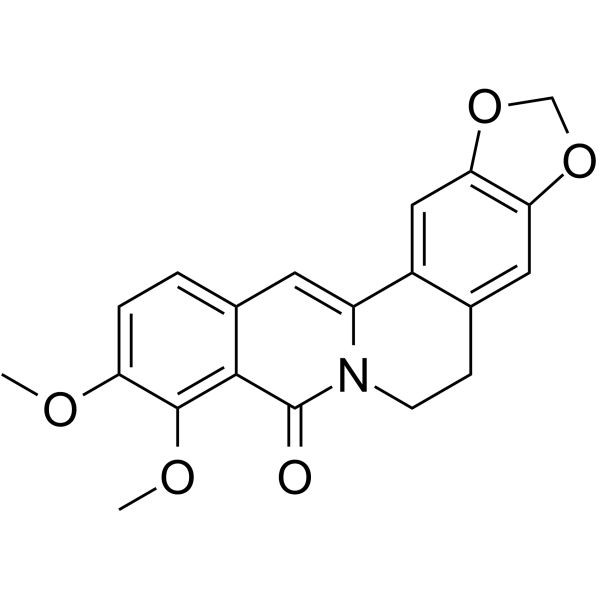
Oxyberberine (Oxyberberin; Berlambine) is an orally effective heme oxygenase HO-1 agonist that can activate antioxidant mechanisms by regulating the PI3K/Akt/AMPK signaling pathway. Oxyberberine induces HO-1 expression, increases SOD and GSH-Px activity, inhibits NF-κB-mediated inflammatory responses, and improves insulin sensitivity and glucose metabolism. Oxyberberine has anti-diabetic, neuroprotective, anti-inflammatory and antioxidant effects, and can be used to study type 2 diabetes, traumatic brain injury (TBI) and inflammatory bowel disease.
Nos produits utilisent uniquement pour la recherche. Nous ne vendons pas aux patients.
- Pureté : 99.78%
- CAS No.: 549-21-3
- Formule: C20H17NO5
- Masse moléculaire:351.35
-
Stockage:
4°C, protect from light
* In solvent : -80°C, 6 months; -20°C, 1 month (protect from light)

To place orders, for customer services and technical support, please contact: MedChemExpress USA
Tel: 609-228-6898 E-mail: [email protected] [email protected]


-
 Activité biologique
-
Chemical Information
-
Solvant et solubilité
- Protocole
- Pureté et documentation
- Références
-
 Help & FAQs


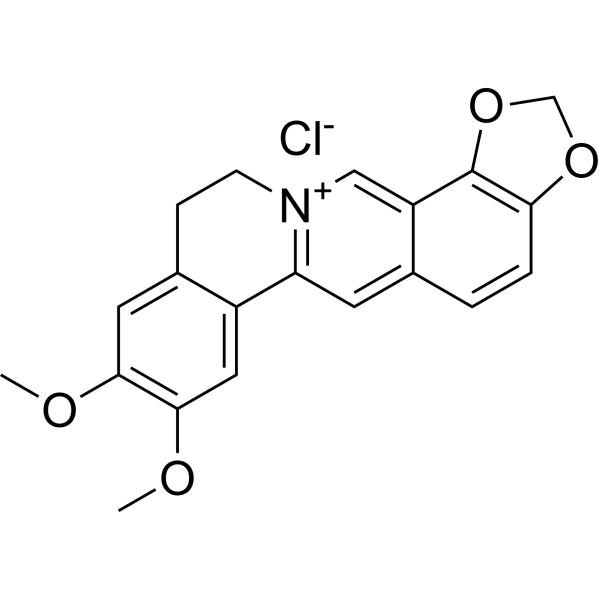
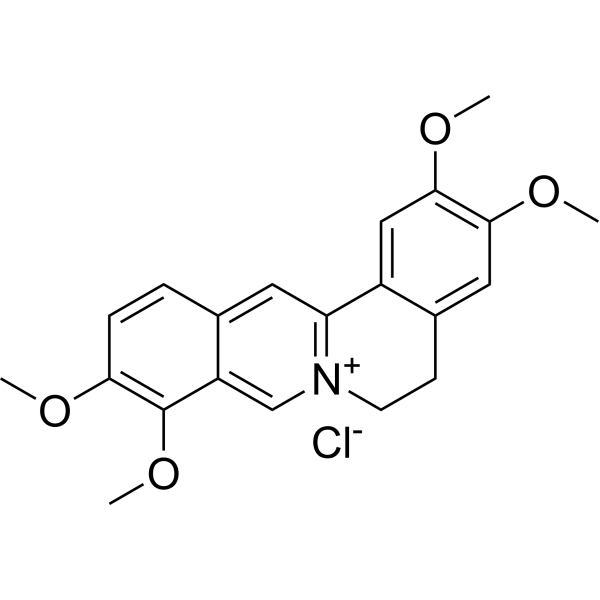
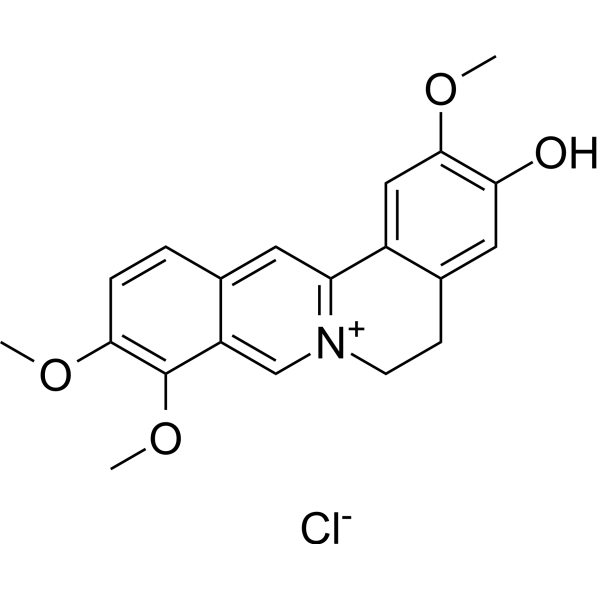
Publications Citing Use of MedChemExpress (MCE) Oxyberberine
More

Activité biologique
Description
Cellular Effect
|
Cell Line

|
Type | Value | Description | References |
|---|---|---|---|---|
| PC-12 | CC50 |
137 μM
Compound: 2
|
Cytotoxicity against rat PC12 cells assessed as reduction in cell viability incubated for 24 hrs by WST-8 assay
Cytotoxicity against rat PC12 cells assessed as reduction in cell viability incubated for 24 hrs by WST-8 assay
|
[PMID: 33611188] |
In Vitro
Oxyberberine (5-20 μM; 24-48 h) promotes glucose-stimulated insulin secretion in INS-1 cells, reduces intracellular reactive oxygen species (ROS) and malondialdehyde (MDA) levels, and increases superoxide dismutase (SOD) and glutathione peroxidase (GSH-Px) activities[1].
Oxyberberine (10-40 μM; 24 h) enhances glucose consumption, upregulates phosphorylated Akt (p-Akt) and GSK-3β (p-GSK-3β) expressions, and downregulates glucose-6-phosphatase (G6Pase) and phosphoenolpyruvate carboxykinase (PEPCK) levels in insulin-resistant HepG2 cells[1].
MedChemExpress (MCE) has not independently confirmed the accuracy of these methods. They are for reference only. Further protocols information, click here.
-
Cell Line:INS-1 cells
-
Concentration:5, 10, 20 μM
-
Incubation Time:48 h
-
Result:Dose-dependently increased insulin secretion in high-glucose (25 mM) stimulated INS-1 cells, reduced oxidative stress markers (NO, MDA) and increased antioxidant enzymes (SOD, GSH-Px).
Co-treatment with HO-1 inhibitor ZnPP reversed these effects, indicating dependency on HO-1 activation.
-
Cell Line:Insulin-resistant HepG2 cells
-
Concentration:10, 20, 40 μM
-
Incubation Time:24 h
-
Result:Significantly increased glucose consumption in insulin-resistant HepG2 cells.
Western blot analysis showed upregulation of p-Akt, p-GSK-3β and downregulation of G6Pase, PEPCK, with the most pronounced effects at 40 μM.
Co-administration of ZnPP attenuated these changes, suggesting involvement of HO-1 signaling.
In Vivo
Oxyberberine can significantly alleviate DSS-induced ulcerative colitis in mice, which may be related to the inhibition of TLR4/Myd88/NF-κB pathway excitation and regulation of intestinal flora. LD50 >5000 mg/kg. Oxyberberine (12.5-50 mg/kg; intraperitoneal injection; once daily; 21 days) significantly improves colon tissue pathological damage in the TNBS-induced rat colitis model, reduces the proinflammatory markers TNF-α, IL-2, IL-8 and IL-22, and increases the levels of IL-4 and IL-13[2].
Oxyberberine (25, 50 mg/kg; intraperitoneal injection; once daily; 21 days) alleviates neurological deficits, improves anxiety-like behaviors and cognitive impairment in the traumatic brain injury (TBI) model of male C57BL/6 mice, and inhibits the HMGB1-mediated TLR4/NF-κB inflammatory pathway in brain tissue[3].
MedChemExpress (MCE) has not independently confirmed the accuracy of these methods. They are for reference only.
-
Animal Model:Male Sprague-Dawley rats (220-240 g, 7-week-old) with high-fat diet/streptozotocin (HFD/STZ)-induced type 2 diabetes[1]
-
Dosage:50 mg/kg, 100 mg/kg (saline)
-
Administration:Oral gavage, once daily, for 6 weeks
-
Result:Significantly decreased fasting blood glucose (FBG), triglyceride (TG), total cholesterol (TC), low-density lipoprotein cholesterol (LDL-C), and glycosylated serum protein (GSP), while increasing high-density lipoprotein cholesterol (HDL-C).
Improved insulin sensitivity (reduced HOMA-IR), pancreatic antioxidant capacity (increased SOD, GSH-Px), and attenuated islet cell apoptosis and inflammatory cytokine levels (TNF-α, IL-6).
Co-treatment with HO-1 inhibitor ZnPP reversed these effects.
-
Animal Model:Male C57BL/6 mice (6-8-week-old) with traumatic brain injury (TBI)-induced traumatic brain injury[3]
-
Dosage:25 mg/kg, 50 mg/kg (saline)
-
Administration:Intraperitoneal injection, once daily, for 21 days
-
Result:Significantly reduced neurological severity scores (NSS) and improved motor coordination in rotarod tests.
Decreased anxiety-like behavior in elevated zero maze (EZM) and improved cognitive performance in novel object recognition task (NORT).
Western blot showed reduced expression of HMGB1, TLR4, and NF-κB in ipsilateral cortex, with the highest efficacy at 50 mg/kg.


Chemical Information
-
CAS No. 549-21-3
-
Appearance Solid
-
Masse moléculaire 351.35
-
Formule C20H17NO5
-
Color Light yellow to yellow
-
SMILES
O=C(C1=C(OC)C(OC)=CC=C1C=C23)N2CCC(C3=C4)=CC5=C4OCO5
-
Synonyms
Oxyberberin; Berlambine; 8-Oxoberberine
-
Structure Classification
-
Initial Source
-
Livraison
Room temperature in continental US; may vary elsewhere.
-
Stockage
4°C, protect from light
* In solvent : -80°C, 6 months; -20°C, 1 month (protect from light)


Publications (3)
-
Journal Impact Factor
-
Most Recent
-
Hepatol Commun
Oxyberberine sensitizes liver cancer cells to sorafenib via inhibiting NOTCH1-USP7-c-Myc pathway. [Abstract]2024 Mar 29;8(4):e0405. PMID: 38573832 -
-


Solvant et solubilité
In Vitro:
DMSO : 16.67 mg/mL (47.45 mM; Need ultrasonic; Hygroscopic DMSO has a significant impact on the solubility of product, please use newly opened DMSO)
Please refer to the solubility information to select the appropriate solvent. Once prepared, please aliquot and store the solution to prevent product inactivation from repeated freeze-thaw cycles.
Storage method and period of stock solution: -80°C, 6 months; -20°C, 1 month (protect from light). When stored at -80°C, please use it within 6 months. When stored at -20°C, please use it within 1 month.
Please refer to the solubility information to select the appropriate solvent. Once prepared, please aliquot and store the solution to prevent product inactivation from repeated freeze-thaw cycles.
Storage method and period of stock solution: -80°C, 6 months; -20°C, 1 month (protect from light). When stored at -80°C, please use it within 6 months. When stored at -20°C, please use it within 1 month.
Concentration (start) × Volume (start) = Concentration (final) × Volume (final)
In Vivo:
Select the appropriate dissolution method based on your experimental animal and administration route.
- For the following dissolution methods, please ensure to first prepare a clear stock solution using an In Vitro approach and then sequentially add co-solvents:
- To ensure reliable experimental results, the clarified stock solution can be appropriately stored based on storage conditions. As for the working solution for In Vivo experiments, it is recommended to prepare freshly and use it on the same day.
- The percentages shown for the solvents indicate their volumetric ratio in the final prepared solution. If precipitation or phase separation occurs during preparation, heat and/or sonication can be used to aid dissolution.
Add each solvent one by one: 10% DMSO 40% PEG300 5% Tween-80 45% Saline
Solubility: ≥ 1.67 mg/mL (4.75 mM); Clear solution
This protocol yields a clear solution of ≥ 1.67 mg/mL (saturation unknown).
Taking 1 mL working solution as an example, add 100 μL DMSO stock solution (16.7 mg/mL) to 400 μL PEG300, and mix evenly; then add 50 μL Tween-80 and mix evenly; then add 450 μL Saline to adjust the volume to 1 mL.
Preparation of Saline: Dissolve 0.9 g sodium chloride in ddH₂O and dilute to 100 mL to obtain a clear Saline solution.
In Vivo Dissolution Calculator
Please enter the basic information of animal experiments:
-
-
-
-
Recommended: Prepare an additional quantity of animals to account for potential losses during experiments.
Please enter your animal formula composition:
-
%DMSO +
Recommended: Keep the proportion of DMSO in working solution below 2% if your animal is weak.
-
%+
-
+%Tween-80 + +
-
%Saline +
The co-solvents required include: DMSO, . All of co-solvents are available by MedChemExpress (MCE). , Tween 80. All of co-solvents are available by MedChemExpress (MCE).
Working solution concentration: 0.22 mg/mL
Method for preparing stock solution: mg drug dissolved in μL DMSO. Stock solution concentration: mg/mL. * In solvent : -80°C, 6 months; -20°C, 1 month (protect from light)
1. Take μL DMSO stock solution;
2. Add μL .
μL , mix evenly;
3. Then add μL Tween 80, mix evenly;
4. Then add μL
Please ensure that the stock solution in the first step is dissolved to a clear state, and add co-solvents in sequence. You can use ultrasonic heating (ultrasonic cleaner, recommended frequency 20-40 kHz), vortexing, etc. to assist dissolution.

Protocole
-
RNA extraction experimental
By lysing cells, releasing RNA, and removing impurities such as proteins and DNA, high-purity RNA products are finally obtained. The commonly used traditional method is the guanidine isothiocyanate/phenol/chloroform method (Trizol), which is suitable for a variety of animal materials including animal tissues, microorganisms, cultured cells, etc., and most plant materials.
-
Research Protocol for Endocrine Diseases
Endocrine diseases often arise from disrupted hormone production, hormone signaling, or target-tissue responsiveness; for diabetes-focused endocrine disease models, insulin signaling regulates glucose uptake, hepatic glucose output, lipid metabolism, and β-cell compensation. Type 2 diabetes develops through interacting defects in insulin resistance, β-cell dysfunction, adipose inflammation, hepatic glucose overproduction, altered incretin signaling, and ectopic lipid metabolism. A major unresolved question is whether endocrine dysfunction is driven primarily by target-tissue insulin resistance, intrinsic β-cell failure, immune/inflammatory stress, or combined multi-organ failure that differs by disease stage.
-
DSS-Induced Colitis
Dextran sulfate sodium (DSS)-induced colitis is generated by administering DSS in mouse drinking water, producing epithelial injury, barrier disruption, weight loss, diarrhea, fecal blood, colon shortening, histologic mucosal damage, and inflammatory mediator changes; the model is mainly used to study acute or chronic intestinal inflammation resembling selected features of ulcerative colitis. DSS injury is interpreted through clinical and tissue readouts rather than a single molecular endpoint: daily body weight, stool consistency, and bleeding are combined into a disease activity index, while colon length, histology, cytokines, myeloperoxidase activity, intestinal permeability, and tight-junction markers provide complementary measures of inflammation and barrier damage.
-
TNBS-Induced Colitis
TNBS-induced colitis is produced by intrarectal delivery of 2,4,6-trinitrobenzene sulfonic acid in ethanol, where ethanol disrupts the mucosal barrier and TNBS haptenates colonic proteins, generating immune-mediated colonic inflammation with weight loss, diarrhea, ulceration, transmural injury, inflammatory-cell infiltration, and cytokine responses. The model is used as an experimental intestinal inflammation model with Crohn’s disease–like features, especially when Th1-type responses, IL-12–dependent inflammation, chronic relapsing inflammation, or fibrosis-related endpoints are studied.
-
Research Protocol for Inflammation-related Diseases
The NLRP3 inflammasome is a cytosolic innate immune signaling platform that integrates priming signals and danger-signal activation to promote caspase-1 activation, maturation of IL-1β and IL-18, and gasdermin D-mediated pyroptotic cell death. The core experimental logic is to determine whether inflammatory disease phenotypes are driven by increased NLRP3 expression, ASC-containing inflammasome assembly, caspase-1 cleavage, GSDMD cleavage, and extracellular release of IL-1β/IL-18 rather than by nonspecific cell injury alone. The pathway is strongly linked to inflammation-related disease phenotypes because monosodium urate crystals activate NALP3/NLRP3 inflammasome signaling in gout-like crystal inflammation, cholesterol crystals activate NLRP3 inflammasomes in atherogenesis models, and DSS-induced intestinal inflammation has been reported to involve NLRP3 inflammasome activity. However, experimental colitis studies also show context-dependent protective effects of NLRP3 inflammasome co
-
Research Protocol for Metabolic Diseases
AMP-activated protein kinase, AMPK, is a conserved cellular energy sensor that responds to reduced cellular energy status and coordinates metabolism by increasing ATP-generating catabolic pathways while suppressing ATP-consuming anabolic processes. In metabolic disease research, the AMPK pathway is experimentally relevant because it regulates hepatic lipid synthesis, fatty acid oxidation, glucose production, skeletal-muscle glucose disposal, mTORC1-linked biosynthesis, autophagy, mitochondrial homeostasis, and whole-body energy balance. The central pathway logic is that energy stress, metformin, exercise-like stimulation, or direct AMPK activators increase AMPKα Thr172 phosphorylation and downstream substrate phosphorylation, including ACC and RAPTOR. Phosphorylation of ACC suppresses lipogenesis and supports fatty acid oxidation, whereas phosphorylation of RAPTOR suppresses mTORC1 signaling and links cellular energy status to growth and protein synthesis control. The pathway is linked


Pureté et documentation
-
Fiche technique (283 KB)
-
SDS (393 KB)
- English - EN (393 KB)
- Français - FR (393 KB)
- Deutsch - DE (393 KB)
- Norwegian - NO (393 KB)
- Español - ES (393 KB)
- Swedish - SV (393 KB)
- Italian - IT (393 KB)
- Korean - KR (393 KB)
- Portuguese - PT (393 KB)
-
Instruction de manipulation (2659 KB)
Références
[1]. Dou Y, et al. In vitro and in vivo hypoglycemia effect of oxyberberine, a novel HO-1 agonist: A renewed evidence linking HO-1 to diabetes mellitus. Phytomedicine. 2022 Jul;101:154135. [Content Brief]
[2]. Li C, et al. Oxyberberine ameliorates TNBS-induced colitis in rats through suppressing inflammation and oxidative stress via Keap1/Nrf2/NF-κB signaling pathways. Phytomedicine. 2023 Jul 25;116:154899. [Content Brief]
[3]. Tentu PM, et al. Oxyberberine an oxoderivative of berberine confers neuroprotective effects in controlled-cortical impact mouse model of traumatic brain injury. Int J Neurosci. 2025 Jan;135(1):80-95. [Content Brief]


Complete Stock Solution Preparation Table
Please refer to the solubility information to select the appropriate solvent. Once prepared, please aliquot and store the solution to prevent product inactivation from repeated freeze-thaw cycles.
Storage method and period of stock solution: -80°C, 6 months; -20°C, 1 month (protect from light). When stored at -80°C, please use it within 6 months. When stored at -20°C, please use it within 1 month.
| Optional Solvent | Concentration Solvent Mass | 1 mg | 5 mg | 10 mg | 25 mg |
|---|---|---|---|---|---|
| DMSO | 1 mM | 2.8462 mL | 14.2308 mL | 28.4616 mL | 71.1541 mL |
| 5 mM | 0.5692 mL | 2.8462 mL | 5.6923 mL | 14.2308 mL | |
| 10 mM | 0.2846 mL | 1.4231 mL | 2.8462 mL | 7.1154 mL | |
| 15 mM | 0.1897 mL | 0.9487 mL | 1.8974 mL | 4.7436 mL | |
| 20 mM | 0.1423 mL | 0.7115 mL | 1.4231 mL | 3.5577 mL | |
| 25 mM | 0.1138 mL | 0.5692 mL | 1.1385 mL | 2.8462 mL | |
| 30 mM | 0.0949 mL | 0.4744 mL | 0.9487 mL | 2.3718 mL | |
| 40 mM | 0.0712 mL | 0.3558 mL | 0.7115 mL | 1.7789 mL |


Oxyberberine Related Classifications
HY-N5027 Related Classifications
 Powered by Bioz