1. Search Result
Search Result
Results for "

diabetic nephropathy model

" in MedChemExpress (MCE) Product Catalog:

15

Inhibitors & Agonists

3

Peptides

1

Inhibitory Antibodies

6

Natural
Products

Cat. No. Nombre del producto Target Áreas de investigación Chemical Structure
  • HY-B0093A
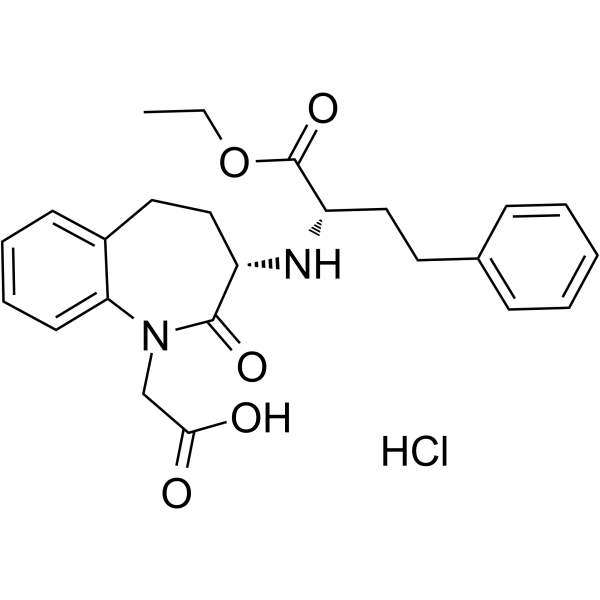
    Benazepril hydrochloride
    2 Publications Verification

    CGS14824A

    Angiotensin-converting Enzyme (ACE) Apoptosis Reactive Oxygen Species (ROS) Akt Cardiovascular Disease Metabolic Disease Inflammation/Immunology
    Benazepril (CGS14824A) hydrochloride is an orally active angiotensin-converting enzyme (ACE) inhibitor to reduce angiotensin-II production. Benazepril hydrochloride inhibits oxidative stress and inhibits apoptosis by the PI3K/Akt signaling pathway. In addition, Benazepril hydrochloride improves diabetic nephropathy and decreases proteinuria. Benazepril hydrochloride can be used in the study of hypertension, heart failure and diabetic nephropathy .
    Benazepril hydrochloride
  • HY-B0093
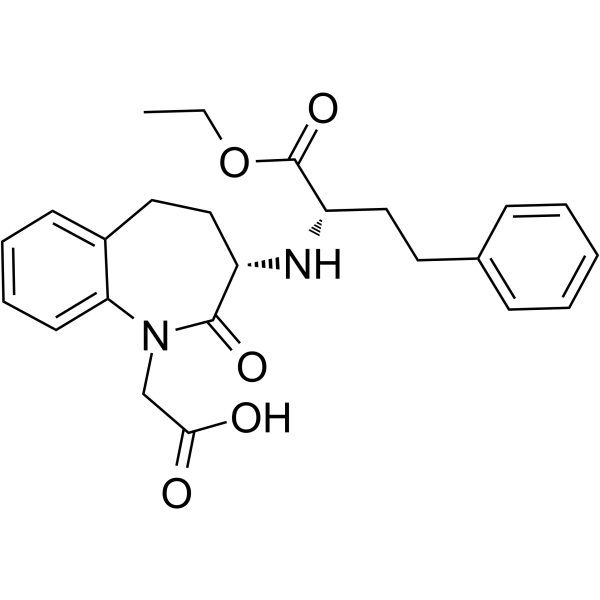
    Benazepril
    2 Publications Verification

    CGS14824A free base

    Angiotensin-converting Enzyme (ACE) Apoptosis Reactive Oxygen Species (ROS) Cardiovascular Disease Cancer
    Benazepril (CGS14824A free base) is an orally active angiotensin-converting enzyme (ACE) inhibitor to reduce angiotensin-II production. Benazepril inhibits oxidative stress and inhibits apoptosis by the PI3K/Akt signaling pathway. Benazepril improves diabetic nephropathy and decreases proteinuria. Benazepril can be used in the study of hypertension, heart failure and diabetic nephropathy .
    Benazepril
  • HY-B1451

    TA-6366

    Angiotensin-converting Enzyme (ACE) MMP JNK Cardiovascular Disease Neurological Disease Metabolic Disease Inflammation/Immunology
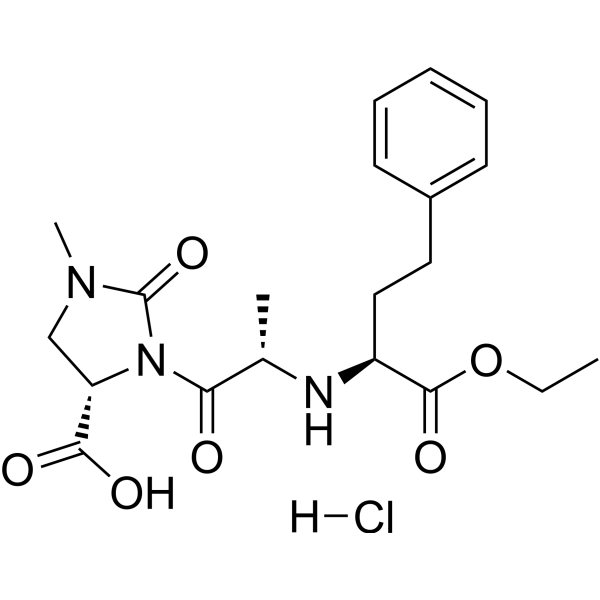
    Imidapril hydrochloride (TA-6366) is an orally active dual inhibitor of angiotensin-converting enzyme (ACE) and MMP-9. Imidapril hydrochloride inhibits lipopolysaccharide-induced phosphorylation of c-Jun, MKK4 and JNK in monocytes, and downregulates the production of specific inflammatory factors such as TNF-α and IP-10, thereby exerting anti-inflammatory activity. Imidapril hydrochloride also effectively ameliorates mesangial expansion and reduces urinary albumin excretion by inhibiting angiotensin AngII production, lowering glomerular pressure and oxidative stress, thus delaying disease progression. Imidapril hydrochloride can also directly bind to the active site of MMP-9 to inhibit gelatinase activity, and suppress the enlargement of cerebral aneurysms without altering systemic blood pressure. Imidapril hydrochloride is widely applicable to related studies on autoimmune glomerulonephritis, diabetic nephropathy, cerebral aneurysms and other conditions .
    Imidapril hydrochloride
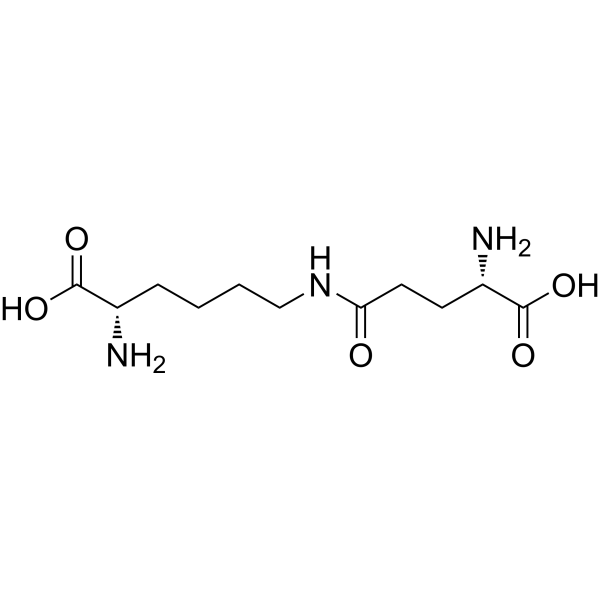
  • HY-113089

    H-Glu(H-Lys-OH)-OH; γ-Glu-ε-Lys

    Endogenous Metabolite Metabolic Disease
    Epsilon-(gamma-glutamyl)-lysine is an N(6)-acyl-L-lysine derivative. The enzyme tissue transglutaminase (tTg) helps the formation of epsilon-(gamma-glutamyl)lysine bonds between ECM components in some disease, such as non-diabetic kidney, glaucoma filtration .
    Epsilon-(gamma-glutamyl)-lysine
  • HY-15195

    Ro 67-0565; SPP-301

    Endothelin Receptor Cardiovascular Disease Endocrinology
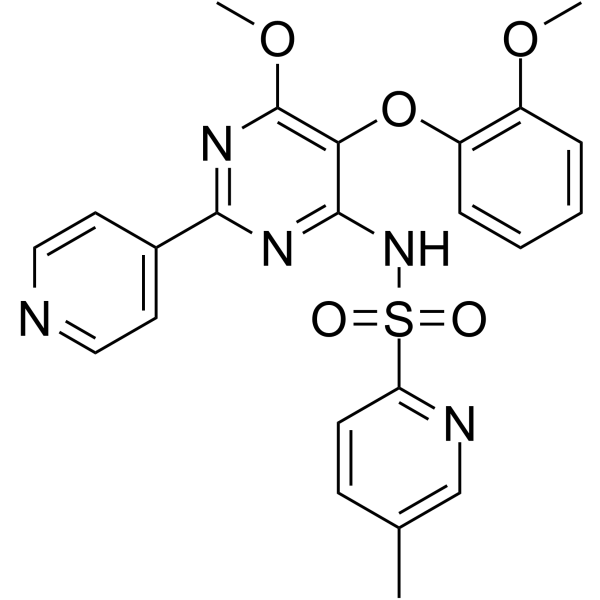
    Avosentan (Ro 67-0565; SPP-301) is an orally active endothelin (ETA) receptor antagonist. Avosentan can block the ETA receptor, thereby reducing vascular contraction and exerting a renal protective effect. Avosentan inhibits vascular contraction caused by ET-1 and alleviates the reduction in retinal and optic nerve head blood flow induced by it, lowering intraocular pressure in the glaucoma monkey model. Avosentan non-specifically blocks ETB receptors at high doses, inhibiting ETB-mediated diuresis and natriuresis, and may cause fluid retention. Avosentan can be used to reduce proteinuria with diabetic nephropathy, but induces significant fluid overload and congestive heart failure .
    Avosentan
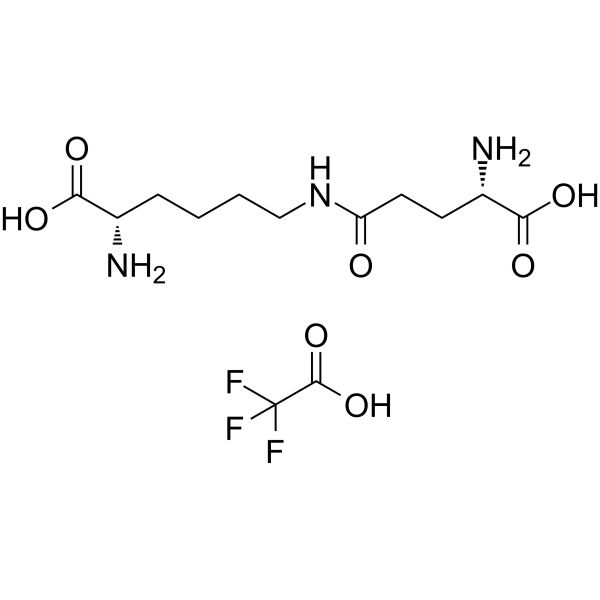
  • HY-113089A

    H-Glu(H-Lys-OH)-OH TFA; γ-Glu-ε-Lys TFA

    Endogenous Metabolite Metabolic Disease
    Epsilon-(gamma-glutamyl)-lysine (H-Glu(H-Lys-OH)-OH) TFA is an N(6)-acyl-L-lysine derivative. The enzyme tissue transglutaminase (tTg) helps the formation of epsilon-(gamma-glutamyl)lysine bonds between ECM components in some disease, such as non-diabetic kidney, glaucoma filtration .
    Epsilon-(gamma-glutamyl)-lysine TFA
  • HY-113089AR

    H-Glu(H-Lys-OH)-OH TFA (Standard); γ-Glu-ε-Lys TFA (Standard)

    Endogenous Metabolite Reference Standards Metabolic Disease
    Epsilon-(gamma-glutamyl)-lysine (TFA) (Standard) is the analytical standard of Epsilon-(gamma-glutamyl)-lysine (TFA). This product is intended for research and analytical applications. Epsilon-(gamma-glutamyl)-lysine (H-Glu(H-Lys-OH)-OH) TFA is an N(6)-acyl-L-lysine derivative. The enzyme tissue transglutaminase (tTg) helps the formation of epsilon-(gamma-glutamyl)lysine bonds between ECM components in some disease, such as non-diabetic kidney, glaucoma filtration .
    Epsilon-(gamma-glutamyl)-lysine TFA (Standard)
  • HY-14923

    AVE 7688

    Angiotensin-converting Enzyme (ACE) Metabolic Disease
    Ilepatril, a dual inhibitor of angiotensin-converting enzyme (ACE) and neutral endopeptidase, has inhibitory effects in the type 2 diabetic nephropathy model in obese Zucker diabetic fatty (ZDF) rats. Ilepatril significantly reduced albuminuria in a dose-dependent manner and may be a strategy distinct from metabolic control to inhibit type 2 diabetic nephropathy .
    Ilepatril
  • HY-100819

    CCR Metabolic Disease
    RO5234444 is an orally active CCR2 antagonist, with IC50s of 22nM for human CCR2 and 161 nM for mouse CCR2. RO5234444 alleviates glomerulosclerosis, reduces albuminuria, and significantly improves the glomerular filtration rate (GFR) in the uninephrectomized (1K) type 2 diabetic db/db mouse model. RO5234444 can be used for the study of type 2 diabetic nephropathy .
    RO5234444
  • HY-123409

    TGF-β Receptor Metabolic Disease
    Nicousamide is a potent inhibitor of TGF-β RII phosphorylation. Nicousamide can be used to study renal fibrosis in animal models of diabetic nephropathy .
    Nicousamide
  • HY-15195R

    Ro 67-0565 (Standard); SPP-301 (Standard)

    Reference Standards Endothelin Receptor Cardiovascular Disease Endocrinology
    Avosentan (Standard) is the analytical standard of Avosentan (HY-15195). This product is intended for research and analytical applications. Avosentan is an orally active endothelin (ETA) receptor antagonist. Avosentan can block the ETA receptor, thereby reducing vascular contraction, and exerting a renal protective effect. Avosentan inhibits vascular contraction caused by ET-1 and alleviates the reduction in retinal and optic nerve head blood flow induced by it, lowering intraocular pressure in the glaucoma monkey model. Avosentan non-specifically blocks ETB receptors at high doses, inhibiting ETB-mediated diuresis and natriuresis, and may cause fluid retention. Avosentan can be used to reduce proteinuria with diabetic nephropathy, but induces significant fluid overload and congestive heart failure.
    Avosentan (Standard)
  • HY-N19615

    Keap1-Nrf2 GSK-3 TNF Receptor Interleukin Related SOD Inflammation/Immunology
    Isoeucommin A is a lignan compound. Isoeucommin A activates the Nrf2/HO-1 pathway and induces phosphorylation of GSK-3β. Isoeucommin A reduces the levels of pro-inflammatory cytokines TNF-α, IL-1β and IL-6, decreases the oxidative stress marker MDA, increases the antioxidants SOD and GSH, and alleviates oxidative stress in mesangial cells. Isoeucommin A alleviates renal tissue injury, improves impaired renal function and enhances the viability of renal tubular epithelial cells in diabetic nephropathy models. Isoeucommin A can be used in the research of diabetic nephropathy .
    Isoeucommin A
  • HY-P992410

    PAI-1 TGF-beta/Smad Inflammation/Immunology
    MEDI-579 is a fully human monoclonal antibody against PAI-1, with a KD value of 6 pM for human PAI-1 and 105 pM for rat PAI-1. MEDI-579 restores renal plasmin activity and inhibits PAI-1-mediated intracellular signal transduction. MEDI-579 reduces albuminuria, glomerulosclerosis severity, TGF-β1 expression level, and phosphorylated Smad2 level induced in diabetic mice. MEDI-579 decreases the levels of active PAI-1 in plasma and kidneys, and increases plasma plasmin level in a mouse model of lupus nephritis. MEDI-579 can be used in research related to diabetic nephropathy and lupus nephritis. The recommended isotype control is human IgG1 kappa (HY-P99001) .
    MEDI-579
  • HY-N17737

    Fatty Acid Synthase (FASN) Cytochrome P450 Metabolic Disease Inflammation/Immunology
    Floramanoside F is a type of flavonol glycoside compound. Floramanoside F has a moderate free radical scavenging effect, with a SC₅₀ value of 25.1 μM. Floramanoside F has a relatively weak inhibitory activity on aldose reductase, with a IC₅₀ value greater than 100 μM. Floramanoside F has strong binding affinity with key target enzymes of type 1 diabetic nephropathy (T1DN) (Fasn, Cyp2e1, Cyp4a32), and can inhibit lipid accumulation and oxidative stress, thereby alleviating renal inflammation and fibrosis. Floramanoside F can be used to study type 1 diabetic nephropathy and diabetic complications .
    Floramanoside F
  • HY-118945

    Prostaglandin Receptor Bradykinin Receptor Cardiovascular Disease Metabolic Disease Inflammation/Immunology
    FR191413 is a selective bradykinin B2 receptor agonist that stimulates prostaglandin E2 production in WI-38 cells and activates BK B2 receptor-mediated pathways such as vasodilation and organ protection. FR191413 competitively binds to [ 3H]-BK in guinea pig ileum (GPI) membranes and CHO cells transfected with the human BK B2 receptor, with IC50 values ​​of 20.0 nM and 2.60 nM, respectively. FR191413 can be used in research related to cardiovascular diseases and diabetes, including hypertension, myocardial hypertrophy, myocardial infarction, arrhythmias, and diabetic nephropathy .
    FR191413

Consulta en línea

Your information is safe with us. * Required Fields.

Saludo


Country or Region *

Nombre del solicitante *


Nombre de la Organizaciòn *

Department *


Direcciòn del E-mail *


Nombre del producto *

Cat. No.


Requested quantity *

Número de teléfono *


Observaciones

Consulta en línea

Inquiry Information

Nombre del producto:
Cat. No.:
Cantidad:
MCE Japan Authorized Agent:

