1. Search Result
Search Result
Results for "

green-fluorescent dye

" in MedChemExpress (MCE) Product Catalog:

42

Inhibitors & Agonists

36

Fluorescent Dyes

3

Biochemical Assay Reagents

1

Peptides

3

MCE Kits

2

Click Chemistry

Targets Recommended:
Cat. No. Product Name Target Research Areas Chemical Structure
  • HY-135056
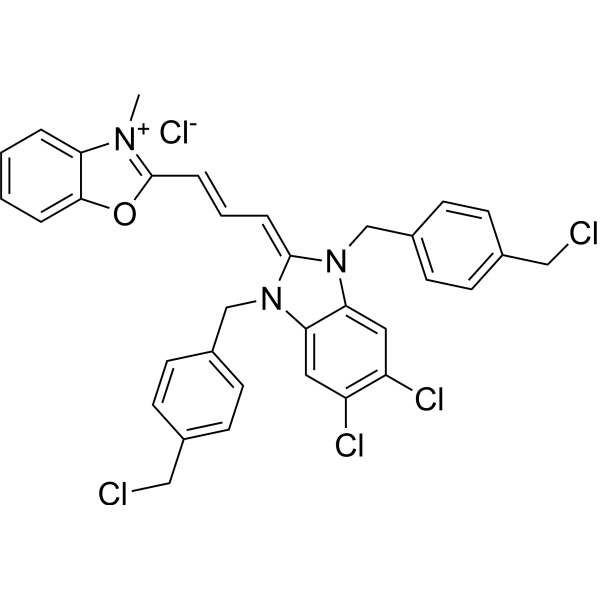
    MitoTracker Green FM
    Maximum Cited Publications
    24 Publications Verification

    Fluorescent Dye Others
    Mito-Tracker Green is a green fluorescent dye that selectively accumulates in the mitochondrial matrix. MitoTracker Green FM covalently binds mitochondrial proteins by reacting with free mercaptan of cysteine residues, allowing staining of mitochondrial membrane potential independent of membrane potential. Excitation/emission wavelength 490/523 nm.
    MitoTracker Green FM
  • HY-43520

    Fluorescent Dye Others
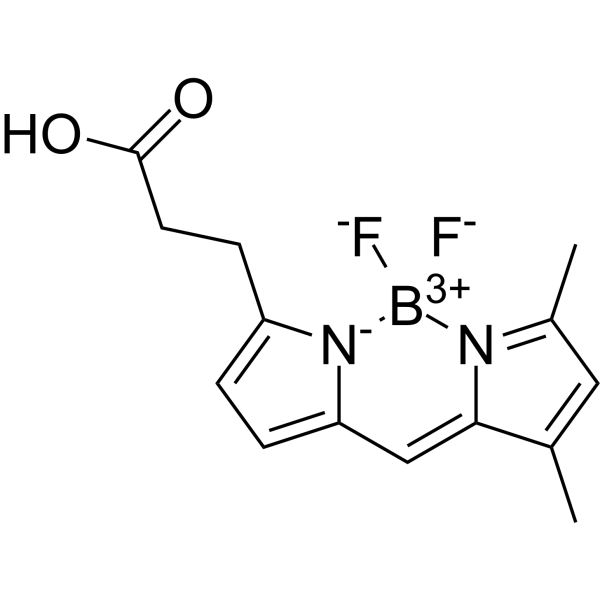
    BODIPY-FL is a green fluorescent dye that can be used to label probes or primers. BODIPY-FL fluorescence can be quenched after interacting with uniquely positioned guanine, making it useful for quantifying specific DNA or RNA molecules. The maximum absorption wavelength of BODIPY-FL is 505 nm, and the maximum emission wavelength is 513 nm .
    BODIPY-FL
  • HY-15558
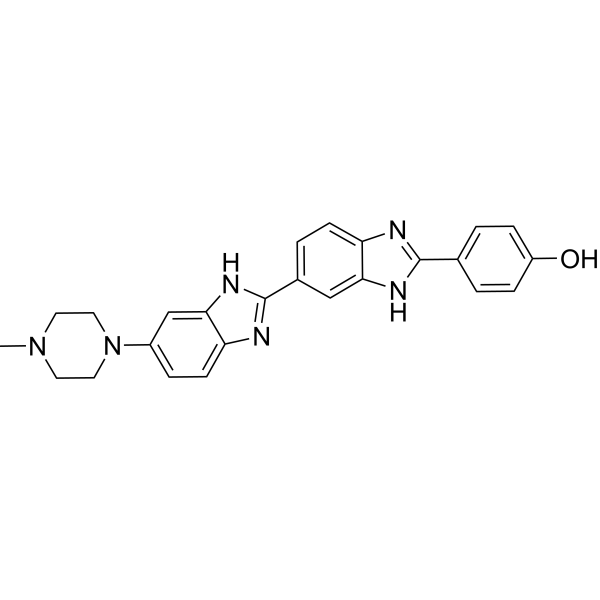
    Hoechst 33258
    20+ Cited Publications

    bisBenzimide H 33258; H 33258

    Fluorescent Dye DNA Stain DNA Alkylator/Crosslinker Others
    Hoechst 33258 is a blue to blue-green fluorescent live cell dye that can label DNA. Hoechst 33258 can specifically bind to the minor groove of DNA (and tends to bind to A/T-rich DNA), resulting in a significant increase in fluorescence intensity. Hoechst 33258 can cross the cell membrane and cause changes in DNA structure, such as G2/M phase arrest. Hoechst 33258 can bind to live or fixed cells, and the fluorescence intensity increases with increasing solution pH. As a DNA-specific probe, Hoechst 33258 can be used to detect DNA content, analyze cell cycle, etc. The excitation wavelength of Hoechst 33258 is 350-365 nm, and the emission wavelength is 460-490 nm .
    Hoechst 33258
  • HY-15937
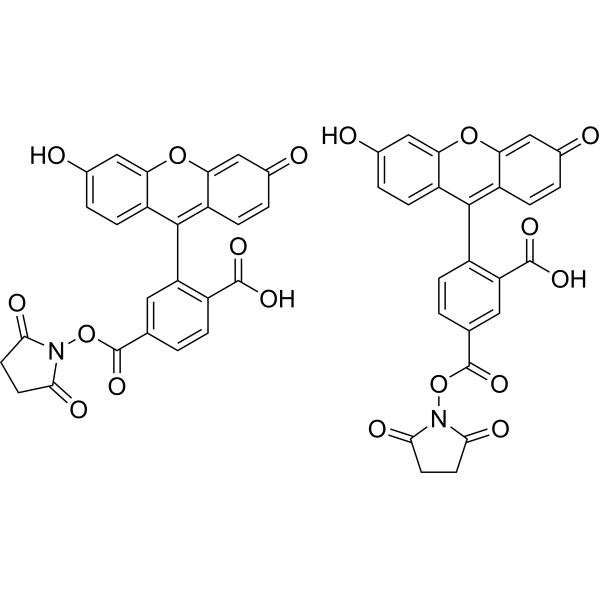
    5(6)-FAM SE
    4 Publications Verification

    5(6)-Carboxyfluorescein N-hydroxysuccinimide ester; 5(6)-Carboxyfluorescein succinimidyl ester mixed isomers

    Fluorescent Dye Others
    5(6)-FAM SE is a green fluorescent dye widely used for protein labeling.
    5(6)-FAM SE
  • HY-D1612

    Fluorescent Dye Others
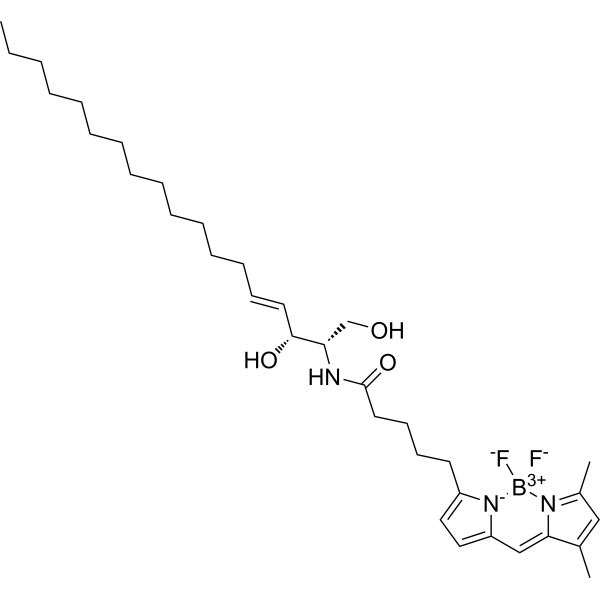
    The Golgi apparatus is composed of flattened vesicles superimposed on each other by unit membranes. The flattened vesicles are round with expanded and perforated edges. The Golgi fluorescent probe is a BODIPY-labeled ceramide derivative, the synthesis of which occurs in the endoplasmic reticulum and can then be transported to the Golgi via ceramide transport protein (CERT) or vesicular translocation, allowing specific labeling of the dye . BODIPY Fl C5-Ceramide is a Golgi-specific green fluorescent dye, which can visualise individual cells . Ex/Em= 505 nm/512 nm.
    BODIPY FL C5-Ceramide
  • HY-D1605
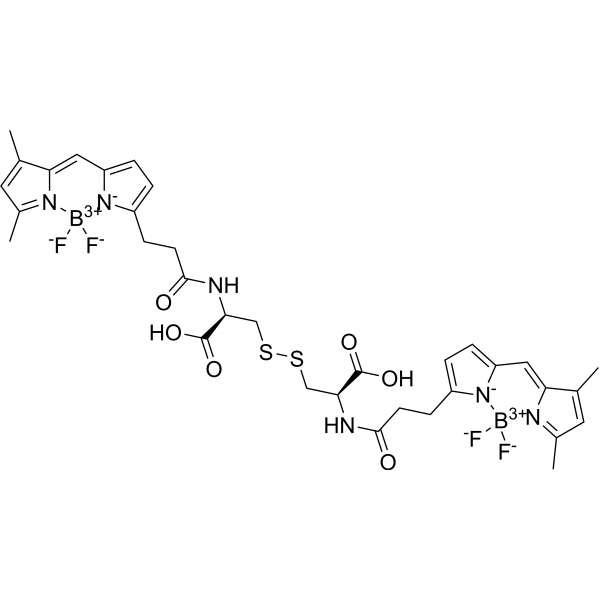
    BODIPY FL L-Cystine
    1 Publications Verification

    Fluorescent Dye Others
    BODIPY FL L-Cystine is a thiol-reactive, green-fluorescent dye. BODIPY FL L-Cystine can be the labeling of membrane proteins, proteins with hydrophobic binding sites, or hydrophobic ligands. (λex=504 nm, λem=511 nm) .
    BODIPY FL L-Cystine
  • HY-103469
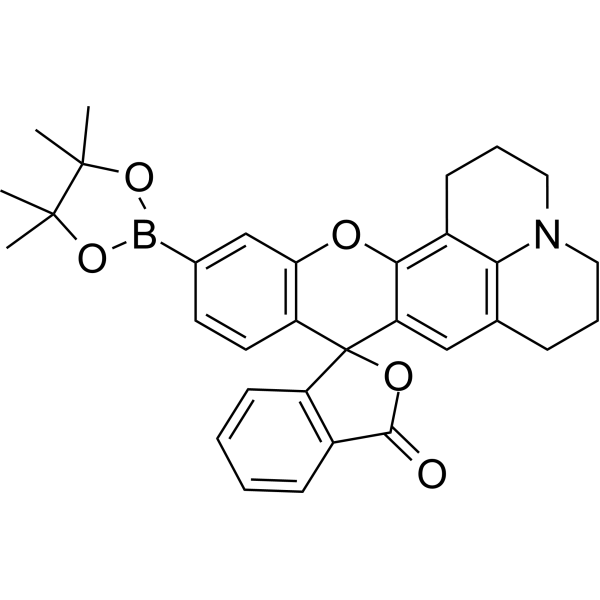
    Peroxy Orange 1
    3 Publications Verification

    PO1

    Fluorescent Dye Others
    Peroxy Orange 1 (PO1) is a new H2O2 specific probe that can bind to green fluorescent highly reactive oxygen species (hROS) probe APF. Peroxy Orange 1 is also a living cell dye .
    Peroxy Orange 1
  • HY-DY1032

    Fluorescent Dye Others
    Mito-Tracker Green (solution) is a green fluorescent dye that selectively accumulates in the mitochondrial matrix. MitoTracker Green FM covalently binds mitochondrial proteins by reacting with free mercaptan of cysteine residues, allowing staining of mitochondrial membrane potential independent of membrane potential. Excitation/emission wavelength 490/523 nm.
    Solvent and concentration: DMSO: 1 mM
    MitoTracker Green FM (solution)
  • HY-D2174

    Fluorescent Dye Others
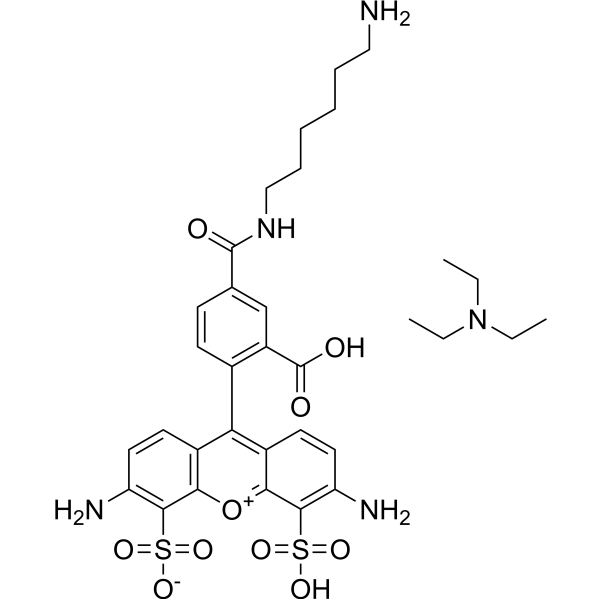
    AF488 amine is a bright, green-fluorescent dye used for labeling molecule such as antibodies. AF488 exhibits the λem and λex wavelength of 520 nm and 470 nm, respectively .
    AF488 amine
  • HY-D0918

    Fluorescent Dye Others
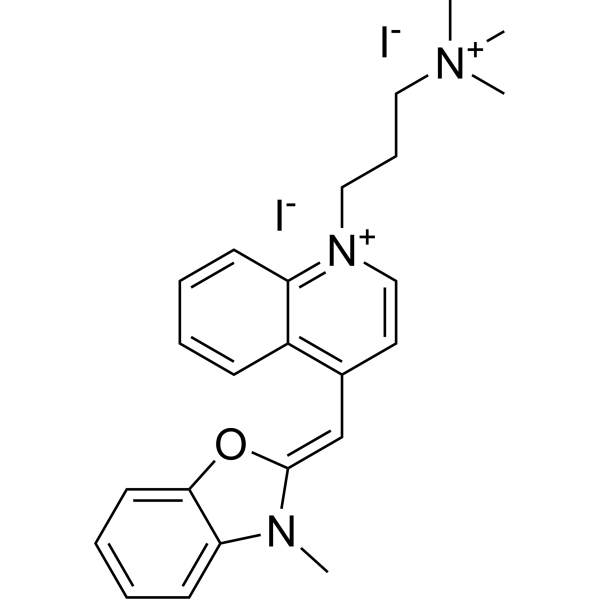
    YO-PRO-1 is a non-cell-membrane-penetrating green fluorescent dye. YO-PRO-1 cannot penetrate normal cell membranes but can penetrate the membranes of apoptotic and necrotic cells. YO-PRO-1 has a high affinity for DNA. When it is not bound to DNA, it emits almost no fluorescence, and when it binds to DNA, it can emit green fluorescence (Ex/Em: 488/530±30 nM). YO-PRO-1 is often used together with Propidium Iodide (HY-D0815) to analyze and identify apoptotic and necrotic cells .
    YO-PRO-1
  • HY-114351

    Fluorescent Dye Others
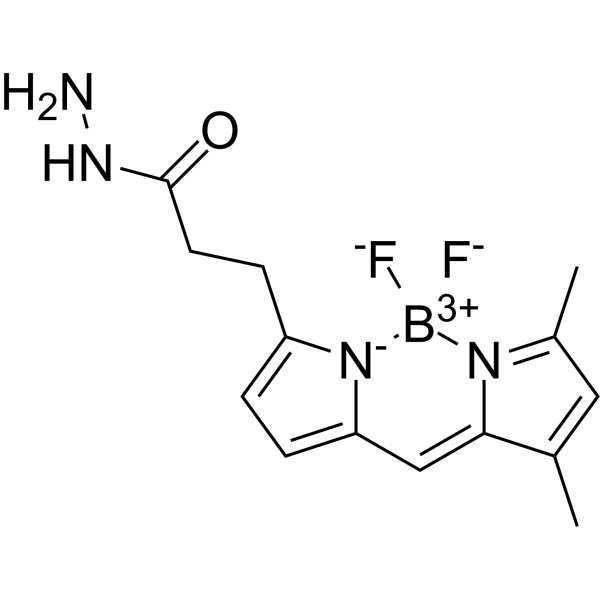
    BODIPY FL Hydrazide is a green-fluorescent dye, BODIPY FL Hydrazide is reactive with aldehyde/ketone on polysaccharides and glycoproteins, yielding a reversible Schiff base product that can be transformed to a stable linkage using a reducing agent like sodium borohydride or sodium cyanoborohydride. (λex=495 nm, λem=516 nm) .
    BODIPY FL hydrazide
  • HY-D2875
    5-FITC tyramide
    1 Publications Verification

    Fluorescent Dye Others
    5-FITC tyramide is a green fluorescent dye composed of FITC (HY-66019) and tyramide (Ex=488 nm, Em=525 nm). 5-FITC tyramide is utilized as reporter fluorescent substrate of horseradish peroxidase (HRP)-catalyzed deposition for tyramide signal amplification (TSA). 5-FITC tyramide can be used for multiplex immunohistochemistry (mIHC) .
    5-FITC tyramide
  • HY-W442295

    Fluorescent Dye Others
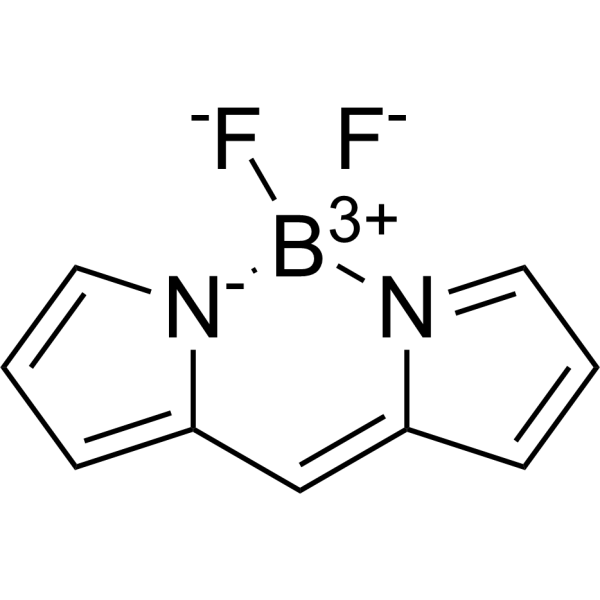
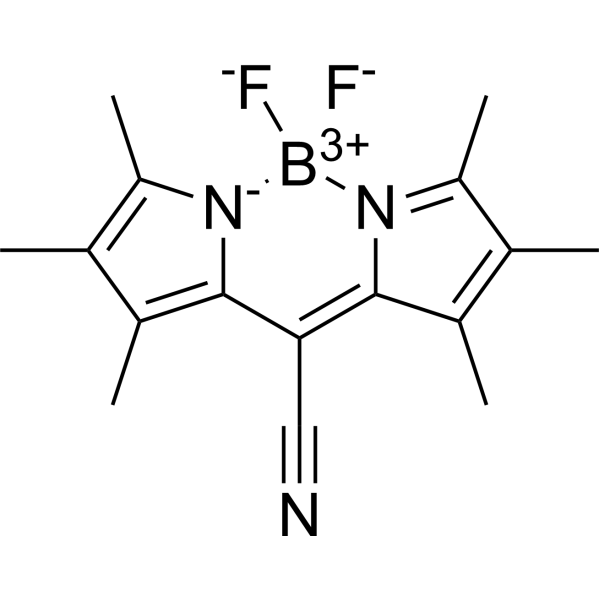
    Dipyrrometheneboron difluoride is a green-fluorescent dye used for labeling nonpolar lipids and detecting calcium.
    Dipyrrometheneboron difluoride
  • HY-W248583

    PM650

    Fluorescent Dye Others
    Pyrromethene 650 (PM650) is a green-fluorescent polar tracer dye. It is used for investigations of membrane fusion, lysis, and gap-junctional communication and to detect volume changes in cells or liposomes.
    Pyrromethene 650
  • HY-D1613

    Fluorescent Dye Others
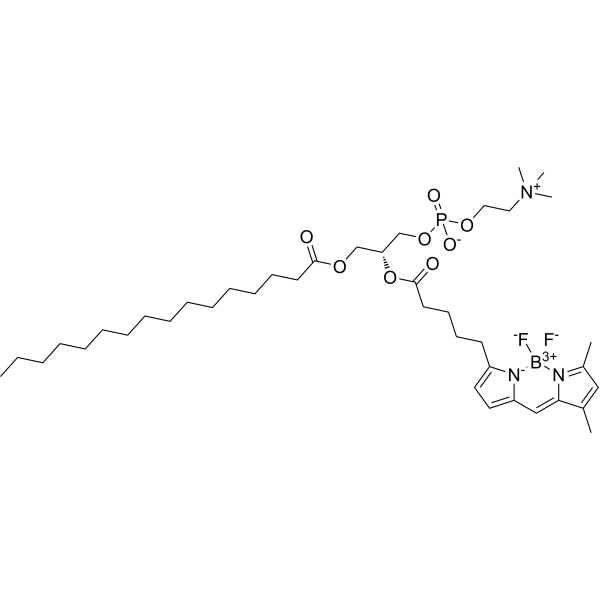
    BODIPY FL C5-HPC is a lipophilic green fluorescent dye (Ex/Em: 500/510 nm) .
    BODIPY FL C5-HPC
  • HY-D1690A

    Fluorescent Dye Others
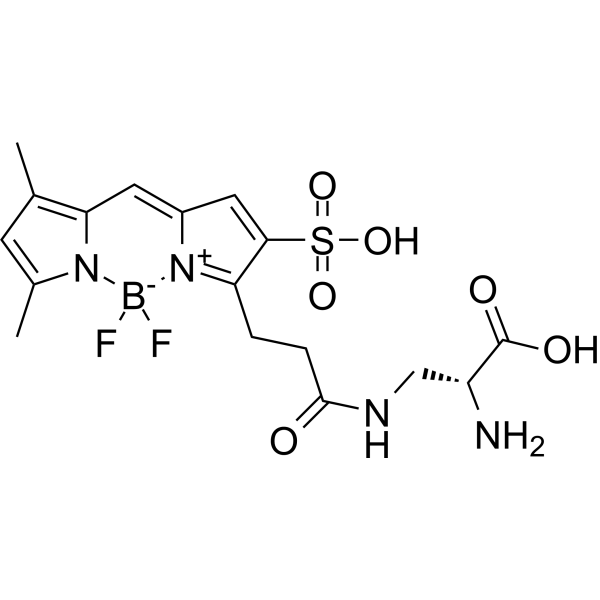
    sBADA is a potent green fluorescent dye. sBADA is a sulfonated BODIPY-FL 3-amino-D-alanine. sBADA is used to label peptidoglycans in bacterial cell walls in situ. (λex=490 nm, λem=510 nm) .
    sBADA
  • HY-133876

    DiA

    Fluorescent Dye Others
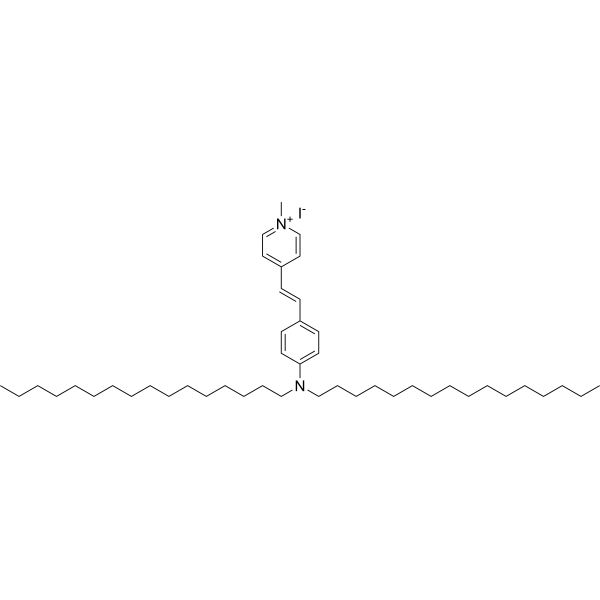
    4-Di-16-ASP is a green fluorescent membrane dye. 4-Di-16-ASP is a lipophilic aminostyryl probe with a broad emission spectrum (can be detected with green, orange or even red filters). It is commonly used for neuronal membrane tracing (it diffuses faster than DiO) .
    4-Di-16-ASP
  • HY-D2874

    Fluorescent Dye Others
    6-AF488 tyramide is a bright, green fluorescent dye (Ex=496 nm, Em=524 nm). 6-AF488 tyramide is utilized as reporter fluorescent substrate of horseradish peroxidase (HRP)-catalyzed deposition for tyramide signal amplification (TSA). 5-FITC tyramide can be used for multiplex immunohistochemistry (mIHC) .
    6-AF488 tyramide
  • HY-D1327
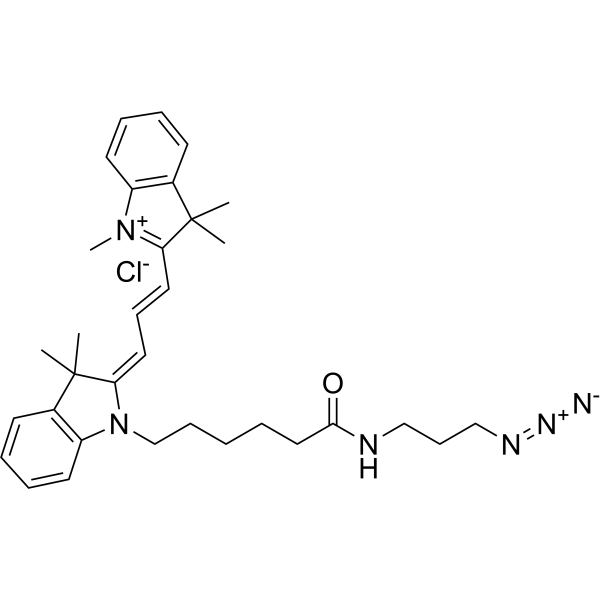
    Cyanine3 azide chloride
    1 Publications Verification

    Fluorescent Dye Others
    Cyanine3 azide chloride, an analog of Cy3 azide, is a potent green fluorescent dye. Cyanine3 azide chloride uses click chemistry coupled with Alkyne-labeled proteins. Cyanine3 azide chloride can be detected by fluorometers, imagers, and microscopes. (λex=684 nm, λem=710 nm) [1]. Cyanine3 azide (chloride) is a click chemistry reagent, it contains an Azide group and can undergo copper-catalyzed azide-alkyne cycloaddition reaction (CuAAc) with molecules containing Alkyne groups. It can also undergo strain-promoted alkyne-azide cycloaddition (SPAAC) reactions with molecules containing DBCO or BCN groups.
    Cyanine3 azide chloride
  • HY-D1777

    PM605

    Fluorescent Dye Others
    Pyrromethene 605 (PM605) is a green-fluorescent polar tracer dye. It is used for investigations of membrane fusion, lysis, and gap-junctional communication and to detect volume changes in cells or liposomes.
    Pyrromethene 605
  • HY-D1372

    Fluorescent Dye Others
    Cyanine3 amine hydrochloride, an analog of Cyanine3 amine, is a potent green fluorescent dye. Cyanine3 amine hydrochloride has the primary amine group and is covalently coupled with reactive groups such as NHS esters, carboxy groups (after carbodiimide activation), and epoxides. (λex=555 nm, λem=570 nm) .
    Cyanine3 amine hydrochloride
  • HY-D1372A

    Fluorescent Dye Others
    Cyanine3 amine (TFA), an analog of Cyanine3 amine, is a potent green fluorescent dye. Cyanine3 amine (TFA) has the primary amine group and is covalently coupled with reactive groups such as NHS esters, carboxy groups (after carbodiimide activation), and epoxides. (λex=555 nm, λem=570 nm) .
    Cyanine3 amine TFA
  • HY-P2496

    Endothelin Receptor Fluorescent Dye NF-κB COX Prostaglandin Receptor Apoptosis TNF Receptor Interleukin Related MMP Cardiovascular Disease Inflammation/Immunology Cancer
    Endothelin 1 (swine, human), Alexa Fluor 488-labeled is an Endothelin-1 conjugated with Alexa Fluor 488 (HY-D1304). Endothelin-1 is an endogenous vasoconstrictor and agonist of ETA/ETB receptor. Endothelin 1 (swine, human) exerts effects including promoting mitosis, angiogenesis, tumor invasion and metastasis, and inhibiting apoptosis. Endothelin 1 (swine, human) induces inflammation and oxidative stress by activating the NF-κB pathway. Endothelin 1 (swine, human), Alexa Fluor 488-labeled is specifically designed for fluorescence imaging, flow cytometry or receptor localization studies, and can be used in research related to sepsis, atherosclerosis, systemic inflammatory response syndrome, cancer and congestive heart failure .
    Endothelin 1 (swine, human), Alexa Fluor 488-labeled
  • HY-W248118

    PM556

    Fluorescent Dye Others
    Pyrromethene 556 (PM556) is a green-fluorescent polar tracer dye. It is used for investigations of membrane fusion, lysis, and gap-junctional communication and to detect volume changes in cells or liposomes.
    Pyrromethene 556
  • HY-D1608

    Calcium Channel Others
    BODIPY FL Thapsigargin is a potent green fluorescent dye. BODIPY FL Thapsigargin inhibits intracellular SERCA-type Ca2+ pumps present in the sarcoplasmic/endoplasmic reticulum. BODIPY FL Thapsigargin used for investigation of thapsigargin binding sites in live cells .
    BODIPY FL Thapsigargin
  • HY-D1611

    Fluorescent Dye Others
    BODIPY FL-C5 NHS Ester is a green-fluorescent dye that is reactive with primary amines on biomolecules such as peptides, proteins, modified nucleotides and biopolymers .
    BODIPY FL-C5 NHS Ester
  • HY-172269

    Fluorescent Dye Others
    BP Fluor 488 is a bright, green-fluorescent dye widely used for labeling aldehydes or ketones in polysaccharides or glycoproteins. The dye has an excitation peak at 499 nm and an emission peak at 520 nm. The conjugates are widely used in microscopy, flow cytometry, and other applications.
    BP Fluor 488
  • HY-168947

    Fluorescent Dye Others
    Green Fluorescent PLGA nanoparticles, 100nm is a PLGA nanoparticle labeled with a green fluorescent dye and is commonly used in imaging and diagnostic applications.
    Green Fluorescent PLGA nanoparticles, 100nm
  • HY-D1074

    3,3'-Dipropyloxacarbocyanine iodide

    Fluorescent Dye Others
    DiOC3(3) (3,3'-Dipropyloxacarbocyanine iodide) is a green fluorescent lipophilic dye with cell membrane permeability. DiOC3(3) can be used to stain cell membranes and other lipid-soluble biological structures .
    DiOC3(3)
  • HY-D1113

    Fluorescent Dye Others
    TFAX 488,TFP is a green fluorescent dye and exhibits pH-insensitivity over a very broad range (pH in the 4-10). TFAX 488,TFP yields exceptionally bright, photostable conjugates with proteins or antibodies (such as goat anti-mouse IgG, streptavidin) .
    TFAX 488,TFP
  • HY-D1114

    Fluorescent Dye Others
    TFAX 488,SE dilithium is a green fluorescent dye and exhibits pH-insensitivity over a very broad range (pH in the 4-10). TFAX 488,SE dilithium yields exceptionally bright, photostable conjugates with proteins or antibodies (such as goat anti-mouse IgG, streptavidin) .
    TFAX 488,SE dilithium
  • HY-D2459

    Fluorescent Dye Cancer
    Alexa Fluor 430 NHS ester is a compound that couples green fluorescent dye Alexa Fluor 430 to a protein or antibody. Alexa Fluor 430 is used for the generation of stable signals in imaging and flow cytometry. NHS ester can be used to label proteins, amine-modified oligonucleotides and other primary amines (R-NH2) containing amine molecules .
    Alexa Fluor 430 NHS ester
  • HY-D2757

    Fluorescent Dye Others
    5(6)-Carboxyrhodamine 110 NHS Ester is the nonsulfonated analog of the BP Fluor 488 dye. The amine-reactive 5(6)-Carboxyrhodamine 110 NHS ester can be used to create bright and photostable green-fluorescent bioconjugates with excitation/emission maxima ~502/527 nm. The conjugates of this dye often used for Fluorescence Correlation Spectroscopy (FCS).
    5(6)-Carboxyrhodamine 110 NHS ester
  • HY-114352

    Fluorescent Dye Others
    BODIPY FL-X is a green-fluorescent dye. BODIPY FL-X has the succinimidyl ester covalently coupled to proteins. BODIPY FL-X has high fluorescence quantum yield and is relatively insensitive to pH change. (λex=504 nm, λem=510 nm) .
    BODIPY FL-X
  • HY-168947A

    Fluorescent Dye Others
    Green Fluorescent PLGA nanoparticles, 200nm is a PLGA nanoparticle labeled with a green fluorescent dye and is commonly used in imaging and diagnostic applications.
    Green Fluorescent PLGA nanoparticles, 200nm
  • HY-168947B

    Fluorescent Dye Others
    Green Fluorescent PLGA nanoparticles, 500nm is a PLGA nanoparticle labeled with a green fluorescent dye and is commonly used in imaging and diagnostic applications.
    Green Fluorescent PLGA nanoparticles, 500nm
  • HY-W800775

    Fluorescent Dye Others
    BP Fluor 647 Alkyne is a bright green-fluorescent dye optimal for use with the 633, 650 nm Argon laser. The alkyne group can react with azides via copper catalyzed Click Chemistry reactions. The dye is water soluble and pH-insensitive from pH 4 to pH 10. The dye has 4 sulfonate groups which make it highly water soluble and cause less aggregation in the aqueous solution. BP Fluor 647 Alkyne is used for protein and antibody labeling, or nucleic acid applications with high labeling density.
    BP Fluor 647 Alkyne
  • HY-D2773

    Fluorescent Dye Others
    5-Carboxyrhodamine 110 NHS Ester is the nonsulfonated analog of the BP Fluor 488 dye. The amine-reactive 5(6)-Carboxyrhodamine 110 NHS Ester can be used to create bright and photostable green-fluorescent bioconjugates with excitation/emission maxima ~502/527 nm. For many applications, the dye is preferred over 5-(6)-carboxyfluorescein NHS ester or FITC because of its exceptional photostability and fluorescence insensitivity to pH (4-9). Although the mixed isomers of Carboxyrhodamine 110 NHS Ester preferred, routinely used fluorescent dye for labeling proteins, peptides and nucleotides, purification of peptide and nucleotides labeled with 5(6) isomers might be troublesome due to significant signal broadening in HPLC purification. Peptides and nucleotides labeled with a single isomer usually give better resolution in HPLC purification that is often required in the conjugation processes.
    5-Carboxyrhodamine 110 NHS ester
  • HY-D2768

    Fluorescent Dye Others
    BP Fluor 430 NHS Ester is a water-soluble, green-fluorescent dye that is often used in multi-color applications, including flow cytometry and super-resolution microscopy using STORM. Its excitation is ideally suited for the 407 nm spectral line of the krypton laser or the 408 nm violet laser diode. BP Fluor 405 conjugates are pH-insensitive from pH 4 to pH 10. The NHS ester (or succinimidyl ester) is the most popular amine reactive group for labeling the primary amines of proteins (Lys), amine-modified oligonucleotides, and other amine-containing molecules. Proteins can be labeled with BP Fluor 430 NHS Ester at high molar ratios without significant self-quenching, leading to brighter conjugates and more sensitive detection.
    BP Fluor 430 NHS ester
  • HY-D1690

    Fluorescent Dye Others
    sBADA TFA is a potent green fluorescent dye. sBADA TFA is a sulfonated BODIPY-FL 3-amino-D-alanine. sBADA TFA is used to label peptidoglycans in bacterial cell walls in situ. (λex=490 nm, λem=510 nm) .
    sBADA TFA
  • HY-D2741

    Fluorescent Dye Others
    MB 488 NHS ester is a fluroescent agent with a terminal NHS ester group. MB 488 NHS ester is a green fluorescent, very hydrophilic dye molecule that has a maximal absorption of 501 nm and emission at 524 nm. The NHS ester can be applied to label the primary amines (-NH2) of proteins, amine-modified oligonucleotides, and other amine-containing molecules.
    MB 488 NHS ester
  • HY-D1597

    Fluorescent Dye Others
    Cyanine3.5 azide chloride, an analog of Cyanine3.5 azide, is a potent green fluorescent dye. Cyanine3.5 azide chloride uses click chemistry to tag the ethylidene group. (λex=591 nm, λem=604 nm) . Cyanine3.5 azide (chloride) is a click chemistry reagent, it contains an Azide group and can undergo copper-catalyzed azide-alkyne cycloaddition reaction (CuAAc) with molecules containing Alkyne groups. It can also undergo strain-promoted alkyne-azide cycloaddition (SPAAC) reactions with molecules containing DBCO or BCN groups.
    Cyanine3.5 azide chloride

Inquiry Online

Your information is safe with us. * Required Fields.

Salutation


Country or Region *

Applicant Name *


Organization Name *

Department *


Email Address *


Product Name *

Cat. No.


Requested quantity *

Phone Number *


Remarks

Inquiry Online

Inquiry Information

Product Name:
Cat. No.:
Quantity:
MCE Japan Authorized Agent:

