1. Search Result
Search Result
Results for "

insect pest control

" in MedChemExpress (MCE) Product Catalog:

33

Inhibitors & Agonists

1

Peptides

3

Natural
Products

5

Isotope-Labeled Compounds

Cat. No. Product Name Target Research Areas Chemical Structure
  • HY-118504
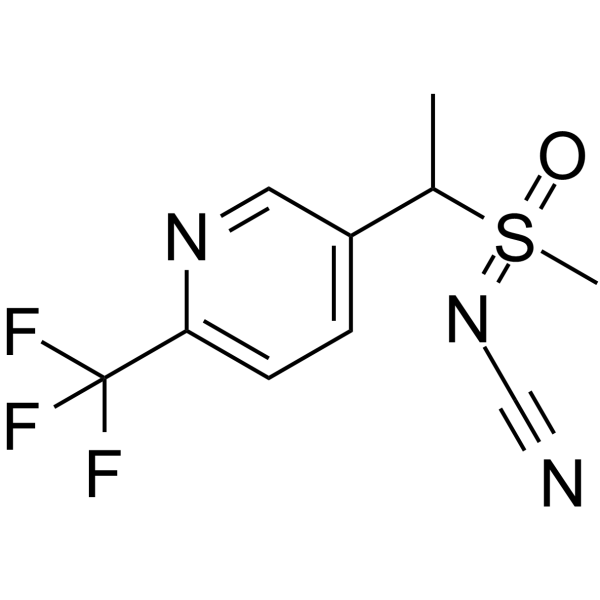
    Sulfoxaflor
    1 Publications Verification

    Environmental Pollutants nAChR Neurological Disease
    Sulfoxaflor is an orally active full agonist of insect nicotinic acetylcholine receptors (nAChRs), targeting the α-bungarotoxin-insensitive nAChR1 and nAChR2 subtypes. Sulfoxaflor binding to nACh is not inhibited by d-Tubocurarine (HY-125901), but is partially inhibited by Mecamylamine (HY-B1395A). Sulfoxaflor induces inward currents by activating nAChRs, leading to insect neurotoxicity. Sulfoxaflor can be used in the research of agricultural pest control, pesticide toxicology, insect neural receptor pharmacology, etc .
    Sulfoxaflor
  • HY-B0840

    Environmental Pollutants Parasite Oxidative Phosphorylation Metabolic Disease
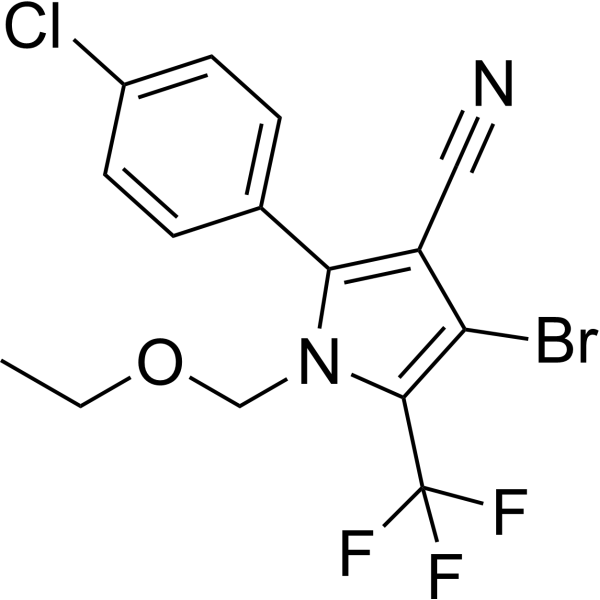
    Chlorfenapyr is a pyrrole insecticide. Chlorfenapyr has a mode of action: the mixed function oxidase oxidizes and removes the Nethoxymethyl group to form the active metabolite, CL 303268. Chlorfenapyr is used for termite control and crop protection against a variety of insect and mite pests .
    Chlorfenapyr
  • HY-133167
    Clothianidin
    1 Publications Verification

    Environmental Pollutants Insecticide Others
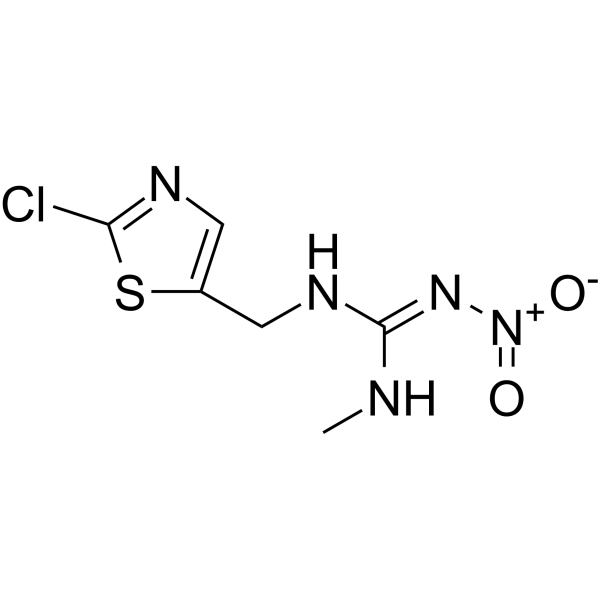
    Clothianidin is a neonicotinoid insecticide. Clothianidin shows excellent long-term control effect in small doses against various insect pests such as Coleoptera, Thysanoptera, Lepidoptera, Diptera, Homoptera, Heteroptera, Orthoptera and Isoptera families. Clothianidin has various application methods and high safety for crops .
    Clothianidin
  • HY-B0827
    Dinotefuran
    4 Publications Verification

    MTI-446

    Environmental Pollutants Parasite nAChR Infection Cardiovascular Disease
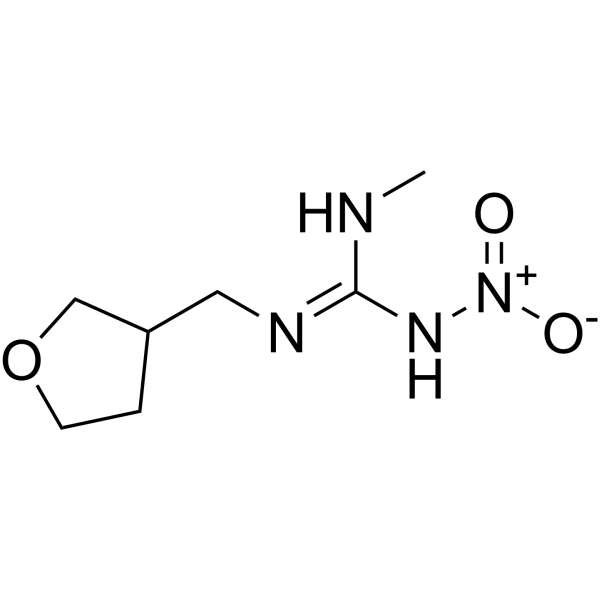
    Dinotefuran is an orally active and competitive inhibitor and insecticide targeting insect nicotinic acetylcholine receptors (nAChRs). Dinotefuran blocks neural signaling and induces neural dysfunction in insects. Dinotefuran binds to [ 3H]epibatidine in the neural cord membrane of American cockroach with an IC50 of 890 nM and to [ 3H]α-bungarotoxin with an IC50 of 36.1 μM. Dinotefuran exhibits knockdown activity (KD50=0.351 nmol/g) and lethal activity (LD50=0.173 nmol/g) against German cockroach. Dinotefuran is mainly used for agricultural pest control, such as field control of piercing-sucking and chewing insects (e.g., aphids, planthoppers), while its environmental toxicological effects (e.g., oxidative stress and reproductive neurotoxicity on earthworms) are also a research focus to assess ecological risks .
    Dinotefuran
  • HY-B1072A

    (-)-trans-Phenothrin

    Parasite Infection
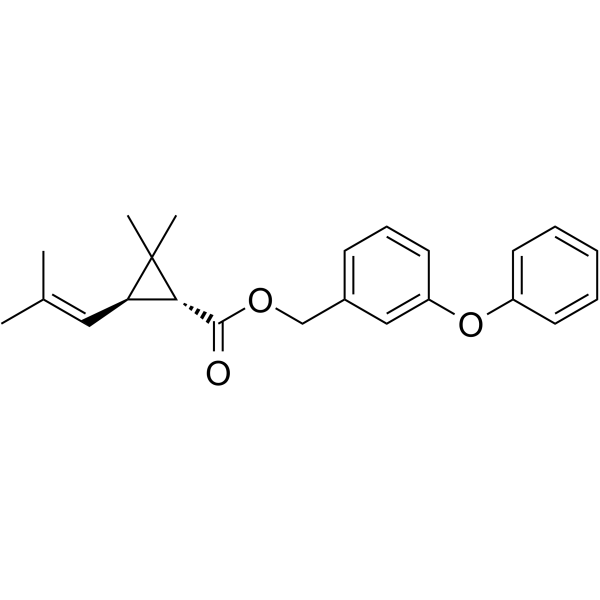
    D-Phenothrin ((-)-trans-Phenothrin), an orally active Type II synthetic pyrethroid, is widely used to kill insects, mosquitoes, and human lice. D-Phenothrin is also used in veterinary medicine to control insect pests on animals and protect agricultural crops .
    D-Phenothrin
  • HY-B2054

    Environmental Pollutants Insecticide MDM-2/p53 Apoptosis Cancer
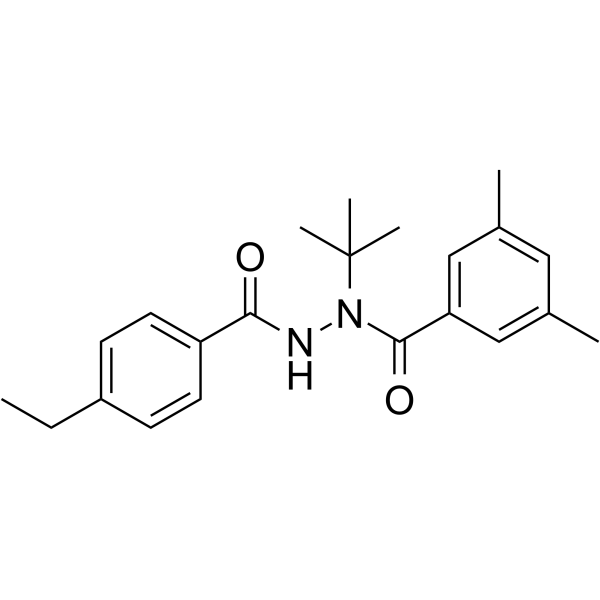
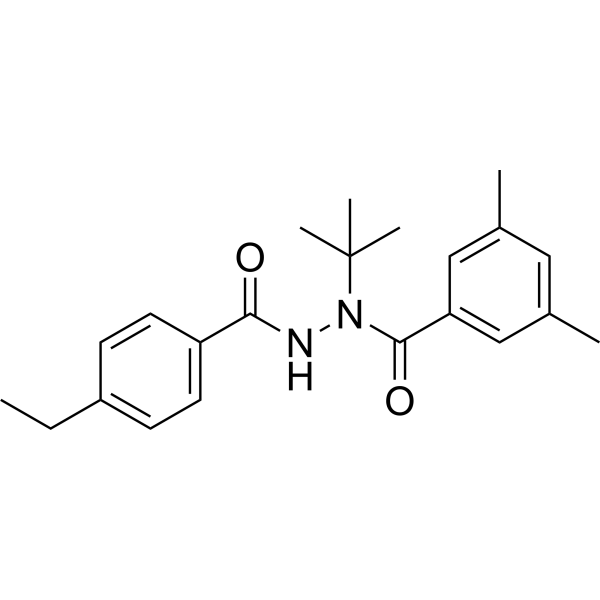
    Tebufenozide is a nonsteroidal ecdysone agonist used to control pest. Tebufenozide has cytotoxic and induces apoptosis in HeLa and insect Tn5B1-4 cells .
    Tebufenozide
  • HY-126741R

    Reference Standards Apoptosis Parasite NF-κB Bcl-2 Family Caspase Infection Inflammation/Immunology Cancer
    Azadirachtin (Standard) is the analytical standard of Azadirachtin. This product is intended for research and analytical applications. Azadirachtin, one of the most promising botanical insecticides, is widely used for pest control. Azadirachtin induces apoptosis in insect cell lines, including Sf9, SL-1 and BTI-Tn-5B1-4 .
    Azadirachtin (Standard)
  • HY-114117

    GF-3242

    Environmental Pollutants Insecticide Infection
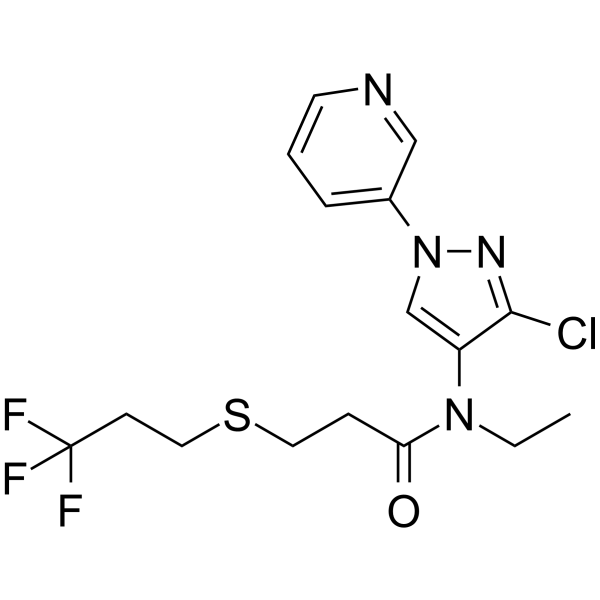
    Tyclopyrazoflor (GF-3242) is a pyridylpyrazole Insecticide. Tyclopyrazoflor exhibits excellent insecticidal efficacy against sap-sucking insects. Tyclopyrazoflor effectively controls insect pests caused by Myzus persicae and Bemisia tabaci larvae .\n

    Tyclopyrazoflor
  • HY-133204

    IKI-7899

    Environmental Pollutants Insecticide Others
    Chlorfluazuron (IKI-7899) is a benzoylurea insecticide. Chlorfluazuron inhibts insect chitin and disrupts normal exuviation by inducing malformations, thereby preventing and controlling lepidopteran pests .
    Chlorfluazuron
  • HY-B0816

    Environmental Pollutants Insecticide Others Cancer
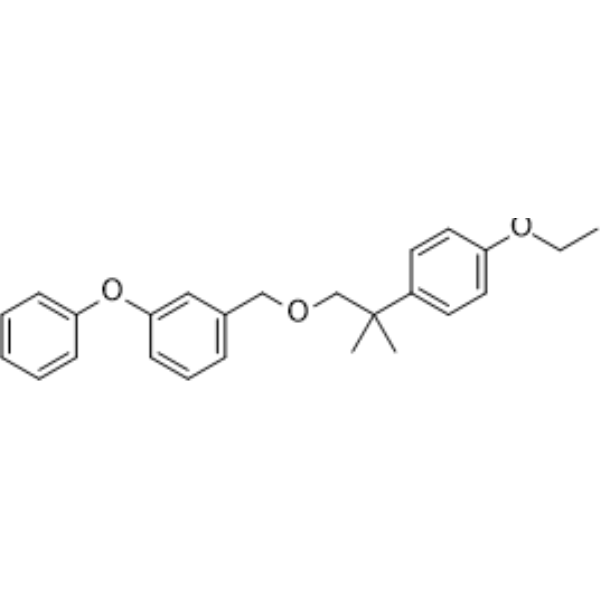
    Etofenprox is an orally active non-ester pyrethroid insecticide. Etofenprox induces toxicity against many pest insects, including Diptera rather than mammalian and fish. Etofenprox has a liver tumor-promoting activity in rats accompanied with microsomal ROS production increase. Etofenprox can be used in agricultural pest control and malaria research .
    Etofenprox
  • HY-B0840R

    Oxidative Phosphorylation Parasite Reference Standards Metabolic Disease
    Chlorfenapyr (Standard) is the analytical standard of Chlorfenapyr. This product is intended for research and analytical applications. Chlorfenapyr is a pyrrole insecticide. Chlorfenapyr has a mode of action: the mixed function oxidase oxidizes and removes the Nethoxymethyl group to form the active metabolite, CL 303268. Chlorfenapyr is used for termite control and crop protection against a variety of insect and mite pests .
    Chlorfenapyr (Standard)
  • HY-117146

    (S)-DPX-JW062

    Parasite Infection
    Indoxacarb ((S)-DPX-JW062) is an oxathiazole insecticide with activity against a wide range of insect pests. Indoxacarb is used in forest pest management to control insect pests, and its toxicity has significant effects on adult individuals of the predatory stink bug Podisus distinctus. Indoxacarb showed high toxicity to P. distinctus at a lethal concentration (LC50 = 2.62 g L-1). Indoxacarb treatment significantly reduced the survival rate of P. distinctus, with the survival rate of individuals exposed to 2.62 g L-1 decreasing to 40.7%. Indoxacarb also reduced the respiration rate of P. distinctus from 18.45 to 14.41 μL CO2 h-1, and inhibited its food intake. P. distinctus showed hyperexcitatory responses after Indoxacarb treatment .
    Indoxacarb
  • HY-133167S

    Isotope-Labeled Compounds Others
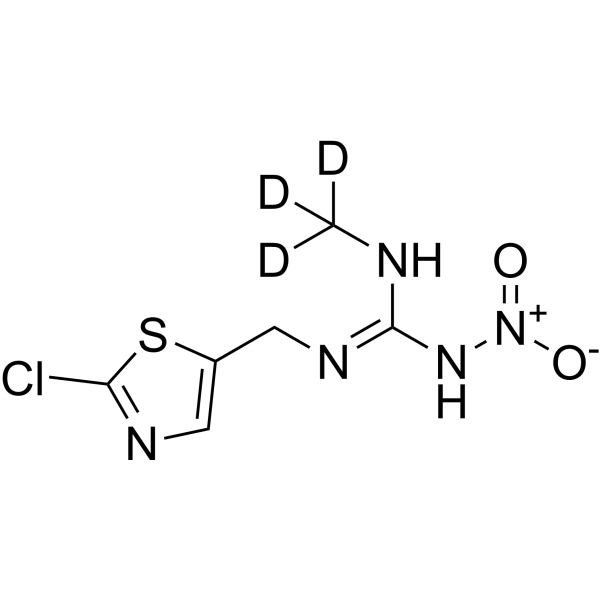
    Clothianidin-d3 is the deuterium labeled Clothianidin.Clothianidin-d3 is a neonicotinoid insecticide. Clothianidin-d3 shows excellent long-term control effect in small doses against various insect pests such as Coleoptera, Thysanoptera, Lepidoptera, Diptera, Homoptera, Heteroptera, Orthoptera and Isoptera families. Clothianidin-d3 has various application methods and high safety for crops .
    Clothianidin-d3
  • HY-B1970

    2,4'-DDT

    Insecticide Estrogen Receptor/ERR Endocrinology
    o,p'-DDT (2,4'-DDT) is a chlorinated organic pesticide with estrogenic activity. o,p'-DDT is persistent in the environment, can accumulate in organisms and disrupt the endocrine system. o,p'-DDT is used in agriculture as a pesticide, especially for controlling insect pests. The use of o,p'-DDT has led to toxic effects in organisms, raising widespread concern about its environmental and health effects. o,p'-DDT has also led to research into its long-term effects in ecosystems .
    o,p'-DDT
  • HY-N16475

    nAChR Infection
    Spinosyn L is a selective nicotinic acetylcholine receptors (nAChR) agonist. Spinosyn L causes sustained neural excitation and paralysis in insects. Spinosyn L is promising for research of pesticides for controlling Lepidoptera, Diptera, and other agricultural pests .
    Spinosyn L
  • HY-119381

    Jodfenphos

    Insecticide Others
    Iodofenphos (Jodfenphos) is an insecticide, that can be used as a protectant for stored grains. Iodofenphos is effective against grain pests, such as Sitophilus oryzae, Tribolium castaneum, and larvae of Trogoderma granarium, and has a significant residual toxicity, which could provide good insect control for several months .
    Iodofenphos
  • HY-176748

    PP 484

    Parasite Infection
    Primidophos is an ingredient in insecticide and acaricide compositions. Primidophos can be used in research on the prevention and control of insect and acarid pests .
    Primidophos
  • HY-162778

    Parasite Infection
    FM-1088 is an insecticide. FM-1088 can be used in research related to crop disease and insect pest control .
    FM-1088
  • HY-169068

    Carboxylesterase (CES) Infection
    Antifeedant agent 1 is a carboxylesterase inhibitor that exerts insecticidal activity by inhibiting insect feeding, with an EC50 value of 0.038 mg/mL. Antifeedant agent 1 can be used in research related to pest control .
    Antifeedant agent 1
  • HY-148968

    Carbathion

    Fungal Infection
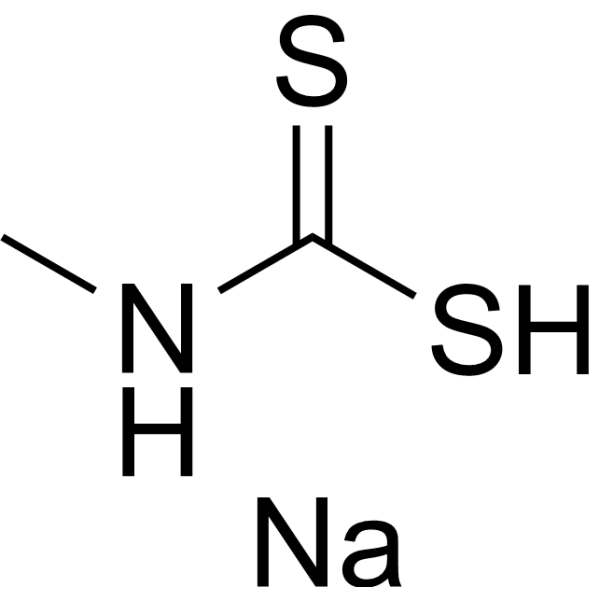
    Metham sodium (Carbathion) is a broad-spectrum soil microbial suppressant. Metham sodium controls soil-borne pests and weeds. Metham sodium inhibits weed seeds, plant-parasitic nematodes, plant pathogenic fungi and soil insects .
    Metham sodium
  • HY-118751

    Bancol

    nAChR Others Neurological Disease
    Bensultap (Bancol) is an insecticide, which can control Colorado beetle and some other insect pests. Bensultap is a modulator for nicotinic acetylcholine receptor (nAChR), and exhibits mild and temporary neuromodulatory efficacy on rat nervous system .
    Bensultap
  • HY-105581

    Oxinothiofos

    Cholinesterase (ChE) Others
    Quintiofos (Oxinothiofos) is an insecticide. Quintiofos inhibits the activity of acetylcholinesterase in insects, causing nerve conduction disorders, thereby achieving an insecticidal effect. Quintiofos can be used to control a variety of pests, such as aphids, whiteflies, and stem borers .
    Quintiofos
  • HY-133204R

    IKI-7899 (Standard)

    Insecticide Reference Standards Others
    Chlorfluazuron (Standard) is the analytical standard of Chlorfluazuron. This product is intended for research and analytical applications. Chlorfluazuron (IKI-7899) is a benzoylurea insecticide. Chlorfluazuron inhibts insect chitin and disrupts normal exuviation by inducing malformations, thereby preventing and controlling lepidopteran pests .
    Chlorfluazuron (Standard)
  • HY-B0816R

    Insecticide Reference Standards Others
    Etofenprox (Standard) is the analytical standard of Etofenprox. This product is intended for research and analytical applications. Etofenprox is an orally active non-ester pyrethroid insecticide. Etofenprox induces toxicity against many pest insects, including Diptera rather than mammalian and fish. Etofenprox has a liver tumor-promoting activity in rats accompanied with microsomal ROS production increase. Etofenprox can be used in agricultural pest control and malaria research .
    Etofenprox (Standard)
  • HY-W718786

    Isotope-Labeled Compounds Insecticide Cancer
    Etofenprox-phenol-d5 is the deuterium labeled Etofenprox (HY-B0816). Etofenprox is an orally active non-ester pyrethroid insecticide. Etofenprox induces toxicity against many pest insects, including Diptera rather than mammalian and fish. Etofenprox has a liver tumor-promoting activity in rats accompanied with microsomal ROS production increase. Etofenprox can be used in agricultural pest control and malaria research .
    Etofenprox-phenol-d5
  • HY-B2054S

    Isotope-Labeled Compounds Apoptosis Insecticide MDM-2/p53 Cancer
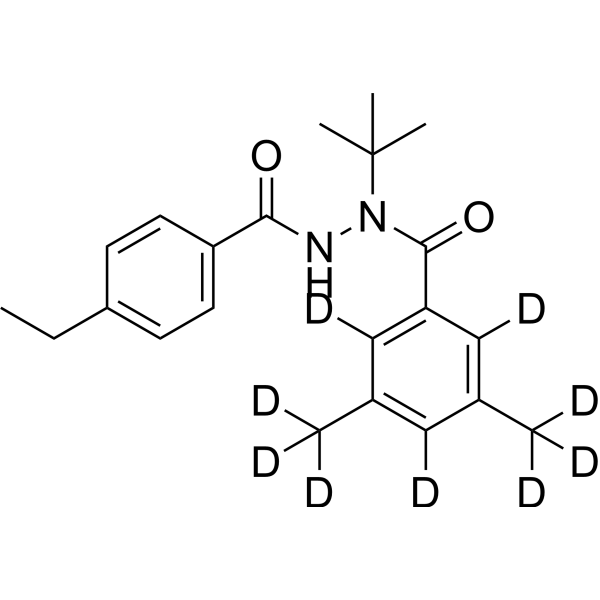
    Tebufenozide-d9 is the deuterium labeled Tebufenozide (HY-B2054). Tebufenozide is a nonsteroidal ecdysone agonist used to control pest. Tebufenozide has cytotoxic and induces apoptosis in HeLa and insect Tn5B1-4 cells .
    Tebufenozide-d9
  • HY-118504S

    Isotope-Labeled Compounds nAChR Neurological Disease
    Sulfoxaflor-d3 is the deuterium labeled Sulfoxaflor (HY-118504). Sulfoxaflor is an orally active full agonist of insect nicotinic acetylcholine receptors (nAChRs), targeting the α-bungarotoxin-insensitive nAChR1 and nAChR2 subtypes. Sulfoxaflor binding to nACh is not inhibited by d-Tubocurarine (HY-125901), but is partially inhibited by Mecamylamine (HY-B1395A). Sulfoxaflor induces inward currents by activating nAChRs, leading to insect neurotoxicity. Sulfoxaflor can be used in the research of agricultural pest control, pesticide toxicology, insect neural receptor pharmacology, etc .
    Sulfoxaflor-d3
  • HY-B2054R

    Reference Standards Apoptosis Insecticide MDM-2/p53 Cancer
    Tebufenozide (Standard) is the analytical standard of Tebufenozide (HY-B2054). This product is intended for research and analytical applications. Tebufenozide is a nonsteroidal ecdysone agonist used to control pest. Tebufenozide has cytotoxic and induces apoptosis in HeLa and insect Tn5B1-4 cells .
    Tebufenozide (Standard)
  • HY-119381R

    Jodfenphos (Standard)

    Reference Standards Insecticide Infection
    Iodofenphos (Standard) is the analytical standard of Iodofenphos. This product is intended for research and analytical applications. Iodofenphos (Jodfenphos) is an insecticide, that can be used as a protectant for stored grains. Iodofenphos is effective against grain pests, such as Sitophilus oryzae, Tribolium castaneum, and larvae of Trogoderma granarium, and has a significant residual toxicity, which could provide good insect control for several months .
    Iodofenphos (Standard)
  • HY-133167R

    Insecticide Reference Standards Others
    Clothianidin (Standard) is the analytical standard of Clothianidin. This product is intended for research and analytical applications. Clothianidin is a neonicotinoid insecticide. Clothianidin shows excellent long-term control effect in small doses against various insect pests such as Coleoptera, Thysanoptera, Lepidoptera, Diptera, Homoptera, Heteroptera, Orthoptera and Isoptera families. Clothianidin has various application methods and high safety for crops .
    Clothianidin (Standard)
  • HY-W770250

    Isotope-Labeled Compounds Insecticide Others
    Clothianidin-d3, 13C1 is the 13C-labeled Clothianidin (HY-133167). Clothianidin is a neonicotinoid insecticide. Clothianidin shows excellent long-term control effect in small doses against various insect pests such as Coleoptera, Thysanoptera, Lepidoptera, Diptera, Homoptera, Heteroptera, Orthoptera and Isoptera families. Clothianidin has various application methods and high safety for crops .
    Clothianidin-d3,13C1
  • HY-P11156

    Parasite Infection
    Sulfated sulfakinin is a Sulfakinin receptor (SKR) activator with EC50s of 1.6 and 5.4 nM for Tribolium castaneumTc TcSKR1 and TcSKR2, respectively. SKRs are G-protein-coupled receptors (GPCRs) that interact with sulfakinins to modulate diverse biological processes. Sulfated sulfakinin can be used for tho control of pest insects research .
    Sulfated sulfakinin
  • HY-N18873

    Insecticide Infection
    Inulasalsolin is a insecticide with antifeedant activity, which is isolated from the plant Inula salsoloides. Inulasalsolin reduces the feeding behavior of third-instar Plutella xylostella larvae. Inulasalsolin induces the death of third-instar Plutella xylostella larvae and vegetable aphids. Inulasalsolin is applicable to pest control research .
    Inulasalsolin

Inquiry Online

Your information is safe with us. * Required Fields.

Salutation


Country or Region *

Applicant Name *


Organization Name *

Department *


Email Address *


Product Name *

Cat. No.


Requested quantity *

Phone Number *


Remarks

Inquiry Online

Inquiry Information

Product Name:
Cat. No.:
Quantity:
MCE Japan Authorized Agent: