



Clothianidin (Standard)

Based on 1 Customer Validation
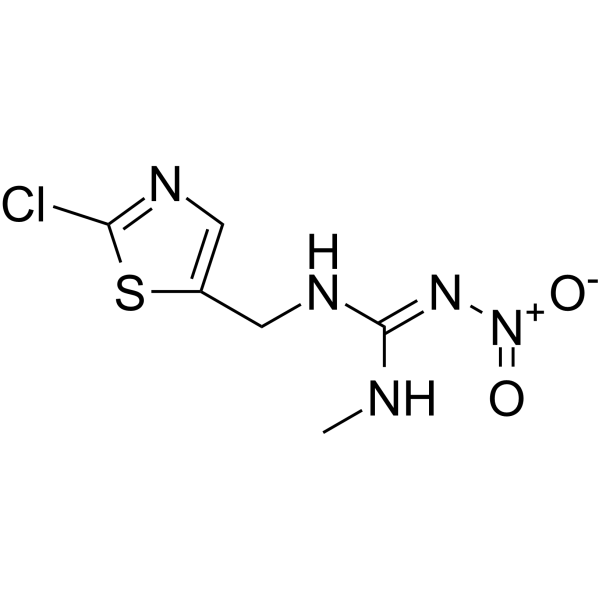
Clothianidin (Standard) is the analytical standard of Clothianidin. This product is intended for research and analytical applications. Clothianidin is a neonicotinoid insecticide. Clothianidin shows excellent long-term control effect in small doses against various insect pests such as Coleoptera, Thysanoptera, Lepidoptera, Diptera, Homoptera, Heteroptera, Orthoptera and Isoptera families. Clothianidin has various application methods and high safety for crops.
For research use only. We do not sell to patients.
- CAS No.: 210880-92-5
- Formula: C6H8ClN5O2S
- Molecular Weight:249.68
-
Storage:
Please store the product under the recommended conditions in the Certificate of Analysis.


To place orders, for customer services and technical support, please contact: MedChemExpress USA
Tel: 609-228-6898 E-mail: [email protected] [email protected]


-
 Product Information
-
Chemical Information
- Purity & Documentation
-
 Help & FAQs


-
HY-133167
ClothianidinInsecticide -
HY-B0833
ThiamethoxamInsecticide -
HY-B0833R
Thiamethoxam (Standard)Insecticide -
HY-137296
LumogallionAluminum Ion Fluorescent Dyes -
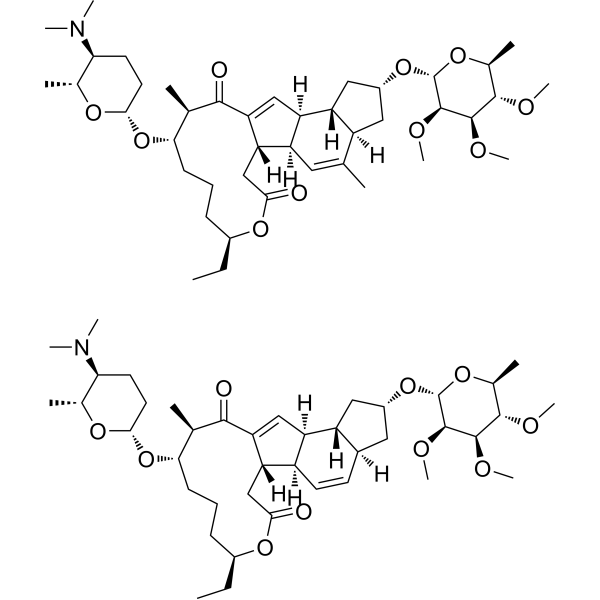
HY-138800
SpinosadAcetylcholine Agonist -
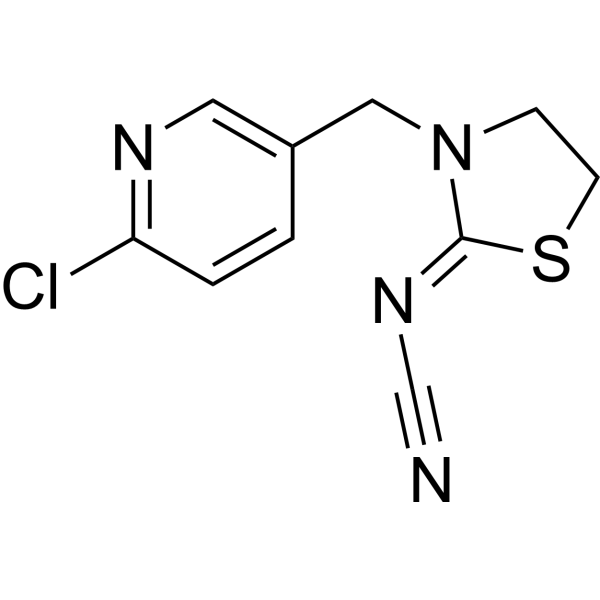
HY-B1953
ThiaclopridInsecticide -
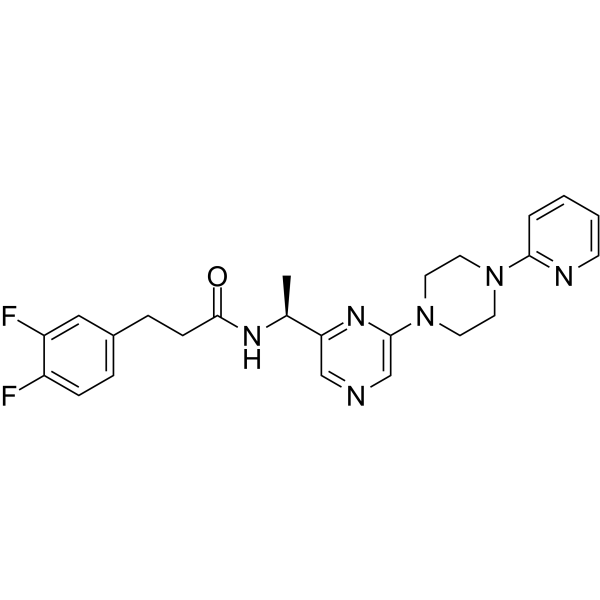
HY-114269
(-)-(S)-B-973Bα7 nAChR Activator -
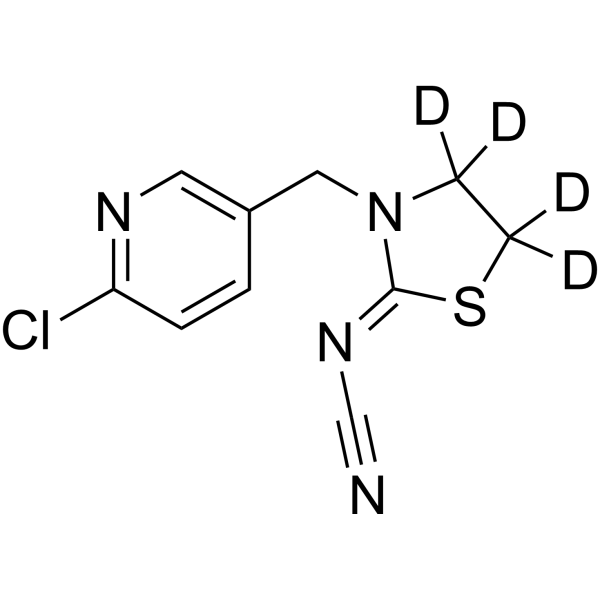
HY-B1953S
Thiacloprid-d4Stable Isotope -
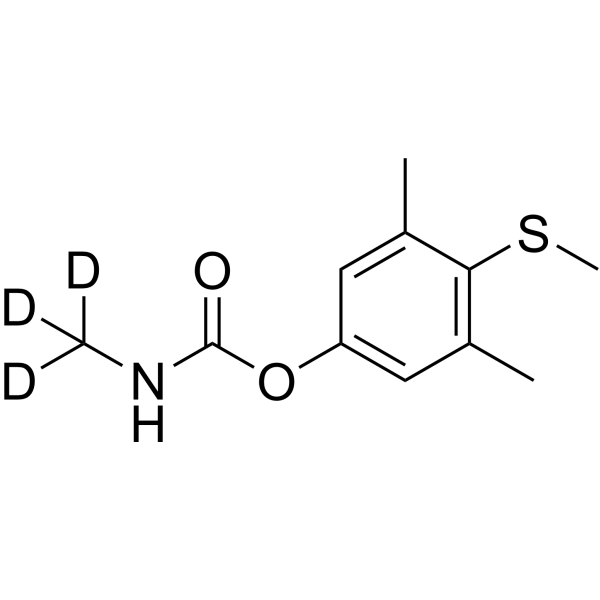
HY-124920S
Methiocarb-d3Stable Isotope -

HY-130349
Emamectin B1a


Product Information
Information
Application
The compound is the grade of analytical standard, which is the reference standard supplied assay. It is commonly used in qualitative, quantitative and methodological research experiments in HPLC, GC and MS.


Chemical Information
-
CAS No. 210880-92-5
-
Appearance Solid
-
Molecular Weight 249.68
-
Formula C6H8ClN5O2S
-
Color White to off-white
-
SMILES
CN/C(NCC1=CN=C(Cl)S1)=N\[N+]([O-])=O
-
Shipping
Room temperature in continental US; may vary elsewhere.
-
Storage
Please store the product under the recommended conditions in the Certificate of Analysis.


Purity & Documentation
-
SDS (252 KB)
- Français - FR (252 KB)
- Deutsch - DE (252 KB)
- Norwegian - NO (252 KB)
- Español - ES (252 KB)
- Swedish - SV (252 KB)
- Italian - IT (252 KB)
- Korean - KR (252 KB)
- Portuguese - PT (252 KB)
-
Handling Instructions (2659 KB)
References
[1]. Uneme H. Chemistry of clothianidin and related compounds. J Agric Food Chem. 2011 Apr 13;59(7):2932-7. [Content Brief]
[3]. Pecenka JR, et al. Non-target effects of clothianidin on monarch butterflies. Naturwissenschaften. 2015 Apr;102(3-4):19. [Content Brief]
[4]. de Perre C, et al. Fate and effects of clothianidin in fields using conservation practices. Environ Toxicol Chem. 2015 Feb;34(2):258-65. [Content Brief]

Calculators
Concentration (start) × Volume (start) = Concentration (final) × Volume (final)


Clothianidin (Standard) Related Classifications
HY-133167R Related Classifications
 Powered by Bioz