



Chlorfenapyr (Standard)

Based on 1 Customer Validation
Chlorfenapyr (Standard) is the analytical standard of Chlorfenapyr. This product is intended for research and analytical applications. Chlorfenapyr is a pyrrole insecticide. Chlorfenapyr has a mode of action: the mixed function oxidase oxidizes and removes the Nethoxymethyl group to form the active metabolite, CL 303268. Chlorfenapyr is used for termite control and crop protection against a variety of insect and mite pests.
For research use only. We do not sell to patients.
- Purity : 99.58%
- CAS No.: 122453-73-0
- Formula: C15H11BrClF3N2O
- Molecular Weight:407.61
-
Storage:
Please store the product under the recommended conditions in the Certificate of Analysis.


To place orders, for customer services and technical support, please contact: MedChemExpress USA
Tel: 609-228-6898 E-mail: [email protected] [email protected]


-
 Product Information
-
Chemical Information
- Purity & Documentation
-
 Help & FAQs


-
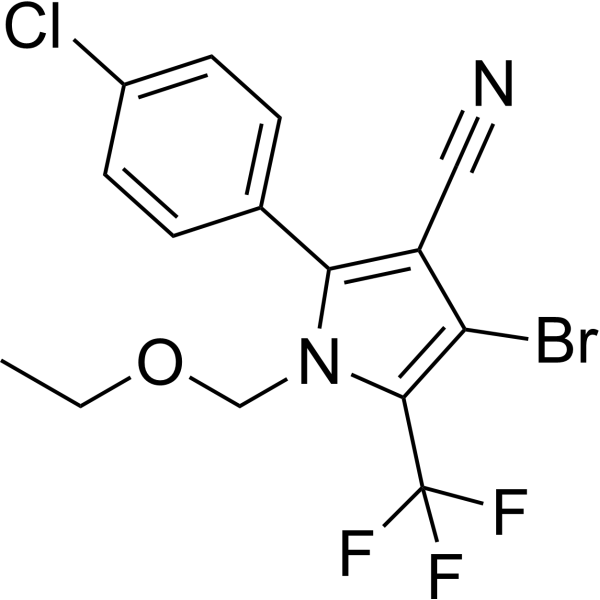
HY-B0840
ChlorfenapyrPyrrole Insecticide -
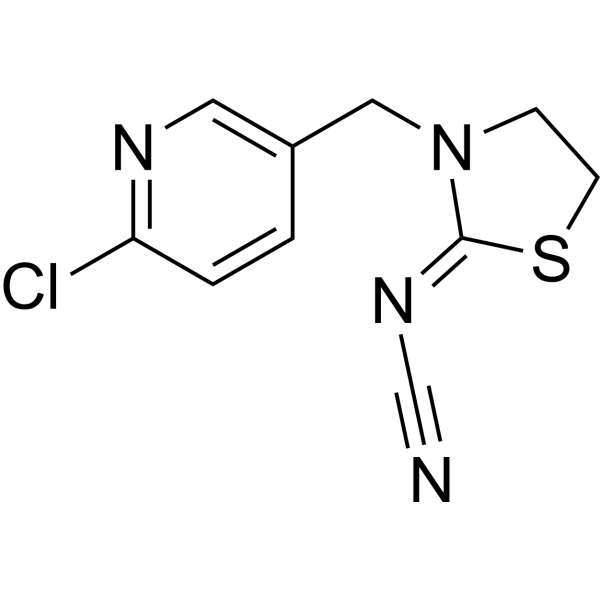
HY-B1953
ThiaclopridInsecticide -
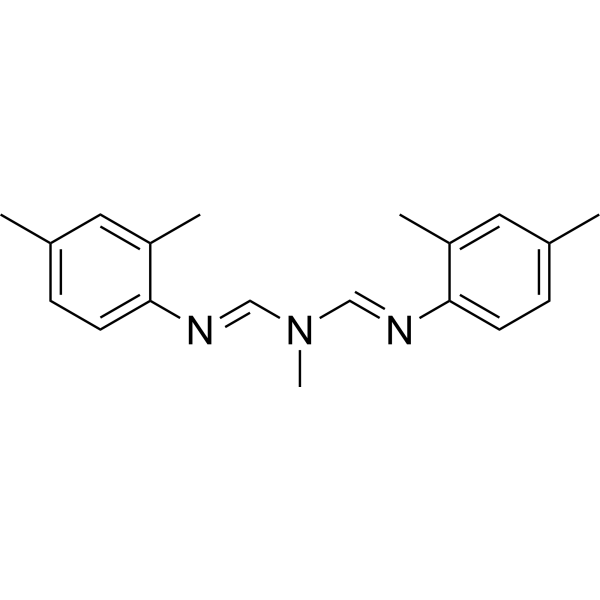
HY-B1111
AmitrazParasite Inhibitor -
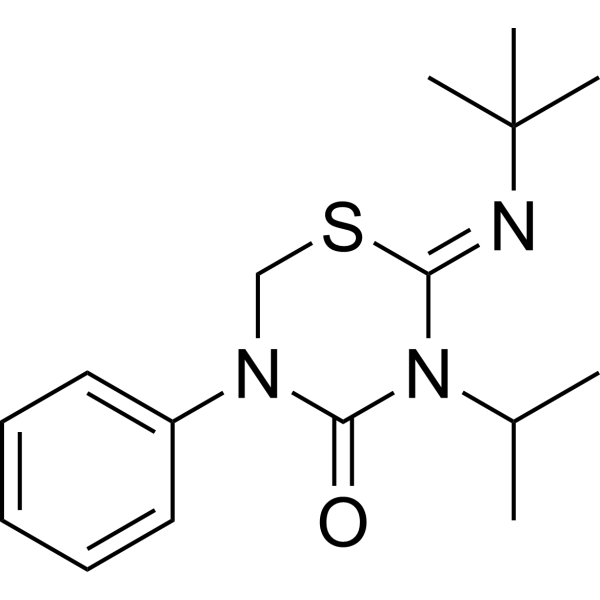
HY-B0831
BuprofezinChitin Synthesis Inhibitor -
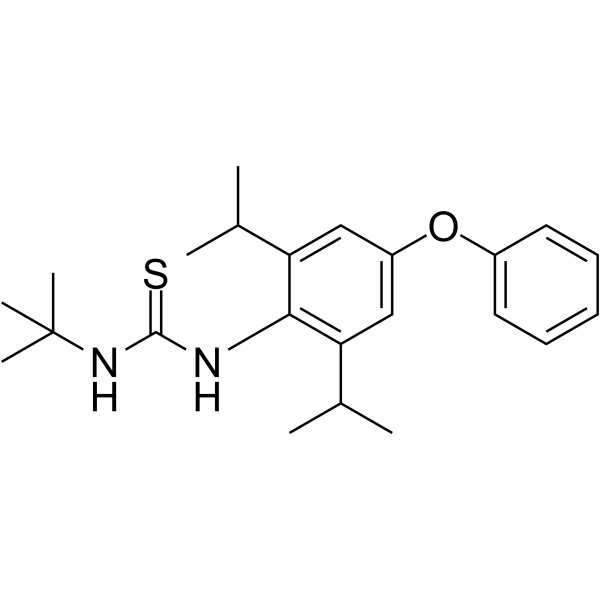
HY-136394
DiafenthiuronPesticide -
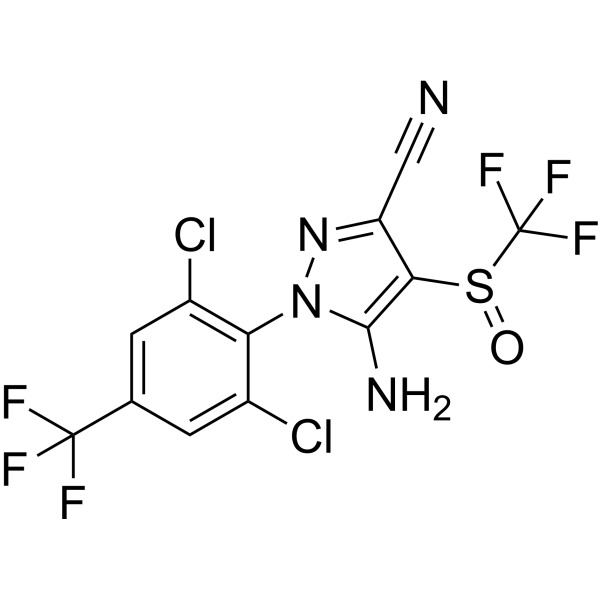
HY-B0822
FipronilGABA Receptor Antagonist -
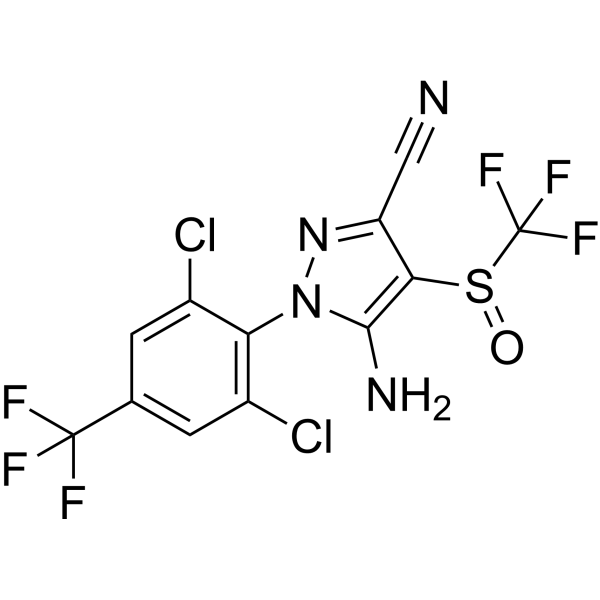
HY-B0822R
Fipronil (Standard)GABA Receptor Antagonist -

HY-136394R
Diafenthiuron (Standard)Pesticide -

HY-B1953R
Thiacloprid (Standard)Chloronicotinyl Insecticide -

HY-B1111R
Amitraz (Standard)Parasite Inhibitor -

HY-B0831R
Buprofezin (Standard)Chitin Synthesis Inhibitor


Product Information
Information
Application
The compound is the grade of analytical standard, which is the reference standard supplied assay. It is commonly used in qualitative, quantitative and methodological research experiments in HPLC, GC and MS.


Chemical Information
-
CAS No. 122453-73-0
-
Appearance Solid
-
Molecular Weight 407.61
-
Formula C15H11BrClF3N2O
-
Color White to off-white
-
SMILES
N#CC1=C(C2=CC=C(Cl)C=C2)N(COCC)C(C(F)(F)F)=C1Br
-
Shipping
Room temperature in continental US; may vary elsewhere.
-
Storage
Please store the product under the recommended conditions in the Certificate of Analysis.


Purity & Documentation
-
SDS (563 KB)
- English - EN (563 KB)
- Français - FR (563 KB)
- Deutsch - DE (563 KB)
- Norwegian - NO (563 KB)
- Español - ES (563 KB)
- Swedish - SV (563 KB)
- Italian - IT (563 KB)
- Korean - KR (563 KB)
- Portuguese - PT (563 KB)
-
Handling Instructions (2659 KB)
References
[1]. Byung Hyun Baek, et al. Chlorfenapyr-Induced Toxic Leukoencephalopathy with Radiologic Reversibility: A Case Report and Literature Review. Korean J Radiol. 2016 Mar-Apr;17(2):277-80. [Content Brief]
[2]. Kamaraju Raghavendra, et al. Chlorfenapyr: a new insecticide with novel mode of action can control pyrethroid resistant malaria vectors. Malar J. 2011 Jan 25;10:16. [Content Brief]

Calculators
Concentration (start) × Volume (start) = Concentration (final) × Volume (final)


Chlorfenapyr (Standard) Related Classifications
HY-B0840R Related Classifications
 Powered by Bioz