


1. Search Result
Search Result
Pathways Recommended: Stem Cell/Wnt Cell Cycle/DNA Damage
Results for "

murine immune cells

" in MedChemExpress (MCE) Product Catalog:

15

Inhibitors & Agonists

1

Peptides

4

Inhibitory Antibodies

2

Natural
Products

Cat. No. Product Name Target Research Areas Chemical Structure
  • HY-P99379

    CAN04; Anti-IL-1RAP/IL-1R3 Reference Antibody (nidanilimab)

    Interleukin Related Cancer
    Nidanilimab (CAN04) is a fully humanized monoclonal anti-IL1RAP antibody with a Kd value of 1.10 pM. Nidanilimab blocks IL1α and IL1β signaling and stimulates the immune system to destroy tumour cells. Nidanilimab can be used in research of non-small lung cancer (NSCLC) and pancreatic ductal adenocarcinoma (PDAC) .
    Nidanilimab (Nadunolimab)
  • HY-P99358

    GSK 2398852; Anti-Serum Amyloid P/SAP Reference Antibody (dezamizumab)

    Complement System Inflammation/Immunology
    Dezamizumab (GSK 2398852) is a fully humanized clonal IgG1 antibody against serum amyloid P component (SAP) with complement activation and amyloid clearance-inducing activities. Dezamizumab binds to SAP associated with amyloid deposits to form complexes that activate complement and mediate phagocytic clearance, triggering activation of the classical complement pathway. Dezamizumab can be used for the research of systemic amyloidosis .
    Dezamizumab
  • HY-N7700

    G2013

    MMP COX VEGFR Toll-like Receptor (TLR) NF-κB NO Synthase Inflammation/Immunology Cancer
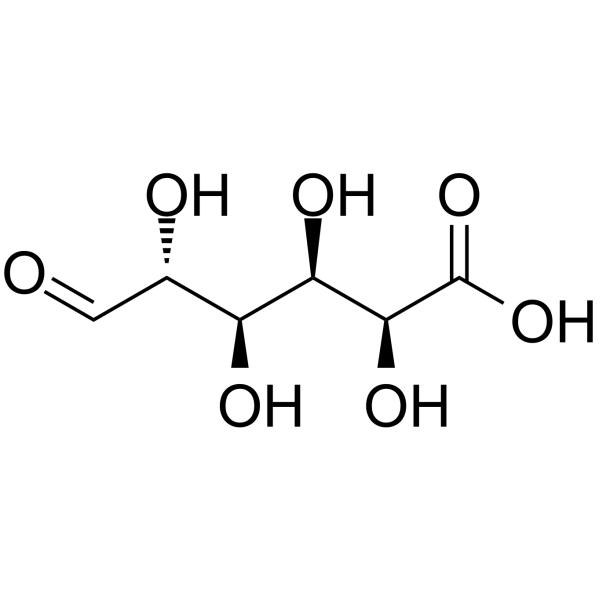
    Guluronic acid (G2013) is an orally active oxidative stress regulator and anti-inflammatory agent that exerts pharmacological effects by down-regulating various pro-inflammatory and oxidative stress-related genes (such as TLR4, NF-κB, iNOS, etc.) and inhibiting the activities of COX-2, MMPs and VEGF. Low-dose Guluronic acid up-regulates the expression of immunoregulatory genes SHIP1 and SOCS1, thereby effectively inhibiting cancer-related inflammation, tumor angiogenesis, cell adhesion and metastasis, while reducing the accumulation of immunosuppressive cells. Guluronic acid significantly prolongs the survival time of tumor-bearing hosts within a concentration range without direct cytotoxicity, demonstrating favorable safety. Guluronic acid has involved in the research of multiple sclerosis, ankylosing spondylitis, breast cancer and other inflammatory diseases .
    Guluronic acid
  • HY-P99409

    Alt-2 monoclonal antibody; MAB-B43.13; Oregovamab

    Transmembrane Glycoprotein Cancer
    Oregovomab (Alt-2 monoclonal antibody) is a murine mAb targeting CA125. Oregovomab induces cytotoxic immune response against CA125 expressing tumor cells .
    Oregovomab
  • HY-134454

    Prolyl Endopeptidase (PREP) Parasite Infection
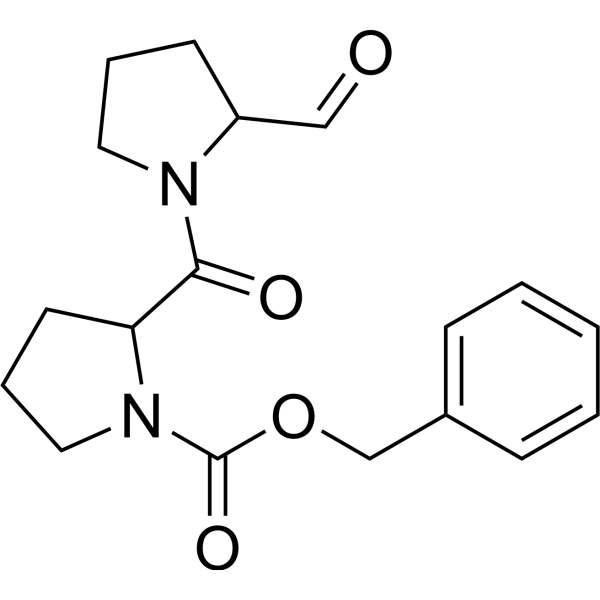
    Z-Pro-Pro-CHO is a potent inhibitor of prolyl oligopeptidase (POP), with extremely high affinity for human prolyl oligopeptidase (HsPOP) (IC50=0.012 μM), and it also effectively inhibits the activity of Schistosoma mansoni prolyl oligopeptidase (SmPOP) (IC50=0.16 μM). Z-Pro-Pro-CHO does not block the phosphorylation of ERK or the production of TNF-α or IFN-γ in immune cells from presensitized mice, nor does it induce harmful phenotypes in cultured Schistosoma mansoni schistosomula. Z-Pro-Pro-CHO only partially inhibits epithelial cell wound healing at extremely high concentrations. Z-Pro-Pro-CHO finds wide application in studies related to schistosomiasis .
    Z-Pro-Pro-CHO
  • HY-163749

    STING Inflammation/Immunology
    STING-IN-8 (Compound 15b) emerges as a potent stimulator of interferon gene (STING) inhibitor with an IC50 value of 0.121 μM in human and an IC50 value of 0.033 μM in mouse. STING-IN-8 inhibits MSA-2 (HY-136927) or 2’, 3’ -cGAMP (HY-100564)-stimulated STING signaling and suppresses immune-inflammatory cytokine levels in both human and murine cells. STING-IN-8 is promising for research in the field of STING-associated inflammatory and autoimmune diseases .
    STING-IN-8
  • HY-157793

    Toll-like Receptor (TLR) NF-κB MAPKAPK2 (MK2) Inflammation/Immunology Cancer
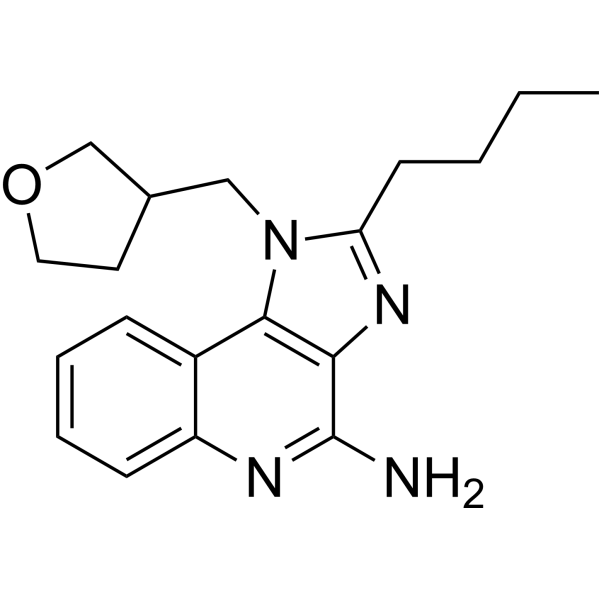
    SMU-L11 is a specific TLR7 agonist (EC50=0.024 μM), which recruits MyD88 adapter protein and activates downstream NF-κB and MAPK signaling pathways. In murine models, SMU-L11 significantly enhances immune cell activation and promotes the proliferation of CD4 + T and CD8 + T cells, thereby directly killing tumor cells and inhibiting tumor growth. SMU-L11 can be used for cancer research, and also has the potential for studying immune system diseases .
    SMU-L11
  • HY-N12104

    BMS-182123

    TNF Receptor Infection
    Trichodimerol (BMS-182123) is a TNF-α promoter inhibitor that inhibits the activity of lipopolysaccharide-induced cytokine secretion. Trichodimerol inhibits lipopolysaccharide-induced TNF-α promoter activity, reduces steady-state TNF-α mRNA expression, and does not alter the stability of TNF-α mRNA. Trichodimerol inhibits lipopolysaccharide-induced TNF-α secretion in murine and human immune cells. Trichodimerol reduces lipopolysaccharide-induced IL-1β secretion by 25%-50% in vitro. Trichodimerol does not alter total protein synthesis or constitutive lysozyme secretion at effective concentrations. Trichodimerol can be used for the research of septic shock .
    Trichodimerol
  • HY-186103

    CD1 IFNAR Interleukin Related Bacterial Influenza Virus Infection Inflammation/Immunology
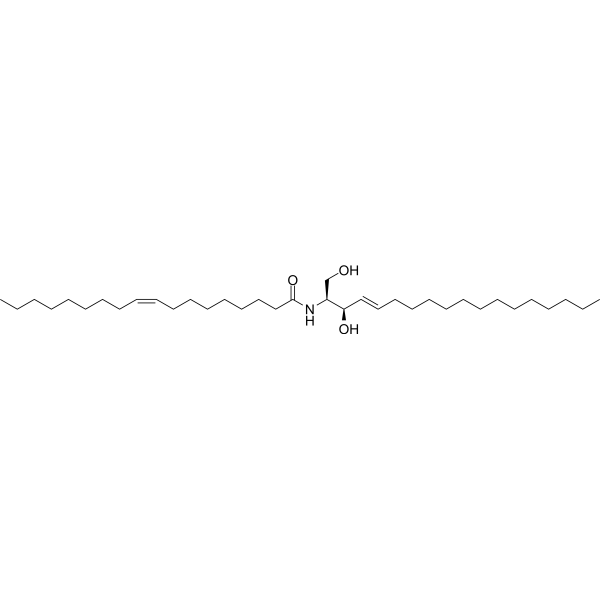
    Glycolipid C34, α-GalCer (HY-102022) analog, is a CD1d-binding glycolipid antinfection agent. Glycolipid C34 mediates invariant natural killer T cell activation and increases the secretion of IFN-γ and IL-4. Glycolipid C34 promotes clearance of bacterial infections in murine models and enhances protective immunity against viral infections. Glycolipid C34 can be used for the research of bacterial infection, viral infection .
    Glycolipid C34
  • HY-147129

    Guanylate Cyclase Adenylate Cyclase CXCR NF-κB Inflammation/Immunology
    cGAS-IN-9 is a cyclic guanosine monophosphate-adenosine monophosphate synthase (cGAS) inhibitor, with IC50 values of 27.5 nM and 5.15 μM against human and murine cGAS, respectively. cGAS-IN-9 shows weak inhibitory activity against human soluble adenylate cyclase, with an IC50 of 26.4 μM. cGAS-IN-9 inhibits dsDNA-induced expression of IFNB1 and CXCL10, as well as activation of the NF-κB pathway, in human immune cells. cGAS-IN-9 can be used in research related to cGAS-dependent inflammatory diseases .
    cGAS-IN-9
  • HY-181096

    PD-1/PD-L1 Inflammation/Immunology Cancer
    PD-L1-IN-9 is a PD-L1 inhibitor with an IC50 of 110.85 nM. PD-L1-IN-9 has a Kd of 319 nM for human PD-L1 and a Kd of 450 nM for murine PD-L1. PD-L1-IN-9 blocks the PD-1/PD-L1 interaction, restores T cell-mediated anti-tumor immunity, and induces PD-L1 degradation in tumor tissues. PD-L1-IN-9 exhibits anti-tumor activity and can be used in the research of tumors such as melanoma .
    PD-L1-IN-9
  • HY-W069974

    Calcium Channel Inflammation/Immunology
    Ca2+-Langerin-IN-1 (Compound 3) is a allosteric Langerin inhibitor. Langerin is a C-type lectin that is expressed on Langerhans cells and plays a crucial role in pathogen recognition and innate immune activation. The KD value of the CRD domain of murine Langerin protein for Ca2+-Langerin-IN-1 is 17 μM under the presence of Ca²⁺ and 53 μM under the absence of Ca²⁺ competition. Ca2+-Langerin-IN-1 induces conformational changes and competitively replaces Ca²⁺, thereby inhibiting the carbohydrate recognition function of the protein. Ca2+-Langerin-IN-1 can be used in the research of immunomodulatory therapy .
    Ca2+ -Langerin-IN-1
  • HY-181663

    PD-1/PD-L1 JAK Cancer
    PJ27 is a dual PD-1/PD-L1/JAK1 inhibitor, with an IC50 of 414 nM against PD-1/PD-L1, an IC50 of 786 nM against JAK1, a Ka of 294 nM for human PD-1/PD-L1, and a Ka of 473 nM for murine PD-1/PD-L1. PJ27 promotes the infiltration of CD3 +CD8 + and CD3 +CD4 + cells into the tumor microenvironment and exerts a significant immune activation effect. PJ27 inhibits tumor growth in a dose-dependent manner in the LLC lung cancer mouse model. PJ27 is applicable to relevant research on lung cancer .
    PJ27
  • HY-N3691

    Drug Derivative Others
    Daturataturin A aglycone is a natural steroid.
    Daturataturin A aglycone
  • HY-183290

    Parasite Reactive Oxygen Species (ROS) Infection
    Antileishmanial agent-41 (Compound 20k) is a selective Antileishmanial agent with a IC50 of 1.51 μg/mL against Leishmania donovani. Antileishmanial agent-41 increases ROS levels. Antileishmanial agent-41 can be used for the research of leishmaniasis .
    Antileishmanial agent-41

Inquiry Online

Your information is safe with us. * Required Fields.

Salutation


Country or Region *

Applicant Name *


Organization Name *

Department *


Email Address *


Product Name *

Cat. No.


Requested quantity *

Phone Number *


Remarks

Inquiry Online

Inquiry Information

Product Name:
Cat. No.:
Quantity:
MCE Japan Authorized Agent:

