1. Search Result
Search Result
Results for "

perennial

" in MedChemExpress (MCE) Product Catalog:

36

Inhibitors & Agonists

12

Natural
Products

3

Isotope-Labeled Compounds

Cat. No. Product Name Target Research Areas Chemical Structure
  • HY-B0860
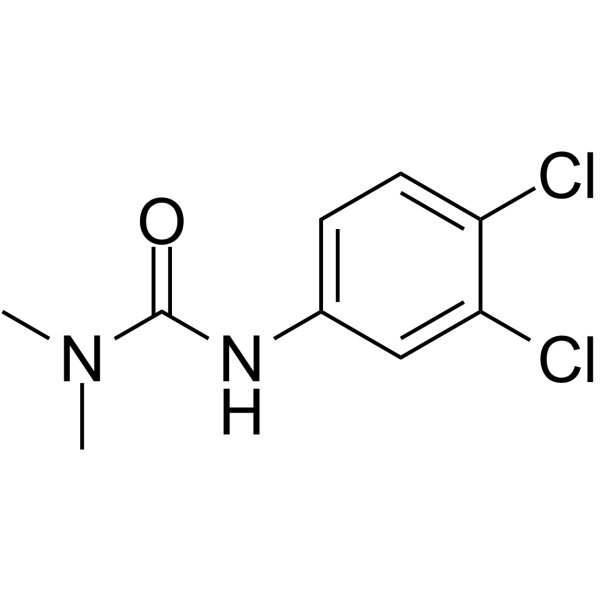
    Diuron
    2 Publications Verification

    Environmental Pollutants Reactive Oxygen Species (ROS) Herbicide MDM-2/p53 Cancer
    Diuron is an orally active phenylurea herbicide. Diuron inhibits photosynthesis in plants by blocking the formation of ATP and NADH. Diuron increases the production of ROS. Diuron increases expression of p53 in certain cell lines. Diuron has herbicidal activity against annual and perennial broadleaf weeds and grass weeds. Diuron promotes DMBA/BBN-induced bladder cancer. Diuron can be used in breast cancer research .
    Diuron
  • HY-B0154
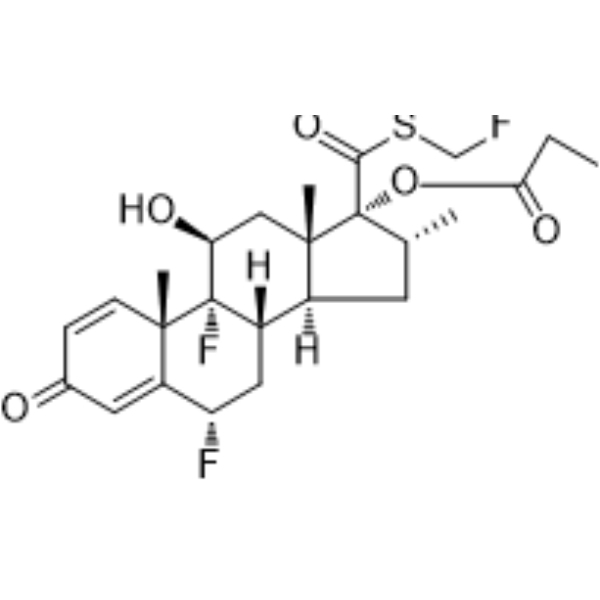
    Fluticasone propionate
    1 Publications Verification

    Glucocorticoid Receptor Enterovirus Endogenous Metabolite ADC Payload Infection Inflammation/Immunology Endocrinology
    Fluticasone propionate, a potent topical anti-inflammatory corticosteroid, is a selective glucocorticoid receptor agonist, with an absolute affinity (KD) of 0.5 nM. Fluticasone propionate shows little or no activity at other steroid receptors. Anti-viral activity .
    Fluticasone propionate
  • HY-B1589A
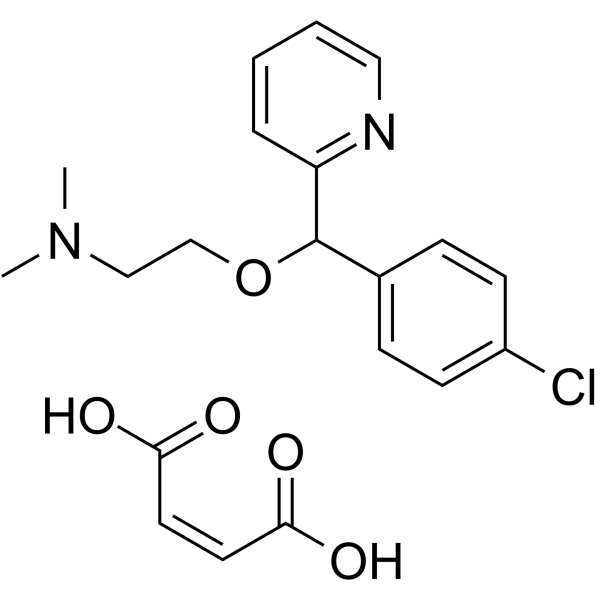
    Carbinoxamine maleate salt
    1 Publications Verification

    Histamine Receptor Influenza Virus Infection Inflammation/Immunology
    Carbinoxamine maleate salt is a blood-brain barrier-permeable histamine H1 receptor antagonist. Carbinoxamine maleate salt blocks the action of histamine on H1 receptors, reducing symptoms such as sneezing, rhinitis, rhinorrhea, erythema, pruritus and urticaria. Carbinoxamine maleate salt inhibits influenza virus entry into cells via endocytosis, targets the early stage of the viral life cycle, and simultaneously reduces viral replication levels in the lungs, alleviating pathological damage and inflammatory responses in lung tissues. Carbinoxamine maleate salt can be used in research on allergic rhinitis, influenza, etc.
    Carbinoxamine maleate salt
  • HY-126922

    Environmental Pollutants Herbicide Others
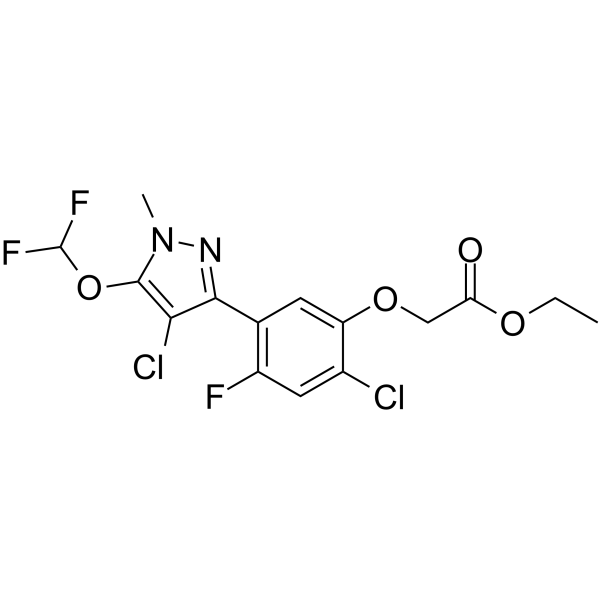
    Pyraflufen-ethyl is a phenylpyrazole herbicide for control of annual and perennial broadleaf weeds. Pyraflufen-ethyl inhibits protoporphyrinogen oxidase (PPO). Pyraflufen-ethyl controls rosette Parthenium hysterophorus .
    Pyraflufen-ethyl
  • HY-B0170A

    Azatadine maleate

    Histamine Receptor Inflammation/Immunology Endocrinology
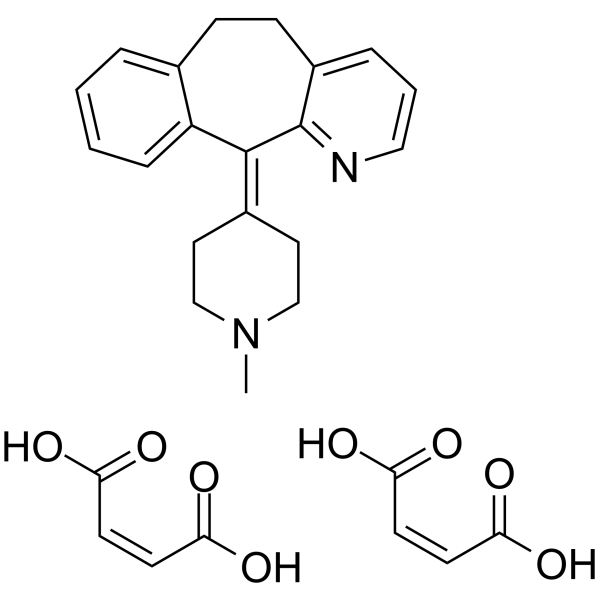
    Azatadine dimaleate (Azatadine maleate) is an inhibitor of histamine and cholinergic with an IC50 of 6. Azatadine dimaleate has additional antiserotonin activity. Azatadine dimaleate can be studied in research on perennial allergic rhinitis .
    Azatadine dimaleate
  • HY-B1860

    Environmental Pollutants Herbicide Others
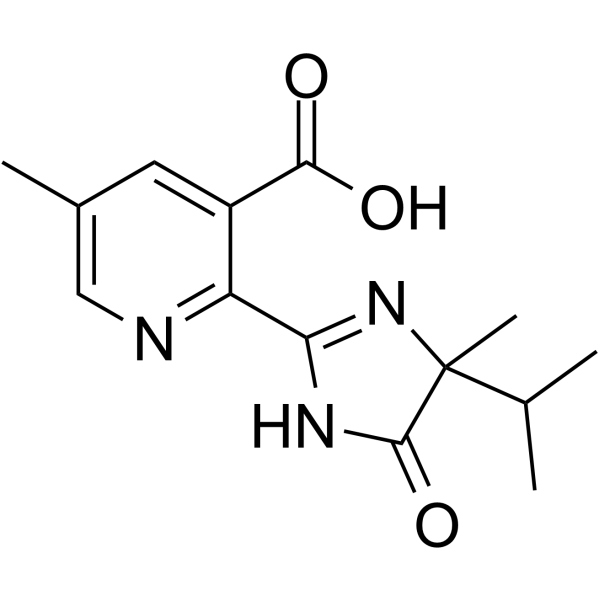
    Imazapic is a selective herbicide used to control perennial grasses and some broadleaf weeds.
    Imazapic
  • HY-B1842

    Herbicide Others
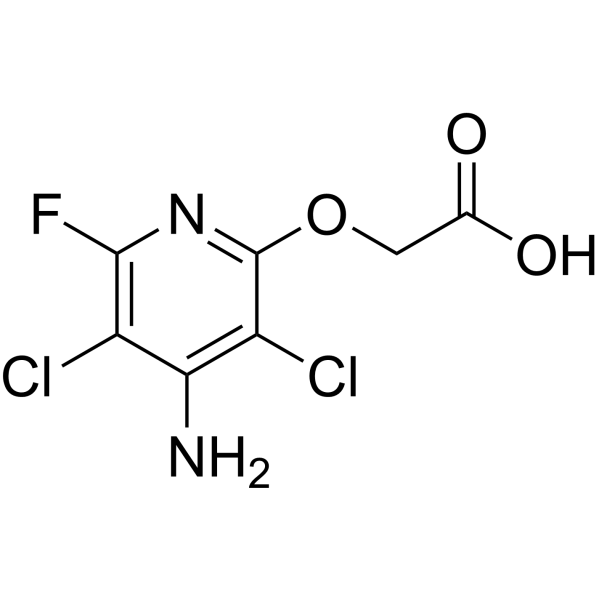
    Fluroxypyr is an auxin herbicide to control annual or perennial weeds. Fluroxypyr icauses auxin overdose or excessive endogenous auxin concentrations, thereby resulting in an imbalance of auxin homeostasis and interaction with other hormones in tissues .
    Fluroxypyr
  • HY-N0377A

    (±)-4',7-Dihydroxyflavanone

    Reactive Oxygen Species (ROS) Cardiovascular Disease
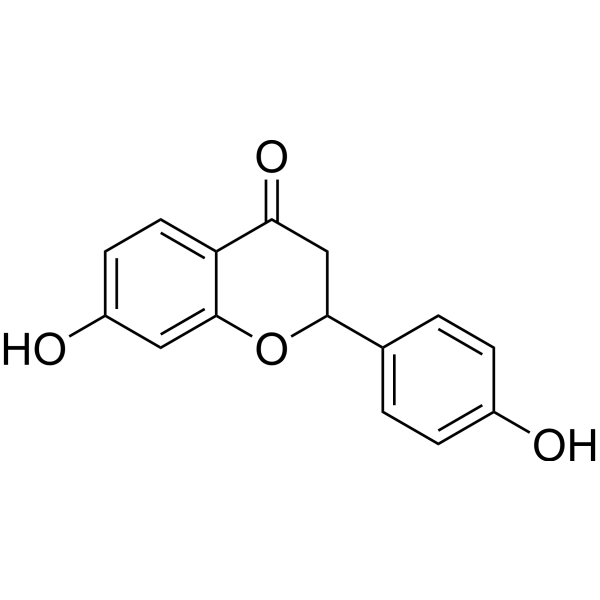
    (±)-Liquiritigenin ((±)-4',7-Dihydroxyflavanone) is isolated from Angelica keiskei, a hardy perennial herb of the Umbelliferae family. (±)-Liquiritigenin promotes cell proliferation, has cytoprotective activity and reduces cytotoxicity, and also has antioxidant stress effects .
    (±)-Liquiritigenin
  • HY-N2238

    Others Metabolic Disease
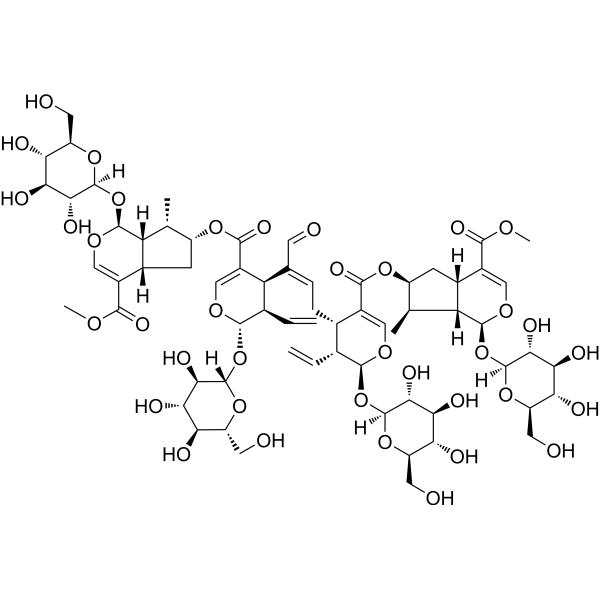
    Dipsanoside A is a novel tetrairidoid glucoside from Dipsacus asper. Dipsacus asper Wall., a perennial plant widespread in China, has been used in traditional Chinese medicine for hundreds of years as a tonic for refreshment, as a fissiparism promoter of the osseous cells, and as an embryo security agent, etc .
    Dipsanoside A
  • HY-N2236

    Others Infection
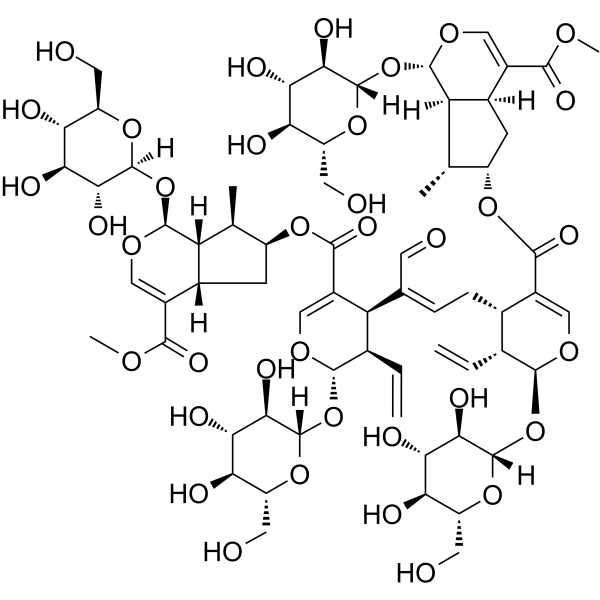
    Dipsanoside B is a novel tetrairidoid glucoside from Dipsacus asper. Dipasandin B shows s an anti-osteoarthritis effect. Dipsacus asper Wall., a perennial plant widespread in China, has been used in traditional Chinese medicine for hundreds of years as a tonic for refreshment, as a fissiparism promoter of the osseous cells, and as an embryo security agent, etc .
    Dipsanoside B
  • HY-N2205
    Esculentoside H
    2 Publications Verification

    NF-κB JNK Cancer
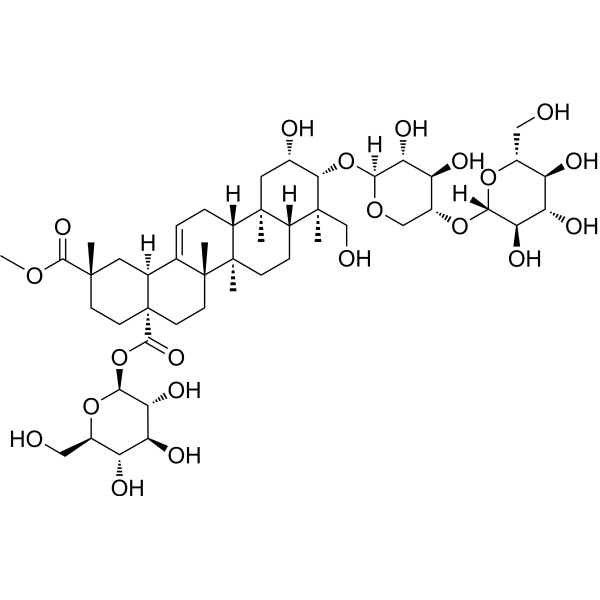
    Esculentoside H (EsH) is a saponin isolated from the root extract of perennial plant Phytolacca esculenta . Esculentoside H (EH) has anti-tumor activity, the mechanism is related to the capacity for TNFrelease . Esculentoside H (EsH) suppresses colon cancer cell migration through blockage of the JNK1/2 and NF-κB signaling-mediated matrix metalloproteinases-9 (MMP-9) expression .
    Esculentoside H
  • HY-B0860S

    Isotope-Labeled Compounds Herbicide Reactive Oxygen Species (ROS) MDM-2/p53 Cancer
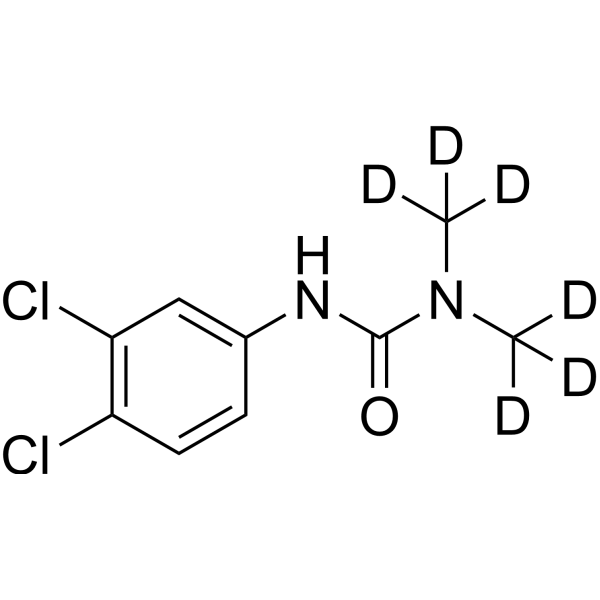
    Diuron-d6 is the deuterium labeled Diuron (HY-B0860). Diuron is an orally active phenylurea herbicide. Diuron inhibits photosynthesis in plants by blocking the formation of ATP and NADH. Diuron increases the production of ROS. Diuron increases expression of p53 in certain cell lines. Diuron has herbicidal activity against annual and perennial broadleaf weeds and grass weeds. Diuron promotes DMBA/BBN-induced bladder cancer. Diuron can be used in breast cancer research .
    Diuron-d6
  • HY-N8305

    Others Others
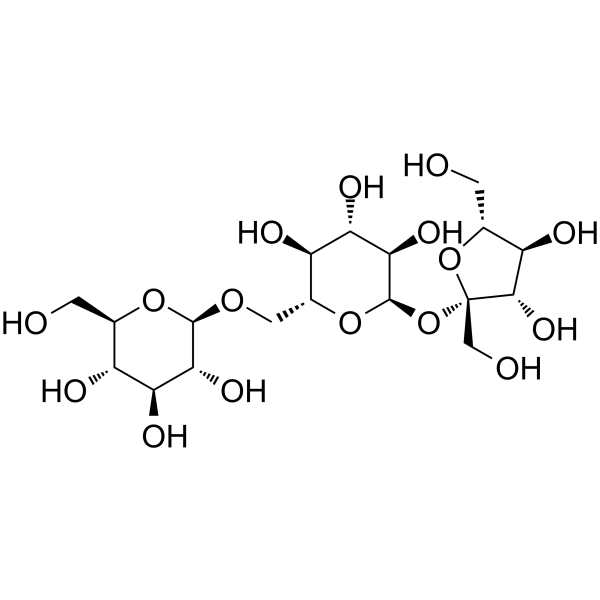
    Gentianose is a predominant carbohydrate reserve found in the storage roots of perennial Gentiana lutea .
    Gentianose
  • HY-116706

    Environmental Pollutants Herbicide Others
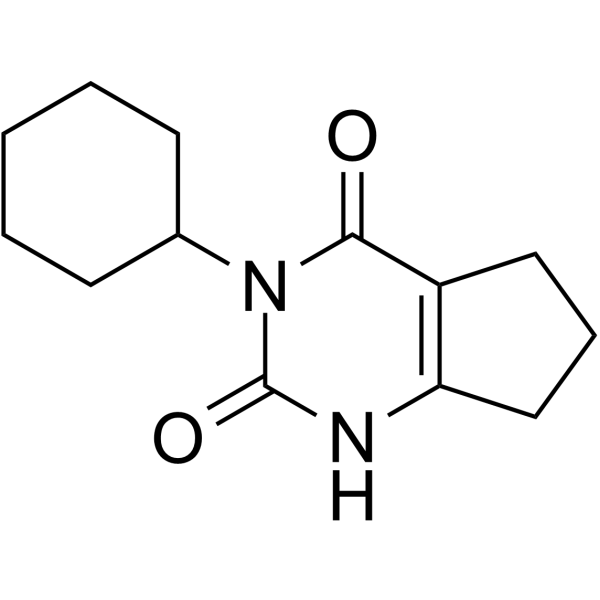
    Lenacil is a selective uracil substituted herbicide used for control of both annual grasses, broad leafed weeds and some perennial weeds in sugarcane, apples, alfalfa, peaches, peacans, peppermints (Mentha piperita) and sugar beets. Lenacil can inhibit photosynthesis .
    Lenacil
  • HY-N16034

    Momordica saponin II; MS II

    Biochemical Assay Reagents Inflammation/Immunology
    MS 2 (Momordica saponin II) is a vaccine adjuvant found in the seeds of perennial Momordica cochinchinensis Spreng .
    MS 2
  • HY-W286307

    Environmental Pollutants Herbicide Others
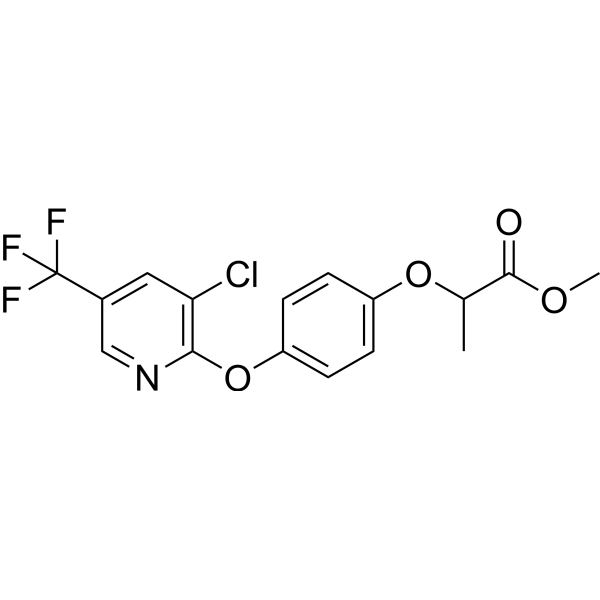
    Haloxyfop-methyl is a high-efficacy herbicide. Haloxyfop-methyl selectively controls several annual and perennial grasses in soybeans and other dicotyledenous crops .
    Haloxyfop-methyl
  • HY-B0154R

    Reference Standards Glucocorticoid Receptor Enterovirus Endogenous Metabolite ADC Payload Infection Inflammation/Immunology Endocrinology
    Fluticasone propionate (Standard) is the analytical standard of Fluticasone propionate. This product is intended for research and analytical applications. Fluticasone propionate, a potent topical anti-inflammatory corticosteroid, is a selective glucocorticoid receptor agonist, with an absolute affinity (KD) of 0.5 nM. Fluticasone propionate shows little or no activity at other steroid receptors. Anti-viral activity .
    Fluticasone propionate (Standard)
  • HY-B0860R

    Herbicide Reference Standards Reactive Oxygen Species (ROS) MDM-2/p53 Cancer
    Diuron (Standard) is the analytical standard of Diuron (HY-B0860). This product is intended for research and analytical applications. Diuron is an orally active phenylurea herbicide. Diuron inhibits photosynthesis in plants by blocking the formation of ATP and NADH. Diuron increases the production of ROS. Diuron increases expression of p53 in certain cell lines. Diuron has herbicidal activity against annual and perennial broadleaf weeds and grass weeds. Diuron promotes DMBA/BBN-induced bladder cancer. Diuron can be used in breast cancer research .
    Diuron (Standard)
  • HY-106567

    Glucocorticoid Receptor Inflammation/Immunology
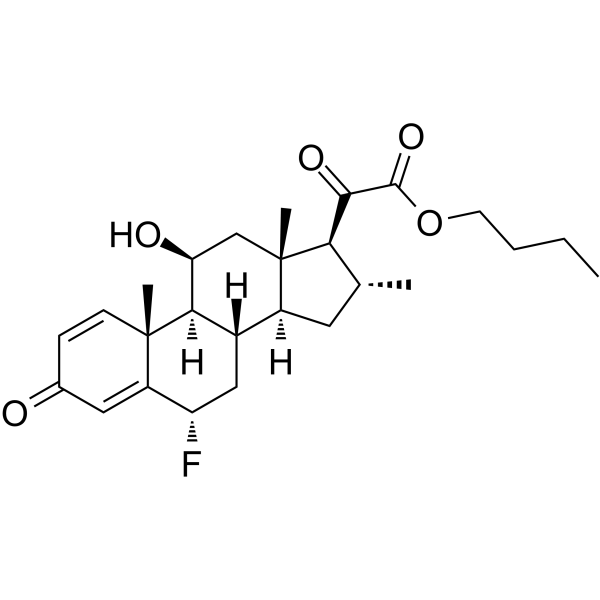
    Fluocortin butyl ester is a developed corticosteroid compound with no detectable systemic corticosteroid activity when it is used topically. Fluocortin butyl ester appears to be an effective well-tolerated topical steroid useful in the research of perennial rhinitis .
    Fluocortin butyl ester
  • HY-N14757

    Endogenous Metabolite Others
    Hydantocidin is an adenylosuccinate synthetase inhibitor and a spiroribofuranose. Hydantocidin can be produced by Streptomyces hygroscopicus. Hydantocidin has strong herbicidal activity toward annual, biennial and perennial weeds .
    Hydantocidin
  • HY-B1842R

    Herbicide Reference Standards Others
    Fluroxypyr (Standard) is the analytical standard of Fluroxypyr. This product is intended for research and analytical applications. Fluroxypyr is an auxin herbicide to control annual or perennial weeds. Fluroxypyr icauses auxin overdose or excessive endogenous auxin concentrations, thereby resulting in an imbalance of auxin homeostasis and interaction with other hormones in tissues .
    Fluroxypyr (Standard)
  • HY-B0170AR

    Azatadine maleate (Standard)

    Histamine Receptor Reference Standards Inflammation/Immunology Endocrinology
    Azatadine (dimaleate) (Standard) is the analytical standard of Azatadine (dimaleate). This product is intended for research and analytical applications. Azatadine dimaleate (Azatadine maleate) is an inhibitor of histamine and cholinergic with an IC50 of 6. Azatadine dimaleate has additional antiserotonin activity. Azatadine dimaleate can be studied in research on perennial allergic rhinitis .
    Azatadine dimaleate (Standard)
  • HY-W874850

    Herbicide
    Fluorodifen is a selective herbicide with the activity of inhibiting weed growth. Fluorodifen can effectively control the growth of various annual and perennial broadleaf weeds and some grass weeds, and is widely used in the field management of various crops. By acting on the photosynthesis of plants and the regulation of their growth hormones, Fluorodifen ensures the healthy growth and harvest of crops.
    Fluorodifen
  • HY-116706R

    Herbicide Reference Standards Others
    Lenacil (Standard) is the analytical standard of Lenacil. This product is intended for research and analytical applications. Lenacil is a selective uracil substituted herbicide used for control of both annual grasses, broad leafed weeds and some perennial weeds in sugarcane, apples, alfalfa, peaches, peacans, peppermints (Mentha piperita) and sugar beets. Lenacil can inhibit photosynthesis .
    Lenacil (Standard)
  • HY-W768772

    Isotope-Labeled Compounds Herbicide Others
    Fluroxypyr- 13C2,d2 is the deuterium labeled and 13C-labeled Fluroxypyr (HY-B1842). Fluroxypyr is an auxin herbicide to control annual or perennial weeds. Fluroxypyr icauses auxin overdose or excessive endogenous auxin concentrations, thereby resulting in an imbalance of auxin homeostasis and interaction with other hormones in tissues .
    Fluroxypyr-13C2,d2
  • HY-N2274

    12-Oleanene-3β,16β,23,28-tetrol; 3β,16β-12-Oleanene-3, 16,23,28-tetrol

    Others Cancer
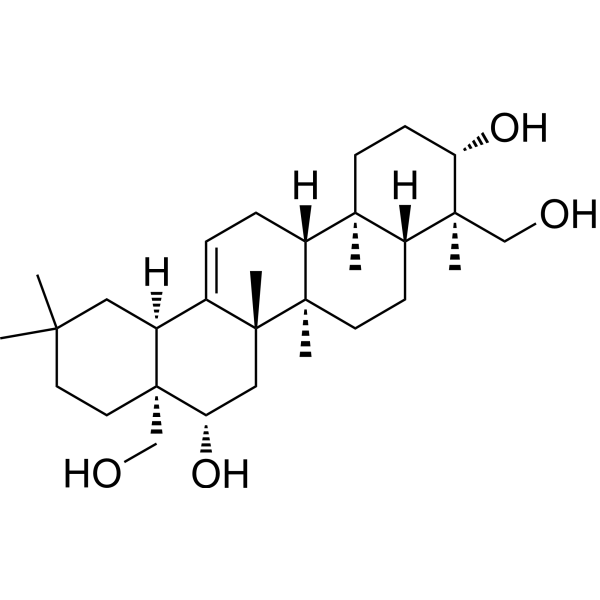
    23-Hydroxylongispinogenin (12-Oleanene-3β,16β,23,28-tetrol) is extracted from Lysimachia heterogenea Klatt. Lysimachia heterogenea Klatt is a perennial herb, which is used as a folk medicine in subduing swelling and detoxicating in China. The effective fraction LH-1 of L. heterogene has antitumor activity .
    23-Hydroxylongispinogenin
  • HY-B1589

    Histamine Receptor Infection Inflammation/Immunology
    (±)-Carbinoxamine is a blood-brain barrier-permeable histamine H1 receptor antagonist. (±)-Carbinoxamine blocks the action of histamine on H1 receptors, reducing symptoms such as sneezing, rhinitis, rhinorrhea, erythema, pruritus and urticaria. (±)-Carbinoxamine inhibits influenza virus entry into cells via endocytosis, targets the early stage of the viral life cycle, and simultaneously reduces viral replication levels in the lungs, alleviating pathological damage and inflammatory responses in lung tissues. (±)-Carbinoxamine can be used in research on allergic rhinitis, influenza, etc.
    (±)-Carbinoxamine
  • HY-W008484

    Environmental Pollutants Herbicide Infection
    Aminopyralid is a synthetic auxin herbicide. Aminopyralid provides foliar and soil residual weed control, and also increases forage yield in bahiagrass pastures. When present as a soil residue, Aminopyralid causes phytotoxicity, reduced plant height, decreased flower number and fruit yield loss in rotated vegetable crops. Aminopyralid is registered for the control of annual and perennial broadleaf weeds in pastures, permanent grasslands and non-cropped areas .
    Aminopyralid
  • HY-N15952

    Biochemical Assay Reagents Inflammation/Immunology
    MS 1 (Momordica saponin I) is a vaccine adjuvant found in the seeds of perennial Momordica cochinchinensis Spreng .
    MS 1
  • HY-N19052

    Others Neurological Disease Inflammation/Immunology
    Alpinia galangal extract is derived from the rhizome of Alpinia galanga, a perennial herb of the ginger family. It is rich in bioactive compounds such as diarylheptanes and flavonoids, which are known for their antioxidant, anti-inflammatory and neuroprotective properties.
    Alpinia galangal extract
  • HY-W286307R

    Herbicide Reference Standards Others
    Haloxyfop-methyl (Standard) is the analytical standard of Haloxyfop-methyl. This product is intended for research and analytical applications. Haloxyfop-methyl is a high-efficacy herbicide. Haloxyfop-methyl selectively controls several annual and perennial grasses in soybeans and other dicotyledenous crops .
    Haloxyfop-methyl (Standard)
  • HY-B1842S1

    Isotope-Labeled Compounds Herbicide Others
    Fluroxypyr-d2 is the deuterium labeled Fluroxypyr (HY-B1842). Fluroxypyr is an auxin herbicide to control annual or perennial weeds. Fluroxypyr icauses auxin overdose or excessive endogenous auxin concentrations, thereby resulting in an imbalance of auxin homeostasis and interaction with other hormones in tissues .
    Fluroxypyr-d2
  • HY-126922R

    Herbicide Reference Standards Others
    Pyraflufen-ethyl (Standard) is the analytical standard of Pyraflufen-ethyl (HY-126922). This product is intended for research and analytical applications. Pyraflufen-ethyl is a phenylpyrazole herbicide for control of annual and perennial broadleaf weeds. Pyraflufen-ethyl inhibits protoporphyrinogen oxidase (PPO). Pyraflufen-ethyl controls rosette Parthenium hysterophorus .
    Pyraflufen-ethyl (Standard)
  • HY-W874850R

    Endogenous Metabolite Reference Standards
    Fluorodifen (Standard) is the analytical standard of Fluorodifen. This product is intended for research and analytical applications. Fluorodifen is a selective herbicide with the activity of inhibiting weed growth. Fluorodifen can effectively control the growth of various annual and perennial broadleaf weeds and some grass weeds, and is widely used in the field management of various crops. By acting on the photosynthesis of plants and the regulation of their growth hormones, Fluorodifen ensures the healthy growth and harvest of crops.
    Fluorodifen (Standard)
  • HY-W725041

    Herbicide Others
    Methiozolin is an oxazoline herbicide designed for the selective control of annual bluegrass in turfgrass. Methiozolin strongly inhibits the biosynthesis of cellulose and hemicellulose in corn root cells at low concentrations. Methiozolin inhibits recombinant Arabidopsis thaliana tyrosine aminotransferase, with a IC50 of approximately 200 µM. Methiozolin not only effectively controls vegetative growth but also significantly suppresses inflorescence formation, which helps reduce the seed bank .
    Methiozolin
  • HY-N16818

    Herbicide Others
    9-epi-Blumenol C is a C13-norisoprenoid (carotenoid derivative) compound with allelopathic and antifungal activities, and can regulate plant growth. The IC50 values ??of 9-epi-Blumenol C for watercress roots and hypocotyls are 2780 μM and 2240 μM, respectively, and for perennial ryegrass roots and coleoptiles are 3290 μM and 2950 μM, respectively. 9-epi-Blumenol C exhibits allelopathic activity through a mechanism involving direct inhibition of plant growth and degradation of arbuscular mycorrhizal fungi (AMF) colonization, thereby weakening nutrient uptake and stress resistance in neighboring plants. 9-epi-Blumenol C can be used in herbicide development and research related to plant competition mechanisms. 9-epi-Blumenol C can be obtained from the dried fallen leaves of Metasequoia glyptostroboides (a plant of the cypress family, genus Metasequoia) through extraction with 70% methanol and purification by ethyl acetate extraction .
    9-epi-Blumenol C

Inquiry Online

Your information is safe with us. * Required Fields.

Salutation


Country or Region *

Applicant Name *


Organization Name *

Department *


Email Address *


Product Name *

Cat. No.


Requested quantity *

Phone Number *


Remarks

Inquiry Online

Inquiry Information

Product Name:
Cat. No.:
Quantity:
MCE Japan Authorized Agent: