1. Search Result
Search Result
Results for "

phospholipid+metabolism

" in MedChemExpress (MCE) Product Catalog:

28

Inhibitors & Agonists

1

Biochemical Assay Reagents

4

Natural
Products

11

Isotope-Labeled Compounds

4

Oligonucleotides

Cat. No. Product Name Target Research Areas Chemical Structure
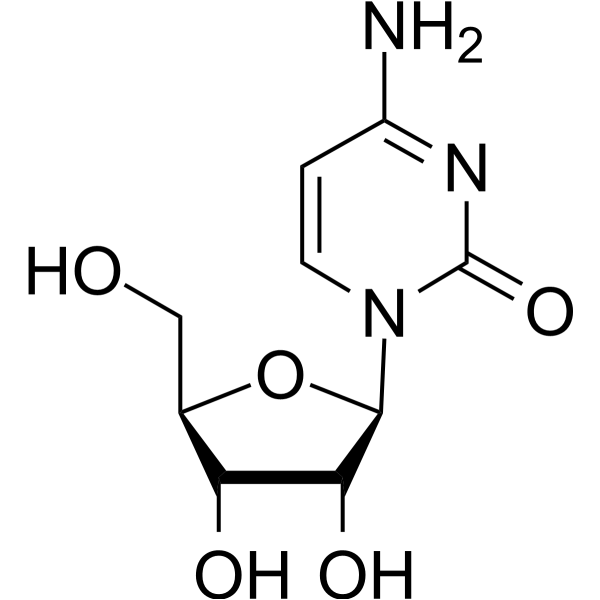
  • HY-B0158
    Cytidine
    5+ Cited Publications

    Cytosine β-D-riboside; Cytosine-1-β-D-ribofuranoside

    Nucleoside Antimetabolite/Analog Endogenous Metabolite Neurological Disease
    Cytidine is a pyrimidine nucleoside and acts as a component of RNA. Cytidine is a precursor of uridine. Cytidine controls neuronal-glial glutamate cycling, affecting cerebral phospholipid metabolism, catecholamine synthesis, and mitochondrial function .
    Cytidine
  • HY-154918

    Drug Metabolite Metabolic Disease
    LysoPE (18:2/0:0) is a lysophosphatidylethanolamine implicated in phospholipid metabolism. LysoPE (18:2/0:0) shows significantly altered serum levels in mice exposed to a combination of DEHP (HY-B1945) and Aroclor 1254, which is associated with disturbed phospholipid metabolism. LysoPE (18:2/0:0) can be used for the research of endocrine-disrupting compound-induced metabolic disorders and lipid metabolism disturbance. LysoPE (18:2/0:0) is identified as a potential biomarker for the combined toxicity of DEHP and Aroclor 1254 .
    LysoPE(18:2/0:0)
  • HY-W018587

    Mitochondrial Metabolism Cytochrome P450 TNF Receptor Interleukin Related HSP LDLR Eukaryotic Initiation Factor (eIF) ClpP Metabolic Disease Inflammation/Immunology
    TBPH is a brominated flame retardant. TBPH enhances hepatic steatosis, inflammation, and fibrosis in mice with nonalcoholic steatohepatitis (NASH). TBPH induces dysregulation of phospholipid metabolism, reducing cardiolipin (CL) and phosphatidylserine (PS) levels. TBPH leads to impaired endoplasmic reticulum-mitochondria (ER-Mito) contacts, subsequently causing mitochondrial dysfunction. TBPH induces lung injury through an inflammatory response mediated by mitochondria-derived ds-DNA. TBPH can be used to study the role of MFN2-mediated ER-mitochondria contacts in lipid metabolism homeostasis .
    TBPH
  • HY-W355700

    Drug Metabolite Infection
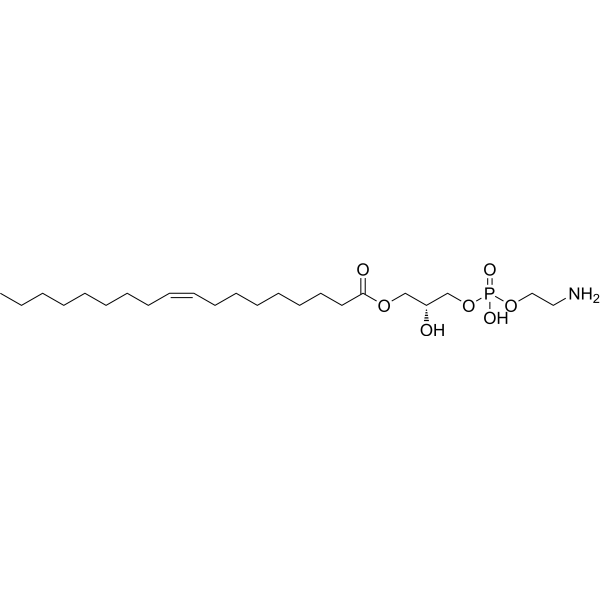
    1-oleoyl-sn-glycero-3-phosphoethanolamine (LysoPE 18:1) is a lysophosphatidylethanolamine molecule involved in phospholipid metabolism, targeting cell membrane receptors (such as G protein-coupled receptors) to regulate cell signaling pathways. 1-oleoyl-sn-glycero-3-phosphoethanolamine may activate mitogen-activated protein kinase (MAPK) signaling, promote cell migration, regulate inflammatory responses and lipid metabolism, and has both pro-inflammatory and anti-inflammatory activities. 1-oleoyl-sn-glycero-3-phosphoethanolamine is mainly used in the screening of biomarkers for metabolic diseases (such as non-alcoholic fatty liver disease and obesity), as well as the study of the mechanism of lysophospholipids in cell membrane homeostasis and signal transduction .
    1-Oleoyl-2-hydroxy-sn-glycero-3-phosphoethanolamine
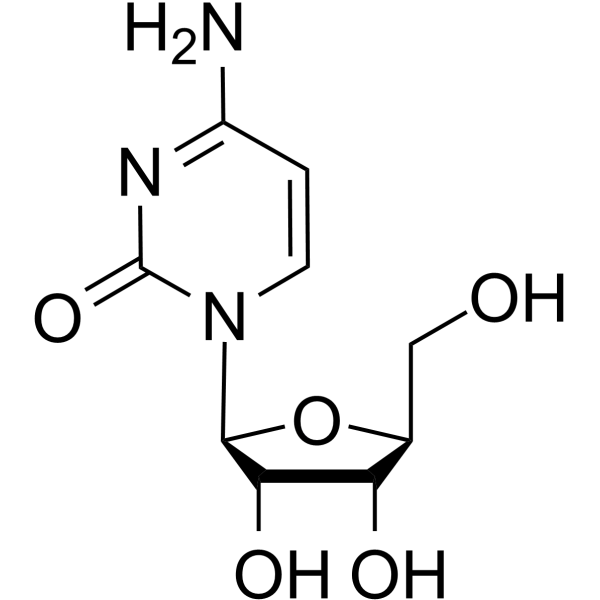
  • HY-148165

    Nucleoside Antimetabolite/Analog Neurological Disease
    L-Cytidine is an L-configurational form of Cytidine (HY-B0158). L-Cytidine is a pyrimidine nucleoside, a component of RNA. Cytidine can control the glial glutamate cycle, affect brain phospholipid metabolism, catecholamine synthesis and mitochondrial function .
    L-Cytidine
  • HY-B0158S7

    Cytosine β-D-riboside-13C9; Cytosine-1-β-D-ribofuranoside-13C9

    Nucleoside Antimetabolite/Analog Endogenous Metabolite Isotope-Labeled Compounds Neurological Disease
    Cytidine- 13C9 (Cytosine β-D-riboside- 13C9) is 13C labeled Cytidine (HY-B0158). Cytidine is a pyrimidine nucleoside and acts as a component of RNA. Cytidine is a precursor of uridine. Cytidine controls neuronal-glial glutamate cycling, affecting cerebral phospholipid metabolism, catecholamine synthesis, and mitochondrial function .
    Cytidine-13C9
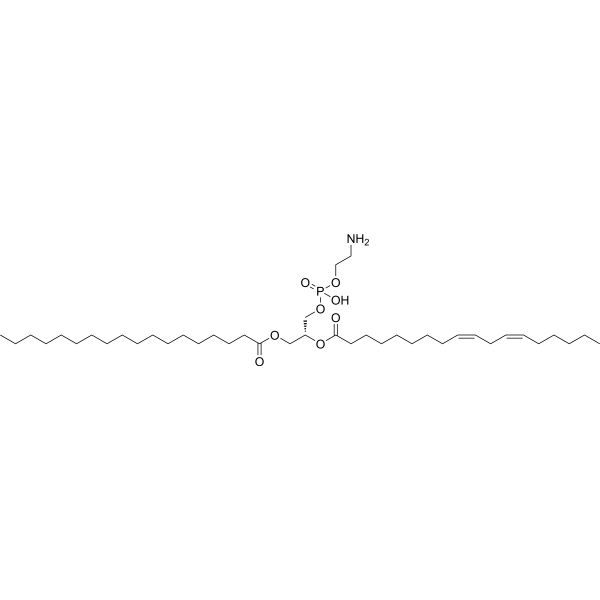
  • HY-143203

    1-Stearoyl-2-linoleoyl-sn-glycero-3-phosphoethanolamine

    Liposome Cancer
    18:0-18:2 PE is an important component of phosphatidylethanolamine (PE), involved in phospholipid metabolism and associated with diseases such as ovarian cancer. 18:0-18:2 PE in the hot processing process, its unsaturated fatty acids will degrade to form a variety of odor active compounds. 18:0-18:2 PE is mainly used in the field of food science to improve the flavor of aquatic products, as well as medical research on diseases related to phospholipid metabolism .
    18:0-18:2 PE
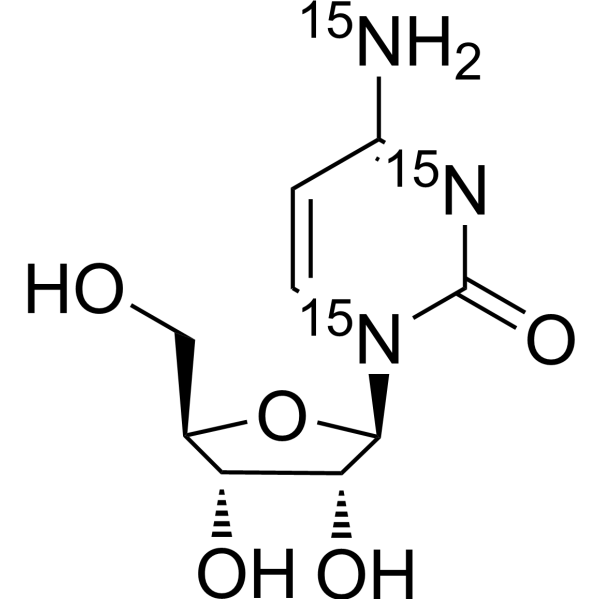
  • HY-B0158S6

    Cytosine β-D-riboside-15N3; Cytosine-1-β-D-ribofuranoside-15N3

    Nucleoside Antimetabolite/Analog Endogenous Metabolite Neurological Disease
    Cytidine- 15N3 is the 15N labeled Cytidine . Cytidine is a pyrimidine nucleoside and acts as a component of RNA. Cytidine is a precursor of uridine. Cytidine controls neuronal-glial glutamate cycling, affecting cerebral phospholipid metabolism, catecholamine synthesis, and mitochondrial function .
    Cytidine-15N3
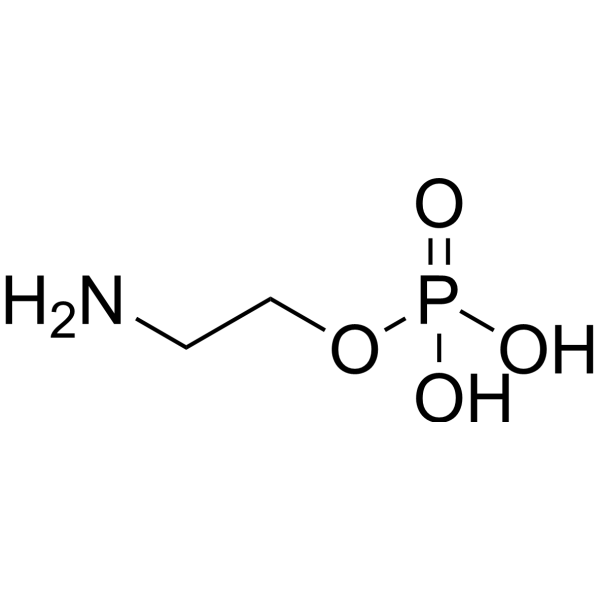
  • HY-N5034R

    Monoaminoethyl phosphate (Standard); NSC 254167 (Standard); O-Phosphoethanolamine (Standard)

    Reference Standards Endogenous Metabolite Metabolic Disease Cancer
    Phosphorylethanolamine (Standard) is the analytical standard of Phosphorylethanolamine. This product is intended for research and analytical applications. Phosphorylethanolamine (Monoaminoethyl phosphate) is present in most animal tissues and is also present in various human extracranial tumors. Phosphorylethanolamine is considered as the intermediate product of phospholipid metabolism. Phosphorylethanolamine is essential for the formation and maintenance of the cell membrane .
    Phosphorylethanolamine (Standard)
  • HY-B0158R

    Cytosine β-D-riboside (Standard); Cytosine-1-β-D-ribofuranoside (Standard)

    Reference Standards Nucleoside Antimetabolite/Analog Endogenous Metabolite Neurological Disease
    Cytidine (Standard) is the analytical standard of Cytidine. This product is intended for research and analytical applications. Cytidine is a pyrimidine nucleoside and acts as a component of RNA. Cytidine is a precursor of uridine. Cytidine controls neuronal-glial glutamate cycling, affecting cerebral phospholipid metabolism, catecholamine synthesis, and mitochondrial function . In Vivo:Cytidine decreases glutamate/glutamine levels and induces earlier improvement of depressive symptoms .
    Cytidine (Standard)
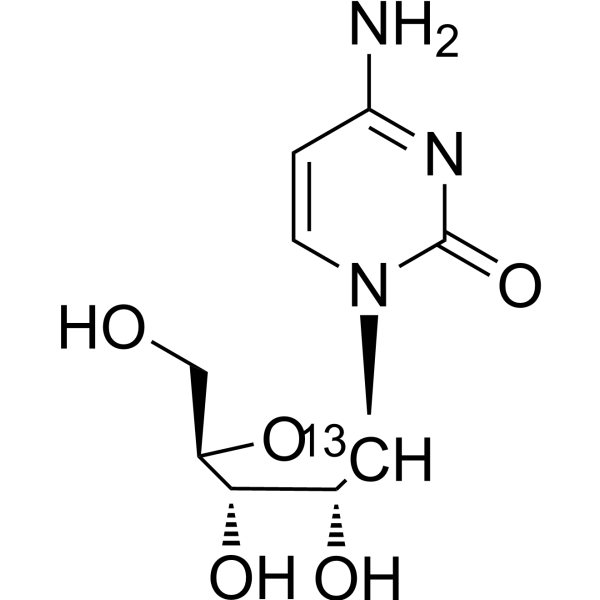
  • HY-B0158S1

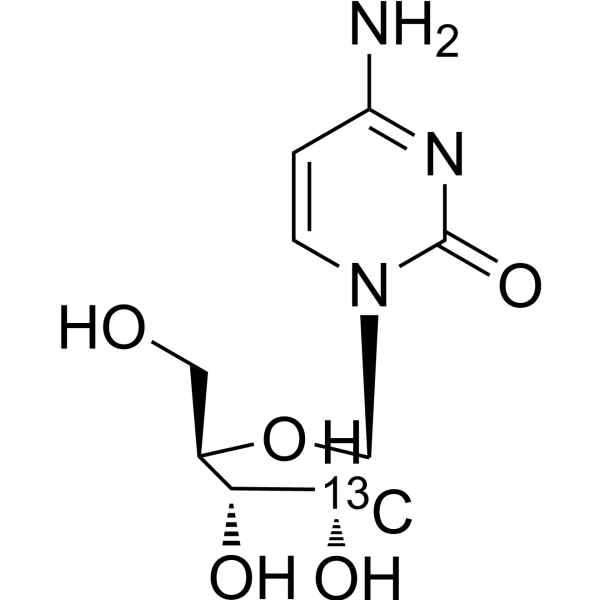
    Cytosine β-D-riboside-13C; Cytosine-1-β-D-ribofuranoside-13C

    Isotope-Labeled Compounds Endogenous Metabolite Nucleoside Antimetabolite/Analog Neurological Disease
    Cytidine- 13C is the 13C labeled Cytidine. Cytidine is a pyrimidine nucleoside and acts as a component of RNA. Cytidine is a precursor of uridine. Cytidine controls neuronal-glial glutamate cycling, affecting cerebral phospholipid metabolism, catecholamine
    Cytidine-13C
  • HY-B0158S

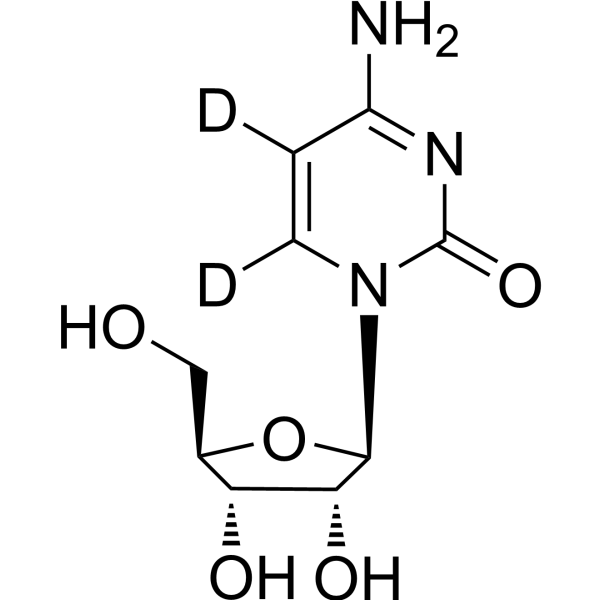
    Cytosine β-D-riboside-d2; Cytosine-1-β-D-ribofuranoside-d2

    Nucleoside Antimetabolite/Analog Endogenous Metabolite Neurological Disease
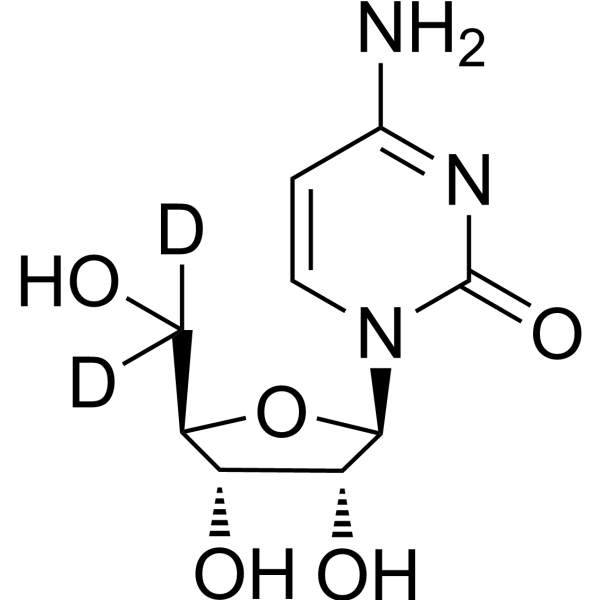
    Cytidine-d2 is the deuterium labeled Cytidine. Cytidine is a pyrimidine nucleoside and acts as a component of RNA. Cytidine is a precursor of uridine. Cytidine controls neuronal-glial glutamate cycling, affecting cerebral phospholipid metabolism, catecholamine synthesis, and mitochondrial function .
    Cytidine-d2
  • HY-14830

    Albitiazolium bromide

    Parasite Infection
    SAR 97276 (Albitiazolium bromide) is an antimalarial agent. SAR 97276 interfers with the phospholipid metabolism of malarial parasites, especially the biosynthesis of phosphatidylcholine (PC). SAR 97276 enters erythrocytes through the new permeability pathways (NPP) of infected erythrocytes, and is transported into the malarial parasite by a poly-specific cation carrier .
    SAR 97276
  • HY-N5034A

    Monoaminoethyl phosphate calcium; NSC 254167 calcium; O-Phosphoethanolamine calcium

    Liposome Others
    Phosphoethanolamine (calcium) (Monoaminoethyl phosphate (calcium); NSC 254167 (calcium); O-Phosphoethanolamine (calcium)) is a precursor to phosphatidylethanolamine and can be used in the synthesis of phosphatidylcholine. Phosphoethanolamine (calcium) is used in the study of phospholipid metabolism and cell membrane structure .
    Phosphoethanolamine calcium
  • HY-B0158S2

    Cytosine β-D-riboside-13C-1; Cytosine-1-β-D-ribofuranoside-13C-1

    Isotope-Labeled Compounds Endogenous Metabolite Nucleoside Antimetabolite/Analog Neurological Disease
    Cytidine- 13C-1 is the 13C labeled Cytidine. Cytidine is a pyrimidine nucleoside and acts as a component of RNA. Cytidine is a precursor of uridine. Cytidine controls neuronal-glial glutamate cycling, affecting cerebral phospholipid metabolism, catecholami
    Cytidine-13C-1
  • HY-19594

    WIN 13146

    Parasite Infection
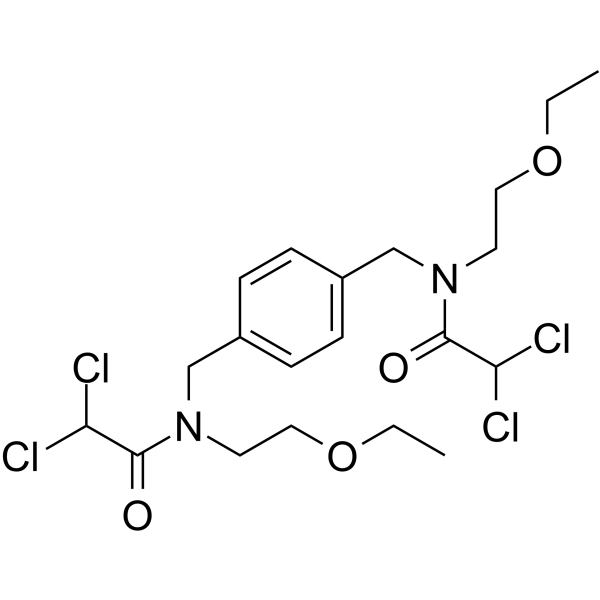
    Teclozan (WIN 13146) is an antiprotozoal agent, class in benzylamine derivatives. Teclozan intervenes in the phospholipid metabolism preventes the formation of arachidonic acid. Teclozan acts in the intestinal lumen being effective in Anti-G. intestinalis. Teclozan can be used for the research of protozoan infections .
    Teclozan
  • HY-B0158S5

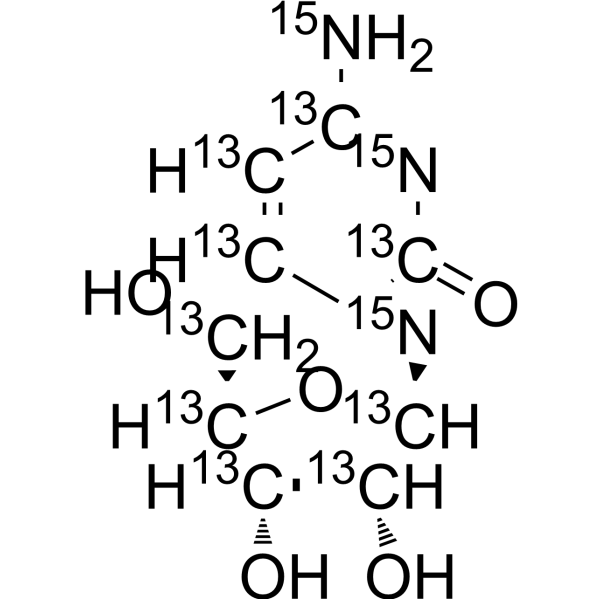
    Cytosine β-D-riboside-13C9,15N3; Cytosine-1-β-D-ribofuranoside-13C9,15N3

    Nucleoside Antimetabolite/Analog Endogenous Metabolite Neurological Disease
    Cytidine- 13C9, 15N3 is the 13C and 15N labeled Cytidine . Cytidine is a pyrimidine nucleoside and acts as a component of RNA. Cytidine is a precursor of uridine. Cytidine controls neuronal-glial glutamate cycling, affecting cerebral phospholipid metabolism, catecholamine synthesis, and mitochondrial function .
    Cytidine-13C9,15N3
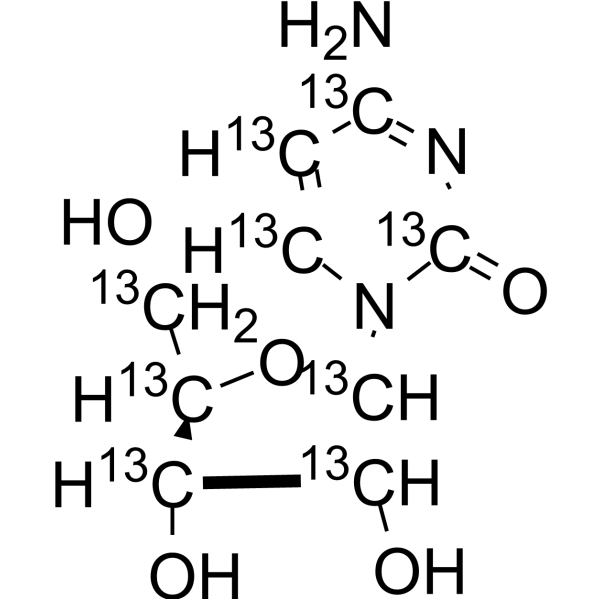
  • HY-W768207

    Isotope-Labeled Compounds Nucleoside Antimetabolite/Analog Endogenous Metabolite Neurological Disease
    Cytidine-1',2',3',4',5'- 13C5 is the 13C-labeled Cytidine (HY-B0158). Cytidine is a pyrimidine nucleoside and acts as a component of RNA. Cytidine is a precursor of uridine. Cytidine controls neuronal-glial glutamate cycling, affecting cerebral phospholipid metabolism, catecholamine synthesis, and mitochondrial function .
    Cytidine-1',2',3',4',5'-13C5
  • HY-B0158S4

    Cytosine β-D-riboside-d1; Cytosine-1-β-D-ribofuranoside-d1

    Isotope-Labeled Compounds Endogenous Metabolite Nucleoside Antimetabolite/Analog Neurological Disease
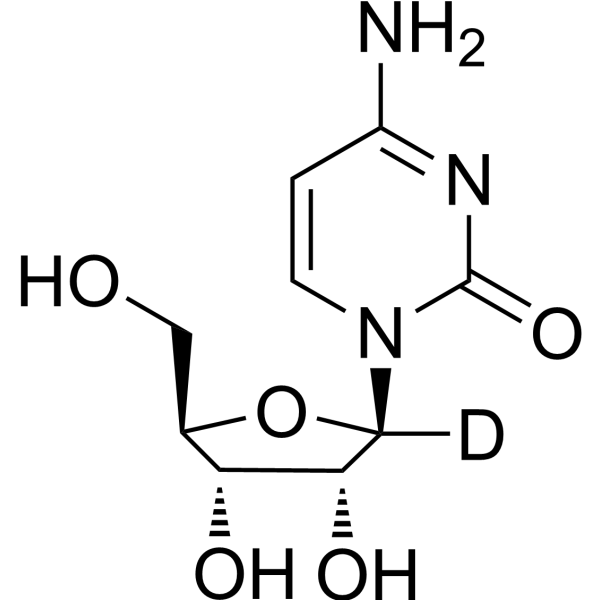
    Cytidine-d is the deuterium labeled Cytidine. Cytidine is a pyrimidine nucleoside and acts as a component of RNA. Cytidine is a precursor of uridine. Cytidine controls neuronal-glial glutamate cycling, affecting cerebral phospholipid metabolism, catechol
    Cytidine-d1
  • HY-103406

    Dopamine Receptor CCR Neurological Disease Metabolic Disease
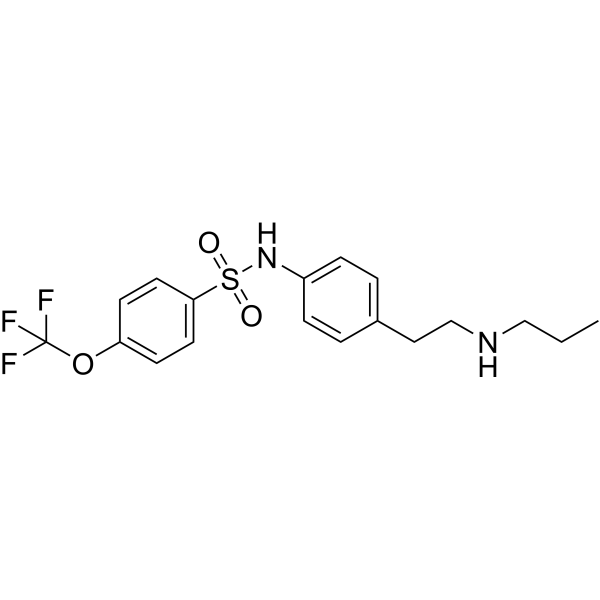
    PNU-177864 is a potent, selective, orally active dopamine D3 receptor antagonist. PNU-177864 induces phospholipid metabolism in vivo and has anti-schizophrenia activity .
    PNU-177864
  • HY-103406A

    Dopamine Receptor CCR Neurological Disease
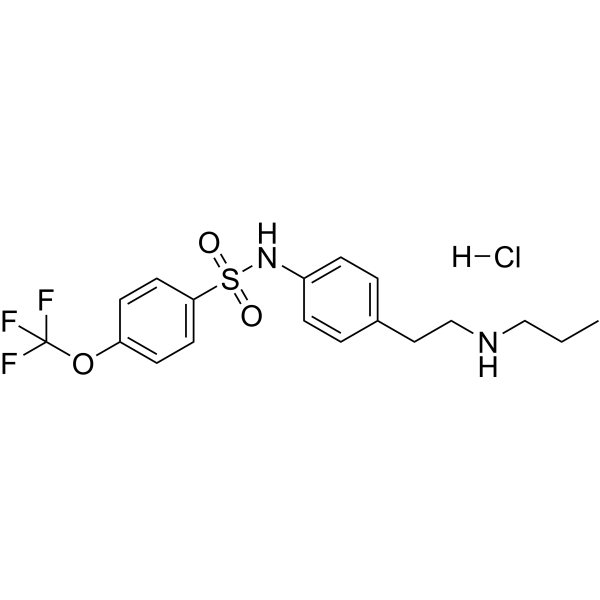
    PNU-177864 is a potent, selective, orally active dopamine D3 receptor antagonist. PNU-177864 induces phospholipid metabolism in vivo and has anti-schizophrenia activity .
    PNU-177864 hydrochloride
  • HY-B0158S3

    Cytosine β-D-riboside-d2-1; Cytosine-1-β-D-ribofuranoside-d2-1

    Isotope-Labeled Compounds Endogenous Metabolite Nucleoside Antimetabolite/Analog Neurological Disease
    Cytidine-d2-1 is the deuterium labeled Cytidine. Cytidine is a pyrimidine nucleoside and acts as a component of RNA. Cytidine is a precursor of uridine. Cytidine controls neuronal-glial glutamate cycling, affecting cerebral phospholipid metabolism, catech
    Cytidine-d2-1
  • HY-P2745

    GPC-PDE

    Biochemical Assay Reagents Cancer
    Glycerophosphocholine phosphodiesterase (GPC-PDE) catalyzes the degradation of low-glycerophosphocholine into free choline and glycerol-3-phosphate. Glycerophosphocholine phosphodiesterase participates in the regulation of choline phospholipid metabolism in breast cancer. Glycerophosphocholine phosphodiesterase can be used for research on diseases such as breast cancer .
    Glycerophosphocholine phosphodiesterase
  • HY-19594R

    WIN 13146 (Standard)

    Reference Standards Parasite Infection
    Teclozan (Standard) is the analytical standard of Teclozan. This product is intended for research and analytical applications. Teclozan (WIN 13146) is an antiprotozoal agent, class in benzylamine derivatives. Teclozan intervenes in the phospholipid metabolism preventes the formation of arachidonic acid. Teclozan acts in the intestinal lumen being effective in Anti-G. intestinalis. Teclozan can be used for the research of protozoan infections .
    Teclozan (Standard)
  • HY-B0158S8

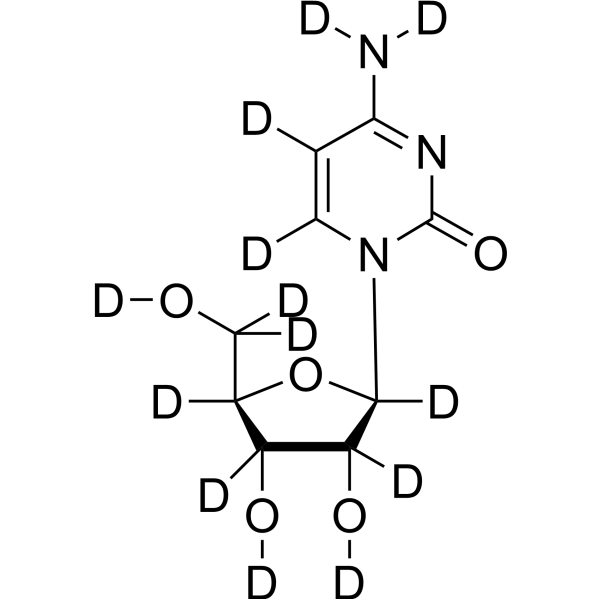
    Cytosine β-D-riboside-d13; Cytosine-1-β-D-ribofuranoside-d13

    Nucleoside Antimetabolite/Analog Endogenous Metabolite Isotope-Labeled Compounds Neurological Disease
    Cytidine-d13 (Cytosine β-D-riboside-d13) is deuterium labeled Cytidine (HY-B0158). Cytidine is a pyrimidine nucleoside and acts as a component of RNA. Cytidine is a precursor of uridine. Cytidine controls neuronal-glial glutamate cycling, affecting cerebral phospholipid metabolism, catecholamine synthesis, and mitochondrial function .
    Cytidine-d13
  • HY-106435

    DNA/RNA Synthesis DNA Alkylator/Crosslinker Cancer
    Cystemustine is a DNA inhibitor (a chloroethyl nitrosourea, CENU). Cystemustine can cause DNA cross-linking, thereby inhibiting the proliferation of tumor cells. Cystemustine can also exert cytotoxic effects by interfering with the cell cycle, inducing cell re-differentiation, and altering phospholipid metabolism. Cystemustine exhibits high anti-tumor activity and a relatively short plasma half-life in mice. Cystemustine can be used for the study of various malignant tumors, including melanoma, glioma, renal cancer, head and neck cancer, and colorectal cancer, etc .
    Cystemustine
  • HY-N19810

    Libanotine; Cnidimine

    Bacterial Infection Cancer
    Edultin (Libanotine; Cnidimine) is an angular furanocoumarin. Edultin potently inhibits TPA (HY-18739)-induced early signals associated with tumor promotion (phospholipid metabolism). Edultin exerts mild inhibitory effects on some clinically isolated strains of Pseudomonas aeruginosa and Staphylococcus aureus. Edultin can be used in studies related to tumor promotion and bacterial infections .
    Edultin
  • HY-W355700S

    Isotope-Labeled Compounds Infection
    1-Oleoyl-2-hydroxy-sn-glycero-3-phosphoethanolamine-d31 is the deuterium labeled 1-Oleoyl-2-hydroxy-sn-glycero-3-phosphoethanolamine (HY-W355700). 1-oleoyl-sn-glycero-3-phosphoethanolamine (LysoPE 18:1) is a lysophosphatidylethanolamine molecule involved in phospholipid metabolism, targeting cell membrane receptors (such as G protein-coupled receptors) to regulate cell signaling pathways. 1-oleoyl-sn-glycero-3-phosphoethanolamine may activate mitogen-activated protein kinase (MAPK) signaling, promote cell migration, regulate inflammatory responses and lipid metabolism, and has both pro-inflammatory and anti-inflammatory activities. 1-oleoyl-sn-glycero-3-phosphoethanolamine is mainly used in the screening of biomarkers for metabolic diseases (such as non-alcoholic fatty liver disease and obesity), as well as the study of the mechanism of lysophospholipids in cell membrane homeostasis and signal transduction .
    1-Oleoyl-2-hydroxy-sn-glycero-3-phosphoethanolamine-d31

Inquiry Online

Your information is safe with us. * Required Fields.

Salutation


Country or Region *

Applicant Name *


Organization Name *

Department *


Email Address *


Product Name *

Cat. No.


Requested quantity *

Phone Number *


Remarks

Inquiry Online

Inquiry Information

Product Name:
Cat. No.:
Quantity:
MCE Japan Authorized Agent: