1. Search Result
Search Result
Results for "

spontaneous hypertension

" in MedChemExpress (MCE) Product Catalog:

30

Inhibitors & Agonists

3

Peptides

5

Natural
Products

Cat. No. Product Name Target Research Areas Chemical Structure
  • HY-N0202
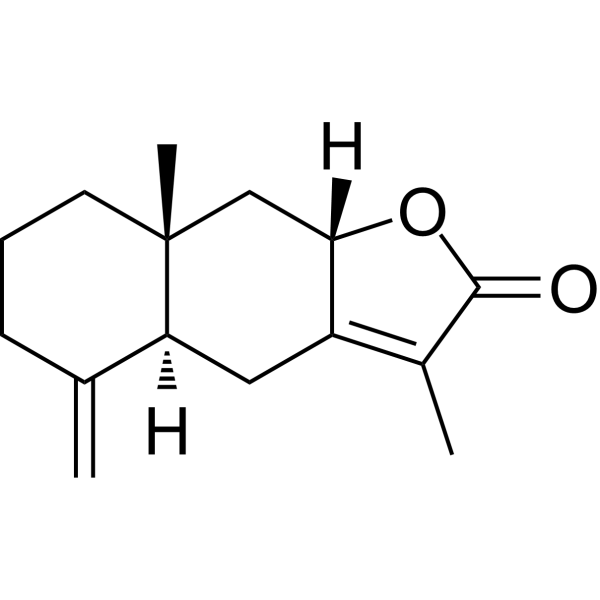
    Atractylenolide II
    3 Publications Verification

    Asterolide

    ERK Apoptosis p38 MAPK Akt Src STAT Cardiovascular Disease Neurological Disease Inflammation/Immunology Cancer
    Atractylenolide II (Asterolide) is a sesquiterpenoid compound. Atractylenolide II can induce G1 phase cell cycle arrest and apoptosis in B16 melanoma cells. Atractylenolide II is an orally effective anticancer agent that can exert anti-melanoma effects by inhibiting the STAT3 signaling pathway. In addition, Atractylenolide II has been shown to ameliorate myocardial fibrosis, oxidative stress, and neuroprotective activity .
    Atractylenolide II
  • HY-B0592

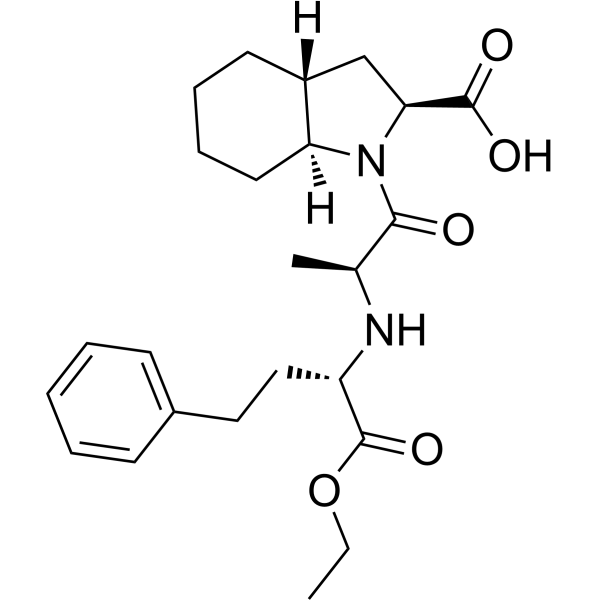
    RU44570

    Angiotensin-converting Enzyme (ACE) Cardiovascular Disease
    Trandolapril (RU44570) is a nonsulfhydryl proagent that is hydrolysed to the active diacid Trandolaprilat. Trandolapril is an orally administered angiotensin converting enzyme (ACE) inhibitor that has been used in the treatment of hypertension and congestive heart failure (CHF), and after myocardial infarction (MI) .
    Trandolapril
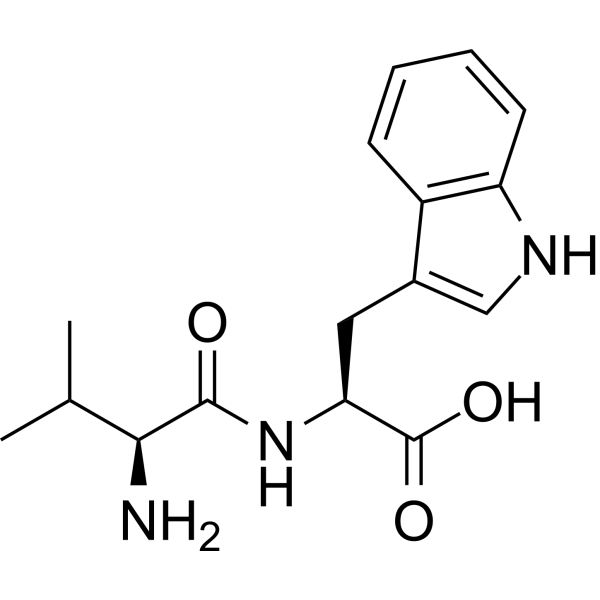
  • HY-118060

    N-Valyltryptophan; Val-Trp

    Angiotensin-converting Enzyme (ACE) Calcium Channel NO Synthase Cardiovascular Disease
    Dipeptide 2 (N-Valyltryptophan) is an orally active, competitive angiotensin-converting enzyme (ACE) inhibitory peptide with an IC50 of 10.50 μM. Dipeptide 2 reduces intracellular Calcium ions. Dipeptide 2 significantly increases the content of NO, inhibits the production of ET-1, and induces the phosphorylation of eNOS. Dipeptide 2 decreases the systolic and diastolic blood pressure of spontaneously hypertensive rats .
    Dipeptide 2
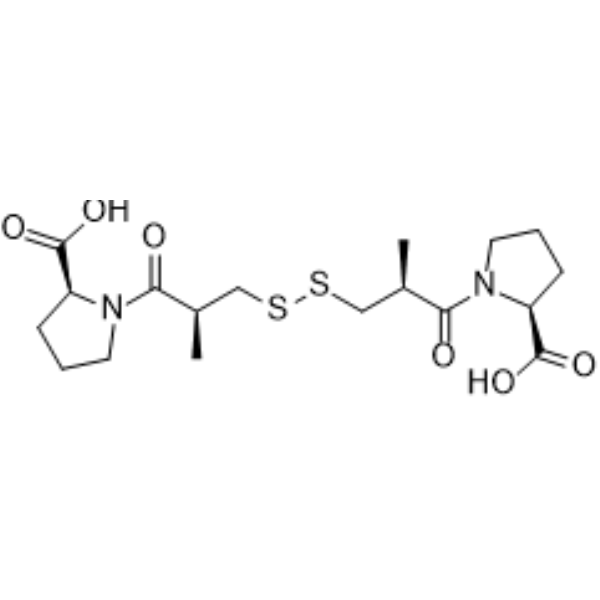
  • HY-123068

    SQ 14551

    Drug Derivative Cardiovascular Disease
    Captopril disulfide (SQ 14551) is an orally active disulfide dimer prodrug. Captopril disulfide is metabolized to Captopril and acts as a Bradykinin potentiator. Captopril disulfide enhances the vasodilatory effect of Bradykinin in anesthetized rats and the contractile response of isolated guinea pig ileum to Bradykinin. Captopril disulfide exhibits antihypertensive activity in spontaneously hypertensive rats. Captopril disulfide can be used in hypertension-related research .
    Captopril disulfide
  • HY-111827
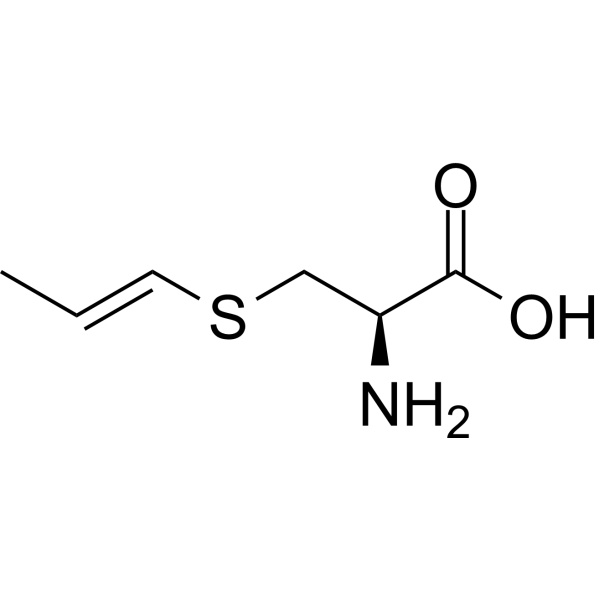
    S-1-Propenyl-L-cysteine
    Maximum Cited Publications
    6 Publications Verification

    Histamine Receptor Cardiovascular Disease Others Metabolic Disease Inflammation/Immunology
    S-1-Propenyl-L-cysteine is a stereoisomer of S-allyl-l-cysteine, extracted from garlic, with immunomodulatory effects and reduces blood pressure in a hypertensive animal model . S-1-Propenyl-L-cysteine exhibits antioxidative efficacy through a NO-dependent BACH1 signaling pathway . S-1-Propenyl-L-cysteine is orally active.
    S-1-Propenyl-L-cysteine
  • HY-134769

    Mitochondrial Metabolism Reactive Oxygen Species (ROS) Cardiovascular Disease Metabolic Disease
    OPC-163493 is an orally active and liver-targeted mitochondrial uncoupling agent. OPC-163493 reduces the production of mitochondrial Δψ and ROS. OPC-163493 has anti-diabetic and lipid-lowering effects. In addition, OPC-163493 has a protective effect on cardiovascular disease .
    OPC-163493
  • HY-106103

    MK-678; L-363586

    Somatostatin Receptor Cardiovascular Disease Neurological Disease Metabolic Disease Inflammation/Immunology
    Seglitide (MK-678) is an orally active, selective SSTR2 agonist and somatostatin analog. Seglitide also acts as a competitive Somatostatin receptor antagonist, with pA2 values of 6.50, 6.24 and 6.09 against SS14, SS25 and SS28, respectively. Seglitide produces only weak, transient inhibition of myocardial contractility in isolated right atria of guinea pigs. Seglitide inhibits glucagon secretion and reduces circulating insulin levels. Seglitide causes a sustained, reversible reduction in elevated systolic blood pressure in streptozotocin (HY-13753)-induced diabetic rats, but exerts no effect on spontaneously hypertensive rats. Seglitide induces membrane hyperpolarization and inhibits electrical excitability. Seglitide induces concentration-dependent contraction and significant desensitization in isolated distal colon of rats. Seglitide can be used in research related to hypertension complicated with insulin-dependent diabetes mellitus .
    Seglitide
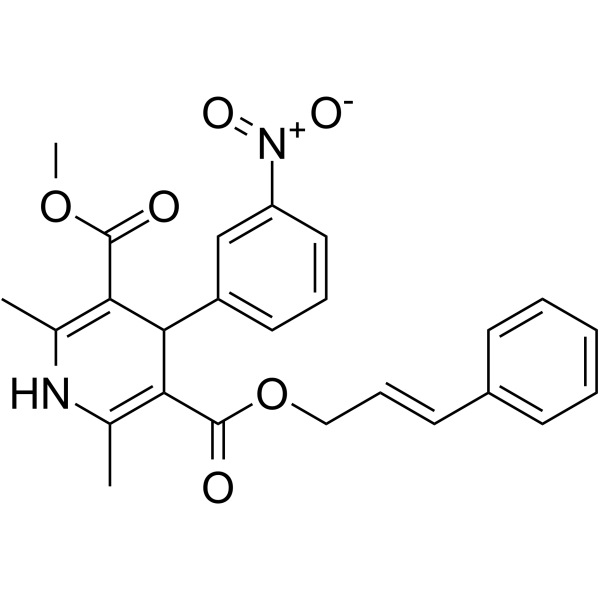
  • HY-19664

    OPC-13340

    Calcium Channel NO Synthase Cardiovascular Disease
    Pranidipine (OPC-13340) is an orally active L-type voltage-dependent calcium channel (L-VDCC) blocker with a Ki value of 0.16 nM. Pranidipine inhibits calcium-induced contraction, suppresses slow-response action potentials, shortens action potential duration, reduces systolic and diastolic blood pressure, and exerts vasodilatory effects. Pranidipine enhances its vasodilatory effect by blocking NO decomposition. Pranidipine can be used in research related to essential hypertension, angina pectoris, myocardial infarction, and dilated cardiomyopathy .
    Pranidipine
  • HY-N6065
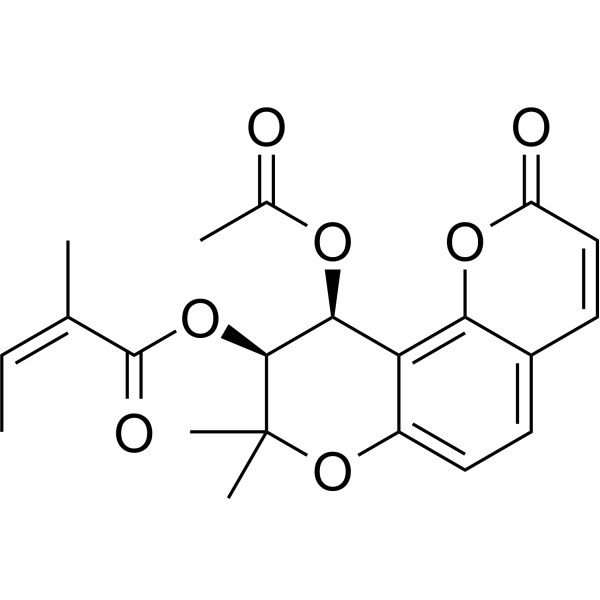
    Praeruptorin A
    3 Publications Verification

    (+)-Praeruptorin A

    Calcium Channel Drug Isomer Cytochrome P450 iGluR Apoptosis Cardiovascular Disease Neurological Disease
    Praeruptorin A ((+)-Praeruptorin A) is an orally active isomer of (±)-Praeruptorin A (HY-N0081). Praeruptorin A also acts as a Calcium channel blocker. Praeruptorin A can be isolated from Peucedanum. Praeruptorin A serves as a substrate for CYP3A4. Praeruptorin A downregulates NMDA receptors containing GluN2B and inhibits neuronal Apoptosis. Praeruptorin A mediates vasodilation, inhibits vascular hypertrophy and reduces blood pressure. Praeruptorin A can be used in research related to neurological diseases, myocardial ischemia, heart failure, exertional angina, renovascular hypertension and spontaneous hypertension .
    Praeruptorin A
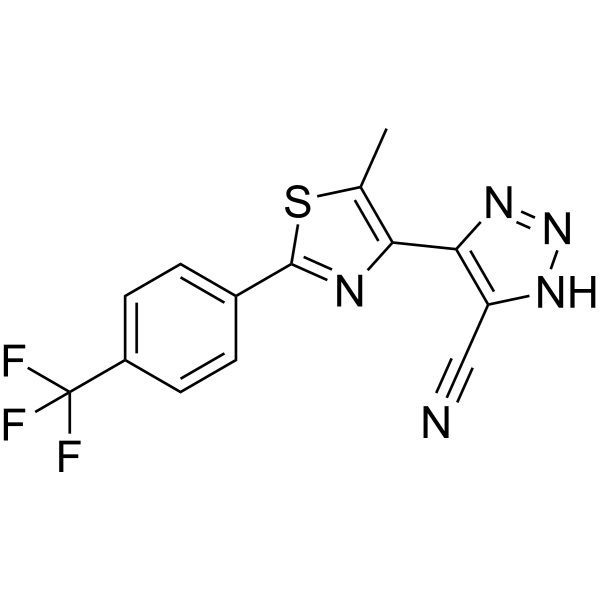
  • HY-123983

    Pim DAPK Cardiovascular Disease
    HS56 is an ATP-competitive dual Pim/DAPK3 inhibitor with Ki values of 0.26, 0.208, 2.94, and >100 μM for DAPK3, Pim-3, Pim-1, and Pim-2, respectively. HS56 inhibits LC20 phosphorylation and smooth muscle contraction. HS56 decreases blood pressure in spontaneously hypertensive mice. HS56 can be used in research of hypertension .
    HS56
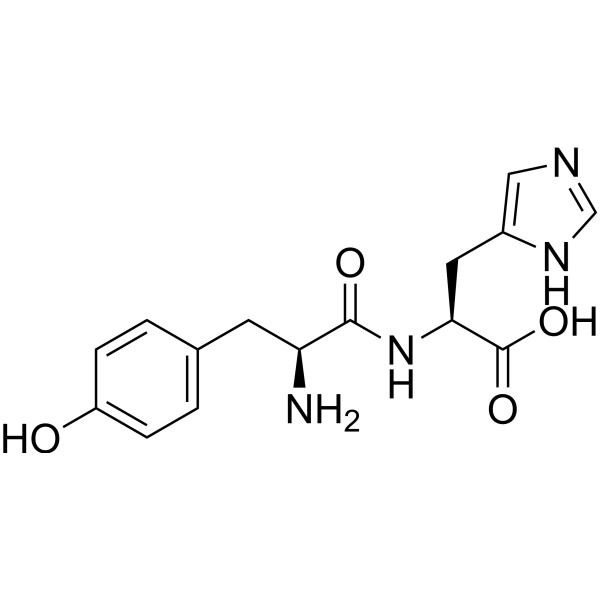
  • HY-P4650

    Angiotensin-converting Enzyme (ACE) Cardiovascular Disease
    Tyrosylhistidine is a dipeptide consisting of tyrosine and histidine (Tyr-His). Tyrosylhistidine is an orally active antihypertensive peptide. Tyrosylhistidine reduces blood pressure in mice in a model of spontaneous hypertension .
    Tyrosylhistidine
  • HY-101390D

    Calcium Channel Cardiovascular Disease
    (R)-Niguldipine, a R-epimer of Niguldipine (HY-101390B), is a calcium channel antagonist. (R)-Niguldipine exerts a vasodilatory effect by blocking calcium channels and reducing the transmembrane influx of calcium ions. (R)-Niguldipine can inhibit U-46619 (HY-108566)-induced coronary artery contraction in guinea pig Langendorff hearts (pID50 of 9.93), has high affinity for calcium channel binding sites on guinea pig skeletal muscle membranes (Ki of 8.10), and lowers blood pressure in spontaneously hypertensive rats (pED30 of 5.55). (R)-Niguldipine can improve cardiovascular diseases such as hypertension, angina pectoris, and arrhythmias .
    (R)-Niguldipine
  • HY-N14880

    Antibiotic Bacterial Infection Cardiovascular Disease
    Oudenone is an oxygen-containing heterocyclic antibiotic. Oudenone has weak antibacterial and fungal activity. Oudenone has antihypertensive effect on spontaneous hypertension in rats by intraperitoneal injection or oral administration .
    Oudenone
  • HY-19253A

    Angiotensin Receptor Cardiovascular Disease Metabolic Disease
    KRH-594 is an orally active angiotensin AT1 receptor antagonist. KRH-594 ameliorates the progression of diabetic nephropathy and hyperlipidaemia. KRH-594 inhibits cardiac hypertrophy .
    KRH-594
  • HY-W752502

    Dopamine Receptor Vasopressin Receptor Adrenergic Receptor Cardiovascular Disease
    Docarpamine is an orally active dopamine prodrug that can be hydroxylated in the small intestine and liver to form active dopamine. Docarpamine mainly activates D1-like receptors in peripheral blood vessels to lower blood pressure and heart rate in a state of spontaneous hypertension. Docarpamine exerts a pressor and tachycardic effect by activating D1-like receptors, vasopressin V1 receptors, and α-adrenergic receptors in normal blood pressure conditions. Docarpamine can be used for research on renal vascular dilation and diuresis .
    Docarpamine
  • HY-135488

    Adrenergic Receptor Cardiovascular Disease
    A 131701 is a selective α1a- (Ki: 0.22 nM for human α1a) and α1d-adrenoceptor antagonist. A 131701 antagonizes epinephrine-induced increases in intraurethral pressure (IUP). A 131701 causes transient decreases in mean arterial blood pressure (MABP) and transient tachycardia. A 131701 can be used in the research of spontaneous hypertension .
    A 131701
  • HY-116262

    Phosphodiesterase (PDE) Cardiovascular Disease Inflammation/Immunology
    SCH 51866 is a potent, selective and orally active inhibitor of PDE1 (IC50=70 nM) and PDE5 (IC50=60 nM). SCH 51866 inhibits collagen-induced aggregation of human washed platelets (IC50=10 μM), prevents neointimal formation in balloon catheter-injured carotid arteries of spontaneously hypertensive rats (SHR), and reduces blood pressure in SHR. SCH 51866 can be used in the study of hypertension .
    SCH 51866
  • HY-19200

    Neprilysin Angiotensin-converting Enzyme (ACE) Cardiovascular Disease
    RB-105 is an inhibitor of angiotensin-converting enzyme (ACE) (Ki = 4.2 nM) and neutral endopeptidase (NEP) (Ki = 1.7 nM). RB-105 after inhibiting ACE reduces the production of Ang II and increase the level of bradykinin. RB-105 after inhibiting NEP increases the level of natriuretic peptide and further increases the level of bradykinin, thereby generating a powerful synergistic effect. RB-105 has significant antihypertensive and natriuretic effects in both spontaneously hypertensive rats and normal blood pressure rats. RB-105 can be used for research on hypertension .
    RB-105
  • HY-101390A

    (R)-Niguldipine hydrochloride

    Calcium Channel Cardiovascular Disease
    (-)-Niguldipine ((R)-Niguldipine) hydrochloride is a calcium channel antagonist. (-)-Niguldipine hydrochloride exerts a vasodilatory effect by blocking calcium channels and reducing the transmembrane influx of calcium ions. (-)-Niguldipine can inhibit U-46619 (HY-108566)-induced coronary artery contraction in guinea pig Langendorff hearts (pID50 of 9.93), has high affinity for calcium channel binding sites on guinea pig skeletal muscle membranes (Ki of 8.10), and lowers blood pressure in spontaneously hypertensive rats (pED30 of 5.55). (-)-Niguldipine hydrochloride can improve cardiovascular diseases such as hypertension, angina pectoris, and arrhythmias .
    (-)-Niguldipine hydrochloride
  • HY-19078

    Prostaglandin Receptor Cardiovascular Disease
    SQ-30741 is a thromboxane A2 receptor antagonist. SQ-30741 reduces vasoconstriction in a feline pulmonary vascular bed model. SQ-30741 increases relaxation of aortic endothelium and vascular smooth muscle in adult rats in a spontaneously hypertensive rat model. SQ-30741 can be used in research on cardiovascular diseases such as hypertension .
    SQ-30741
  • HY-121550

    Angiotensin-converting Enzyme (ACE) Cardiovascular Disease
    ME3221 is an angiotensin AT1 receptor antagonist that effectively antagonizes the pressor response to angiotensin II in rats and marmosets without affecting the hypotensive response to bradykinin. It demonstrates potent antihypertensive effects in renal hypertensive rats and spontaneously hypertensive rats (SHR). ME3221's repeated administration in SHR results in sustained and stable hypotensive effects without affecting heart rate, indicating its potential for studying both renal and essential hypertension .
    ME3221
  • HY-111827R

    Histamine Receptor Cardiovascular Disease Others Metabolic Disease Inflammation/Immunology
    S-1-Propenyl-L-cysteine (Standard) is the analytical standard of S-1-Propenyl-L-cysteine. This product is intended for research and analytical applications. S-1-Propenyl-L-cysteine is a stereoisomer of S-allyl-l-cysteine, extracted from garlic, with immunomodulatory effects and reduces blood pressure in a hypertensive animal model . S-1-Propenyl-L-cysteine exhibits antioxidative efficacy through a NO-dependent BACH1 signaling pathway . S-1-Propenyl-L-cysteine is orally active.
    S-1-Propenyl-L-cysteine (Standard)
  • HY-123449A

    Adrenergic Receptor Cardiovascular Disease Neurological Disease
    MK-761 TFA is an orally effective β2-adrenergic receptor antagonist. MK-761 TFA attenuates positive inotropic effects, reduces arterial pressure, enhances the contractility of papillary muscles in cat hearts, and exerts effects mediated by catecholamine release. MK-761 TFA can be used in the research of hypertension .
    MK-761 TFA
  • HY-123449

    Adrenergic Receptor Cardiovascular Disease
    MK-761 free base is an orally effective β2-adrenergic receptor antagonist. MK-761 free base attenuates positive inotropic effects, reduces arterial pressure, enhances the contractility of papillary muscles in cat hearts, and exerts effects mediated by catecholamine release. MK-761 free base can be used in the research of hypertension .
    MK-761 free base
  • HY-105527

    Adrenergic Receptor Cardiovascular Disease
    Flavodilol is an orally active antihypertensive agent. Flavodilol extensively depletes catecholamines and serotonin in heart tissue of normotensive and spontaneously hypertensive rats (SHR). Flavodilol can be used for hypertension research .
    Flavodilol
  • HY-B0592R

    RU44570 (Standard)

    Reference Standards Angiotensin-converting Enzyme (ACE) Cardiovascular Disease
    Trandolapril (Standard) is the analytical standard of Trandolapril. This product is intended for research and analytical applications. Trandolapril (RU44570) is a nonsulfhydryl proagent that is hydrolysed to the active diacid Trandolaprilat. Trandolapril is an orally administered angiotensin converting enzyme (ACE) inhibitor that has been used in the treatment of hypertension and congestive heart failure (CHF), and after myocardial infarction (MI) .
    Trandolapril (Standard)
  • HY-B0592A

    RU44570 hydrochloride

    Angiotensin-converting Enzyme (ACE) Cardiovascular Disease
    Trandolapril (RU44570) hydrochloride is a nonsulfhydryl proagent that is hydrolysed to the active diacid Trandolapril hydrochlorideat. Trandolapril hydrochloride is an orally active angiotensin converting enzyme (ACE) inhibitor that has been used in the treatment of hypertension and congestive heart failure (CHF), and after myocardial infarction (MI) .
    Trandolapril hydrochloride
  • HY-180354

    MDL-899

    Drug Derivative Cardiovascular Disease
    Mopidralazine hydrochloride (MDL-899) (Compound 30) is an orally active antihypertensive agent. Mopidralazine hydrochloride significantly reduces systolic blood pressure (ED50 = 1.94 mg/kg) in spontaneously hypertensive rats models. Mopidralazine hydrochloride has a slower onset of action but a longer duration of action and has a significantly smaller effect on increasing heart rate in canine model of renal hypertension. Mopidralazine hydrochloride can be used for the research of hypertension .
    Mopidralazine hydrochloride
  • HY-129599

    PARP NF-κB Cardiovascular Disease Neurological Disease
    L-2286 is an orally active PARP-1 inhibitor. L-2286 alleviates carotid artery remodeling, oxidative stress and inflammation in spontaneously hypertensive rats, protects neurons in the dorsal hippocampus, and reduces pyramidal cell loss and gliosis without affecting blood pressure. L-2286 can be used in research related to hypertension .
    L-2286
  • HY-182407

    Angiotensin-converting Enzyme (ACE) Cardiovascular Disease
    CV 5975 is an orally active angiotensin converting enzyme (ACE) competitive inhibitor with a rabbit lung ACE IC50 of 3.1 nM and Ki values of 2.6 nM. CV 5975 inhibits ACE in plasma, aorta, kidney, and brain, intensifying inhibition with repeated administration. CV 5975 inhibits Angiotensin I (HY-P1032)-induced pressor responses and ileum contraction, and augments bradykinin-induced ileum contraction and depressor responses. CV 5975 reduces blood pressure via ACE-independent mechanisms, with sustained action across multiple hypertensive and normotensive animal models, intensified by repeated dosing or Hydrochlorothiazide (HY-B0252) co-administration. CV 5975 can be used for the research of hypertension .
    CV 5975

Inquiry Online

Your information is safe with us. * Required Fields.

Salutation


Country or Region *

Applicant Name *


Organization Name *

Department *


Email Address *


Product Name *

Cat. No.


Requested quantity *

Phone Number *


Remarks

Inquiry Online

Inquiry Information

Product Name:
Cat. No.:
Quantity:
MCE Japan Authorized Agent:

