1. Search Result
Search Result
Pathways Recommended: Protein Tyrosine Kinase/RTK
Results for "

thymidine kinases

" in MedChemExpress (MCE) Product Catalog:

29

Inhibitors & Agonists

4

Natural
Products

2

Isotope-Labeled Compounds

5

Oligonucleotides

Cat. No. Product Name Target Research Areas Chemical Structure
  • HY-17422
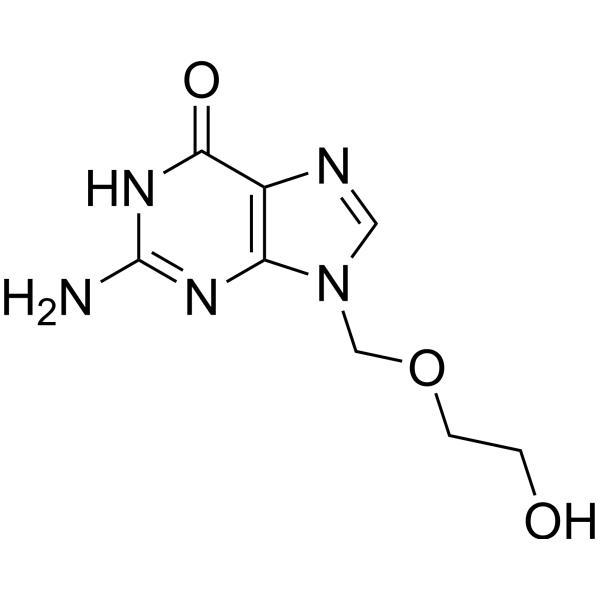
    Acyclovir
    Maximum Cited Publications
    21 Publications Verification

    Aciclovir; Acycloguanosine

    HSV Apoptosis Antibiotic Bacterial Infection Cancer
    Acyclovir (Aciclovir) is a potent, orally active antiviral agent. Acyclovir has antiherpetic activity with IC50 values of 0.85 μM and 0.86 μM for HSV-1 and HSV-2, respectively. Acyclovir induces cell cycle perturbation and apoptosis. Acyclovir prevents bacterial infections during induction therapy for acute leukaemia .
    Acyclovir
  • HY-128738
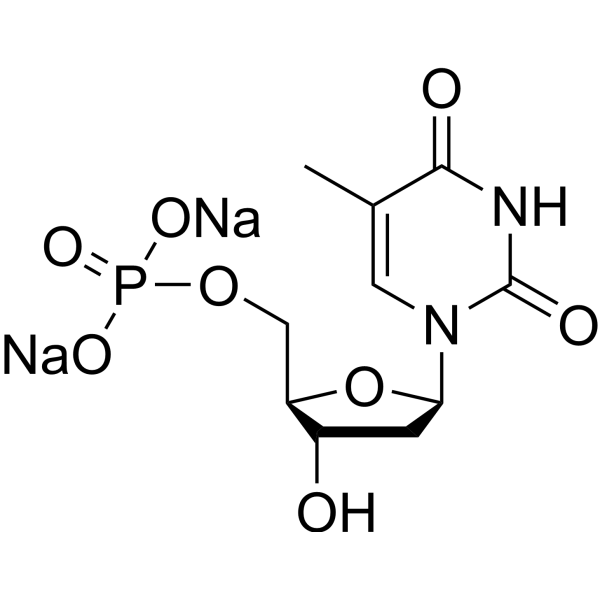
    Thymidine-5'-monophosphate disodium salt
    1 Publications Verification

    TMP disodium salt

    Endogenous Metabolite DNA/RNA Synthesis Metabolic Disease
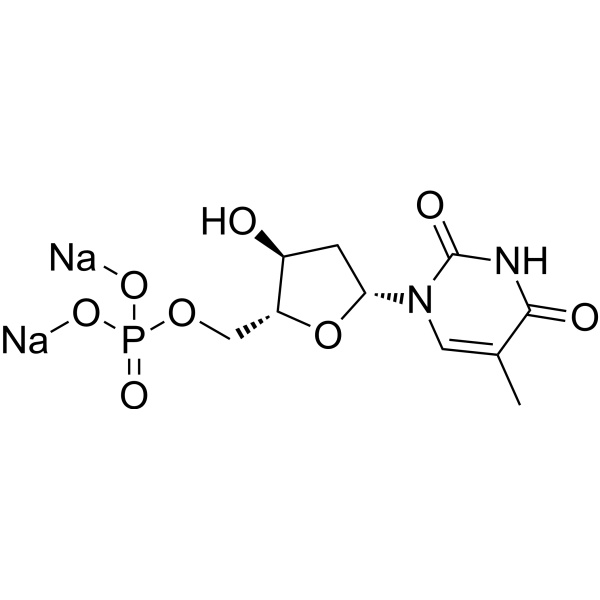
    Thymidine-5'-monophosphate (TMP) disodium salt is a key nucleotide in pyrimidine metabolism, and its kinase activity can be competitively inhibited by 5'-fluorothymidine. The level of Thymidine-5'-monophosphate disodium salt is closely associated with acute kidney injury .
    Thymidine-5'-monophosphate disodium salt
  • HY-17422A
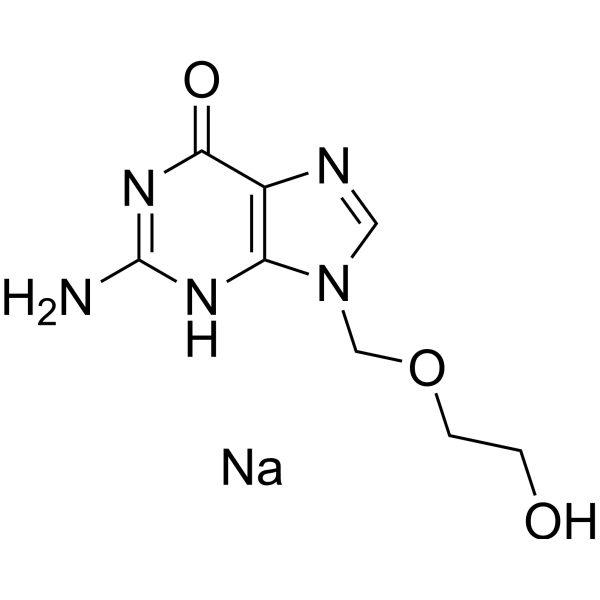
    Acyclovir sodium
    Maximum Cited Publications
    21 Publications Verification

    Aciclovir sodium; Acycloguanosine sodium

    HSV Apoptosis Antibiotic Bacterial Infection Cancer
    Acyclovir (Aciclovir) sodium is a potent, orally active antiviral agent. Acyclovir sodium has antiherpetic activity with IC50 values of 0.85 μM and 0.86 μM for HSV-1 and HSV-2, respectively. Acyclovir sodium induces cell cycle perturbation and apoptosis. Acyclovir sodium prevents bacterial infections during induction therapy for acute leukaemia .
    Acyclovir sodium
  • HY-W342664

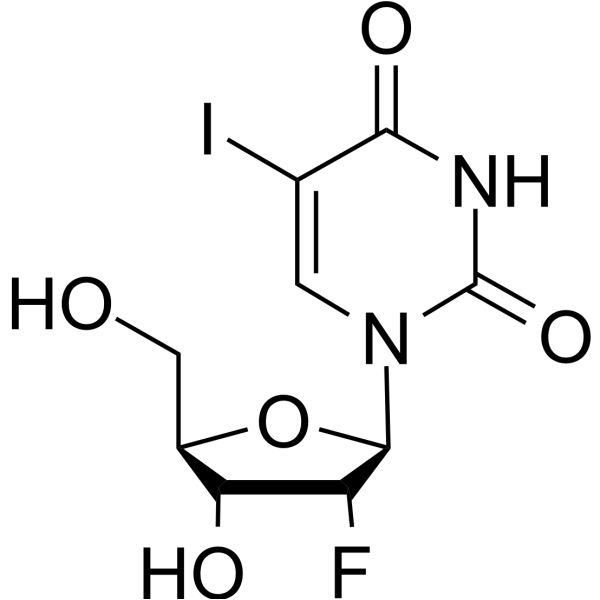
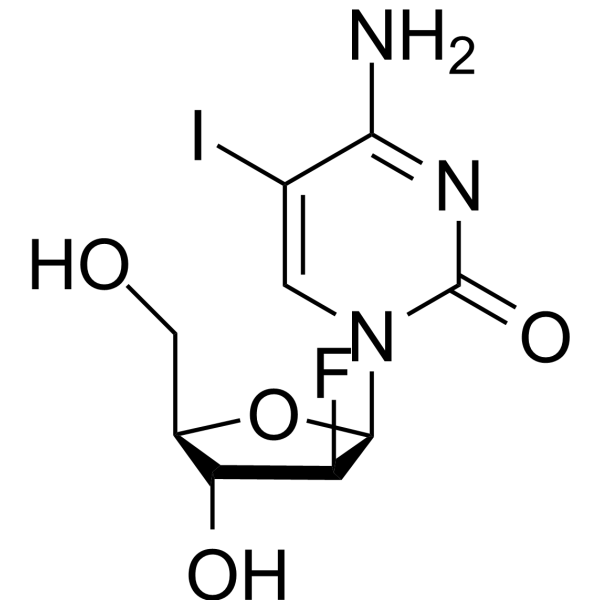
    FIRU

    Nucleoside Antimetabolite/Analog HSV Cancer
    2'-Deoxy-2'-fluoro-5-iodouridine (FIRU) is a nucleoside analog. When labeled with 123I, 2'-Deoxy-2'-fluoro-5-iodouridine accumulates highly selectively in tumors expressing the HSV1-tk gene. Radiolabeled 2'-Deoxy-2'-fluoro-5-iodouridine enables imaging of adenovirus-mediated HSV1-tk suicide gene transfer .
    2'-Deoxy-2'-fluoro-5-iodouridine
  • HY-131576A

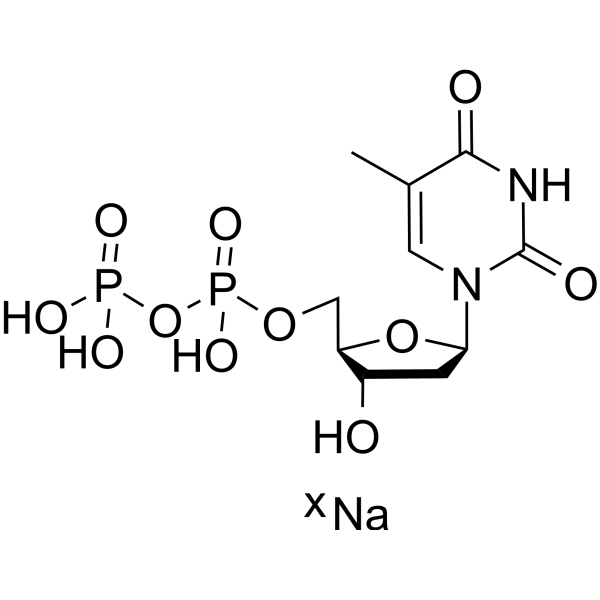
    dTDP sodium

    Endogenous Metabolite Metabolic Disease
    Thymidine 5′-diphosphate (dTDP) sodium is the key product of pyrimidine synthesis in organisms. Thymidine 5′-diphosphate sodium is produced by thymidylate kinase (TMPK) catalyzed phosphorylation of 5′-thymidine monophosphate (dTMP), which requires ATP and Mg 2+. Thymidine 5′-diphosphate sodium is further catalyzed by TMPK to thymidine 5′-triphosphate (dTTP). TMPK activity can be detected by measuring the level of Thymidine 5′-diphosphate .
    Thymidine 5′-diphosphate sodium
  • HY-17422R

    Aciclovir (Standard); Acycloguanosine (Standard)

    Reference Standards HSV Apoptosis Antibiotic Bacterial Infection Cancer
    Acyclovir (Standard) is the analytical standard of Acyclovir. This product is intended for research and analytical applications. Acyclovir (Aciclovir) is a potent, orally active antiviral agent. Acyclovir has antiherpetic activity with IC50 values of 0.85 μM and 0.86 μM for HSV-1 and HSV-2, respectively. Acyclovir induces cell cycle perturbation and apoptosis. Acyclovir prevents bacterial infections during induction therapy for acute leukaemia .
    Acyclovir (Standard)
  • HY-17422S1

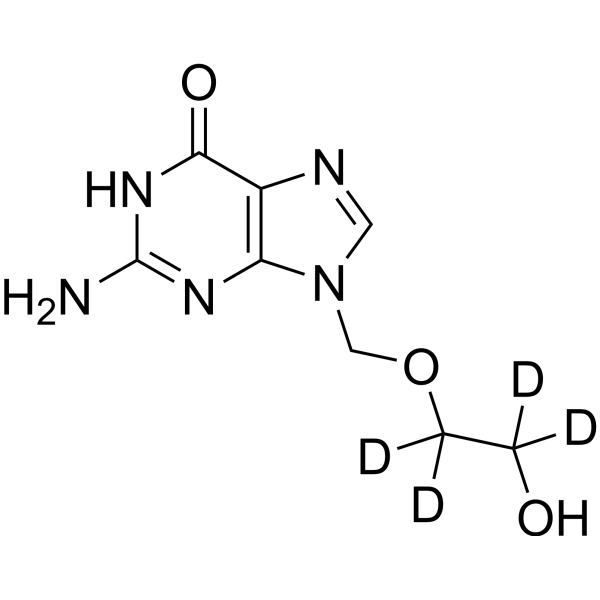
    Aciclovir-d4; Acycloguanosine-d4

    Isotope-Labeled Compounds HSV Bacterial Apoptosis Antibiotic Infection Cancer
    Acyclovir-d4 is the deuterium labeled Acyclovir. Acyclovir (Aciclovir) is a guanosine analogue and an orally active antiviral agent. Acyclovir inhibits HSV-1 (IC50 of 0.85 μM), HSV-2 (IC50 of 0.86 μM) and varicella-zoster virus. Acyclovir can be phosphorylated by viral thymidine kinase (TK), and Acyclovir triphosphate interferes with viral DNA polymerization through competitive inhibition with guanosine triphosphate and obligatory chain termination . Acyclovir prevents bacterial infections during induction therapy for acute leukaemia .
    Acyclovir-d4
  • HY-148169

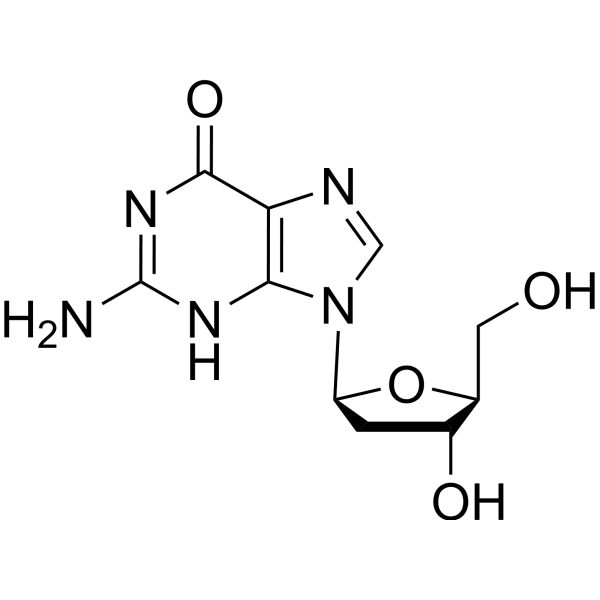
    Nucleoside Antimetabolite/Analog Infection
    2'-Deoxy-L-guanosine selectively inhibits D-Thymidine phosphorylation catalyzed by HSV 1 thymidine kinase. 2'-Deoxy-L-guanosine is the L-configuration of 2'-Deoxyguanosine (HY-17563) .
    2'-Deoxy-L-guanosine
  • HY-128710

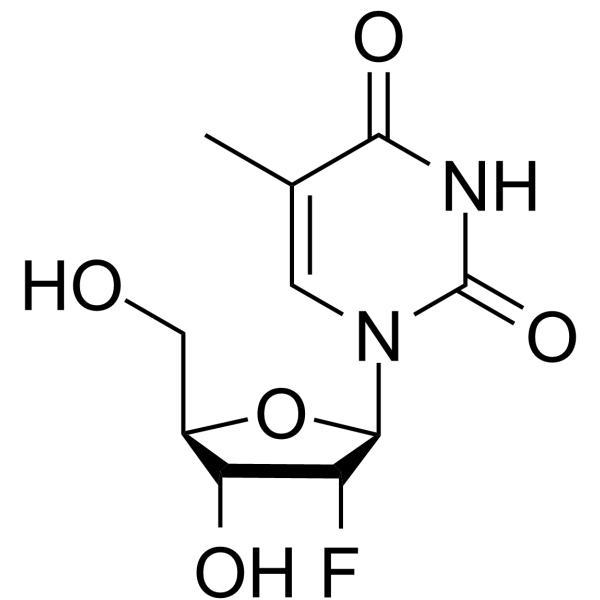
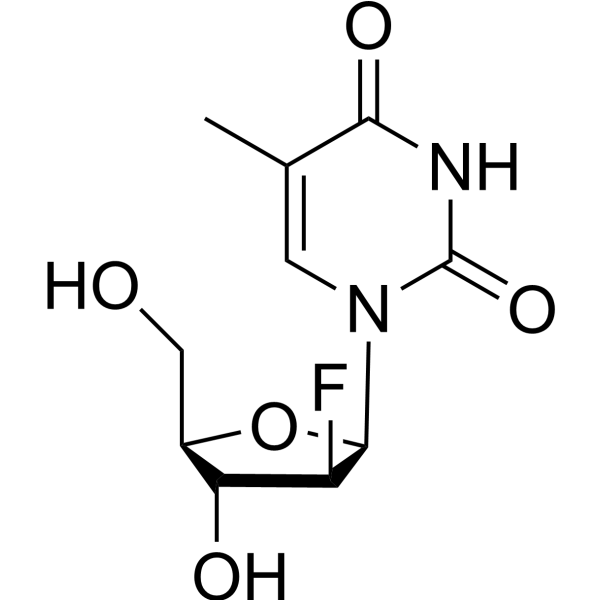
    2'-​Deoxy-​2'-​fluoro-​5-​Methyluridine

    Nucleoside Antimetabolite/Analog Cancer
    2'-Fluorothymidine (2'-Fluoro-2'-deoxythymidine) is a nucleoside analog and hCNT inhibitor, with an IC50 of 1.1 μM against hCNT1 and an IC50 of 9.7 μM against hCNT3. 2'-Fluorothymidine undergoes phosphorylation by cytosolic thymidine kinase (TK1) and mitochondrial thymidine kinase (TK2). 2'-Fluorothymidine acts as a backbone stabilizer in oligonucleotide synthesis and can also form radiolabeled candidates. 2'-Fluorothymidine is applicable in tumor-related research .
    2'-Fluorothymidine
  • HY-W353804

    Nucleoside Antimetabolite/Analog Infection
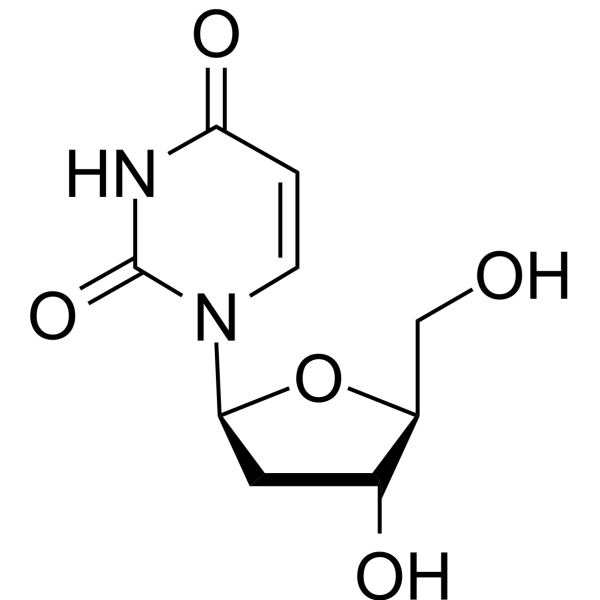
    2'-Deoxy-β-L-uridine is a nucledside analogue and a specific substrate for the viral enzyme, shows no stereospecificity against herpes simplex 1 (HSV1) thymidine kinase (TK). 2′-Deoxy-β-L-uridine exerts antiviral activity via the interation of 5'-triphosphates with the viral DNA polymerase .
    2′-Deoxy-β-L-uridine
  • HY-50735

    NSC 382097; FIAC; FOAC

    HSV EBV DNA/RNA Synthesis Infection
    Fiacitabine (NSC 382097; FIAC; FOAC) is a potent and highly selective anti-herpesvirus agent. Fiacitabine acts as an inhibitor of HSV DNA polymerase, with a Ki of 0.26 μM for HSV-1 and 0.42 μM for HSV-2, respectively. Fiacitabine can be efficiently phosphorylated by thymidine kinase encoded by the virus itself to generate FIACTP, an active triphosphate metabolite. Fiacitabine is applicable to research related to herpesvirus infections .
    Fiacitabine
  • HY-131576

    dTDP

    Endogenous Metabolite Metabolic Disease
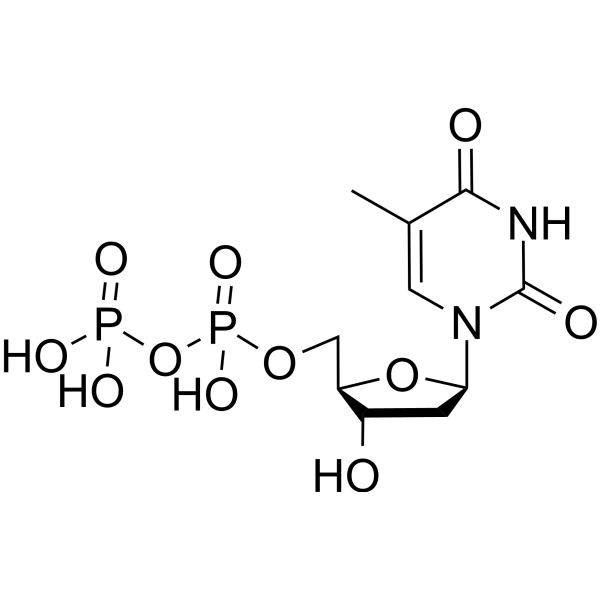
    Thymidine 5′-diphosphate (dTDP) is a key product for pyrimidine synthesis in organisms. Thymidine 5′-diphosphate is generated via the phosphorylation of thymidine 5'-monophosphate (dTMP) catalyzed by thymidylate kinase (TMPK), a process requiring ATP and Mg 2+. Thymidine 5′-diphosphate is further catalyzed by TMPK into thymidine 5'-triphosphate (dTTP). Detection of Thymidine 5′-diphosphate levels enables the assessment of TMPK activity .
    Thymidine 5′-diphosphate
  • HY-114247

    D-FMAU

    Nucleoside Antimetabolite/Analog Infection Cancer
    FMAU is a nucleoside analog and cell proliferation marker that can be phosphorylated by human thymidine kinase and subsequently incorporated into DNA. FMAU is applicable to research related to herpes simplex virus infection, various cancers, hepatitis B virus infection, and Epstein-Barr virus infection .
    FMAU
  • HY-123032

    BV-araU

    DNA/RNA Synthesis Infection
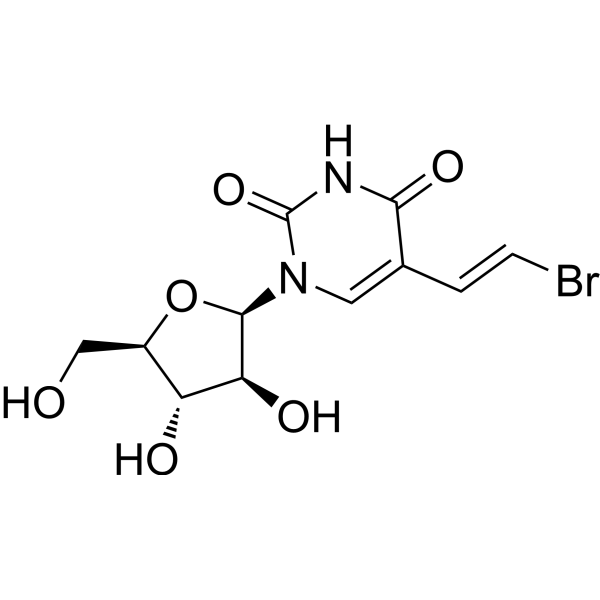
    Sorivudine (BV-araU) is an orally active synthetic pyrimidine nucleoside antimetabolite agent. Sorivudine derives its antiviral activity from selective conversion by a specific thymidine kinase present in certain DNA viruses to nucleotides, which can in turn interfere with viral DNA synthesis .
    Sorivudine
  • HY-177023

    Nucleoside Antimetabolite/Analog Cancer
    Ap5dT is a cytosolic thymidine kinase and mitochondrial enzyme inhibitor with Kis of 0.12 μM and 0.50 μM, respectively. Ap5dT can be used for the study of acute myelocytic leukemia .
    Ap5dT
  • HY-137611A

    DNA/RNA Synthesis Cancer
    α,β-MTDP trisodium, a thymidylate analog, is a thymidine kinase inhibitor with a Ki of 23 µM .
    α,β-MTDP trisodium
  • HY-128738R

    TMP disodium salt (Standard)

    Reference Standards Endogenous Metabolite DNA/RNA Synthesis Metabolic Disease
    Thymidine-5'-monophosphate (TMP) disodium salt (Standard) is the analytical standard of Thymidine-5'-monophosphate disodium salt (HY-128738). This product is intended for research and analytical applications. Thymidine-5'-monophosphate (TMP) disodium salt is a key nucleotide in pyrimidine metabolism, and its kinase activity can be competitively inhibited by 5'-fluorothymidine. The level of Thymidine-5'-monophosphate disodium salt is closely associated with acute kidney injury.
    Thymidine-5'-monophosphate disodium salt (Standard)
  • HY-107025

    Nucleoside Antimetabolite/Analog Infection
    Cf1743 is a potent anti-varicella-zoster virus (VZV) bicyclic nucleoside analogue. Cf1743 has antiviral activity, with an IC50 of 3.3 μM for VZV thymidine kinase (TK) .
    Cf1743
  • HY-128710R

    2'-​Deoxy-​2'-​fluoro-​5-​Methyluridine (Standard)

    Reference Standards Nucleoside Antimetabolite/Analog Cancer
    2'-Fluorothymidine (Standard) is the analytical standard of 2'-Fluorothymidine. This product is intended for research and analytical applications. 2'-Fluorothymidine (2'-Fluoro-2'-deoxythymidine) is a nucleoside analog and hCNT inhibitor, with an IC50 of 1.1 μM against hCNT1 and an IC50 of 9.7 μM against hCNT3. 2'-Fluorothymidine undergoes phosphorylation by cytosolic thymidine kinase (TK1) and mitochondrial thymidine kinase (TK2). 2'-Fluorothymidine acts as a backbone stabilizer in oligonucleotide synthesis and can also form radiolabeled candidates. 2'-Fluorothymidine is applicable in tumor-related research.
    2'-Fluorothymidine (Standard)
  • HY-17422D

    Aciclovir hydrochloride; Acycloguanosine hydrochloride

    HSV Apoptosis Antibiotic Bacterial Infection Cancer
    Acyclovir (Aciclovir) hydrochloride is a potent, orally active antiviral agent. Acyclovir hydrochloride has antiherpetic activity with IC50 values of 0.85 μM and 0.86 μM for HSV-1 and HSV-2, respectively. Acyclovir hydrochloride induces cell cycle perturbation and apoptosis. Acyclovir hydrochloride prevents bacterial infections during induction therapy for acute leukaemia .
    Acyclovir hydrochloride
  • HY-W770090

    Isotope-Labeled Compounds Nucleoside Antimetabolite/Analog VZV Infection
    CF 1743-d7 is the deuterium labeled Cf1743 (HY-107025). Cf1743 is a potent anti-varicella-zoster virus (VZV) bicyclic nucleoside analogue. Cf1743 has antiviral activity, with an IC50 of 3.3 μM for VZV thymidine kinase (TK) .
    CF 1743-d7
  • HY-W747737

    (E)-5-(2-Bromovinyl)-dUTP; BVdUTP

    VZV DNA/RNA Synthesis HSV Infection
    BVDU 5′-Triphosphate is an antivirus agent with 5′-Triphosphate label, targeting viral DNA polymerase. BVDU 5′-Triphosphate shows excellent selectivity against varicella-zoster virus (VZV) and herpes simplex virus type 1 (HSV-1), due to a specific phosphorylation by the virus-encoded thymidine kinase.
    BVDU 5′-Triphosphate
  • HY-W747737A

    (E)-5-(2-Bromovinyl)-dUTP ammonium; BVdUTP ammonium

    VZV DNA/RNA Synthesis HSV Infection
    BVDU 5′-Triphosphate ammonium is an antivirus agent with 5′-Triphosphate label, targeting viral DNA polymerase. BVDU 5′-Triphosphate ammonium shows excellent selectivity against varicella-zoster virus (VZV) and herpes simplex virus type 1 (HSV-1), due to a specific phosphorylation by the virus-encoded thymidine kinase.
    BVDU 5′-Triphosphate ammonium
  • HY-16740A

    A-5021 potassium

    DNA/RNA Synthesis Infection
    Eprociclovir potassium is an antiviral drug with nucleoside analogues. The triphosphate form of Eprociclovir potassium is converted into the active form within virus-infected cells by the virus and possible cellular enzymes, including the viral thymidine kinase, thereby inhibiting the activity of the viral DNA polymerase. The primary activity of Eprociclovir potassium is against herpes viruses, including but not limited to cytomegalovirus (CMV) and herpes simplex virus (HSV). Eprociclovir potassium can be used in studies interfered with by sensitive viruses .
    Eprociclovir potassium
  • HY-16740B

    A-5021 sodium

    DNA/RNA Synthesis Infection
    Eprociclovir sodium is an antiviral drug with nucleoside analogues. The triphosphate form of Eprociclovir sodium is converted into the active form within virus-infected cells by the virus and possible cellular enzymes, including the viral thymidine kinase, thereby inhibiting the activity of the viral DNA polymerase. The primary activity of Eprociclovir sodium is against herpes viruses, including but not limited to cytomegalovirus (CMV) and herpes simplex virus (HSV). Eprociclovir sodium can be used in studies interfered with by sensitive viruses .
    Eprociclovir sodium
  • HY-16740

    A-5021

    DNA/RNA Synthesis Infection
    Eprociclovir is an antiviral drug with nucleoside analogues. The triphosphate form of Eprociclovir is converted into the active form within virus-infected cells by the virus and possible cellular enzymes, including the viral thymidine kinase, thereby inhibiting the activity of the viral DNA polymerase. The primary activity of Eprociclovir is against herpes viruses, including but not limited to cytomegalovirus (CMV) and herpes simplex virus (HSV). Eprociclovir can be used in studies interfered with by sensitive viruses .
    Eprociclovir
  • HY-131721

    Drug Derivative Mitosis Others
    14,15-EET-SI is a sulfonimide (SI) analog metabolized from 14,15-EET, which is also an effective mitogen. 14,15-EET-SI can stimulate the incorporation of [3H] thymidine, activate pp60c-src and initiate the tyrosine kinase cascade, mediating their mitotic effects. Additionally, 14,15-EET-SI can increase cell proliferation as well as the expression of c-fos and egr-1 mRNA .
    14,15-EET-SI
  • HY-131576B

    dTDP disodium

    Endogenous Metabolite Metabolic Disease
    Thymidine 5′-diphosphate (dTDP) disodium is a key product for pyrimidine synthesis in organisms. Thymidine 5′-diphosphate is generated via the phosphorylation of thymidine 5'-monophosphate (dTMP) catalyzed by thymidylate kinase (TMPK), a process requiring ATP and Mg 2+. Thymidine 5′-diphosphate disodium is further catalyzed by TMPK into thymidine 5'-triphosphate (dTTP). Detection of Thymidine 5′-diphosphate levels enables the assessment of TMPK activity .
    Thymidine 5′-diphosphate disodium
  • HY-105111

    Parasite Angiotensin-converting Enzyme (ACE) HSV DNA/RNA Synthesis Cardiovascular Disease Metabolic Disease
    P-536 is a ACE inhibitor that also inhibits herpes simplex virus HSV-1 thymidine kinase and Trypanosoma cruzi RNA polymerase. By inhibiting the renin-angiotensin system, downregulating the expression of AT1R and NOX4, and reducing oxidative stress (decreasing plasma hydrogen peroxide (H2O2) and 8-isoprostaglandin levels), P-536 effectively reduces systolic blood pressure and improves vascular reactivity. P-536 also inhibits the replication of DNA/RNA viruses such as HSV-1 by blocking nucleotide metabolism and nucleic acid synthesis, competitively inhibits RNA synthesis in Trypanosoma cruzi, and inhibits amastigote replication, thereby impeding its growth. P-536 is suitable for research on hypertension, insulin resistance, and Chagas disease .
    P-536

Inquiry Online

Your information is safe with us. * Required Fields.

Salutation


Country or Region *

Applicant Name *


Organization Name *

Department *


Email Address *


Product Name *

Cat. No.


Requested quantity *

Phone Number *


Remarks

Inquiry Online

Inquiry Information

Product Name:
Cat. No.:
Quantity:
MCE Japan Authorized Agent:

