Search Result
Results for "
4-nitrophenyl-
" in MedChemExpress (MCE) Product Catalog:
59
Biochemical Assay Reagents
8
Isotope-Labeled Compounds
| Cat. No. |
Product Name |
Target |
Research Areas |
Chemical Structure |
-
- HY-W011183
-
|
|
Biochemical Assay Reagents
|
Metabolic Disease
|
|
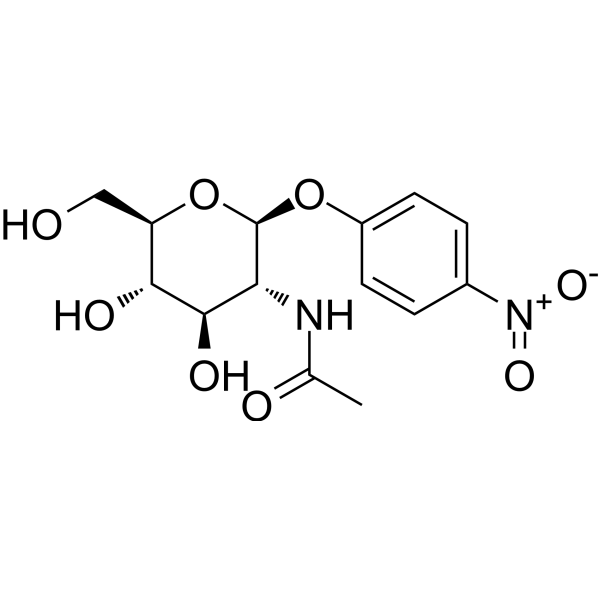
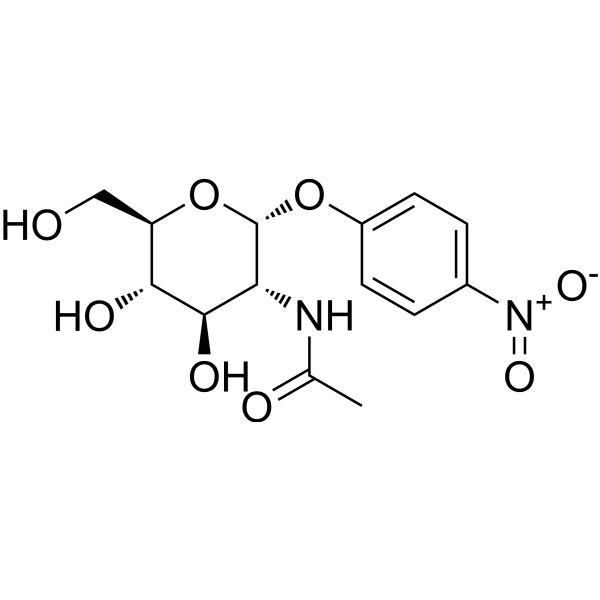
4-Nitrophenyl-N-acetyl-β-D-glucosaminide, an artificial substrate of N-acetyl-beta-D-hexosaminidase (NAGase), can be used in rapid and accurate rate assay for N-acetyl-beta-D-hexosaminidase. 4-Nitrophenyl-N-acetyl-β-D-glucosaminide is highly soluble and stable. 4-Nitrophenyl-N-acetyl-β-D-glucosaminide can be used for the study of renal tubular injury .
|
-
-
- HY-W011411
-
|
|
Glycosidase
|
Others
|
|
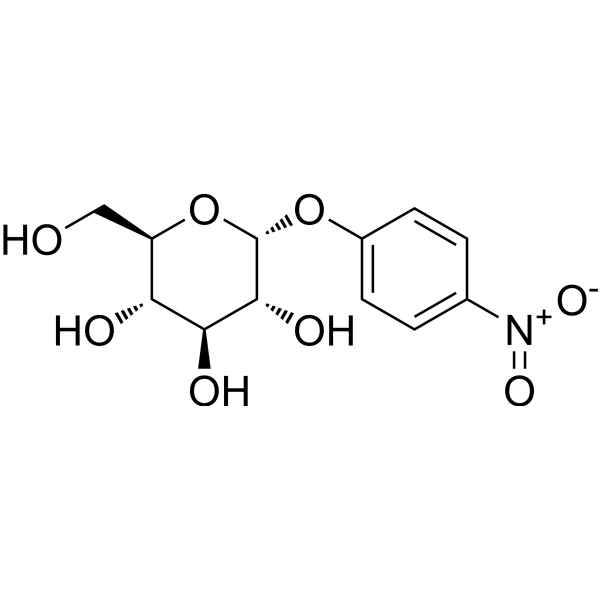
4-Nitrophenyl a-D-glucopyranoside is a chromogenic substrate for α-glucosidase. 4-Nitrophenyl a-D-glucopyranoside can be used to measure of α-glucosidase activity .
|
-
-
- HY-15928
-
|
p-nitrophenyl phosphate disodium
|
Fluorescent Dye
|
Others
|
|
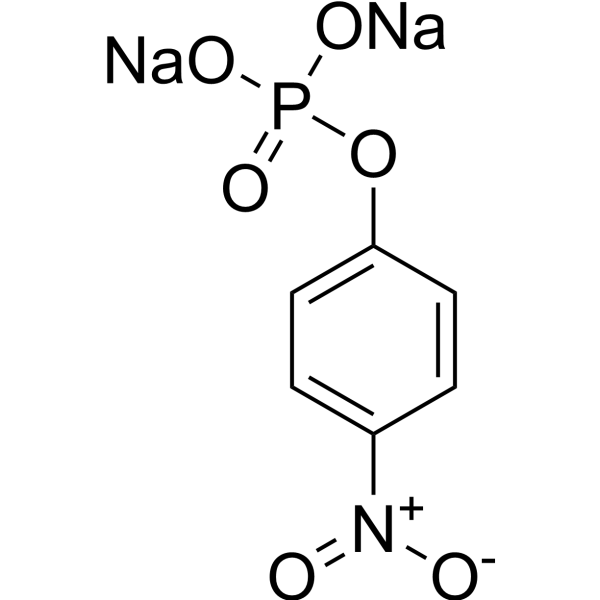
4-Nitrophenyl phosphate (p-Nitrophenyl phosphate) disodium is a non-proteinaceous chromogenic substrate for alkaline and acid phosphatases used in ELISA and conventional spectrophotometric assays.
|
-
-
- HY-W014449
-
|
|
Biochemical Assay Reagents
|
Others
|
|
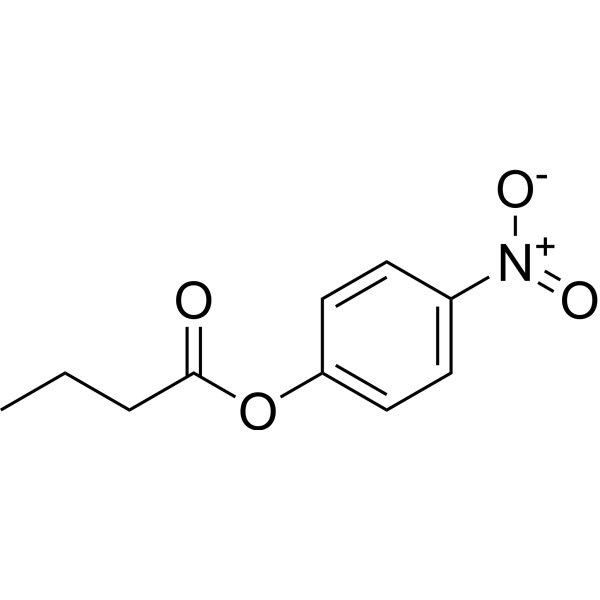
4-Nitrophenyl butyrate consists of butyric acid chains esterified with 4-nitrophenol groups, thus giving it a yellow color. This compound is commonly used as a substrate in enzyme assays to measure esterase and lipase activity. When these enzymes cleave the ester bond, the nitrophenol group is released and the color changes from yellow to orange. Thus, the rate of color change can be used to determine enzyme activity. In addition, 4-Nitrophenyl butyrate can also be used as organic synthesis reagent and dye intermediate.
|
-
-
- HY-15927
-
|
|
Biochemical Assay Reagents
|
Metabolic Disease
|
|
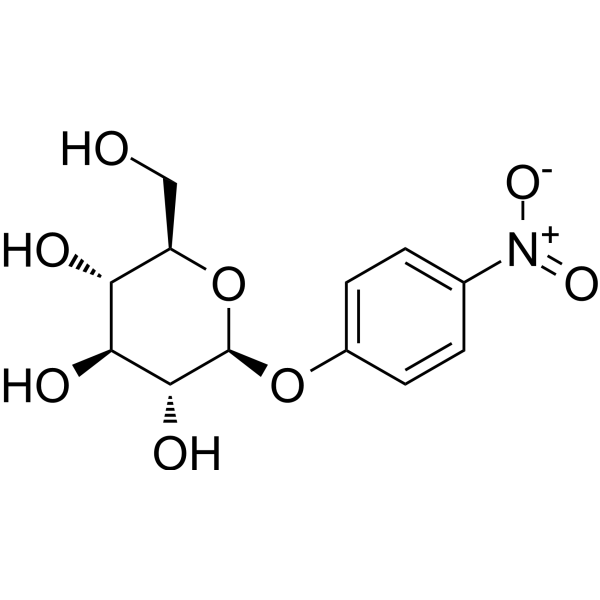
4-Nitrophenyl β-D-glucopyranoside is a chromogenic substrate for β-glucosidase. 4-Nitrophenyl β-D-glucopyranoside is converted to a colored product, p-nitrophenol that is easily detected spectrophotometrically at 405 nm when used in a β-glycosidase assay. 4-Nitrophenyl β-D-glucopyranoside is hydrolysed through intramolecular nucleophilic catalysis by the phosphate group in the 2-position. 4-Nitrophenyl β-D-glucopyranoside is promising for research of postmenopausal osteoporosis .
|
-
-
- HY-116022A
-
|
p-nitrophenyl phosphate disodium hexahydrate
|
Biochemical Assay Reagents
|
Others
|
|
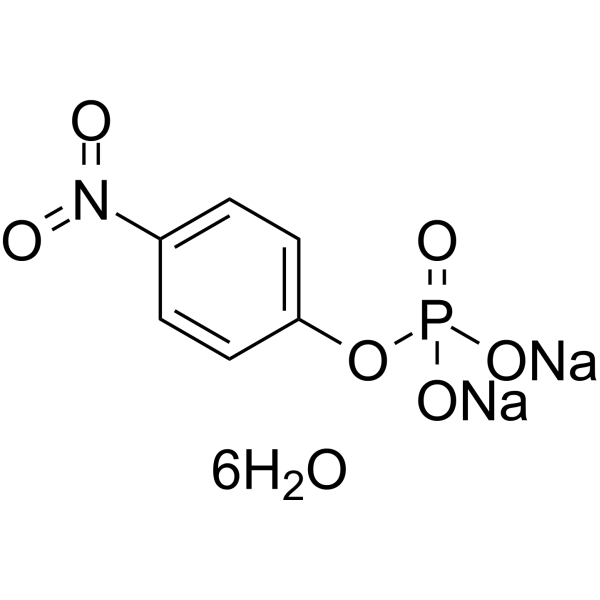
4-Nitrophenyl phosphate (p-nitrophenyl phosphate) disodium hexahydrate is widely used as a small molecule phosphotyrosine-like substrate in activity assays for protein tyrosine phosphatases. 4-Nitrophenyl phosphate disodium hexahydrate is a colorless substrate that upon hydrolysis is converted to a yellow 4-nitrophenolate ion that can be monitored by absorbance at 405 nm .
|
-
-
- HY-W013168
-
|
4-nitrophenyl hexadecanoate; p-nitrophenyl Palmitate; pNpp
|
Lipase
|
Others
|
|
4-Nitrophenyl palmitate (4-Nitrophenyl hexadecanoate) is a chromogenic substrate for lipases and esterases. Upon enzymatic hydrolysis, 4-Nitrophenyl palmitate releases p-nitrophenol, which can be quantified by colorimetric detection at 410 nm as a measure of enzymatic activity. 4-Nitrophenyl palmitate is used to characterize the activity of various bacterial and mammalian enzymes, including those from Burkholderia and porcine pancreatic lipase .
|
-

-
- HY-W039892
-
|
pNPG_1
|
β-glucuronidase
|
Others
|
|
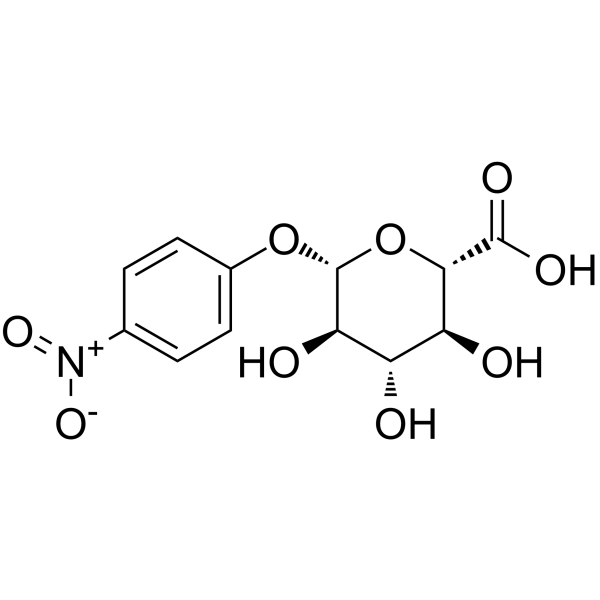
4-Nitrophenyl β-D-glucuronide (pNPG_1) is aderivative of 4-Nitrophenol. 4-Nitrophenyl β-D-glucuronide is the chromogenic substrate for β-glucuronidase .
|
-
-
- HY-116022
-
|
p-nitrophenyl phosphate
|
Biochemical Assay Reagents
|
Others
|
|
4-Nitrophenyl phosphate (p-Nitrophenyl phosphate) is widely used as a small molecule phosphotyrosine-like substrate in activity assays for protein tyrosine phosphatases.4-Nitrophenyl phosphate is a colorless substrate that upon hydrolysis is converted to a yellow 4-nitrophenolate ion that can be monitored by absorbance at 405 nm .
|
-

-
- HY-W039911
-
|
PNP-alpha-D-Gal; PNP-α-D-Gal
|
Biochemical Assay Reagents
|
Others
|
|
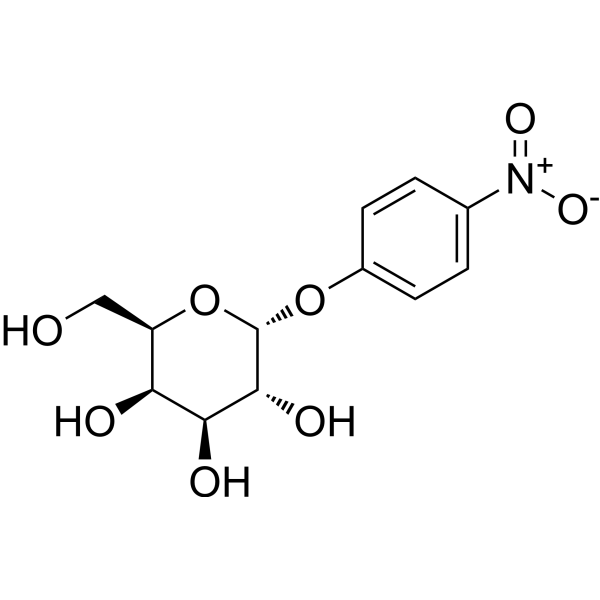
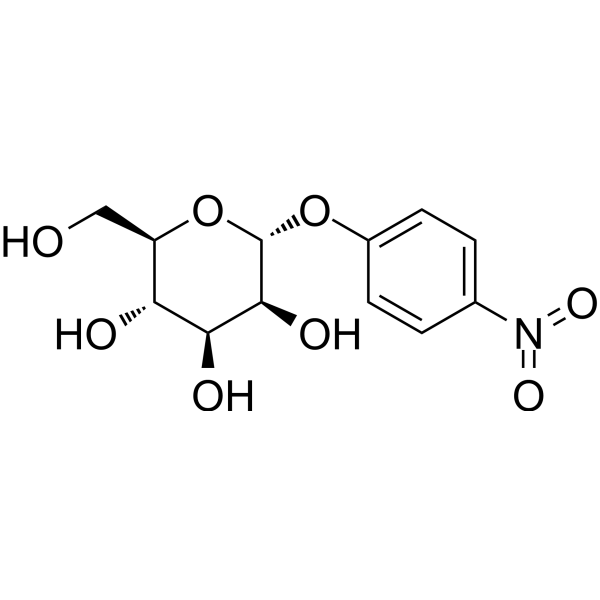
4-Nitrophenyl α-D-galactopyranoside (PNP-alpha-D-Gal) is an artificial substrate of 4-nitrophenyl (pNP) glycopyranoside for detecting α-galactosidase activity. The amount of released pNP is significantly increased when 4-Nitrophenyl α-D-galactopyranoside is used as substrates .
|
-
-
- HY-137822
-
|
4-nitrophenyl a-D-mannopyranoside
|
Glycosidase
|
Others
|
|
p-Nitrophenyl α-D-mannopyranoside (4-Nitrophenyl α-D-mannopyranoside) is a chromogenic glycosidic ligand. p-Nitrophenyl α-D-mannopyranoside features a sugar moiety (α-D-mannopyranose) with the mannose-characteristic axial hydroxyl group at the C2 position and a ligand portion (p-nitrophenol) that provides ultraviolet-visible light absorption properties. p-Nitrophenyl α-D-mannopyranoside can be used to determine glycosidase activity and characterize the sugar recognition properties of lectins (such as Concanavalin A (HY-P2149)) .
|
-
-
- HY-137550
-
|
|
Biochemical Assay Reagents
|
Others
|
|
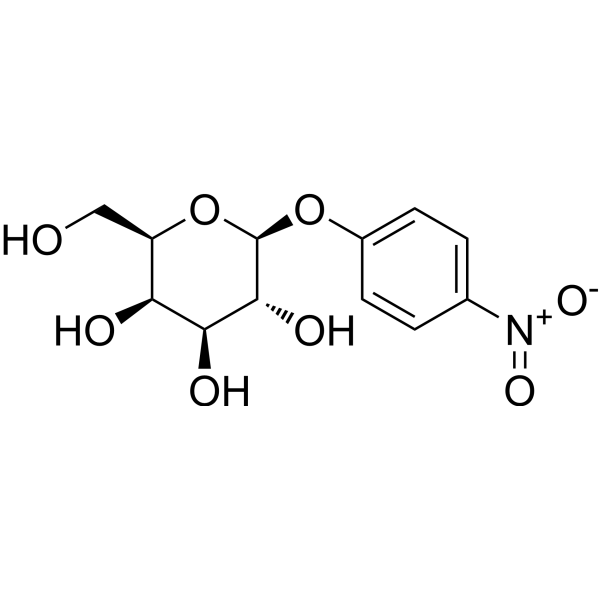
4-Nitrophenyl β-D-galactopyranoside is a derivative of beta-D-galactoside and monosaccharide. 4-Nitrophenyl β-D-galactopyranoside can be used for affinity label .
|
-
-
- HY-112835
-
|
pNP-G7
|
Amylases
Glycosidase
|
Inflammation/Immunology
|
|
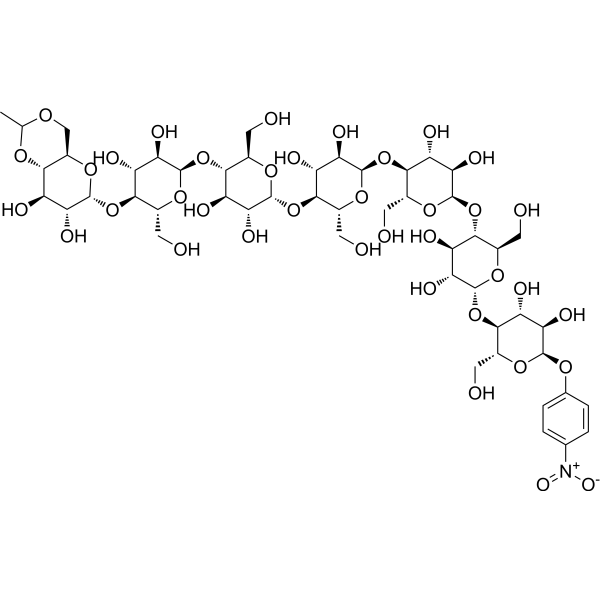
Ethylidene-4-nitrophenyl-α-D-Maltoheptaoside (EPS; pNP-G7) serves as a substrate for α-amylase. In the presence of an auxiliary enzyme such as α-glucosidase (α-glucosidase), Ethylidene-4-nitrophenyl-α-D-Maltoheptaoside is degraded by amylase (Amylase) to release a chromophore, enabling the measurement of amylase activity. Ethylidene-4-nitrophenyl-α-D-Maltoheptaoside is applicable for the diagnosis of pancreatitis [2].
|
-
-
- HY-W013205
-
|
|
Biochemical Assay Reagents
|
Others
|
|
Bis(4-nitrophenyl) phosphate is a catalyst for metal micelles and can catalyze the hydrolysis of (4-nitrophenyl) phosphate. Bis(4-nitrophenyl) phosphate is also an effective catalyst for ring-opening polymerization (ROP), which can achieve controlled polymerization of β-butyrolactone (β-BL) ring-opening and can be used to prepare diembedded polymers without quenching. segment copolymer .
|
-

-
- HY-137827
-
|
p-nitrophenyl β-D-Cellobioside
|
Glycosidase
|
Others
|
|
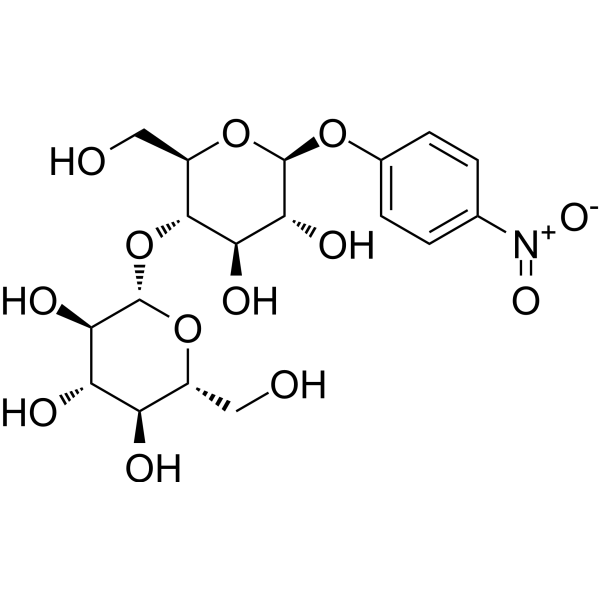
4-Nitrophenyl β-D-Cellobioside (p-Nitrophenyl β-D-cellobioside) is a cellotriose analog. 4-Nitrophenyl β-D-Cellobioside is hydrolyzed by β-glucosidases such as TxGH116 and ThCel7B. 4-Nitrophenyl β-D-Cellobioside can also be hydrolyzed by exoglucanases and endoglucanases to produce p-nitrophenol (PNP). 4-Nitrophenyl β-D-Cellobioside can be used to detect cellulase activity [4] .
|
-
-
- HY-W039938
-
|
|
Fluorescent Dye
|
Others
|
|
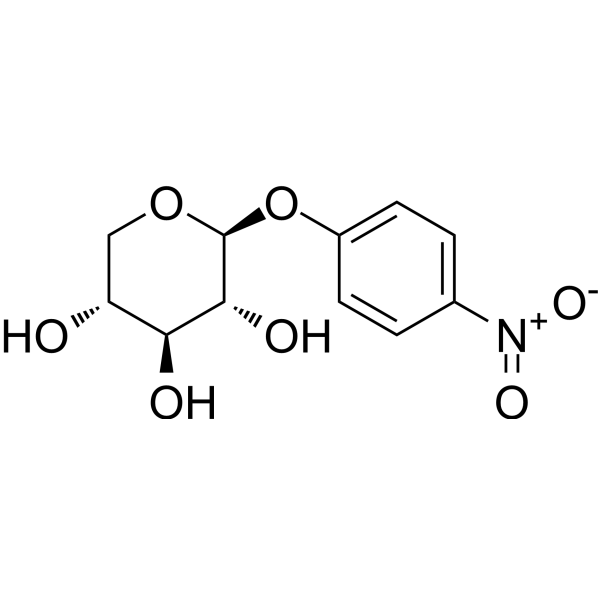
4-Nitrophenyl β-D-xylopyranoside is a chromogenic β-xylosidase substrate. 4-Nitrophenyl β-D-xylopyranoside can be used to test β-xylosidase activity .
|
-
-
- HY-137814
-
|
NPGB hydrochloride
|
Ser/Thr Protease
|
Endocrinology
|
|
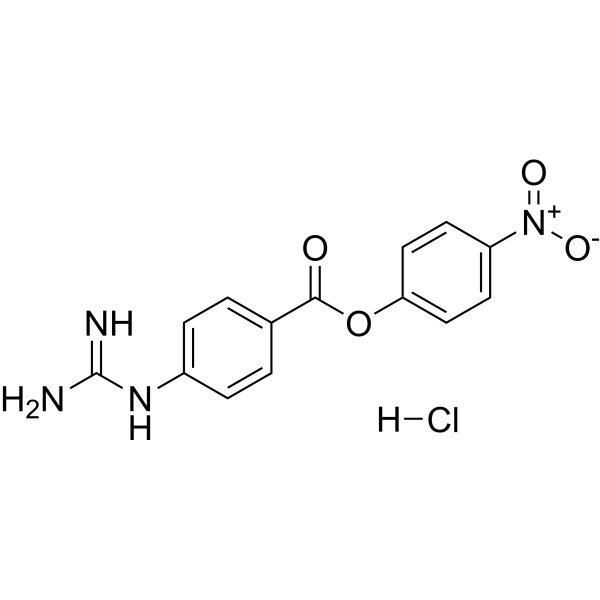
4-Nitrophenyl 4-guanidinobenzoate (NPGB) hydrochloride is a potent sperm acrosin inhibitor, and also a trypsin substrate .
|
-
-
- HY-134459
-
|
|
Others
|
Others
|
|
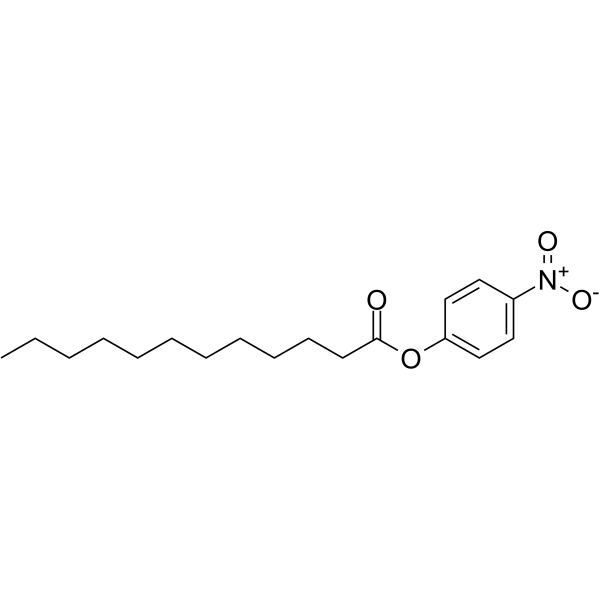
4-Nitrophenyl Laurate is a class of 4-nitrophenyl ester, which can be used as enzyme substrate .
|
-
-
- HY-W111209
-
-
-
- HY-W013205B
-
-

-
- HY-137815
-
|
|
Biochemical Assay Reagents
|
Metabolic Disease
|
|
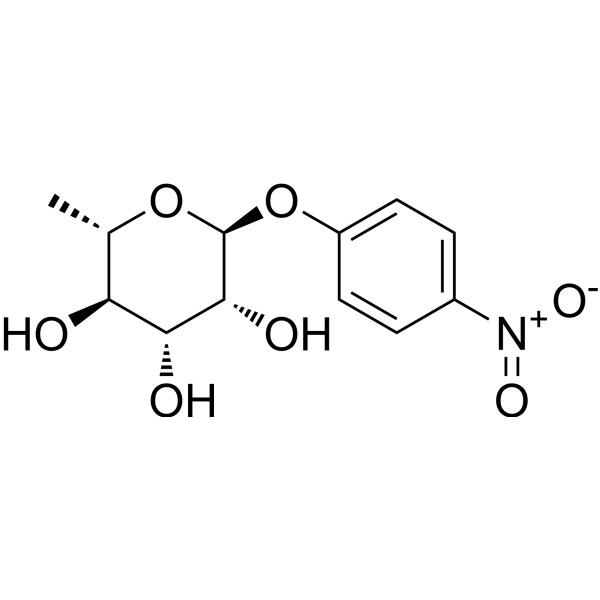
4-Nitrophenyl α-L-rhamnopyranoside is a commonly used substrate in various biochemical assays to measure the activity of enzymes that hydrolyze rhamnose, such as α-L-rhamnosidase. 4-Nitrophenyl α-L-rhamnopyranoside has unique chemical properties that allow it to be hydrolyzed by these enzymes to form a yellow product called p-nitrophenol. This makes it a useful tool for detecting and quantifying rhamnohydrolase activity in biological samples or microbial cultures.
|
-
-
- HY-W011410
-
|
p-nitrophenyl β-D-Mannopyranoside
|
Glycosidase
|
Others
|
|
4-Nitrophenyl β-D-mannopyranoside is a useful substrate for β-D-mannopyranosidase. 4-Nitrophenyl β-D-mannopyranoside is also a substrate for GH1-glucosidase (EaBgl1A) and α-L-rhamnosidase .
|
-

-
- HY-W009693
-
-
-
- HY-141405
-
|
|
PROTAC Linkers
|
Cancer
|
|
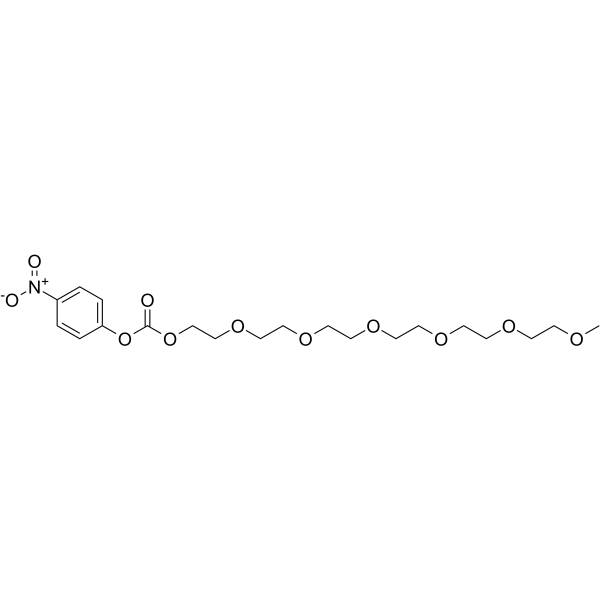
m-PEG7-4-nitrophenyl carbonate is a PEG-based PROTAC linker that can be used in the synthesis of PROTACs .
|
-
-
- HY-W015996
-
|
pNP-GalNAc
|
Fluorescent Dye
|
Others
|
|
4-Nitrophenyl-N-acetyl-α-D-galactosaminide (pNP-GalNAc) can be used as a chromogenic substrate for N-acetyl-D-galactosaminase. 4-Nitrophenyl-N-acetyl-α-D-galactosaminide is cleaved by N-acetyl-D-galactosaminase to generate a yellow solution. The enzyme activity is quantitatively determined by absorbance detection .
|
-

-
- HY-120798
-
-

-
- HY-137421
-
-
-
- HY-W127404
-
|
|
Biochemical Assay Reagents
|
Others
|
|
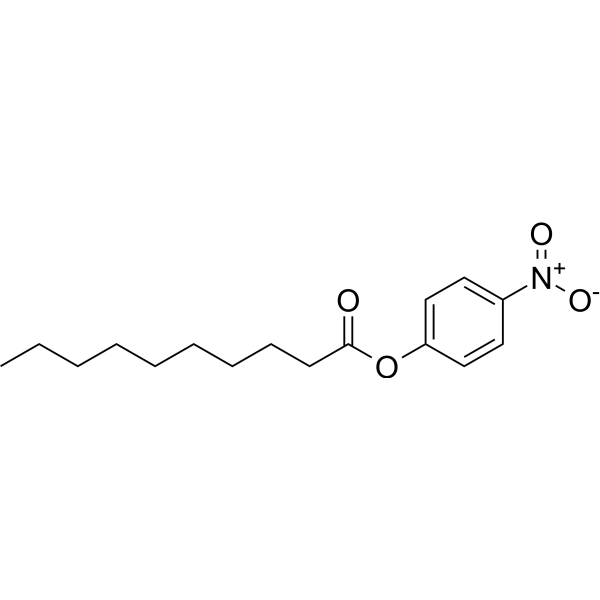
4-Nitrophenyl decanoate is a biochemical reagent that can be used as a biological material or organic compound for life science related research.
|
-
-
- HY-134164
-
|
|
Biochemical Assay Reagents
|
Others
|
|
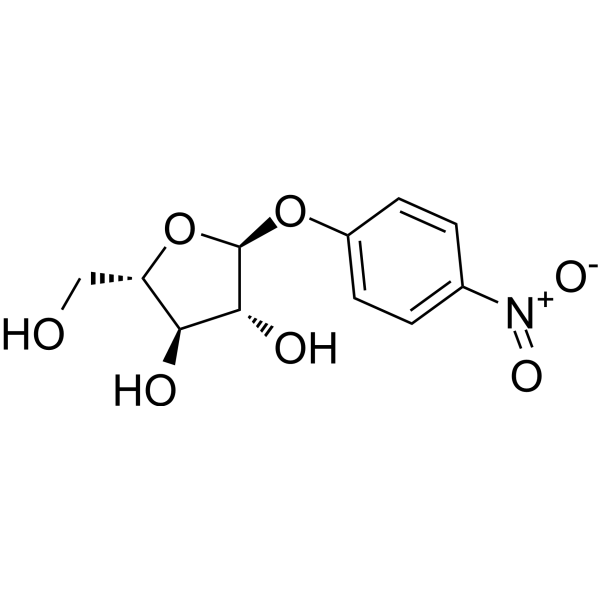
4-Nitrophenyl α-L-arabinofuranoside is a biochemical reagent that can be used as a biological material or organic compound for life science related research.
|
-
-
- HY-134455
-
|
|
Biochemical Assay Reagents
|
Others
|
|
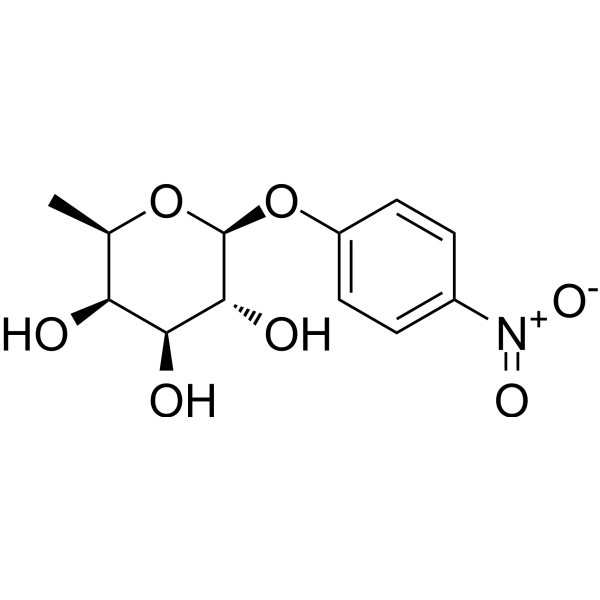
4-Nitrophenyl β-D-fuco-pyran-oside is a biochemical reagent that can be used as a biological material or organic compound for life science related research.
|
-
-
- HY-W039859
-
-

-
- HY-137823
-
|
|
Endogenous Metabolite
|
Cancer
|
|
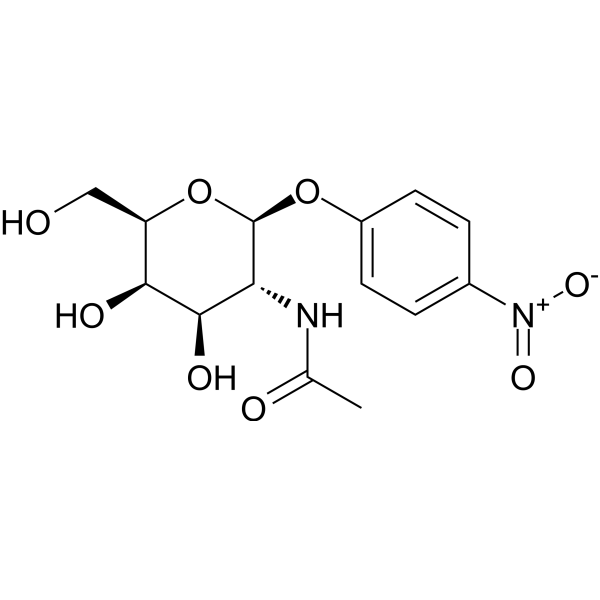
4-Nitrophenyl-N-acetyl-β-D-galactosaminide has inhibitory activity against GlcNAc and GalNAc with Kis of 1.15 mM and 0.51 mM, respectively. 4-Nitrophenyl-N-acetyl-β-D-galactosaminide is extracted from Trichomonas foetus (T. foetus)
|
-
-
- HY-140858
-
|
|
PROTAC Linkers
|
Cancer
|
|
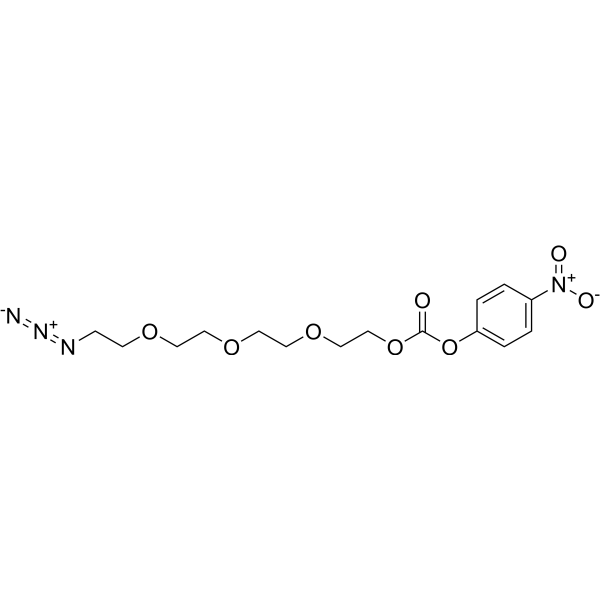
Azido-PEG4-4-nitrophenyl carbonate is a PEG-based PROTAC linker that can be used in the synthesis of PROTACs . Azido-PEG4-4-nitrophenyl carbonate is a click chemistry reagent, it contains an Azide group and can undergo copper-catalyzed azide-alkyne cycloaddition reaction (CuAAc) with molecules containing Alkyne groups. It can also undergo strain-promoted alkyne-azide cycloaddition (SPAAC) reactions with molecules containing DBCO or BCN groups.
|
-
-
- HY-Z0085
-
|
|
Drug Intermediate
|
Others
|
|
2-Chloro-N-methyl-N-(4-nitrophenyl)acetamide is a synthetic intermediate useful for pharmaceutical synthesis.
|
-

-
- HY-W008919
-
|
N-Alpha,N-epsilon-di-Boc-L-lysine 4-nitrophenyl ester
|
Amino Acid Derivatives
|
Others
|
|
Boc-Lys(Boc)-Onp (N-Alpha,N-epsilon-di-Boc-L-lysine 4-nitrophenyl ester) is a lysine with a Boc protecting group. Boc-Lys(Boc)-Onp was used as a substrate for a catalyst model to study its enzymatic hydrolysis reaction catalyzed by a copper(II) complex .
|
-

-
- HY-138959
-
|
p-nitrophenyl caprylate
|
Lipase
|
Others
|
|
4-Nitrophenyl octanoate (p-Nitrophenyl caprylate) is an aromatic ester compound which can be used as a substrate for pancreatic lipase.
4-Nitrophenyl octanoate contains an ester bond that can be hydrolyzed under the action of lipase, releasing p-nitrophenol as a yellow product.
4-Nitrophenyl octanoate can be used to assay the activities of lipases and esterases .
|
-

-
- HY-W099563
-
|
|
Biochemical Assay Reagents
|
Others
|
|
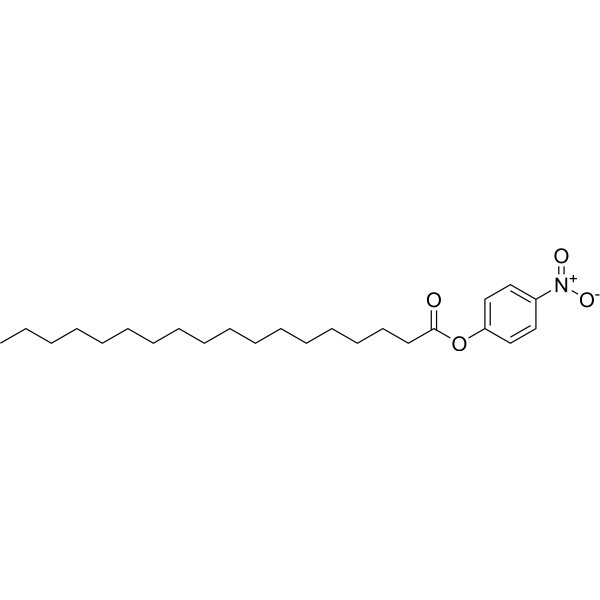
4-Nitrophenyl stearate, which is an ester formed by the condensation of stearic acid and 4-nitrophenol, is commonly used as a substrate for enzymatic assays, where the hydrolysis of ester bonds by esterase and lipase can be measured by absorbance or ratio In addition, 4-Nitrophenyl stearate has been used as a model compound to study the enzymatic activity and selectivity of lipases and esterases from various sources. The long hydrophobic tail of the molecule makes it suitable for use in lipophilic Good solubility in the environment makes it a useful probe for studying lipid metabolism.
|
-
-
- HY-137828
-
|
pNP-chitobiose
|
Biochemical Assay Reagents
|
Others
|
|
4-Nitrophenyl N,N′-diacetyl-β-D-chitobioside (pNP-chitobiose) is a fluorescent substrate that can be used to detect chitinase activity.
|
-

-
- HY-15911
-
|
2-Chloro-4-nitrophenyl α-L-fucopyranoside
|
Biochemical Assay Reagents
|
Others
|
|
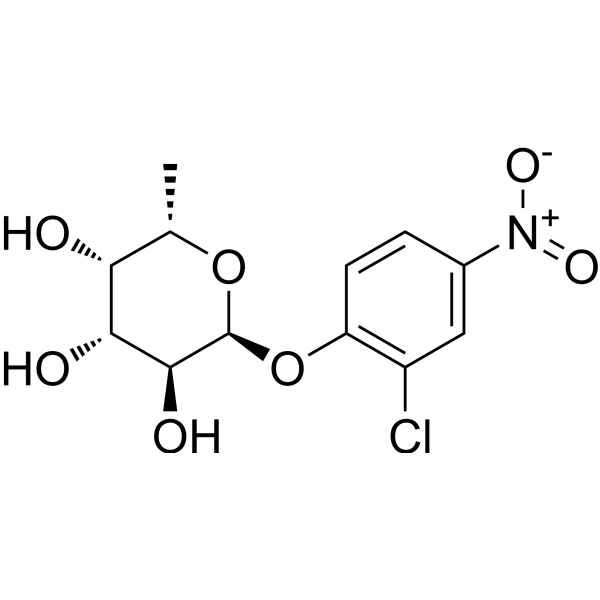
CNP-AFU (2-Chloro-4-nitrophenyl α-L-fucopyranoside) is a substrate for alpha-L-fucosidase(AFU).
|
-
-
- HY-W011137
-
|
|
Drug Derivative
|
Others
|
|
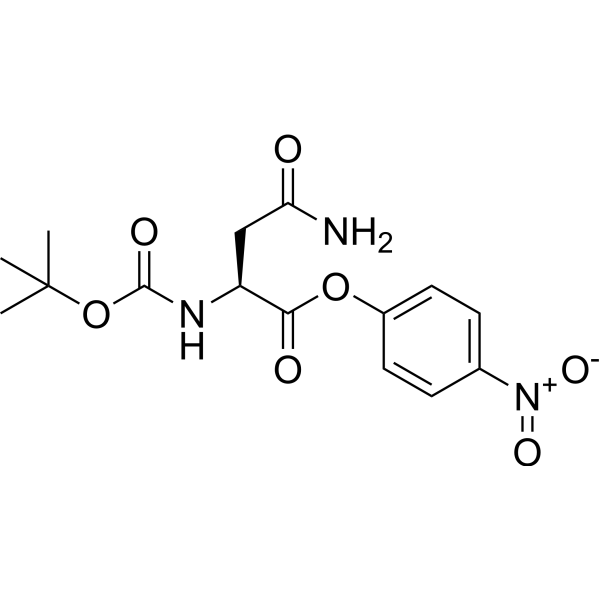
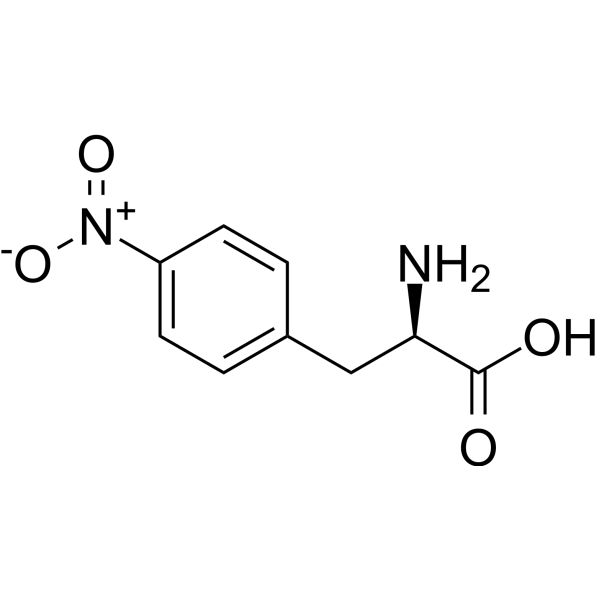
(S)-4-Nitrophenyl 4-amino-2-((tert-butoxycarbonyl)amino)-4-oxobutanoate is an asparagine derivative .
|
-
-
- HY-W014406
-
-
-
- HY-121549
-
|
4-nitrophenyl-2S,3S-epoxy-3 phenylpropyl carbonate
|
Epoxide Hydrolase
|
Others
|
|
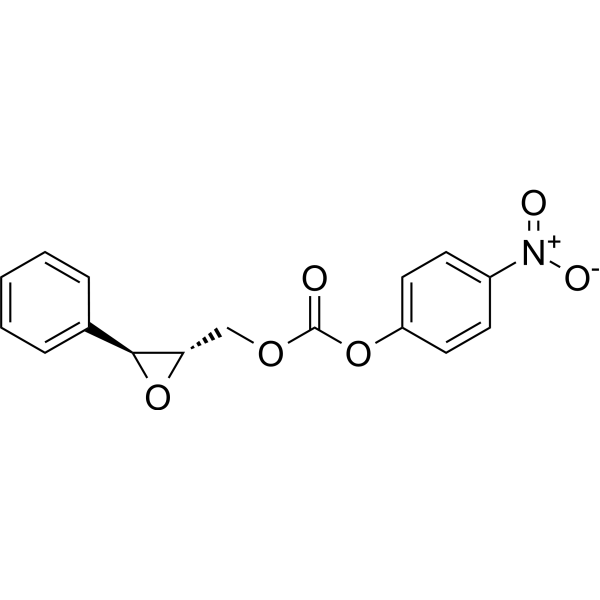
S-NEPC (4-Nitrophenyl-2S,3S-epoxy-3 phenylpropyl carbonate) is a colorimetric substrate used to measure epoxide hydrolase activity .
|
-
-
- HY-W007679
-
-
-
- HY-124324
-
|
p-Nitopheyl β-D-cellotioside
|
Fluorescent Dye
|
Others
|
|
4-Nitrophenyl β-D-cellotrioside (p-Nitopheyl β-D-cellotioside) is a chromogenic substrate for endoglucanases and cellulose biohydrolases. As a fluorescent dye, nitrophenyl β-D-Cellotrioside can be hydrolyzed by enzymes to release 4-nitrophenol, producing a yellow color. The activity of the enzyme can be quantitatively analyzed by monitoring the change in absorbance at 405 nm .
|
-

-
- HY-W740068
-
-

-
- HY-116022C
-
-

-
- HY-W283245
-
-

-
- HY-76255
-
|
|
Drug Derivative
|
Others
|
|
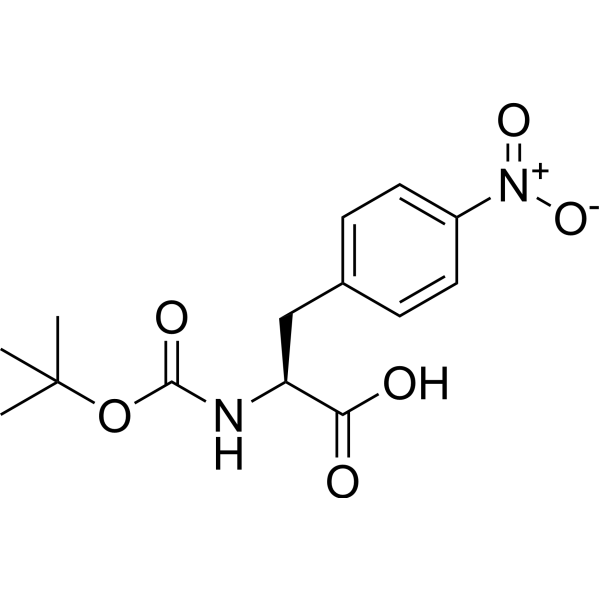
4-Nitrophenyl (tert-butoxycarbonyl)-L-phenylalaninate is a phenylalanine derivative .
|
-

-
- HY-W416249
-
-

-
- HY-134430
-
|
Tetradecanoic acid, 4-nitrophenyl ester
|
Biochemical Assay Reagents
|
Others
|
|
p-Nitrophenyl myristate (Tetradecanoic acid, 4-nitrophenyl ester) is a biochemical assay reagent.
|
-

- HY-137198
-
-

- HY-W145619
-
|
|
Biochemical Assay Reagents
|
Others
|
|
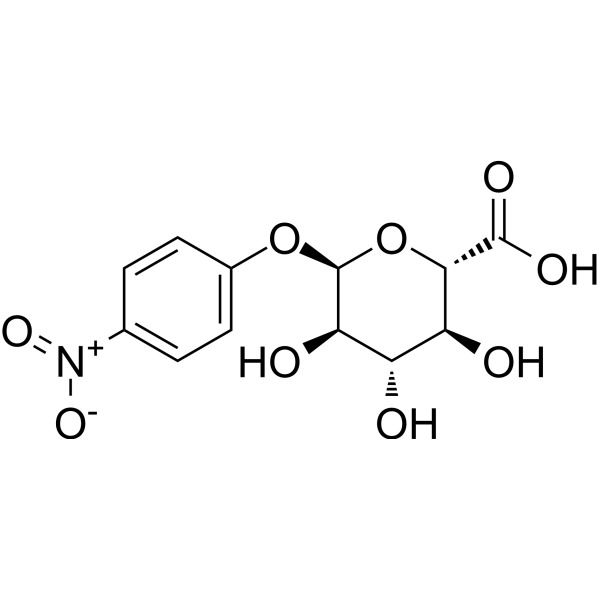
4-Nitrophenyl α-D-Glucuronide is a biochemical reagent that can be used as a biological material or organic compound for life science related research.
|
-
- HY-137826
-
-

- HY-W416255
-
-

- HY-116022B
-
|
p-nitrophenyl phosphate ditromethamine
|
Biochemical Assay Reagents
|
Others
|
|
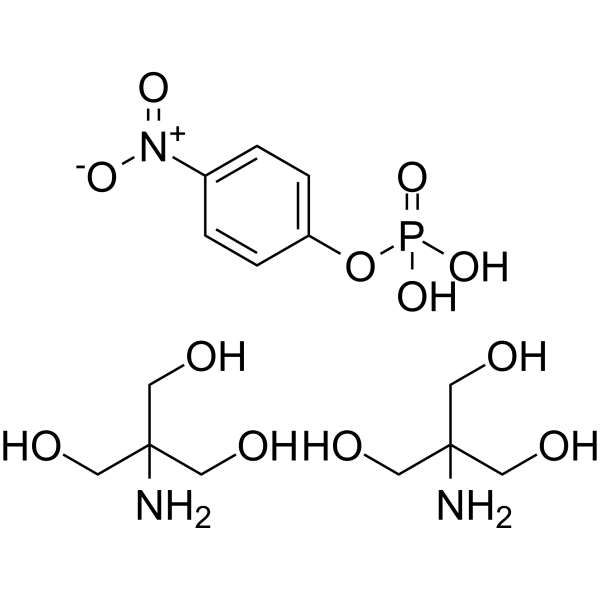
4-Nitrophenyl phosphate ditromethamine is an enzyme substrate commonly used in biochemical assays to measure the activity of various phosphatases, including alkaline phosphatase. 4-Nitrophenylphosphate has unique chemical properties that allow it to be hydrolyzed by phosphatases, releasing a yellow product that can be detected spectrophotometrically.
|
-
- HY-138111
-
|
p-Nitopheyl β-D-cellotetaoside
|
Fluorescent Dye
|
Others
|
|
4-Nitrophenyl β-D-cellotetraoside (p-Nitopheyl β-D-cellotetaoside) is a small molecule cellulose mimetic consisting of a tetramer of D-glucose units linked by β-1-4 glycosidic bonds. The fragmentation pattern of 4-Nitrophenyl β-D-cellotetraoside after enzymatic hydrolysis can be analyzed by TLC or by the release of 4-nitrophenol, which has a strong absorbance at 395 nm in alkaline solutions. 4-Nitrophenyl β-D-cellotetraoside can be used in cellulose degradation studies to determine the specificity of cellulases .
|
-

- HY-130888
-
|
(+)-Biotin 4-nitrophenyl ester
|
PROTAC Linkers
|
Cancer
|
|
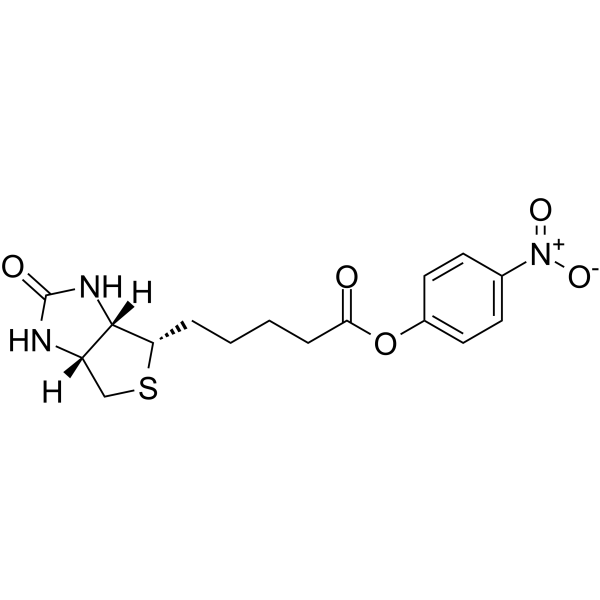
(+)-Biotin-ONP is an alkyl chain-based PROTAC linker that can be used in the synthesis of PROTACs .
|
-
- HY-117023
-
|
|
PROTAC Linkers
|
Cancer
|
|
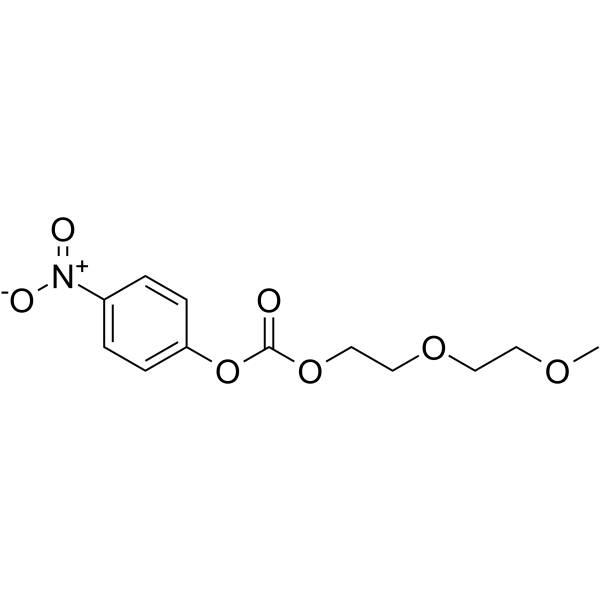
m-PEG2-4-nitrophenyl carbonate is a PEG-based PROTAC linker that can be used in the synthesis of PROTACs .
|
-
- HY-W699888
-
|
|
Biochemical Assay Reagents
|
Others
|
|
α-Neuraminic acid,N-acetyl-2-O-(4-nitrophenyl) (sodium) is a class of biochemical reagents used in glycobiology research. Glycobiology studies the structure, synthesis, biology, and evolution of sugars. It involves carbohydrate chemistry, enzymology of glycan formation and degradation, protein-glycan recognition, and the role of glycans in biological systems. This field is closely related to basic research, biomedicine, and biotechnology .
|
-

- HY-W555915
-
|
|
Biochemical Assay Reagents
|
Others
|
|
4-Nitrophenyl 4,6-O-(phenylmethylene)-α-D-mannopyranoside is a class of biochemical reagents used in glycobiology research. Glycobiology studies the structure, synthesis, biology, and evolution of sugars. It involves carbohydrate chemistry, enzymology of glycan formation and degradation, protein-glycan recognition, and the role of glycans in biological systems. This field is closely related to basic research, biomedicine, and biotechnology .
|
-

- HY-166971
-
|
|
Biochemical Assay Reagents
|
Others
|
|
4-Nitrophenyl-α-D-maltoheptaoside is a class of biochemical reagents used in glycobiology research. Glycobiology studies the structure, synthesis, biology, and evolution of sugars. It involves carbohydrate chemistry, enzymology of glycan formation and degradation, protein-glycan recognition, and the role of glycans in biological systems. This field is closely related to basic research, biomedicine, and biotechnology .
|
-

- HY-W416254
-
|
|
Biochemical Assay Reagents
|
Others
|
|
4-Nitrophenyl 2-O-β-D-glucopyranosyl-β-D-glucopyranoside is a class of biochemical reagents used in glycobiology research. Glycobiology studies the structure, synthesis, biology, and evolution of sugars. It involves carbohydrate chemistry, enzymology of glycan formation and degradation, protein-glycan recognition, and the role of glycans in biological systems. This field is closely related to basic research, biomedicine, and biotechnology .
|
-

- HY-W777046
-
|
|
Biochemical Assay Reagents
|
Others
|
|
4-Nitrophenyl 3-O-α-D-glucopyranosyl-α-D-glucopyranoside is a class of biochemical reagents used in glycobiology research. Glycobiology studies the structure, synthesis, biology, and evolution of sugars. It involves carbohydrate chemistry, enzymology of glycan formation and degradation, protein-glycan recognition, and the role of glycans in biological systems. This field is closely related to basic research, biomedicine, and biotechnology .
|
-

- HY-W777041
-
|
|
Biochemical Assay Reagents
|
Others
|
|
4-Nitrophenyl 6-O-α-D-glucopyranosyl-α-D-glucopyranoside is a class of biochemical reagents used in glycobiology research. Glycobiology studies the structure, synthesis, biology, and evolution of sugars. It involves carbohydrate chemistry, enzymology of glycan formation and degradation, protein-glycan recognition, and the role of glycans in biological systems. This field is closely related to basic research, biomedicine, and biotechnology .
|
-

- HY-D1510
-
|
|
Biochemical Assay Reagents
|
Others
|
|
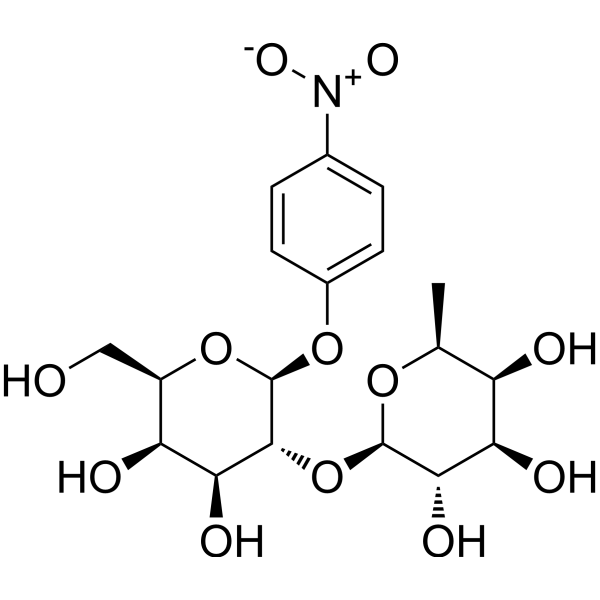
4-Nitrophenyl 2-O-(β-L-Fucopyranosyl)-β-D-Galactopyranoside is a synthetic chromogenic substrate and can be used in the assay of α-fucosidases which hydrolyze the glycosidic linkage Fuc α1-2Gal. The assay is based on the sequential action of α-fucosidase and an exogenously added exo-β-d-galactosidase to release the easily measurable p-nitrophenol moiety .
|
-
- HY-W013205R
-
|
|
Biochemical Assay Reagents
Reference Standards
|
Others
|
|
Bis(4-nitrophenyl) phosphate (Standard) is the analytical standard of Bis(4-nitrophenyl) phosphate. This product is intended for research and analytical applications. Bis(4-nitrophenyl) phosphate is a catalyst for metal micelles and can catalyze the hydrolysis of (4-nitrophenyl) phosphate. Bis(4-nitrophenyl) phosphate is also an effective catalyst for ring-opening polymerization (ROP), which can achieve controlled polymerization of β-butyrolactone (β-BL) ring-opening and can be used to prepare diembedded polymers without quenching. segment copolymer .
|
-

- HY-W882740
-
|
|
Biochemical Assay Reagents
|
Others
|
|
4-Nitrophenyl 11,16-dioxo-14,14-bis(3-oxo-3-((2-(2-(prop-2-yn-1-yloxy)ethoxy)ethyl)amino)propyl)-4,7-dioxa-10,15-diazaicos-1-yn-20-oate is a biological molecule.
|
-

- HY-W791782
-
-

- HY-W039893
-
-

- HY-W154351
-
-

- HY-W357132
-
-

- HY-166870
-
-

- HY-W014103R
-
|
5-(4-nitrophenyl)furfural (Standard)
|
Reference Standards
|
|
|
5-(4-Nitrophenyl)furan-2-carbaldehyde (Standard) is the analytical standard of 5-(4-Nitrophenyl)furan-2-carbaldehyde. This product is intended for research and analytical applications.
|
-

- HY-W012294S
-
-
- HY-W191560S
-
|
4-Amino-N-(4-nitrophenyl)benzenesulfonamide-d4
|
Isotope-Labeled Compounds
|
Others
|
|
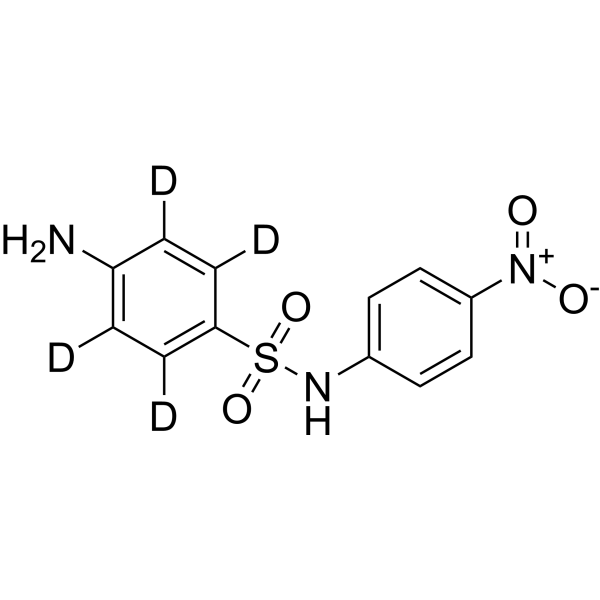
N1-(4-Nitrophenyl)sulfanilamide-d4 is the deuterium labeled N1-(4-Nitrophenyl)sulfanilamide.
|
-
- HY-Z0007R
-
|
|
Reference Standards
|
|
|
2-Chloro-N-(4-nitrophenyl)acetamide (Standard) is the analytical standard of 2-Chloro-N-(4-nitrophenyl)acetamide. This product is intended for research and analytical applications.
|
-

- HY-W416344
-
-

- HY-W357161
-
-

- HY-W742982
-
|
|
Isotope-Labeled Compounds
|
Others
|
|
N,N-Dimethyl-N'-(4-nitrophenyl)acetimidamide-d6 is the deuterium labeled N,N-Dimethyl-N'-(4-nitrophenyl)acetimidamide (HY-W704907).
|
-

- HY-W698923
-
-

- HY-W293502
-
|
2-Chloro-4-nitrophenyl-beta-D-galactopyranoside
|
Biochemical Assay Reagents
|
Others
|
|
2-Chloro-4-nitrophenyl-β-D-galactopyranoside is a chromogenic substrate used for testing enzyme activity. It is commonly used in molecular biology research to detect and measure the activity of β-galactosidase (biosynth: EC03318).
|
-

- HY-137785
-
|
|
Biochemical Assay Reagents
|
Others
|
|
2-Chloro-4-nitrophenyl-β-D-maltotrioside is a chromogenic substrate used in bioluminescent and fluorescent assays to detect α-amylase.
|
-

- HY-W127824
-
|
(5Z,9Z,14Z)-5,10,15-Tris(4-nitrophenyl)-22,24-dihydro-21H-corri
|
Biochemical Assay Reagents
|
Others
|
|
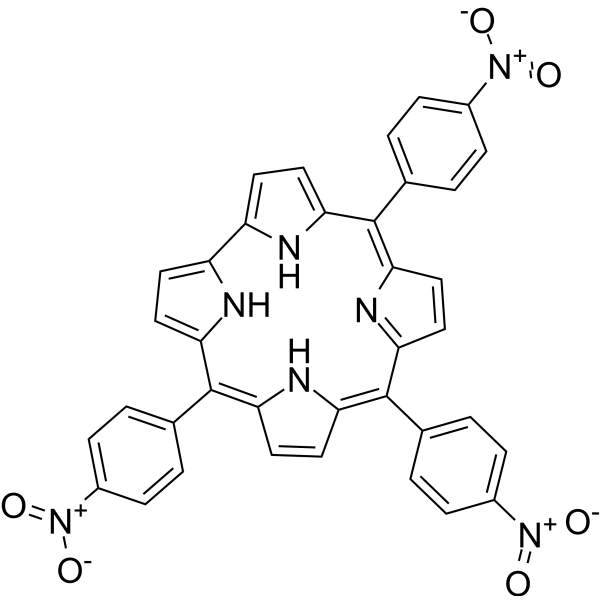
5,10,15-tris(4-nitrophenyl)corrole is a corrole derivative used as a trianionic ligand for transition metals.
|
-
- HY-134218
-
|
|
Biochemical Assay Reagents
|
Others
|
|
4-Nitrophenyl-α-D-maltopyranoside is a class of biochemical reagents used in glycobiology research. Glycobiology studies the structure, synthesis, biology, and evolution of sugars. It involves carbohydrate chemistry, enzymology of glycan formation and degradation, protein-glycan recognition, and the role of glycans in biological systems. This field is closely related to basic research, biomedicine, and biotechnology .
|
-

- HY-W739586
-
|
|
Biochemical Assay Reagents
|
Others
|
|
4-Nitrophenyl 6-O-α-D-mannopyranosyl-α-D-mannopyranoside is a class of biochemical reagents used in glycobiology research. Glycobiology studies the structure, synthesis, biology, and evolution of sugars. It involves carbohydrate chemistry, enzymology of glycan formation and degradation, protein-glycan recognition, and the role of glycans in biological systems. This field is closely related to basic research, biomedicine, and biotechnology .
|
-

- HY-W699344
-
|
|
Biochemical Assay Reagents
|
Others
|
|
4-Nitrophenyl 2-O-α-D-glucopyranosyl-α-D-glucopyranoside is a class of biochemical reagents used in glycobiology research. Glycobiology studies the structure, synthesis, biology, and evolution of sugars. It involves carbohydrate chemistry, enzymology of glycan formation and degradation, protein-glycan recognition, and the role of glycans in biological systems. This field is closely related to basic research, biomedicine, and biotechnology .
|
-

- HY-W740337
-
|
|
Biochemical Assay Reagents
|
Others
|
|
4-Nitrophenyl 3,4-O-(1-methylethylidene)-α-D-galactopyranoside is a class of biochemical reagents used in glycobiology research. Glycobiology studies the structure, synthesis, biology, and evolution of sugars. It involves carbohydrate chemistry, enzymology of glycan formation and degradation, protein-glycan recognition, and the role of glycans in biological systems. This field is closely related to basic research, biomedicine, and biotechnology .
|
-

- HY-W700578
-
-

- HY-W357145
-
|
|
Biochemical Assay Reagents
|
Others
|
|
(4-Nitrophenyl)methyl 1-thio-β-D-galactopyranoside is a class of biochemical reagents used in glycobiology research. Glycobiology studies the structure, synthesis, biology, and evolution of sugars. It involves carbohydrate chemistry, enzymology of glycan formation and degradation, protein-glycan recognition, and the role of glycans in biological systems. This field is closely related to basic research, biomedicine, and biotechnology .
|
-

- HY-W776979
-
|
|
Biochemical Assay Reagents
|
Others
|
|
4-Nitrophenyl 2-benzoyl-4,6-O-benzylidene-α-D-mannopyranoside is a class of biochemical reagents used in glycobiology research. Glycobiology studies the structure, synthesis, biology, and evolution of sugars. It involves carbohydrate chemistry, enzymology of glycan formation and degradation, protein-glycan recognition, and the role of glycans in biological systems. This field is closely related to basic research, biomedicine, and biotechnology .
|
-

- HY-W416322
-
-

- HY-W087930S
-
-
- HY-W041486
-
|
4-nitrophenyl-1,3-dicarboxylic acid
|
MOFs
|
Others
|
|
4-Nitroisophthalic acid(4-Nitrophenyl-1,3-dicarboxylic acid) is a metal-organic framework (MOF).
|
-

- HY-W415806
-
-

- HY-W746550
-
|
(2S)-2-Amino-3-(4-nitrophenyl)-1-propanol-d6
|
Isotope-Labeled Compounds
|
Others
|
|
(S)-2-Amino-3-(4-nitrophenyl)propan-1-ol-d6 ((2S)-2-Amino-3-(4-nitrophenyl)-1-propanol-d6) is the deuterium labeled (S)-2-amino-3-(4-nitrophenyl)propan-1-ol (HY-W270163).
|
-

- HY-W415809
-
-

- HY-W083821
-
|
1-(4-Nitrobenzyl)-1,4-diazepane
|
Bacterial
|
Infection
|
|
1-[(4-Nitrophenyl) methyl]-1,4-diazepane (1-(4-Nitrobenzyl)-1,4-diazepane) is an anti-biofilm agent. 1-[(4-Nitrophenyl) methyl]-1,4-diazepane reduces biofilm formation in Escherichia coli. 1-[(4-Nitrophenyl) methyl]-1,4-diazepane is used for the research of Escherichia coli biofilm-related infections .
|
-
![1-[(4-Nitrophenyl)methyl]-1,4-diazepane](//file.medchemexpress.com/product_pic/hy-w083821.gif)
- HY-W416327
-
|
|
Biochemical Assay Reagents
|
Others
|
|
β-D-Galactopyranoside,4-nitrophenyl,3,4,6-triacetate is a class of biochemical reagents used in glycobiology research. Glycobiology studies the structure, synthesis, biology, and evolution of sugars. It involves carbohydrate chemistry, enzymology of glycan formation and degradation, protein-glycan recognition, and the role of glycans in biological systems. This field is closely related to basic research, biomedicine, and biotechnology .
|
-

- HY-W014552
-
|
|
Drug Intermediate
|
Cancer
|
|
1-(4-Nitrophenyl)piperazine (Compound 15) is a piperazine linker that can be used for the synthesis of HDAC3/6-IN-2 (HY-133147). HDAC3/6-IN-2 is an anti-cancer compound formed by connecting CDODA-Me and Vorinostat (HY-10221) through the piperazine linker .
|
-

- HY-W776843
-
-

- HY-172511
-
|
|
Biochemical Assay Reagents
|
Others
|
|
m-PEG9-4-nitrophenyl carbonate serves as a PEG linker containing a nitrophenyl carbonate, which is readily displaced by amine nucleophiles to form carbamate bonds under mild conditions. The PEG9 chain bolsters the water solublity of the compound.
|
-

- HY-W739581
-
|
|
Biochemical Assay Reagents
|
Others
|
|
β-D-Mannopyranoside,4-nitrophenyl 4,6-O-cyclohexylidene,3-benzoate is a class of biochemical reagents used in glycobiology research. Glycobiology studies the structure, synthesis, biology, and evolution of sugars. It involves carbohydrate chemistry, enzymology of glycan formation and degradation, protein-glycan recognition, and the role of glycans in biological systems. This field is closely related to basic research, biomedicine, and biotechnology .
|
-

- HY-41278
-
|
|
Drug Intermediate
|
Others
|
|
1-(1-(2-Methoxy-4-nitrophenyl)piperidin-4-yl)-4-methylpiperazine is a drug intermediate for synthesis of various active compounds.
|
-

- HY-167906S
-
-

- HY-W416311
-
|
|
Biochemical Assay Reagents
|
Others
|
|
β-D-Glucopyranoside,2-chloro-4-nitrophenyl,2,3,4,6-tetraacetate is a class of biochemical reagents used in glycobiology research. Glycobiology studies the structure, synthesis, biology, and evolution of sugars. It involves carbohydrate chemistry, enzymology of glycan formation and degradation, protein-glycan recognition, and the role of glycans in biological systems. This field is closely related to basic research, biomedicine, and biotechnology .
|
-

- HY-W330621
-
|
CNP-α-D-Glucopyaoside
|
Fluorescent Dye
|
Others
|
|
2-Chloro-4-nitrophenyl-α-D-glucopyranoside (CNP-α-D-Glucopyaoside) as a chromogenic substrate for the enzymatic activity assay of the enzyme that releases CNP from conjugated carbohydrates .
|
-

- HY-W707854
-
|
1-(3'-Pyridylmethyl)-3-(4'-nitrophenyl)urea-d4
|
Isotope-Labeled Compounds
|
Others
|
|
Mieshuan-d4 (1-(3'-Pyridylmethyl)-3-(4'-nitrophenyl)urea-d4) is the deuterium labeled Mieshuan.
|
-

- HY-403587
-
|
|
Others
|
Others
|
|
3-(4-Nitrophenyl)-1H-pyrazol-5(4H)-one is a natural product found in Caesalpinia sappan. Caesalpinia sappan contains various phytochemicals and is considered a plant with significant medicinal value .
|
-

- HY-177198
-
-

- HY-131489R
-
|
n,o-di(2-Hydroxyethyl)-2-amino-5-nitrophenol (Standard)
|
Reference Standards
|
|
|
2-((2-(2-Hydroxyethoxy)-4-nitrophenyl)amino)ethan-1-ol (Standard) is the analytical standard of 2-((2-(2-Hydroxyethoxy)-4-nitrophenyl)amino)ethan-1-ol. This product is intended for research and analytical applications.
|
-

- HY-W039891
-
-

- HY-153196
-
|
|
ADC Linker
|
Others
|
|
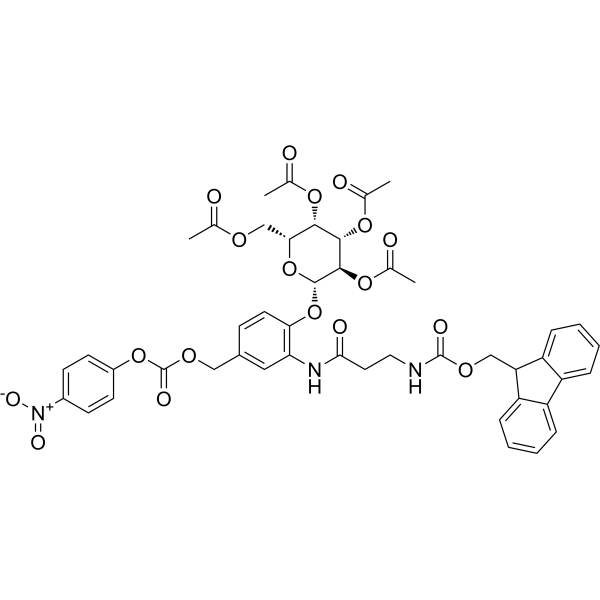
Tetra-O-acetyl-β-D-galactopyranosyl-Ph-CH2-(4-nitrophenyl)carbonate-Fmoc (Example 2.28.6) is an ADC linker that can be used to synthesize antibody-conjugated active molecules (ADCs) .
|
-
- HY-W086270
-
|
2-(4-Nitro-phenyl)-3H-benzoimidazole-5-carboxylic acid
|
MOFs
|
Others
|
|
2-(4-Nitrophenyl)-1H-1,3-benzodiazole-6-carboxylic acid(2-(4-Nitro-phenyl)-3H-benzoimidazole-5-carboxylic acid) is a metal-organic framework (MOF).
|
-

- HY-W593287
-
-

- HY-Z0127R
-
|
|
Reference Standards
|
|
|
tert-Butyl Methyl(4-nitrophenyl)carbamate (Standard) is the analytical standard of tert-Butyl Methyl(4-nitrophenyl)carbamate. This product is intended for research and analytical applications.
|
-

- HY-Z0138R
-
|
|
Reference Standards
|
|
|
N-Methyl-N-(4-nitrophenyl)acetamide (Nintedanib Impurity) (Standard) is the analytical standard of N-Methyl-N-(4-nitrophenyl)acetamide (Nintedanib Impurity). This product is intended for research and analytical applications.
|
-

- HY-Z4093
-
-

- HY-77055R
-
-

- HY-P4561
-
|
|
Cathepsin
|
Others
|
|
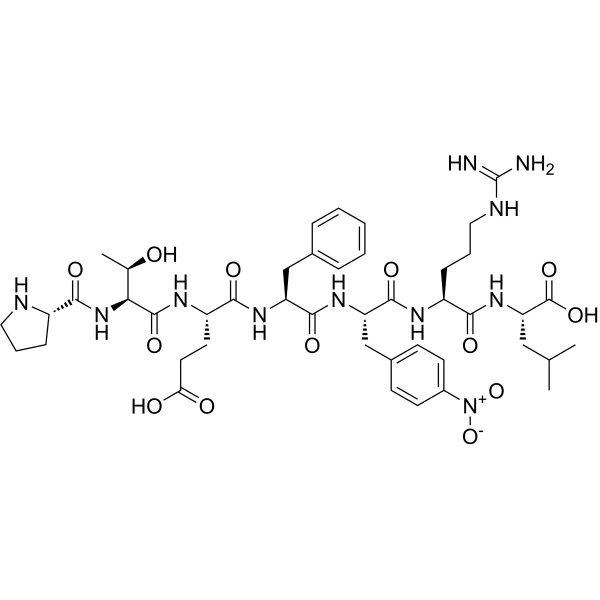
H-Pro-Thr-Glu-Phe-p-nitro-Phe-Arg-Leu-OH is a water-soluble polypeptide that can serve as a substrate for cathepsin D, pepsin and pepsinogen. H-Pro-Thr-Glu-Phe-p-nitro-Phe-Arg-Leu-OH has potential applications in biochemical analysis .
|
-
- HY-P4556
-
|
|
Biochemical Assay Reagents
|
Others
|
|
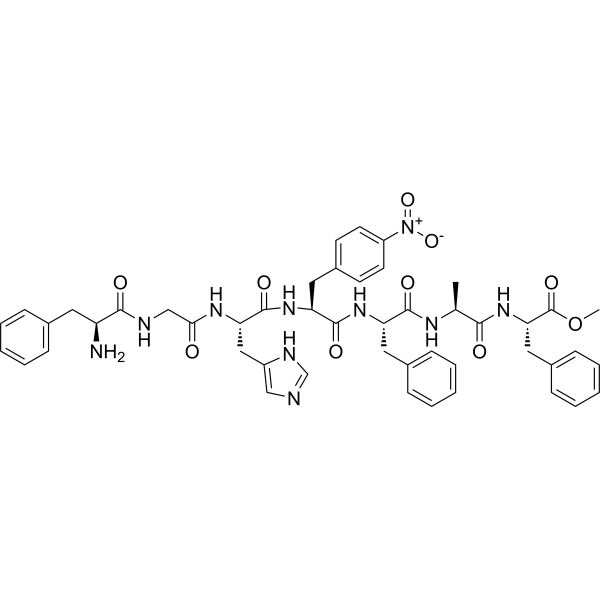
H-Phe-Gly-His-p-nitro-Phe-Phe-Ala-Phe-OMe is a polypeptide that can be hydrolyzed by Rennin (HY-P2810). H-Phe-Gly-His-p-nitro-Phe-Phe-Ala-Phe-OMe is commonly used as a biochemical reaction reagent .
|
-
- HY-P4545
-
|
|
Angiotensin Receptor
|
Others
|
|
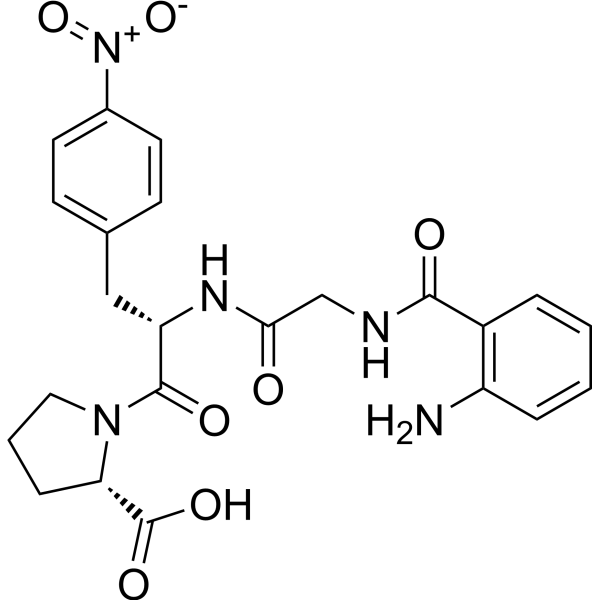
Abz-Gly-p-nitro-Phe-Pro-OH is the fluorescent substrate angiotensin I converting enzyme (ACE-I) with 355 nm excitation and 405 nm emission wavelengths .
|
-
- HY-P4725
-
|
|
Fluorescent Dye
|
Others
|
|
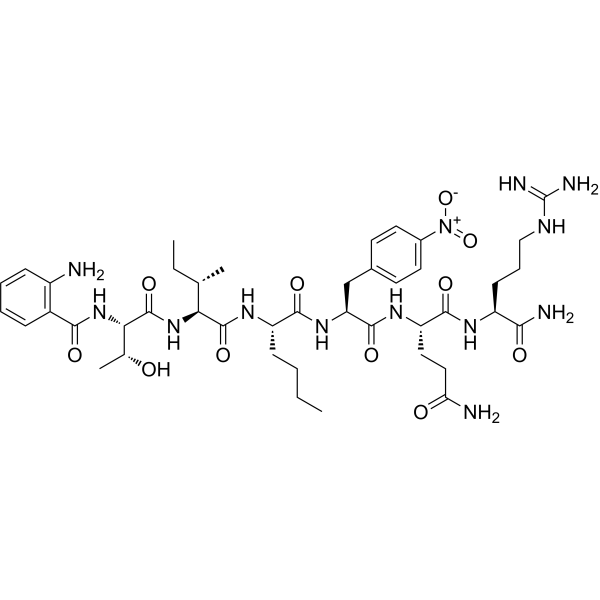
Abz-Thr-Ile-Nle-p-nitro-Phe-Gln-Arg-NH2 is a fluorogenic substrate, that can be used for the fluorescence screening assay .
|
-
- HY-P3350
-
|
|
Bacterial
|
Infection
|
|
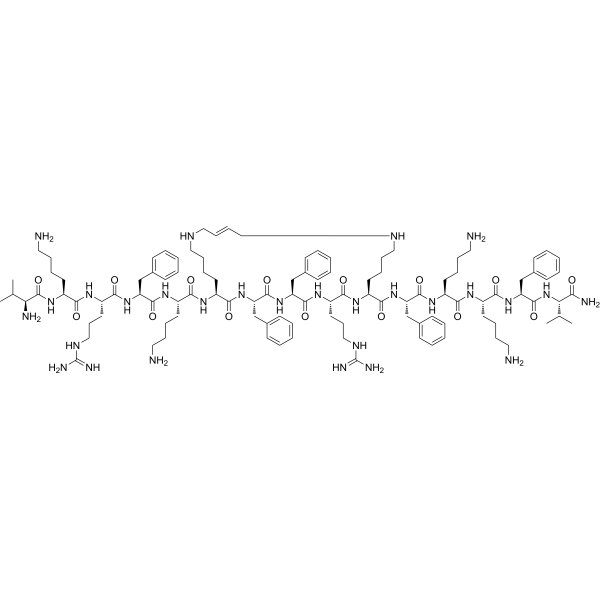
LS-BF1 is a stable and low toxic cationic antimicrobial peptide. LS-BF1 displays broad spectrum of antibacterial activity, including the challenging ESKAPE pathogens, by cell membrane disruptive mechanism. LS-BF1 shows good in vivo efficacy for elimination of bacteria in a mouse infection model[1].
|
-
- HY-105168
-
|
|
Endothelin Receptor
|
Cardiovascular Disease
|
|
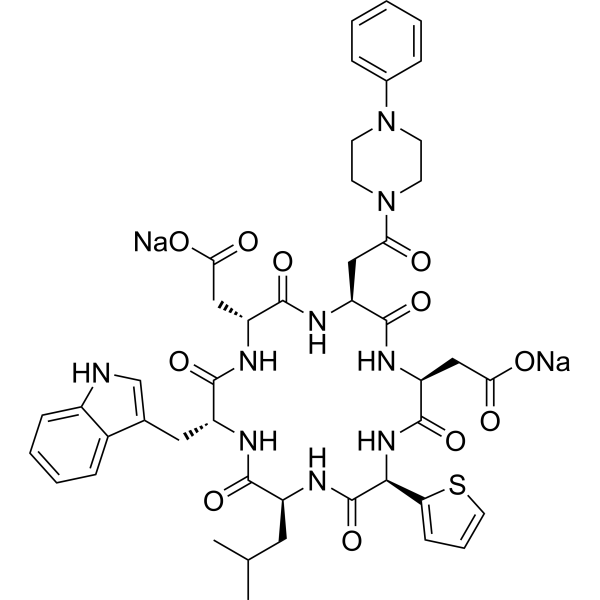
TAK 044 is an antagonist of Endothelin Receptor. TAK 044 strongly inhibits ET-induced deterioration in various animal models. TAK 044 can be used in study ET-related diseases such as acute myocardial infarction,acute renal failure, acute hepatic malfunction, and subarachnoid hemorrhage .
|
-
- HY-P4948
-
|
|
Biochemical Assay Reagents
|
Others
|
|
Coumarin-phalloidin is a kind of phalloidin labeled with Coumarin (HY-N0709). Coumarin-phalloidin is a new type of actin probe that can be used for triple immunofluorescence microscopic observation of the cell skeleton .
|
-

- HY-P10563
-
|
BHV-1100
|
CD38
|
Cancer
|
|
Noraramtide (BHV-1100) is an antibody recruitment molecule. Noraramtide can specifically bind to CD38 molecules to recruit natural killer (NK) cells. Noraramtide enhances the ability of NK cells to kill tumor cells through antibody-dependent cellular cytotoxicity (ADCC). This mechanism allows NK cells to more effectively recognize and eliminate tumor cells while avoiding mutual killing between NK cells. Noraramtide can be used for the study of autologous cancer immunity .
|
-

| Cat. No. |
Product Name |
Type |
-
- HY-15928
-
|
p-nitrophenyl phosphate disodium
|
Fluorescent Dyes
|
|
4-Nitrophenyl phosphate (p-Nitrophenyl phosphate) disodium is a non-proteinaceous chromogenic substrate for alkaline and acid phosphatases used in ELISA and conventional spectrophotometric assays.
|
-
- HY-W013168
-
|
4-nitrophenyl hexadecanoate; p-nitrophenyl Palmitate; pNpp
|
Fluorescent Dyes
|
|
4-Nitrophenyl palmitate (4-Nitrophenyl hexadecanoate) is a chromogenic substrate for lipases and esterases. Upon enzymatic hydrolysis, 4-Nitrophenyl palmitate releases p-nitrophenol, which can be quantified by colorimetric detection at 410 nm as a measure of enzymatic activity. 4-Nitrophenyl palmitate is used to characterize the activity of various bacterial and mammalian enzymes, including those from Burkholderia and porcine pancreatic lipase .
|
-
- HY-W015996
-
|
pNP-GalNAc
|
Fluorescent Dyes
|
|
4-Nitrophenyl-N-acetyl-α-D-galactosaminide (pNP-GalNAc) can be used as a chromogenic substrate for N-acetyl-D-galactosaminase. 4-Nitrophenyl-N-acetyl-α-D-galactosaminide is cleaved by N-acetyl-D-galactosaminase to generate a yellow solution. The enzyme activity is quantitatively determined by absorbance detection .
|
-
- HY-124324
-
|
p-Nitopheyl β-D-cellotioside
|
Fluorescent Dyes
|
|
4-Nitrophenyl β-D-cellotrioside (p-Nitopheyl β-D-cellotioside) is a chromogenic substrate for endoglucanases and cellulose biohydrolases. As a fluorescent dye, nitrophenyl β-D-Cellotrioside can be hydrolyzed by enzymes to release 4-nitrophenol, producing a yellow color. The activity of the enzyme can be quantitatively analyzed by monitoring the change in absorbance at 405 nm .
|
-
- HY-138111
-
|
p-Nitopheyl β-D-cellotetaoside
|
Fluorescent Dyes
|
|
4-Nitrophenyl β-D-cellotetraoside (p-Nitopheyl β-D-cellotetaoside) is a small molecule cellulose mimetic consisting of a tetramer of D-glucose units linked by β-1-4 glycosidic bonds. The fragmentation pattern of 4-Nitrophenyl β-D-cellotetraoside after enzymatic hydrolysis can be analyzed by TLC or by the release of 4-nitrophenol, which has a strong absorbance at 395 nm in alkaline solutions. 4-Nitrophenyl β-D-cellotetraoside can be used in cellulose degradation studies to determine the specificity of cellulases .
|
-
- HY-W330621
-
|
CNP-α-D-Glucopyaoside
|
Fluorescent Dyes
|
|
2-Chloro-4-nitrophenyl-α-D-glucopyranoside (CNP-α-D-Glucopyaoside) as a chromogenic substrate for the enzymatic activity assay of the enzyme that releases CNP from conjugated carbohydrates .
|
| Cat. No. |
Product Name |
Type |
-
- HY-W011183
-
|
|
Biochemical Assay Reagents
|
|
4-Nitrophenyl-N-acetyl-β-D-glucosaminide, an artificial substrate of N-acetyl-beta-D-hexosaminidase (NAGase), can be used in rapid and accurate rate assay for N-acetyl-beta-D-hexosaminidase. 4-Nitrophenyl-N-acetyl-β-D-glucosaminide is highly soluble and stable. 4-Nitrophenyl-N-acetyl-β-D-glucosaminide can be used for the study of renal tubular injury .
|
-
- HY-W014449
-
|
|
Biochemical Assay Reagents
|
|
4-Nitrophenyl butyrate consists of butyric acid chains esterified with 4-nitrophenol groups, thus giving it a yellow color. This compound is commonly used as a substrate in enzyme assays to measure esterase and lipase activity. When these enzymes cleave the ester bond, the nitrophenol group is released and the color changes from yellow to orange. Thus, the rate of color change can be used to determine enzyme activity. In addition, 4-Nitrophenyl butyrate can also be used as organic synthesis reagent and dye intermediate.
|
-
- HY-15927
-
|
|
Biochemical Assay Reagents
|
|
4-Nitrophenyl β-D-glucopyranoside is a chromogenic substrate for β-glucosidase. 4-Nitrophenyl β-D-glucopyranoside is converted to a colored product, p-nitrophenol that is easily detected spectrophotometrically at 405 nm when used in a β-glycosidase assay. 4-Nitrophenyl β-D-glucopyranoside is hydrolysed through intramolecular nucleophilic catalysis by the phosphate group in the 2-position. 4-Nitrophenyl β-D-glucopyranoside is promising for research of postmenopausal osteoporosis .
|
-
- HY-116022A
-
|
p-nitrophenyl phosphate disodium hexahydrate
|
Biochemical Assay Reagents
|
|
4-Nitrophenyl phosphate (p-nitrophenyl phosphate) disodium hexahydrate is widely used as a small molecule phosphotyrosine-like substrate in activity assays for protein tyrosine phosphatases. 4-Nitrophenyl phosphate disodium hexahydrate is a colorless substrate that upon hydrolysis is converted to a yellow 4-nitrophenolate ion that can be monitored by absorbance at 405 nm .
|
-
- HY-W039911
-
|
PNP-alpha-D-Gal; PNP-α-D-Gal
|
Biochemical Assay Reagents
|
|
4-Nitrophenyl α-D-galactopyranoside (PNP-alpha-D-Gal) is an artificial substrate of 4-nitrophenyl (pNP) glycopyranoside for detecting α-galactosidase activity. The amount of released pNP is significantly increased when 4-Nitrophenyl α-D-galactopyranoside is used as substrates .
|
-
- HY-137822
-
|
4-nitrophenyl a-D-mannopyranoside
|
Biochemical Assay Reagents
|
|
p-Nitrophenyl α-D-mannopyranoside (4-Nitrophenyl α-D-mannopyranoside) is a chromogenic glycosidic ligand. p-Nitrophenyl α-D-mannopyranoside features a sugar moiety (α-D-mannopyranose) with the mannose-characteristic axial hydroxyl group at the C2 position and a ligand portion (p-nitrophenol) that provides ultraviolet-visible light absorption properties. p-Nitrophenyl α-D-mannopyranoside can be used to determine glycosidase activity and characterize the sugar recognition properties of lectins (such as Concanavalin A (HY-P2149)) .
|
-
- HY-137550
-
|
|
Biochemical Assay Reagents
|
|
4-Nitrophenyl β-D-galactopyranoside is a derivative of beta-D-galactoside and monosaccharide. 4-Nitrophenyl β-D-galactopyranoside can be used for affinity label .
|
-
- HY-W013205B
-
-
- HY-137815
-
|
|
Biochemical Assay Reagents
|
|
4-Nitrophenyl α-L-rhamnopyranoside is a commonly used substrate in various biochemical assays to measure the activity of enzymes that hydrolyze rhamnose, such as α-L-rhamnosidase. 4-Nitrophenyl α-L-rhamnopyranoside has unique chemical properties that allow it to be hydrolyzed by these enzymes to form a yellow product called p-nitrophenol. This makes it a useful tool for detecting and quantifying rhamnohydrolase activity in biological samples or microbial cultures.
|
-
- HY-W011410
-
|
p-nitrophenyl β-D-Mannopyranoside
|
Biochemical Assay Reagents
|
|
4-Nitrophenyl β-D-mannopyranoside is a useful substrate for β-D-mannopyranosidase. 4-Nitrophenyl β-D-mannopyranoside is also a substrate for GH1-glucosidase (EaBgl1A) and α-L-rhamnosidase .
|
-
- HY-W127404
-
|
|
Biochemical Assay Reagents
|
|
4-Nitrophenyl decanoate is a biochemical reagent that can be used as a biological material or organic compound for life science related research.
|
-
- HY-134164
-
|
|
Biochemical Assay Reagents
|
|
4-Nitrophenyl α-L-arabinofuranoside is a biochemical reagent that can be used as a biological material or organic compound for life science related research.
|
-
- HY-134455
-
|
|
Biochemical Assay Reagents
|
|
4-Nitrophenyl β-D-fuco-pyran-oside is a biochemical reagent that can be used as a biological material or organic compound for life science related research.
|
-
- HY-W039859
-
|
|
Biochemical Assay Reagents
|
|
2-Chloro-4-nitrophenyl β-D-glucopyranoside, 98% is a substrate for β-glucosidase, used as a bacterial growth medium.
|
-
- HY-W099563
-
|
|
Biochemical Assay Reagents
|
|
4-Nitrophenyl stearate, which is an ester formed by the condensation of stearic acid and 4-nitrophenol, is commonly used as a substrate for enzymatic assays, where the hydrolysis of ester bonds by esterase and lipase can be measured by absorbance or ratio In addition, 4-Nitrophenyl stearate has been used as a model compound to study the enzymatic activity and selectivity of lipases and esterases from various sources. The long hydrophobic tail of the molecule makes it suitable for use in lipophilic Good solubility in the environment makes it a useful probe for studying lipid metabolism.
|
-
- HY-137828
-
|
pNP-chitobiose
|
Biochemical Assay Reagents
|
|
4-Nitrophenyl N,N′-diacetyl-β-D-chitobioside (pNP-chitobiose) is a fluorescent substrate that can be used to detect chitinase activity.
|
-
- HY-15911
-
|
2-Chloro-4-nitrophenyl α-L-fucopyranoside
|
Biochemical Assay Reagents
|
|
CNP-AFU (2-Chloro-4-nitrophenyl α-L-fucopyranoside) is a substrate for alpha-L-fucosidase(AFU).
|
-
- HY-W593287
-
-
- HY-116022C
-
|
p-nitrophenyl phosphate cyclohexylammonium
|
Biochemical Assay Reagents
|
|
4-Nitrophenyl phosphate (cyclohexylammonium) is a biochemical assay reagent.
|
-
- HY-W283245
-
-
- HY-W416249
-
-
- HY-134430
-
|
Tetradecanoic acid, 4-nitrophenyl ester
|
Biochemical Assay Reagents
|
|
p-Nitrophenyl myristate (Tetradecanoic acid, 4-nitrophenyl ester) is a biochemical assay reagent.
|
-
- HY-137198
-
-
- HY-W145619
-
|
|
Biochemical Assay Reagents
|
|
4-Nitrophenyl α-D-Glucuronide is a biochemical reagent that can be used as a biological material or organic compound for life science related research.
|
-
- HY-137826
-
-
- HY-W416255
-
-
- HY-116022B
-
|
p-nitrophenyl phosphate ditromethamine
|
Biochemical Assay Reagents
|
|
4-Nitrophenyl phosphate ditromethamine is an enzyme substrate commonly used in biochemical assays to measure the activity of various phosphatases, including alkaline phosphatase. 4-Nitrophenylphosphate has unique chemical properties that allow it to be hydrolyzed by phosphatases, releasing a yellow product that can be detected spectrophotometrically.
|
-
- HY-W699888
-
|
|
Biochemical Assay Reagents
|
|
α-Neuraminic acid,N-acetyl-2-O-(4-nitrophenyl) (sodium) is a class of biochemical reagents used in glycobiology research. Glycobiology studies the structure, synthesis, biology, and evolution of sugars. It involves carbohydrate chemistry, enzymology of glycan formation and degradation, protein-glycan recognition, and the role of glycans in biological systems. This field is closely related to basic research, biomedicine, and biotechnology .
|
-
- HY-W555915
-
|
|
Biochemical Assay Reagents
|
|
4-Nitrophenyl 4,6-O-(phenylmethylene)-α-D-mannopyranoside is a class of biochemical reagents used in glycobiology research. Glycobiology studies the structure, synthesis, biology, and evolution of sugars. It involves carbohydrate chemistry, enzymology of glycan formation and degradation, protein-glycan recognition, and the role of glycans in biological systems. This field is closely related to basic research, biomedicine, and biotechnology .
|
-
- HY-166971
-
|
|
Biochemical Assay Reagents
|
|
4-Nitrophenyl-α-D-maltoheptaoside is a class of biochemical reagents used in glycobiology research. Glycobiology studies the structure, synthesis, biology, and evolution of sugars. It involves carbohydrate chemistry, enzymology of glycan formation and degradation, protein-glycan recognition, and the role of glycans in biological systems. This field is closely related to basic research, biomedicine, and biotechnology .
|
-
- HY-W416254
-
|
|
Biochemical Assay Reagents
|
|
4-Nitrophenyl 2-O-β-D-glucopyranosyl-β-D-glucopyranoside is a class of biochemical reagents used in glycobiology research. Glycobiology studies the structure, synthesis, biology, and evolution of sugars. It involves carbohydrate chemistry, enzymology of glycan formation and degradation, protein-glycan recognition, and the role of glycans in biological systems. This field is closely related to basic research, biomedicine, and biotechnology .
|
-
- HY-W777046
-
|
|
Biochemical Assay Reagents
|
|
4-Nitrophenyl 3-O-α-D-glucopyranosyl-α-D-glucopyranoside is a class of biochemical reagents used in glycobiology research. Glycobiology studies the structure, synthesis, biology, and evolution of sugars. It involves carbohydrate chemistry, enzymology of glycan formation and degradation, protein-glycan recognition, and the role of glycans in biological systems. This field is closely related to basic research, biomedicine, and biotechnology .
|
-
- HY-W777041
-
|
|
Biochemical Assay Reagents
|
|
4-Nitrophenyl 6-O-α-D-glucopyranosyl-α-D-glucopyranoside is a class of biochemical reagents used in glycobiology research. Glycobiology studies the structure, synthesis, biology, and evolution of sugars. It involves carbohydrate chemistry, enzymology of glycan formation and degradation, protein-glycan recognition, and the role of glycans in biological systems. This field is closely related to basic research, biomedicine, and biotechnology .
|
-
- HY-W791782
-
-
- HY-W039893
-
-
- HY-W154351
-
-
- HY-W357132
-
-
- HY-166870
-
-
- HY-W416344
-
-
- HY-W357161
-
-
- HY-W698923
-
-
- HY-W293502
-
|
2-Chloro-4-nitrophenyl-beta-D-galactopyranoside
|
Biochemical Assay Reagents
|
|
2-Chloro-4-nitrophenyl-β-D-galactopyranoside is a chromogenic substrate used for testing enzyme activity. It is commonly used in molecular biology research to detect and measure the activity of β-galactosidase (biosynth: EC03318).
|
-
- HY-137785
-
|
|
Biochemical Assay Reagents
|
|
2-Chloro-4-nitrophenyl-β-D-maltotrioside is a chromogenic substrate used in bioluminescent and fluorescent assays to detect α-amylase.
|
-
- HY-W127824
-
|
(5Z,9Z,14Z)-5,10,15-Tris(4-nitrophenyl)-22,24-dihydro-21H-corri
|
Biochemical Assay Reagents
|
|
5,10,15-tris(4-nitrophenyl)corrole is a corrole derivative used as a trianionic ligand for transition metals.
|
-
- HY-134218
-
|
|
Biochemical Assay Reagents
|
|
4-Nitrophenyl-α-D-maltopyranoside is a class of biochemical reagents used in glycobiology research. Glycobiology studies the structure, synthesis, biology, and evolution of sugars. It involves carbohydrate chemistry, enzymology of glycan formation and degradation, protein-glycan recognition, and the role of glycans in biological systems. This field is closely related to basic research, biomedicine, and biotechnology .
|
-
- HY-W739581
-
|
|
Biochemical Assay Reagents
|
|
β-D-Mannopyranoside,4-nitrophenyl 4,6-O-cyclohexylidene,3-benzoate is a class of biochemical reagents used in glycobiology research. Glycobiology studies the structure, synthesis, biology, and evolution of sugars. It involves carbohydrate chemistry, enzymology of glycan formation and degradation, protein-glycan recognition, and the role of glycans in biological systems. This field is closely related to basic research, biomedicine, and biotechnology .
|
-
- HY-W739586
-
|
|
Biochemical Assay Reagents
|
|
4-Nitrophenyl 6-O-α-D-mannopyranosyl-α-D-mannopyranoside is a class of biochemical reagents used in glycobiology research. Glycobiology studies the structure, synthesis, biology, and evolution of sugars. It involves carbohydrate chemistry, enzymology of glycan formation and degradation, protein-glycan recognition, and the role of glycans in biological systems. This field is closely related to basic research, biomedicine, and biotechnology .
|
-
- HY-W699344
-
|
|
Biochemical Assay Reagents
|
|
4-Nitrophenyl 2-O-α-D-glucopyranosyl-α-D-glucopyranoside is a class of biochemical reagents used in glycobiology research. Glycobiology studies the structure, synthesis, biology, and evolution of sugars. It involves carbohydrate chemistry, enzymology of glycan formation and degradation, protein-glycan recognition, and the role of glycans in biological systems. This field is closely related to basic research, biomedicine, and biotechnology .
|
-
- HY-W740337
-
|
|
Biochemical Assay Reagents
|
|
4-Nitrophenyl 3,4-O-(1-methylethylidene)-α-D-galactopyranoside is a class of biochemical reagents used in glycobiology research. Glycobiology studies the structure, synthesis, biology, and evolution of sugars. It involves carbohydrate chemistry, enzymology of glycan formation and degradation, protein-glycan recognition, and the role of glycans in biological systems. This field is closely related to basic research, biomedicine, and biotechnology .
|
-
- HY-W416311
-
|
|
Biochemical Assay Reagents
|
|
β-D-Glucopyranoside,2-chloro-4-nitrophenyl,2,3,4,6-tetraacetate is a class of biochemical reagents used in glycobiology research. Glycobiology studies the structure, synthesis, biology, and evolution of sugars. It involves carbohydrate chemistry, enzymology of glycan formation and degradation, protein-glycan recognition, and the role of glycans in biological systems. This field is closely related to basic research, biomedicine, and biotechnology .
|
- HY-W700578
-
- HY-W357145
-
|
|
Biochemical Assay Reagents
|
|
(4-Nitrophenyl)methyl 1-thio-β-D-galactopyranoside is a class of biochemical reagents used in glycobiology research. Glycobiology studies the structure, synthesis, biology, and evolution of sugars. It involves carbohydrate chemistry, enzymology of glycan formation and degradation, protein-glycan recognition, and the role of glycans in biological systems. This field is closely related to basic research, biomedicine, and biotechnology .
|
- HY-W776979
-
|
|
Biochemical Assay Reagents
|
|
4-Nitrophenyl 2-benzoyl-4,6-O-benzylidene-α-D-mannopyranoside is a class of biochemical reagents used in glycobiology research. Glycobiology studies the structure, synthesis, biology, and evolution of sugars. It involves carbohydrate chemistry, enzymology of glycan formation and degradation, protein-glycan recognition, and the role of glycans in biological systems. This field is closely related to basic research, biomedicine, and biotechnology .
|
- HY-W416322
-
- HY-W415806
-
- HY-W415809
-
- HY-W416327
-
|
|
Biochemical Assay Reagents
|
|
β-D-Galactopyranoside,4-nitrophenyl,3,4,6-triacetate is a class of biochemical reagents used in glycobiology research. Glycobiology studies the structure, synthesis, biology, and evolution of sugars. It involves carbohydrate chemistry, enzymology of glycan formation and degradation, protein-glycan recognition, and the role of glycans in biological systems. This field is closely related to basic research, biomedicine, and biotechnology .
|
- HY-W039891
-
|
|
Biochemical Assay Reagents
|
|
β-D-Glucopyranosiduronic acid,2-formyl-4-nitrophenyl,methyl ester,2,3,4-triacetate can be used in glycobiology research.
|
- HY-W776843
-
| Cat. No. |
Product Name |
Target |
Research Area |
-
- HY-W111209
-
-
- HY-W009693
-
-
- HY-P4545
-
|
|
Angiotensin Receptor
|
Others
|
|
Abz-Gly-p-nitro-Phe-Pro-OH is the fluorescent substrate angiotensin I converting enzyme (ACE-I) with 355 nm excitation and 405 nm emission wavelengths .
|
-
- HY-W008919
-
|
N-Alpha,N-epsilon-di-Boc-L-lysine 4-nitrophenyl ester
|
Amino Acid Derivatives
|
Others
|
|
Boc-Lys(Boc)-Onp (N-Alpha,N-epsilon-di-Boc-L-lysine 4-nitrophenyl ester) is a lysine with a Boc protecting group. Boc-Lys(Boc)-Onp was used as a substrate for a catalyst model to study its enzymatic hydrolysis reaction catalyzed by a copper(II) complex .
|
-
- HY-P4561
-
|
|
Cathepsin
|
Others
|
|
H-Pro-Thr-Glu-Phe-p-nitro-Phe-Arg-Leu-OH is a water-soluble polypeptide that can serve as a substrate for cathepsin D, pepsin and pepsinogen. H-Pro-Thr-Glu-Phe-p-nitro-Phe-Arg-Leu-OH has potential applications in biochemical analysis .
|
-
- HY-P4725
-
|
|
Fluorescent Dye
|
Others
|
|
Abz-Thr-Ile-Nle-p-nitro-Phe-Gln-Arg-NH2 is a fluorogenic substrate, that can be used for the fluorescence screening assay .
|
-
- HY-P10563
-
|
BHV-1100
|
CD38
|
Cancer
|
|
Noraramtide (BHV-1100) is an antibody recruitment molecule. Noraramtide can specifically bind to CD38 molecules to recruit natural killer (NK) cells. Noraramtide enhances the ability of NK cells to kill tumor cells through antibody-dependent cellular cytotoxicity (ADCC). This mechanism allows NK cells to more effectively recognize and eliminate tumor cells while avoiding mutual killing between NK cells. Noraramtide can be used for the study of autologous cancer immunity .
|
-
- HY-W011137
-
|
|
Drug Derivative
|
Others
|
|
(S)-4-Nitrophenyl 4-amino-2-((tert-butoxycarbonyl)amino)-4-oxobutanoate is an asparagine derivative .
|
-
- HY-W014406
-
-
- HY-W007679
-
-
- HY-76255
-
|
|
Drug Derivative
|
Others
|
|
4-Nitrophenyl (tert-butoxycarbonyl)-L-phenylalaninate is a phenylalanine derivative .
|
-
- HY-P3350
-
|
|
Bacterial
|
Infection
|
|
LS-BF1 is a stable and low toxic cationic antimicrobial peptide. LS-BF1 displays broad spectrum of antibacterial activity, including the challenging ESKAPE pathogens, by cell membrane disruptive mechanism. LS-BF1 shows good in vivo efficacy for elimination of bacteria in a mouse infection model[1].
|
-
- HY-105168
-
|
|
Endothelin Receptor
|
Cardiovascular Disease
|
|
TAK 044 is an antagonist of Endothelin Receptor. TAK 044 strongly inhibits ET-induced deterioration in various animal models. TAK 044 can be used in study ET-related diseases such as acute myocardial infarction,acute renal failure, acute hepatic malfunction, and subarachnoid hemorrhage .
|
-
- HY-P4556
-
|
|
Biochemical Assay Reagents
|
Others
|
|
H-Phe-Gly-His-p-nitro-Phe-Phe-Ala-Phe-OMe is a polypeptide that can be hydrolyzed by Rennin (HY-P2810). H-Phe-Gly-His-p-nitro-Phe-Phe-Ala-Phe-OMe is commonly used as a biochemical reaction reagent .
|
-
- HY-P4948
-
|
|
Biochemical Assay Reagents
|
Others
|
|
Coumarin-phalloidin is a kind of phalloidin labeled with Coumarin (HY-N0709). Coumarin-phalloidin is a new type of actin probe that can be used for triple immunofluorescence microscopic observation of the cell skeleton .
|
| Cat. No. |
Product Name |
Category |
Target |
Chemical Structure |
| Cat. No. |
Product Name |
Chemical Structure |
-
- HY-W740068
-
|
|
|
tert-Butyl 4-Nitrophenyl Carbonate-d9 is the deuterium labeled Tert-Butyl (4-nitrophenyl) carbonate (HY-W683522).
|
-
-
- HY-W012294S
-
|
|
|
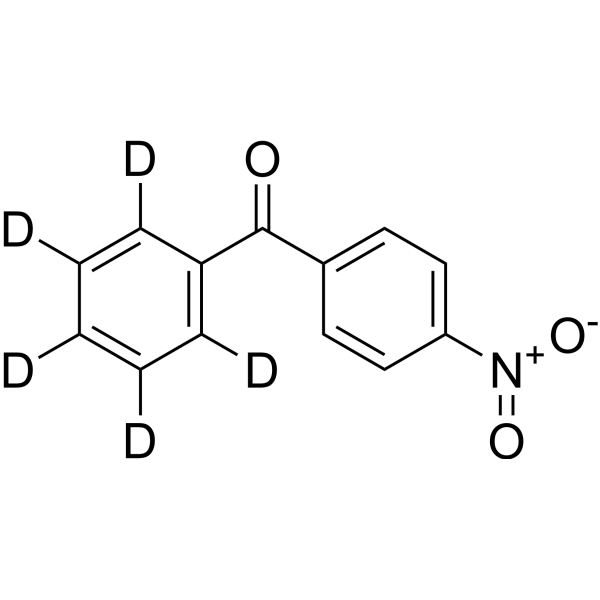
(4-Nitrophenyl)(phenyl)methanone-d5 is the deuterium labeled (4-Nitrophenyl)(phenyl)methanone .
|
-
-
- HY-W191560S
-
|
|
|
N1-(4-Nitrophenyl)sulfanilamide-d4 is the deuterium labeled N1-(4-Nitrophenyl)sulfanilamide.
|
-
-
- HY-W742982
-
|
|
|
N,N-Dimethyl-N'-(4-nitrophenyl)acetimidamide-d6 is the deuterium labeled N,N-Dimethyl-N'-(4-nitrophenyl)acetimidamide (HY-W704907).
|
-
-
- HY-167906S
-
|
|
|
Hexadecyl 2-((4-Nitrophenyl)thio)acetate- 13C2 is the 13C-labeled Lunamarine (HY-167906). Lunamarine is a inhibitor of PDE5 with BBB permeability. Lunamarine can be used in the reseach of Pulmonary Arterial Hypertension (PAH) and Erectile Dysfunction (ED) .
|
-
-
- HY-W087930S
-
|
|
|
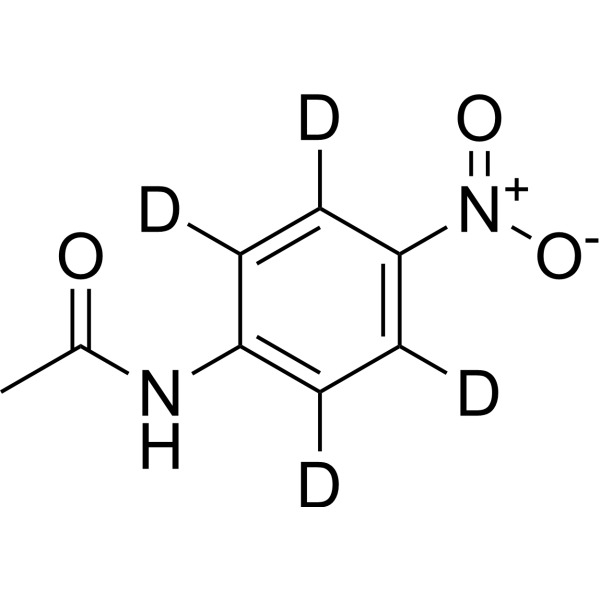
N-(4-Nitrophenyl)acetamide-d4 is the deuterium labeled N-(4-Nitrophenyl)acetamide .
|
-
-
- HY-W746550
-
|
|
|
(S)-2-Amino-3-(4-nitrophenyl)propan-1-ol-d6 ((2S)-2-Amino-3-(4-nitrophenyl)-1-propanol-d6) is the deuterium labeled (S)-2-amino-3-(4-nitrophenyl)propan-1-ol (HY-W270163).
|
-
-
- HY-W707854
-
|
|
|
Mieshuan-d4 (1-(3'-Pyridylmethyl)-3-(4'-nitrophenyl)urea-d4) is the deuterium labeled Mieshuan.
|
-
| Cat. No. |
Product Name |
|
Classification |
-
- HY-140858
-
|
|
|
Azide
PROTAC Synthesis
|
|
Azido-PEG4-4-nitrophenyl carbonate is a PEG-based PROTAC linker that can be used in the synthesis of PROTACs . Azido-PEG4-4-nitrophenyl carbonate is a click chemistry reagent, it contains an Azide group and can undergo copper-catalyzed azide-alkyne cycloaddition reaction (CuAAc) with molecules containing Alkyne groups. It can also undergo strain-promoted alkyne-azide cycloaddition (SPAAC) reactions with molecules containing DBCO or BCN groups.
|
-
- HY-W882740
-
|
|
|
Alkynes
|
|
4-Nitrophenyl 11,16-dioxo-14,14-bis(3-oxo-3-((2-(2-(prop-2-yn-1-yloxy)ethoxy)ethyl)amino)propyl)-4,7-dioxa-10,15-diazaicos-1-yn-20-oate is a biological molecule.
|
Your information is safe with us. * Required Fields.
Inquiry Information
- Product Name:
- Cat. No.:
- Quantity:
- MCE Japan Authorized Agent:





![1-[(4-Nitrophenyl)methyl]-1,4-diazepane](http://file.medchemexpress.com/product_pic/hy-w083821.gif)





