



Bis(4-nitrophenyl) phosphate
Based on 2 publication(s) in Google Scholar
Bis(4-nitrophenyl) phosphate (BNPP) is an esterase inhibitor, inhibits the activity of esterases such as carboxylesterase. Bis(4-nitrophenyl) phosphate inhibits the degradation of Abiraterone in fresh plasma. Bis(4-nitrophenyl) phosphate can be used as a substrate to determine the enzymatic activity of phosphodiesterase in the roots of wetland plants. Bis(4-nitrophenyl) phosphate also acts as a catalyst for metallomicelles and a catalyst that promotes ring-opening polymerization (ROP).
For research use only. We do not sell to patients.
- Purity : 99.93%
- CAS No.: 645-15-8
- Formula: C12H9N2O8P
- Molecular Weight:340.18
-
Storage:Powder -20°C, 3 years , 4°C, 2 years ; In solvent -80°C, 6 months , -20°C, 1 month


To place orders, for customer services and technical support, please contact: MedChemExpress USA
Tel: 609-228-6898 E-mail: [email protected] [email protected]


-
 Biological Activity
-
Chemical Information
-
Solvent & Solubility
- Purity & Documentation
- References
-
 Help & FAQs


-

HY-W013205R
Bis(4-nitrophenyl) phosphate (Standard)Catalyst -
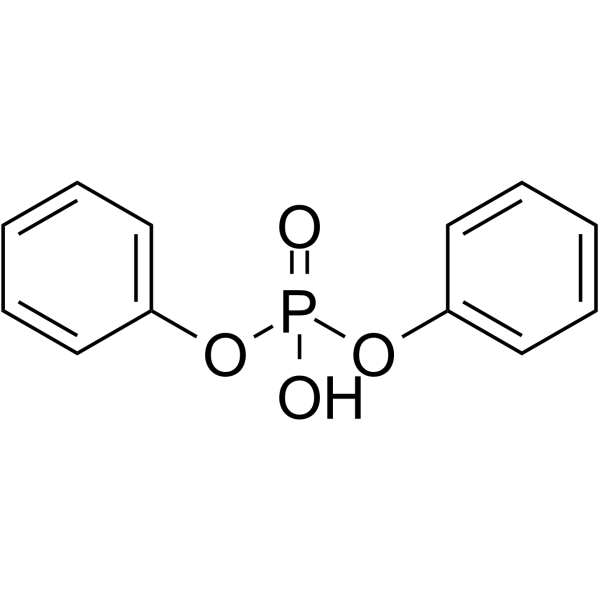
HY-W008151
Diphenyl PhosphateMetabolic Inhibitor -

HY-135604
Dibutyl phosphateOrganophosphate esters metabolite -
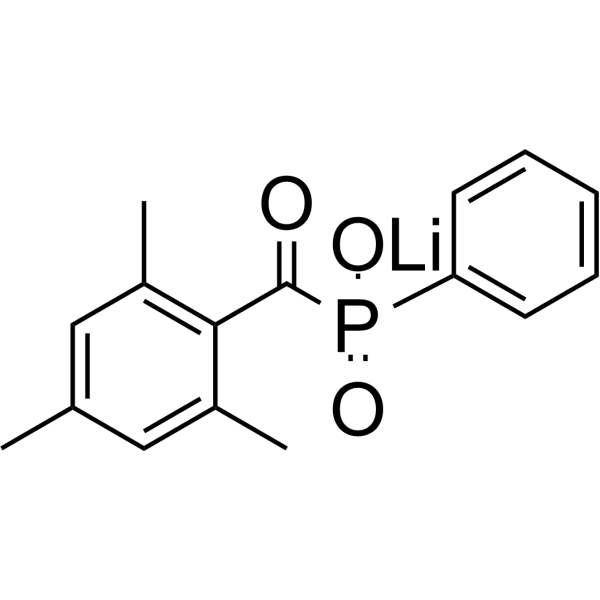
HY-44076
LAPRadical Initiator -
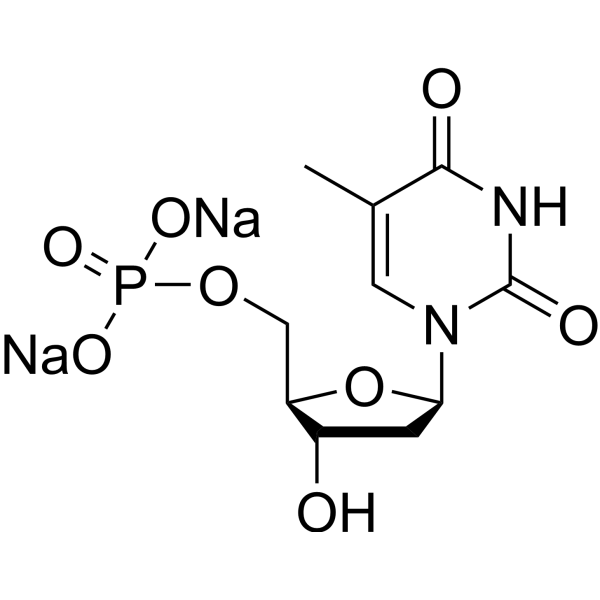
HY-128738
Thymidine-5'-monophosphate disodium saltNucleotide -
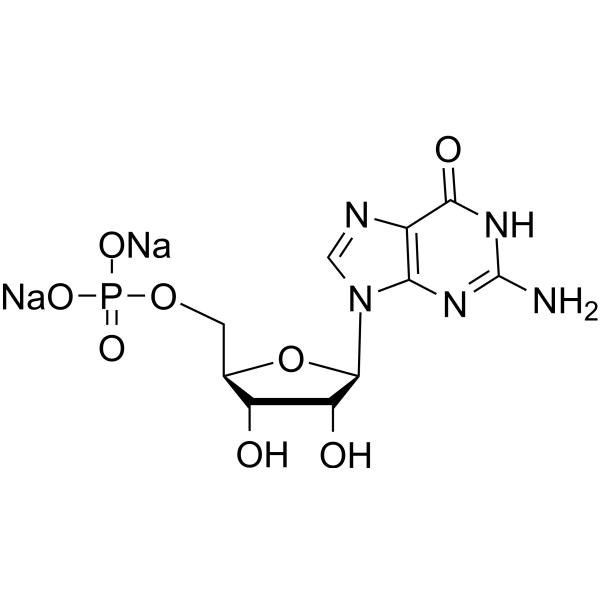
HY-W010970
5'-Guanylic acid disodium saltNucleotide -

HY-W008151R
Diphenyl Phosphate (Standard)Metabolic Inhibitor -
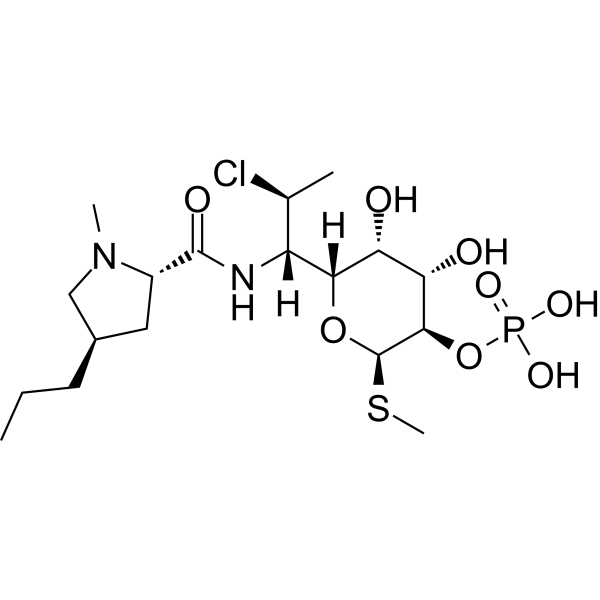
HY-B1064
Clindamycin phosphateLincosamide Antibiotic -
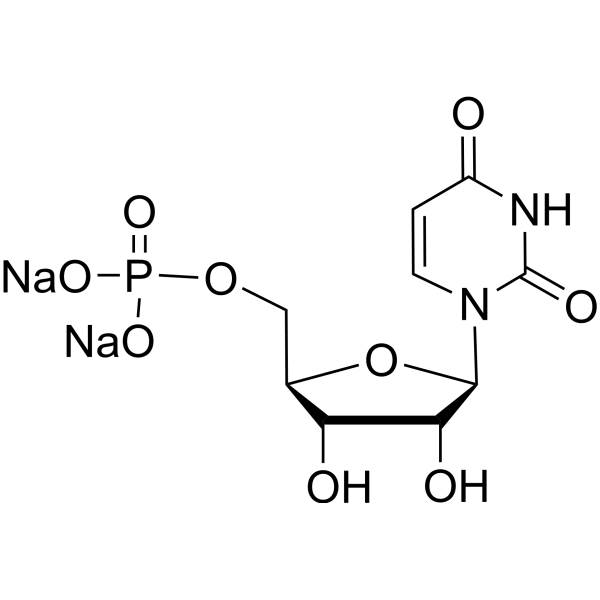
HY-W013175
Uridine 5'-monophosphate disodium saltNucleotide Analogue -

HY-W016414
Triethyl phosphateSmooth Muscle Relaxant -

HY-Y0091
XantphosBiochemical Reagent -

HY-D0833
Tricalcium phosphateCalcium-phosphorus Compound
Publications Citing Use of MedChemExpress (MCE) Bis(4-nitrophenyl) phosphate
More

Biological Activity
Description
In Vitro
Bis (4-nitrophenyl) phosphate (1-10 mM; 48 h-5 d) effectively stabilizes Abiraterone (HY-70013) in fresh human K2EDTA plasma at room temperature for at least 5 days[1].
MedChemExpress (MCE) has not independently confirmed the accuracy of these methods. They are for reference only. .


Chemical Information
-
CAS No. 645-15-8
-
Appearance Solid
-
Molecular Weight 340.18
-
Formula C12H9N2O8P
-
Color Off-white to gray
-
SMILES
O=P(OC1=CC=C([N+]([O-])=O)C=C1)(OC2=CC=C([N+]([O-])=O)C=C2)O
-
Synonyms
BNPP
-
Shipping
Room temperature in continental US; may vary elsewhere.
-
Storage
Powder -20°C 3 years 4°C 2 years In solvent -80°C 6 months -20°C 1 month


Publications (2)
-
Journal Impact Factor
-
Most Recent
-
Biomacromolecules
Trivalent GalNAc-Mediated Delivery of Cucurbitacin B Overcomes Systemic Toxicity for Potent HCC Chemoradiotherapy. [Abstract]2026 May 11;27(5):3080-3108. PMID: 41950466 -
Pharm Res
In vitro and ex vivo Pharmacological Profile of HY-022619, a Novel Intravenous P2Y12 Receptor Antagonist with Rapid-onset and Sustained Antiplatelet Activity. [Abstract]2026 May;43(5):1425-1440. PMID: 41951863


Solvent & Solubility
In Vitro:
DMSO : 100 mg/mL (293.96 mM; Need ultrasonic; Hygroscopic DMSO has a significant impact on the solubility of product, please use newly opened DMSO)
Please refer to the solubility information to select the appropriate solvent. Once prepared, please aliquot and store the solution to prevent product inactivation from repeated freeze-thaw cycles.
Storage method and period of stock solution: -80°C, 6 months; -20°C, 1 month. When stored at -80°C, please use it within 6 months. When stored at -20°C, please use it within 1 month.
Please refer to the solubility information to select the appropriate solvent. Once prepared, please aliquot and store the solution to prevent product inactivation from repeated freeze-thaw cycles.
Storage method and period of stock solution: -80°C, 6 months; -20°C, 1 month. When stored at -80°C, please use it within 6 months. When stored at -20°C, please use it within 1 month.
Concentration (start) × Volume (start) = Concentration (final) × Volume (final)
In Vivo:
Select the appropriate dissolution method based on your experimental animal and administration route.
- For the following dissolution methods, please ensure to first prepare a clear stock solution using an In Vitro approach and then sequentially add co-solvents:
- To ensure reliable experimental results, the clarified stock solution can be appropriately stored based on storage conditions. As for the working solution for In Vivo experiments, it is recommended to prepare freshly and use it on the same day.
- The percentages shown for the solvents indicate their volumetric ratio in the final prepared solution. If precipitation or phase separation occurs during preparation, heat and/or sonication can be used to aid dissolution.
Add each solvent one by one: 10% DMSO 90% (20% SBE-β-CD in Saline)
Solubility: ≥ 2.5 mg/mL (7.35 mM); Clear solution
This protocol yields a clear solution of ≥ 2.5 mg/mL (saturation unknown).
Taking 1 mL working solution as an example, add 100 μL DMSO stock solution (25.0 mg/mL) to 900 μL 20% SBE-β-CD in Saline, and mix evenly.
Preparation of 20% SBE-β-CD in Saline (4°C, storage for one week): 2 g SBE-β-CD powder is dissolved in 10 mL Saline, completely dissolve until clear.
In Vivo Dissolution Calculator
Please enter the basic information of animal experiments:
-
-
-
-
Recommended: Prepare an additional quantity of animals to account for potential losses during experiments.
Please enter your animal formula composition:
-
%DMSO +
Recommended: Keep the proportion of DMSO in working solution below 2% if your animal is weak.
-
%+
-
+%Tween-80 + +
-
%Saline +
The co-solvents required include: DMSO, . All of co-solvents are available by MedChemExpress (MCE). , Tween 80. All of co-solvents are available by MedChemExpress (MCE).
Working solution concentration: 0.22 mg/mL
Method for preparing stock solution: mg drug dissolved in μL DMSO. Stock solution concentration: mg/mL.
1. Take μL DMSO stock solution;
2. Add μL .
μL , mix evenly;
3. Then add μL Tween 80, mix evenly;
4. Then add μL
Please ensure that the stock solution in the first step is dissolved to a clear state, and add co-solvents in sequence. You can use ultrasonic heating (ultrasonic cleaner, recommended frequency 20-40 kHz), vortexing, etc. to assist dissolution.


Purity & Documentation
-
Data Sheet (273 KB)
-
SDS (480 KB)
- English - EN (480 KB)
- Français - FR (480 KB)
- Deutsch - DE (480 KB)
- Norwegian - NO (480 KB)
- Español - ES (480 KB)
- Swedish - SV (480 KB)
- Italian - IT (480 KB)
- Korean - KR (480 KB)
- Portuguese - PT (480 KB)
-
Handling Instructions (2659 KB)
References


Complete Stock Solution Preparation Table
Please refer to the solubility information to select the appropriate solvent. Once prepared, please aliquot and store the solution to prevent product inactivation from repeated freeze-thaw cycles.
Storage method and period of stock solution: -80°C, 6 months; -20°C, 1 month. When stored at -80°C, please use it within 6 months. When stored at -20°C, please use it within 1 month.
| Optional Solvent | Concentration Solvent Mass | 1 mg | 5 mg | 10 mg | 25 mg |
|---|---|---|---|---|---|
| DMSO | 1 mM | 2.9396 mL | 14.6981 mL | 29.3962 mL | 73.4905 mL |
| 5 mM | 0.5879 mL | 2.9396 mL | 5.8792 mL | 14.6981 mL | |
| 10 mM | 0.2940 mL | 1.4698 mL | 2.9396 mL | 7.3491 mL | |
| 15 mM | 0.1960 mL | 0.9799 mL | 1.9597 mL | 4.8994 mL | |
| 20 mM | 0.1470 mL | 0.7349 mL | 1.4698 mL | 3.6745 mL | |
| 25 mM | 0.1176 mL | 0.5879 mL | 1.1758 mL | 2.9396 mL | |
| 30 mM | 0.0980 mL | 0.4899 mL | 0.9799 mL | 2.4497 mL | |
| 40 mM | 0.0735 mL | 0.3675 mL | 0.7349 mL | 1.8373 mL | |
| 50 mM | 0.0588 mL | 0.2940 mL | 0.5879 mL | 1.4698 mL | |
| 60 mM | 0.0490 mL | 0.2450 mL | 0.4899 mL | 1.2248 mL | |
| 80 mM | 0.0367 mL | 0.1837 mL | 0.3675 mL | 0.9186 mL | |
| 100 mM | 0.0294 mL | 0.1470 mL | 0.2940 mL | 0.7349 mL |


Bis(4-nitrophenyl) phosphate Related Classifications
HY-W013205 Related Classifications
 Powered by Bioz
Keywords
- Bis(4-nitrophenyl)
- 645-15-8
- BNPP
- Phosphodiesterase (PDE)
- Carboxylesterase (CES)
- carboxylesterase
- metallomicelles
- arylacetamide deacetylase
- abiraterone
- p-nitrophenol
- esterase
- β-butyrolactone
- human K2EDTA plasma
- Cu(II) macrocyclic Schiff base complexes
- Ni(II) macrocyclic Schiff base complexes
- Inhibitor
- inhibitor
- inhibit