



CES3
Carboxylesterase 3 (CES3) is a member of the mammalian carboxylesterase family, a group of serine hydrolases that catalyze the hydrolysis of ester-, thioester-, and amide-containing endogenous compounds and xenobiotics involved in drug and lipid metabolism[1][2]. CES3 belongs to one of the five recognized human carboxylesterase families and shares conserved catalytic and structural features with other CES enzymes, supporting its role in metabolic biotransformation pathways[1][3]. Mechanistically, carboxylesterases participate in the metabolism of lipid esters and contribute to energy homeostasis and lipid-related biological processes, providing a functional framework for investigating CES3 in metabolic regulation[2]. CES3 is expressed in multiple tissues, including the brain, colon, and trachea, and has been implicated in neural and colon drug metabolism, suggesting potential relevance to tissue-specific xenobiotic processing[4]. In disease-related research, the broader carboxylesterase family has been linked to metabolic disorders and fatty liver disease, making CES3 a candidate for studies examining esterase-mediated metabolic regulation[2]. Compared with the extensively characterized CES1 and CES2 isoforms, CES3 remains less well understood, and available evidence indicates that it may exhibit lower catalytic efficiency toward selected substrates[3]. Structural analyses have identified sequence insertions and deletions in CES3 relative to CES1, which may influence enzymatic properties and substrate recognition[3]. Therefore, CES3 provides a useful experimental model for studying carboxylesterase isoform diversity, substrate specificity, and mechanisms of xenobiotic and lipid metabolism[1][3].
References:
- [1]. Holmes RS, et al. Recommended nomenclature for five mammalian carboxylesterase gene families: human, mouse, and rat genes and proteins. Mamm Genome. 2010 Oct;21(9-10):427-41. [Content Brief]
- [2]. Lian J, et al. Carboxylesterases in lipid metabolism: from mouse to human. Protein Cell. 2018;9(2):178-195.
- [3]. Sanghani SP, et al. Human Carboxylesterases: An Update on CES1, CES2 and CES3. Protein Pept Lett. 2009;16(10):1207-1214.
- [4]. CES3 information.
All Product Categories
-
CES3 Related Products (2)
Related Products (2)

-
WWL113
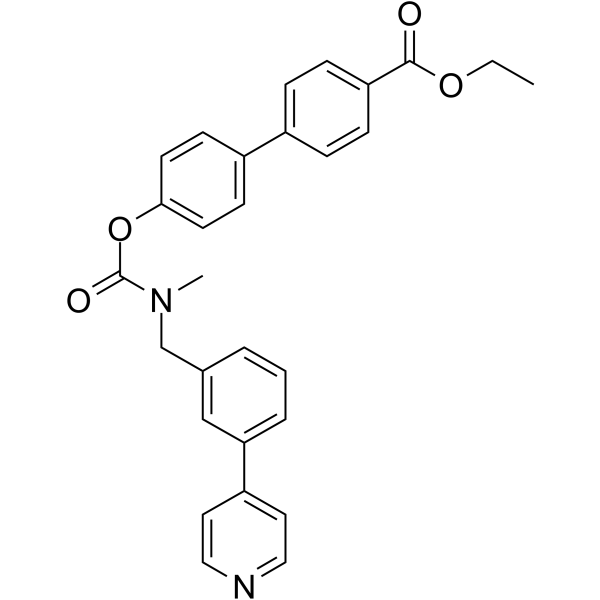 0 ImagesWWL113 is a selective and orally active Ces3 and Ces1f inhibitor, with IC50 values of 120 nM and 100 nM for Ces3 and Ces1f, respectively. WWL113 appears to show excellent selectivity for the 60-kDa serine hydrolase (or hydrolases).
-
WWL229
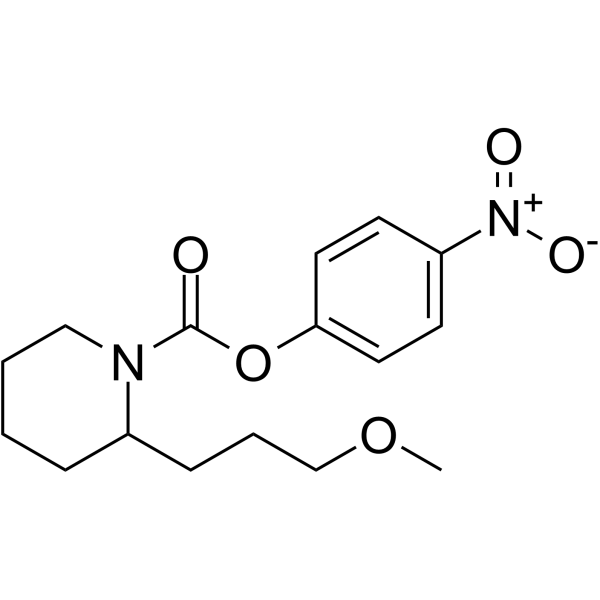 0 ImagesWWL229 is a selective inhibitor of carboxylesterase 3 (CES3) with an IC50 1.94 μM. WWL229 attenuates LPS (HY-D1056)-induced pro-inflammatory cytokine mRNA levels, inhibits lipolysis and adipose thermogenesis, impairs mitochondrial function, and promotes lipid storage. WWL229 can be used for the research of obesity, insulin resistance, type 2 diabetes, and lung inflammation.



