



WWL229

Based on 1 Customer Validation
WWL229 is a selective inhibitor of carboxylesterase 3 (CES3) with an IC50 1.94 μM. WWL229 attenuates LPS (HY-D1056)-induced pro-inflammatory cytokine mRNA levels, inhibits lipolysis and adipose thermogenesis, impairs mitochondrial function, and promotes lipid storage. WWL229 can be used for the research of obesity, insulin resistance, type 2 diabetes, and lung inflammation.
For research use only. We do not sell to patients.
- Purity : 99.49%
- CAS No.: 1338575-28-2
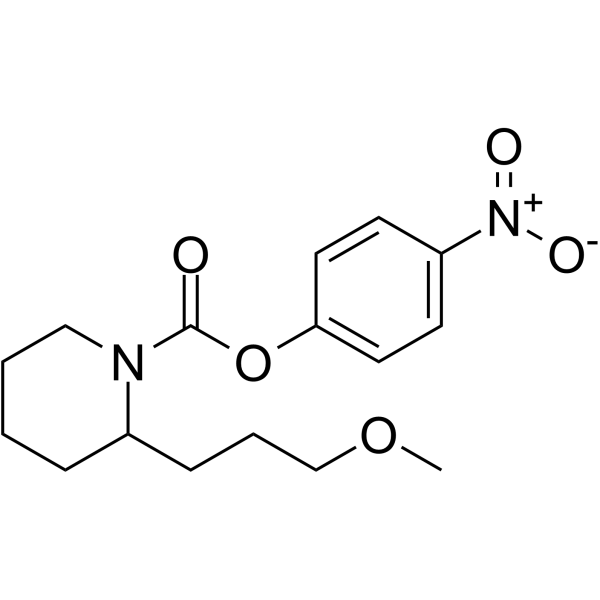
- Formula: C16H22N2O5
- Molecular Weight:322.36
-
Storage:Pure form -20°C, 3 years , 4°C, 2 years ; In solvent -80°C, 6 months , -20°C, 1 month

To place orders, for customer services and technical support, please contact: MedChemExpress USA
Tel: 609-228-6898 E-mail: [email protected] [email protected]


-
 Biological Activity
-
Chemical Information
-
Solvent & Solubility
- Protocols
- Purity & Documentation
- References
-
 Help & FAQs


-
HY-110148
WWL113Ces3/Ces1f Inhibitor -
HY-N3474
IsolicoflavonolhCES2A Inhibitor -
HY-23148
1-MethylisatinCE Inhibitor -
HY-N0235
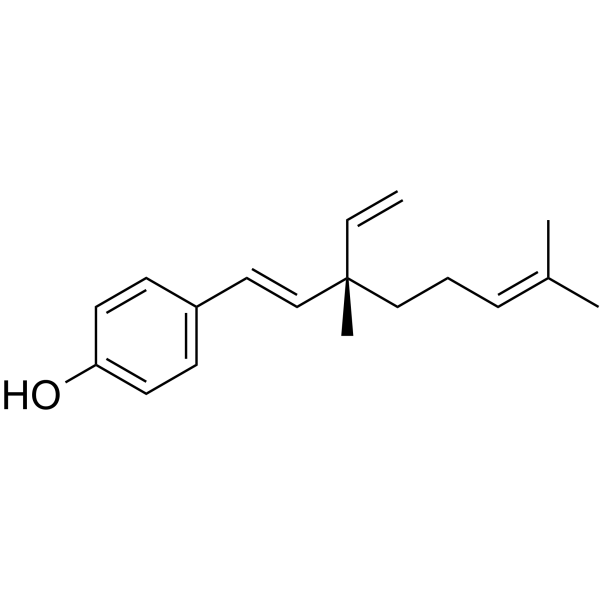
BakuchiolPhytoestrogen -
HY-114879
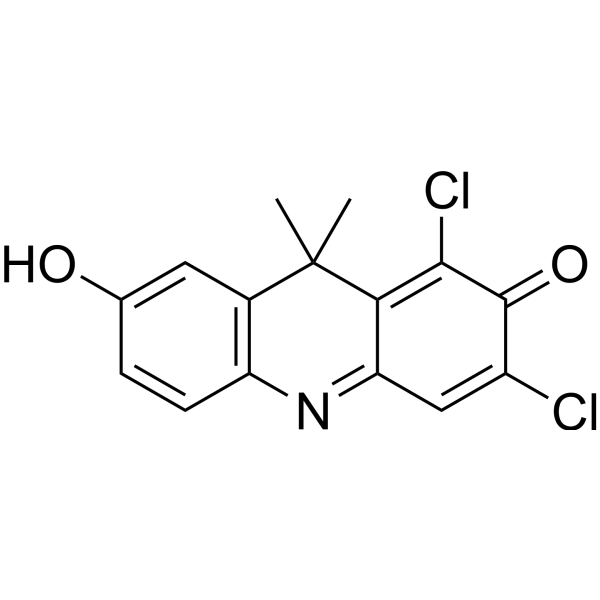
DDAORed Fluorescent Probe -
HY-N3921
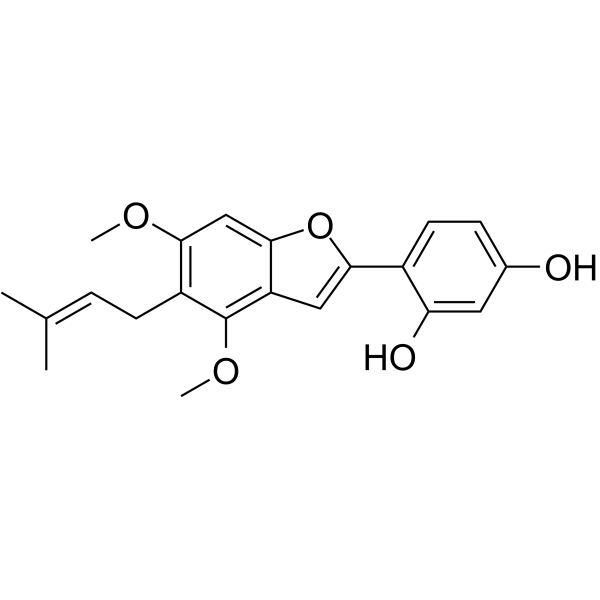
Gancaonin IhCES2A Inhibitor -
HY-100235
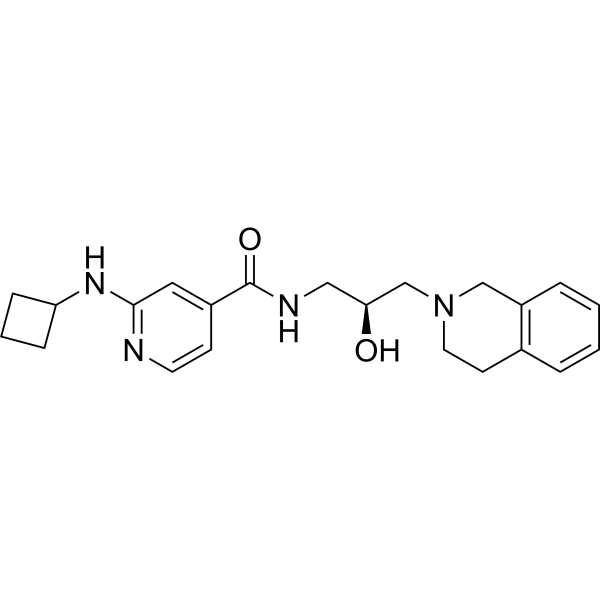
GSK591PRMT5 Inhibitor -
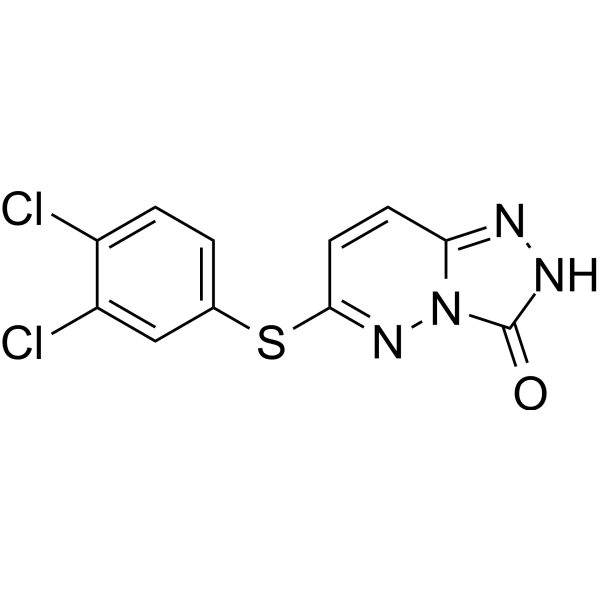
HY-142689
Carboxylesterase-IN-3Carboxylesterase Notum Inhibitor -
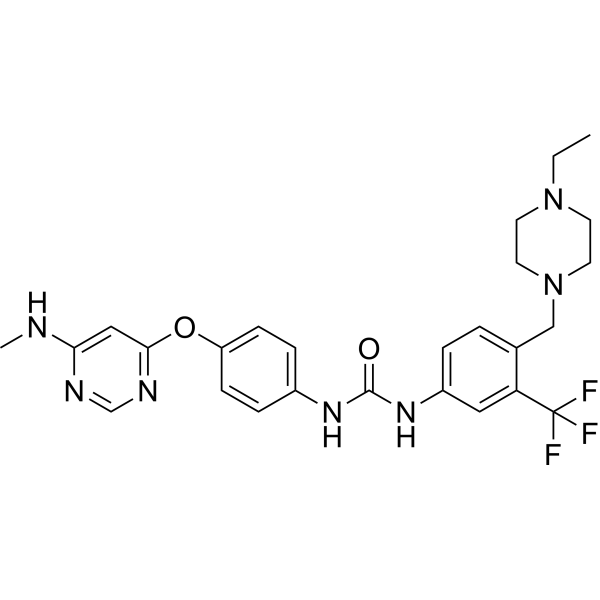
HY-15002
AST 487c-Kit Inhibitor -
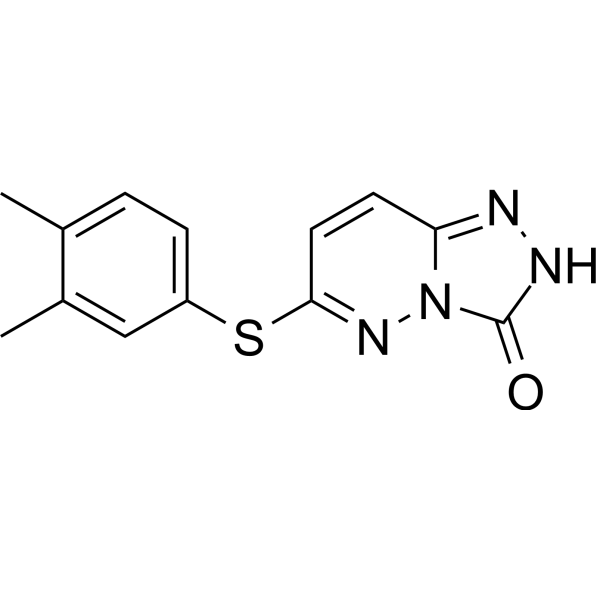
HY-142688
Carboxylesterase-IN-2Carboxylesterase Notum Inhibitor -

HY-N0235R
Bakuchiol (Standard)Phytoestrogen -
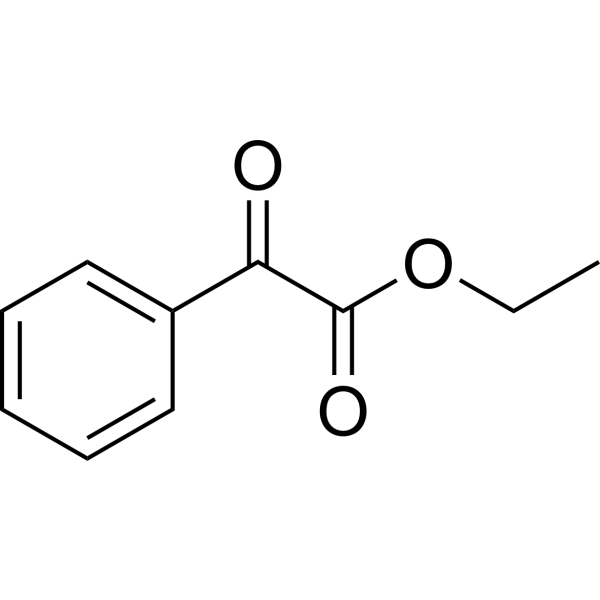
HY-W016618
Ethyl phenylglyoxylateSynthetic Reagent


Biological Activity
Description
|
CES3 1.94 μM (IC50) |
IL-6 |
In Vitro
WWL229 (1 μM; 15 min) inhibits ~70% of CES1 activity in intact THP-1 monocytes[1].
WWL229 attenuates LPS-induced IL-6 and TNFα mRNA levels in THP-1 macrophages, both with and without exogenous 2-AG[1].
WWL229 (10-100 μM; 1 h) dose-dependently attenuates Isoproterenol (ISO) (HY-B0468)-induced lipolysis in differentiated 3T3-L1 and BAC adipocytes[2].
WWL229 (10 μM; 1 h) attenuates ISO-induced upregulation of β-oxidation genes in BAC cells, and reduces basal, proton leak, and maximal mitochondrial respiration in both 3T3-L1 and BAC adipocytes[2].
WWL229 (10 μM) downregulates thermogenic gene and protein expression in ISO-treated BAC cells, and inhibits PPAR transcriptional activity in both basal and ISO-stimulated conditions[2].
WWL229 (0.1-100 μM; 30 min) potently and selectively inhibits Ces1d activity in WT C57BL/6 wild-type mouse lung membranes[3].
WWL229 (30 μM; 1 h) has no effect on TxB2 or PGE2 levels or related gene expression in PMA-differentiated human THP-1 macrophages treated with LPS[4].
WWL229 (10 μM; 45 min) selectively inhibits Ces3 activity in adipocyte proteomes, with no inhibitory effect on Ces1f, ABHD6, or other serine hydrolases detected by ABPP-MudPIT[5].
WWL229 (5 mM; 30 min) significantly reduces ER-EM activity in Wistar rat liver ER fraction, demonstrating that the Ces1d lipolysis site is crucial for ER-EM recognition of hydrophobic aglycone substrates[6].
MedChemExpress (MCE) has not independently confirmed the accuracy of these methods. They are for reference only.
-
Cell Line:Differentiated 3T3-L1 and BAC adipocytes
-
Concentration:10; 100 μM
-
Incubation Time:1 h
-
Result:Had the blocking effect at all dosages, whereas a higher dose (100 μM) showed a more significant effect.
Showed a dose-dependent manner in response to ISO treatment.
-
Cell Line:WT C57BL/6 wild-type mouse lung membranes
-
Concentration:0.1; 0.3; 1; 3; 10; 30; 100 μM
-
Incubation Time:30 min
-
Result:Inhibited Ces1d activity in a does-dependent manner.
Exhibited an IC50 of 2.35 μM.
In Vivo
MedChemExpress (MCE) has not independently confirmed the accuracy of these methods. They are for reference only.
-
Animal Model:C57BL/6 wild-type mice (adult female and male) with acute lung inflammation model via intraperitoneal LPS challenge[3]
-
Dosage:30 mg/kg
-
Administration:i.p.; single dose
-
Result:Augmented LPS-induced serum monocyte chemoattractant protein-1 (MCP-1) levels in female mice but not male mice at 6 hours post-LPS challenge.
Enhanced LPS-induced myeloperoxidase (MPO) activity and increased Il1b mRNA levels in female mouse lungs; these effects were not observed in male mouse lungs at 6 hours post-LPS challenge.
Did not alter LPS-induced Il6 or Tnfa mRNA levels in either female or male mouse lungs, nor significantly change other serum cytokine/chemokine levels induced by LPS.
Inhibited lung carboxylesterase (Ces) activity in female mice (but not male mice) at 4 hours post-dosing; inhibited lung Ces activity in both female and male mice to a similar degree by 6 hours post-dosing.
Selectively inhibited lung Ces1d activity in vivo by ~75% at 4 hours, with no inhibition of Ces1c or monoacylglycerol lipase (Magl).


Chemical Information
-
CAS No. 1338575-28-2
-
Appearance Liquid (Density: 1.196±0.06 g/cm3)
-
Molecular Weight 322.36
-
Formula C16H22N2O5
-
Color Colorless to light yellow
-
SMILES
O=C(N1CCCCC1CCCOC)OC2=CC=C(C=C2)[N+]([O-])=O
-
Shipping
Room temperature in continental US; may vary elsewhere.
-
Storage
Pure form -20°C 3 years 4°C 2 years In solvent -80°C 6 months -20°C 1 month


Solvent & Solubility
In Vitro:
DMSO : ≥ 100 mg/mL (310.21 mM; Hygroscopic DMSO has a significant impact on the solubility of product, please use newly opened DMSO)
* "≥" means soluble, but saturation unknown.
Please refer to the solubility information to select the appropriate solvent. Once prepared, please aliquot and store the solution to prevent product inactivation from repeated freeze-thaw cycles.
Storage method and period of stock solution: -80°C, 6 months; -20°C, 1 month. When stored at -80°C, please use it within 6 months. When stored at -20°C, please use it within 1 month.
Please refer to the solubility information to select the appropriate solvent. Once prepared, please aliquot and store the solution to prevent product inactivation from repeated freeze-thaw cycles.
Storage method and period of stock solution: -80°C, 6 months; -20°C, 1 month. When stored at -80°C, please use it within 6 months. When stored at -20°C, please use it within 1 month.
Concentration (start) × Volume (start) = Concentration (final) × Volume (final)
In Vivo:
Select the appropriate dissolution method based on your experimental animal and administration route.
- For the following dissolution methods, please ensure to first prepare a clear stock solution using an In Vitro approach and then sequentially add co-solvents:
- To ensure reliable experimental results, the clarified stock solution can be appropriately stored based on storage conditions. As for the working solution for In Vivo experiments, it is recommended to prepare freshly and use it on the same day.
- The percentages shown for the solvents indicate their volumetric ratio in the final prepared solution. If precipitation or phase separation occurs during preparation, heat and/or sonication can be used to aid dissolution.
Add each solvent one by one: 10% DMSO 90% (20% SBE-β-CD in Saline)
Solubility: ≥ 2.08 mg/mL (6.45 mM); Clear solution
This protocol yields a clear solution of ≥ 2.08 mg/mL (saturation unknown).
Taking 1 mL working solution as an example, add 100 μL DMSO stock solution (20.8 mg/mL) to 900 μL 20% SBE-β-CD in Saline, and mix evenly.
Preparation of 20% SBE-β-CD in Saline (4°C, storage for one week): 2 g SBE-β-CD powder is dissolved in 10 mL Saline, completely dissolve until clear.
In Vivo Dissolution Calculator
Please enter the basic information of animal experiments:
-
-
-
-
Recommended: Prepare an additional quantity of animals to account for potential losses during experiments.
Please enter your animal formula composition:
-
%DMSO +
Recommended: Keep the proportion of DMSO in working solution below 2% if your animal is weak.
-
%+
-
+%Tween-80 + +
-
%Saline +
The co-solvents required include: DMSO, . All of co-solvents are available by MedChemExpress (MCE). , Tween 80. All of co-solvents are available by MedChemExpress (MCE).
Working solution concentration: 0.22 mg/mL
Method for preparing stock solution: mg drug dissolved in μL DMSO. Stock solution concentration: mg/mL.
1. Take μL DMSO stock solution;
2. Add μL .
μL , mix evenly;
3. Then add μL Tween 80, mix evenly;
4. Then add μL
Please ensure that the stock solution in the first step is dissolved to a clear state, and add co-solvents in sequence. You can use ultrasonic heating (ultrasonic cleaner, recommended frequency 20-40 kHz), vortexing, etc. to assist dissolution.


Purity & Documentation
-
Data Sheet (282 KB)
-
SDS (394 KB)
- English - EN (394 KB)
- Français - FR (394 KB)
- Deutsch - DE (394 KB)
- Norwegian - NO (394 KB)
- Español - ES (394 KB)
- Swedish - SV (394 KB)
- Italian - IT (394 KB)
- Korean - KR (394 KB)
- Portuguese - PT (394 KB)
-
Handling Instructions (2659 KB)
References
[1]. Scheaffer HL, et al. Inactivation of CES1 Blocks Prostaglandin D2 Glyceryl Ester Catabolism in Monocytes/Macrophages and Enhances Its Anti-inflammatory Effects, Whereas the Pro-inflammatory Effects of Prostaglandin E2 Glyceryl Ester Are Attenuated. ACS Omega. 2020;5(45):29177-29188. Published 2020 Nov 3. [Content Brief]
[2]. Yang L, et al. A Unique Role of Carboxylesterase 3 (Ces3) in β-Adrenergic Signaling-Stimulated Thermogenesis. Diabetes. 2019;68(6):1178-1196. [Content Brief]
[3]. Szafran BN, et al. Carboxylesterase 1d Inactivation Augments Lung Inflammation in Mice. ACS Pharmacol Transl Sci. 2022 Sep 12;5(10):919-931. [Content Brief]
[4]. Borazjani A, et al. Thromboxane A2 synthase is an off target of the CES1 small-molecule inhibitor WWL113. Prostaglandins Other Lipid Mediat. Published online April 3, 2026. [Content Brief]
[5]. Dominguez E, et al. Integrated phenotypic and activity-based profiling links Ces3 to obesity and diabetes. Nat Chem Biol. 2014;10(2):113-121. [Content Brief]
[6]. Taira A, et al. Carboxylesterase 1d-mediated aglycone recognition is crucial for substrate processing and allosteric activation of endo-α-mannosidase in the endoplasmic reticulum. Bioorg Med Chem. 2026;134:118547. [Content Brief]


Complete Stock Solution Preparation Table
Please refer to the solubility information to select the appropriate solvent. Once prepared, please aliquot and store the solution to prevent product inactivation from repeated freeze-thaw cycles.
Storage method and period of stock solution: -80°C, 6 months; -20°C, 1 month. When stored at -80°C, please use it within 6 months. When stored at -20°C, please use it within 1 month.
| Optional Solvent | Concentration Solvent Mass | 1 mg | 5 mg | 10 mg | 25 mg |
|---|---|---|---|---|---|
| DMSO | 1 mM | 3.1021 mL | 15.5106 mL | 31.0212 mL | 77.5530 mL |
| 5 mM | 0.6204 mL | 3.1021 mL | 6.2042 mL | 15.5106 mL | |
| 10 mM | 0.3102 mL | 1.5511 mL | 3.1021 mL | 7.7553 mL | |
| 15 mM | 0.2068 mL | 1.0340 mL | 2.0681 mL | 5.1702 mL | |
| 20 mM | 0.1551 mL | 0.7755 mL | 1.5511 mL | 3.8777 mL | |
| 25 mM | 0.1241 mL | 0.6204 mL | 1.2408 mL | 3.1021 mL | |
| 30 mM | 0.1034 mL | 0.5170 mL | 1.0340 mL | 2.5851 mL | |
| 40 mM | 0.0776 mL | 0.3878 mL | 0.7755 mL | 1.9388 mL | |
| 50 mM | 0.0620 mL | 0.3102 mL | 0.6204 mL | 1.5511 mL | |
| 60 mM | 0.0517 mL | 0.2585 mL | 0.5170 mL | 1.2926 mL | |
| 80 mM | 0.0388 mL | 0.1939 mL | 0.3878 mL | 0.9694 mL | |
| 100 mM | 0.0310 mL | 0.1551 mL | 0.3102 mL | 0.7755 mL |


WWL229 Related Classifications
HY-120602 Related Classifications
 Powered by Bioz