



CES1
CES1 (carboxylesterase 1) is a major serine hydrolase highly expressed in the liver and functions in the hydrolysis of ester-, amide-, and lipid-containing substrates, thereby contributing to both xenobiotic metabolism and endogenous lipid turnover[1][1]. Mechanistically, CES1 hydrolyzes triacylglycerols and cholesteryl esters and participates in pathways controlling hepatic lipid homeostasis, fatty acid utilization, and lipid droplet dynamics[2][3]. Therefore, CES1 has become an important target for studies investigating the interface between drug metabolism and metabolic regulation[1][2]. In disease-related models, genetic deletion or functional disruption of Ces1/CES1 alters lipid metabolism, promotes adipose lipid accumulation, impairs glucose tolerance, and contributes to hepatic metabolic abnormalities, supporting its relevance to metabolic syndrome research[2][3]. In hepatocellular carcinoma models, inhibition or genetic ablation of CES1 reprograms lipid signaling, reduces polyunsaturated fatty acid-associated pathways, and alters mitochondrial function, linking CES1 activity to tumor progression and therapeutic response[4]. Compared with the related isoform CES2, CES1 is the predominant hepatic carboxylesterase and displays distinct substrate preferences and tissue distribution patterns, making isoform selectivity an important consideration in mechanistic studies and drug development[1][1]. For experimental applications, selective CES1 inhibitors such as WWL229 have been used to investigate CES1-dependent lipid metabolism and disease-associated signaling pathways[4].
References:
- [1]. Ross MK, et al. Carboxylesterases: Dual roles in lipid and pesticide metabolism. J Pestic Sci. 2010;35(3):257-264.
- [2]. Lian J, et al. Carboxylesterases in lipid metabolism: from mouse to human. Protein Cell. 2018 Feb;9(2):178-195. [Content Brief]
- [3]. Nagaoka M, et al. Role of carboxylesterase and arylacetamide deacetylase in drug metabolism, physiology, and pathology. Biochem Pharmacol. 2024 May;223:116128. [Content Brief]
- [4]. Li G, et al. Interfering with lipid metabolism through targeting CES1 sensitizes hepatocellular carcinoma for chemotherapy. JCI Insight. 2023 Jan 24;8(2):e163624. [Content Brief]
All Product Categories
-
CES1 Related Products (5)
Related Products (5)

-
WWL113
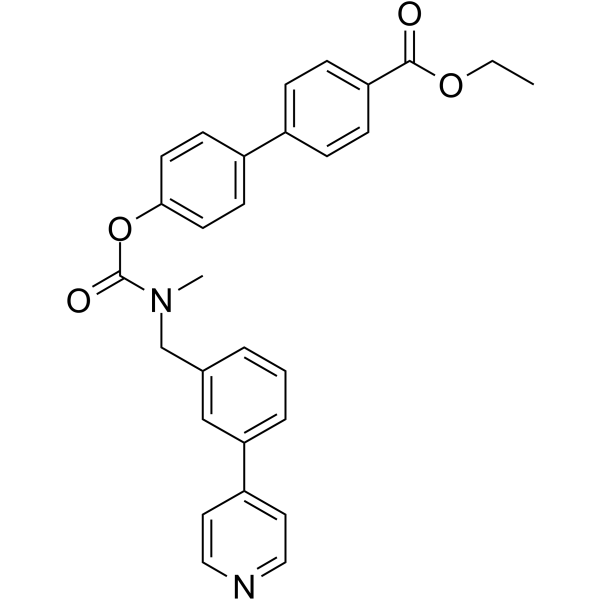 0 ImagesWWL113 is a selective and orally active Ces3 and Ces1f inhibitor, with IC50 values of 120 nM and 100 nM for Ces3 and Ces1f, respectively. WWL113 appears to show excellent selectivity for the 60-kDa serine hydrolase (or hydrolases).
-
Dihydromethysticin
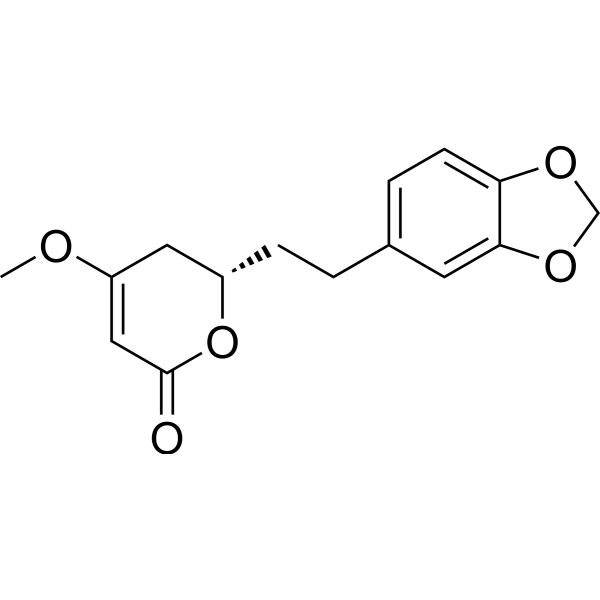 0 ImagesSynonyms: (+)-DihydromethysticinDihydromethysticin is an orally active natural active ingredient. Dihydromethysticin can be extracted from Piper methysticum. Dihydromethysticin inhibits carboxylesterase 1 (Ki = 68.2 μM) and CYP2A5. Dihydromethysticin upregulates NLRC3 and induces Apoptosis. Dihydromethysticin exhibits anticancer activity against colorectal cancer and lung adenoma.
-
CES2A-IN-2
 0 ImagesCat. No.: HY-173267Purity: 99.16%CES2A-IN-2 (compound 14n) is an orally active, highly specific, irreversible and covalent CES2A inhibitor with an IC50 of 0.04 nM for human CES2A. CES2A-IN-2 covalently binds to CES2A by specifically targeting the catalytic serine residue (Ser-228). CES2A-IN-2 can significantly ameliorate Irinotecan-triggered gut toxicity (ITGT) without diminishing the anti-tumor effects of Irinotecan (HY-16562) in tumor-bearing mice.
-
CycLuc1 methyl ester
 0 ImagesCat. No.: HY-D3461CAS No.: 2770784-56-8CycLuc1 methyl ester (Example 1) is a selective CES1 substrate and indirect bioluminescent inducer. CycLuc1 methyl ester undergoes catalytic hydrolysis via CES1-mediated ester bond cleavage to form a carboxyl product. The carboxyl product of CycLuc1 methyl ester undergoes an oxidation reaction with luciferase to generate a detectable bioluminescent signal. CycLuc1 methyl ester enables quantitative detection of CES1 activity.
-
Dihydromethysticin (Standard)
 0 ImagesCat. No.: HY-N0921RCAS No.: 19902-91-1Synonyms: (+)-Dihydromethysticin (Standard)Dihydromethysticin (Standard) is the analytical standard of Dihydromethysticin (HY-N0921). This product is intended for research and analytical applications. Dihydromethysticin is an orally active natural active ingredient. Dihydromethysticin can be extracted from Piper methysticum. Dihydromethysticin inhibits carboxylesterase 1 (Ki = 68.2 μM) and CYP2A5. Dihydromethysticin upregulates NLRC3 and induces Apoptosis. Dihydromethysticin exhibits anticancer activity against colorectal cancer and lung adenoma.



