



CES2
Carboxylesterase CES2 is a serine hydrolase expressed mainly in liver and intestine, most abundantly in intestine, where it hydrolyzes carboxylester, thioester, and amide bonds in exogenous and endogenous compounds, including lipids[1]. Mechanistically, CES2/Ces2 proteins act as efficient diglyceride and monoglyceride hydrolases, linking CES2 activity to liver and gut lipid signaling[2]. In metabolic disease models, hepatic CES2 prevents liver steatosis by modulating lipolysis, endoplasmic reticulum stress, and lipogenesis, and HNF-4α controls hepatic CES2 expression in diabetes, obesity, or NASH[3]. Compared with CES1, CES2 shows distinct substrate preference: CES1 favors substrates with a small alcohol group and large acyl group, whereas CES2 favors compounds with a relatively small acyl group and large alcohol group[4]. This isoform distinction is critical for prodrug research because hCE-2 shows higher affinity and velocity for CPT-11 hydrolysis than hCE-1, supporting CES2 as a major irinotecan-activating enzyme[5]. In tumor research, CES2 expression correlates with irinotecan activation, and recombinant or cellular CES2 models support evaluation of irinotecan, LY2334737, and CES2 inhibitors[6][7][8].
References:
- [1]. Wang YG, et al. Intestinal human carboxylesterase 2 (CES2) expression rescues drug metabolism and most metabolic syndrome phenotypes in global Ces2 cluster knockout mice. Acta Pharmacol Sin. 2025 Mar;46(3):777-793. [Content Brief]
- [2]. Chalhoub G, et al. Carboxylesterase 2 proteins are efficient diglyceride and monoglyceride lipases possibly implicated in metabolic disease. J Lipid Res. 2021;62:100075. [Content Brief]
- [3]. Li Y, et al. Carboxylesterase 2 prevents liver steatosis by modulating lipolysis, endoplasmic reticulum stress, and lipogenesis and is regulated by hepatocyte nuclear factor 4 alpha in mice. Hepatology. 2016 Jun;63(6):1860-74. [Content Brief]
- [4]. Hosokawa M. Structure and catalytic properties of carboxylesterase isozymes involved in metabolic activation of prodrugs. Molecules. 2008 Feb 18;13(2):412-31. doi: 10.3390/molecules13020412. PMID: 18305428; PMCID: PMC6245361. et al. Structure and catalytic properties of carboxylesterase isozymes involved in metabolic activation of prodrugs. Molecules. 2008 Feb 18;13(2):412-31. [Content Brief]
- [5]. Humerickhouse R, et al. Characterization of CPT-11 hydrolysis by human liver carboxylesterase isoforms hCE-1 and hCE-2. Cancer Res. 2000;60(5):1189-92. [Content Brief]
- [6]. Xu G, et al. Human carboxylesterase 2 is commonly expressed in tumor tissue and is correlated with activation of irinotecan. Clin Cancer Res. 2002;8(8):2605-11. [Content Brief]
- [7]. Pratt SE, et al. Human carboxylesterase-2 hydrolyzes the prodrug of gemcitabine (LY2334737) and confers prodrug sensitivity to cancer cells. Clin Cancer Res. 2013 Mar 1;19(5):1159-68. [Content Brief]
- [8]. Kailass K, et al. Tight-Binding Small-Molecule Carboxylesterase 2 Inhibitors Reduce Intracellular Irinotecan Activation. J Med Chem. 2024 Feb 8;67(3):2019-2030. [Content Brief]
All Product Categories
-
CES2 Related Products (6)
Related Products (6)

-
Miltirone
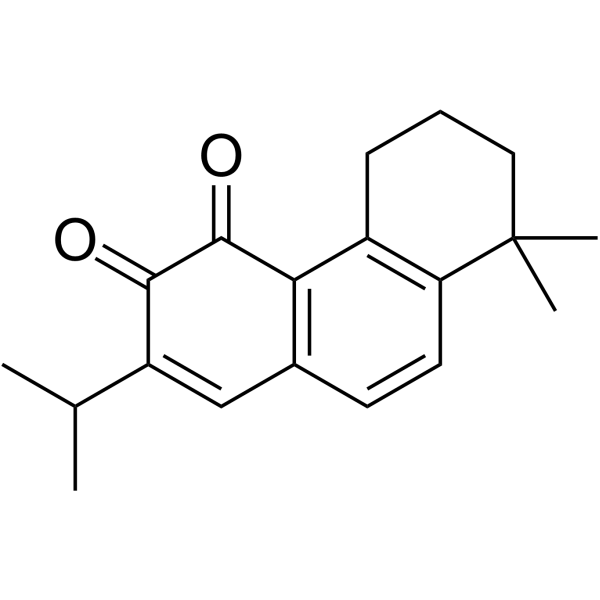 0 ImagesSynonyms: RosmariquinoneMiltirone is an orally active natural compound found in the root of Salvia miltiorrhiza. Miltirone is a central benzodiazepine receptor partial agonist, with an IC50 of 0.3 μM. Miltirone induces ROS - and-p53 dependent apoptosis. Miltirone inhibits carboxylesterase 2 (CES2; Ki = 0.04 μM) and SARS-CoV main protease (Mpro).
-
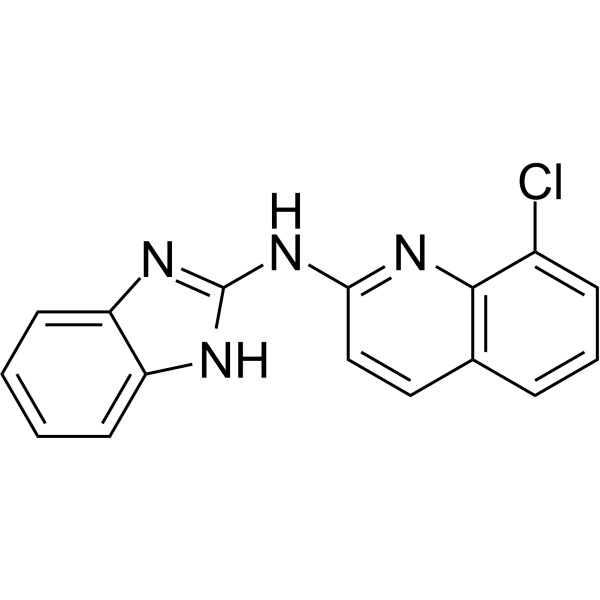
CES2A-IN-2
 0 ImagesCat. No.: HY-173267Purity: 99.16%CES2A-IN-2 (compound 14n) is an orally active, highly specific, irreversible and covalent CES2A inhibitor with an IC50 of 0.04 nM for human CES2A. CES2A-IN-2 covalently binds to CES2A by specifically targeting the catalytic serine residue (Ser-228). CES2A-IN-2 can significantly ameliorate Irinotecan-triggered gut toxicity (ITGT) without diminishing the anti-tumor effects of Irinotecan (HY-16562) in tumor-bearing mice.
-
Alisol G
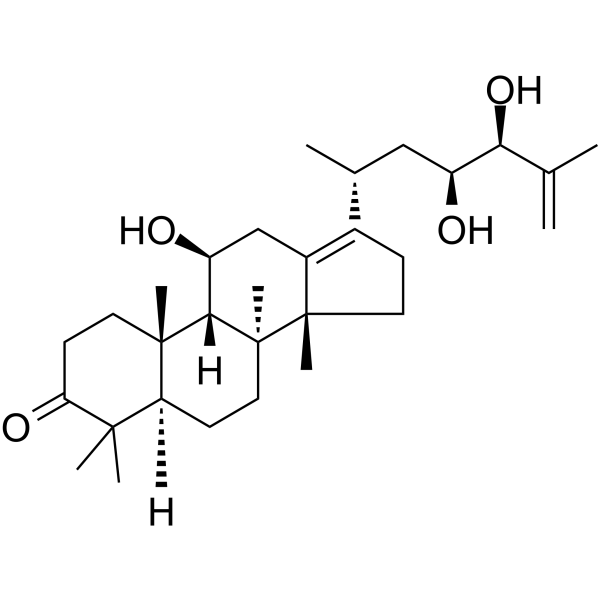 0 ImagesSynonyms: Alisol-G; 25-Anhydroalisol AAlisol G (25-Anhydroalisol A) is a human carboxylesterase 2 (hCES2) inhibitor with an IC50 of 3.85 μM. Alisol G exhibits cytotoxic activity against human cancer cells, antibacterial activity against Gram-positive strains, and anti-hepatitis B virus activity. Alisol G can be used in research related to lung cancer, breast cancer, prostate cancer, bacterial infections, and HBV infections.
-
CES2A-IN-3
 0 ImagesCat. No.: HY-176465CAS No.: 3037959-47-7CES2A-IN-3 (Compound 9d) is a potent serine-targeting covalent human carboxylesterase 2A (hCES2A) inhibitor with an IC50 value of 0.12 nM. CES2A-IN-3 is promising for research of diarrhea and ulcerative colitis.
-
Carboxylesterase 2-IN-1
 0 ImagesCat. No.: HY-184061CAS No.: 2590661-64-4Carboxylesterase 2-IN-1 is a potent carboxylesterase CES2 inhibitor with an IC50 of 0.13 μM. Carboxylesterase 2-IN-1 blocks the hydrolysis of fluorescein diacetate by CES2 via non-competitive inhibition. Carboxylesterase 2-IN-1 also effectively inhibits adipogenesis induced in mouse preadipocytes.



