1. Cell Cycle/DNA Damage Epigenetics Apoptosis
  2. Aurora Kinase Apoptosis
  3. Barasertib-HQPA

Barasertib-HQPA  (Synonyms: AZD2811; INH-34; AZD1152-HQPA)

Art. -Nr.: HY-10126 Reinheit: 98.90%
Handling Instructions Technical Support

Barasertib-HQPA (AZD2811) is a highly selective Aurora B inhibitor with an IC50 of 0.37 nM in a cell-free assay. Barasertib-HQPA (AZD2811) induces growth arrest and apoptosis in cancer cells.

Nur für Forschungszwecke. Wir verkaufen nicht an Patienten.

CAS. Nr. : 722544-51-6

Größe Preis Verfügbarkeit Menge
Kostenlose Probe (0.1 - 0.2 mg)   Jetzt bewerben  
Solid + Solvent (Highly Recommended)
10 mM * 1 mL in DMSO
ready for reconstitution
Auf Lager
Solution
10 mM * 1 mL in DMSO Auf Lager
Solid
5 mg Auf Lager
10 mg Auf Lager
25 mg Auf Lager
50 mg Auf Lager
100 mg Auf Lager
200 mg   Angebot einholen  
500 mg   Angebot einholen  

* Bitte wählen Sie Menge, bevor Sie Artikel hinzufügen.

This product is a controlled substance and not for sale in your territory.

Kundenbewertung

Based on 9 publication(s) in Google Scholar

Other Forms of Barasertib-HQPA:

Top Publications Citing Use of Products

    Barasertib-HQPA purchased from MedChemExpress. Usage Cited in: J Cell Sci. 2025 Sep 1:jcs.263766.  [Abstract]

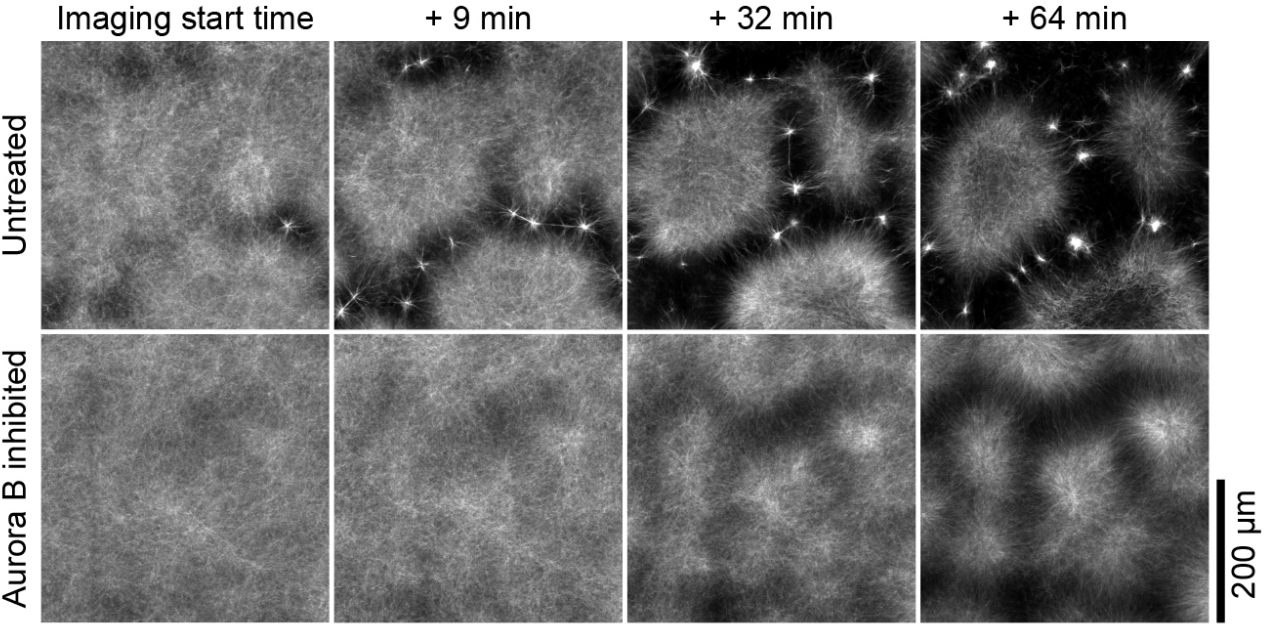
    Confocal images of microtubule dynamics in control extracts (top row) and extracts with 40 µM Aurora kinase B inhibitor Barasertib-HQPA (bottom row). n=6. Each image is a maximum-intensity projection of nine confocal planes spanning 16 µm of depth. Imaging started at an arbitrary time point when asters had just begun to form in the untreated extracts. The results showed that Aurora kinase B inhibition by Barasertib-HQPA abolishes the aster, and the cell-like compartments form with a substantial delay.

    Barasertib-HQPA purchased from MedChemExpress. Usage Cited in: Int J Mol Sci. 2022 Jan 11;23(2):763.

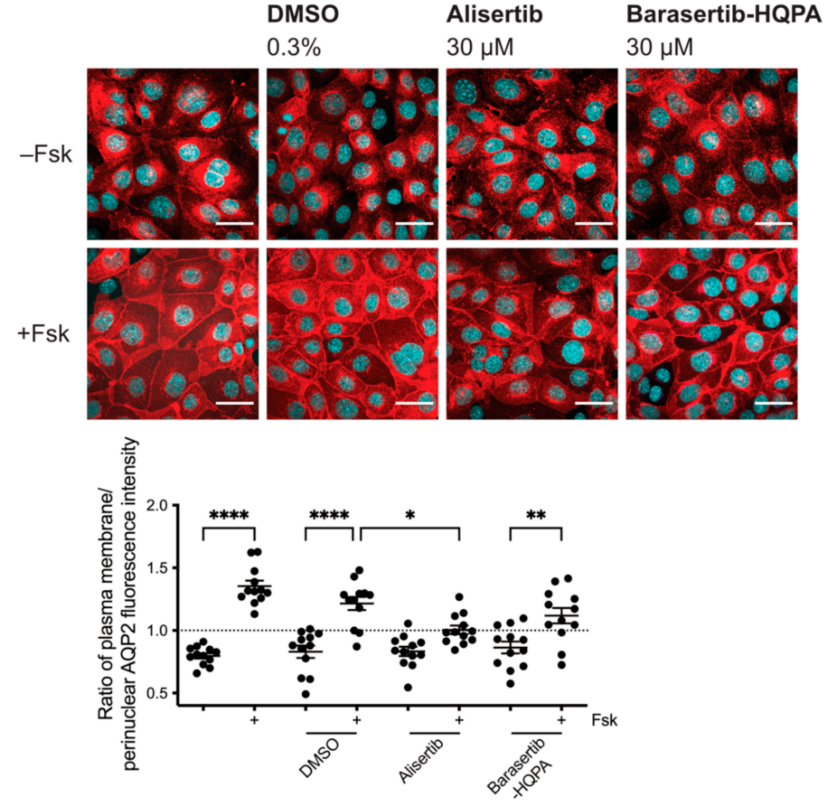
    MCD4 were left untreated or treated with DMSO (0.3% or 0.2%, 1 h), Alisertib (AURKA inhibitor; 30 µM or 20 µM, 1 h), or Barasertib-HQPA (AURKB inhibitor; 30 µM or 20 µM, 1 h) alone or in combination with forskolin (Fsk; 30 µM, 30 min) or arginine-vasopressin (AVP; 100 nM, 30 min) where indicated. AQP2 was detected by immunofluorescence microscopy. Shown are representative images of four independent experiments; scale bar 30 µm. AQP2 was quantified using a segmentation-based approach. Ratios > 1 indicate a predominant localization at the plasma membrane.

    Barasertib-HQPA purchased from MedChemExpress. Usage Cited in: Exp Cell Res. 2021 Sep 1;406(1):112741.  [Abstract]

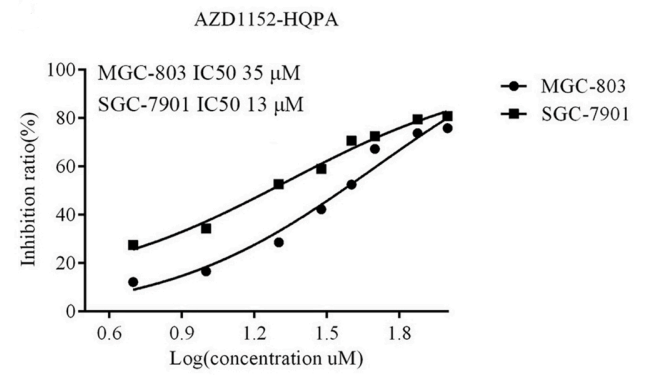
    The IC50 of AURKB inhibitors (AZD1152-HQPA (Barasertib-HQPA, 48 h) and hesperadin) was explored by CCK-8 in gastric cancer cells (MGC-803 and SGC-7901).

    Barasertib-HQPA purchased from MedChemExpress. Usage Cited in: Ann Transl Med. 2020 May;8(10):646.  [Abstract]

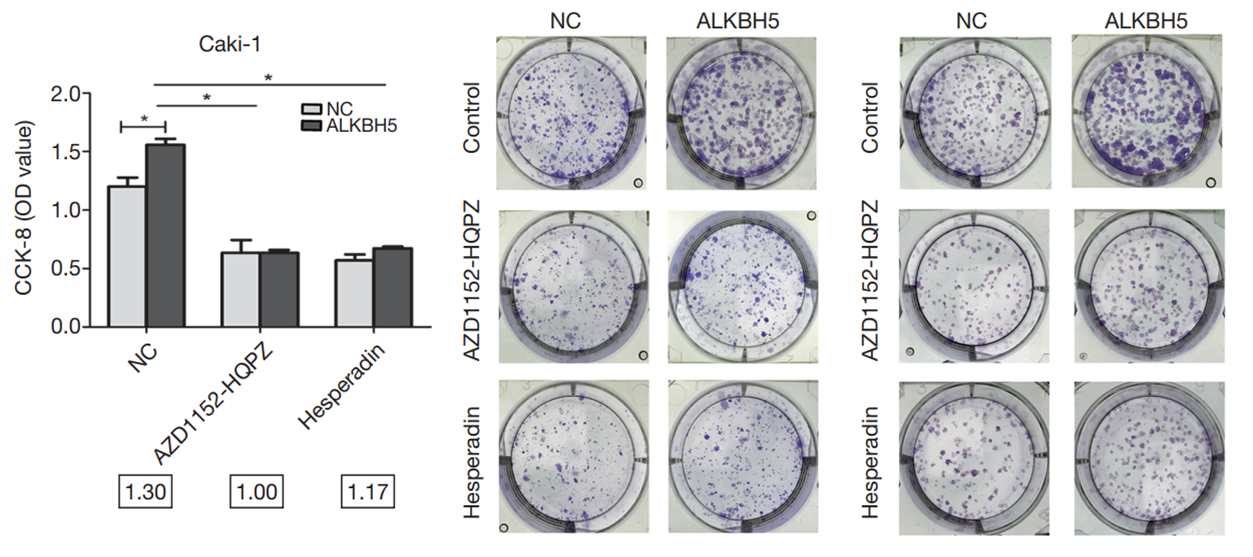
    The effect of AURKB inhibitor (AZD1152 (Barasertib)-HQPZ (10 μM; 48 h) and hesperidin) on Caki-1 and 786-0 cells with ALKBH5 overexpression was measured by CCK8 and clone formation assays. The colony fold (NC/ALKBH5) is stated under the histogram.

    Alle Aurora Kinase Isoform-spezifische Produkte anzeigen:

    • Biologische Aktivität

    • Reinheit & Dokumentation

    • Verweise

    • Kundenbewertung

    Beschreibung

    Barasertib-HQPA (AZD2811) is a highly selective Aurora B inhibitor with an IC50 of 0.37 nM in a cell-free assay. Barasertib-HQPA (AZD2811) induces growth arrest and apoptosis in cancer cells[1].

    IC50 & Target[1]

    Aurora B

    0.37 nM (IC50)

    Cellular Effect
    Cell Line Type Value Description References
    A549 IC50
    0.1 μM
    Compound: AAZD1152-HQPA
    Cytotoxicity against human A549 cells by SRB assay
    Cytotoxicity against human A549 cells by SRB assay
    [PMID: 25036791]
    A549 IC50
    5.4 μM
    Compound: AAZD1152-HQPA
    Antimigratory activity against human A549 cells assessed as inhibition of cell migration after 8 to 24 hrs by transwell migration assay
    Antimigratory activity against human A549 cells assessed as inhibition of cell migration after 8 to 24 hrs by transwell migration assay
    [PMID: 25036791]
    A549 IC50
    8.3 μM
    Compound: AAZD1152-HQPA
    Antimigratory activity against human A549 cells assessed as inhibition of cell migration after 8 to 24 hrs by scratch wound model assay
    Antimigratory activity against human A549 cells assessed as inhibition of cell migration after 8 to 24 hrs by scratch wound model assay
    [PMID: 25036791]
    HL-60 IC50
    12.7 nM
    Compound: AZD1152
    Cytotoxicity against human HL60 cells assessed as cell viability after 48 hrs by MTT assay
    Cytotoxicity against human HL60 cells assessed as cell viability after 48 hrs by MTT assay
    [PMID: 25089810]
    HepG2 IC50
    0.1 μM
    Compound: AAZD1152-HQPA
    Cytotoxicity against human HepG2 cells by SRB assay
    Cytotoxicity against human HepG2 cells by SRB assay
    [PMID: 25036791]
    MOLM-13 IC50
    1 nM
    Compound: AZD1152-HQPA
    Inhibition of clonogenic growth in human MOLM-13 cells incubated for 10 days
    Inhibition of clonogenic growth in human MOLM-13 cells incubated for 10 days
    [PMID: 17495131]
    MOLM-13 IC50
    12 nM
    Compound: AZD1152-HQPA
    Inhibition of cell proliferation of human MOLM-13 cells incubated for 48 hrs by 3H-thymidine uptake assay
    Inhibition of cell proliferation of human MOLM-13 cells incubated for 48 hrs by 3H-thymidine uptake assay
    [PMID: 17495131]
    MOLM-13 IC50
    9.7 nM
    Compound: AZD1152
    Cytotoxicity against human MOLM13 cells assessed as cell viability after 48 hrs by MTT assay
    Cytotoxicity against human MOLM13 cells assessed as cell viability after 48 hrs by MTT assay
    [PMID: 25089810]
    MV4-11 IC50
    2.8 nM
    Compound: AZD1152-HQPA
    Inhibition of clonogenic growth in human MV4-11 cells incubated for 10 days
    Inhibition of clonogenic growth in human MV4-11 cells incubated for 10 days
    [PMID: 17495131]
    MV4-11 IC50
    8 nM
    Compound: AZD1152-HQPA
    Inhibition of cell proliferation of human MV4-11 cells incubated for 48 hrs by 3H-thymidine uptake assay
    Inhibition of cell proliferation of human MV4-11 cells incubated for 48 hrs by 3H-thymidine uptake assay
    [PMID: 17495131]
    MV4-11 IC50
    8.6 nM
    Compound: AZD1152
    Cytotoxicity against human MV4-11 cells assessed as cell viability after 48 hrs by MTT assay
    Cytotoxicity against human MV4-11 cells assessed as cell viability after 48 hrs by MTT assay
    [PMID: 25089810]
    SW-620 IC50
    0.017 μM
    Compound: 7, AZD-1152 HQPA
    Inhibition of aurora B in human SW620 cells assessed as inhibition of histone H3 phosphorylation
    Inhibition of aurora B in human SW620 cells assessed as inhibition of histone H3 phosphorylation
    [PMID: 19320489]
    THP-1 IC50
    25.1 nM
    Compound: AZD1152
    Cytotoxicity against human THP1 cells assessed as cell viability after 48 hrs by MTT assay
    Cytotoxicity against human THP1 cells assessed as cell viability after 48 hrs by MTT assay
    [PMID: 25089810]
    In Vitro

    Barasertib-HQPA (3 μM, 3 hours) significantly decreases expression of the phosphorylated forms of histone H3 in freshly isolated leukemia cells[1].
    Barasertib-hydroxyquinazoline pyrazol anilide (HQPA) is converted rapidly to the active Barasertib-HQPA in plasma[2].
    Barasertib-HQPA treatment induced defective cell survival, polyploidy, and cell death in LNCaP cell line[3].
    Barasertib-HQPA induces a marked anti-propliferative effect accompanied by the appearance of a polyploid population, which in most cases led to apoptosis[4].

    MedChemExpress (MCE) has not independently confirmed the accuracy of these methods. They are for reference only.

    Cell Proliferation Assay[1].

    Cell Line: AML lines (HL-60, NB4, MOLM13), ALL line (PALL-2), biphenotypic leukemia (MV4-11), acute eosinophilic leukemia (EOL-1), and the blast crisis of chronic myeloid leukemia K562 cells.
    Concentration: 0-100 nM. (Barasertib -HQPA)
    Incubation Time: 48 h.
    Result: IC50 values ranged from 3 nM to 40 nM.
    In Vivo

    Barasertib-HQPA (AZD1152, 25 mg/kg) markedly suppresses the growth and weights of AZD1152-treated tumors[1].
    Barasertib-HQPA (AZD1152, 5 mg/kg) enhances the ability of vincristine or daunorubicin to inhibit the proliferation of human MOLM13 leukemic xenografts[1].
    Barasertib-HQPA (AZD1152, (10-150 mg/kg/d) potently inhibited the growth of human colon, lung, and hematologic tumor xenografts (mean tumor growth inhibition range, 55% to z100%; P < 0.05) in immunodeficient mice[2].

    MedChemExpress (MCE) has not independently confirmed the accuracy of these methods. They are for reference only.

    Klinische Studie
    Molekulargewicht

    507.56

    Formel

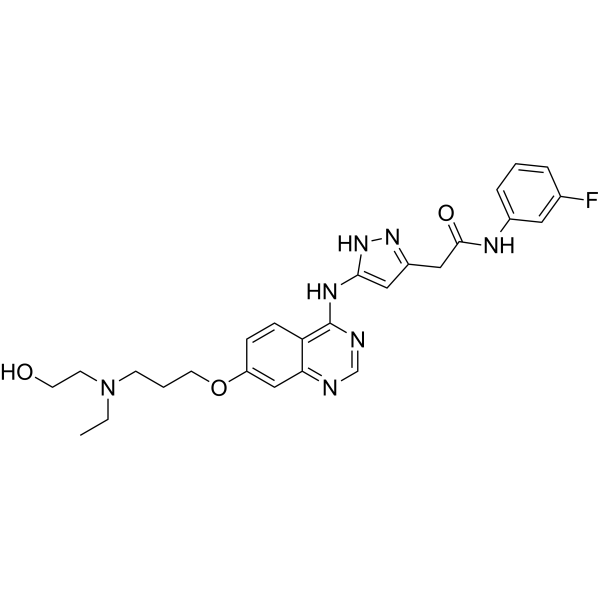
    C26H30FN7O3

    CAS. Nr.
    Appearance

    Solid

    Color

    White to yellow

    SMILES

    O=C(CC1=NNC(NC2=C3C=CC(OCCCN(CCO)CC)=CC3=NC=N2)=C1)NC4=CC=CC(F)=C4

    Versand

    Room temperature in continental US; may vary elsewhere.

    Speicherung
    Powder -20°C 3 years
    4°C 2 years
    In solvent -80°C 2 years
    -20°C 1 year
    Lösungsmittel & Löslichkeit
    In Vitro: 

    DMSO : ≥ 22 mg/mL (43.34 mM; Hygroscopic DMSO has a significant impact on the solubility of product, please use newly opened DMSO)

    *"≥" means soluble, but saturation unknown.

    Preparing
    Stock Solutions
    Concentration Solvent Mass 1 mg 5 mg 10 mg
    1 mM 1.9702 mL 9.8511 mL 19.7021 mL
    5 mM 0.3940 mL 1.9702 mL 3.9404 mL
    View the Complete Stock Solution Preparation Table

    * Please refer to the solubility information to select the appropriate solvent. Once prepared, please aliquot and store the solution to prevent product inactivation from repeated freeze-thaw cycles.
    Storage method and period of stock solution: -80°C, 2 years; -20°C, 1 year. When stored at -80°C, please use it within 2 years. When stored at -20°C, please use it within 1 year.

    • Molaritätsrechner

    • Verdünnungsrechner

    Mass (g) = Concentration (mol/L) × Volume (L) × Molecular Weight (g/mol)

    Mass
    =
    Concentration
    ×
    Volume
    ×
    Molecular Weight *

    Concentration (start) × Volume (start) = Concentration (final) × Volume (final)

    This equation is commonly abbreviated as: C1V1 = C2V2

    Concentration (start)

    C1

    ×
    Volume (start)

    V1

    =
    Concentration (final)

    C2

    ×
    Volume (final)

    V2

    In Vivo:

    Select the appropriate dissolution method based on your experimental animal and administration route.

    For the following dissolution methods, please ensure to first prepare a clear stock solution using an In Vitro approach and then sequentially add co-solvents:
    To ensure reliable experimental results, the clarified stock solution can be appropriately stored based on storage conditions. As for the working solution for in vivo experiments, it is recommended to prepare freshly and use it on the same day.
    The percentages shown for the solvents indicate their volumetric ratio in the final prepared solution. If precipitation or phase separation occurs during preparation, heat and/or sonication can be used to aid dissolution.

    • Protocol 1

      Add each solvent one by one:  10% DMSO    40% PEG300    5% Tween-80    45% Saline

      Solubility: ≥ 2.5 mg/mL (4.93 mM); Clear solution

      This protocol yields a clear solution of ≥ 2.5 mg/mL (saturation unknown).

      Taking 1 mL working solution as an example, add 100 μL DMSO stock solution (25.0 mg/mL) to 400 μL PEG300, and mix evenly; then add 50 μL Tween-80 and mix evenly; then add 450 μL Saline to adjust the volume to 1 mL.

      Preparation of Saline: Dissolve 0.9 g sodium chloride in ddH₂O and dilute to 100 mL to obtain a clear Saline solution.
    • Protocol 2

      Add each solvent one by one:  10% DMSO    90% Corn Oil

      Solubility: ≥ 2.5 mg/mL (4.93 mM); Clear solution

      This protocol yields a clear solution of ≥ 2.5 mg/mL (saturation unknown). If the continuous dosing period exceeds half a month, please choose this protocol carefully.

      Taking 1 mL working solution as an example, add 100 μL DMSO stock solution (25.0 mg/mL) to 900 μL Corn oil, and mix evenly.

    In Vivo Dissolution Calculator
    Please enter the basic information of animal experiments:

    Dosage

    mg/kg

    Animal weight
    (per animal)

    g

    Dosing volume
    (per animal)

    μL

    Number of animals

    Recommended: Prepare an additional quantity of animals to account for potential losses during experiments.
    Please enter your animal formula composition:
    %
    DMSO +
    +
    %
    Tween-80 +
    %
    Saline
    Recommended: Keep the proportion of DMSO in working solution below 2% if your animal is weak.
    The co-solvents required include: DMSO, . All of co-solvents are available by MedChemExpress (MCE). , Tween 80. All of co-solvents are available by MedChemExpress (MCE).
    Calculation results:
    Working solution concentration: mg/mL
    Method for preparing stock solution: mg drug dissolved in μL  DMSO (Stock solution concentration: mg/mL).
    The concentration of the stock solution you require exceeds the measured solubility. The following solution is for reference only. If necessary, please contact MedChemExpress (MCE).
    Method for preparing in vivo working solution for animal experiments: Take μL DMSO stock solution, add μL . μL , mix evenly, next add μL Tween 80, mix evenly, then add μL Saline.
     If the continuous dosing period exceeds half a month, please choose this protocol carefully.
    Please ensure that the stock solution in the first step is dissolved to a clear state, and add co-solvents in sequence. You can use ultrasonic heating (ultrasonic cleaner, recommended frequency 20-40 kHz), vortexing, etc. to assist dissolution.
    Reinheit & Dokumentation
    Verweise

    Complete Stock Solution Preparation Table

    * Please refer to the solubility information to select the appropriate solvent. Once prepared, please aliquot and store the solution to prevent product inactivation from repeated freeze-thaw cycles.
    Storage method and period of stock solution: -80°C, 2 years; -20°C, 1 year. When stored at -80°C, please use it within 2 years. When stored at -20°C, please use it within 1 year.

    Optional Solvent Concentration Solvent Mass 1 mg 5 mg 10 mg 25 mg
    DMSO 1 mM 1.9702 mL 9.8511 mL 19.7021 mL 49.2553 mL
    5 mM 0.3940 mL 1.9702 mL 3.9404 mL 9.8511 mL
    10 mM 0.1970 mL 0.9851 mL 1.9702 mL 4.9255 mL
    15 mM 0.1313 mL 0.6567 mL 1.3135 mL 3.2837 mL
    20 mM 0.0985 mL 0.4926 mL 0.9851 mL 2.4628 mL
    25 mM 0.0788 mL 0.3940 mL 0.7881 mL 1.9702 mL
    30 mM 0.0657 mL 0.3284 mL 0.6567 mL 1.6418 mL
    40 mM 0.0493 mL 0.2463 mL 0.4926 mL 1.2314 mL
    • No file chosen (Maximum size is: 1024 Kb)
    • If you have published this work, please enter the PubMed ID.
    • Your name will appear on the site.
    Help & FAQs
    • Do most proteins show cross-species activity?

      Species cross-reactivity must be investigated individually for each product. Many human cytokines will produce a nice response in mouse cell lines, and many mouse proteins will show activity on human cells. Other proteins may have a lower specific activity when used in the opposite species.

    Ihre kürzlich angesehenen Produkte:

    Online-Anfrage

    Your information is safe with us. * Required Fields.

    Produktname


    Requested Quantity *

    Name des Antragstellers *


    Anrede

    E-Mail-Addresse *


    Telefonnummer *

    Department


    Name der Organisation *

    City

    Bundesland

    Country or Region *


    Bemerkungen

    Massenanfrage

    Inquiry Information

    Produktname:
    Barasertib-HQPA
    Art. -Nr.:
    HY-10126
    Menge:
    MCE Japan Authorized Agent: