1. Epigenetics Anti-infection
  2. Histone Acetyltransferase Epigenetic Reader Domain Bacterial
  3. Anacardic Acid

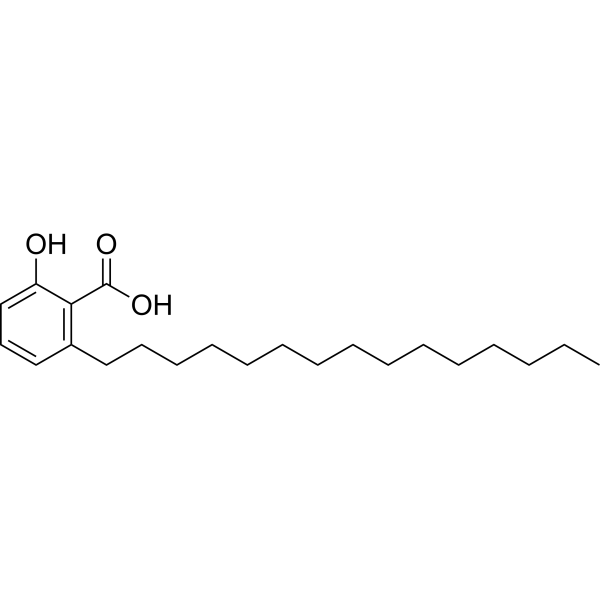
Anacardic Acid  (Synonyms: Hydroginkgolic acid; Ginkgolic Acid C15:0)

Cat. No.: HY-N2020 Purity: 98.49%
Handling Instructions Technical Support

Anacardic Acid, extracted from cashew nut shell liquid, is a histone acetyltransferase inhibitor, inhibits HAT activity of p300 and PCAF, with IC50s of ∼8.5 μM and ∼5 μM, respectively.

For research use only. We do not sell to patients.

CAS No. : 16611-84-0

Size Price Stock Quantity
Solid + Solvent (Highly Recommended)
10 mM * 1 mL in DMSO
ready for reconstitution
In-stock
Solution
10 mM * 1 mL in DMSO In-stock
Solid
5 mg In-stock
10 mg In-stock
25 mg In-stock
50 mg In-stock
100 mg In-stock
200 mg   Get quote  
500 mg   Get quote  

* Please select Quantity before adding items.

This product is a controlled substance and not for sale in your territory.

Customer Review

Based on 16 publication(s) in Google Scholar

Other Forms of Anacardic Acid:

Top Publications Citing Use of Products

    Anacardic Acid purchased from MedChemExpress. Usage Cited in: Cell Mol Biol Lett. 2025 Jan 29;30(1):14.  [Abstract]

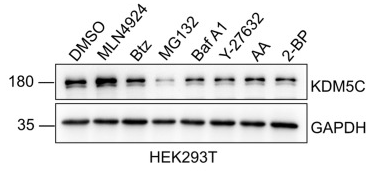
    HEK293T cellswere treated with various types of inhibitors (1 µM Anacardic Acid) for 24 h and the resulting cell lysates were subjected to western blotting.

    Anacardic Acid purchased from MedChemExpress. Usage Cited in: J Mol Cell Biol. 2024 Dec 23:mjae056.  [Abstract]

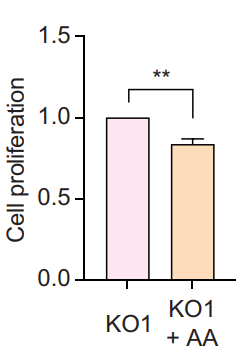
    DNAJC12 KO1 SH-SY5Y cells were treated with the p300/CBP inhibitor anacardic acid (AA, 10 μM). Cell proliferation rates was measured.

    Anacardic Acid purchased from MedChemExpress. Usage Cited in: J Mol Cell Biol. 2024 Dec 23:mjae056.  [Abstract]

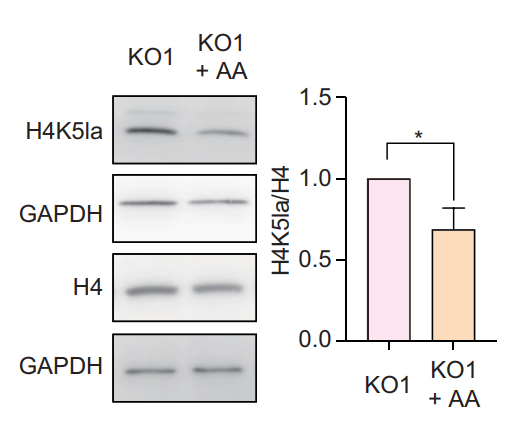
    DNAJC12 KO1 SH-SY5Y cells were treated with the p300/CBP inhibitor anacardic acid (AA, 10 μM). H4K5la levels was measured.

    Anacardic Acid purchased from MedChemExpress. Usage Cited in: J Mol Cell Biol. 2024 Dec 23:mjae056.  [Abstract]

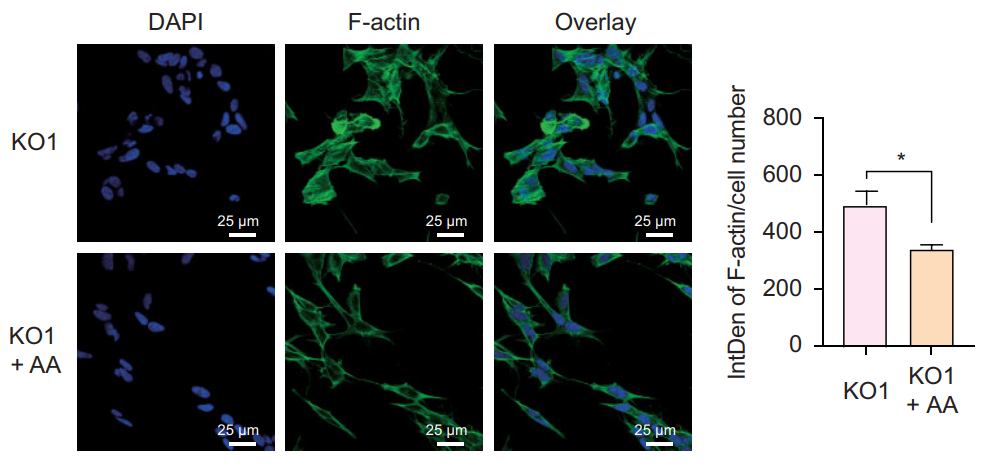
    DNAJC12 KO1 SH-SY5Y cells were treated with the p300/CBP inhibitor anacardic acid (AA, 10 μM). F-actin amounts ( scale bar, 25 μm) was measured.

    Anacardic Acid purchased from MedChemExpress. Usage Cited in: J Mol Cell Biol. 2024 Dec 23:mjae056.  [Abstract]

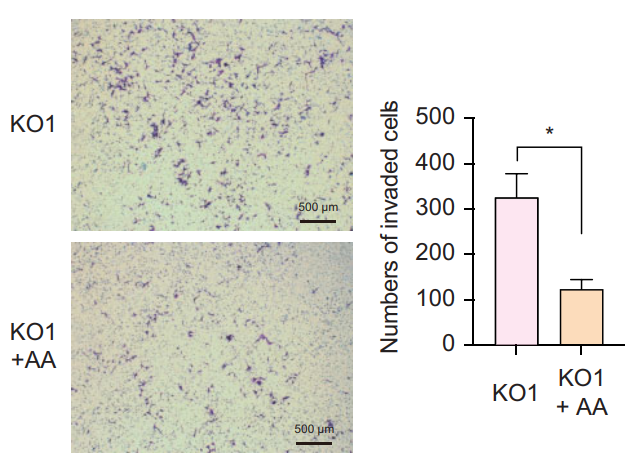
    DNAJC12 KO1 SH-SY5Y cells were treated with the p300/CBP inhibitor anacardic acid (AA, 10 μM). Cell invasion capability (scale bar, 10 μm) was measured.

    Anacardic Acid purchased from MedChemExpress. Usage Cited in: Cell Death Dis. 2021 Jun 7;12(6):582.  [Abstract]

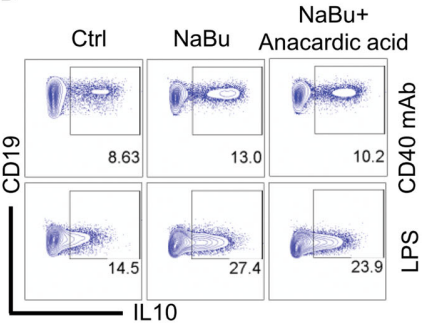
    B10 cell frequency in purified splenic B cells cultured with or without Anacardic acid (1–10 μM) under the existence of CD40 mAb or LPS for 2 days. Results were shown as representative FACS plots or bar graphs. The data are presented as mean ± SD from three independent experiments.

    Anacardic Acid purchased from MedChemExpress. Usage Cited in: Sci Total Environ. 2021 Aug 20:783:147014.

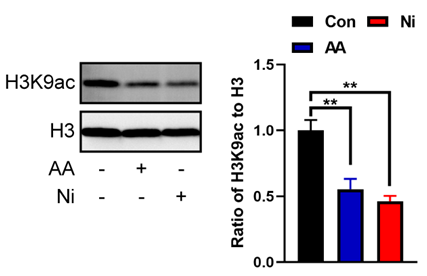
    The acetylation level of H3K9 in primary cultured hippocampal neurons treated with NiCl2 or anacardic acid (AA, 4 µM, 72 h), a HAT inhibitor, was measured by western blot.

    Anacardic Acid purchased from MedChemExpress. Usage Cited in: Sci Total Environ. 2021 Aug 20:783:147014.

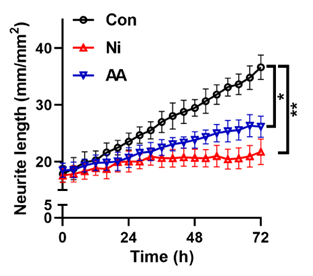
    Neurite length of cultured neurons treated with NiCl2 or Anacardic Acid (4 µM, 72 h) was measured with the IncuCyte Zoom system. The data represent at least three independent experiments. *p < 0.05 vs the control group, **p < 0.01 vs the control group.

    View All Histone Acetyltransferase Isoform Specific Products:

    • Biological Activity

    • Protocol

    • Purity & Documentation

    • References

    • Customer Review

    Description

    Anacardic Acid, extracted from cashew nut shell liquid, is a histone acetyltransferase inhibitor, inhibits HAT activity of p300 and PCAF, with IC50s of ∼8.5 μM and ∼5 μM, respectively.

    IC50 & Target[1]

    p300-HAT

    8.5 μM (IC50)

    PCAF

    5 μM (IC50)

    Cellular Effect
    Cell Line Type Value Description References
    Sf21 IC50
    5 μM
    Compound: 4
    Inhibition of full length recombinant human FLAG-tagged PCAF expressed in baculovirus infected Sf21 cells using N-terminal H3 peptide substrate after 10 mins by radiometric filter binding assay in presence of [3H]acetyl-CoA
    Inhibition of full length recombinant human FLAG-tagged PCAF expressed in baculovirus infected Sf21 cells using N-terminal H3 peptide substrate after 10 mins by radiometric filter binding assay in presence of [3H]acetyl-CoA
    [PMID: 26701186]
    Sf21 IC50
    5 μM
    Compound: 94
    Inhibition of FLAG epitope-tagged recombinant human PCAF expressed in baculovirus infected insect Sf21 cells using [3H]acetyl-CoA as substrate preincubated for 10 mins followed by substrate addition measured after 10 mins by liquid scintillation counting analysis
    Inhibition of FLAG epitope-tagged recombinant human PCAF expressed in baculovirus infected insect Sf21 cells using [3H]acetyl-CoA as substrate preincubated for 10 mins followed by substrate addition measured after 10 mins by liquid scintillation counting analysis
    10.1039/C1MD00199J
    Sf21 IC50
    8.5 μM
    Compound: 4
    Inhibition of full length recombinant human His6-tagged p300 expressed in baculovirus infected Sf21 cells using N-terminal H3 peptide substrate after 10 mins by radiometric filter binding assay in presence of [3H]acetyl-CoA
    Inhibition of full length recombinant human His6-tagged p300 expressed in baculovirus infected Sf21 cells using N-terminal H3 peptide substrate after 10 mins by radiometric filter binding assay in presence of [3H]acetyl-CoA
    [PMID: 26701186]
    Sf21 IC50
    8.5 μM
    Compound: 94
    Inhibition of His6-tagged recombinant full length p300 (unknown origin) expressed in baculovirus infected insect Sf21 cells using [3H]acetyl-CoA as substrate preincubated for 10 mins followed by substrate addition measured after 10 mins by liquid scintillation counting analysis
    Inhibition of His6-tagged recombinant full length p300 (unknown origin) expressed in baculovirus infected insect Sf21 cells using [3H]acetyl-CoA as substrate preincubated for 10 mins followed by substrate addition measured after 10 mins by liquid scintillation counting analysis
    10.1039/C1MD00199J
    Sf21 IC50
    8.5 μM
    Compound: Anacardic acid
    Inhibition of recombinant human full-length His6-tagged p300 expressed in baculovirus infected Sf21 insect cells using [3H]acetylCoA as substrate preincubated for 10 mins followed by substrate addition and measured after 10 mins by liquid scintillation counting method
    Inhibition of recombinant human full-length His6-tagged p300 expressed in baculovirus infected Sf21 insect cells using [3H]acetylCoA as substrate preincubated for 10 mins followed by substrate addition and measured after 10 mins by liquid scintillation counting method
    [PMID: 31910017]
    In Vitro

    Anacardic Acid is a histone acetyltransferase, inhibits HAT activity of p300 and PCAF, with IC50s of ~8.5 μM and ~5 μM, respectively[1]. Anacardic Acid (300 μM) inhibits mycelial growth. Anacardic Acid (50 μM) induces apoptosis-like characteristics in M. oryzae, and the effect is caspase independent. Anacardic Acid (1-80 μM) leads to loss of mitochondrial potential. Anacardic Acid (1-60 μM) also exhibits antioxidant activity in M. oryzae[3].

    MedChemExpress (MCE) has not independently confirmed the accuracy of these methods. They are for reference only.

    In Vivo

    Anacardic acid (5 mg/kg, i.p.) attenuates the binding of HATs to the promoter of MEF2A and reverse hyperacetylation of H3K9ac caused by phenylephrine in C57BL/6 mice. Anacardic acid inhibits the level of transcription on MEF2A and cardiac development-related downstream genes, attenuates the protein overexpression of cardiac downstream genes caused by phenylephrine, reverses and attenuates cardiac hypertrophy in the hearts of mice exposed to phenylephrine, and attenuates the left ventricular pressure and improves cardiac function in the cardiac hypertrophy mice[2].

    MedChemExpress (MCE) has not independently confirmed the accuracy of these methods. They are for reference only.

    Molecular Weight

    348.52

    Formula

    C22H36O3

    CAS No.
    Appearance

    Solid

    Color

    White to off-white

    SMILES

    O=C(O)C1=C(CCCCCCCCCCCCCCC)C=CC=C1O

    Structure Classification
    Initial Source
    Shipping

    Room temperature in continental US; may vary elsewhere.

    Storage
    Powder -20°C 3 years
    4°C 2 years
    In solvent -80°C 6 months
    -20°C 1 month
    Solvent & Solubility
    In Vitro: 

    DMSO : 100 mg/mL (286.93 mM; Need ultrasonic; Hygroscopic DMSO has a significant impact on the solubility of product, please use newly opened DMSO)

    Preparing
    Stock Solutions
    Concentration Solvent Mass 1 mg 5 mg 10 mg
    1 mM 2.8693 mL 14.3464 mL 28.6928 mL
    5 mM 0.5739 mL 2.8693 mL 5.7386 mL
    View the Complete Stock Solution Preparation Table

    * Please refer to the solubility information to select the appropriate solvent. Once prepared, please aliquot and store the solution to prevent product inactivation from repeated freeze-thaw cycles.
    Storage method and period of stock solution: -80°C, 6 months; -20°C, 1 month. When stored at -80°C, please use it within 6 months. When stored at -20°C, please use it within 1 month.

    • Molarity Calculator

    • Dilution Calculator

    Mass (g) = Concentration (mol/L) × Volume (L) × Molecular Weight (g/mol)

    Mass
    =
    Concentration
    ×
    Volume
    ×
    Molecular Weight *

    Concentration (start) × Volume (start) = Concentration (final) × Volume (final)

    This equation is commonly abbreviated as: C1V1 = C2V2

    Concentration (start)

    C1

    ×
    Volume (start)

    V1

    =
    Concentration (final)

    C2

    ×
    Volume (final)

    V2

    In Vivo:

    Select the appropriate dissolution method based on your experimental animal and administration route.

    For the following dissolution methods, please ensure to first prepare a clear stock solution using an In Vitro approach and then sequentially add co-solvents:
    To ensure reliable experimental results, the clarified stock solution can be appropriately stored based on storage conditions. As for the working solution for in vivo experiments, it is recommended to prepare freshly and use it on the same day.
    The percentages shown for the solvents indicate their volumetric ratio in the final prepared solution. If precipitation or phase separation occurs during preparation, heat and/or sonication can be used to aid dissolution.

    • Protocol 1

      Add each solvent one by one:  10% DMSO    90% (20% SBE-β-CD in Saline)

      Solubility: 10 mg/mL (28.69 mM); Suspended solution; Need ultrasonic

      This protocol yields a suspended solution of 10 mg/mL. Suspended solution can be used for oral and intraperitoneal injection.

      Taking 1 mL working solution as an example, add 100 μL DMSO stock solution (100.0 mg/mL) to 900 μL 20% SBE-β-CD in Saline, and mix evenly.

      Preparation of 20% SBE-β-CD in Saline (4°C, storage for one week): 2 g SBE-β-CD powder is dissolved in 10 mL Saline, completely dissolve until clear.
    • Protocol 2

      Add each solvent one by one:  10% DMSO    40% PEG300    5% Tween-80    45% Saline

      Solubility: 2.5 mg/mL (7.17 mM); Suspended solution; Need ultrasonic

      This protocol yields a suspended solution of 2.5 mg/mL. Suspended solution can be used for oral and intraperitoneal injection.

      Taking 1 mL working solution as an example, add 100 μL DMSO stock solution (25.0 mg/mL) to 400 μL PEG300, and mix evenly; then add 50 μL Tween-80 and mix evenly; then add 450 μL Saline to adjust the volume to 1 mL.

      Preparation of Saline: Dissolve 0.9 g sodium chloride in ddH₂O and dilute to 100 mL to obtain a clear Saline solution.
    In Vivo Dissolution Calculator
    Please enter the basic information of animal experiments:

    Dosage

    mg/kg

    Animal weight
    (per animal)

    g

    Dosing volume
    (per animal)

    μL

    Number of animals

    Recommended: Prepare an additional quantity of animals to account for potential losses during experiments.
    Please enter your animal formula composition:
    %
    DMSO +
    +
    %
    Tween-80 +
    %
    Saline
    Recommended: Keep the proportion of DMSO in working solution below 2% if your animal is weak.
    The co-solvents required include: DMSO, . All of co-solvents are available by MedChemExpress (MCE). , Tween 80. All of co-solvents are available by MedChemExpress (MCE).
    Calculation results:
    Working solution concentration: mg/mL
    Method for preparing stock solution: mg drug dissolved in μL  DMSO (Stock solution concentration: mg/mL).
    The concentration of the stock solution you require exceeds the measured solubility. The following solution is for reference only. If necessary, please contact MedChemExpress (MCE).
    Method for preparing in vivo working solution for animal experiments: Take μL DMSO stock solution, add μL . μL , mix evenly, next add μL Tween 80, mix evenly, then add μL Saline.
     If the continuous dosing period exceeds half a month, please choose this protocol carefully.
    Please ensure that the stock solution in the first step is dissolved to a clear state, and add co-solvents in sequence. You can use ultrasonic heating (ultrasonic cleaner, recommended frequency 20-40 kHz), vortexing, etc. to assist dissolution.
    Purity & Documentation

    Purity: 98.49%

    References
    Kinase Assay
    [1]

    Briefly, indicated amounts of proteins/peptide are incubated in HAT assay buffer containing 50 mM Tris-HCl, pH 8.0, 10% (v/v) glycerol, 1 mM dithiothreitol, 1 mM phenylmethyl sulfonyl fluoride, 0.1 mM EDTA, pH 8.0, 10 mM sodium butyrate at 30°C for 10 min in the presence or absence of compound followed by the addition of 1 μL of 6.2 Ci/mmol [3H]acetyl coenzyme A (acetyl-CoA) and are further incubated for another 10 min. The final reaction volume is 30 μL. The reaction mixture is then blotted onto P-81 filter papers, and radioactive counts are recorded on a Wallac 1409 liquid scintillation counter. To characterize the inhibition kinetics of anacardic acid, filter binding assays are done using a constant amount of HeLa core histones in the presence or absence of AA with increasing concentrations of [3H]acetyl-CoA[1].

    MCE has not independently confirmed the accuracy of these methods. They are for reference only.

    Cell Assay
    [3]

    Mycelial cell death assay is performed to evaluate the number of colony-forming units in treated and untreated samples. M. oryzae conidia (106 conidia/mL) are allowed to germinate in 100-mL flasks with 20 mL complete medium broth (CM) at 28°C in a rotary shaker (200 rpm) for 12 h. The cultures are exposed to different concentrations of anacardic acid for 2 h. The germinated conidia are washed with sterile water, diluted to 104 conidia/mL, and plated on oat meal agar and incubated at 28°C for 3 days. Colony-forming units (CFUs) are counted in each of the three ndividual experiments performed, and values are plotted in the graph as average of three replicates. The data in each sample is expressed as the percentage of the total number of CFUs observed in untreated or 0.1 % DMSO treated control[3].

    MCE has not independently confirmed the accuracy of these methods. They are for reference only.

    Animal Administration
    [2]

    Pathogen-free male and female 11-13 week-old C57BL/6 mice (18-20 g) are randomly selected to inject phenylephrine (20 mg/kg) (control groups receive equivalent normal saline). In some cases, phenylephrine-treated C57BL/6 mice are administered with a Chinese herbal extract anacardic acid (5 mg/kg). Anacardic acid is dissolved in sterile DMSO at a concentration of 1 mg/ml and stored at 4°C. Phenylephrine is administered by a subcutaneous injection at a dose of 20 mg per kg per day continuously for 30 days. Moreover, anacardic acid is administered by an intraperitoneal injection at a dose of 5 mg/kg every 3rd day intraperitoneal injection at a dose of 5 mg/kg every 3rd day. After modeling, mice are euthanized using 20% carbon dioxide in an anesthesia chamber until they are unresponsive to nose pinch and the hearts are isolated[2].

    MCE has not independently confirmed the accuracy of these methods. They are for reference only.

    References

    Complete Stock Solution Preparation Table

    * Please refer to the solubility information to select the appropriate solvent. Once prepared, please aliquot and store the solution to prevent product inactivation from repeated freeze-thaw cycles.
    Storage method and period of stock solution: -80°C, 6 months; -20°C, 1 month. When stored at -80°C, please use it within 6 months. When stored at -20°C, please use it within 1 month.

    Optional Solvent Concentration Solvent Mass 1 mg 5 mg 10 mg 25 mg
    DMSO 1 mM 2.8693 mL 14.3464 mL 28.6928 mL 71.7319 mL
    5 mM 0.5739 mL 2.8693 mL 5.7386 mL 14.3464 mL
    10 mM 0.2869 mL 1.4346 mL 2.8693 mL 7.1732 mL
    15 mM 0.1913 mL 0.9564 mL 1.9129 mL 4.7821 mL
    20 mM 0.1435 mL 0.7173 mL 1.4346 mL 3.5866 mL
    25 mM 0.1148 mL 0.5739 mL 1.1477 mL 2.8693 mL
    30 mM 0.0956 mL 0.4782 mL 0.9564 mL 2.3911 mL
    40 mM 0.0717 mL 0.3587 mL 0.7173 mL 1.7933 mL
    50 mM 0.0574 mL 0.2869 mL 0.5739 mL 1.4346 mL
    60 mM 0.0478 mL 0.2391 mL 0.4782 mL 1.1955 mL
    80 mM 0.0359 mL 0.1793 mL 0.3587 mL 0.8966 mL
    100 mM 0.0287 mL 0.1435 mL 0.2869 mL 0.7173 mL
    • No file chosen (Maximum size is: 1024 Kb)
    • If you have published this work, please enter the PubMed ID.
    • Your name will appear on the site.
    Help & FAQs
    • Do most proteins show cross-species activity?

      Species cross-reactivity must be investigated individually for each product. Many human cytokines will produce a nice response in mouse cell lines, and many mouse proteins will show activity on human cells. Other proteins may have a lower specific activity when used in the opposite species.

    Your Recently Viewed Products:

    Inquiry Online

    Your information is safe with us. * Required Fields.

    Product Name


    Requested Quantity *

    Applicant Name *


    Salutation

    Email Address *


    Phone Number *

    Department


    Organization Name *

    City

    State

    Country or Region *


    Remarks

    Bulk Inquiry

    Inquiry Information

    Product Name:
    Anacardic Acid
    Cat. No.:
    HY-N2020
    Quantity:
    MCE Japan Authorized Agent: