



CE3F4
Based on 2 publication(s) in Google Scholar
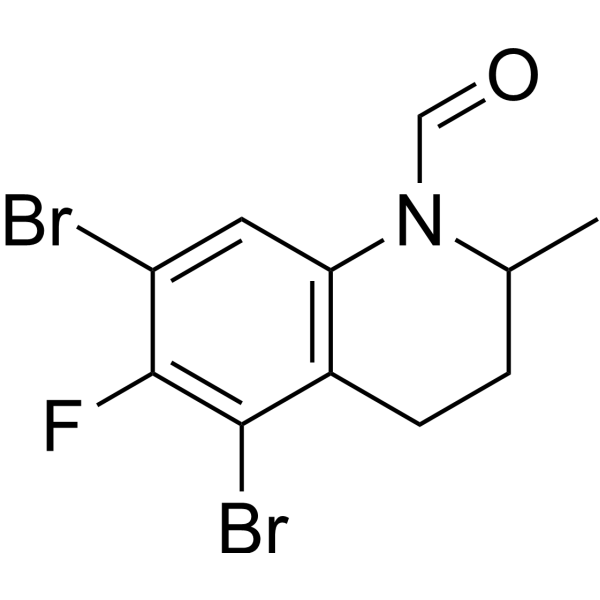
CE3F4 is a selective antagonist of exchange protein directly activated by cAMP (Epac1), with IC50s of 10.7 μM and 66 μM for Epac1 and Epac2(B), respectively.
For research use only. We do not sell to patients.
- Purity : 98.85%
- CAS No.: 143703-25-7
- Formula: C11H10Br2FNO
- Molecular Weight:351.01
-
Storage:
-20°C, stored under nitrogen
* In solvent : -80°C, 6 months; -20°C, 1 month (stored under nitrogen)

To place orders, for customer services and technical support, please contact: MedChemExpress USA
Tel: 609-228-6898 E-mail: [email protected] [email protected]


-
 Biological Activity
-
Chemical Information
-
Solvent & Solubility
- Purity & Documentation
- References
-
 Help & FAQs


-
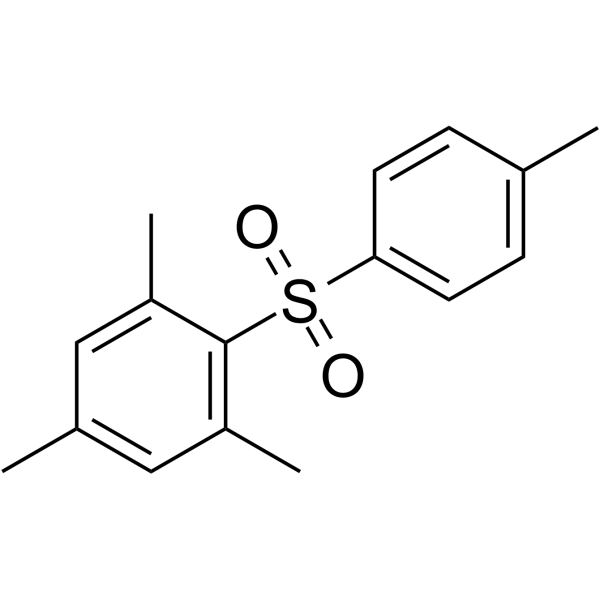
HY-117656
ESI-05EPAC2 Inhibitor -
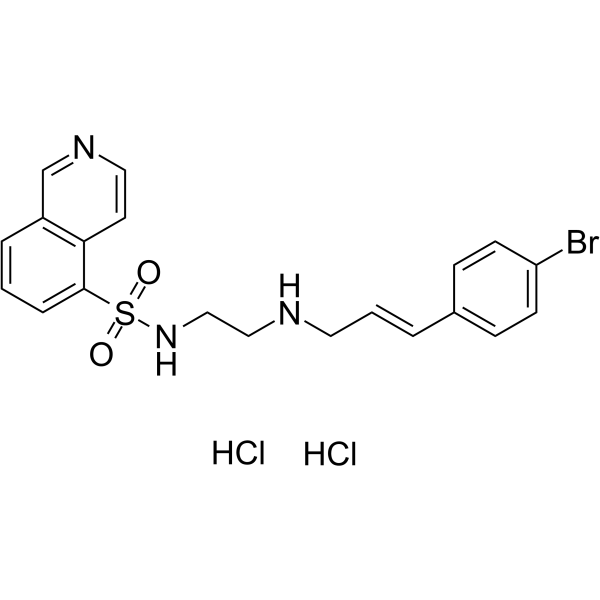
HY-15979A
H-89 dihydrochloridePKA Inhibitor -
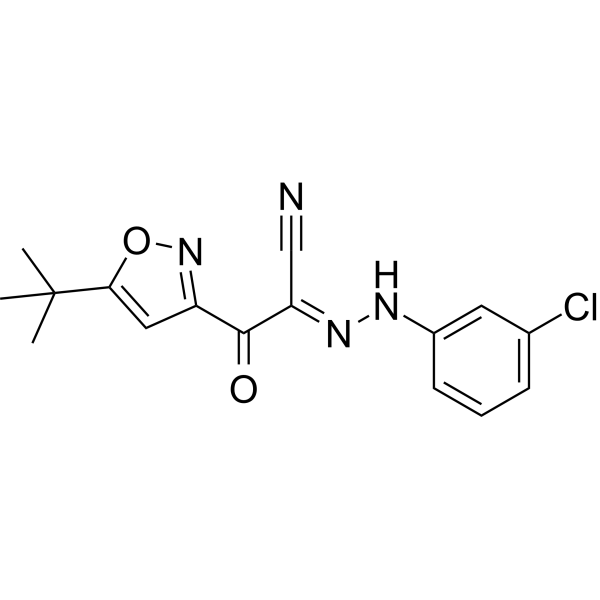
HY-16704
ESI-09Virus Protease Inhibitor -
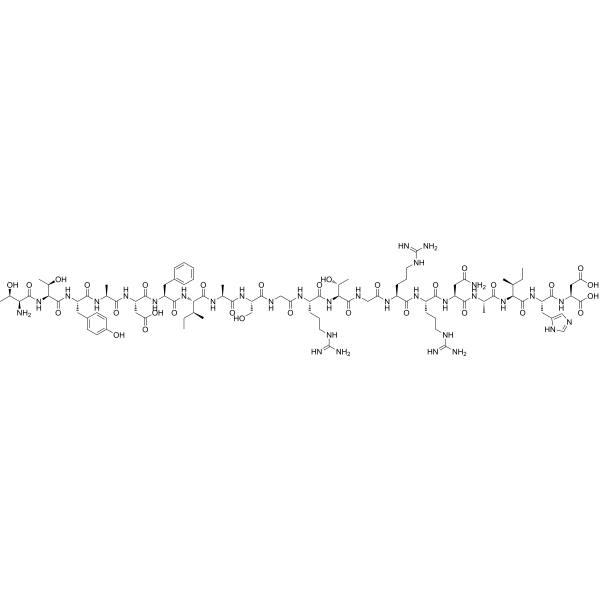
HY-P0222
PKI(5-24)PKA Inhibitor -
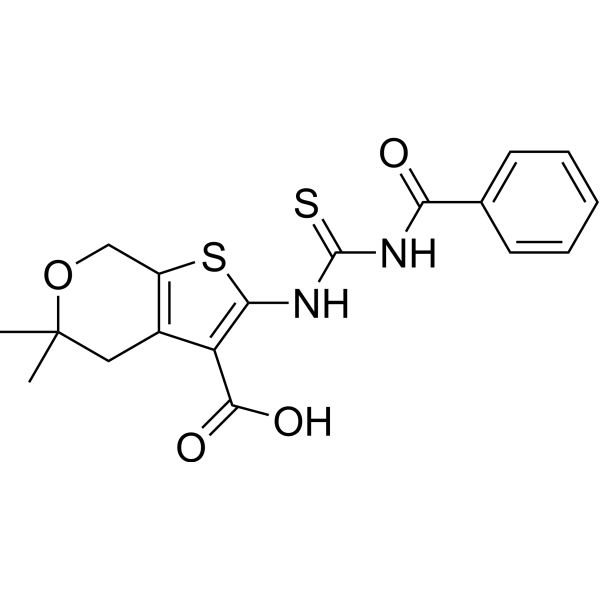
HY-13452
CID-1067700GTPase Inhibitor -
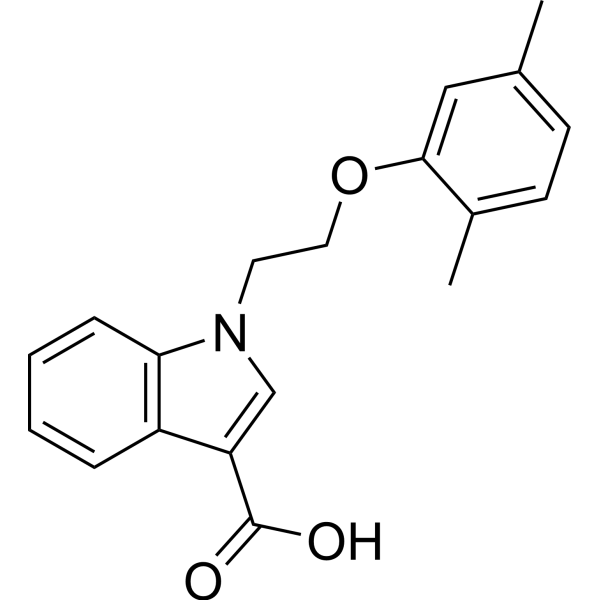
HY-19800
ML-098Ras Activator -

HY-108539R
CE3F4 (Standard)Reference Standard -
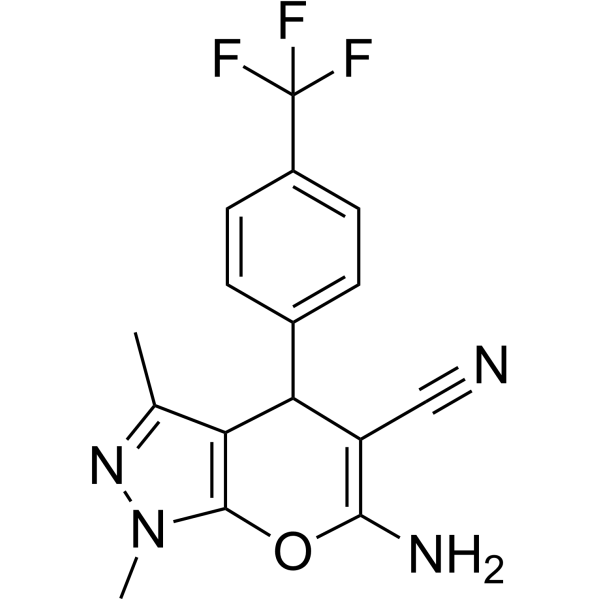
HY-12875
BQU57Ral Inhibitior -

HY-132179
FucoidanAnticoagulant/Cancer Agent -
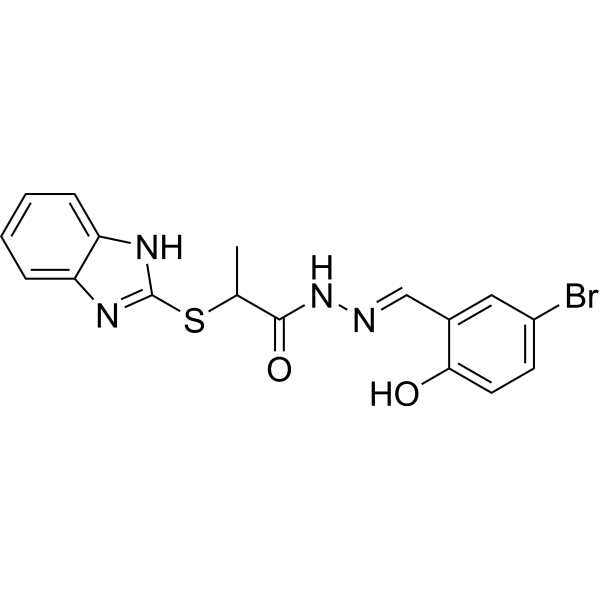
HY-103194
KH7Soluble Adenylyl Cyclase Inhibitor -
HY-N0738
Stachydrine hydrochlorideEndogenous Metabolite -
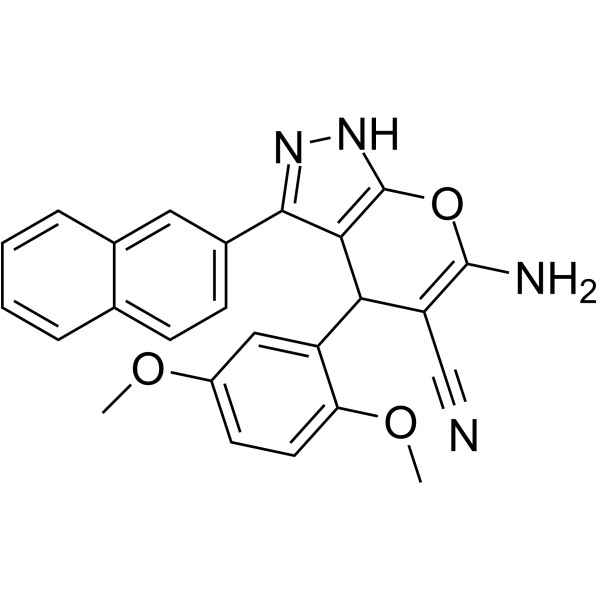
HY-12873
RBC8RALA/RALB Inhibitor
Publications Citing Use of MedChemExpress (MCE) CE3F4
More

Biological Activity
Description
IC50 & Target
IC50: 10.7 μM (Epac1), 66 μM (Epac2(B))[1]
In Vitro
CE3F4 is a selective antagonist of Epac1, with IC50s of 10.7 μM and 66 μM for Epac1 and Epac2(B), respectively. CE3F4 is more active on Epac1 than (S)-stereoisomer ((S)-CE3F4, IC50, 56 μM), but less active than (R)-CE3F4 (IC50, 5.8 μM). CE3F4 (50 μM) shows more inhibitory activities against GEF activity of Epac1, than that of Epac2(AB) or Epac2(B)[1]. CE3F4 reduces the exchange activity of Epac1 induced by 007, with IC50 of 23 ± 3 μM. CE3F4 (40 μM) specifically inhibits Epac1 guanine nucleotide exchange activity without interference with Rap1 activity or Epac1-Rap1 interaction. CE3F4 has no influence on PKA activity. CE3F4 (20 μM) inhibits Epac-induced Rap1 activation in living cultured HEK293 cells[2]. CE3F4 (20 μM) significantly inhibits the late phase of ERK activation stimulated by glucose in INS-1 cells[3].
MedChemExpress (MCE) has not independently confirmed the accuracy of these methods. They are for reference only.
In Vivo
CE3F4 (10 mg/kg; i.v.) improves cardiac function after myocardial infarction in mice[5].
MedChemExpress (MCE) has not independently confirmed the accuracy of these methods. They are for reference only.
-
Animal Model:Wild-type (WT) mice (induced AF after 20min of CE3F4 administration)[4]
-
Dosage:3 mg/kg and 1mg/kg
-
Administration:Through a catheter in the internal jugular vein
-
Result:Shortened the duration of the pacing-induced AF at 3mg/kg.
-
Animal Model:Casq2-KO mice (premature ventricular contraction induced by isoproterenol injection 20min after CE3F4 administration)[4]
-
Dosage:3 mg/kg
-
Administration:I.v.
-
Result:Reduced the incidence of sympathetic activation-induced ventricular arrhythmias.


Chemical Information
-
CAS No. 143703-25-7
-
Appearance Solid
-
Molecular Weight 351.01
-
Formula C11H10Br2FNO
-
Color White to off-white
-
SMILES
O=CN1C(C)CCC2=C1C=C(Br)C(F)=C2Br
-
Shipping
Room temperature in continental US; may vary elsewhere.
-
Storage
-20°C, stored under nitrogen
* In solvent : -80°C, 6 months; -20°C, 1 month (stored under nitrogen)


Publications (2)
-
Journal Impact Factor
-
Most Recent
-
J Exp Med
2023 Nov 6;220(11):e20230577. PMID: 37584653 -
Oncogene
Identification of RAPGEF3 as the therapeutic vulnerability of basal-subtype lung squamous cell carcinoma. [Abstract]2025 Sep;44(34):3142-3148. PMID: 40781157


Solvent & Solubility
In Vitro:
DMSO : 50 mg/mL (142.45 mM; Need ultrasonic; Hygroscopic DMSO has a significant impact on the solubility of product, please use newly opened DMSO)
Please refer to the solubility information to select the appropriate solvent. Once prepared, please aliquot and store the solution to prevent product inactivation from repeated freeze-thaw cycles.
Storage method and period of stock solution: -80°C, 6 months; -20°C, 1 month (stored under nitrogen). When stored at -80°C, please use it within 6 months. When stored at -20°C, please use it within 1 month.
Please refer to the solubility information to select the appropriate solvent. Once prepared, please aliquot and store the solution to prevent product inactivation from repeated freeze-thaw cycles.
Storage method and period of stock solution: -80°C, 6 months; -20°C, 1 month (stored under nitrogen). When stored at -80°C, please use it within 6 months. When stored at -20°C, please use it within 1 month.
Concentration (start) × Volume (start) = Concentration (final) × Volume (final)
In Vivo:
Select the appropriate dissolution method based on your experimental animal and administration route.
- For the following dissolution methods, please ensure to first prepare a clear stock solution using an In Vitro approach and then sequentially add co-solvents:
- To ensure reliable experimental results, the clarified stock solution can be appropriately stored based on storage conditions. As for the working solution for In Vivo experiments, it is recommended to prepare freshly and use it on the same day.
- The percentages shown for the solvents indicate their volumetric ratio in the final prepared solution. If precipitation or phase separation occurs during preparation, heat and/or sonication can be used to aid dissolution.
Add each solvent one by one: 10% DMSO 40% PEG300 5% Tween-80 45% Saline
Solubility: ≥ 2.5 mg/mL (7.12 mM); Clear solution
This protocol yields a clear solution of ≥ 2.5 mg/mL (saturation unknown).
Taking 1 mL working solution as an example, add 100 μL DMSO stock solution (25.0 mg/mL) to 400 μL PEG300, and mix evenly; then add 50 μL Tween-80 and mix evenly; then add 450 μL Saline to adjust the volume to 1 mL.
Preparation of Saline: Dissolve 0.9 g sodium chloride in ddH₂O and dilute to 100 mL to obtain a clear Saline solution.
Add each solvent one by one: 10% DMSO 90% (20% SBE-β-CD in Saline)
Solubility: ≥ 2.5 mg/mL (7.12 mM); Clear solution
This protocol yields a clear solution of ≥ 2.5 mg/mL (saturation unknown).
Taking 1 mL working solution as an example, add 100 μL DMSO stock solution (25.0 mg/mL) to 900 μL 20% SBE-β-CD in Saline, and mix evenly.
Preparation of 20% SBE-β-CD in Saline (4°C, storage for one week): 2 g SBE-β-CD powder is dissolved in 10 mL Saline, completely dissolve until clear.
In Vivo Dissolution Calculator
Please enter the basic information of animal experiments:
-
-
-
-
Recommended: Prepare an additional quantity of animals to account for potential losses during experiments.
Please enter your animal formula composition:
-
%DMSO +
Recommended: Keep the proportion of DMSO in working solution below 2% if your animal is weak.
-
%+
-
+%Tween-80 + +
-
%Saline +
The co-solvents required include: DMSO, . All of co-solvents are available by MedChemExpress (MCE). , Tween 80. All of co-solvents are available by MedChemExpress (MCE).
Working solution concentration: 0.22 mg/mL
Method for preparing stock solution: mg drug dissolved in μL DMSO. Stock solution concentration: mg/mL. * In solvent : -80°C, 6 months; -20°C, 1 month (stored under nitrogen)
1. Take μL DMSO stock solution;
2. Add μL .
μL , mix evenly;
3. Then add μL Tween 80, mix evenly;
4. Then add μL
Please ensure that the stock solution in the first step is dissolved to a clear state, and add co-solvents in sequence. You can use ultrasonic heating (ultrasonic cleaner, recommended frequency 20-40 kHz), vortexing, etc. to assist dissolution.


Purity & Documentation
-
Data Sheet (280 KB)
-
SDS (597 KB)
- English - EN (597 KB)
- Français - FR (597 KB)
- Deutsch - DE (597 KB)
- Norwegian - NO (597 KB)
- Español - ES (597 KB)
- Swedish - SV (597 KB)
- Italian - IT (597 KB)
- Korean - KR (597 KB)
- Portuguese - PT (597 KB)
-
Handling Instructions (2659 KB)
References
[1]. Courilleau D, et al. The (R)-enantiomer of CE3F4 is a preferential inhibitor of human exchange protein directly activated by cyclic AMP isoform 1 (Epac1). Biochem Biophys Res Commun. 2013 Oct 25;440(3):443-8. [Content Brief]
[2]. Courilleau D, et al. Identification of a tetrahydroquinoline analog as a pharmacological inhibitor of the cAMP-binding protein Epac. J Biol Chem. 2012 Dec 28;287(53):44192-202. [Content Brief]
[3]. Pratt EP, et al. Ca2+ influx through L-type Ca2+ channels and Ca2+-induced Ca2+ release regulate cAMP accumulation and Epac1-dependent ERK 1/2 activation in INS-1 cells. Mol Cell Endocrinol. 2016 Jan 5;419:60-71. [Content Brief]
[4]. Prajapati R, et al. Usefulness of Exchanged Protein Directly Activated by cAMP (Epac)1-Inhibiting Therapy for Prevention of Atrial and Ventricular Arrhythmias in Mice. Circ J. 2019;83(2):295-303. [Content Brief]


Complete Stock Solution Preparation Table
Please refer to the solubility information to select the appropriate solvent. Once prepared, please aliquot and store the solution to prevent product inactivation from repeated freeze-thaw cycles.
Storage method and period of stock solution: -80°C, 6 months; -20°C, 1 month (stored under nitrogen). When stored at -80°C, please use it within 6 months. When stored at -20°C, please use it within 1 month.
| Optional Solvent | Concentration Solvent Mass | 1 mg | 5 mg | 10 mg | 25 mg |
|---|---|---|---|---|---|
| DMSO | 1 mM | 2.8489 mL | 14.2446 mL | 28.4892 mL | 71.2230 mL |
| 5 mM | 0.5698 mL | 2.8489 mL | 5.6978 mL | 14.2446 mL | |
| 10 mM | 0.2849 mL | 1.4245 mL | 2.8489 mL | 7.1223 mL | |
| 15 mM | 0.1899 mL | 0.9496 mL | 1.8993 mL | 4.7482 mL | |
| 20 mM | 0.1424 mL | 0.7122 mL | 1.4245 mL | 3.5612 mL | |
| 25 mM | 0.1140 mL | 0.5698 mL | 1.1396 mL | 2.8489 mL | |
| 30 mM | 0.0950 mL | 0.4748 mL | 0.9496 mL | 2.3741 mL | |
| 40 mM | 0.0712 mL | 0.3561 mL | 0.7122 mL | 1.7806 mL | |
| 50 mM | 0.0570 mL | 0.2849 mL | 0.5698 mL | 1.4245 mL | |
| 60 mM | 0.0475 mL | 0.2374 mL | 0.4748 mL | 1.1871 mL | |
| 80 mM | 0.0356 mL | 0.1781 mL | 0.3561 mL | 0.8903 mL | |
| 100 mM | 0.0285 mL | 0.1424 mL | 0.2849 mL | 0.7122 mL |


CE3F4 Related Classifications
HY-108539 Related Classifications
 Powered by Bioz