1. 疾患モデリングル製品 Cell Cycle/DNA Damage Apoptosis
  2. Nervous System Disease Models DNA/RNA Synthesis Apoptosis
  3. Neuropathic Pain Models
  4. Oxaliplatin

Oxaliplatin  (Synonyms: オキサリプラチン)

製品番号: HY-17371 純度: 99.65%
COA 取扱説明書 Technical Support

Oxaliplatin is a DNA synthesis inhibitor. Oxaliplatin causes DNA crosslinking damage, prevents DNA replication and transcription and induces apoptosis. Oxaliplatin can be used for cancer research.

商品は「研究用試薬」です。人や動物の医療用・臨床診断用・食品用の製品ではありません。
研究用途以外に使用した場合、当社は一切の責任を負いかねます。

CAS 番号 : 61825-94-3

容量 価格(税別) 在庫状況 数量
5 mg $45 在庫あり
50 mg $60 在庫あり
100 mg $84 在庫あり
200 mg $144 在庫あり
500 mg $168 在庫あり
1 g $288 在庫あり
2 g $460 在庫あり
5 g $800 在庫あり
10 g   お問い合わせ  
50 g   お問い合わせ  

* アイテムを追加する前、数量をご選択ください

This product is a controlled substance and not for sale in your territory.

カスタマーレビュー

Based on 216 publication(s) in Google Scholar

Other Forms of Oxaliplatin:

Top Publications Citing Use of Products

顧客検証

In Vivo Efficacy Study
Cell Proliferation/Viability Assay
IF

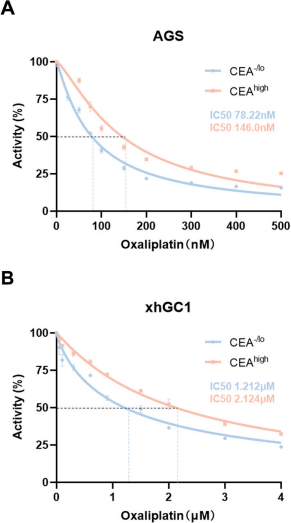
    Oxaliplatin purchased from MedChemExpress. Usage Cited in: Drug Resist Updat. 2024 Dec 3:78:101179.  [Abstract]

    Oxaliplatin (100 nM-4 μM; 48 h) inhibits CEAhigh (AGS) and CEA-⁠/lo (xhGC1) gastric cancer cells, with IC50 values of 150 nM and 2.2 μM, respectively.

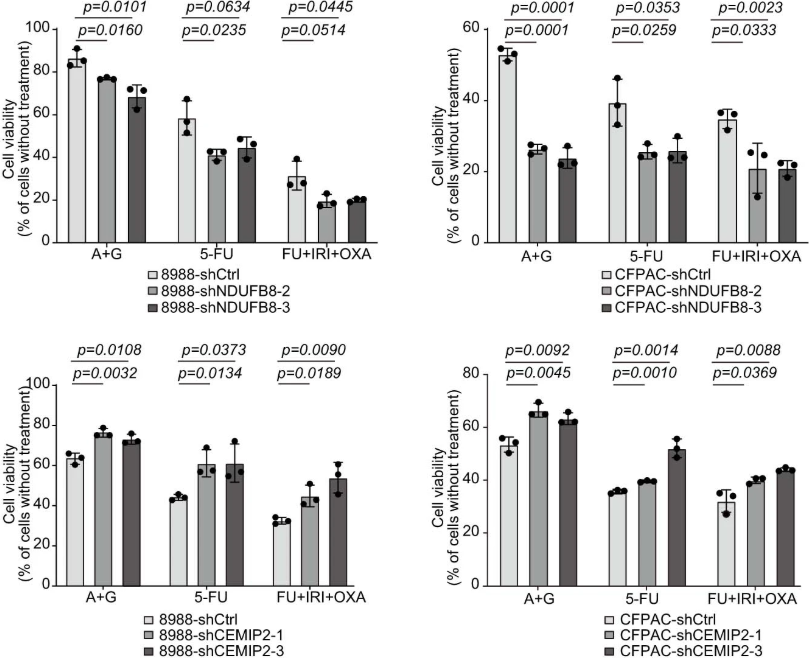
    Oxaliplatin purchased from MedChemExpress. Usage Cited in: Nat Med. 2024 Mar;30(3):749-761.  [Abstract]

    The relative cell viability of shCtl-, shNDUFB8-, and shCEMIP2-transfected cells was detected by XTT assay after paclitaxel plus gemcitabine treatment (A+G), single-agent 5-Fu (5-FU), and the FOLFIRINOX chemotherapy cocktail [FU+IRI+OXA: 5-FU+Irinotecan (SN-38) +Oxaliplatin (50 nM)] for 48h.

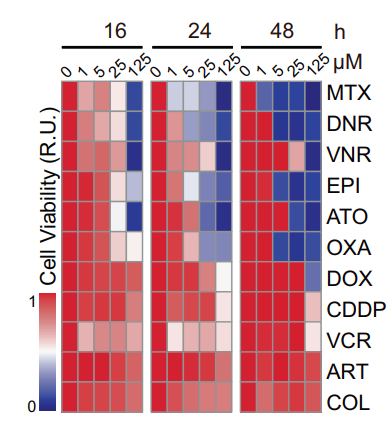
    Oxaliplatin purchased from MedChemExpress. Usage Cited in: Cell Mol Immunol. 2023 Jan;20(1):51-64.  [Abstract]

    Comparison of drug (Epirubicin hydrochloride, EPI; Daunorubicin hydrochloride, DNR; Vinorelbine ditartrate, VNR; Oxaliplatin, OXA; Vincristine, VCR; Artemisinin, ART; Colchicine, COL) cytotoxicity to TC1 cells at the indicated doses and time points measured with CCK-8 assays. R.U. (Relative unit) was calculated from the average O.D. values in each condition as the indicator of cell viability (n = 3).

    Oxaliplatin purchased from MedChemExpress. Usage Cited in: Gastroenterology. 2021 Nov;161(5):1601-1614.e23.  [Abstract]

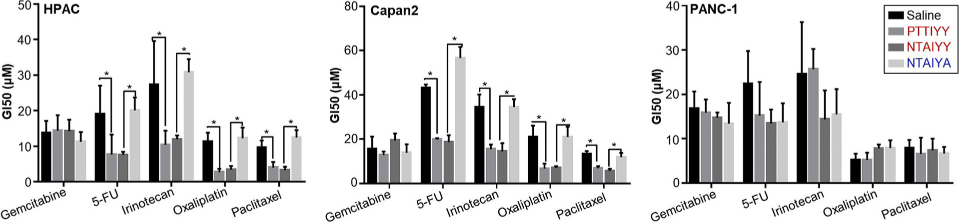
    Bar graphs show the GI50 of 5-fluoruracil (48 h), irinotecan (48 h), gemcitabine (48 h), paclitaxel (48 h), and oxaliplatin (48 h) in PDAC cells in combination with bioactive hexapeptides (NTAIYY and PTTIYY) or controls (saline and NTAIYA).

    Oxaliplatin purchased from MedChemExpress. Usage Cited in: Mol Oncol. 2020 Nov;14(11):2894-2919.  [Abstract]

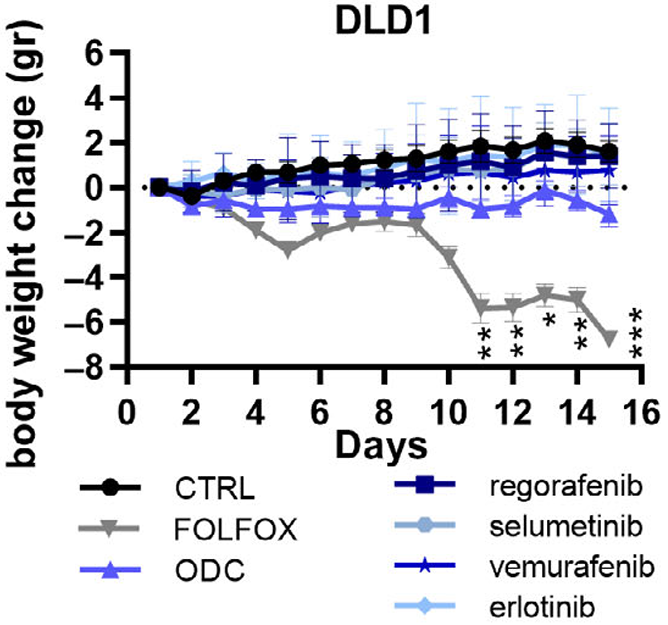
    FOLFOX was administered as 6 mg/kg Oxaliplatin two hours before administration of 90 mg/kg Leucovorin and 50 mg/kg 5-Fluorouracil at day 1 and a repeat of 5‐Fluorouracil dosing on day 2. Weight loss of ODC-, CTRL-, and FOLFOX-treated mice over time of mice with DLD1 tumors.

    Oxaliplatin purchased from MedChemExpress. Usage Cited in: Nat Med. 2019 Sep;25(9):1428-1441.  [Abstract]

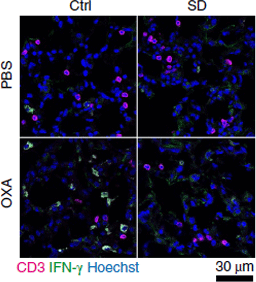
    Quantification of CD3+IFN-γ+ T cells in lung lobes taken from urethane-induced primary lung cancer models (n = 5 mice for SD group, n = 6 mice for all the other groups). Three coronal sections containing five pulmonary lobes from each mouse near the maximal diameters are quantified. Each dot represents one view field. A representative result from two independent experiments is shown.

    DNA/RNA Synthesis アイソフォーム固有の製品をすべて表示:

    • 生物活性

    • 純度とドキュメンテーション

    • 参考文献

    • カスタマーレビュー

    製品説明

    Oxaliplatin is a DNA synthesis inhibitor. Oxaliplatin causes DNA crosslinking damage, prevents DNA replication and transcription and induces apoptosis. Oxaliplatin can be used for cancer research[1][2][3].

    IC50 & Target

    IC50: DNA synthesis[1]

    体外実験

    Oxaliplatin (24-72 hours; 2-128 μM; HCC, HCCLM3 and Hep3B cells) inhibits cell growth and induces apoptosis[1].
    Oxaliplatin (10 μM; 15-240 mins; CEM cells ) induces primary and secondary DNA lesions, including DNA cross-links (ISC) and DNA-protein cross-links (DPC)[2].
    Oxaliplatin (0.01 to 100 μM; 24 hours) potently inhibits bladder carcinoma cell lines RT4 and TCCSUP, ovarian carcinoma cell line A2780, colon carcinoma cell line HT-29, glioblastoma cell lines U-373MG and U-87MG, and melanoma cell lines SK-MEL-2 and HT-144 with IC50 of 11 μM, 15 μM, 0.17 μM, 0.97 μM, 2.95 μM, 17.6 μM, 30.9 μM and 7.85 μM, respectively[3].

    MedChemExpress (MCE) has not independently confirmed the accuracy of these methods. They are for reference only.

    Cell Viability Assay[1]

    Cell Line: HCC, HCCLM3 and Hep3B cells
    Concentration: 24, 48 and 72 hours
    Incubation Time: 2, 4, 8, 16, 32, 64 and 128 μM
    Result: Decreased cell viability in a dose- and time-dependent manner.

    Cell Cycle Analysis[1]

    Cell Line: HCCLM3 and Hep3B cells
    Concentration: 10 μM
    Incubation Time: 24 hours
    Result: Increased the percentage of apoptotic cells (17.70% for HCCLM3 cells; 21.19% for Hep3B cells).

    Cell Cycle Analysis[1]

    Cell Line: HCCLM3 cells
    Concentration: 10 μM
    Incubation Time: 48 hours
    Result: Down-regulated the expression of Bcl-2 and Bcl-xL, and increased the expression of Bax.
    体内実験

    Oxaliplatin (5-10 mg/kg; i.p.; for 32 days; nude mice) inhibits tumor growth[1].


    Note:
    Please do not refer to only one article to determine the experimental conditions. It is recommended to determine the optimal experimental conditions (animal strain, age, dosage, frequency and cycle, detection time and indicators, etc.) through preliminary experiments before the formal experiment.

    1. Induction of acute chemotherapy-induced peripheral neuropathy (CINP)[10][11][12]
    Background
    Oxaliplatin induces acute neuropathic pain through a multifaceted mechanism involving disruption of voltage-gated ion channels, activation of TRP channels, suppression of DNA transcription, mitochondrial dysfunction, and increased generation of reactive oxygen species (ROS)[10].
    Specific Modeling Methods
    Rats: SD rats
    Administration: Oxaliplatin (3, 5, 6 and 10 mg/kg) • i.p. • once
    Rats: SD rats
    Administration: Oxaliplatin (2 mg/kg) • i.p. • once
    Mice: Male CD-1 mice
    Administration: Oxaliplatin (10 mg/kg) • i.p. • once
    Mice: Male C57BL/6 mice
    Administration: Oxaliplatin (3 and 6 mg/kg) • i.p. • once
    Mice: Male BALB/c mice
    Administration: Oxaliplatin (5 mg/kg) • i.v. • once
    Note
    Oxaliplatin working solution is typically prepared in 5% glucose solution.
    Modeling Indicators
    Molecular changes: Activation of TRPA1/TRPM8 channels, voltage-gated Na⁺ channel dysfunction, and mild ROS elevation
    Mechanical allodynia: Decreased paw withdrawal threshold (Von Frey test)
    Cold allodynia: Decreased paw withdrawal latency (acetone test)
    Motor function: No impairment (rotarod test), confirming pain specificity

    2. Induction of chronic chemotherapy-induced peripheral neuropathy (CINP)[10][11][12]
    Background
    Oxaliplatin-induced activation of TRPA1 channels on dorsal root ganglion (DRG) neurons triggers Ca2+ influx, leading to the accumulation of ROS, mitochondrial DNA (mtDNA) damage, disruption of the electron transport chain, and opening of the mitochondrial permeability transition pore (mPTP). These alterations subsequently impede ATP synthesis and promote neurotoxicity[10].
    Specific Modeling Methods
    Rats: SD rats
    Administration: Oxaliplatin (2.4 mg/kg) • i.p. • on days 1-3, 6-10, and 13-15
    Rats: SD rats
    Administration: Oxaliplatin (2 and 4 mg/kg) • i.p. • on days 1, 2, 3, 4, 5
    Rats: SD rats
    Administration: Oxaliplatin (6 mg/kg) • i.p. • on days 1,3, 5, 7
    Rats: SD rats
    Administration: Oxaliplatin (2.4, 3.2, and 4 mg/kg) • i.p. • twice weekly for 4.5 weeks
    Rats: Wistar rats
    Administration: Oxaliplatin (4 mg/kg) • i.p. • twice weekly for 4 weeks
    Rats: Wistar rats
    Administration: Oxaliplatin (6 mg/kg) • i.p. • once per day for 6 days
    Rats: SD rats
    Administration: Oxaliplatin (2 mg/kg) • i.v. • once per day for 5 days
    Mice: C57BL/6J mice; BALB/c mice; ICR mice
    Administration: Oxaliplatin (0.3 and 3 mg/kg) • i.p. • 5 consecutive days, followed by 2 days of rest, for two cycles
    Mice: C57BL/6 mice
    Administration: Oxaliplatin (3 mg/kg) • i.p. • 3 times per week for 4 weeks
    Mice: CD-1 mice
    Administration: Oxaliplatin (2.4 mg/kg) • i.p. • 5 consecutive days each week for 2 weeks
    Mice: Swiss mice
    Administration: Oxaliplatin (6 mg/kg) • i.p. • every 3 days over 6 days
    Note
    Oxaliplatin is typically prepared in 5% glucose solution.
    Modeling Indicators
    Molecular changes: Increased ROS levels, activation of TLR4/NF‑κB pathway (TNF‑α, IL‑1β), decreased ATP, and TRPA1 sensitization
    Histological changes: Significant loss of intraepidermal nerve fibers (IENF) in hind paw skin
    Mechanical allodynia: Decreased paw withdrawal threshold (Von Frey test)
    Cold allodynia: Decreased paw withdrawal latency (acetone test)
    Motor function: No impairment (rotarod test), confirming pain specificity
    Nerve conduction velocity: Decreased sensory nerve conduction velocity (SNCV); normal motor nerve conduction velocity (MNCV)

    MedChemExpress (MCE) has not independently confirmed the accuracy of these methods. They are for reference only.

    Animal Model: Nude mice[1]
    Dosage: 5 and 10 mg/kg
    Administration: Intraperitoneal injection; for 32 days
    Result: Reduced tumor volume in HCCLM3 tumor xenografts.
    臨床実験
    分子量

    397.29

    分子式

    C8H14N2O4Pt

    CAS 番号
    Appearance

    Solid

    Color

    White to off-white

    SMILES

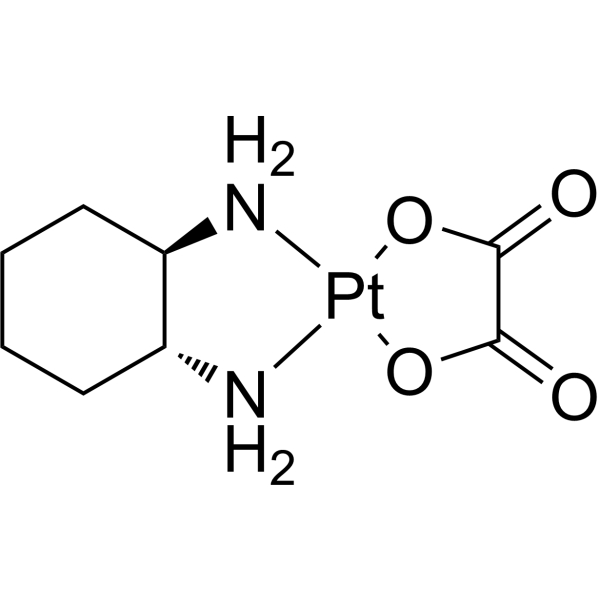
    O=C(O1)C(O[Pt]21[NH2][C@@H]3CCCC[C@H]3[NH2]2)=O

    輸送条件

    Room temperature in continental US; may vary elsewhere.

    保管条件

    4°C, protect from light

    *In solvent : -80°C, 6 months; -20°C, 1 month (protect from light)

    溶剤 & 溶解度
    体外: 

    H2O : 2 mg/mL (5.03 mM; ultrasonic and warming and heat to 60°C; DMSO can inactivate Oxaliplatin's activity)

    DMF : 1.67 mg/mL (4.20 mM; Need ultrasonic; DMSO can inactivate Oxaliplatin's activity)

    Ethanol : < 1 mg/mL (insoluble; DMSO can inactivate Oxaliplatin's activity)

    Preparing
    Stock Solutions
    Concentration Solvent Mass 1 mg 5 mg 10 mg
    1 mM 2.5171 mL 12.5853 mL 25.1705 mL
    5 mM 0.5034 mL 2.5171 mL 5.0341 mL
    10 mM --- --- ---
    View the Complete Stock Solution Preparation Table

    * Please refer to the solubility information to select the appropriate solvent. Once prepared, please aliquot and store the solution to prevent product inactivation from repeated freeze-thaw cycles.
    Storage method and period of stock solution: -80°C, 6 months; -20°C, 1 month (protect from light). When stored at -80°C, please use it within 6 months. When stored at -20°C, please use it within 1 month.

    * Note: If you choose water as the stock solution, please dilute it to the working solution, then filter and sterilize it with a 0.22 μm filter before use.

    • Molarity Calculator

    • Dilution Calculator

    Mass (g) = Concentration (mol/L) × Volume (L) × Molecular Weight (g/mol)

    Mass
    =
    Concentration
    ×
    Volume
    ×
    Molecular Weight *

    Concentration (start) × Volume (start) = Concentration (final) × Volume (final)

    一般には略語で表示されます:C1V1 = C2V2

    濃度 (開始)

    C1

    ×
    体積 (開始)

    V1

    =
    濃度 (終了)

    C2

    ×
    体積 (終了)

    V2

    体内:

    For the following dissolution methods, please prepare the working solution directly. It is recommended to prepare fresh solutions and use them promptly within a short period of time.
    The percentages shown for the solvents indicate their volumetric ratio in the final prepared solution. If precipitation or phase separation occurs during preparation, heat and/or sonication can be used to aid dissolution.

    • Protocol 1

      Add each solvent one by one:  5% w/v Glucose Solution

      Solubility: 3.33 mg/mL (8.38 mM); Clear solution; Need ultrasonic

    In Vivo Dissolution Calculator
    Please enter the basic information of animal experiments:

    Dosage

    mg/kg

    Animal weight
    (per animal)

    g

    Dosing volume
    (per animal)

    μL

    Number of animals

    Recommended: Prepare an additional quantity of animals to account for potential losses during experiments.
    Calculation results:
    Working solution concentration: mg/mL
    The concentration of the stock solution you require exceeds the measured solubility. The following solution is for reference only.If necessary, please contact MedChemExpress (MCE).
    純度とドキュメンテーション

    純度: 99.65%

    参考文献

    Complete Stock Solution Preparation Table

    * Please refer to the solubility information to select the appropriate solvent. Once prepared, please aliquot and store the solution to prevent product inactivation from repeated freeze-thaw cycles.
    Storage method and period of stock solution: -80°C, 6 months; -20°C, 1 month (protect from light). When stored at -80°C, please use it within 6 months. When stored at -20°C, please use it within 1 month.

    Optional Solvent Concentration Solvent Mass 1 mg 5 mg 10 mg 25 mg
    DMF / H2O 1 mM 2.5171 mL 12.5853 mL 25.1705 mL 62.9263 mL
    H2O 5 mM 0.5034 mL 2.5171 mL 5.0341 mL 12.5853 mL

    * Note: If you choose water as the stock solution, please dilute it to the working solution, then filter and sterilize it with a 0.22 μm filter before use.

    • No file chosen (Maximum size is: 1024 Kb)
    • If you have published this work, please enter the PubMed ID.
    • Your name will appear on the site.
    • Molarity Calculator

    • Dilution Calculator

    The molarity calculator equation

    Mass (g) = Concentration (mol/L) × Volume (L) × Molecular Weight (g/mol)

    質量   濃度   体積   分子量 *
    = × ×

    The dilution calculator equation

    Concentration (start) × Volume (start) = Concentration (final) × Volume (final)

    一般には略語で表示されます:C1V1 = C2V2

    濃度 (開始) × 体積 (開始) = 濃度 (終了) × 体積 (終了)
    × = ×
    C1   V1   C2   V2
    Help & FAQs
    • Do most proteins show cross-species activity?

      Species cross-reactivity must be investigated individually for each product. Many human cytokines will produce a nice response in mouse cell lines, and many mouse proteins will show activity on human cells. Other proteins may have a lower specific activity when used in the opposite species.

    最近チェックした製品:

    オンラインお問い合わせ

    Your information is safe with us. * Required Fields.

    製品名


    カスタマ需要量 *

    お名前 *


    タイトル

    メールアドレス *


    電話番号 *

    デパートメント


    組纖名 *

    市区町村

    都道府県

    国或いは地域 *


    必ず会社名を記載ください。個人への返信は行いません。

    備考

    バルクお問い合わせ

    Inquiry Information

    製品名:
    Oxaliplatin
    製品番号:
    HY-17371
    数量:
    MCE 日本正規代理店: