



Oxaliplatin (Standard)

Based on 1 Customer Validation
Oxaliplatin (Standard) is the analytical standard of Oxaliplatin. This product is intended for research and analytical applications. Oxaliplatin is a DNA synthesis inhibitor. Oxaliplatin causes DNA crosslinking damage, prevents DNA replication and transcription and induces apoptosis. Oxaliplatin can be used for cancer research.
Nos produits utilisent uniquement pour la recherche. Nous ne vendons pas aux patients.
- Pureté : 99.99%
- CAS No.: 61825-94-3
- Formule: C8H14N2O4Pt
- Masse moléculaire:397.29
-
Stockage:
Please store the product under the recommended conditions in the Certificate of Analysis.


To place orders, for customer services and technical support, please contact: MedChemExpress USA
Tel: 609-228-6898 E-mail: [email protected] [email protected]


-
 Product Information
-
Chemical Information
- Pureté et documentation
-
 Help & FAQs


-
HY-90006
5-FluorouracilThymidylate Synthase Inhibitor -

HY-90006R
5-Fluorouracil (Standard)Thymidylate Synthase Inhibitor -
HY-17371
OxaliplatinDNA Synthesis Inhibitor -

HY-B0015R
Paclitaxel (Standard)Antitumor Agent -
HY-B0016
CapecitabineDNA/RNA Synthesis Inhibitor -
HY-17394
CisplatinDNA Alkylator -
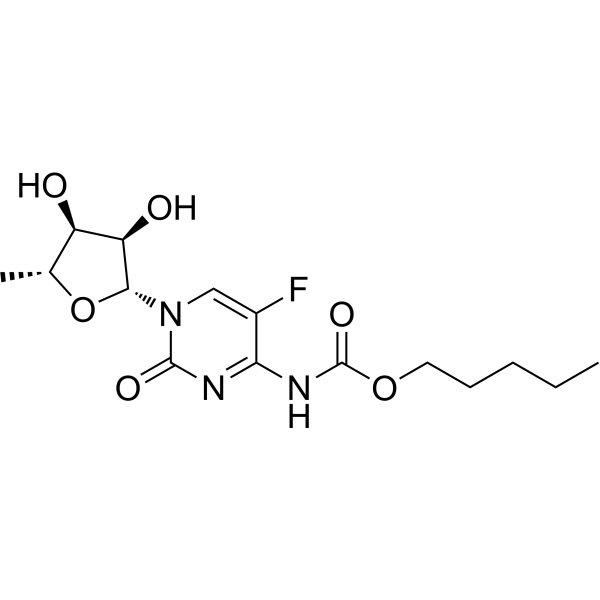
HY-B0016R
Capecitabine (Standard)DNA/RNA Synthesis Inhibitor -
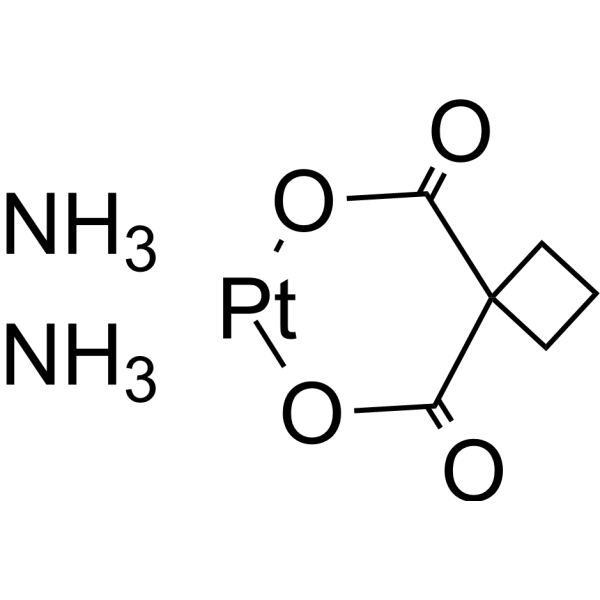
HY-17393
CarboplatinDNA Synthesis Inhibitor -
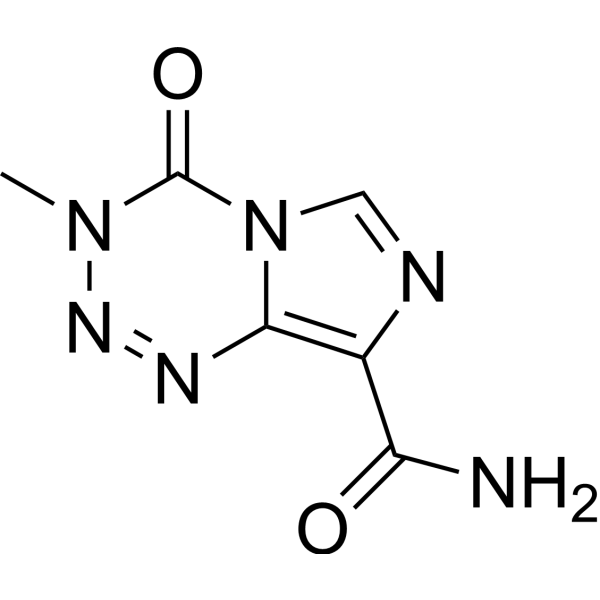
HY-17364
TemozolomideDNA Alkylator -
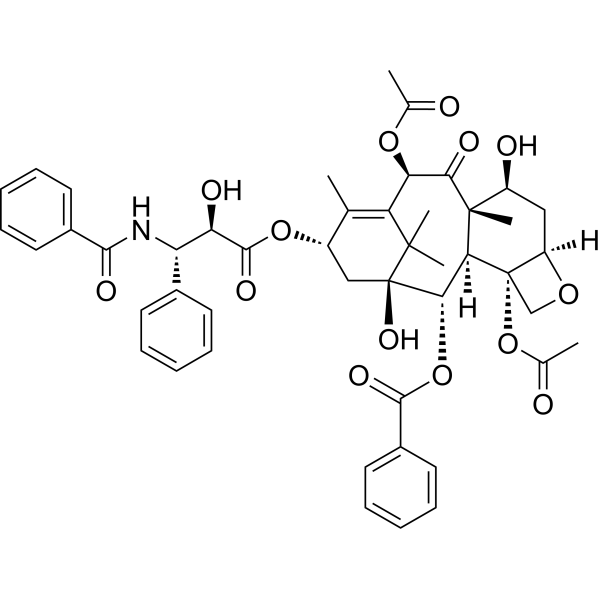
HY-B0015
PaclitaxelAntitumor Agent -
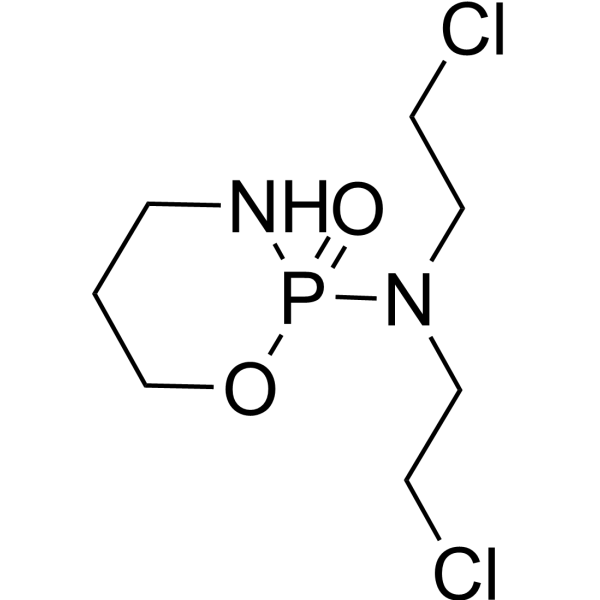
HY-17420
CyclophosphamideAlkylating Agent -
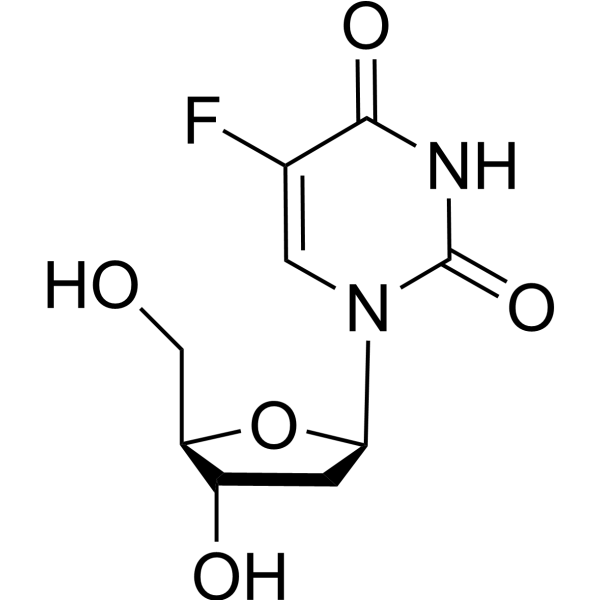
HY-B0097
FloxuridineOncology Antimetabolite


Product Information
Information
Application
The compound is the grade of analytical standard, which is the reference standard supplied assay. It is commonly used in qualitative, quantitative and methodological research experiments in HPLC, GC and MS.


Chemical Information
-
CAS No. 61825-94-3
-
Appearance Solid
-
Masse moléculaire 397.29
-
Formule C8H14N2O4Pt
-
Color White to off-white
-
SMILES
O=C(O1)C(O[Pt]21[NH2][C@@H]3CCCC[C@H]3[NH2]2)=O
-
Livraison
Room temperature in continental US; may vary elsewhere.
-
Stockage
Please store the product under the recommended conditions in the Certificate of Analysis.


Pureté et documentation
-
SDS (419 KB)
- English - EN (419 KB)
- Français - FR (419 KB)
- Deutsch - DE (419 KB)
- Norwegian - NO (419 KB)
- Español - ES (419 KB)
- Swedish - SV (419 KB)
- Italian - IT (419 KB)
- Korean - KR (419 KB)
- Portuguese - PT (419 KB)
-
Instruction de manipulation (2659 KB)
Références
[1]. Raymond E, et al. Oxaliplatin: a review of preclinical and clinical studies. Ann Oncol. 1998 Oct;9(10):1053-71. [Content Brief]
[2]. Mohammed MQ, et al. Oxaliplatin is active in vitro against human melanoma cell lines: comparison with NSC 119875 and NSC 241240. Anticancer Drugs. 2000 Nov;11(10):859-63. [Content Brief]
[3]. Pendyala L, et al. In vitro cytotoxicity, protein binding, red blood cell partitioning, and biotransformation of oxaliplatin. Cancer Res. 1993 Dec 15;53(24):5970-6. [Content Brief]
[4]. Wang Z, et al. Oxaliplatin induces apoptosis in hepatocellular carcinoma cells and inhibits tumor growth. Expert Opin Investig Drugs. 2009 Nov;18(11):1595-604 [Content Brief]
[5]. Mathé G, et al. Oxalato-platinum or 1-OHP, a third-generation platinum complex: an experimental and clinical appraisal and preliminary comparison with cis-platinum. Biomed Pharmacother. 1989;43(4):237-50. [Content Brief]
[6]. Schellingerhout D, et al. Impairment of retrograde neuronal transport in oxaliplatin-induced neuropathy demonstrated by molecular imaging. PLoS One. 2012;7(9):e45776. doi: 10.1371/journal.pone.0045776. Epub 2012 Sep 20. [Content Brief]
[7]. Park GY, et al. Phenanthriplatin, a monofunctional DNA-binding platinum anticancer drug candidate with unusual potency and cellular activity profile. Proc Natl Acad Sci U S A. 2012 Jul 24;109(30):11987-92. [Content Brief]
[8]. Yi Yao, et al. Comparative proteomic analysis of colon cancer cells in response to oxaliplatin treatment. Biochim Biophys Acta. 2009 Oct;1794(10):1433-40. [Content Brief]
[9]. Garrett MJ, et, al. Capecitabine, Oxaliplatin, and Bevacizumab (BCapOx) Regimen for Metastatic Colorectal Cancer. Hosp Pharm. 2017 May;52(5):341-347. [Content Brief]

Calculators
Concentration (start) × Volume (start) = Concentration (final) × Volume (final)


Oxaliplatin (Standard) Related Classifications
HY-17371R Related Classifications
 Powered by Bioz