



Apoptosis
Apoptosis
Apoptosis is a distinctive form of cell death exhibiting specific morphological and biochemical characteristics, including cell membrane blebbing, chromatin condensation, genomic DNA fragmentation, and exposure of specific phagocytosis signaling molecules on the cell surface. Cells undergoing apoptosis differ from those dying through necrosis. Necrotic cells are usually recognized by the immune system as a danger signal and, thus, resulting in inflammation; in contrast, apoptotic death is quiet and orderly.
There are two major pathways of apoptotic cell death induction: The intrinsic pathway, also called the Bcl-2-regulated or mitochondrial pathway, is activated by various developmental cues or cytotoxic insults, such as viral infection, DNA damage and growth-factor deprivation, and is strictly controlled by the BCL-2 family of proteins. The extrinsic or death-receptor pathway is triggered by ligation of death receptors (members of the tumor necrosis factor (TNF) receptor family, such as Fas or TNF receptor-1 (TNFR1)) that contain an intracellular death domain, which can recruit and activate caspase-8 through the adaptor protein Fas-associated death domain (FADD; also known as MORT1) at the cell surface. This recruitment causes subsequent activation of downstream (effector) caspases, such as caspase-3, -6 or -7, without any involvement of the BCL-2 family.
Studies suggest that alterations in cell survival contribute to the pathogenesis of a number of human diseases, including cancer, viral infections, autoimmune diseases, neurodegenerative disorders, and AIDS (acquired immunodeficiency syndrome). Treatments designed to specifically alter the apoptotic threshold may have the potential to change the natural progression of some of these diseases.
All Product Categories
-
Apoptosis Inhibitors
(904)
View all products
-
Apoptosis Agonists
(7)
View all products
-
Apoptosis Antagonists
(9)
View all products
-
Apoptosis Activators
(363)
View all products
-
Apoptosis Modulators
(60)
View all products
-
Apoptosis Inducers
(7944)
View all products
-
Apoptosis Degrader
(1)
View all products
-
Apoptosis Controls
(33)
View all products
-
Apoptosis Related Products (9888)
Related Products (9888)

-
Antibodies (120)
-
Cinchonine (Standard)
 0 ImagesSynonyms: (8R,9S)-Cinchonine (Standard); LA40221 (Standard)Cinchonine (Standard) is the analytical standard of Cinchonine. This product is intended for research and analytical applications. Cinchonine is a natural compound present in Cinchona bark with antimalarial, antitumor, anti-inflammatory, anti platelet-aggregation and anti-obesity properties. Cinchonine inhibits cells proliferation and autophagy and induces apoptosis through activation of Caspase-3. Cinchonine activates endoplasmic reticulum stress-induced apoptosis in human liver cancer cells.
-
HI042
 0 ImagesCat. No.: HY-175473CAS No.: 898168-15-5HI042 is a FMS-like Tyrosine Kinase 3 (FLT3) inhibitor. HI042 shows IC50 values of 0.62 μM for MOLM-13, 0.33 μM for MV4-11, and 0.89 μM for OCI-AML3 cells. HI042 selectively reduces the viability of FLT3-internal tandem duplication (FLT3-|TD) mutations-positive cell lines, induces apoptosis, disrupts cell cycle progression, and diminishes the clonogenic potential. HI042 can be used for the research of acute myeloid leukemia (AML).
-
Boerelasin E
 0 ImagesCat. No.: HY-N15306Boerelasin E is the first cytochalasan possessing a cis-configured Δ21(22) double bond that can be isolated from endophytic fungus Boeremia exigua. Boerelasin E exhibits antiproliferative activity against MCF-7 cells (IC50=20.52 μM) more potent than cisplatin (HY-17394). Boerelasin E inhibits the complete cell division of MCF-7 cells by arresting them in the G2/M phase and inducing apoptosis[1].
-
Kuwanon H (Standard)
 0 ImagesCat. No.: HY-N2600RCAS No.: 76472-87-2Kuwanon H (Standard) is the analytical standard of Kuwanon H. This product is intended for research and analytical applications. Kuwanon H is a selective non-peptide bombesin receptor antagonist and platelet activation inhibitor. Kuwanon H also acts as a specific antagonist of GRP-preferring receptors, with a Ki value of 290 nM for mouse GRP-R and 6500 nM for rat NMB-R. Kuwanon H inhibits the phosphorylation of AKT, mTOR, ERK, cPLA2 and p38, and upregulates TRIB3. It induces endoplasmic reticulum stress, apoptosis and autophagosome formation. Kuwanon H blocks calcium mobilization, mitogenic signaling, DNA synthesis, dense granule secretion, thromboxane A2 generation and integrin αIIb/β3 activity. It inhibits collagen-induced platelet aggregation and fibronectin adhesion, and delays clot retraction. Kuwanon H inhibits melanoma cell growth in vitro and in vivo, and enhances the sensitivity of melanoma cells to CDDP. It can be used in research related to melanoma, small cell lung cancer and thrombosis.
-
Ginkgetin (Standard)
 0 ImagesGinkgetin (Standard) is the analytical standard of Ginkgetin. This product is intended for research and analytical applications. Ginkgetin, a biflavone, is isolated from Ginkgo biloba leaves. Ginkgetin exhibit anti-tumor, anti-inflammatory, neuroprotective, anti-fungal activities. Ginkgetin is also a potent inhibitor of Wnt signaling, with an IC50 of 5.92 μΜ.
-
Fidaxomicin-d6
 0 ImagesCat. No.: HY-17580S1Synonyms: OPT-80-d6; PAR-101-d6Fidaxomicin-d6 (OPT-80-d6) is the deuterium labeled Fidaxomicin (HY-17580). Fidaxomicin (OPT-80), a macrocyclic antibiotic, is an orally active and potent RNA polymerase inhibitor. Fidaxomicin has a narrow spectrum of antibacterial activity and a good anti-Clostridium difficile activity (MIC90=0.12 μg/mL). Fidaxomicin can be used for Clostridium difficile infection (CDI) research.
-
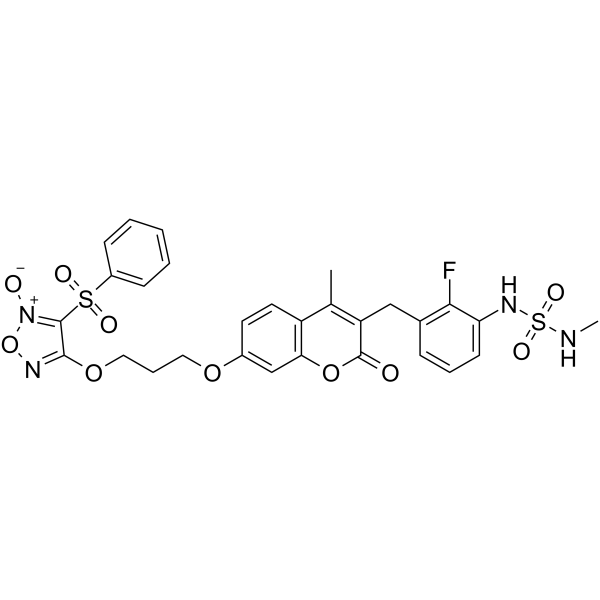
BMX-IN-3
 0 ImagesCat. No.: HY-173057CAS No.: 2657662-64-9
-
Lw13
 0 ImagesCat. No.: HY-162589Lw13 is a Hsp90 PROTAC degrader. Lw13 induces Hsp90 degradation via the ubiquitin-proteasome system, destabilizes client proteins HER2 and AKT, and blocks the activation of the HER2/AKT/mTOR signaling pathway. Lw13 inhibits the metastasis of cervical cancer cells, induces cell cycle arrest and apoptosis (apoptosis). Lw13 exerts synergistic anti-tumor activity with Cisplatin (HY-17394). Lw13 is applicable to cervical cancer-related research.
-
Isobutylparaben (Standard)
 0 ImagesSynonyms: Isobutyl-P-Hydroxybenzoate (Standard)Isobutylparaben (Standard) is the analytical standard of Isobutylparaben. This product is intended for research and analytical applications. Isobutylparaben (Isobutyl 4-hydroxybenzoate) is the agonist for PXR, CAR and PPAR. Isobutylparaben has a broad-spectrum antimicrobial activity and widely used in personal care products and cosmetics.
-
SL-3-19
 0 ImagesCat. No.: HY-130559CAS No.: 2000199-45-9SL-3-19 is a tubulin ligand. SL-3-19 exhibits antitumor activity against esophageal squamous cell carcinoma (ESCC) both in vitro and in vivo by inhibiting microtubule assembly, inducing G2/M phase cell cycle arrest and apoptosis, and disrupting tumor blood vessels. SL-3-19 has a higher activity than SL-1-73 (HY-130558). SL-3-19 can be used for the research of ESCC and other tumors.
-
2'-O-Methyl-5-iodouridine
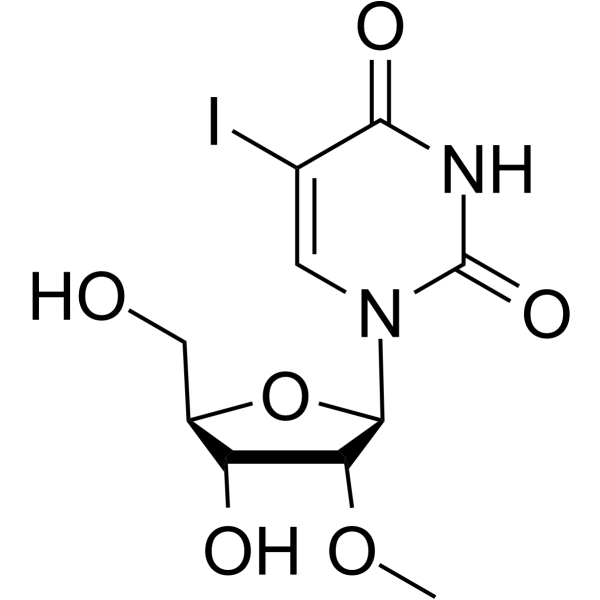 0 ImagesSynonyms: 5-Iodo-2'-O-methyluridine2’-O-Methyl-5-iodouridine (5-Iodo-2'-O-methyluridine) is a purine nucleoside analog. Purine nucleoside analogs have broad antitumor activity targeting indolent lymphoid malignancies. Anticancer mechanisms in this process rely on inhibition of DNA synthesis, induction of apoptosis, etc.
-
Myrislignan-13C,d2
 0 ImagesCat. No.: HY-N0608SMyrislignan-13C,d2 is the 13C, d2 deuterated-labeled Myrislignan (HY-N0608). Myrislignan is a PI3K/AKT/NF-κB inhibitor that can cross the blood-brain barrier. Myrislignan exerts anticancer activity by inducing apoptosis and ferroptosis. Myrislignan inhibits the replication and invasion of Toxoplasma gondii; it induces reactive oxygen species (ROS) imbalance, autophagy, and the death of Toxoplasma gondii tachyzoites. Myrislignan inhibits mitochondrial function and ERK1/2 phosphorylation to improve ovariectomy-induced osteoporosis. Myrislignan can be used in studies related to gastric cancer, glioblastoma, osteoporosis, and toxoplasmosis.
-
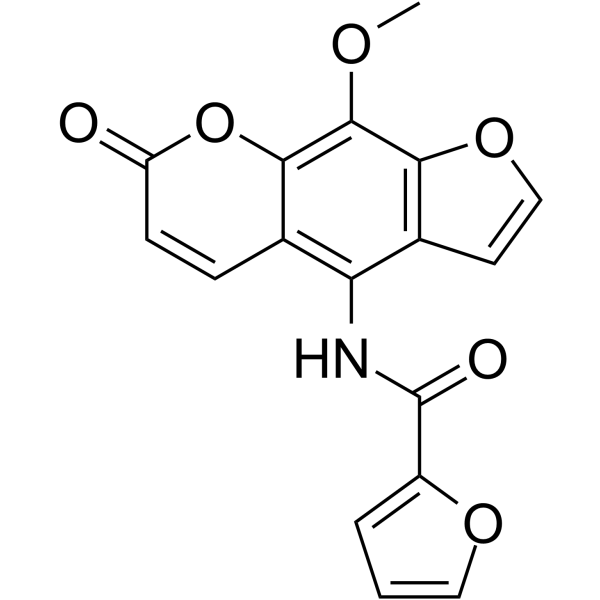
BPH-628
 0 ImagesCat. No.: HY-113869CAS No.: 1059677-40-5BPH-628 is an aromatic geranylgeranyl diphosphate synthase (GGPPS) inhibitor, with a pIC50 of 6.1.
-
Mammea A/BA
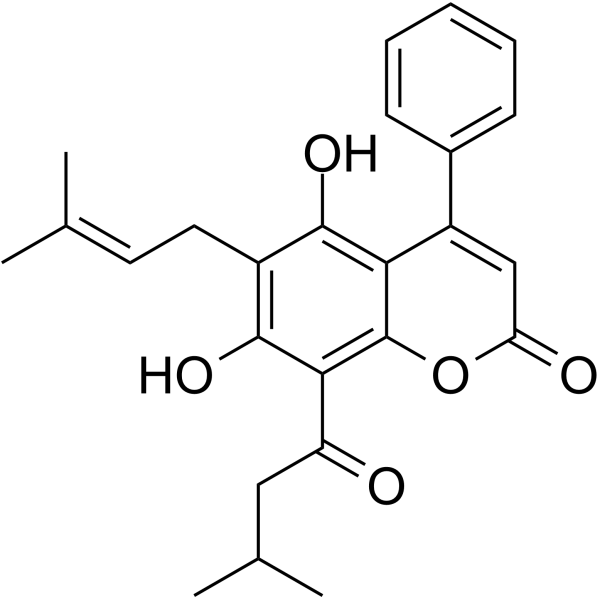 0 ImagesMammea A/BA has potent activity against Trypanosoma cruzi (T. cruzi). Mammea A/BA induces mitochondrial dysfunction, reactive oxygen species (ROS) production and DNA fragmentation, and increases number of acidic vacuoles. Mammea A/BA can induce apoptosis, autophagy and necrosis. Mammea A/BA can be used for researching chagas disease.
-
Cidofovir-13C,15N2 disodium
 0 ImagesCat. No.: HY-167911SSynonyms: GS 0504-13C,15N2 disodium; HPMPC-13C,15N2 disodium; (S)-HPMPC-13C,15N2 disodiumCidofovir-13C,15N2 disodium (GS 0504-13C,15N2 disodium) is the 13C- and 15N-labeled Cidofovir disodium (HY-167911). Cidofovir sodium is an acyclic monophosphate nucleotide analogue and CMV inhibitor with antiviral activity. Cidofovir sodium inhibits cytomegalovirus (CMV) replication by selectively inhibiting viral DNA polymerase. Cidofovir sodium induces apoptosis and can be used in studies of AIDS cytomegalovirus retinitis, herpes, and cancer. Cidofovir sodium also has anti-orthopoxvirus and anti-variola activities.
-
Cinobufagin (Standard)
 0 ImagesCinobufagin (Standard) is the analytical standard of Cinobufagin. This product is intended for research and analytical applications. Cinobufagin is an anticancer agent that can be secreted by the Asiatic toad Bufo gargarizans. Cinobufagin induces the cell cycle arrests in the G1 phase or G2/M phase, leading to apoptosis in cancer cells. Cinobufagin inhibits tumor growth in melanoma and glioblastoma multiforme xenograft mouse models.
-
TAT-NEP1-40 TFA
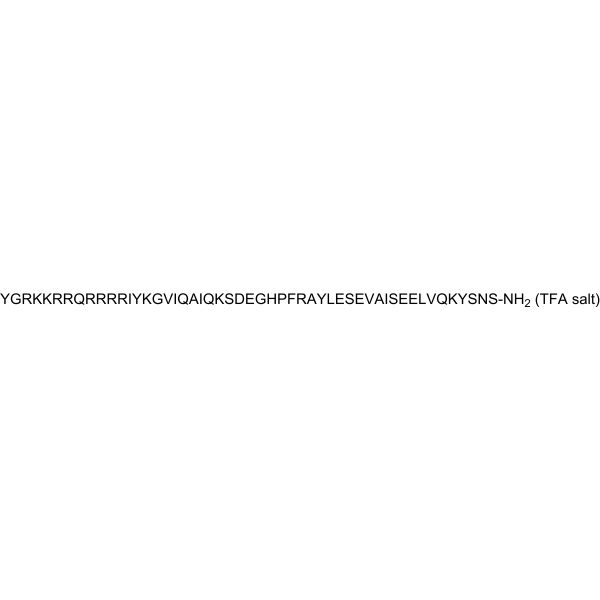 0 ImagesCat. No.: HY-P5754ATAT-NEP1-40 TFA is a BBB-penatrable peptide. TAT-NEP1-40 TFA protects PC12 cells against oxygen and glucose deprivation (OGD), and promotes neurite outgrowth. TAT-NEP1-40 TFA also improves ischemia-induced neurologic outcomes by inhibiting cell apoptosis in ischemic brains. TAT-NEP1-40 TFA can be used for research of CNS injuries, such as axonal regeneration and functional recovery after stroke.
-
WF-210
 0 ImagesCat. No.: HY-117614CAS No.: 1242279-00-0WF-210 is a potent procaspase-3 activator with an EC50 value of 0.95 μM. WF-210 induces Apoptosis. WF-210 has anti-tumor activity.




