



Bacterial
Anything that destroys bacteria or suppresses their growth or their ability to reproduce. Heat, chemicals such as chlorine, and antibiotic drugs all have antibacterial properties. Many antibacterial products for cleaning and handwashing are sold today. Such products do not reduce the risk for symptoms of viral infectious diseases in otherwise healthy persons. This does not preclude the potential contribution of antibacterial products to reducing symptoms of bacterial diseases in the home.
All Product Categories
-
Bacterial Inhibitors
(7487)
View all products
-
Bacterial Agonists
(3)
View all products
-
Bacterial Antagonists
(9)
View all products
-
Bacterial Activators
(23)
View all products
-
Bacterial Modulators
(27)
View all products
-
Bacterial Chemicals
(2)
View all products
-
Bacterial Inducers
(7)
View all products
-
Bacterial Controls
(14)
View all products
-
Bacterial Substrates
(2)
View all products
-
Bacterial Ligand
(1)
View all products
-
Bacterial Related Products (8804)
Related Products (8804)

-
Antibodies (14)
-
Related Compound Screening Libraries (1)
-
Doramectin (Standard)
 0 ImagesCat. No.: HY-17035RCAS No.: 117704-25-3Doramectin (Standard) is the analytical standard of Doramectin. This product is intended for research and analytical applications. Doramectin is a derivative of Ivermectin (HY-15310). Doramectin is a potent antiparasitic antibiotic. Doramectin is an active compound against S.mansoni in an NMRI mouse infection model.
-
Nithiamide
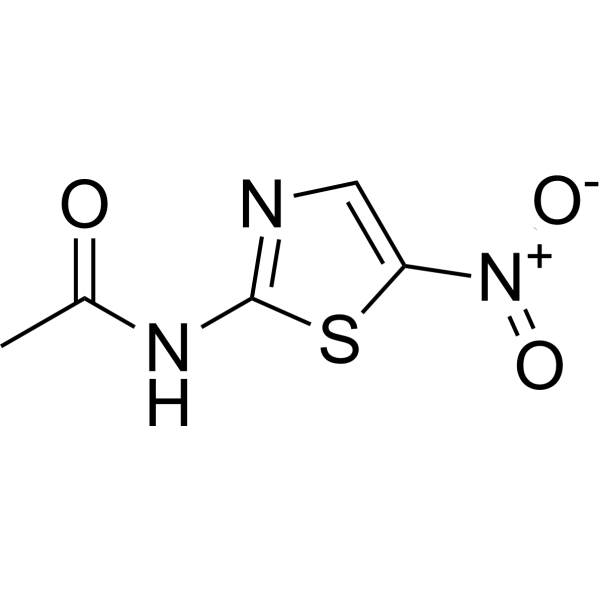 0 ImagesNithiamide is a non-5-nitroimidazole drugs, is a antibiotic used in veterinary.
-
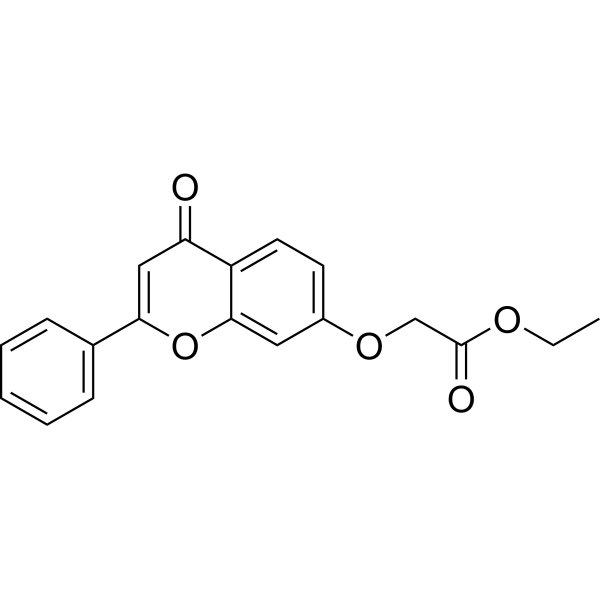
Avilamycin C
 0 ImagesCat. No.: HY-N13920CAS No.: 69787-80-0Avilamycin C is an avilamycin-type antibiotic. Avilamycin C has antibacterial activity and can inhibit Gram-positive bacteria.
-
Azlocillin
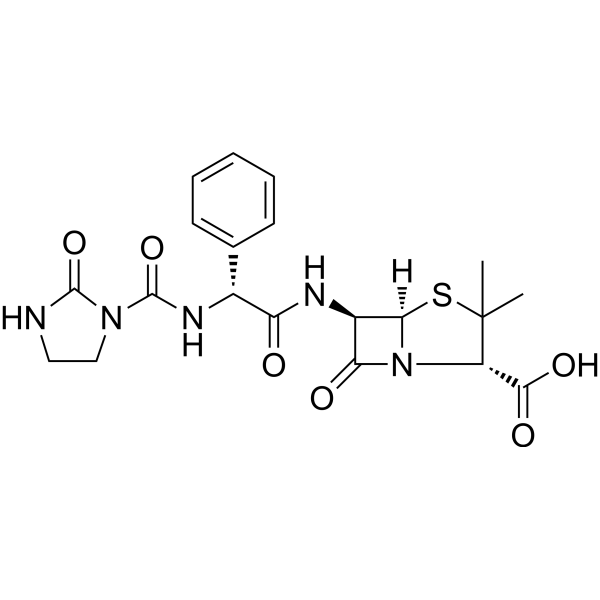 0 ImagesAzlocillin, an antibiotic, is a semisynthetic penicillin, and has broad-spectrum antibacterial activity. Azlocillin is active against drug-tolerant B. burgdorferi sensu stricto JLB31 infection.
-
Hesperidin dihydrochalcone
 0 ImagesCat. No.: HY-164370CAS No.: 35573-79-6Hesperidin dihydrochalcone is a non-toxic, low-sweetness sweetener. Hesperidin dihydrochalcone exhibits potent antioxidant and free radical scavenging activities, anti-lipid peroxidation activity, as well as potential effects of protecting the liver and kidneys, inhibiting bacteria, and improving gastrointestinal function.
-
Secnidazole (Standard)
 0 ImagesSynonyms: RP-14539 (Standard); PM-185184 (Standard)Secnidazole (Standard) is the analytical standard of Secnidazole. This product is intended for research and analytical applications. Secnidazole (RP-14539) is an orally active azole antibiotic and a imidazole mitigator of Serratia marcescens virulence. Secnidazole, as an analog of acylhomoserine lactones, effectively inhibits QS resulting in the attenuation of Pseudomonas aeruginosa pathogenesis. Secnidazole has antimicrobial activity against many anaerobic Gram-negative and Gram-positive bacterial species in vitro. Secnidazole can be used for the research of various diseases, such as amoebiasis and giardiasis, and bacterial vaginitis.
-
Ethyl acetoacetate-d5
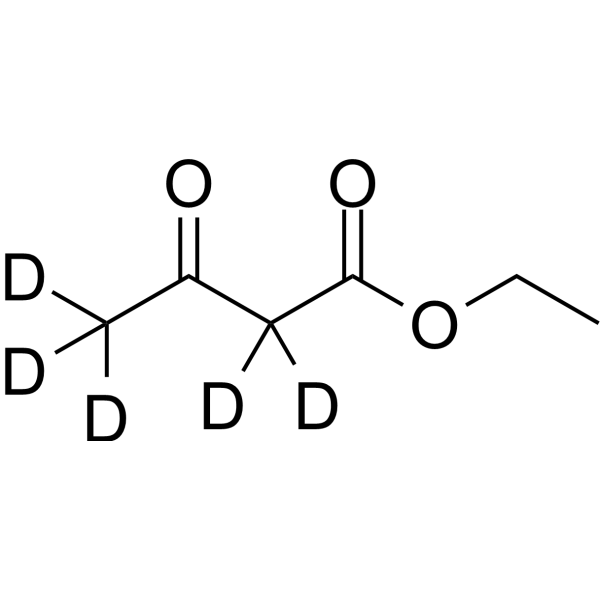 0 ImagesSynonyms: Ethyl acetylacetate-d5; EAA-d5Ethyl acetoacetate-d5 is the deuterium labeled Ethyl acetoacetate. Ethyl acetoacetate (Ethyl acetylacetate) is an ester widely used as an intermediate in the synthesis of many varieties of compounds. Ethyl acetoacetate is an inhibitor of bacterial biofilm.
-
Erythorbic acid (Standard)
 0 ImagesSynonyms: D-Isoascorbic acid (Standard); D-Araboascorbic acid (Standard)Erythorbic acid (Standard) (D-Isoascorbic acid (Standard)) is the analytical standard of Erythorbic acid (HY-N7079). This product is intended for research and analytical applications. Erythorbic acid is an orally active compound. Erythorbic acid improves the radiation resistance of Listeria monocytogenes. Erythorbic acid can react with free radicals and reduce oxidative damage. Erythorbic acid has weak antiscorbic activity. Erythorbic acid can prevent oxidative discoloration in meat products.
-
Sodium propionate-d5
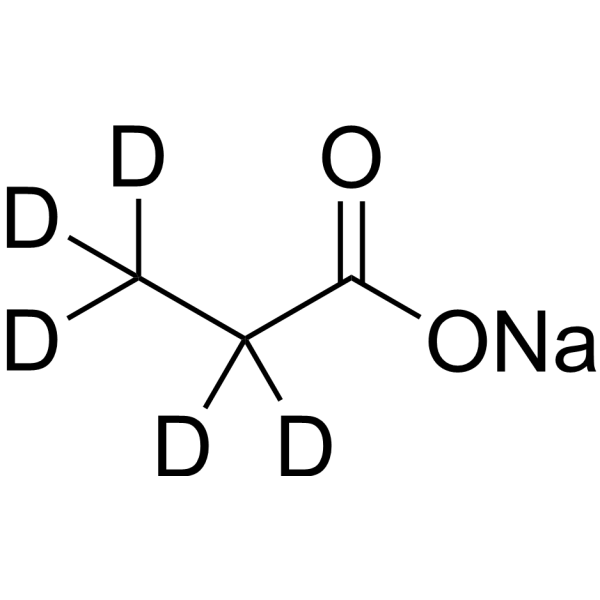 0 ImagesSodium propionate-d5 is the deuterium labeled Propionate sodium (HY-B1773A). Sodium propionate is an orally active short-chain fatty acid. Sodium propionate can be produced by intestinal bacteria from the metabolism of dietary fiber. Sodium propionate increases PPAR-γ, inhibits NF-κB activation, and reduces COX-2 expression and NO production. Sodium propionate also induces Apoptosis and Autophagy. Sodium propionate reduces HSV-1-induced keratitis. Sodium propionate has anticancer effects against glioblastoma. Sodium propionate exhibits neuroprotective, antioxidant, and anti-inflammatory activities. Sodium propionate can be used in the research of spinal cord injury and Alzheimer's disease.
-
4-Methylbenzohydrazide
 0 ImagesCat. No.: HY-W038767CAS No.: 3619-22-5Synonyms: p-Toluoylhydrazine4-Methylbenzohydrazide (p-ToluoylHYdrazine) (Compound 5) is an antibacterial agent. 4-Methylbenzohydrazide shows a pMIC value of 1.38 against Staphylococcus aureus, Bacillus subtilis, Escherichia coli, and Aspergillus niger.
-
Conimine
 0 ImagesConimine is a steroidal alkaloid, antibacterial agent and potentiator. Conimine is isolated from the seeds of Holarrhena antidysenteriaca Wall.ex A.DC. Conimine exhibits intrinsic antibacterial activity against methicillin-sensitive Staphylococcus aureus and methicillin-resistant Staphylococcus aureus. When combined with Penicillin, Conimine shows synergistic antibacterial effects against methicillin-resistant Staphylococcus aureus; when combined with Vancomycin (HY-B0671), it exerts synergistic antibacterial effects against both methicillin-sensitive and methicillin-resistant Staphylococcus aureus.
-
Ethylenediaminetetraacetic acid sodium hydrate
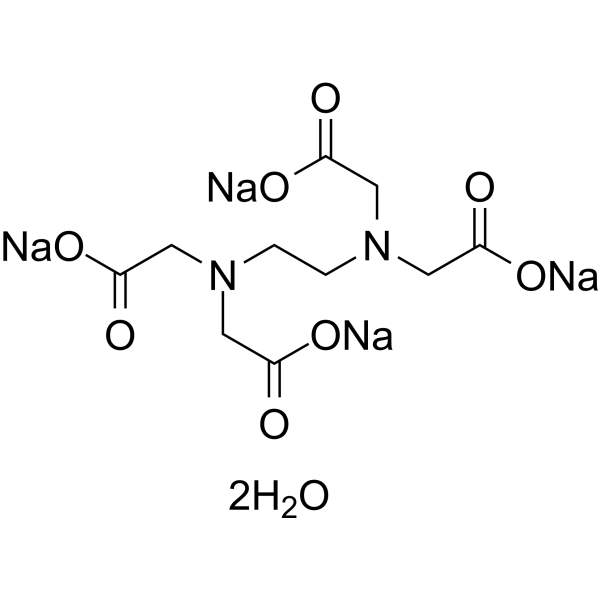 0 ImagesSynonyms: EDTA sodium hydrateEthylenediaminetetraacetic acid (EDTA) sodium hydrate is a kind of metal chelating agent (binds to bivalent and trivalent metal cations, including calcium). Ethylenediaminetetraacetic acid sodium hydrate has antibacterial, anti-inflammatory, antioxidant, anti-hypercalcemia and anticoagulant activities. Ethylenediaminetetraacetic acid sodium hydrate decreases the metal ion-catalyzed oxidative damage to proteins, and allows maintenance of reducing environment during protein purification. Ethylenediaminetetraacetic acid sodium hydrate can alleviate the liver fibrosis. Ethylenediaminetetraacetic acid sodium hydrate can be used for coronary artery disease and neural system disease research.
-
Diethyl terephthalate
 0 ImagesSynonyms: Terephthalic acid, diethyl esterDiethyl terephthalate (Terephthalic acid, diethyl ester) is a synthetic monomer for the production of polyethylene terephthalate (PET) and also a substrate for biodegradation. Diethyl terephthalate serves as a carbon source for the growth of Delftia sp. WL-3 and can be biodegraded by Delftia sp. WL-3.
-
Pinobanksin 5-methyl ether
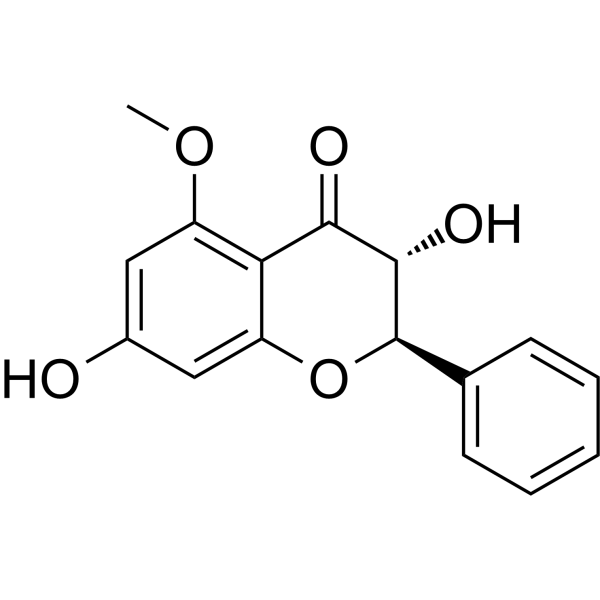 0 ImagesPinobanksin 5-methyl ether can be isolated from Georgian Propolises. Pinobanksin 5-methyl ether has anti-helicobacter activity. Pinobanksin 5-methyl ether is effective inducer of CYP9Q enzyme.
-
Fostriecin
 0 ImagesCat. No.: HY-106702ACAS No.: 87810-56-8Synonyms: PD 110161; CL 1565A; CI-920Fostriecin is a triene antibiotic. Fostriecin is a topoisomerase II and protein phosphatase PP2A inhibitor.
-
Dodecyl gallate (Standard)
 0 ImagesSynonyms: Lauryl gallate (Standard)Dodecyl gallate (Standard) is the analytical standard of Dodecyl gallate. This product is intended for research and analytical applications. Dodecyl gallate (Lauryl gallate) has been widely used as an antioxidant in food manufacturing, as well as in the pharmaceutical and cosmetic industries. Dodecyl gallate also is active against a highly relevant animal virus such as African swine fever virus (ASFV).
-
Sulfapyridine-d4
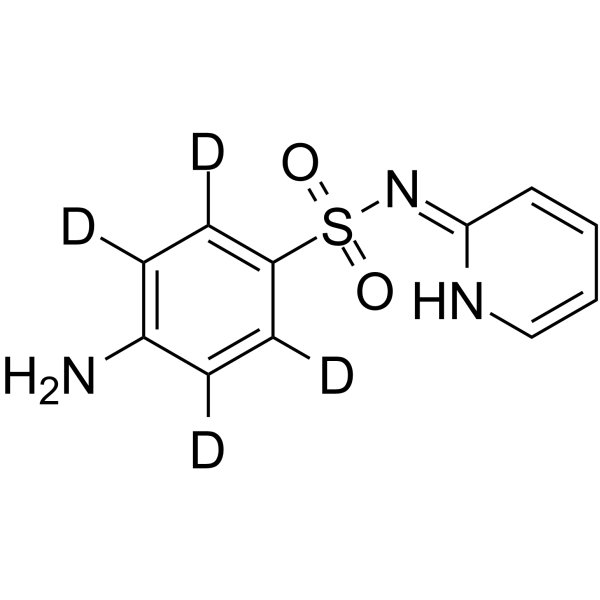 0 ImagesSulfapyridine-d4 is the deuterated-labeled Sulfapyridine (HY-B0212). Sulfapyridine, a major metabolite of Sulfasalazine, is a sulfonamide antibiotic agent. Sulfapyridine inhibits recombinant P. carinii dihydropteroate synthetase (DHPS) with an IC50 of 0.18 μM. Sulfapyridine has antibacterial, anti-inflammatory and anti-rheumatic activities.
-
Showdomycin
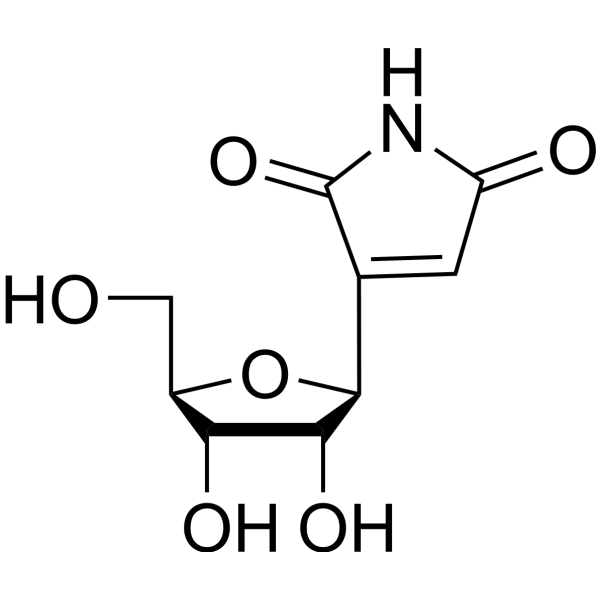 0 ImagesShowdomycin is an antibiotic produced by IM-2-induced in Streptomyces.
-
1-Naphthalenemethanol
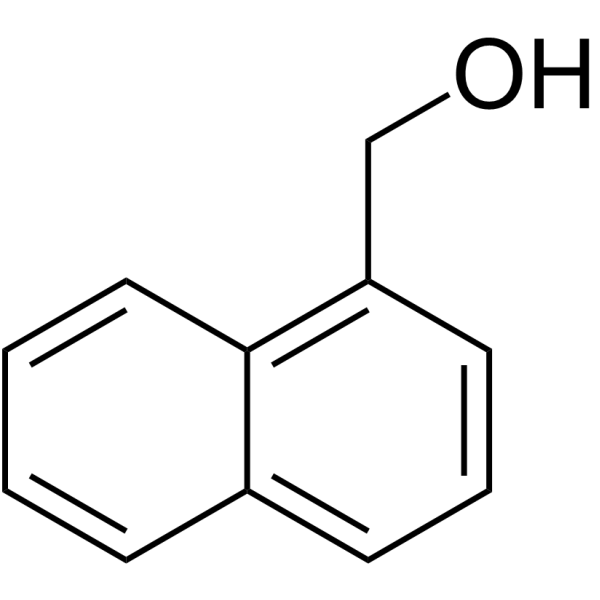 0 ImagesSynonyms: 1-Hydroxymethylnaphthalene1-Naphthalenemethanol is a hydroxyl-substituted naphthalene derivative. 1-Naphthalenemethanol can be extracted from the root of Annona senegalensis. 1-Naphthalenemethanol is a photolysis product of 1-napthaleneacetic acid. 1-Naphthalenemethanol, together with PAPS, provides some protection against the irreversible inactivation of AST IV caused by N-OH-2AF. 1-Naphthalenemethanol can be used in antibacterial research.




