



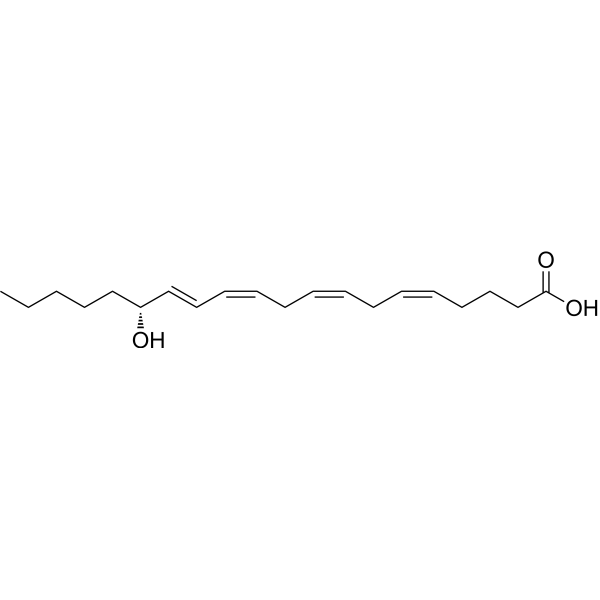
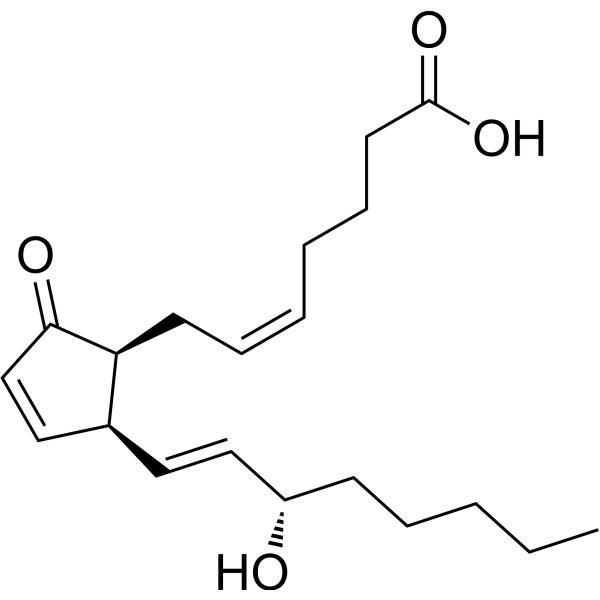
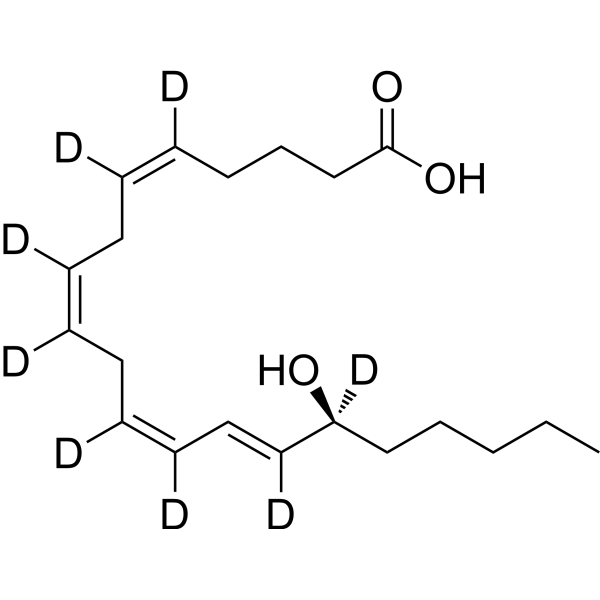
(±)15-HEPE
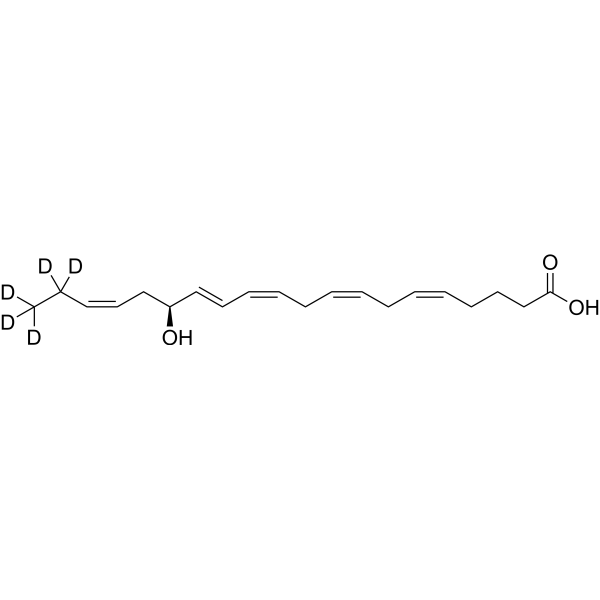
(±)15-HEPE is a racemic mixture of the monohydroxy fatty acids 15(R)-HEPE and 15(S)-HEPE (HY-130675A). (±)15-HEPE is active against P. acnes and S. aureus (MICs = 128 and 512 mg/L, respectively). It inhibits aggregation of isolated rat neutrophils induced by the formyl peptide receptor agonist fMLP (IC50 = 4.7 µM). Bronchoalveolar lavage fluid (BALF) levels of (±)15-HEPE are increased in patients with allergic asthma or COVID-19.
For research use only. We do not sell to patients.
- CAS No.: 88852-33-9
- Formula: C20H30O3
- Molecular Weight:318.45
-
Storage:
Solution, -20°C, 2 years


To place orders, for customer services and technical support, please contact: MedChemExpress USA
Tel: 609-228-6898 E-mail: [email protected] [email protected]


-
 Biological Activity
-
Chemical Information
- Protocols
- Purity & Documentation
- References
-
 Help & FAQs





Biological Activity
Description


Chemical Information
-
CAS No. 88852-33-9
-
Appearance Liquid
-
Molecular Weight 318.45
-
Formula C20H30O3
-
Color Colorless to light yellow
-
SMILES
CC/C=C\CC(O)/C=C/C=C\C/C=C\C/C=C\CCCC(O)=O
-
Synonyms
(±)15-hydroxyeicosapentaenoic acid; 15-OHEPA
-
Shipping
Room temperature in continental US; may vary elsewhere.
-
Storage
Solution, -20°C, 2 years

Protocols
-
Cell Cytotoxicity Assay
Cytotoxicity assays are usually based on the assessment of cell membrane damage, which can also be indirectly detected by measuring cell viability. Detection methods include MTT assay, CKK-8 assay, LDH assay and ATP assay, etc.
-
Ovalbumin-Induced Allergic Airway Inflammation
Ovalbumin-induced allergic airway inflammation is a mouse model in which systemic sensitization to ovalbumin, usually with aluminum hydroxide adjuvant, is followed by airway ovalbumin challenge to induce allergic airway inflammation, eosinophil recruitment, mucus production, serum antigen-specific IgE, Th2 cytokine responses, and airway hyperresponsiveness to methacholine. The model is used to study allergen-driven airway inflammation and asthma-like immune responses, but it does not reproduce every feature of human asthma. The main readouts are bronchoalveolar lavage fluid cellularity, lung histopathology, airway hyperresponsiveness, serum OVA-specific IgE, and cytokines such as IL-4, IL-5, and IL-13 in bronchoalveolar lavage fluid or lung samples. Eosinophilia and Th2 cytokines reflect allergic type 2 inflammation, while methacholine responsiveness provides a functional airway-reactivity endpoint.


Purity & Documentation
-
Data Sheet (265 KB)
-
SDS (252 KB)
- Français - FR (252 KB)
- Deutsch - DE (252 KB)
- Norwegian - NO (252 KB)
- Español - ES (252 KB)
- Swedish - SV (252 KB)
- Italian - IT (252 KB)
- Korean - KR (252 KB)
- Portuguese - PT (252 KB)
-
Handling Instructions (2659 KB)
References
[1]. Desbois AP, Lawlor KC. Antibacterial activity of long-chain polyunsaturated fatty acids against Propionibacterium acnes and Staphylococcus aureus. Mar Drugs. 2013;11(11):4544-4557. [Content Brief]
[2]. Lam BK, Hirai A, Yoshida S, Tamura Y, Wong PY. Transformation of 15-hydroperoxyeicosapentaenoic acid to lipoxin A5 and B5, mono- and dihydroxyeicosapentaenoic acids by porcine leukocytes. Biochim Biophys Acta. 1987;917(3):398-405. [Content Brief]
[3]. Lundström SL, Yang J, Källberg HJ, et al. Allergic asthmatics show divergent lipid mediator profiles from healthy controls both at baseline and following birch pollen provocation. PLoS One. 2012;7(3):e33780. [Content Brief]
[4]. Peh HY, Nshimiyimana R, Brüggemann TR, et al. 15-epi-lipoxin A5 promotes neutrophil exit from exudates for clearance by splenic macrophages. FASEB J. 2024;38(14):e23807. [Content Brief]

Calculators
Concentration (start) × Volume (start) = Concentration (final) × Volume (final)


(±)15-HEPE Related Classifications
HY-130675 Related Classifications
 Powered by Bioz