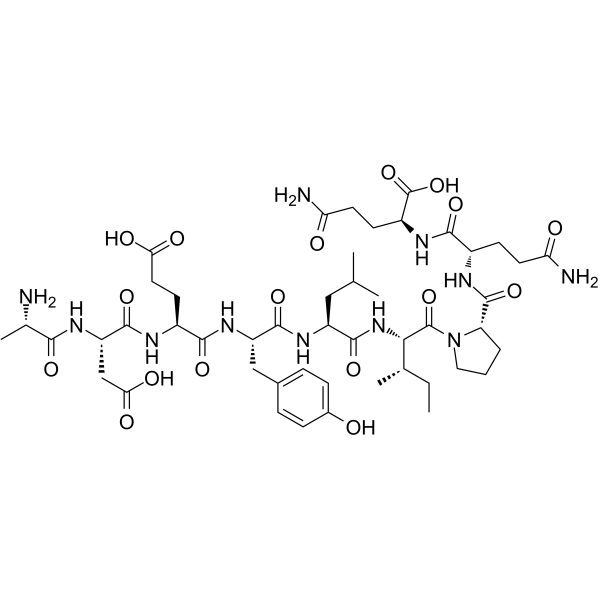
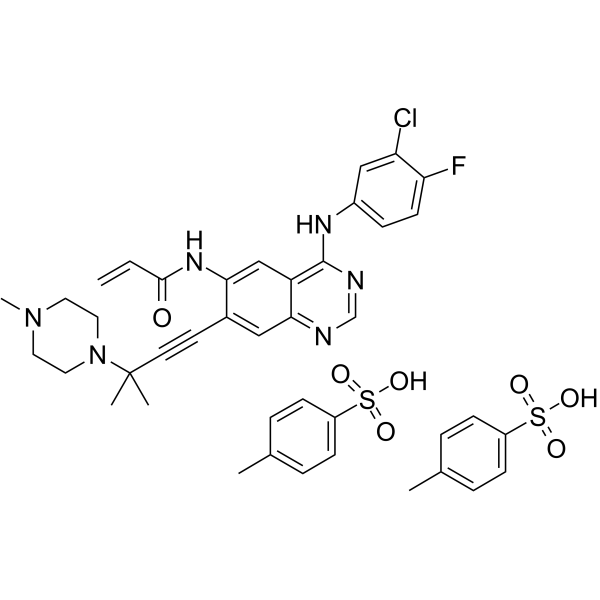
EGFR
Epidermal growth factor receptor; ErbB-1; HER1
The EGFR family of receptor tyrosine kinases (RTK) comprises four distinct receptors: the EGFR (also known as ErbB-1/HER1), ErbB-2 (neu, HER2), ErbB-3 (HER3) and ErbB-4 (HER4). All EGFR family members are characterized by a modular structure consisting of an extracellular ligand-binding domain, a single hydrophobic transmembrane region, and the intracellular part harbouring the highly conserved tyrosine kinase domain. The ErbB family of receptor tyrosine kinases (RTKs) couples binding of extracellular growth factor ligands to intracellular signaling pathways regulating diverse biologic responses, including proliferation, differentiation, cell motility, and survival. Ten growth factors and their ErbB specificities are: EGF, amphiregulin (AR), and TGF bind ErbB-1; betacellulin, and epiregulin bind both ErbB-1 and ErbB-4; the neuregulins (also called heregulins and Neu differentiation factors) NRG-1 and NRG-2 bind ErbB-3 and ErbB-4; and NRG-3 and NRG-4 bind ErbB-4. No known ligand binds ErbB-2. The three best characterized signaling pathways induced through ErbBs are Ras-mitogen-activated protein kinase (Ras-MAPK), phosphatidylinositol 3 kinase-protein kinase B (PI3K-PKB/Akt), and phospholipase C-protein kinase C (PLC-PKC) pathways.
EGFR Isoform Specific Products
All Product Categories
-
EGFR Inhibitors
(1036)
View all products
-
EGFR Agonists
(4)
View all products
-
EGFR Antagonists
(5)
View all products
-
EGFR Activators
(8)
View all products
-
EGFR Modulators
(7)
View all products
-
EGFR Chemicals
(3)
View all products
-
EGFR Inducers
(4)
View all products
-
EGFR Degraders
(45)
View all products
-
EGFR Controls
(6)
View all products
-
EGFR Substrate
(1)
View all products
-
EGFR Ligands
(19)
View all products
-
ErbB2/HER2 Proteins
(39)
View all products
-
ErbB3/HER3 Proteins
(15)
View all products
-
EGFR Proteins
(46)
View all products
-
ErbB4/HER4 Proteins
(10)
View all products
-
EGFR Related Products (1260)
Related Products (1260)

-
Recombinant Proteins (110)
-
Antibodies (19)
-
EGFR Isoform Comparison
-
Allitinib tosylate
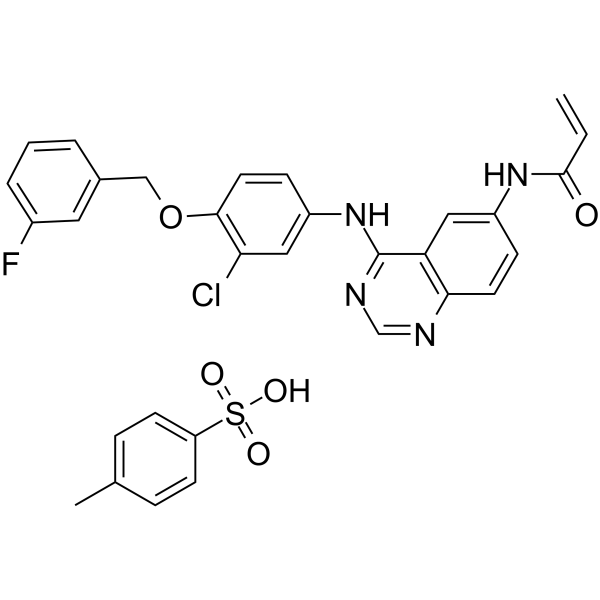 0 ImagesSynonyms: AST-1306 (TsOH)Allitinib tosylate (AST-1306 (TsOH)) is an orally active and irreversible EGFR and ErbB2 inhibitor with IC50s of 0.5 and 3 nM, respectively. Allitinib tosylate also inhibits ErbB4 with an IC50 of 0.8 nM. Allitinib tosylate is an anilino-quinazoline compound and has anti-cancer activity
-
Sec61-IN-3
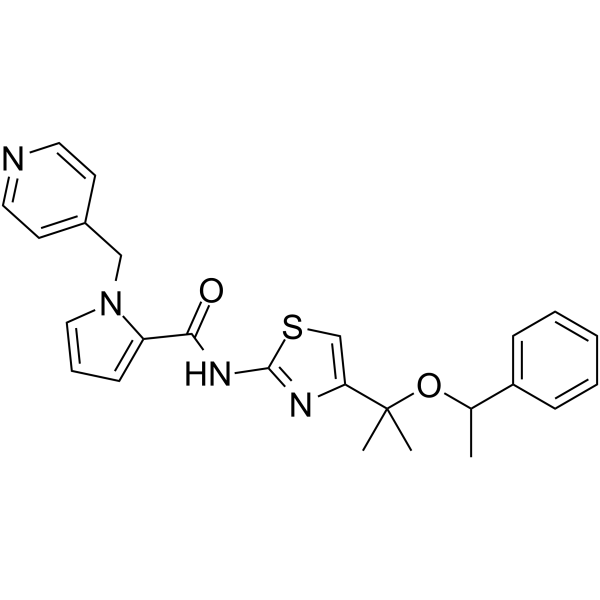 0 ImagesSec61-IN-3 is a Sec61 inhibitor. Sec61-IN-3 shows a significant inhibitory effect on PD-1 related reporter gene cell models (PD1tsGluc) (IC50 = 42 nM), and also has certain inhibitory activity on Her3 (IC50 = 99 nM), IL2 (IC50 = 144 nM) related reporter pathways, but has a relatively weak inhibitory effect on the TNFα (IC50 = 580 nM) pathway. Sec61-IN-3 can be used for cancer research.
-
DZD1516
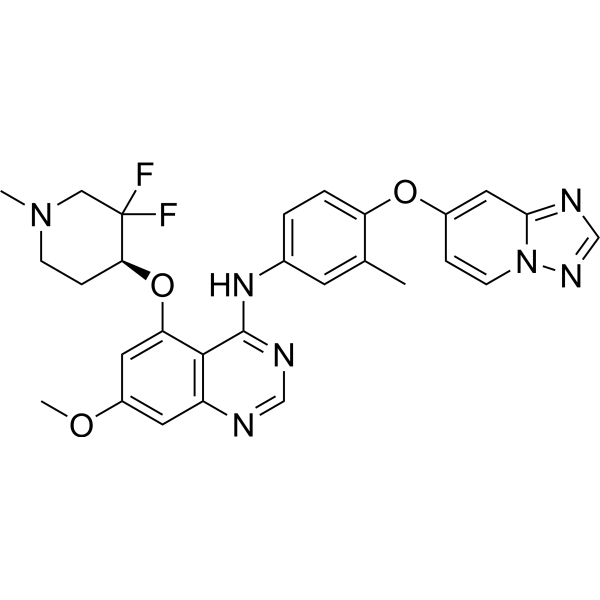 0 ImagesDZD1516 is a potent and selective HER2 inhibitor (IC50=0.56 nM) with good blood-brain permeability. DZD1516 exhibits antitumor activity in CNS and subcutaneous xenograft mouse models.
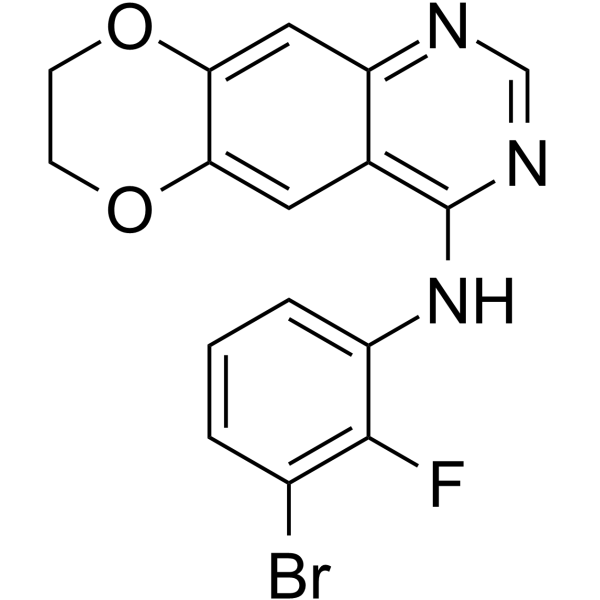
-
Wighteone
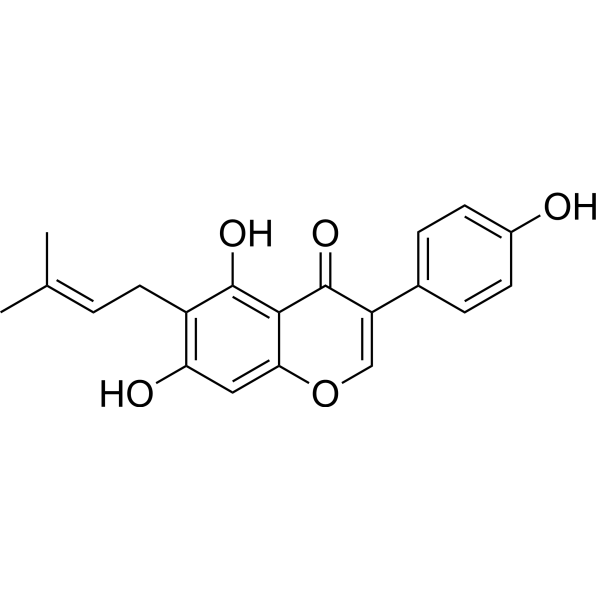 0 ImagesSynonyms: 6-Isopentenylgenistein; Erythrinin BWighteone (6-Isopentenylgenistein; Erythrinin B) is a prenylated isoflavone that acts as a HSP90/EGFRL858R/T790M inhibitor and antifungal agent. Wighteone reduces the expression level of HSP90, blocks EGF-induced phosphorylation of EGFR, and thereby inhibits the downstream ERK and AKT signaling pathways. Wighteone induces cell cycle redistribution, inhibits proliferation and triggers apoptosis in cancer cells. Wighteone can be isolated from Erythrina suberosa, and can also be induced to synthesize in Lotus japonicus under specific conditions. Wighteone can be used to study HER2-positive breast cancer, leukemia, non-small cell lung cancer with EGFRL858R/T790M mutation, and fungal infections.
-
PROTAC EGFR degrader 8
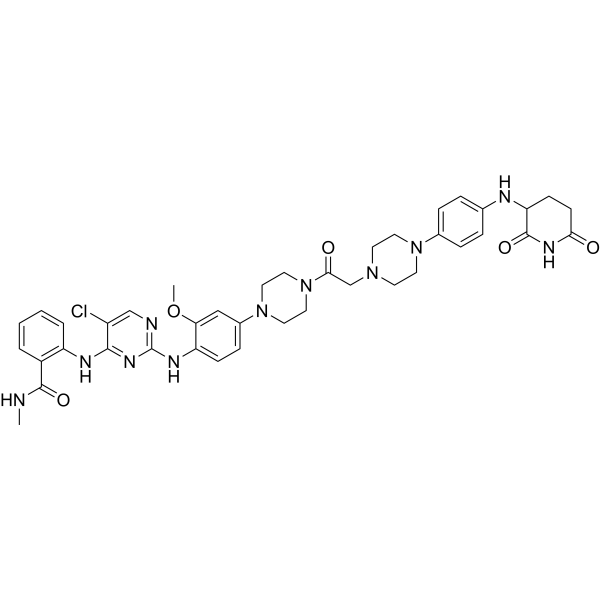 0 ImagesPROTAC EGFR degrader 8 (T-184) is a PROTAC degrader that targets EGFR for degradation by recruiting cereblon. It induces EGFR protein degradation with a DC50 of 10.18 nM. The IC50 values of PROTAC EGFR degrader 8 for inhibiting the growth of H1975, PC-9 and HCC827 cells are 7.72, 121.9 and 14.21 nM, respectively. PROTAC EGFR degrader 8 inhibits the proliferation of EGFR-mutant non-small cell lung cancer cells and can be used in studies related to non-small cell lung cancer.
-
13(S)-HPODE
 0 ImagesCat. No.: HY-110406CAS No.: 33964-75-913(S)-HPODE is a linoleic acid metabolite found in several plants and mammals.
-
Tarlox-TKI
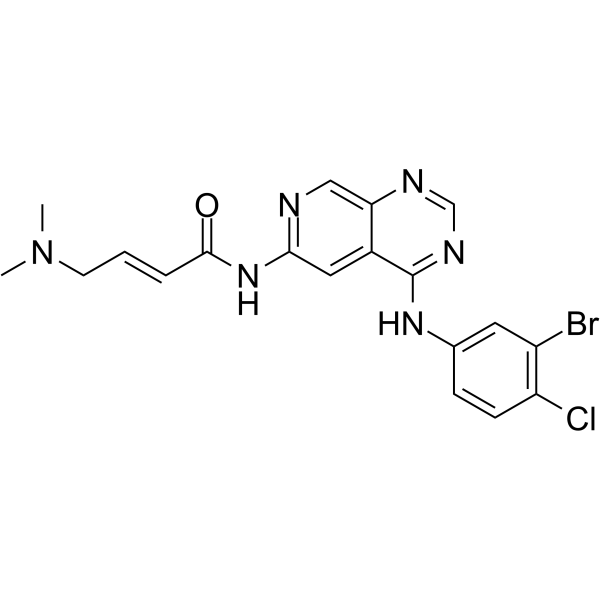 0 ImagesTarlox-TKI, the active metabolite of Tarloxotinib, is an irreversible pan-ErbB TKI (Tarlox-TKI).
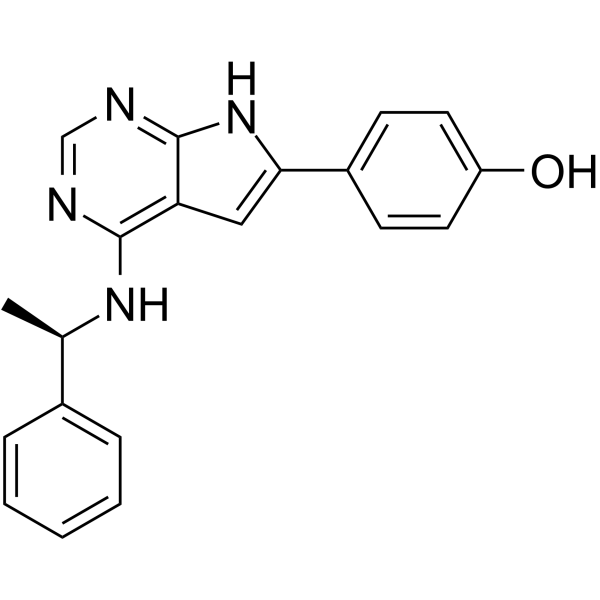
-
EGFR-IN-86
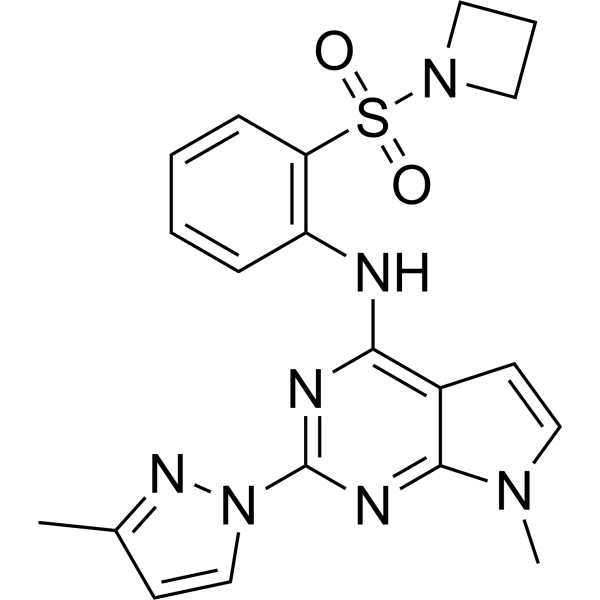 0 ImagesEGFR-IN-86 (compound 4i) is an EGFR inhibitor (IC50: 1.5 nM) with high activity against glioblastoma. EGFR-IN-86 induces apoptosis and arrests the U87 cell cycle in the G2/M phase.

-
OK2
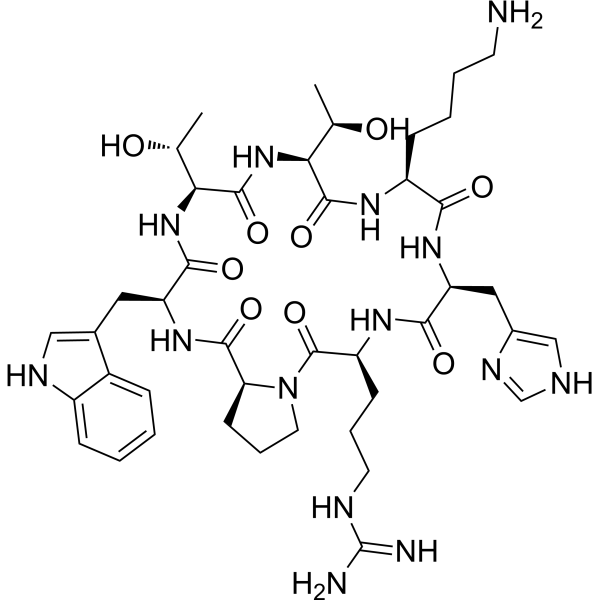 0 ImagesOK2, a specific inhibitor of the CCN2/EGFR interaction, efficiently blocks CCN2/EGFR interaction through binding to the CT domain of CCN2. OK2 can be used for kidney fibrosis and chronic kidney disease research.
-
Tyrphostin A51
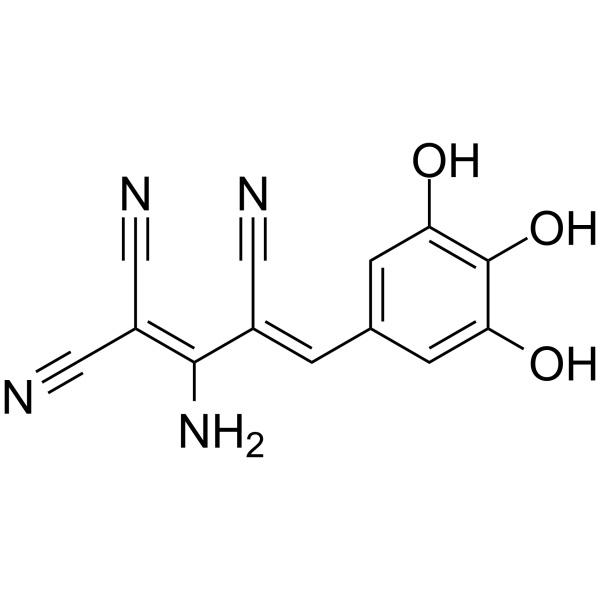 0 ImagesSynonyms: AG-183Tyrphostin A51 is a potent protein tyrosine kinase (PTK) inhibitor. Tyrphostin A51 inhibits the volume-dependent release of [3H]taurine in a dose-dependent manner. Tyrphostin A51 markedly reduces cellular tyrosyl phosphorylation level. Tyrphostin A51 inhibits both basal and EGF-induced human bone cell proliferation.
-
ErbB-2-binding peptide-1
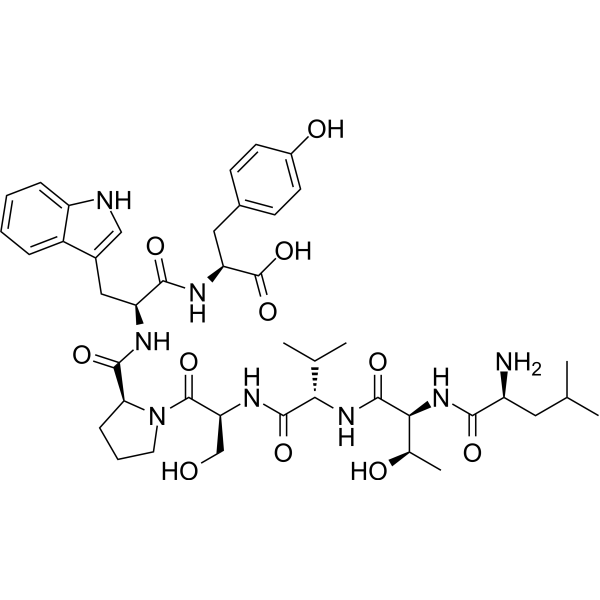 0 ImagesSynonyms: LTVSPWYErbB-2-binding peptide-1 (LTVSPWY) is a HER2 receptor-binding peptide. ErbB-2-binding peptide-1 can be conjugated with nuclear cross-linked micelles loaded with Doxorubicin (HY-15142A). ErbB-2-binding peptide-1 can also be radiolabeled to form 177Lu-DOTA-LTVSPWY. ErbB-2-binding peptide-1 is conjugated with antisense oligonucleotides. ErbB-2-binding peptide-1 can be used in research related to HER2-positive breast cancer and ovarian cancer.
-
PROTAC EGFR degrader 4
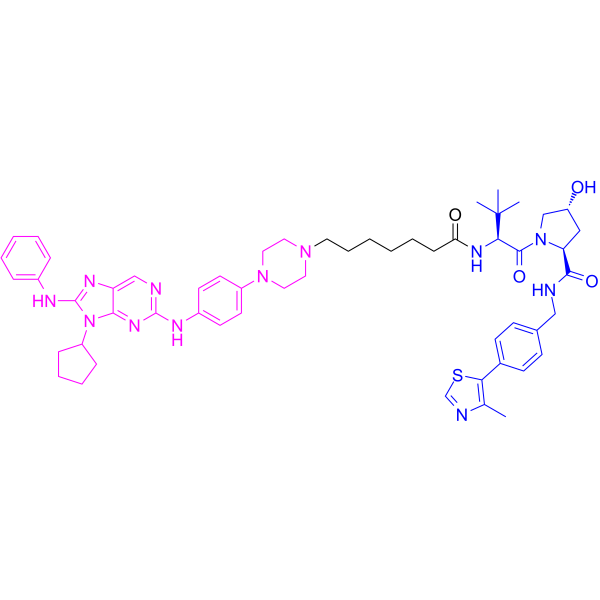 0 ImagesPROTAC EGFR degrader 4 is an EGFRdel19 and EGFRL858R/T790M degrader with anti-proliferative activity. PROTAC EGFR degrader 4 induces degradation of mutant EGFR variants via ubiquitination and autophagy. PROTAC EGFR degrader 4 suppresses EGFR pathway signal transduction. PROTAC EGFR degrader 4 induces apoptosis, arrests cell cycle, and suppresses cell colony formation in cancer cells. PROTAC EGFR degrader 4 can be used for the research of non-small cell lung cancer.
-
Cucurbitacin IIa
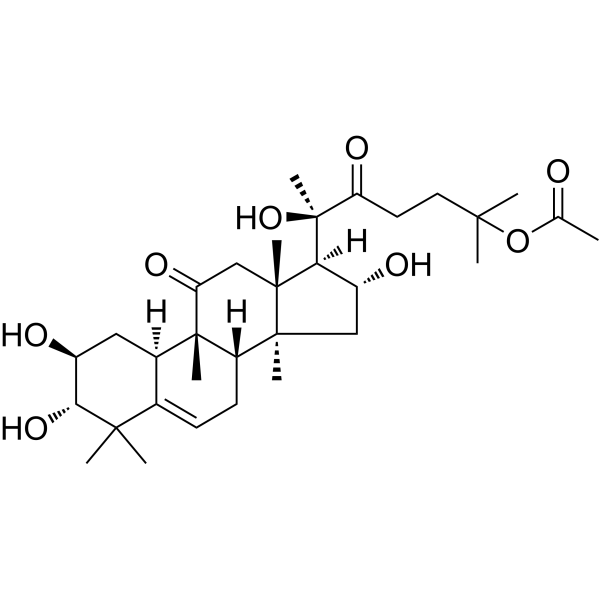 0 ImagesSynonyms: Hemslecin ACucurbitacin IIa (Hemslecin A) is an orally active, blood-brain barrier-permeable EGFR inhibitor with an IC50 of 1.455 nM against human EGFR. Cucurbitacin IIa induces caspase-3-dependent apoptosis, downregulates survivin expression, enhances autophagy levels, disrupts the actin cytoskeleton via actin aggregation, arrests the cell cycle at the G2/M phase, and exerts anti-inflammatory activity by inhibiting the EGFR-MAPK signaling pathway. Cucurbitacin IIa can be used in the research of inflammation-related diseases, depression, and cancers such as non-small cell lung cancer.