



Allitinib tosylate
Based on 3 publication(s) in Google Scholar
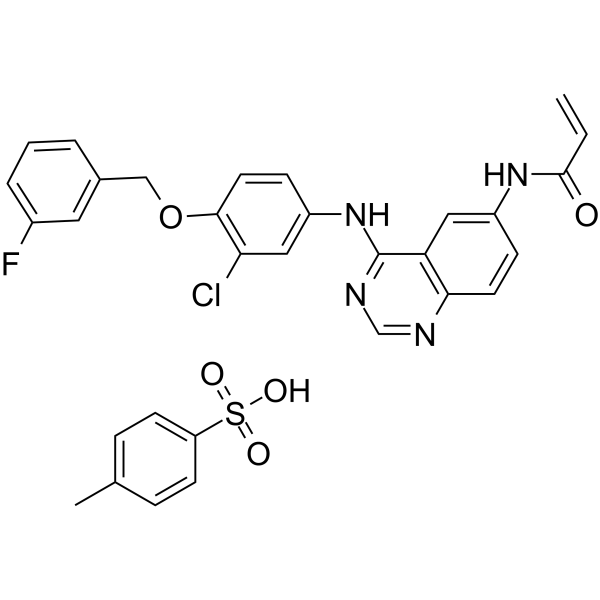
Allitinib tosylate (AST-1306 (TsOH)) is an orally active and irreversible EGFR and ErbB2 inhibitor with IC50s of 0.5 and 3 nM, respectively. Allitinib tosylate also inhibits ErbB4 with an IC50 of 0.8 nM. Allitinib tosylate is an anilino-quinazoline compound and has anti-cancer activity
For research use only. We do not sell to patients.
- Purity : 99.54%
- CAS No.: 1050500-29-2
- Formula: C31H26ClFN4O5S
- Molecular Weight:621.08
-
Storage:
4°C, sealed storage, away from moisture
* In solvent : -80°C, 6 months; -20°C, 1 month (sealed storage, away from moisture)

To place orders, for customer services and technical support, please contact: MedChemExpress USA
Tel: 609-228-6898 E-mail: [email protected] [email protected]


-
 Biological Activity
-
Chemical Information
-
Solvent & Solubility
- Protocols
- Purity & Documentation
- References
-
 Help & FAQs


-
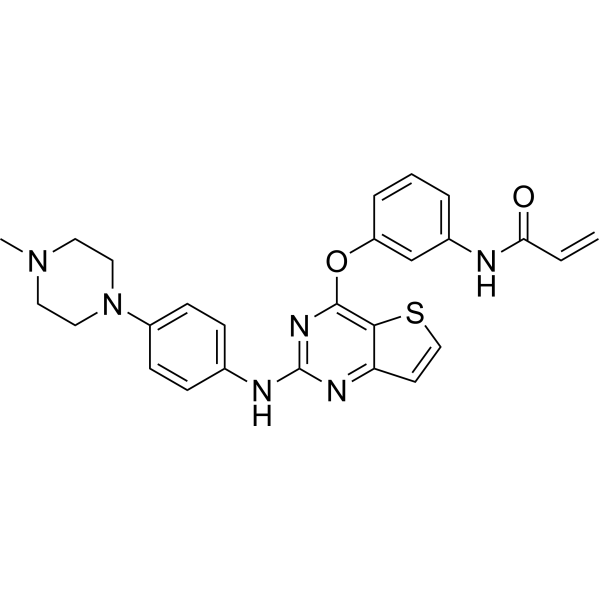
HY-19730
OlmutinibEGFR Tyrosine Kinase Inhibitor -
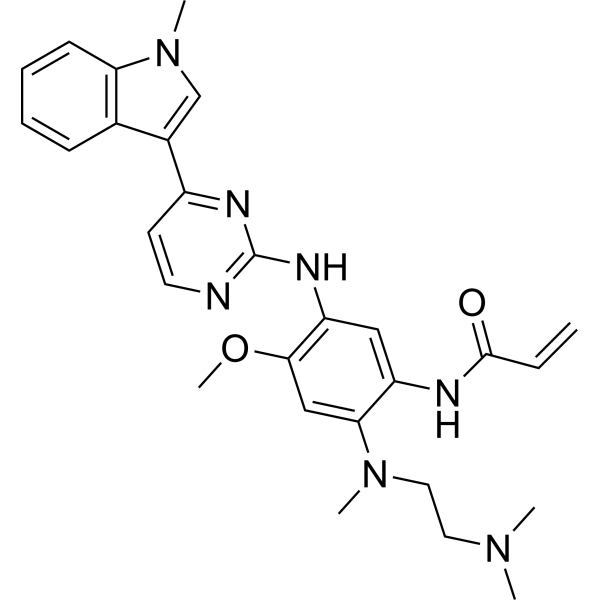
HY-15772
OsimertinibMutant-Selective EGFR Inhibitor -
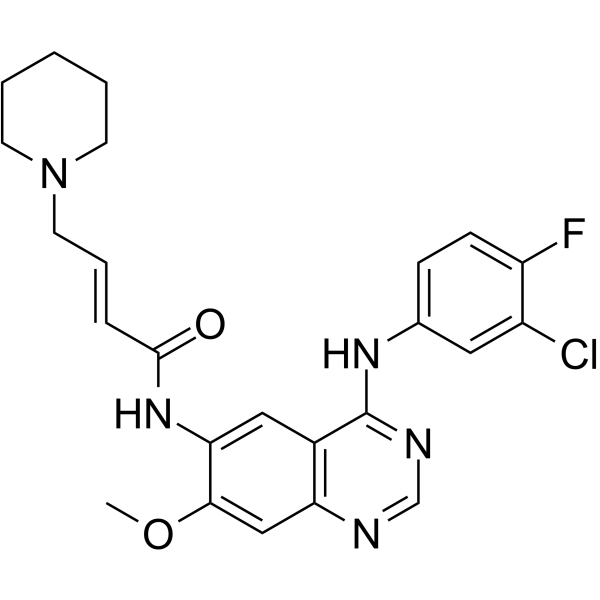
HY-13272
DacomitinibErbB Inhibitor -
HY-100493
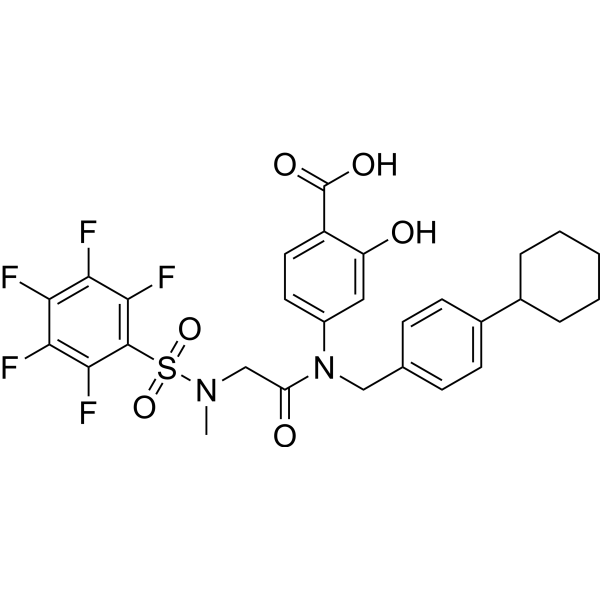
BP-1-102STAT3 Inhibitor -
HY-14346
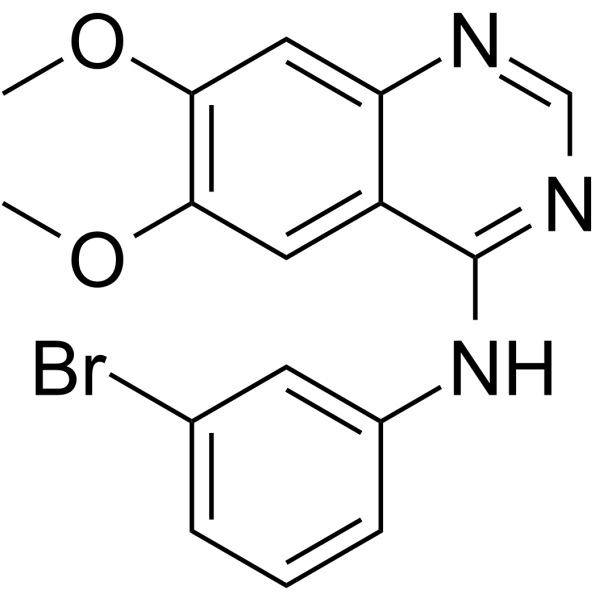
PD153035EGFR Inhibitor -

HY-15772R
Osimertinib (Standard)Mutant-Selective EGFR Inhibitor -
HY-32721
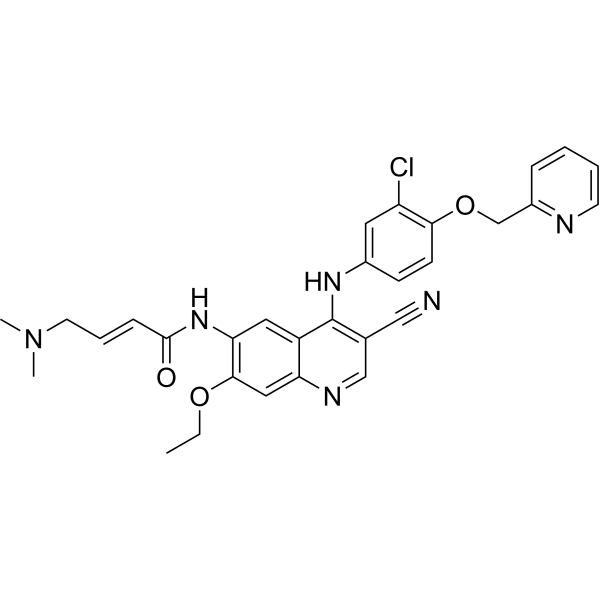
NeratinibHER2/EGFR Inhibitor -
HY-15644
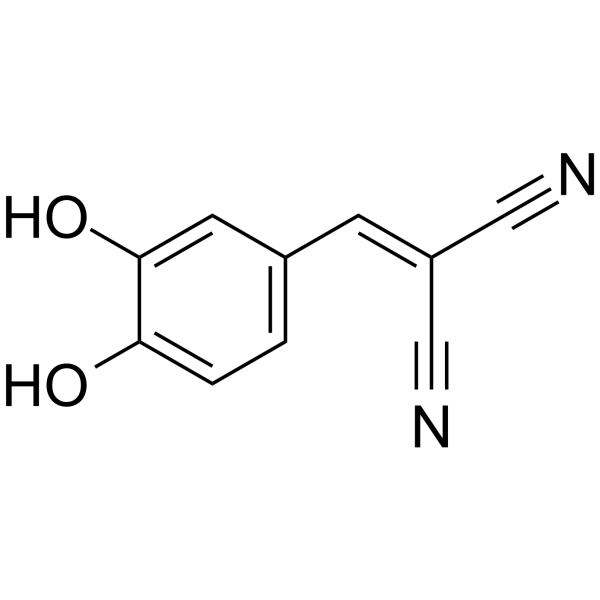
Tyrphostin 23EGFR Inhibitor -
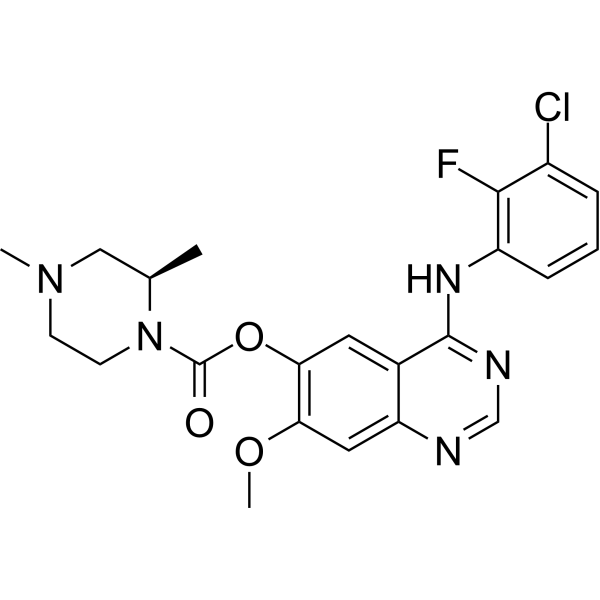
HY-18750
ZorifertinibEGFR Inhibitor -
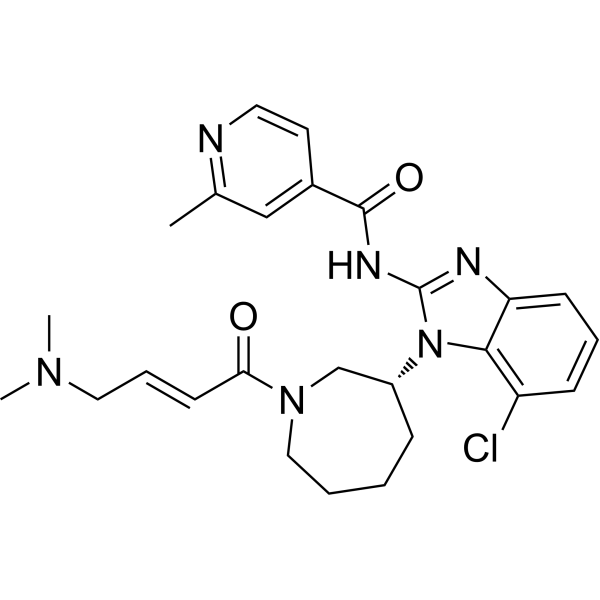
HY-12872
NazartinibEGFR Inhibitor -
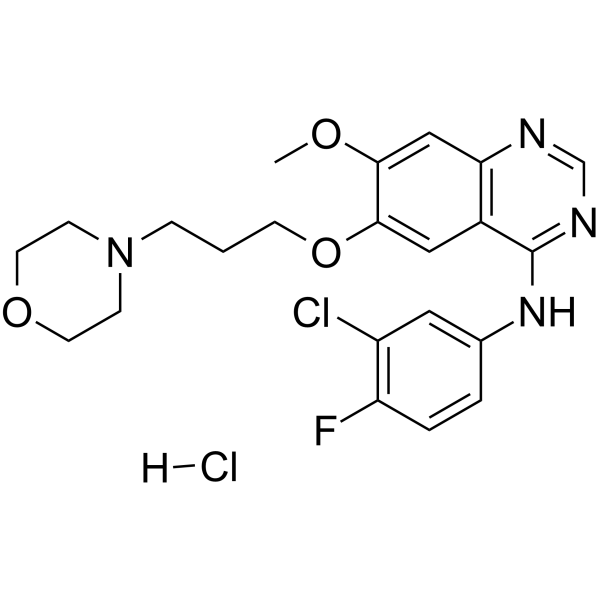
HY-50895A
Gefitinib hydrochlorideEGFR Inhibitor -
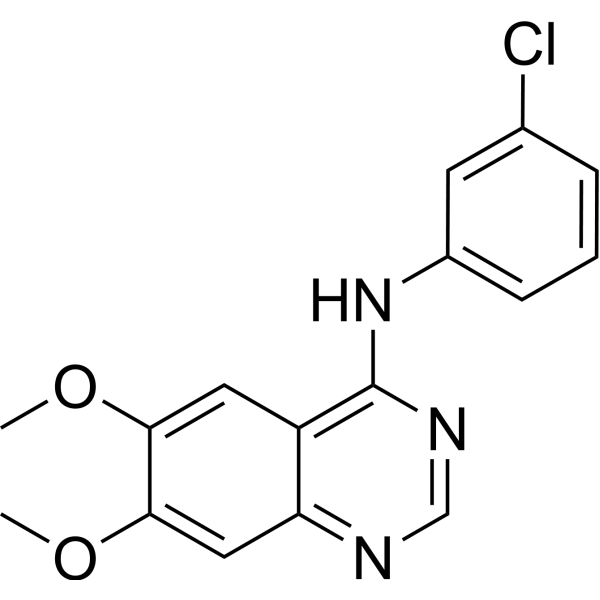
HY-13524
AG-1478EGFR Inhibitor
Publications Citing Use of MedChemExpress (MCE) Allitinib tosylate
MoreAll EGFR Isoforms
More

Biological Activity
Description
IC50 & Target
[1]|
EGFR 0.5 nM (IC50) |
ErbB2 3 nM (IC50) |
EGFRL858R/T790M 12 nM (IC50) |
ErbB4 0.8 nM (IC50) |
In Vitro
AST1306 tosylate (AST-1306 (TsOH); 0.19-6.25 μM; 72 hours) induces a significant, concentration-dependent inhibition of the growth of HIH3T3-EGFR T790M/L858R cells[1].
AST1306 tosylate inhibits the activation of tyrosine kinases and downstream signaling pathways in A549 cells, Calu-3 cells and SK-OV-3 cells. AST1306 tosylate dose-dependently and markedly inhibits EGF-induced EGFR phosphorylation in A549 cells[1].
AST1306 tosylate (0.1, 0.5, 1.0, 5.0 μM) can dramatically inhibit the growth of both tumor cells on soft agar, and SK-OV-3 cells exhibited much more sensitivity than that of A549 cells[1].
AST1306 tosylate (0.001-1.0 μM; 4 hours) is more than 3000-fold selective for ErbB family kinases over other kinase families[1].
AST1306 tosylate potently inhibits the EGFR T790M/L858R double mutant, exhibiting an IC50 value of 12±2 nmol/L[1].
MedChemExpress (MCE) has not independently confirmed the accuracy of these methods. They are for reference only.
-
Cell Line:NIH3T3 parental cells and NIH3T3 cells
-
Concentration:0.19, 0.39, 0.78, 1.56, 3.13, 6.25 μM
-
Incubation Time:72 hours
-
Result:Induced a significant, concentration-dependent inhibition of the growth of HIH3T3-EGFR T790M/L858R cells.
-
Cell Line:A549 cells , Calu-3 cells and SK-OV-3 cells
-
Concentration:0.001, 0.01, 0.1, 1.0 μM
-
Incubation Time:4 hours
-
Result:Inhibits the activation of tyrosine kinases and downstream signaling pathways.
In Vivo
MedChemExpress (MCE) has not independently confirmed the accuracy of these methods. They are for reference only.
-
Animal Model:Nude mice with SK-OV-3 and Calu-3 tumors[1]
-
Dosage:25, 50, 100 mg/kg
-
Administration:p.o.; twice daily; for 28 days
-
Result:Caused a dramatic suppression of tumor growth.


Chemical Information
-
CAS No. 1050500-29-2
-
Appearance Solid
-
Molecular Weight 621.08
-
Formula C31H26ClFN4O5S
-
Color Light yellow to yellow
-
SMILES
FC1=CC=CC(COC2=C(Cl)C=C(NC3=NC=NC4=C3C=C(NC(C=C)=O)C=C4)C=C2)=C1.O=S(C5=CC=C(C)C=C5)(O)=O
-
Synonyms
AST-1306 (TsOH)
-
Shipping
Room temperature in continental US; may vary elsewhere.
-
Storage
4°C, sealed storage, away from moisture
* In solvent : -80°C, 6 months; -20°C, 1 month (sealed storage, away from moisture)


Publications (3)
-
Journal Impact Factor
-
Most Recent
-
Sci Adv
Tissue-specific inflammation induces cell state plasticity with oncogenic addiction in mucosal melanoma. [Abstract]2026 Apr 3;12(14):eady4536. PMID: 41920996 -
Cell Rep
2025 Apr 16;44(5):115572. PMID: 40249703 -
Sci Data
High-throughput drug screening identifies novel therapeutics for Low Grade Serous Ovarian Carcinoma. [Abstract]2024 Sep 19;11(1):1024. PMID: 39300112


Solvent & Solubility
In Vitro:
DMSO : 50 mg/mL (80.50 mM; Need ultrasonic; Hygroscopic DMSO has a significant impact on the solubility of product, please use newly opened DMSO)
Please refer to the solubility information to select the appropriate solvent. Once prepared, please aliquot and store the solution to prevent product inactivation from repeated freeze-thaw cycles.
Storage method and period of stock solution: -80°C, 6 months; -20°C, 1 month (sealed storage, away from moisture). When stored at -80°C, please use it within 6 months. When stored at -20°C, please use it within 1 month.
Please refer to the solubility information to select the appropriate solvent. Once prepared, please aliquot and store the solution to prevent product inactivation from repeated freeze-thaw cycles.
Storage method and period of stock solution: -80°C, 6 months; -20°C, 1 month (sealed storage, away from moisture). When stored at -80°C, please use it within 6 months. When stored at -20°C, please use it within 1 month.
Concentration (start) × Volume (start) = Concentration (final) × Volume (final)
In Vivo:
Select the appropriate dissolution method based on your experimental animal and administration route.
- For the following dissolution methods, please ensure to first prepare a clear stock solution using an In Vitro approach and then sequentially add co-solvents:
- To ensure reliable experimental results, the clarified stock solution can be appropriately stored based on storage conditions. As for the working solution for In Vivo experiments, it is recommended to prepare freshly and use it on the same day.
- The percentages shown for the solvents indicate their volumetric ratio in the final prepared solution. If precipitation or phase separation occurs during preparation, heat and/or sonication can be used to aid dissolution.
Add each solvent one by one: 10% DMSO 40% PEG300 5% Tween-80 45% Saline
Solubility: ≥ 2.5 mg/mL (4.03 mM); Clear solution
This protocol yields a clear solution of ≥ 2.5 mg/mL (saturation unknown).
Taking 1 mL working solution as an example, add 100 μL DMSO stock solution (25.0 mg/mL) to 400 μL PEG300, and mix evenly; then add 50 μL Tween-80 and mix evenly; then add 450 μL Saline to adjust the volume to 1 mL.
Preparation of Saline: Dissolve 0.9 g sodium chloride in ddH₂O and dilute to 100 mL to obtain a clear Saline solution.
In Vivo Dissolution Calculator
Please enter the basic information of animal experiments:
-
-
-
-
Recommended: Prepare an additional quantity of animals to account for potential losses during experiments.
Please enter your animal formula composition:
-
%DMSO +
Recommended: Keep the proportion of DMSO in working solution below 2% if your animal is weak.
-
%+
-
+%Tween-80 + +
-
%Saline +
The co-solvents required include: DMSO, . All of co-solvents are available by MedChemExpress (MCE). , Tween 80. All of co-solvents are available by MedChemExpress (MCE).
Working solution concentration: 0.22 mg/mL
Method for preparing stock solution: mg drug dissolved in μL DMSO. Stock solution concentration: mg/mL. * In solvent : -80°C, 6 months; -20°C, 1 month (sealed storage, away from moisture)
1. Take μL DMSO stock solution;
2. Add μL .
μL , mix evenly;
3. Then add μL Tween 80, mix evenly;
4. Then add μL
Please ensure that the stock solution in the first step is dissolved to a clear state, and add co-solvents in sequence. You can use ultrasonic heating (ultrasonic cleaner, recommended frequency 20-40 kHz), vortexing, etc. to assist dissolution.


Purity & Documentation
-
Data Sheet (281 KB)
-
SDS (644 KB)
- English - EN (644 KB)
- Français - FR (644 KB)
- Deutsch - DE (644 KB)
- Norwegian - NO (644 KB)
- Español - ES (644 KB)
- Swedish - SV (644 KB)
- Italian - IT (644 KB)
- Korean - KR (644 KB)
- Portuguese - PT (644 KB)
-
Handling Instructions (2659 KB)
References


Complete Stock Solution Preparation Table
Please refer to the solubility information to select the appropriate solvent. Once prepared, please aliquot and store the solution to prevent product inactivation from repeated freeze-thaw cycles.
Storage method and period of stock solution: -80°C, 6 months; -20°C, 1 month (sealed storage, away from moisture). When stored at -80°C, please use it within 6 months. When stored at -20°C, please use it within 1 month.
| Optional Solvent | Concentration Solvent Mass | 1 mg | 5 mg | 10 mg | 25 mg |
|---|---|---|---|---|---|
| DMSO | 1 mM | 1.6101 mL | 8.0505 mL | 16.1010 mL | 40.2525 mL |
| 5 mM | 0.3220 mL | 1.6101 mL | 3.2202 mL | 8.0505 mL | |
| 10 mM | 0.1610 mL | 0.8050 mL | 1.6101 mL | 4.0252 mL | |
| 15 mM | 0.1073 mL | 0.5367 mL | 1.0734 mL | 2.6835 mL | |
| 20 mM | 0.0805 mL | 0.4025 mL | 0.8050 mL | 2.0126 mL | |
| 25 mM | 0.0644 mL | 0.3220 mL | 0.6440 mL | 1.6101 mL | |
| 30 mM | 0.0537 mL | 0.2683 mL | 0.5367 mL | 1.3417 mL | |
| 40 mM | 0.0403 mL | 0.2013 mL | 0.4025 mL | 1.0063 mL | |
| 50 mM | 0.0322 mL | 0.1610 mL | 0.3220 mL | 0.8050 mL | |
| 60 mM | 0.0268 mL | 0.1342 mL | 0.2683 mL | 0.6709 mL | |
| 80 mM | 0.0201 mL | 0.1006 mL | 0.2013 mL | 0.5032 mL |


Allitinib tosylate Related Classifications
HY-13427 Related Classifications
 Powered by Bioz